







The Time & Material hiring model is a flexible pricing strategy in software development. Clients pay for the actual time and resources used.
This approach is great for projects with changing needs or those needing a lot of flexibility. It’s a top choice for businesses using agile software development methods.
In this article, we’ll explore the Time & Material hiring model. We’ll look at its benefits and how it stacks up against other software development pricing models.
Table of Contents
Key Takeaways
- The Time & Material hiring model offers flexibility in software development pricing.
- It is ideal for projects with changing or evolving requirements.
- This model is closely associated with agile software development methodologies.
- Clients pay for the actual development time and resources used.
- It provides transparency in costing for software development projects.
Understanding the Time & Material Hiring Model
In software development, the Time & Material model is known for its flexibility. It’s popular because it can adapt to changing project needs. This model helps in creating high-quality software products.
This model pays based on the time spent by the team and the cost of materials. It’s great for projects with unclear or changing scopes. It helps avoid extra costs from scope creep or unnecessary features.

- Flexibility in project scope and requirements
- Payment based on actual time and materials used
- Transparency in billing and project tracking
- Adaptability to changing project needs
The Time & Material model is different from Fixed Price. In Fixed Price, you pay a set amount for the whole project. This can cause cost overruns if the project scope changes.
The benefits of the Time & Material model include:
- Ability to adjust project scope as needed
- Reduced risk of cost overruns
- Improved transparency in project costs
- Enhanced collaboration between clients and development teams
However, the Time & Material model has its challenges. It requires ongoing project management and can lead to budget uncertainty. To manage these risks, businesses need clear communication with their teams. They should also use strong project tracking tools.
Core Principles of the Time & Material Contract Model
The Time & Material contract model is great for projects that change a lot. It’s flexible and adapts well to new needs.
This model has three main parts: an hourly rate, costs for materials, and clear reporting. These parts make sure everything is open and documented.
Hourly Rate Structure
The hourly rate is key in this contract. Clients pay for the actual time spent by the team. The rate depends on the team member’s skill, experience, and where they are.
For example, a Flutter developer might cost more than a junior engineer. This way, clients only pay for what’s done.
| Role | Hourly Rate Range |
|---|---|
| Junior Developer | $25-$50 |
| Senior Developer | $75-$150 |
| Project Manager | $50-$100 |
Material and Resource Costs
The contract also covers costs for materials and resources. This includes software tools and hardware needed for the project.
It’s important to be clear about these costs. Clients should know how they’re calculated and what they include.
“Transparency in billing builds trust between clients and service providers, ensuring a smooth project execution.”
Transparency and Documentation Requirements
Being open and documenting everything is crucial. This means keeping records of time, materials, and expenses.
Regular reporting helps keep things clear. Clients should get detailed updates on the project’s progress and any changes.
Following these principles makes the Time & Material contract a flexible and open way to manage software projects. It helps projects adapt to new needs.
How the Time & Material Model Works in Software Development
The Time & Material model is great for software development. It’s flexible and can change with project needs. This makes it perfect for projects that keep evolving.
Project Initiation and Scope Definition
Starting a project in this model means defining its scope and goals. This is key to setting up the project. Clear communication between the client and team is vital to align everyone with the project’s aims.
The scope might not be fully set at the start. But, having a clear initial scope helps estimate the needed resources for the project’s first phase.
Team Assembly and Resource Allocation
After setting the project’s scope, the next step is to build a team. The Time & Material model lets you dynamic team assembly. This means you can adjust the team as the project evolves.
- Identify the required skill sets for the project.
- Allocate resources based on the project’s initial scope.
- Adjust the team composition as the project requirements change.
Billing and Payment Cycles
Billing in this model is based on actual time and resources used. This way, clients only pay for the work done.
Weekly Billing Arrangements
Some projects have weekly billing. Clients are invoiced weekly for the work done. This makes billing transparent and helps with cash flow.
Monthly Payment Structures
Others prefer monthly billing. Clients get one invoice at the end of the month for all work done. This simplifies things and is good for longer projects.
“The Time & Material model offers the flexibility that software development projects need to adapt to changing requirements and deliver high-quality results.”
In summary, the Time & Material model is great for software development. It’s flexible in scope, team, and billing. This makes it a top choice for many projects.
Time & Material Hiring Model Explained for Software Teams: A Complete Breakdown
The Time & Material hiring model needs a deep understanding of team dynamics for success. It works best with flexibility, adaptability, and clear communication among team members.
Team Composition in Time & Material Arrangements
In Time & Material, the team’s makeup is key to project success. A good team has senior developers, designers, project managers, and quality assurance specialists.
Key roles in team composition:
- Project Manager: Oversees the project’s overall direction and ensures timely completion.
- Technical Lead: Responsible for technical decisions and guiding the development team.
- Developers: Handle the coding and development tasks.
- Quality Assurance Engineers: Ensure the product meets the required quality standards.
- UX/UI Designers: Focus on creating user-friendly and aesthetically pleasing interfaces.
Role Distribution and Responsibilities
Clear roles and responsibilities are vital to avoid confusion and overlapping work. Roles in Time & Material are based on project needs and team members’ expertise.
Effective role distribution involves:
- Clearly defining each team member’s responsibilities.
- Ensuring that each role complements the others.
- Establishing a chain of command for decision-making.
Communication Protocols and Workflows
Good communication is crucial for Time & Material projects. Strong communication protocols and workflows keep the team aligned and focused on goals.
Daily Standups and Status Updates
Daily standup meetings are common in Time & Material projects. They let team members share progress, discuss challenges, and plan their day.
Benefits of daily standups:
- Improved transparency across the team.
- Early identification of potential roadblocks.
- Enhanced collaboration among team members.
Sprint Planning Sessions
Sprint planning sessions are key in Time & Material projects, especially with Agile methodologies. They set clear goals for the sprint and keep the team focused on priorities.

When to Choose the Time & Material Model for Your Software Project
For software projects with changing needs, the Time & Material model is great. It lets you adjust to new project demands. This makes it perfect for some software development projects.

Projects with Evolving Requirements
Software projects often see changes in what they need. The Time & Material model helps by letting you change scope and resources. This is key for projects where needs aren’t clear at the start.
Long-Term Development Engagements
The Time & Material model is cost-effective for long projects. It lets you adjust your team size as needed. This ensures you use resources well. It’s great for projects lasting months or years.
Agile and Iterative Development Scenarios
Agile development focuses on making progress, being flexible, and working together. The Time & Material model fits well with these ideas. It supports iterative work and feedback. This keeps the development process flexible and responsive.
In summary, the Time & Material model is good for projects needing flexibility, with changing needs, or lasting a long time. Its flexibility makes it a great choice for agile and iterative projects.
Key Benefits of the Time & Material Approach
The Time & Material model is great because it can change with project needs. This is key in today’s fast world of software development, where things can change fast.

Flexibility and Adaptability in Development
The Time & Material way lets teams adjust to new project needs or timeline changes. This is super useful in software development, where surprises can pop up.
With this model, teams can quickly adapt to new priorities. This keeps the project on track and meets the client’s changing needs.
Quality Focus Over Speed
The Time & Material model puts quality first. This means developers can focus on making great software, not just rushing to meet a deadline. This leads to better, more reliable software.
By focusing on quality, the model cuts down on costly fixes later on. This saves time and money in the long run.
Direct Client Involvement and Control
The Time & Material way lets clients be right in the middle of the development. This means they have more say in how the project goes and what it looks like. This ensures the final product is just what they wanted.
Decision-Making Authority
Clients with a Time & Material model get to make important decisions as the project goes on. This lets them guide the project in the best way possible.
Priority Setting Capabilities
The Time & Material model also lets clients decide what’s most important for the team to work on. This makes sure the most critical parts of the project get done first. This way, the project’s value is maximized.
Challenges and Risks of Time & Material Contracts
Time & Material contracts are flexible but come with challenges and risks. They offer great adaptability and teamwork with clients. Yet, they also have pitfalls that need careful handling.

Budget Uncertainty and Financial Planning
Budget uncertainty is a big challenge with Time & Material contracts. The project’s scope and timeline can change, making it hard to estimate costs early on. This makes financial planning tricky for businesses.
To tackle this, companies and vendors often create rolling forecasts and hold regular budget reviews. This approach helps manage costs and make necessary adjustments.
Scope Creep Concerns
Scope creep is another risk with Time & Material contracts. As the project goes on, new features or changes might be added. This can expand the project’s scope beyond what was originally planned.
“Scope creep can be a major issue if not managed properly. It’s essential to have clear communication channels and a well-defined change management process.”
A strong change management process can help control scope creep. This involves documenting all changes, checking their impact on the project’s timeline and budget, and getting client approval before moving forward.
Management Overhead Requirements
Time & Material contracts need more management overhead than fixed-price contracts. Both the client and vendor must closely watch the project’s progress, handle changes, and work together well.
| Management Aspect | Description | Impact |
|---|---|---|
| Project Monitoring | Regular tracking of project progress | Ensures timely completion and quality |
| Change Management | Managing scope changes and updates | Controls scope creep and budget |
| Coordination | Client-vendor collaboration and communication | Enhances project outcomes and satisfaction |
To handle these challenges well, it’s key to hire a reliable software development company. They should offer the needed expertise and support.
Cost Considerations in Time & Material Hiring
Understanding the costs of Time & Material hiring is key for businesses. This model offers flexibility but needs careful cost management for success.
Calculating Hourly Rates for Different Roles
Calculating hourly rates for roles is a big cost factor. Rates change based on role, skill, and location.
Developer and Engineer Rates
Developers and engineers are vital for software projects. Their rates vary by experience and skills.
- Junior developers: $25-$50 per hour
- Mid-level developers: $50-$100 per hour
- Senior developers: $100-$200 per hour
Designer and Specialist Rates
Designers and specialists are also key. Their rates depend on their expertise and task complexity.
- UI/UX designers: $50-$150 per hour
- QA specialists: $30-$80 per hour
- DevOps engineers: $100-$250 per hour
Hidden Costs and Additional Expenses
There are hidden costs in Time & Material hiring. Businesses need to watch out for these.
Some of these costs include:
- Project management tools and software
- Communication and collaboration platforms
- Training and onboarding expenses
- Potential costs associated with scope changes or project delays

Budget Planning and Forecasting Strategies
Good budget planning and forecasting are crucial. Businesses should use strong strategies to manage costs.
Key strategies include:
- Regularly reviewing project scope and timelines
- Implementing a robust time-tracking system
- Establishing clear communication channels with the development team
- Conducting periodic budget reviews and forecasts
By understanding these costs and using effective strategies, businesses can benefit from Time & Material hiring. They can also avoid financial risks.
Time & Material vs Fixed Price Model
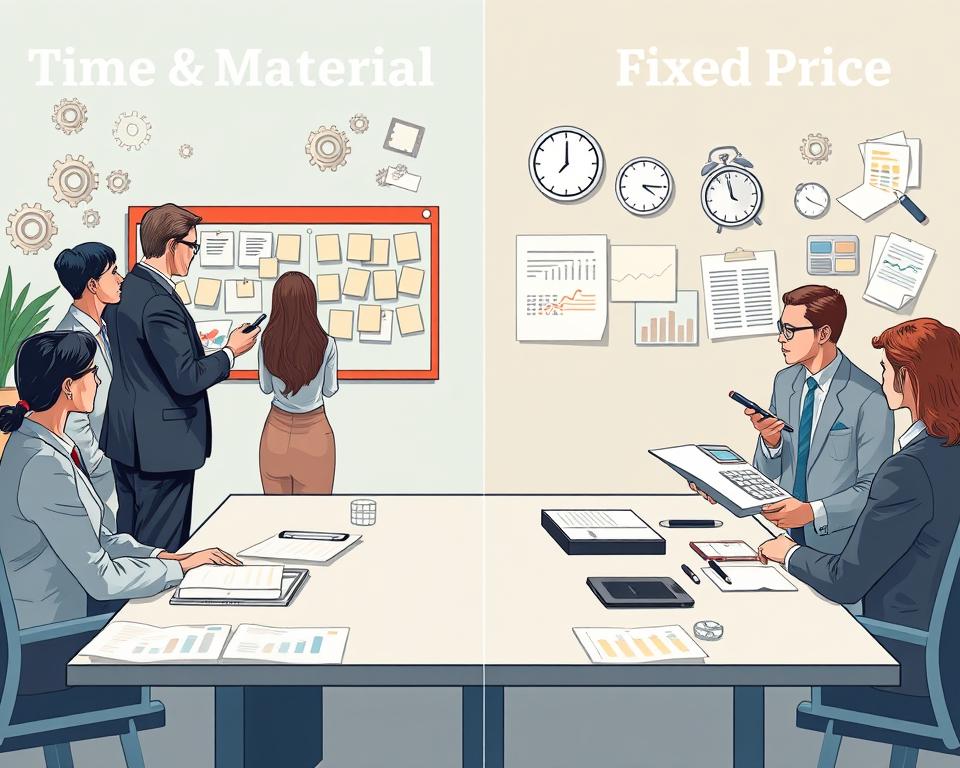
The debate between Time & Material and Fixed Price models centers around cost predictability, flexibility, and risk distribution in software development projects.
When deciding on a pricing model for software development, two popular options are Time & Material and Fixed Price. Each has its advantages and disadvantages, which are crucial to understand for effective project management.
Cost Predictability Comparison
One of the primary differences between Time & Material and Fixed Price models lies in their approach to cost predictability.
- Fixed Price offers a predetermined total cost for the project based on the initial scope, providing a high level of cost predictability.
- Time & Material billing, on the other hand, charges clients based on the actual time and resources used, making it challenging to predict the total project cost upfront.
As Forbes notes, “Fixed-price contracts can be beneficial when the scope is well-defined, but they can become problematic if the scope changes.” This highlights the importance of understanding project requirements before choosing a pricing model.
Flexibility and Change Management
Flexibility is another critical aspect where these models differ significantly.
Time & Material contracts offer greater flexibility as they allow for adjustments in project scope and requirements without significant contractual hurdles.
“Agile development methodologies thrive under Time & Material arrangements due to their iterative nature and the ability to adapt to changing requirements.”
In contrast, Fixed Price contracts can be rigid, making it difficult and costly to implement changes once the project is underway.
Risk Distribution Between Parties
The distribution of risk between the client and the service provider varies between the two models.
- In Fixed Price arrangements, the service provider bears the risk of cost overruns due to unforeseen complexities or scope changes.
- Under Time & Material contracts, the client assumes more risk as they are responsible for costs associated with changes or project delays.
According to a study by McKinsey, “The key to successful project delivery lies in understanding and managing the risks associated with the chosen pricing model.” This underscores the need for careful consideration and clear communication between parties regarding risk distribution.
In conclusion, the choice between Time & Material and Fixed Price models depends on the project’s specific needs, the client’s budget preferences, and the level of flexibility required.
Time & Material vs Dedicated Team Model
The Time & Material model and the Dedicated Team model are two different ways to do software development. Each has its own good points and not-so-good points. They differ a lot in team commitment levels, resource exclusivity, and cost structure.
Team Commitment Levels and Expectations
In the Dedicated Team model, the team works only on your project until it’s done. This dedication helps them really get your project’s goals and needs. On the other hand, the Time & Material model has a team that works by the hour. This can mean they might not focus as much if they’re working on many projects at once.
The Dedicated Team model usually means a team that’s really committed. They often work together in the same place. A study by Next Big Technology shows how good this is for keeping projects together and getting them done fast.
Resource Exclusivity and Availability
Another big difference is how resources are used. In a Dedicated Team, resources are only for your project. This means the team can focus on your project without any distractions. But, the Time & Material model might share resources among projects. This could cause delays or problems with getting the right resources.
- Dedicated Team: Exclusive resource allocation
- Time & Material: Shared resources across projects
Cost Structure Differences
The cost of these models is also different. The Dedicated Team model usually has a fixed cost each month. This makes it easier to plan your budget. The Time & Material model, however, charges by the hour. This can make costs unpredictable. PowerGate Software says it’s important to know these costs to plan your budget well.
| Model | Cost Structure | Predictability |
|---|---|---|
| Dedicated Team | Fixed Monthly Cost | High |
| Time & Material | Hourly Charges | Low |
In summary, both models have their good and bad sides. The right choice depends on what your project needs. Knowing the differences in team commitment, resource use, and cost helps make a choice that fits your project’s goals.
Implementing Time & Material Contracts Successfully
Understanding contract negotiation and setting clear expectations is key to Time & Material contract success. Businesses need a strategic approach to manage these contracts well.
Contract Negotiation Essentials
Contract negotiation is crucial for Time & Material contracts. It’s about agreeing on terms like hourly rates, payment, and work scope. Clear communication about project goals, timelines, and what needs to be done is vital to avoid confusion.
It’s important to create a flexible framework during negotiation. This means defining how changes in project scope will affect the contract.
Setting Clear Expectations and Deliverables
Clear expectations are essential for Time & Material contracts. This means defining the project’s scope, milestones, and what needs to be delivered. Regular updates and open communication help manage client expectations and keep the project on track.
Understanding the client’s needs and priorities is also key. This lets the service provider tailor their work to meet the client’s goals.
Establishing Reporting Mechanisms
Good reporting is key to tracking progress and ensuring the project goes as planned. This includes regular time sheet submissions and progress reports.
Time Sheet Requirements
Time sheets are vital for tracking hours worked on a project. They provide a clear record of time spent on tasks and help in accurate billing. Detailed time sheets should include date, task, hours, and who worked on it.
Progress Report Formats
Progress reports should give a full update on the project’s status, achievements, and challenges. Standardized report formats ensure consistency and make it easy for clients to follow progress.
By using these strategies, businesses can ensure Time & Material contracts are executed well. This creates a collaborative environment that benefits both the client and the service provider.
Best Practices for Managing Time & Material Software Teams
Managing software teams under the Time & Material model needs strategic planning, clear communication, and quality assurance. This helps teams adjust to project changes while keeping quality and productivity high.
Regular Progress Tracking and Monitoring
Tracking project progress is key to staying on schedule and budget. Set clear milestones and track them. Use project management tools for real-time updates.
To track progress well, teams should:
- Set clear project milestones and deliverables
- Use project management software to track progress
- Hold regular status meetings to discuss project updates
Effective Communication Channels
Good communication is vital for Time & Material team management. It means having open channels for team and stakeholder communication. Regular video conferencing and collaboration tools keep teams connected, even when remote.
Teams can use Slack or Microsoft Teams for daily chats and building a remote software development team that works well together.
Quality Assurance Integration
Quality assurance is key in the development process. It involves testing and code reviews to ensure the product meets standards. This catches errors early and improves code quality.
Code Review Processes
Code reviews are crucial for quality assurance. They help teams find and fix errors. Regular code reviews ensure coding standards are followed.
Testing Protocols and Standards
Comprehensive testing is essential for software quality. It includes unit, integration, and user acceptance testing. This covers all aspects of software development.
By following these best practices, teams can manage Time & Material software projects effectively. This ensures quality and successful project delivery.
Tools and Technologies for Time & Material Project Management
Success in Time & Material projects depends on the right tools and technologies. You need time tracking software, project management platforms, and collaboration tools. These ensure smooth execution and happy clients.
Time Tracking Software Solutions
Time tracking is key in Time & Material projects. It affects billing and project profit. Here are two top time tracking software:
Toggl and Harvest
Toggl has a simple interface and detailed reports. It’s great for tracking task time. Harvest combines time tracking with invoicing. This makes billing easier.
Jira and Monday.com
Jira is best for software development projects. It has advanced tracking and agile planning. Monday.com is customizable for Time & Material projects.
| Tool | Key Features | Best For |
|---|---|---|
| Toggl | User-friendly interface, robust reporting | General time tracking |
| Harvest | Time tracking, invoicing integration | Billing and invoicing |
| Jira | Advanced project tracking, agile planning | Software development projects |
| Monday.com | Highly customizable | Custom project management needs |
Project Management Platforms
Project management platforms are vital for organizing tasks and tracking progress. They help teams work together. For more on Time & Material projects, check our guide here.
Communication and Collaboration Tools
Good communication is key for Time & Material project success. Tools like Slack and Zoom help teams and clients stay in touch.
Using these tools can make projects better, clients happier, and management smoother.
Real-World Applications and Success Stories
The Time & Material hiring model is very flexible. It works well in many software development projects. This model is great when you need to be flexible and adapt quickly.
Startup Product Development Cases
Startups often face changing product needs. The Time & Material model helps them adapt quickly. It’s perfect for startups to meet market demands and user feedback.
A tech startup used this model to create its MVP. They could change their product based on user feedback. This led to a product that really met market needs.
“The Time & Material model allowed us to pivot our product strategy based on real user feedback, which was instrumental in our success.” – CTO, Tech Startup
Enterprise Software Modernization Projects
Enterprises need to modernize their software to stay ahead. The Time & Material model helps them do this. It lets them add new technologies and features as needed.
| Aspect | Traditional Approach | Time & Material Model |
|---|---|---|
| Flexibility | Limited flexibility due to fixed scope | Highly flexible, accommodating changing requirements |
| Cost | Higher upfront costs due to detailed initial planning | Costs are more evenly distributed, with the ability to adjust based on project needs |
| Time-to-Market | Longer timelines due to the need for comprehensive planning | Faster time-to-market, as development and iteration can occur concurrently |
Continuous Product Enhancement Scenarios
The Time & Material model is great for ongoing product development. It lets teams keep adding new features and updates. This keeps the product relevant and competitive.
A software company used this model for their main product. They could keep improving it based on customer feedback. This led to happier customers and better retention.
Key Takeaways:
- The Time & Material model is very adaptable, making it suitable for a wide range of software development projects.
- It allows for flexibility in project scope, timeline, and budget, which is particularly beneficial for startups and enterprises alike.
- Continuous product enhancement is facilitated through the model’s iterative development approach.
Common Pitfalls to Avoid in Time & Material Engagements
Time & Material arrangements offer flexibility but come with challenges. It’s important to know these challenges to ensure project success. This way, you can avoid common pitfalls.
Inadequate Documentation and Record Keeping
Inadequate documentation and record keeping is a big problem. It’s key to track progress and manage changes. Without good records, it’s hard to know the project’s status, leading to disputes.
To fix this, start with a strong documentation plan. Keep detailed records of time, materials, and project changes. Regular updates and clear communication can help avoid these issues.
Poor Vendor Selection and Due Diligence
Poor vendor selection is another major issue. The right vendor is crucial for project success. Without proper due diligence, you might choose a vendor who can’t meet your needs, causing delays and poor performance.
To avoid this, do a thorough vendor check. Look at their past work, technical skills, and financial health. Choosing a reliable vendor can greatly reduce risks in Time & Material projects.
Lack of Regular Oversight and Review
A lack of regular oversight and review can also harm projects. It’s important to check on the project’s progress and fix issues quickly. Without this, problems can grow, causing delays or cost overruns.
Missed Milestone Reviews
Missing milestone reviews is part of the oversight problem. These reviews help track progress and make needed changes. Without them, projects can go off track, wasting resources and time.
Insufficient Budget Monitoring
Insufficient budget monitoring is another issue. Without watching expenses closely, projects can go over budget. This can lead to financial problems and even project cancellation. A good budget tracking system can help avoid this.
| Pitfall | Description | Mitigation Strategy |
|---|---|---|
| Inadequate Documentation | Lack of proper records and documentation | Establish robust documentation process |
| Poor Vendor Selection | Failing to select a reliable vendor | Conduct thorough vendor assessments |
| Lack of Oversight | Insufficient monitoring and review | Implement regular oversight and review mechanisms |
Conclusion
The Time & Material hiring model is a flexible and effective way to manage software development. It adapts well to changing project needs. This model helps software teams handle complex projects better.
We’ve looked into the Time & Material contract model in this article. It has its benefits and challenges. This model is great for projects that need ongoing changes and direct client input.
As software development grows, using Time & Material can be very beneficial. It helps teams create quality products while keeping costs and resources in check. By following best practices and using the right tools, businesses can get the most out of this model.