







More companies are choosing the dedicated development team model. It lets them have a reliable, long-term team of engineers for their product. McKinsey says using flexible, distributed models can boost productivity by up to 30% in roles like software development.
This approach has many benefits, like lower costs and better efficiency. By hiring a dedicated team for development, businesses can concentrate on what they do best. They can let the experts handle the technical parts.
Table of Contents
Key Takeaways
- The dedicated development team model provides access to a stable, long-term team of engineers.
- Adopting this model can improve productivity by up to 30%.
- Outsourcing development to a dedicated team can reduce costs and improve efficiency.
- Businesses can focus on their core competencies while leaving technical aspects to the experts.
- This model is particularly beneficial for companies with complex software development needs.
What Is a Dedicated Development Team Model
The dedicated development team model is becoming popular. It’s a flexible way to handle software projects. It involves a team of software experts who work full-time on one project.
This model is great for companies that need ongoing development. It lets them work without a permanent team. Knowing about this model helps businesses decide on their software needs.
Definition and Core Concept
A dedicated team focuses only on one client’s project. They work together to create top-notch software. The team includes developers, testers, and a project or product lead.
The team works closely with the client. They understand the project’s goals and needs well.
How It Differs from Traditional Hiring
This model is different from hiring employees for a company. A dedicated team is hired for a specific project. This way, companies can grow their development team without long-term commitments.
Key differences include:
- Project-specific focus
- Flexibility in team composition
- Scalability to meet evolving project needs
Key Characteristics of the Dedicated Team Model
The dedicated team model has several key traits. These traits make it appealing to businesses. They are:
| Characteristic | Description |
|---|---|
| Long-term Collaboration | Ongoing partnership between the client and the development team |
| Exclusive Project Focus | Dedicated team works solely on the client’s project |
| Flexible Team Structure | Ability to adjust team composition based on project requirements |

Understanding these traits helps businesses see the value of the dedicated team model.
How the Dedicated Development Team Model Works
The dedicated development team model is a way to work on software projects. It brings together a team that fits the client’s needs. This model gives businesses a dedicated team, offering both flexibility and expertise.
Team Composition and Structure
The team composition is made to match the client’s needs. A typical team includes developers, a project manager, quality assurance engineers, and UI/UX designers. The team’s structure is flexible, adapting as the project grows.

Collaboration Framework and Workflow
The collaboration framework involves regular talks, like daily or weekly meetings. It uses shared tools for planning and tracking. This setup helps the team adjust to changes and keeps the client updated.
Contract and Engagement Terms
The contract and engagement terms cover the project’s scope, payment, and roles. These terms protect both sides and aim for a successful partnership. The contract might include options to scale the team, termination rules, and intellectual property rights.
Knowing how the dedicated development team model works helps businesses make better choices. It’s a flexible and efficient way to manage projects. This lets companies focus on their main tasks while the development is handled by experts.
The Complete Hiring Process for a Dedicated Development Team
To hire a dedicated development team, you need to go through several steps. It starts with defining your project’s needs. This step is key because it sets the stage for finding the right team for your project.

Step 1: Define Your Project Requirements and Goals
The first step is to outline your project’s scope and needs. You should identify the technologies and skills needed. This helps guide your search for the perfect team.
Step 2: Research and Shortlist Potential Vendors
After defining your project, research potential vendors. Look for companies with expertise in dedicated teams. Check their portfolio and client reviews. For more on working with a dedicated team, see our blog post.
As Forbes said, focus on what you want, not what you fear. Finding the right vendor is key.
Step 3: Evaluate Technical Expertise and Portfolio
Next, evaluate the technical skills and past projects of vendors. Look at their experience with your project’s technologies. A strong portfolio means a better team.
Step 4: Conduct Interviews and Technical Assessments
Interviews and technical assessments are crucial. They show the team’s problem-solving and technical skills. It’s a chance to see if they fit your project.
Step 5: Negotiate Terms and Sign the Contract
After choosing a vendor, negotiate the contract terms. Discuss pricing and timelines. Signing the contract means you’re ready to start working together.
Step 6: Onboard Your Dedicated Team
The last step is onboarding your team. Integrate them into your project and provide necessary info. Good onboarding leads to a successful partnership.
By following these steps, you can hire a dedicated team effectively. This leads to a successful project outcome.
Dedicated Development Team Hiring – Cost, Process & Benefits Overview
Knowing the costs of hiring a dedicated development team is key. It’s a complex process with many factors affecting the cost and efficiency.
Understanding the Investment Required
The cost of a dedicated team depends on team size, location, and technology. For example, teams in North America cost more than those in Eastern Europe or Asia.
Key factors influencing the investment:
- Team size and composition
- Location and associated costs
- Technology stack and required expertise
- Duration of the project

Process Efficiency and Timeline
The hiring process’s efficiency greatly affects the project timeline. A well-organized process ensures the team is ready to start quickly.
Key aspects of process efficiency:
- Clear definition of project requirements
- Effective vendor selection and evaluation
- Streamlined communication and project management
| Process Step | Timeline | Key Activities |
|---|---|---|
| Define Project Requirements | 1-3 days | Identify project goals, scope, and timelines |
| Vendor Selection | 3-7 days | Research, shortlist, and evaluate potential vendors |
| Team Assembly | 7-14 days | Vendor assembles the team based on project requirements |
Return on Investment Expectations
Investing in a dedicated team is expected to yield significant returns. This comes from better efficiency, quality, and faster market entry.
Factors influencing ROI:
- Project complexity and scope
- Team expertise and productivity
- Effective project management and monitoring
By understanding the costs, improving the hiring process, and focusing on ROI, businesses can maximize their investment in a dedicated team.
Comprehensive Cost Breakdown and Pricing Models
It’s important for businesses to know how much a dedicated development team costs. The price can change based on the type of agreement and the project’s needs.
Hourly Rate Structure
The hourly rate model means clients pay for the hours worked. This model is flexible because costs match the work done.
Advantages include being able to adjust team size as needed. Clients only pay for what’s done.
Monthly Retainer Model
The monthly retainer model means a fixed fee each month for a set number of hours. This model helps keep costs steady and is good for long projects.
Benefits include stable budgets and possibly getting priority service from the team.
Factors Affecting Overall Cost
Many things can change the cost of hiring a dedicated team. Knowing these helps with budgeting.
Team Size and Composition
The team’s size and skill levels affect costs. Bigger teams or those with more experienced members cost more.
Geographic Location and Market Rates
Where the team is located also matters. Teams in North America or Western Europe are often pricier than those in Eastern Europe or Asia.
Technology Stack and Expertise Level
The project’s technology needs and the required expertise also impact costs. More complex or specialized technologies might need more expensive talent.
Project Duration and Complexity
The project’s length and complexity also play a role. Longer or more complex projects need more resources and cost more.

Understanding these factors and picking the right pricing model helps businesses manage costs when hiring a dedicated team.
Average Costs by Region and Expertise Level
When you think about hiring a dedicated development team, knowing the average costs is key. The cost changes a lot based on the team’s location and their expertise level.
North America Rates
In North America, especially the U.S. and Canada, prices are higher than in other places.
United States
Developers in the U.S. charge between $75 to $150 an hour for mid-level skills. Those who are more experienced or have special skills can ask for $150 to $250 an hour.
Canada
Canada’s rates are a bit lower than the U.S., with mid-level developers asking for $60 to $120 an hour. Senior developers in Canada might charge $120 to $200 an hour.
Eastern Europe Rates
Eastern Europe is a top choice for outsourcing software development. It offers good rates and quality work.
Ukraine
Ukraine has some of the lowest rates in Eastern Europe. Mid-level developers charge $25 to $50 an hour. Senior developers might ask for $50 to $100 an hour.
Poland
Poland’s rates are a bit higher than Ukraine’s but still good. Mid-level developers charge $30 to $60 an hour. Senior developers in Poland might charge $60 to $120 an hour.
Asia and Latin America Rates
Asia and Latin America are big players in the global software development market. They offer a variety of pricing options.
India
India is known for its affordable development services. Mid-level developers charge $15 to $30 an hour. Senior developers might charge $30 to $60 an hour.
Argentina and Brazil
Argentina and Brazil have competitive rates. Mid-level developers charge $20 to $40 an hour. Senior developers in these countries might charge $40 to $80 an hour.
Junior, Mid-Level, and Senior Developer Pricing
The level of expertise greatly affects the pricing. Here’s a summary of the average hourly rates for different levels of developers across various regions:
| Region | Junior Developer | Mid-Level Developer | Senior Developer |
|---|---|---|---|
| North America (U.S.) | $50-$100 | $75-$150 | $150-$250 |
| North America (Canada) | $40-$90 | $60-$120 | $120-$200 |
| Eastern Europe (Ukraine) | $15-$30 | $25-$50 | $50-$100 |
| Eastern Europe (Poland) | $20-$40 | $30-$60 | $60-$120 |
| Asia (India) | $10-$20 | $15-$30 | $30-$60 |
| Latin America (Argentina/Brazil) | $15-$25 | $20-$40 | $40-$80 |
For businesses looking to hire dedicated web developers, understanding these regional and expertise-based pricing differences is crucial for making informed decisions.

Key Benefits of Hiring a Dedicated Development Team
Hiring a dedicated development team offers many benefits. These include more control and better scalability. It’s a flexible and efficient way to handle development needs.
Full Control Over the Development Process
One big plus is the control you get. You have direct oversight over the work. This means you can make changes quickly and ensure projects meet their goals.
Scalability and Flexibility
A dedicated team can grow or shrink as needed. You can quickly respond to changes without long-term commitments. This is a big advantage over traditional hiring.
Cost Efficiency Compared to In-House Hiring
It’s often cheaper to hire a dedicated team than to keep an in-house team. You save on recruitment costs, training, and equipment. This cuts down your expenses.

Access to Global Talent Pool
With a dedicated team, you tap into a global talent pool. You can find the best professionals for your needs, no matter where they are.
Faster Time to Market
Dedicated teams work fast to get projects done quickly. This is key in today’s fast-paced market. Being first to market can give you a big edge.
Reduced Management Overhead
Outsourcing to a dedicated team means less management work. You can focus on your core activities while experts handle the development.
Focus on Core Business Activities
By outsourcing, you can concentrate on your core business. This boosts your efficiency and productivity.
| Benefit | Description | Impact |
|---|---|---|
| Full Control | Direct oversight over development process | Improved project management |
| Scalability | Flexibility to scale up or down | Adaptability to changing needs |
| Cost Efficiency | Reduced recruitment and training costs | Lower overall expenditure |
| Global Talent | Access to professionals worldwide | Better skillset for projects |
When to Choose a Dedicated Development Team
Hiring a dedicated development team can change the game for businesses. It’s key to know when to choose this option for tech growth. This choice is vital for success in today’s tech world.

Long-Term Projects with Evolving Requirements
Long-term projects need a team that can grow with them. A dedicated team offers the flexibility to change as needs shift. This avoids the limits of a fixed-price deal.
Experts say a dedicated team helps companies quickly adapt to market changes. This is crucial for meeting customer needs.
Startups Needing to Build MVP and Scale
Startups must build and grow their MVP fast. A dedicated team brings the skills and resources needed. They help build an MVP efficiently and grow it as the business expands.
“The ability to scale quickly is crucial for startups, and a dedicated development team can make all the difference.”
Companies Lacking In-House Technical Expertise
Companies without technical expertise can benefit from a dedicated team. This is great for businesses needing specific skills but can’t hire full-time.
Businesses Requiring Specialized Skills
For specialized skills, a dedicated team offers access to experts. This ensures projects are done well and businesses succeed.
Enterprises Expanding Digital Capabilities
Enterprises wanting to grow digitally find value in a dedicated team. They help with new apps, system upgrades, or digital transformation.
In summary, a dedicated development team is perfect for tackling tech challenges. It’s great for long-term projects, startups, companies without tech skills, and businesses needing special skills or growing digitally.
Dedicated Team vs Other Engagement Models
When looking for a development partner, it’s key to know the differences between various engagement models. This part compares dedicated teams with other common models. It aims to help businesses pick the best one for their project.
Fixed Price Projects vs Dedicated Teams
Fixed price projects mean agreeing on a scope and price upfront. It’s good when the project details are clear and won’t change. But, it can be tough if changes are needed.
Dedicated teams, however, are more flexible. They can adjust to changing project needs. While the cost isn’t fixed, the ability to make changes easily is a big plus.
| Criteria | Fixed Price | Dedicated Team |
|---|---|---|
| Flexibility | Limited | High |
| Cost Structure | Fixed | Variable |
| Project Scope | Well-defined | Flexible |
Time and Material Model vs Dedicated Teams
The time and material model charges for actual time and resources used. It’s good for projects with changing needs or unclear scope.
Dedicated teams can also work on a time and material basis. They offer flexibility and can adjust resources as needed.
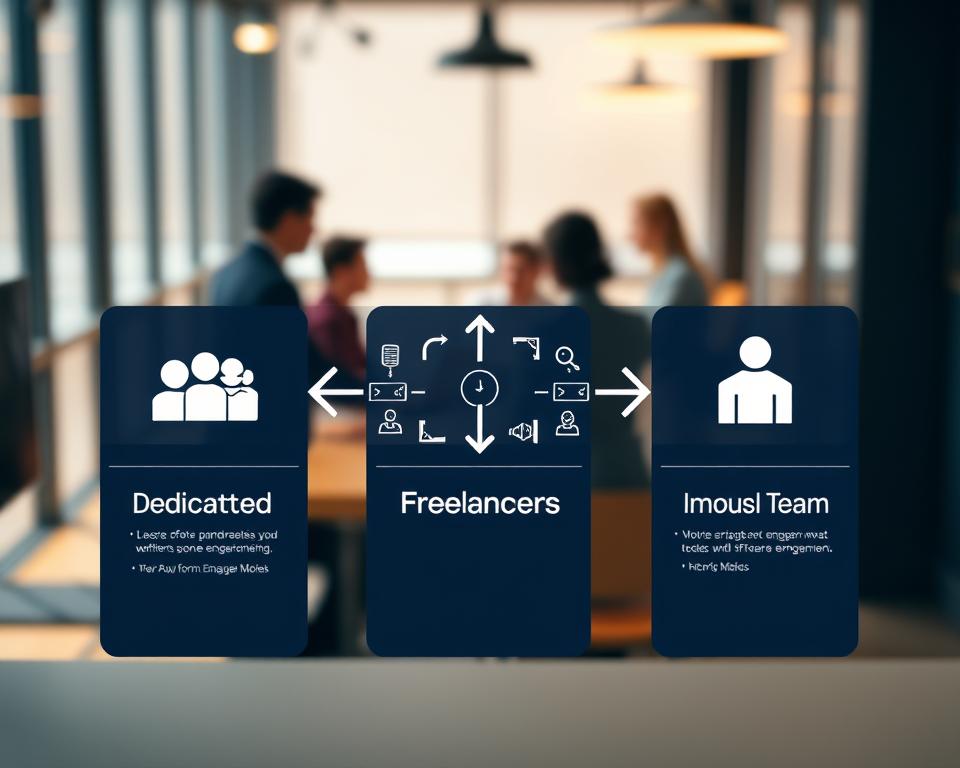
In-House Hiring vs Dedicated Teams
In-house hiring means hiring full-time employees for a project. It gives control over the team and is good for long-term projects.
Dedicated teams offer a different option. They provide specialized skills without the need for long-term employment.
Freelancers vs Dedicated Teams
Freelancers are independent contractors for specific tasks or projects. They’re flexible and cost-effective for small tasks.
Dedicated teams, however, are better for complex projects. They offer a team of experts for various project aspects.
Which Model Is Right for Your Project
Choosing the right model depends on your project’s needs. Consider its scope, complexity, and timeline. Knowing the strengths and weaknesses of each model helps make a choice that fits your business goals.
Roles and Positions in a Dedicated Development Team
A dedicated development team has many roles like software developers, project managers, and quality assurance engineers. They work together to meet the client’s needs and expectations.
Software Developers and Engineers
Software developers and engineers are key to any project. They write clean, efficient code. Their knowledge in programming languages is vital for project success.
Key Responsibilities: Developing software, debugging, and troubleshooting.
Project Manager or Scrum Master
The project manager or Scrum Master oversees the project’s progress. They ensure it’s done on time and within budget. They also manage communication and solve problems.
Effective project management is key for success. It keeps the team focused on the project goals.
Quality Assurance Engineers
Quality assurance engineers check the software’s quality. They test, find bugs, and work with developers to fix them.
Key Responsibilities: Testing, finding defects, and improving product quality with developers.
UI/UX Designers
UI/UX designers make interfaces user-friendly and good-looking. They do user research, create prototypes, and work with developers.
Their work is crucial for a great user experience.
DevOps Engineers
DevOps engineers connect development and operations teams. They ensure the software system works smoothly from start to finish.
Key Responsibilities: Managing deployment, ensuring reliability, and improving deployment with developers.
Business Analysts
Business analysts connect stakeholders with the development team. They gather needs, analyze business, and define project scope.
Their role is vital for meeting business goals.
Technical Architects
Technical architects design the software system’s architecture. They decide on technology and ensure the system is scalable and secure.
Key Responsibilities: Designing architecture, recommending technology, and ensuring scalability and security.
For more information on hiring dedicated development teams, check out this guide. It offers a step-by-step guide to hiring app and web development experts.
How to Manage and Communicate with Your Dedicated Team
Managing a dedicated development team well is key. It’s all about good management and clear communication. You need a strong plan that makes everyone work well together.
Establishing Clear Communication Channels
Good communication is the base of a successful team. For a dedicated team, it’s important to have clear ways to share information. Regular updates and feedback keep everyone informed.
Tools like email, instant messaging, and video calls help a lot. It’s also good to set communication rules, like how fast to respond and what methods to use.
Setting Up Regular Meetings and Standups
Meetings and standups are key for team success. Daily standup meetings let team members share their work and plans. Weekly or bi-weekly meetings are for deeper talks and updates.
Using Project Management Tools
Project management tools are vital for organizing and tracking work. They help teams work together better. Here are some top tools:
Jira and Trello for Task Management
Jira and Trello are great for managing tasks. Jira is good for big projects with its advanced features. Trello uses boards and cards to organize tasks in a clear way.
Slack and Microsoft Teams for Communication
Slack and Microsoft Teams are top for talking and sharing files. They make it easy to chat and work together without email.
GitHub and GitLab for Code Management
GitHub and GitLab are key for managing code. They offer version control and help teams work on code together.
| Tool | Purpose | Key Features |
|---|---|---|
| Jira | Task Management | Agile project planning, issue tracking |
| Trello | Task Management | Boards, lists, cards |
| Slack | Communication | Real-time messaging, file sharing |
| Microsoft Teams | Communication | Real-time messaging, integration with Microsoft tools |
| GitHub | Code Management | Version control, continuous integration |
| GitLab | Code Management | Version control, continuous integration, collaboration features |
For more tips on managing your team well, see this guide on team management.
Building Trust and Team Culture
Building trust and a good team culture is key for success. It’s about creating a place where everyone feels valued and respected. Activities, recognition, and open communication help build a strong team.
Common Challenges and How to Overcome Them
Working with a dedicated development team comes with its own set of challenges. Businesses often face obstacles when teaming up with external teams. Knowing these challenges is the first step to solving them.
Time Zone Differences
Managing time zone differences is a big challenge. Team members in different places make it hard to meet and work together in real-time.
Companies can solve this by having flexible hours, using tools that work across time zones, and having regular online meetings.
Cultural and Language Barriers
Cultural and language barriers also present big challenges. Different cultures and languages can cause misunderstandings.
Businesses can overcome this by training their teams on cultural sensitivity, using simple language, and using translation tools.
Quality Control and Code Standards
Keeping up with quality control and code standards is tough. It’s hard to make sure the team follows standards when working from different places.
Companies can set clear coding rules, do regular code checks, and use tools for automated testing to ensure quality.
Team Retention and Turnover
Team retention and turnover are also big worries. High turnover can mess up projects and lower quality.
Businesses can keep talent by working with reliable vendors, offering good pay, and creating a positive team atmosphere.
Integration with Existing Systems
Finally, integrating the dedicated team with existing systems and processes is a challenge. It’s key for project success.
Companies should plan well for integration, train both teams, and use tools for easy collaboration.
| Challenge | Mitigation Strategy |
|---|---|
| Time Zone Differences | Flexible working hours, time zone-friendly tools, regular virtual meetings |
| Cultural and Language Barriers | Cultural sensitivity training, clear language, translation tools |
| Quality Control and Code Standards | Clear coding standards, regular code reviews, automated testing tools |
| Team Retention and Turnover | Work with reputable vendors, competitive compensation, positive team culture |
| Integration with Existing Systems | Comprehensive integration plan, training, integration tools |
For more on hiring a dedicated development team, including benefits, challenges, and costs, check out this article for a detailed look.
Critical Factors to Consider Before Hiring
When you’re thinking about hiring a dedicated development team, there are key things to look at. These factors help make sure your project goes well. It’s important to think about each one carefully.
Vendor Reputation and Track Record
First, look at the vendor’s reputation and past work. A good track record means they might meet your needs. Check out client testimonials, case studies, and reviews to learn more about their reliability.
“A good vendor is more than just a name. It’s about delivering quality and building lasting relationships,” says Jane Doe, CEO of Tech Solutions.
Technical Capabilities and Technology Stack
Next, check if the team knows the tech you need. Make sure their skills match your project. Look at their knowledge of programming languages, frameworks, and tools.
- Proficiency in relevant programming languages
- Experience with required frameworks and tools
- Ability to adapt to new technologies
Security and Intellectual Property Protection
Security is very important when you outsource work. Find out how the vendor keeps your data safe and protects your ideas.
“Security is not just about protecting data; it’s about ensuring the integrity of your project and maintaining trust with your clients.”
Communication Skills and English Proficiency
Good communication is essential for project success. Check if the team can talk well and understand English well. This helps everyone work together smoothly.
Contract Terms and Exit Clauses
It’s important to read the contract carefully. Know when you can stop working with them and what happens then.
| Contract Term | Description | Implications |
|---|---|---|
| Fixed Term | Contract is valid for a specified period | Penalties for early termination |
| Flexible Term | Contract can be adjusted based on project needs | More flexibility but potentially higher costs |
Scalability Options and Resource Availability
Lastly, think about if the vendor can grow with your project. Make sure they can change their team size as needed.
By looking at these important factors, you can choose the right dedicated development team. This ensures your project is a success.
Conclusion
Hiring a dedicated development team can be a smart move for businesses. It helps them improve their software development skills. This approach offers flexibility, scalability, and cost savings.
A dedicated team gives full control over the development process. This means businesses can easily adjust to changing project needs. They also get access to a global talent pool, ensuring top-notch results.
The hiring process has several important steps. First, businesses need to define their project needs. Then, they onboard the dedicated team. By carefully choosing a vendor, considering cost, technical skills, and communication, businesses can have a successful partnership.
In summary, a dedicated development team is a great asset for businesses aiming to innovate and grow. By understanding the benefits and what to consider, companies can make smart choices. This helps them achieve their project goals.


