







Creating an AI voice synthesis app like ElevenLabs means building advanced voice AI tech. This tech can make speech sound incredibly real, changing how we use digital stuff.
This app’s value comes from making things better for users with text-to-speech. It’s great for companies and developers wanting to add cool voice features to their stuff.
Table of Contents
Key Takeaways
- Knowing what ElevenLabs-like apps offer is key.
- Cost and tech stack are big things to think about.
- Having a good plan is vital for app success.
- Voice AI is making digital stuff better.
- Text-to-speech makes things more user-friendly.
What is ElevenLabs and Why Build a Similar App?
ElevenLabs leads in AI voice tech, offering top-notch voice synthesis. Its cutting-edge solutions have changed the voice AI world. It’s now a big name in the market.
Understanding ElevenLabs’ Core Technology and Market Position
ElevenLabs uses advanced AI and machine learning for top text-to-speech conversion. This has made it a top player in voice AI. It’s used in many industries.
The company’s strong market spot comes from its customizable voice synthesis options. This meets many customer needs. It’s why businesses choose ElevenLabs for voice AI in their products.

Growing Demand for AI Voice Synthesis Solutions
The need for AI voice synthesis is rising fast. More sectors are using voice AI to better user experiences. This includes customer service, entertainment, and education.
Market research shows the voice AI market will grow a lot soon. This is because people want more natural interactions with machines.
| Industry | Application | Growth Potential |
|---|---|---|
| Customer Service | Virtual Assistants | High |
| Entertainment | Audiobooks and Podcasts | Medium |
| Education | Interactive Learning Tools | High |
Business Opportunities in the Voice AI Market
The growing demand for AI voice synthesis opens up many business chances. Companies can make new apps that use voice AI. This can make customer service better and user experiences more enjoyable.
Some chances include making voice-enabled products, offering voice AI consulting services, and creating voice-based entertainment content. There are many ways to make money from voice AI. Businesses that take advantage of these chances will likely do well.
Market Overview of AI Voice Synthesis Applications
The AI voice synthesis market is growing fast. This is thanks to better machine learning and more demand for voice apps. We see this growth in many areas, like customer service and entertainment.

Current Market Size and Projected Growth Through 2030
The AI voice synthesis market is big and getting bigger. It’s expected to keep growing until 2030. A recent study says the global market will hit $4.3 billion by 2025. It will grow at a rate of 14.6% each year from 2020 to 2025.
- More people are using voice assistants and smart speakers.
- There’s a big need for personalized customer service.
- AI and machine learning are getting better.
By 2030, the market will grow even more. This is because AI voice synthesis will get even better and more people will use it.
Key Industries Adopting Voice AI Technology
Many important industries are using voice AI. This helps them work better and talk to customers in new ways. These include:
- Customer Service: Companies use AI to make chatbots and virtual assistants. This makes customers happier and saves money.
- Entertainment: The entertainment world uses AI for voice-overs, dubbing, and voices in games and animations.
- Healthcare: Healthcare uses voice AI for talking to patients, writing down what doctors say, and making healthcare more personal.
These industries are leading the way with AI voice synthesis. They’re making customer service better and setting new standards.
Target Audience Segments and Their Needs
It’s important to know who will use AI voice synthesis. There are a few main groups:
- Consumers: They want easy, hands-free ways to use devices and services.
- Businesses: They want to improve customer service, work more efficiently, and stand out with personalized voice solutions.
- Developers: They need good APIs and SDKs to add AI voice synthesis to their apps.
Each group has different needs. They want things like easy use, great voice quality, options to customize, and the ability to grow.
Core Features to Include in an ElevenLabs-Like App
To make an ElevenLabs-like app, you need to add key features. These features make the app better for users and work well. They help with voice synthesis and meet different user needs.
High-Quality Text-to-Speech Conversion
Any voice AI app must turn text into speech that sounds natural. It uses text-to-speech (TTS) tech for clear, easy-to-understand voices. Good TTS is key for a great user experience.
AI-Powered Voice Cloning Technology
Voice cloning lets users make their own voice models. AI and machine learning make it possible to copy a voice well. This means users can have voices that are just for them.

Multi-Language and Accent Support
An ElevenLabs-like app needs to work in many languages and accents. This helps reach more users worldwide. It’s a big job that includes making language models and adapting accents.
Customizable Voice Library and Voice Designer
A customizable voice library lets users pick voices and tweak them. The voice designer lets users make voices even more personal. This way, users can make voices that are truly their own.
| Feature | Description | Benefit |
|---|---|---|
| High-Quality Text-to-Speech | Advanced TTS technology for natural-sounding speech | Enhanced user experience |
| AI-Powered Voice Cloning | Personalized voice models using AI and ML | Customized voice experiences |
| Multi-Language Support | Support for multiple languages and accents | Global accessibility |
| Customizable Voice Library | Variety of voices and adjustable parameters | User personalization |
Advanced Features for Competitive Advantage
In the fast-changing world of voice AI, having advanced features is key. An ElevenLabs-like app needs to stand out by offering sophisticated tools. These tools should make the user experience better and add more value.
Emotional Tone and Speech Style Control
Emotional tone and speech style control are crucial. They let users adjust the voice to show emotions or fit certain styles. This makes interactions more fun and personal.
Benefits of Emotional Tone Control:
- It makes users more engaged with personalized voices
- It’s great for many uses, like audiobooks and customer service bots
- It helps create a deeper emotional connection with users
Real-Time Voice Generation and Streaming
Real-time voice generation is also important. It lets the app create voices instantly. This is perfect for live events, virtual meetings, and quick customer support.
Real-time processing benefits:
- It makes voice interactions more dynamic and interactive
- It’s great for apps that need voice right away
- It gives users fast feedback, improving their experience
Developer-Friendly API and SDK Integration
A good API and SDK are essential. They make it easy for developers to use the app. This helps the app reach more platforms and users.
| API/SDK Feature | Description | Benefit |
|---|---|---|
| Comprehensive Documentation | Detailed guides and references for developers | Eases integration process |
| Sample Code and Tutorials | Example implementations to facilitate understanding | Reduces development time |
| Support and Community | Access to support teams and developer forums | Helps resolve issues quickly |
Built-In Audio Editing and Enhancement Tools
Adding audio editing tools is a big plus. These tools let users fine-tune their voices. This ensures the audio is top-notch and meets their needs.

With these advanced features, an ElevenLabs-like app can really stand out. It offers a richer and more engaging experience for users.
Essential Tech Stack for Voice AI App Development
Choosing the right tech stack is key for voice AI app development. It lets you use advanced AI and make the app easy to use. The right mix of tech ensures the app can handle complex tasks, offer a smooth user experience, and grow as needed.
Frontend Technologies: React, Vue.js, and Flutter
For the frontend, you can pick from React, Vue.js, and Flutter. React is great for complex UIs because of its component-based design. Vue.js is known for being easy to use and flexible. Flutter lets you make apps for both iOS and Android, giving a native feel.
Backend Framework: Node.js, Python Django, or FastAPI
The backend is important for AI tasks, API work, and managing databases. Node.js is good for real-time apps because it’s event-driven. Python Django helps build secure and fast websites quickly. FastAPI is a fast web framework for APIs in Python 3.7+.
AI and Machine Learning Frameworks: TensorFlow and PyTorch
TensorFlow and PyTorch are top choices for AI and machine learning. TensorFlow is great for big projects. PyTorch is better for research because it’s easy to use and dynamic.

Database Solutions: PostgreSQL and MongoDB
Choosing a good database is crucial for storing data and voice models. PostgreSQL is a powerful database that supports advanced data types. MongoDB is flexible and scalable, perfect for big data.
Cloud Infrastructure: AWS, Google Cloud, or Microsoft Azure
Cloud infrastructure is key for voice AI apps. It provides scalability and reliability. AWS, Google Cloud, and Microsoft Azure offer many services, including computing and AI tools.
| Tech Stack Component | Options | Key Features |
|---|---|---|
| Frontend | React, Vue.js, Flutter | Component-based, cross-platform, flexible |
| Backend | Node.js, Python Django, FastAPI | Real-time, high-level framework, fast API |
| AI/ML Frameworks | TensorFlow, PyTorch | Large-scale, dynamic computation graph |
| Database | PostgreSQL, MongoDB | Relational, NoSQL, scalable |
| Cloud Infrastructure | AWS, Google Cloud, Microsoft Azure | Scalable, reliable, AI-specific tools |
AI Models and Algorithms Required for Voice Synthesis
Voice synthesis technology, like what ElevenLabs offers, relies on advanced AI models and algorithms. The quality and naturalness of the voice depend on these models’ complexity.
Deep Learning Neural Networks for Speech Generation
Deep learning neural networks are key for creating high-quality speech. They learn from large datasets, making voices sound more natural.
Transformer Models and WaveNet Architecture
Transformer models have changed NLP and are now used in voice synthesis. WaveNet is known for its ability to create realistic audio, making voices sound better.
Natural Language Processing for Text Analysis
NLP is vital for analyzing text to be turned into speech. It helps understand the text’s context, tone, and nuances, enhancing voice quality.
Voice Conversion and Transfer Learning Techniques
Voice conversion changes one voice into another. Transfer learning adapts pre-trained models to new tasks. Both are crucial for flexible and robust voice synthesis systems.

| AI Model/Algorithm | Application in Voice Synthesis |
|---|---|
| Deep Learning Neural Networks | Speech generation, improving naturalness and quality |
| Transformer Models | Enhancing NLP capabilities for better text analysis |
| WaveNet Architecture | Generating raw audio waveforms for realistic voice outputs |
| NLP Techniques | Text analysis, understanding context and nuances |
| Voice Conversion Techniques | Transforming one voice into another |
Development Process and Methodology
Creating an ElevenLabs-like app is a detailed process. It needs careful planning and execution. This ensures a high-quality voice AI app that meets user needs and stands out in the market.
Market Research and Requirement Analysis Phase
The first step is to do thorough market research and analyze requirements. This stage helps understand the audience, their needs, and the competition. It also looks at user preferences, trends, and possible income sources. Good market research helps pinpoint key features and functions for success.
Developers and stakeholders work together here. They define the project’s scope, goals, and what needs to be delivered. This teamwork ensures everyone is on the same page with the project’s vision.
UI/UX Design and Interactive Prototyping
After gathering requirements, the next step is designing a user-focused app. UI/UX design is key for an app that’s easy to use and looks good. Interactive prototyping lets developers test the app’s usability and make changes before actual development.
A good UI/UX design boosts user satisfaction. It also helps the app succeed by keeping users engaged and coming back.

Agile Development and Continuous Integration
The development phase uses Agile methods. This means working in cycles, testing continuously, and getting feedback often. Continuous integration keeps the code stable and working well during development.
Agile methods help teams work together well. They ensure the final product meets the desired quality and specifications.
Quality Assurance Testing and Beta Launch
Before launch, the app goes through thorough quality assurance testing. This checks for bugs, ensures it works on different devices, and tests its performance. Beta testing with a small group of users gives feedback for final tweaks to improve the app’s quality and user experience.
| Testing Phase | Objective | Outcome |
|---|---|---|
| Unit Testing | Verify individual components | Ensures each unit functions as expected |
| Integration Testing | Test interactions between components | Validates that components work together seamlessly |
| Beta Testing | Gather user feedback | Identifies issues and areas for improvement |
By following this structured development process, developers can make an ElevenLabs-like app. It will be feature-rich, reliable, and easy to use.
Timeline for ElevenLabs Like App Development – Features, Cost, Tech Stack & Timeline
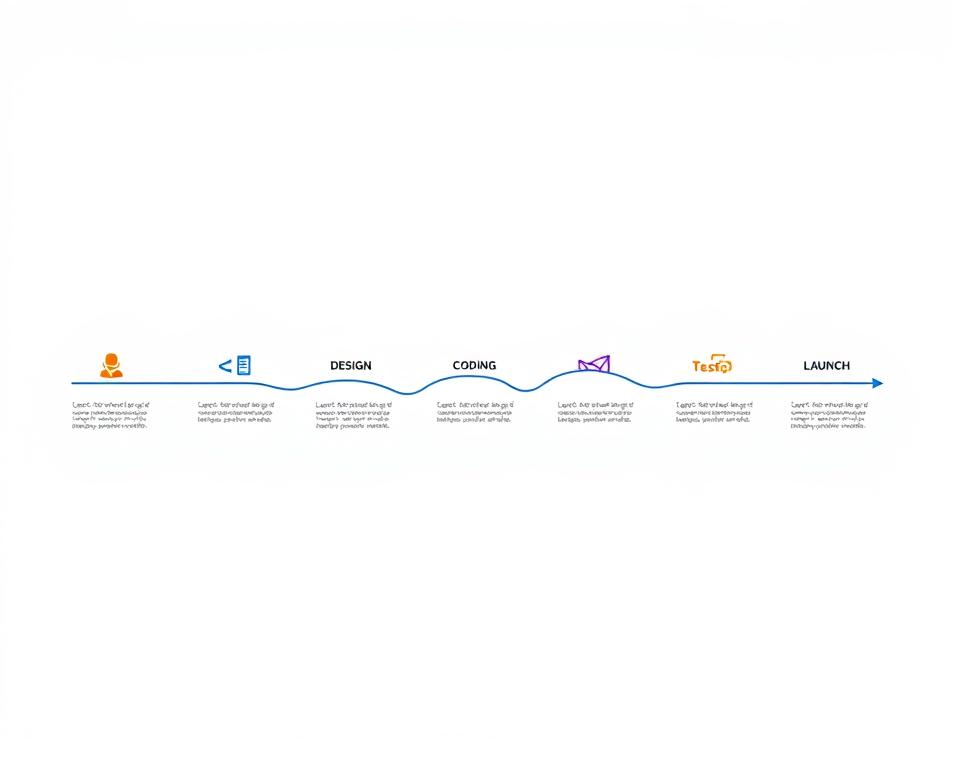
Knowing the development timeline is key for an ElevenLabs-like app. The time needed can change based on the app’s features and tech used.
Minimum Viable Product Development Timeline: 4-6 Months
The first step is creating a Minimum Viable Product (MVP). It usually takes 4 to 6 months. This phase focuses on the app’s core, like text-to-speech and basic voice cloning.
Full-Featured Application Timeline: 8-12 Months
A full-featured application needs more time and effort. It can take 8 to 12 months to develop. This includes advanced features like emotional tone and customizable voices.
Post-Launch Optimization and Scaling Phase
After launching, the post-launch optimization phase is vital. It ensures the app works well and can grow. This phase can last from several months to a year.
Critical Factors That Affect Development Speed
Several things can speed up or slow down app development. These include the AI model’s complexity, the team’s experience, and the tech stack. Good project management and agile methods can make development faster.
Comprehensive Cost Breakdown for Building an ElevenLabs-Like App
To understand the cost of an ElevenLabs-like app, we need to look at the different expenses. These include salaries for the development team, costs for technology licensing, training AI models, and ongoing maintenance.
Development Team Salaries and Contractor Fees
The salaries and fees of the development team are a big part of the cost. You’ll need AI and machine learning engineers, full-stack developers, UI/UX designers, and quality assurance engineers to build such an app.
- AI and Machine Learning Engineers: $100-$150 per hour
- Full-Stack Developers: $80-$120 per hour
- UI/UX Designers: $60-$100 per hour
- Quality Assurance Engineers: $50-$90 per hour
Technology Licensing and Infrastructure Expenses
Technology licensing and infrastructure costs are also key. These include the cost of AI model licenses, cloud infrastructure, and other necessary technologies.
| Technology | Cost |
|---|---|
| AI Model Licensing | $5,000 – $20,000 per year |
| Cloud Infrastructure | $3,000 – $15,000 per month |
AI Model Training, Data Acquisition, and GPU Costs
Training AI models is expensive. It requires a lot of data and GPU resources. The cost of data can vary a lot, depending on its quality and source.
- Data Acquisition: $2,000 – $10,000 per dataset
- GPU Resources: $1,000 – $5,000 per month
Ongoing Maintenance and Operational Expenses
Keeping the app running well is important. This includes server maintenance, software updates, and customer support costs.
- Server Maintenance: $1,000 – $5,000 per month
- Software Updates: $500 – $2,000 per update
- Customer Support: $2,000 – $10,000 per month
Total Cost Estimates: MVP vs Full-Scale Application
The cost of an ElevenLabs-like app can change a lot. It depends on whether you’re making a Minimum Viable Product (MVP) or a full application.
- MVP: $100,000 – $300,000
- Full-Scale Application: $500,000 – $1,500,000
Team Composition and Required Expertise
To create a voice AI app like ElevenLabs, you need a team with different skills. The project is complex, needing experts in AI, machine learning, and more. You’ll also need developers, designers, and a project manager.
AI and Machine Learning Engineers with NLP Experience
AI and machine learning engineers are key for voice AI apps. They work on the AI models for text-to-speech and voice cloning. NLP experience is crucial for tasks like speech synthesis and voice conversion.
Full-Stack Developers and Backend Specialists
Full-stack developers are important for combining frontend and backend parts. Backend specialists handle server logic, database, and API connections. Their skills make the app’s core strong and scalable.
UI/UX Designers and Quality Assurance Engineers
UI/UX designers make the app user-friendly and engaging. They work with developers to ensure a smooth user experience. Quality assurance engineers test the app, fixing bugs for a reliable experience.
Project Manager and DevOps Specialists
A project manager keeps the development on track, on time, and within budget. DevOps specialists maintain the app’s infrastructure and ensure smooth updates. Their work connects development and operations for an efficient process.
In summary, making an ElevenLabs-like app needs a team with technical, design, and management skills. With the right team, you can successfully develop and launch your voice AI app.
Monetization Strategies for Voice AI Applications
Creating a successful app like ElevenLabs needs a smart plan for making money. It’s key to find ways to make your app profitable.
Freemium and Subscription-Based Revenue Models
A freemium model gives basic features for free and then asks for money for more. This draws in lots of users. Subscription-based models keep bringing in money with monthly or yearly fees, keeping users coming back.
Pay-Per-Use and Credit-Based Pricing Systems
Pay-per-use models charge based on how much you use it. It’s good for apps used sometimes or for specific projects. Credit-based systems let users buy credits for certain services, giving them control over costs.
Enterprise Licensing and White-Label Solutions
Enterprise licensing offers special solutions to big companies, often with their own branding. This can lead to big money from big deals. Companies like custom solutions that fit their exact needs, making it a good choice.
API Access Tiers for Developers
Providing API access tiers lets developers add voice AI to their apps. Pricing varies based on how much you use or what features you need. This meets the needs of all developers, from small projects to big ones.
Key Challenges and Practical Solutions in Voice AI Development
Creating Voice AI solutions faces many hurdles. These include keeping data safe and making voices sound natural. As Voice AI becomes more popular, knowing these challenges and solutions is key for developers and businesses.
Data Privacy, Security, and GDPR Compliance
Ensuring data privacy and security is a big challenge in Voice AI. Voice data is personal and can be a target for hackers. Following GDPR rules helps build trust with users.
To solve these issues, developers should use strong encryption. They should also anonymize voice data and get clear consent from users. Regular security checks and compliance audits are also important.
“The protection of personal data is a fundamental right, and it’s essential that companies handling such data take all necessary measures to secure it.” –
Achieving High Voice Quality and Natural Prosody
Getting high voice quality and natural speech is a big challenge. Users want Voice AI to sound real and engaging. This needs advanced AI that can mimic human speech well.
To boost voice quality, developers can use advanced neural networks and big datasets. Techniques like transfer learning and fine-tuning can make voices sound more natural. Getting feedback from users is also key to improving voice models.
| Technique | Description | Benefit |
|---|---|---|
| Transfer Learning | Using pre-trained models as a starting point | Reduces training time and improves performance |
| Fine-Tuning | Adjusting pre-trained models to specific tasks | Enhances model accuracy for specific applications |
Scalability and Infrastructure Optimization
Scalability is vital for Voice AI apps. As more users join, the system must handle the load without losing quality.
To boost scalability, developers can use cloud services with auto-scaling. They should also optimize the backend, use efficient algorithms, and implement load balancing.
Legal Considerations and Ethical Use of Voice Cloning
Voice cloning technology raises big legal considerations and ethical worries. Misusing it can lead to fraud and identity theft.
To tackle these issues, developers must follow laws and get user consent for voice cloning. They should also be clear about how voice data is used.
- Ensure compliance with local and international laws regarding voice data.
- Implement robust security measures to protect voice data.
- Obtain explicit user consent for voice cloning and other sensitive features.
By tackling these challenges, developers can make Voice AI apps more effective, secure, and friendly for users.
Conclusion
Creating an ElevenLabs-like app is a big challenge. It needs careful planning, the right technology, and a skilled team. The demand for voice AI is growing fast. This is a great chance for businesses to be creative and grab a bigger share of the market.
Developers can make a strong and competitive app by knowing the key features and tech needed. Success comes from making high-quality voice synthesis, easy-to-use interfaces, and ensuring the app can grow and stay safe.
As the voice AI world keeps changing, businesses must keep up with new trends and tech. This way, they can offer innovative solutions that meet their customers’ needs. They’ll also stay ahead in the ElevenLabs-like app development field.
This article offers valuable insights and guidelines for tackling voice AI development. It helps in making a successful voice AI app.


