







The rise of remote work has changed how companies find software developers. Now, businesses look for remote developers to work on their projects. They use the global talent pool’s benefits.
This change comes from the need for cost-effective and efficient solutions. Companies are moving to a dedicated remote hiring model. This helps them grow their development teams fast and well.
By using this model, businesses can reach a wide range of talent. This boosts their development skills and helps projects succeed.
Table of Contents
Key Takeaways
- The demand for remote developers is on the rise.
- A dedicated remote hiring model offers cost-effective solutions.
- Businesses can scale their development teams efficiently.
- Access to a global talent pool enhances development capabilities.
- Remote hiring models drive project success.
Understanding the Dedicated Remote Hiring Model for UK Developers
The dedicated remote hiring model is now a top choice for companies looking for the best tech talent, especially in the UK. It means hiring developers full-time to focus on one project. This mix of flexibility and dedication is appealing.
What is a Dedicated Remote Hiring Model
This model lets companies hire remote developers for specific projects. It breaks down barriers of location, allowing access to a global talent pool. This way, businesses can find the right people without being limited by where they are.

How It Differs from Traditional Recruitment
Unlike traditional hiring, which often looks for short-term or general skills, this model focuses on long-term partnerships and project needs. It offers a stable and dedicated team, as developers work only on the project.
The main differences between this model and traditional recruitment are:
| Aspect | Dedicated Remote Hiring | Traditional Recruitment |
|---|---|---|
| Focus | Long-term collaboration | Short-term or general needs |
| Geographical Constraints | No geographical constraints | Limited by location |
| Workforce Commitment | Exclusive project dedication | Variable commitment levels |
Why UK Developers are in High Demand
UK developers are highly sought after for their skills, quality of work, and tech proficiency. The UK’s education system and reputation for tech talent are key factors in this demand.
Here are some reasons why UK developers are in such high demand:
- High level of technical expertise
- Strong educational background
- Proficiency in multiple programming languages and technologies
- Excellent problem-solving skills
By using the dedicated remote hiring model, companies can tap into this talent pool. They get to benefit from the skills and expertise UK developers offer.
Key Benefits of Hiring Remote Developers from the UK
Hiring remote developers from the UK is a great chance for businesses. It lets them access a skilled and talented workforce. This approach improves project quality and offers strategic benefits.
Access to World-Class Technical Talent
The UK is famous for its top-notch education and tech hubs. Places like the University of Cambridge and University of Oxford produce skilled graduates. These graduates are in high demand.
Educational Excellence and Tech Hubs
The UK’s education system is strong, and it has major tech hubs like London, Manchester, and Edinburgh. These areas are known for innovation and attract global talent.
Proven Track Record in Innovation
UK developers have a history of innovation. They’ve made big contributions to technology. This expertise helps businesses stay competitive in the tech world.

Time Zone Compatibility with US Operations
Hiring remote developers from the UK is good for US companies. The time difference is favorable, making real-time collaboration easier.
Optimal Overlap Hours for Collaboration
The time difference between the UK and US allows for good overlap hours. This makes teamwork and decision-making faster.
Real-Time Communication Advantages
Real-time communication is easier with the time difference. This reduces delays and helps meet tight deadlines.
Cultural and Language Alignment
Cultural and language alignment is a big plus. The UK’s culture and language are similar to the US. This makes projects run smoother and reduces misunderstandings.
Cost Efficiency Without Compromising Quality
Hiring remote developers from the UK is cost-effective. It doesn’t mean sacrificing quality. Sources like PROVAB say it’s a smart choice for businesses.
| Benefits | Description | Advantages |
|---|---|---|
| Access to World-Class Talent | UK’s strong educational system and tech hubs | Highly skilled developers, innovative solutions |
| Time Zone Compatibility | Favorable time zone difference with US | Real-time collaboration, reduced project timelines |
| Cultural and Language Alignment | Shared culture and language with US | Smoother project execution, reduced miscommunication |
| Cost Efficiency | Competitive pricing without quality compromise | Cost-effective solution, budget optimization |
Types of Developers You Can Hire in the UK
The UK has a lively group of developers with many specializations. This gives businesses lots of choices when looking for technical talent.
Full-Stack Developers
Full-stack developers can do both frontend and backend tasks. They know many technologies and can handle web apps from start to finish.
Key Skills: They’re good with languages like JavaScript, Python, and Ruby. They also know frameworks such as React, Angular, and Vue.js. Plus, they can manage backend tasks with Node.js, Django, and Ruby on Rails.
Frontend and Backend Specialists
Frontend developers make websites look good and easy to use. Backend developers handle server tasks, databases, and APIs.
Frontend Skills: They know HTML5, CSS3, JavaScript, and frameworks like React, Angular, and Vue.js.
Backend Skills: They’re skilled in Node.js, Python, Ruby, Java, and PHP. They also know databases like MySQL, PostgreSQL, and MongoDB.
Mobile App Developers
Mobile app developers make apps for Android and iOS. They use many programming languages and frameworks.
iOS and Android Expertise
iOS developers use Swift and Objective-C. Android developers use Java and Kotlin. Both make apps that work well and look great.
Cross-Platform Development Skills
Cross-platform developers use React Native and Flutter. They make apps that work on both iOS and Android, saving time and money.
DevOps Engineers and Cloud Specialists
DevOps engineers make sure software systems work smoothly. Cloud specialists manage cloud infrastructure for scalability, security, and efficiency.
Key Skills: They know tools like Jenkins, Docker, and Kubernetes. They also understand cloud platforms such as AWS, Azure, and Google Cloud.
| Type of Developer | Key Skills | Specialization |
|---|---|---|
| Full-Stack Developer | JavaScript, Python, React, Node.js | Both Frontend and Backend |
| Frontend Developer | HTML5, CSS3, JavaScript, React | User Interface and Experience |
| Backend Developer | Node.js, Python, Ruby, Java, MySQL | Server-Side Logic and Database |
| Mobile App Developer | Swift, Objective-C, Java, Kotlin, React Native | iOS and Android Apps |
| DevOps Engineer | Jenkins, Docker, Kubernetes, AWS | Deployment and Operations |

How the Dedicated Remote Hiring Model Works
The dedicated remote hiring model is a detailed process. It starts with a consultation and goes through sourcing, screening, and onboarding. It helps businesses find the right talent and smoothly integrate them.
Initial Consultation and Requirements Analysis
The first step is the initial consultation. Here, the hiring company talks about its project needs with the partner. This stage is key to understanding the project’s technical needs.
Understanding Your Technical Needs
The hiring partner works with the client to understand their technical needs. They identify the skills needed, the technology stack, and other technical details.
Key aspects to discuss during this phase include:
- Project scope and objectives
- Technical requirements and specifications
- Expected outcomes and deliverables
Defining Team Size and Composition
After understanding the technical needs, the team size and composition are decided. This includes the number of developers, their roles, and the required skills.
Candidate Sourcing and Screening Process
The hiring partner then starts sourcing and screening candidates. They search for potential candidates and screen them thoroughly to find the best ones.
Technical Assessment Methods
Technical assessments are a key part of screening. These may include coding tests, problem-solving exercises, or other evaluations to check technical skills.
Cultural Fit Evaluation
The hiring partner also checks if candidates fit the company culture. They assess their teamwork, communication, and alignment with the company’s values.
Interview and Selection Phase
The interview and selection phase lets the hiring company meet the shortlisted candidates. This is crucial for choosing the right candidates for the team.
Onboarding and Integration
Once candidates are selected, onboarding and integration start. This involves setting up tools, systems, and transferring knowledge for a smooth transition.
Tools and System Setup
The hiring partner helps set up tools and systems for the remote team. This includes project management software, communication tools, and other necessary technologies.
Knowledge Transfer Procedures
Knowledge transfer is key in onboarding. It involves sharing project-specific information, documentation, and other details to equip the remote team.
The dedicated remote hiring model offers a streamlined and efficient way to build a high-performing remote team. By following this structured process, businesses can ensure they find the right talent and integrate them well into their operations.

Cost Structure and Pricing Models
When you think about hiring developers from the UK, it’s key to know the different costs and pricing models. This info helps businesses make smart choices that fit their budget and project needs.
Monthly Retainer vs. Hourly Rates
The cost for hiring dedicated developers can differ. You might see models like monthly retainers or hourly rates. A monthly retainer means a set monthly fee for a certain number of hours or tasks. In contrast, hourly rates are flexible, only charging for the actual hours worked. This is great for projects that change or grow.
Which model to choose depends on your project, what you prefer, and how sure you want to be about your budget.
What’s Included in the Pricing
The cost for dedicated developers includes more than just their pay. It covers everything needed for the project to run smoothly.
Infrastructure and Tools
The price usually includes the tools and infrastructure needed. This can be software, development tools, hardware, and more. These are essential for the developers to do their job well.
Administrative Support and Management
Administrative help and management are also part of the deal. This includes managing the project, coordinating tasks, and other admin work. It makes sure the project goes as planned.

Cost Comparison with In-House Hiring
According to Krishang Technolab, hiring dedicated developers remotely can save money compared to hiring in-house. It cuts down on costs like recruitment, training, and employee benefits. These are expenses that come with having full-time employees.
By looking at the costs, businesses can find the best option. This option should meet their needs without sacrificing quality or efficiency.
Legal and Compliance Considerations
Hiring developers in the UK needs a deep understanding of legal and compliance rules. Companies must have the right legal setups to protect their interests and those of the developers.
Employment Contracts and Agreements
It’s key to create detailed employment contracts for remote developers. These should cover job duties, pay, and how to end the contract. Clear contractual agreements avoid confusion and provide a legal way to solve problems.
Data Protection and GDPR Compliance
The UK’s data protection laws, like the GDPR, are strict about personal data handling. Companies hiring UK developers must follow GDPR compliance by having good data protection policies and practices.
Intellectual Property Rights
It’s crucial to protect intellectual property (IP) when working with remote developers. This means making sure IP rights are clear and stated in employment contracts.
Code Ownership and Licensing
Companies need to be clear about code ownership and licensing to avoid legal issues. Code ownership should be clearly stated in contracts to keep the rights to the software with the hiring company.
Confidentiality Agreements
Confidentiality agreements are key to keep sensitive information safe with remote developers. These agreements legally require developers to keep information secret and not share it.

In summary, understanding legal and compliance rules is vital when hiring developers in the UK. By setting up strong legal frameworks, companies can reduce risks and ensure good teamwork.
Hire Developers in UK – Dedicated Remote Hiring Model: The Complete Process
Hiring developers remotely in the UK starts with clear technical needs. This method makes finding and hiring talent easier and faster for businesses.
Step 1: Define Your Technical Requirements
First, you need to know exactly what skills and expertise your project requires. Being specific helps find the right developers for your project.
- Identify the programming languages and technologies required
- Determine the scope of work and project timeline
- Establish the necessary experience level for the developers
Step 2: Partner Selection and Agreement
After defining your needs, choose a reliable partner. Companies like PROVAB can help. They make the process smooth for clients.
Look at the partner’s expertise, reputation, and services. Make sure you have a clear agreement that covers costs, what needs to be done, and when.
Step 3: Team Assembly and Vetting
Once you’ve chosen a partner, it’s time to build and check your team. This includes:
- Finding candidates that match your needs
- Doing interviews and assessments
- Picking the best team for your project
Step 4: Project Kickoff and Management
With your team ready, start your project. Good project management is key to success.
Establishing Communication Channels
Good communication is essential. This means:
- Regular video meetings
- Using tools like Slack or Trello for collaboration
- Having clear ways to report progress and problems
Setting Milestones and Deliverables
Setting clear goals and what needs to be done helps keep your project on track. It lets you see how you’re doing and make changes if needed.

By following these steps, businesses can hire developers in the UK effectively. This ensures a successful project outcome.
Comparing Remote Hiring Models
The world of remote hiring has many models, each with its own pros and cons. It’s key for businesses to know these differences when hiring remote developers in the UK.
Dedicated Team vs. Staff Augmentation
Choosing between a dedicated team and staff augmentation depends on your project’s needs. A dedicated team commits long-term, which can boost team unity and productivity.
Long-Term Commitment Benefits
A dedicated team brings many benefits. They understand your project deeply. This long-term commitment leads to better work quality and project efficiency.
Team Cohesion and Productivity
Good team cohesion is vital for success. A dedicated team, working long-term, develops strong communication and unity. This leads to better productivity.
| Features | Dedicated Team | Staff Augmentation |
|---|---|---|
| Commitment Level | Long-term | Flexible/Short-term |
| Team Cohesion | High | Variable |
| Project Understanding | Deep | Limited |
Freelancers vs. Dedicated Developers
Freelancers are flexible and skilled but lack the commitment of dedicated developers. Dedicated developers are fully invested and work as a team.
Offshore vs. Nearshore vs. UK-Based Remote Teams
Choosing between offshore, nearshore, and UK-based teams depends on several factors. Time zone, language, and culture are important. UK-based teams offer similar time zones and cultural understanding.
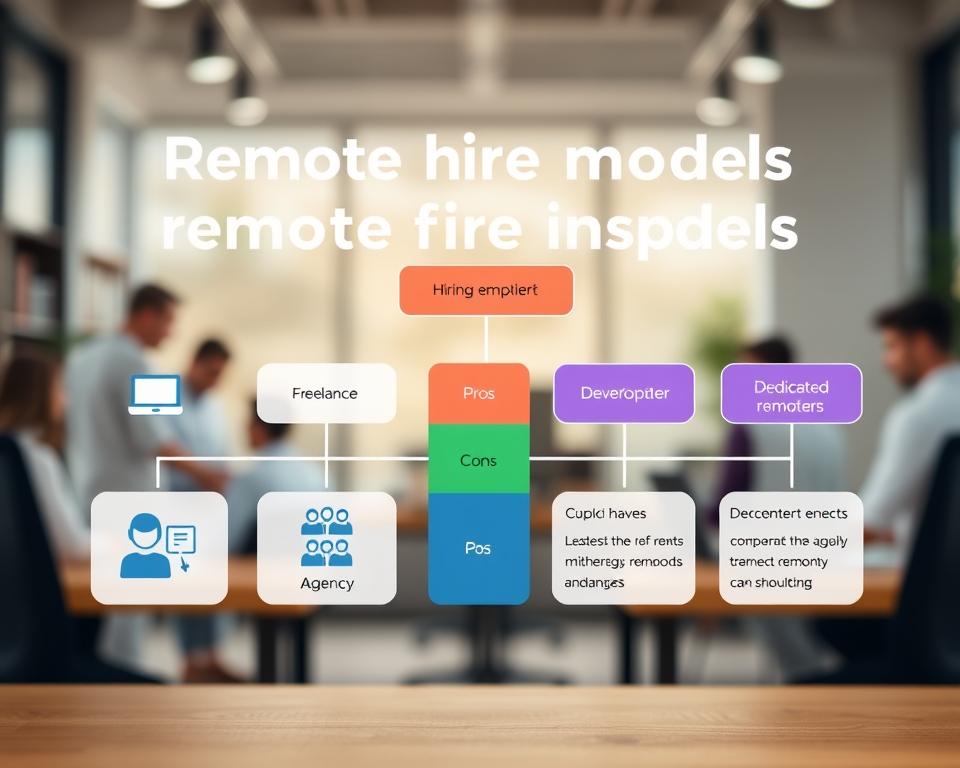
When comparing remote hiring models, consider your project’s needs. Whether it’s a dedicated team, staff augmentation, freelancers, or a UK-based team, knowing the pros and cons helps make a smart choice.
Technical Skills and Expertise Available in the UK Market
The UK is a leader in technology, with a wide range of skills and expertise. It has a strong developer community. They are skilled in many programming languages, frameworks, and new technologies.
Modern Programming Languages and Frameworks
In the UK, developers are well-versed in JavaScript, Python, and Java. These languages are key for web development, data analysis, and machine learning.
JavaScript, Python, and Java Specialists
There’s a big demand for JavaScript experts in web and mobile app development. Python specialists are needed for data science and AI. Java experts are key for big enterprise apps.
React, Angular, and Vue.js Experts
The UK is a hotspot for React, Angular, and Vue.js experts. These frameworks are vital for making web apps dynamic and responsive. The UK has a lot of talent in these areas.
| Framework | Primary Use | Demand in UK Market |
|---|---|---|
| React | Front-end development, UI components | High |
| Angular | Complex front-end applications | High |
| Vue.js | Progressive and flexible front-end framework | Growing |
Emerging Technologies and AI Capabilities
The UK is leading in adopting new technologies like Artificial Intelligence (AI) and Machine Learning (ML). Developers with these skills are in high demand in finance and healthcare.
For businesses wanting to hire dedicated developers in the UK, there’s a lot of talent. They have the skills to drive innovation and technological progress.
Industry-Specific Technical Knowledge
UK developers also have knowledge specific to industries like fintech, healthcare, and e-commerce. This makes them very valuable to businesses. They can create solutions tailored to each industry’s needs.

Managing Your Remote Development Team Effectively
Managing a remote team needs a smart plan for communication, project management, and team culture.
Communication Tools and Protocols
Good communication is key for any remote team’s success. The right tools and clear rules help teams work better together.
Daily Standups and Weekly Reviews
Daily standups keep everyone on the same page with project goals. Weekly reviews let teams check their progress and adjust plans.
Collaboration Platforms and Software
Tools like Slack, Microsoft Teams, and Asana make communication and tracking projects easy. For more on choosing the best tools, see this guide.
Project Management Methodologies
Using a clear project management method is vital for remote teams to stay organized.
Agile and Scrum Implementation
Agile methods, like Scrum, focus on improving in small steps. They help teams adapt quickly to changes.
Sprint Planning and Retrospectives
Sprint planning sets goals for each development cycle. Retrospectives help teams improve by discussing what works and what doesn’t.
Performance Tracking and Reporting
Tracking performance and sharing results is key for team evaluation and making informed decisions.
| Performance Metric | Description | Frequency |
|---|---|---|
| Code Quality | Assessment of code adherence to standards | Weekly |
| Project Timelines | Tracking progress against milestones | Bi-Weekly |
| Team Velocity | Measurement of team’s work capacity | Monthly |
Building Team Culture Remotely
Creating a strong team culture is tough but doable remotely. It involves virtual team-building, recognition, and open communication.
By using these strategies, businesses can manage their remote teams well. This ensures teams are productive and happy.
Common Challenges and How to Overcome Them
More businesses are using remote hiring models. It’s key to know how to face common challenges. Managing remote teams can be tough, especially with time zone differences, code quality, and keeping the team together.
Managing Time Zone Differences
Dealing with different time zones is a big challenge. It can make real-time talks and teamwork hard.
Scheduling Strategies for Maximum Overlap
To deal with time zones, use scheduling that works for everyone. This means flexible hours or set times when everyone is online.
Asynchronous Work Best Practices
Asynchronous work helps with time zones. It means using tools that let team members work and team up when it’s best for them.
Ensuring Code Quality and Standards
Keeping code quality high is key for any project’s success. Remote teams need strict processes to keep standards high.
Code Review Processes
Code reviews are vital. They involve team members checking each other’s work to find mistakes and improve quality.
Automated Testing and CI/CD
Automated tests and CI/CD pipelines are great for quality. They find problems early and make deploying easier.
Maintaining Team Cohesion
Team unity is crucial for success. Remote teams need to work hard to stay together.
Doing team activities, both online and in person, helps. It builds unity and teamwork.
Strategies for Team Cohesion:
- Regular virtual meetings and check-ins
- Team-building exercises and activities
- Recognition and reward systems
With these strategies, remote teams can face challenges and reach their goals.
Industries That Benefit Most from UK Remote Developers
Remote developers from the UK are changing many industries with their skills. More sectors are using remote hiring to get the best talent from the UK.
Fintech and Financial Services
The fintech and financial services world needs skilled developers. They must build safe and efficient systems. UK remote developers are experts at making strong apps for this field.
Key Contributions: They make secure payment systems, algorithmic trading platforms, and improve cybersecurity.
Healthcare and Medical Technology
Remote UK developers help the healthcare world a lot. They make new medical software, telehealth platforms, and health systems. Their work follows all healthcare rules and standards.
Notable Achievements: They create telehealth platforms, electronic health records, and medical imaging software.
E-commerce and Retail
E-commerce and retail need remote UK developers to improve their online shops. They make the sites better for users and more secure. They also make the sites grow and work well.
Key Benefits: Better customer experience, more security, and growth.
SaaS and Enterprise Software
The SaaS and enterprise software world gets a lot from UK remote developers. They make complex software, connect systems, and make sure it works well.
Significant Contributions: They create big SaaS apps, connect systems, and make software run better.
Here’s a quick look at how different industries gain from hiring remote UK developers:
| Industry | Key Needs | Benefits of Remote UK Developers |
|---|---|---|
| Fintech and Financial Services | Secure financial systems, algorithmic trading platforms | Enhanced security, robust applications |
| Healthcare and Medical Technology | Innovative medical software, telehealth platforms | Compliance with regulations, innovative solutions |
| E-commerce and Retail | Scalable e-commerce platforms, improved user experience | Enhanced customer experience, increased scalability |
| SaaS and Enterprise Software | Complex software solutions, system integration | Scalable applications, optimized performance |
Selecting the Right Remote Hiring Partner
Finding the perfect remote hiring partner takes time and effort. The right one can make your project a success by bringing in top talent. Look for a partner who understands your needs and can deliver.
Essential Questions to Ask
Before you choose a partner, ask the right questions. This will help you see if they can meet your project’s needs. Focus on their experience, expertise, and support policies.
Experience and Expertise Verification
It’s important to check a partner’s experience and skills. Look at their portfolio, ask for examples, and check their technical abilities. For example, effective tips to hire a dedicated developer can guide you.
Support and Replacement Policies
Also, understand their support and replacement policies. Know what kind of help they offer and their policies on replacing developers if needed.
Red Flags to Watch For
Be cautious of red flags when choosing a partner. These include unclear processes, poor communication, or making promises they can’t keep.
Evaluating Track Record and References
A partner’s past work and client feedback are key. Look for reviews and testimonials. Also, ask for references to get a full picture of their performance.
By carefully evaluating partners and asking the right questions, you can make a smart choice. The goal is to find a partner who not only brings skilled developers but also shares your project’s goals and values.
Getting Started with Your UK Remote Development Team
Starting a UK remote development team needs careful planning. You must understand your company’s needs well. Several important steps are necessary for a smooth start and good teamwork.
Preparing Your Organization for Remote Collaboration
Before hiring a remote team, check if your company is ready for remote work. Look at your tech, communication tools, and how you manage projects.
- Check if your tech and tools work for remote work.
- Plan how you’ll keep in touch and share updates.
- Choose a way to manage projects and track progress.
Setting Clear Expectations and Goals
It’s key to have clear goals and expectations for your remote team. You need to know what you want to achieve and how you’ll measure success.
Defining Success Metrics
To measure your team’s success, set clear goals. These could be about completing projects, code quality, or business results.
For example, aim to boost app performance by 30% in a set time.
Creating a Communication Charter
A communication charter explains how your team will talk. It includes the tools and rules for communication. This avoids confusion and keeps everyone in sync.
A good communication charter can cut down on misunderstandings and boost team unity.
| Communication Tool | Purpose | Frequency of Use |
|---|---|---|
| Formal communication, updates | Daily | |
| Slack | Real-time messaging, discussions | Continuous |
| Zoom | Video meetings, team discussions | Weekly |
Timeline from Initial Contact to Team Deployment
Knowing the timeline from first contact to team setup is crucial. PROVAB says this involves several steps like initial talks, finding candidates, interviews, and training.
This whole process can take weeks to months. It depends on how complex your needs are and how fast you can find the right people.
Conclusion
The dedicated remote hiring model is a great choice for companies wanting to find top talent in the UK. By learning about its benefits and how to use it, businesses can hire the best remote developers.
This model lets companies find top technical talent. It also makes hiring easier because of time zone and cultural matches. Plus, it saves money. To learn more about hiring skilled Laravel developers in the UK, check out Next Big Technology.
Using the dedicated remote hiring model helps businesses work well with UK developers. This way, companies can reach their goals and grow. It’s a smart move for innovation and success.