






Choosing the right backend framework is key for your web app’s success. Many options are available, making it hard to pick between Laravel, Node.js, and Django.
These frameworks are popular in web development. Each has its own strengths and abilities. Knowing the differences is crucial for making the right choice for your project.
The backend framework you choose affects your app’s scalability, security, and performance. In this article, we’ll compare Laravel, Node.js, and Django. This will help you find the best one for your project.
Table of Contents
Key Takeaways
- Understanding the strengths and weaknesses of Laravel, Node.js, and Django.
- Key considerations for choosing a backend framework.
- Comparison of the scalability and performance of the three frameworks.
- Security features offered by Laravel, Node.js, and Django.
- Best practices for selecting the right backend framework for your web app.
Understanding Backend Development
Backend development is key to any web app. It deals with server-side logic, database work, and API connections. It includes tasks like managing data, user authentication, and server performance.
What is Backend Development?
Backend development is the server-side part of a web app. It focuses on how the app works and its performance. Developers use languages like PHP, Python, or JavaScript to write server-side code.
They also manage databases and create APIs. This helps the server and frontend talk to each other smoothly.
The backend stores and changes data, handles user requests, and keeps the app secure. A strong backend ensures a good user experience.

Why Framework Selection Matters
Choosing the right backend framework is crucial. It affects development, scalability, and app performance. Frameworks help with tasks like authentication and database work.
A good framework makes development easier, reduces bugs, and makes maintenance simpler. For example, Laravel, Node.js, and Django are popular choices. Each has its own strengths and weaknesses.
| Framework | Language | Scalability | Security |
|---|---|---|---|
| Laravel | PHP | High | Strong |
| Node.js | JavaScript | High | Moderate |
| Django | Python | High | Strong |
Laravel: The PHP Powerhouse
Laravel is a top pick for developers globally because of its clear syntax and vast ecosystem. It’s known for making backend work easier with its strong features and sleek design.
Laravel’s Architecture and Core Features
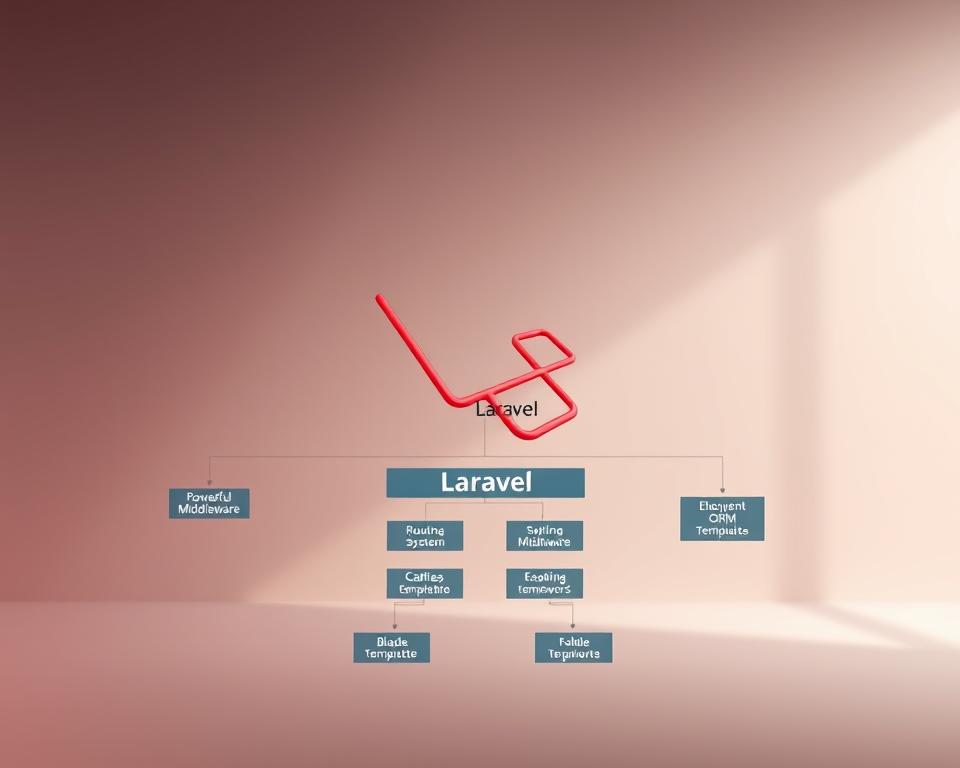
Laravel uses the Model-View-Controller (MVC) pattern. This keeps logic and presentation separate. It has Eloquent ORM, Blade templating, and a solid routing system at its core.
Eloquent ORM makes working with databases easier with its simple, expressive design. The Blade templating engine helps keep code logic and presentation separate.
Advantages of Laravel
Laravel has many benefits that make it a favorite among developers. These include:
- Rapid development capabilities
- Extensive community support
- Rich set of built-in features (authentication, routing, etc.)
- Elegant syntax for expressive coding
| Feature | Description | Benefit |
|---|---|---|
| Eloquent ORM | Simplifies database interactions | Reduces development time |
| Blade Templating | Separates logic from presentation | Improves code readability |
| Routing System | Maps URLs to application actions | Enhances application structure |
Limitations of Laravel
Laravel is powerful but has its downsides. It can be hard for beginners to learn and might slow down due to its many features.
Knowing these limitations helps use Laravel well in web app development.
Node.js: JavaScript Everywhere
Node.js is great for real-time web apps because of its event-driven, non-blocking I/O model. It can handle many connections at once without a big increase in overhead. This makes it perfect for scalable backend solutions.
Architecture and Core Features
Node.js uses Chrome’s V8 JavaScript engine, making apps fast and efficient. It’s built on an event-driven, non-blocking I/O model. This lets it process many requests at once without waiting for each to finish.
Key Features:
- Asynchronous and event-driven
- Single-threaded, with capability for child processes
- Fast execution thanks to V8 engine
- Large ecosystem of packages via npm
Advantages of Node.js
Node.js is great at handling lots of connections with little overhead. It’s perfect for apps that need real-time updates, like live chats or games. Plus, using JavaScript for both frontend and backend makes development easier.
Scalability is a big plus. Node.js apps can grow by adding more nodes, making it easy to handle more traffic. The rich ecosystem of packages from npm speeds up development with pre-built functions for many tasks.
| Feature | Description | Benefit |
|---|---|---|
| Event-driven | Handles requests asynchronously | Improves performance under load |
| Non-blocking I/O | Processes requests without waiting | Enhances real-time capabilities |
| Unified Language | JavaScript for both frontend and backend | Streamlines development process |
Limitations of Node.js
Node.js has its downsides. Managing complexity in big apps can be tough due to its async nature. But, using Promises and async/await helps a lot.
Another issue is Node.js’s single-threaded design. It can slow down for CPU-heavy tasks. Spawning child processes helps, but it makes things more complex.
Django: Python’s Web Framework
Django is a free and open-source web framework written in Python. It encourages rapid development and clean, pragmatic design.
Core Features and Architecture
Django’s architecture focuses on reusability and modularity, known as “batteries included.” It comes with many built-in features ready to use. For example, it has an ORM system that abstracts the database, making it easy to switch between different systems.
The framework uses the MVT (Model-View-Template) pattern, a variant of MVC. This pattern helps keep concerns separate, making development easier.
Key Features:
- Extensive ORM capabilities
- Admin interface for easy data management
- Authentication and authorization system
- Template engine for rendering HTML
Advantages of Django
Django has robust security features to protect against common web vulnerabilities. Its ORM system and secure password storage help developers write secure code.
“Django is a high-level Python Web framework that encourages rapid development and clean, pragmatic design.” – Django Project
The framework’s extensive libraries and tools enable rapid development. Developers can build complex applications quickly. Django also has a large and active community, offering many resources for learning and troubleshooting.
| Feature | Description | Benefit |
|---|---|---|
| ORM System | Abstracts database interactions | Ease of switching databases |
| Admin Interface | Built-in data management | Rapid data manipulation |
| Security Features | Protects against web vulnerabilities | Enhanced security |
Limitations of Django
Django has a steep learning curve, especially for beginners. Its monolithic nature also makes it less suitable for very small projects or applications needing a microservices architecture.
Despite these limitations, Django is still a popular choice for complex, data-driven web applications. Its comprehensive feature set and strong community support make it a favorite among developers.
Performance Comparison
Web applications are getting more complex. This makes a high-performance backend framework crucial. The performance depends on how well it handles requests, how fast it responds, its scalability, and how it uses resources.
Request Handling and Response Times
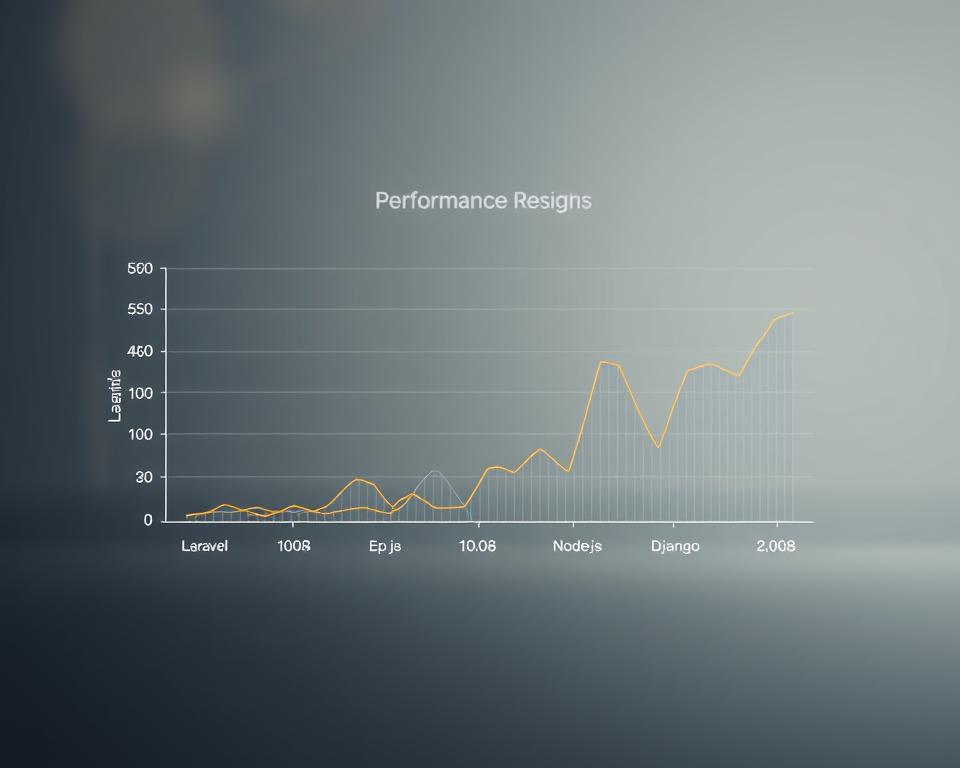
Laravel, Node.js, and Django handle requests differently. Laravel is synchronous, which can slow it down under heavy loads. On the other hand, Node.js is asynchronous, making it better at handling many requests at once. Django is mostly synchronous but can be made asynchronous with extra libraries.
Scalability Potential
Scalability is key for a backend framework’s performance. Node.js is great at scaling horizontally, which is why it’s popular for high-traffic apps. Django also scales horizontally but needs more setup. Laravel can scale too, but it might need extra work and caching to perform well.
Resource Consumption and Efficiency
How much a framework uses resources is important. Node.js is known for being lightweight and efficient. Django can use a lot of resources, especially with its ORM and other features. Laravel is in the middle, with performance depending on how it’s used and set up.
In summary, Laravel, Node.js, and Django each have their own strengths and weaknesses. Node.js is top for handling requests and scaling. Django is robust but uses more resources. Laravel aims to balance these, focusing on developer productivity.
Development Speed and Productivity
The backend framework chosen for a project greatly affects development speed, productivity, and success. A good framework matches the team’s skills and the project’s needs. This can make development faster and more efficient.
Learning Curve Comparison
The learning curve of a framework is key. It shows how fast developers can learn it. Laravel is known for its easy-to-use syntax and detailed guides, making it easier to learn.
Node.js, built on JavaScript, is familiar to many. But, its use of asynchronous code can be tough for newbies. Django has a steeper curve due to its complex architecture and ORM system.
| Framework | Learning Curve |
|---|---|
| Laravel | Moderate |
| Node.js | Challenging (due to asynchronous nature) |
| Django | Steep (due to unique architecture and ORM) |
Built-in Tools and Features
The tools and features a framework offers can speed up development. Laravel has a great ORM, routing, and tools for common tasks. Node.js is simple but has a huge package ecosystem for extra features.
Django has many built-in features like an ORM, authentication, and admin interface. This makes it great for complex projects.
“Django is a high-level Python Web framework that encourages rapid development and clean, pragmatic design.” – Django Project
Community Support and Resources
Community support is crucial for solving problems and learning best practices. Laravel has a big, active community with lots of documentation and packages. Node.js benefits from the large JavaScript community, offering many learning and troubleshooting resources.
Django also has a strong community, with detailed documentation and a big presence on GitHub.
In conclusion, picking the right backend framework is key for development speed and productivity. Look at the learning curve, tools, and community support. This helps choose a framework that fits your project’s needs.
Security Features and Best Practices
Security is key in web development. Knowing the security features of frameworks like Laravel, Node.js, and Django is essential.
These frameworks have strong security features to fight off threats. Let’s look at what each offers.
Authentication and Authorization
Authentication checks who you are, while authorization decides what you can do. Laravel has a solid authentication system, including CSRF protection and secure password hashing. Node.js uses libraries like Passport.js for this. Django has its own system for user registration, login, and setting permissions.
Here’s how the three frameworks handle authentication:
| Framework | Authentication Features |
|---|---|
| Laravel | CSRF protection, secure password hashing, multi-factor authentication |
| Node.js | Third-party libraries like Passport.js for authentication |
| Django | Built-in authentication system, user registration, login, permission management |
Protection Against Common Vulnerabilities
Web apps face threats like SQL injection and XSS. Laravel stops SQL injection with prepared statements. Node.js uses libraries like Sequelize or TypeORM for protection. Django’s ORM system helps avoid SQL injection risks.
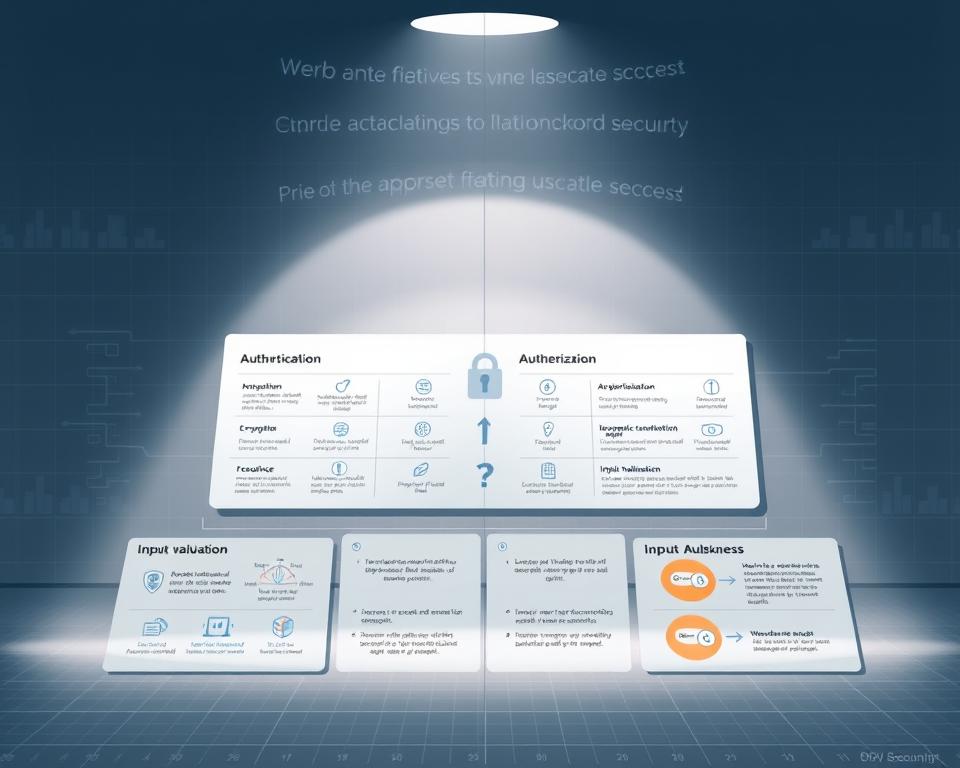
To fight XSS, Laravel and Django have ways to escape user input. Node.js apps can use DOMPurify to clean user input.
Security Updates and Maintenance
Keeping your app secure means regular updates. Laravel has a security team that quickly fixes issues. Node.js relies on the community for updates. Django has a security list for updates.
Here’s how each framework handles updates:
| Framework | Security Update Process |
|---|---|
| Laravel | Dedicated security team, prompt vulnerability fixes |
| Node.js | Community-driven vulnerability reporting and fixing |
| Django | Security mailing list for update notifications |
In conclusion, all three frameworks are secure but in different ways. Knowing these differences helps choose the best framework for your app.
Database Integration and ORM Capabilities
In backend development, the framework you choose affects how you work with databases. ORM capabilities are key for app performance and growth.

Supported Databases
Laravel, Node.js, and Django each excel in database support. Laravel works with MySQL, PostgreSQL, and SQLite through Eloquent. Node.js is flexible and supports many databases with tools like Sequelize and TypeORM. Django is closely tied to its ORM and supports PostgreSQL, MySQL, and SQLite.
“The choice of database can significantly impact the performance of your application,” experts say. Each framework’s support for multiple databases shows its flexibility.
- Laravel: MySQL, PostgreSQL, SQLite
- Node.js: MySQL, PostgreSQL, MongoDB (via Mongoose)
- Django: PostgreSQL, MySQL, SQLite
ORM Functionality Comparison
The ORM (Object-Relational Mapping) is vital for database interaction. Laravel’s Eloquent makes database work easy with PHP. Node.js ORMs like Sequelize offer migration and hook features. Django’s ORM is known for its high-level interface and lazy loading.
As
“A good ORM can simplify your code and improve productivity.”
This is especially true for complex apps with lots of database interactions.
Query Performance and Optimization
Query performance varies among these frameworks. Laravel’s Eloquent helps with eager loading to cut down on queries. Node.js ORMs have methods for query optimization, including caching. Django’s ORM uses select_related and prefetch_related to reduce database hits.
Knowing each framework’s strengths and weaknesses helps developers choose the right tool for their project.
Deployment and DevOps Considerations
Deployment and DevOps are key to a web app’s success. Different backend frameworks offer unique benefits. Good deployment strategies are vital for a web app’s scalability, reliability, and performance.
Hosting Options and Requirements
Choosing the right hosting is crucial for web app deployment. Laravel apps can run on traditional servers or cloud platforms like AWS, needing a LAMP stack. Node.js apps are best on platforms like Heroku or AWS Elastic Beanstalk, with Docker for containerization. Django apps, being Python-based, fit well on servers that support Python, like AWS and Google Cloud.
When picking a host, think about scalability, security, and cost. Clouds offer scalable solutions, and Docker boosts deployment efficiency.

CI/CD Integration
Continuous Integration and Continuous Deployment (CI/CD) are vital for modern web development. Laravel works well with CI/CD tools like Jenkins and GitLab CI. Node.js apps use CI/CD pipelines with CircleCI and Travis CI. Django supports CI/CD with tools like Jenkins and GitHub Actions.
CI/CD pipelines automate testing, building, and deployment. This reduces human error and speeds up deployment.
Containerization and Cloud Deployment
Containerization with Docker is now common for web app deployment. All three frameworks can be containerized, making deployment easier. Cloud deployment adds scalability and reliability, with major clouds offering services for each framework.
Using containerization and cloud deployment ensures consistent environments. This streamlines the deployment process.
Laravel vs Node.js vs Django: Best Backend for Your Web App
Choosing the right backend framework is key to your web app’s success. We’ll compare Laravel, Node.js, and Django. We’ll look at their popularity, job market demand, long-term viability, and cost.
Framework Popularity and Job Market
Framework popularity shows community support and resource availability. The TIOBE Index ranks Python (Django’s base) higher than PHP (Laravel’s base) and JavaScript (Node.js’s base). Yet, Node.js is rising in web framework popularity because it uses JavaScript.
A Stack Overflow survey shows Node.js is top among developers. Django and Laravel follow. This means more job opportunities for those skilled in these areas.
Long-term Viability and Support
It’s important to pick a framework that’s here to stay. Laravel, Node.js, and Django all have strong support and ecosystems.
Laravel is known for its backward compatibility and detailed documentation. This makes it a solid choice for long-term projects.
“Laravel’s commitment to maintaining backward compatibility and its extensive documentation make it a reliable choice for long-term projects.”
Node.js stays relevant because it’s part of the JavaScript ecosystem. Django is also stable and mature, offering long-term viability.
Total Cost of Ownership
Costs include development, maintenance, and scaling. Laravel and Node.js might start cheaper due to open-source packages. But Django’s all-in-one approach could save time and money in the long run.
Experts say the right framework can greatly impact costs. Scalability, security, and ease of maintenance are key. Your choice should match your project’s needs, your team’s skills, and your goals.
How to Choose the Right Framework for Your Project
Choosing the right backend framework is key to your web app’s success. You need to look at several important factors. These factors will help decide the best framework for your project.
Project Requirements Assessment
Start by figuring out what your project needs. Think about the app’s type, expected users, and needed features. For example, a data-heavy app might need a framework with strong ORM.
Looking closely at your project’s needs helps you pick the right framework. Django’s official documentation says it’s great for complex projects. It supports rapid development and clean design.
Team Expertise and Learning Resources
Your team’s skills are also important. Pick a framework your team knows or can learn fast. For instance, if they’re into JavaScript, Node.js could be perfect.
Business Constraints and Timeline
Don’t forget about your budget and deadline. Look at the total cost of each framework. Consider development time, upkeep, and scalability costs.
| Framework | Development Speed | Scalability Costs |
|---|---|---|
| Laravel | Fast | Moderate |
| Node.js | Rapid | Low |
| Django | Fast | High |
By weighing these points, you can choose a framework that fits your project’s needs and budget.
Real-World Success Stories and Case Studies
Real-world case studies show how Laravel, Node.js, and Django have helped build strong web apps. These frameworks have played key roles in many big projects. They prove their flexibility and power.
Laravel Success Stories
Laravel has been crucial for many successful projects. For example, Invoice Ninja, a well-known invoicing tool, uses Laravel for its strong backend. Laravel’s Eloquent ORM and Blade templating engine make it easy to create a smooth user experience.
Node.js Success Stories
Node.js powers some of the web’s biggest applications. Netflix uses Node.js for its fast and scalable backend. Node.js’s non-blocking I/O model helps Netflix manage lots of users at once. Netflix engineers say Node.js is key to their growth and innovation.
“Node.js has been instrumental in our transition to a more scalable and maintainable architecture.”
Django Success Stories
Django has helped build many high-traffic sites. Instagram was built with Django before it changed its architecture. Django’s batteries-included approach let Instagram focus on its main features. Instagram’s engineers say Django helped them grow and scale.
Pinterest also uses Django, showing its strength in handling complex data and user authentication.
Conclusion
Choosing the right backend framework is key for a web app’s success. This comparison of Laravel, Node.js, and Django shows their strengths and weaknesses. It helps developers make the best choice.
Each framework has its own benefits and fits different project needs. Laravel is great for complex PHP apps because of its strong features and ease of use. Node.js is best for handling real-time data and scaling. Django is perfect for Python projects because of its high-level abstractions and fast development.
When picking a backend framework, think about performance, speed, security, and scalability. Knowing what each framework can do helps build a solid web app. This follows the best web development practices.
In short, comparing backend frameworks is crucial for finding the right one for a project. The right choice streamlines development, boosts app performance, and enhances user experience.