







The need for AI talent is growing fast. Companies want to use machine learning to boost their businesses.
With offshore hiring, businesses can find top machine learning engineers worldwide. They can build strong remote teams.
This method lets companies explore a wider range of skills. It helps drive innovation and growth.
Table of Contents
Key Takeaways
- Access to a global talent pool of AI experts
- Building high-performing remote teams
- Driving innovation and business growth
- Tapping into a broader range of skills and expertise
- Leveraging machine learning to drive business forward
1. Understanding Offshore Hiring for Machine Learning Engineers
Offshore hiring is a smart move for companies wanting to find machine learning talent worldwide. It lets businesses reach out to a wider talent pool, beyond their local area. This way, they can find the top professionals for their projects.

What Is Offshore Hiring?
Offshore hiring means hiring people from other countries. It’s often done to save on labor costs or to get skills not found locally. For machine learning, it lets companies connect with a worldwide network of AI experts.
Why Machine Learning Engineers Are in High Demand
Machine learning engineers are in high demand because AI and machine learning are growing fast. Companies need people who can create smart systems, analyze data, and innovate. The demand is for:
- Developing and deploying AI models
- Improving data analysis capabilities
- Enhancing business decision-making processes
- Driving innovation in products and services
The Global Talent Pool Advantage
Offshore hiring lets companies tap into a global talent pool of machine learning engineers. This increases the chances of finding top talent and brings diverse ideas. The benefits include:
- Access to a wider range of skills and expertise
- Increased flexibility in team composition and scaling
- Opportunities for 24/7 development cycles through time zone differences
- Potential for cost savings without compromising on quality
Understanding offshore hiring is key for businesses to use machine learning effectively. By using the global talent pool, companies can keep up with the fast-changing tech world.
2. Key Benefits of Offshore Hiring for ML Engineering Talent
Offshore hiring for machine learning engineers brings many benefits. It helps companies grow their AI and ML skills. They can find talent worldwide, save money, and speed up their AI projects.
Cost Savings Without Compromising Quality
One big plus of offshore hiring is cost savings. Companies like ISHIR and Azendo offer skilled ML engineers at good prices. This lets businesses use their money better, leading to more innovation and growth.
Access to Specialized Skill Sets
Offshore hiring lets you find specialized skill sets that are hard to find locally. By looking globally, you can find experts in areas like natural language processing or computer vision. This boosts your project’s abilities.

Scalability and Flexibility
Offshore hiring is scalable and flexible. It lets businesses quickly change with project needs. Whether scaling up or switching to a new project, teams can adjust or grow as needed.
Round-the-Clock Development Cycles
With teams in different time zones, companies can work non-stop. This means projects can be finished faster. Businesses can get their AI and ML solutions to market quicker.
Understanding these benefits helps companies make smart choices about offshore hiring. This drives success in their AI and ML projects.
3. Essential Skills to Look for in Machine Learning Engineers
When hiring machine learning engineers, it’s key to find the right skills for success. They need both technical and soft skills to do well.
Core Technical Competencies
Technical skills are the foundation for machine learning engineers. They need to know programming languages, data science, and deep learning well.
Programming Languages and Frameworks
Knowing Python and R is a must. They also need to know frameworks like TensorFlow, PyTorch, and Scikit-Learn for model development.
Data Science and Statistical Knowledge
Understanding data science and statistics is crucial. They should know how to prepare data and apply statistical methods to analyze it.
Deep Learning and Neural Networks
Deep learning and neural networks are key for complex models. They need to know how to use CNNs, RNNs, and LSTMs.
Soft Skills That Matter
Soft skills are just as important as technical ones. Problem-solving and communication are essential for success.
Problem-Solving Abilities
Machine learning engineers must solve complex problems. They need to understand business needs and create ML solutions.
Communication and Collaboration Skills
Good communication is vital for translating technical insights into business value. They should work well with teams and share their findings clearly.

4. Top Offshore Destinations for Hiring Machine Learning Engineers
Several regions are top choices for hiring machine learning engineers offshore. They offer talent and cost-effectiveness. The global landscape for offshore machine learning talent is diverse, providing many options for businesses.
Eastern Europe: Poland, Ukraine, and Romania
Eastern Europe is a big hub for offshore machine learning talent. Countries like Poland, Ukraine, and Romania lead the way. They have a strong tradition of technical education and many skilled engineers.
Key advantages: They offer competitive pricing, a strong technical skillset, and are close to European time zones.
Asia: India, China, and Vietnam
Asia is also a great place for hiring machine learning engineers offshore. Countries like India, China, and Vietnam have invested a lot in technology and innovation.
Key advantages: They have a large talent pool, can scale quickly, and are cost-effective.
Latin America: Brazil, Argentina, and Mexico
Latin America is becoming a good choice for machine learning talent offshore. Countries like Brazil, Argentina, and Mexico are building strong tech ecosystems.
Key advantages: They have cultural affinity with North America, a growing tech industry, and favorable time zones.
Comparative Analysis of Regional Strengths
Comparing these regions shows different strengths and areas of specialization. The table below summarizes the key characteristics of each region:
| Region | Technical Skills | Cost | Time Zone Compatibility | Cultural Affinity |
|---|---|---|---|---|
| Eastern Europe | High | Competitive | Good for European clients | Moderate |
| Asia | Very High | Low to Moderate | Varies | Varies |
| Latin America | High | Competitive | Good for North American clients | High |
As the table shows, each region has its own benefits. Eastern Europe has strong technical skills and competitive pricing, great for European clients. Asia offers a huge talent pool and quick scalability, but with varying cultural affinity and time zone compatibility. Latin America has cultural affinity with North America and a growing tech industry, making it a good choice for companies looking for a more localized solution.

Understanding the strengths and weaknesses of each region helps businesses make better decisions about where to hire machine learning engineers offshore.
5. The Complete Process to Hire Machine Learning Engineers – Offshore Hiring Services
To hire machine learning engineers offshore, businesses need a clear plan. This ensures the talent fits the project and the team.
Step 1: Defining Your Project Requirements
Start by clearly defining your project needs. Outline the scope of work and the specific skills needed. Also, set the project’s goals and objectives. This helps attract the right talent and ensures they know what’s expected.
Step 2: Selecting the Right Hiring Model
Choosing the right hiring model is key. You have options like staff augmentation, dedicated development teams, and project-based outsourcing. Each model fits different needs. For example, staff augmentation is flexible, while a dedicated team is more integrated.

Step 3: Sourcing and Screening Candidates
After picking a model, find and screen candidates. Use various recruitment channels like job boards and professional networks. A detailed screening process is crucial to find the right technical skills and experience. It’s also important to check if they can work offshore.
Step 4: Technical Assessment and Interviews
Technical assessments and interviews are vital. Technical tests check problem-solving and technical knowledge. Interviews look at communication skills, experience, and cultural fit.
Step 5: Onboarding and Integration
Once you’ve chosen a candidate, onboard and integrate them. A good onboarding process makes them familiar with the project. It involves regular communication, team-building activities, and continuous feedback. This ensures they feel valued and supported.
6. Different Offshore Hiring Models Explained</h3>
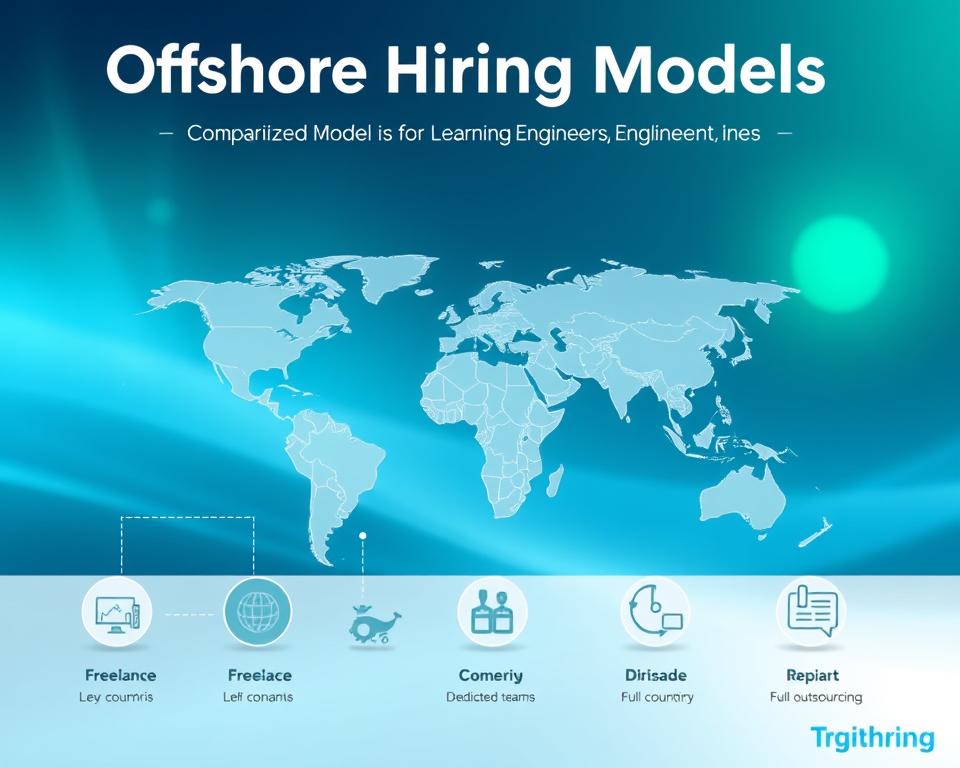
Offshore hiring models give businesses the chance to grow and adjust to new project needs. It’s important to know the different models and how they affect your project.
Staff Augmentation Model
The staff augmentation model lets you hire offshore developers to help your team. It’s great for businesses that need to grow their team quickly without a long-term commitment.
Key Benefits:
- Flexibility to scale up or down as needed
- Access to specialized skills on a project basis
- Reduced overhead costs compared to hiring full-time employees
Dedicated Development Team Model
A dedicated development team is a group of offshore developers working only on your project. This model offers a strong commitment and integration with your team.
Advantages:
- Dedicated team members provide a deeper understanding of your project
- Improved communication and collaboration
- Enhanced project control and flexibility
As Forbes notes, “A dedicated team can become an extension of your in-house team, providing a more cohesive and collaborative work environment.”
“The dedicated team model allows businesses to tap into a global talent pool while maintaining control over the project’s direction and outcome.”
Project-Based Outsourcing Model
In the project-based outsourcing model, you outsource an entire project to an offshore development company. It’s good for businesses that need to finish a specific project without ongoing development.
Benefits:
- Reduced project management burden
- Access to a team of experts with diverse skill sets
- Predictable costs and timelines
| Hiring Model | Flexibility | Cost | Control |
|---|---|---|---|
| Staff Augmentation | High | Variable | High |
| Dedicated Development Team | Medium | Medium | High |
| Project-Based Outsourcing | Low | Fixed | Medium |
Which Model Suits Your Business Needs?
Choosing the right offshore hiring model depends on your business needs, project requirements, and preferences. Think about the project scope, budget, and control level you want when picking a model.
7. Cost Analysis: Offshore vs. Onshore Machine Learning Engineers
When looking to hire machine learning engineers, cost is a key factor. It’s important to compare the costs of hiring offshore versus onshore talent. This helps businesses save money while getting the skills they need.
Salary Comparisons by Region
The cost of hiring machine learning engineers changes a lot depending on where you are. Here’s a look at average salaries in different places:
| Region | Average Annual Salary |
|---|---|
| United States | $141,000 |
| India | $15,000 |
| Poland | $25,000 |
As you can see, salaries vary a lot. This makes offshore hiring a good choice for saving money.

Hidden Costs to Consider
Salary is just one part of the cost. Other things to think about include:
- Relocation costs for onshore hires
- Training and onboarding expenses
- Infrastructure and equipment costs
- Legal and compliance fees
These extra costs can really add up and affect the total cost of hiring.
Calculating Total Cost of Ownership
To really understand the costs, businesses need to look at the total cost of ownership. This means:
- Direct costs: Salaries, benefits, and bonuses
- Indirect costs: Training, infrastructure, and management overhead
Looking at both direct and indirect costs helps businesses make better choices.
Return on Investment of Offshore Hiring
Offshore hiring can save a lot of money. But, it’s important to think about things like productivity and communication. These factors affect the return on investment.
By looking at these things, businesses can decide if offshore hiring fits their goals and budget.
8. Evaluating Technical Expertise in ML Candidates
Checking the technical skills of ML candidates is a detailed process. It’s key to find the right talent for your project. This ensures they can develop and use machine learning models as needed.
Creating Effective Technical Tests
Creating good technical tests is a crucial step. These tests should check a candidate’s problem-solving skills, programming abilities, and machine learning knowledge. For example, you might give them a dataset to work with or ask technical questions.
Some examples of technical tests include:
- Building a simple neural network from scratch
- Improving a machine learning algorithm’s performance
- Fixing a broken machine learning pipeline
Real-World Problem-Solving Assessments
Real-world problem-solving tests are also vital. They present candidates with real job scenarios. This shows how they solve problems and apply their knowledge in practical ways.
For example, you might ask candidates to:
- Design a machine learning system for a business problem
- Explain how to handle missing data in a dataset
- Talk about the trade-offs between different algorithms for a task
Portfolio and GitHub Review
Looking at a candidate’s portfolio and GitHub can give you insights. Look for projects that show their machine learning skills, like:
- Developing and deploying models
- Working with big datasets
- Collaborating on machine learning projects
A strong portfolio or GitHub shows a candidate’s passion for machine learning. It also shows they can use their knowledge in real-world projects.

Conducting Technical Interviews
Technical interviews are key to evaluating a candidate’s skills. They let you dive deeper into their technical knowledge and problem-solving abilities. You can ask a variety of questions, from specific technical ones to open-ended problems.
Questions About Algorithms and Model Development
Ask candidates about different machine learning algorithms, like decision trees or neural networks. Also, ask about their model development process, including data prep and hyperparameter tuning.
System Design and Architecture Discussions
Talking about system design and architecture shows a candidate’s ability to think big. Ask them to describe how they’d design a system for handling big data or deploying models in production.
By using technical tests, real-world assessments, portfolio reviews, and interviews, you can fully evaluate ML candidates. This helps you make informed hiring choices.
9. Overcoming Common Challenges in Offshore Hiring
Offshore hiring comes with its own set of challenges. These include time zone differences and communication barriers. As companies look to hire globally, it’s key to tackle these issues for success.
Managing Time Zone Differences
Time zone differences are a big hurdle in offshore hiring. They can make real-time communication tough. To solve this, companies can set flexible working hours that match the offshore team’s schedule. This ensures everyone can work together effectively.
Using time zone-friendly project management tools is also helpful. Tools like Trello or Asana let teams manage tasks and deadlines, even when they’re in different time zones.
Bridging Communication Gaps
Good communication is essential in offshore hiring. Companies should create clear communication channels using tools like Slack or Microsoft Teams. Regular video meetings also help build trust and personal connections among team members.
For more tips on finding the right offshore development team, check out best tips to find the right offshore development team for your project.

Ensuring Data Security and IP Protection
Data security is a big worry in offshore hiring. Companies must make sure their offshore teams follow strict data security protocols. This includes using NDAs and following international data protection laws.
Using secure data transfer methods and encrypting sensitive info helps protect against breaches. Regular audits and checks keep data security high.
Maintaining Quality Standards
Keeping quality standards high is vital when working with offshore teams. Companies should set clear quality benchmarks and do regular performance checks. This ensures the offshore team’s work meets the required standards.
Having a strong quality assurance process helps catch and fix quality issues early. This includes regular testing and validation of the offshore team’s work.
10. Legal and Compliance Considerations
When you hire machine learning engineers from abroad, you face many legal hurdles. It’s important to follow all laws and rules to avoid trouble. This ensures your operations are legal and fair.
Contractual Agreements and Terms
Having a solid contract is key when hiring overseas. It should cover job duties, pay, secrets, and how to end the job. Make sure the contract fits the laws of both your country and the engineer’s.
Intellectual Property Rights
Keeping your intellectual property (IP) safe is a big deal. Use strong contracts and follow global IP laws. This means getting patents and trademarks and using NDAs to keep secrets.
Data Privacy Regulations and GDPR Compliance
Data privacy is more important than ever. Companies must follow rules like the General Data Protection Regulation (GDPR) in the EU. This means handling data right, making sure teams follow rules, and checking up on compliance often.
Tax Implications and International Labor Laws
Offshore hiring also means dealing with taxes and labor laws worldwide. Know about taxes, social security, and other rules in both countries. Talk to tax experts to stay legal and save money.
| Legal Consideration | Description | Importance Level |
|---|---|---|
| Contractual Agreements | Clearly outlining terms of employment and responsibilities | High |
| Intellectual Property Rights | Protecting company IP through legal measures | High |
| Data Privacy Regulations | Ensuring compliance with data protection laws like GDPR | High |
| Tax Implications | Understanding and complying with tax laws in multiple jurisdictions | Medium |
For more insights on emerging trends and jobs in AI that can be outsourced, visit Talenteum’s article on the 10 AI jobs to outsource in. Knowing these legal and compliance issues is key for successful offshore hiring of machine learning engineers.
11. Best Practices for Managing Offshore ML Engineering Teams
To get the most out of offshore ML engineering teams, businesses need to follow best practices. These include smooth communication and effective project handling. It’s all about clear communication channels, project management systems, and a strong company culture.
Establishing Clear Communication Channels
Good communication is key for offshore teams to succeed. It means picking the right tools like Slack or Microsoft Teams. Also, setting up regular updates and feedback is important.
- Choose the right communication tools for your team.
- Have regular check-ins to stay on the same page.
- Make sure everyone can give feedback easily.
Setting Up Effective Project Management Systems
Good project management is vital for offshore ML engineering teams. Tools like Jira or Trello help track progress and manage deadlines.
| Tool | Feature | Benefit |
|---|---|---|
| Jira | Task assignment and tracking | Boosts team productivity and responsibility |
| Trello | Visual project boards | Makes project management easier and clearer |
Building Company Culture Across Borders
Creating a strong company culture across borders is crucial. It brings unity and a shared goal to the team. This can be done through virtual team-building, promoting openness, and celebrating achievements together.
For more tips on building effective teams, check out how to find the right offshore eCommerce development team.
Regular Performance Reviews and Feedback
Regular reviews and feedback are essential for offshore ML engineering teams. They help spot areas for improvement, set goals, and celebrate successes.
- Have regular reviews to check on progress.
- Give feedback that is clear and helpful.
- Thank and reward team members for their hard work.
12. Tools and Technologies for Remote Collaboration
In today’s world, using the right tools for remote work is key. It helps teams work better and meet their goals. The right tools make working together and talking easy.
Project Management Platforms
Good project management is vital for any team working from afar. Project management platforms like Asana, Trello, and Jira help teams manage tasks and track progress. They offer a place for teams to work together, share files, and talk easily.
- Asana: Great for managing tasks and tracking work.
- Trello: Uses boards, lists, and cards to organize tasks and projects.
- Jira: A detailed tool for software teams, offering issue tracking and project management.
Communication and Video Conferencing Tools
Good communication is key for remote teams. Communication and video conferencing tools like Zoom, Slack, and Microsoft Teams help teams talk in real-time. This way, team members can work together no matter where they are.
| Tool | Primary Use | Key Features |
|---|---|---|
| Zoom | Video Conferencing | High-definition video, screen sharing, virtual whiteboard |
| Slack | Team Communication | Channels, direct messaging, file sharing |
| Microsoft Teams | Integrated Communication | Chat, video meetings, file storage, integration with Office 365 |
Code Collaboration and Version Control
For development teams, code collaboration and version control are crucial. Tools like GitHub, GitLab, and Bitbucket let developers work together on code. They offer features like pull requests, code reviews, and continuous integration.
- GitHub: Popular for open-source projects, with strong version control and collaboration features.
- GitLab: A full DevOps platform with version control, issue tracking, and CI/CD.
- Bitbucket: Offers Git and Mercurial version control, with features like pull requests and code search.
ML Development and Cloud Environments
Machine learning needs special tools and environments. Cloud-based ML platforms like Google Cloud AI Platform, Amazon SageMaker, and Microsoft Azure Machine Learning provide the needed infrastructure. They offer pre-built algorithms, automated model tuning, and easy integration with other cloud services.
Using these remote collaboration tools and technologies helps businesses succeed with their offshore teams. The right tools for project management, communication, code collaboration, and ML development make remote work better. They boost productivity and drive innovation.
13. Future Trends in Offshore Machine Learning Hiring
The world of hiring machine learning experts offshore is changing fast. New tech and shifts in the workforce are leading the way. For companies to keep up, knowing what’s next is key.
The Rise of AI-Assisted Recruitment
AI is changing how we find machine learning engineers. It helps companies find and screen candidates faster and more accurately. For example, AI can check a candidate’s coding skills from their GitHub.
To learn more about hiring AI engineers, visit Next Big Technology for expert insights.
Emerging ML Specializations in Demand
New areas like explainable AI and AI ethics are becoming important. Companies want engineers who know both tech and ethics. This is why there’s a big need for experts in these fields.
Hybrid Work Models
Hybrid work models are getting more popular. They mix remote work with in-office teamwork. For offshore teams, this means better communication and teamwork. Companies are changing how they manage to fit this new way of working.
Increased Focus on Ethics and Responsible AI
There’s a big push for ethics and responsible AI. As AI grows, companies want to make sure it’s fair and transparent. This means they need engineers who know about AI ethics and how to govern it.
| Trend | Description | Impact |
|---|---|---|
| AI-Assisted Recruitment | Use of AI tools to streamline recruitment | Enhanced efficiency and accuracy in hiring |
| Emerging ML Specializations | New areas like explainable AI and AI ethics | Increased demand for specialized ML engineers |
| Hybrid Work Models | Combining remote and in-office work | Better collaboration and project outcomes |
| Ethics and Responsible AI | Focus on fairness and transparency in AI | Greater emphasis on ethical AI practices |
14. Conclusion
Offshore hiring for machine learning engineers is a smart move. It lets businesses tap into a global talent pool. This can drive innovation and success in AI and ML.
There are many benefits to offshore hiring. Companies save money, get access to specialized skills, and can grow easily. These advantages make it a great choice for staying competitive in AI.
The need for machine learning engineers is growing fast. Offshore hiring will shape the future of finding AI talent. Companies that use this approach will be ready for new trends and tech.
By understanding the benefits and best practices in this article, businesses can make smart choices. They can stay ahead in finding AI talent for the future.


