







The success of SHEIN shows the great power of digital shops today. These platforms change how people buy things by offering a smooth and fun experience. The rise of these mobile tools has changed the global market forever.
Many businesses now want to enter this space with a high-quality marketplace app. This tool connects sellers with millions of buyers who want good deals and fast speed. Reaching the American market requires a focus on value and reliability.
Good shopping relies on social features and nice design. Investing in professional ecommerce app development helps your software handle a lot of traffic during busy hours. A stable platform is the only way to ensure customer satisfaction.
A well-built Temu clone gives you the features to keep global users. This helps brands stay ahead in the busy online market and build long-term loyalty. Brands must adapt to new trends to thrive in the modern world.
Table of Contents
Key Takeaways
- Rising demand for budget-friendly retail platforms in the United States.
- High importance of seamless and fast user experiences.
- Social features drive higher customer engagement and sales.
- Scalable architecture supports high transaction volumes during peaks.
- Mobile-first solutions provide a significant competitive edge.
- Integration of gamified elements boosts long-term user retention.
Understanding the Temu Business Model and Market Position
Temu’s success comes from its low prices, easy product finding, and fun shopping experience. It has found a big spot in the online shopping world by focusing on these areas.
The Temu business model is all about low prices. It uses smart supply chains, direct deals with makers, and keeps costs low. This way, Temu saves money and gives it to customers, making its prices unbeatable.

Temu also shines in product discovery. It uses smart tech to help customers find what they need fast. This makes shopping better and helps customers find new things, boosting sales.
Temu also uses gamification in its ecommerce strategy. It adds fun features like rewards and challenges. This makes shopping more fun and keeps customers coming back.
| Key Features | Description | Benefits |
|---|---|---|
| Ultra-Low Prices | Achieved through efficient supply chain management and direct sourcing | Highly competitive pricing attracts price-conscious customers |
| Efficient Product Discovery | Utilizes advanced algorithms and AI-driven tools | Enhances user experience and drives sales |
| Gamification Elements | Incorporates rewards, challenges, and interactive features | Increases user engagement and retention |
In short, Temu’s platform is strong because it’s affordable, efficient, and fun. Knowing these points is key for businesses wanting to make similar apps.
Why Businesses Are Investing in Temu-Like Marketplace Apps
Temu-like apps are getting a lot of business attention. They offer new features that make them stand out. These include personalized feeds and smooth checkout processes.
“The rise of marketplace apps like Temu is changing the ecommerce world,” an expert notes. “They offer a seamless experience and a wide range of products, making a big difference.”
Businesses are drawn to these apps because they boost customer engagement. They give users a shopping experience that’s tailored just for them. This leads to more repeat business and happy customers who tell others about their good experiences.

- Advanced product recommendation algorithms
- User-friendly interfaces
- Streamlined checkout processes
Also, Temu-like apps are a great way for businesses to make money. They help connect buyers and sellers, earning commissions in the process.
As the ecommerce market keeps growing, investing in these apps is becoming more appealing. It’s a smart move for businesses wanting to grow online and find new ways to make money.
Essential Features for Temu Like Ecommerce App Development
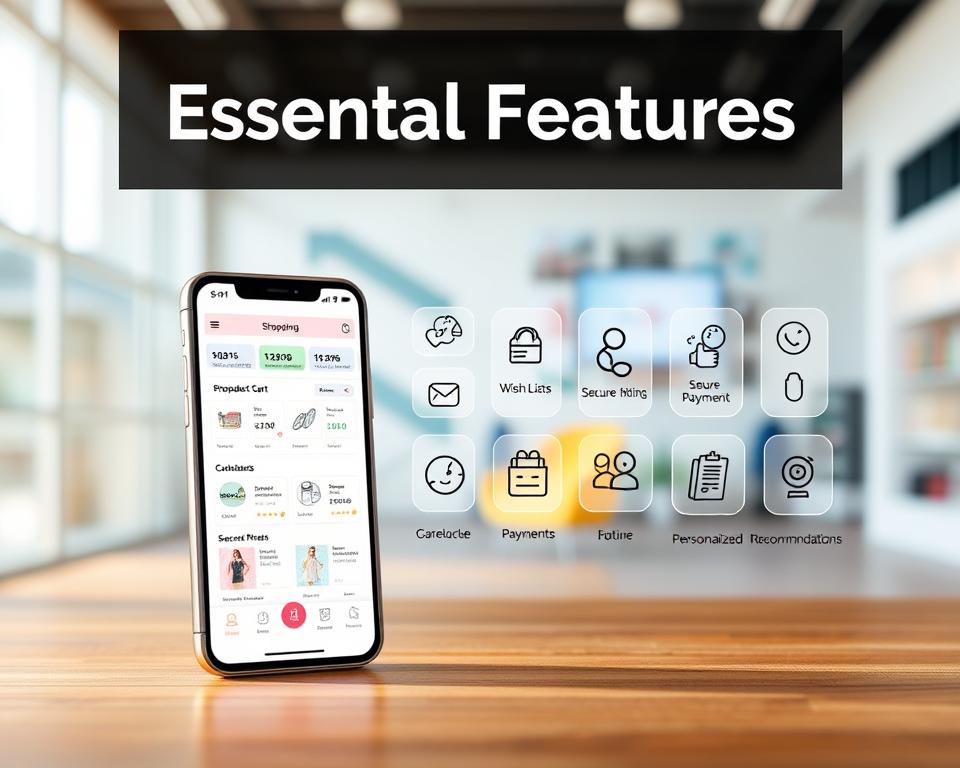
Creating a Temu-like ecommerce app needs key features for a great user experience. These features help users shop and interact with the app easily. They are crucial for any ecommerce app’s success.
User Registration and Profile Management
User registration and profile management are key parts of any ecommerce app. They let users create accounts, save preferences, and track orders.
A good registration process keeps customers coming back. It makes it simple for them to manage their info and preferences.
Advanced Product Search and Discovery
An advanced product search and discovery feature is vital. It helps users find products fast and efficiently. This includes filters, sorting, and AI recommendations based on user behavior.
Shopping Cart and Wishlist Functionality
The shopping cart and wishlist are key for managing products. A user-friendly cart lets customers review, apply discounts, and check out easily.
The wishlist feature lets users save items for later. It encourages them to come back to the app.
Secure Payment Gateway Integration
Integrating a secure payment gateway builds trust with users. It uses SSL encryption, follows PCI DSS standards, and offers various payment options. This meets different user needs.
Gamification and Engagement Features That Drive User Retention
Gamification is a big deal for ecommerce apps. It helps keep users coming back and makes the app more fun. By adding game-like features, businesses make their platforms more interactive and rewarding.
It’s not just about making things fun. Gamification is a smart way to get users to come back, build loyalty, and boost sales. Good gamification means more user engagement, happier customers, and a strong market position.

Reward Points and Loyalty Programs
Reward points and loyalty programs are key in ecommerce gamification. They reward customers for buying and interacting with the app. Users get discounts, free stuff, or other perks.
Reward points can be earned in many ways, like buying, leaving reviews, or referring friends. This keeps users coming back and keeps them excited to use the app.
Referral Systems and Social Sharing
Referral systems are another great tool. They encourage users to bring in new customers. This grows the user base and rewards current users.
Social sharing goes hand in hand with referrals. Users share their experiences and deals on social media. This boosts brand visibility and brings in new visitors.
Daily Deals and Flash Sales
Daily deals and flash sales add excitement and urgency. They push users to buy quickly, boosting sales and engagement.
The limited-time nature of these offers keeps users coming back. They hope to catch the next big deal. This keeps the app lively and users active.
Admin Panel Requirements for Marketplace Management
The backbone of any successful ecommerce marketplace is its admin panel. It’s key for managing vendors, tracking inventory, and analyzing sales data. This ensures the marketplace runs smoothly.
A good admin panel is the heart of marketplace management. It gives admins the tools to manage the platform. This includes handling vendor accounts, keeping an eye on inventory, and analyzing sales trends.
Vendor Management Dashboard
A comprehensive vendor management dashboard is vital for managing many vendors. It should let admins easily onboard new vendors, manage their profiles, and track their performance.
Key features of a vendor management dashboard include:
- Vendor registration and verification process
- Profile management for vendors
- Performance tracking and analytics for vendors
- Communication tools for administrators to interact with vendors
Inventory and Order Tracking
Effective inventory and order tracking are key. They ensure products are available when needed and orders are fulfilled right. The admin panel should offer real-time updates on inventory and order status.
Key features for inventory and order tracking include:
- Real-time inventory level updates
- Order status tracking
- Low stock alerts for timely restocking
- Inventory reporting for analytics

Analytics and Reporting Tools
To make smart decisions, admins need access to detailed analytics and reporting tools. These tools should offer insights into sales trends, customer behavior, and vendor performance.
| Analytics Feature | Description | Benefit |
|---|---|---|
| Sales Performance | Detailed reports on sales trends and revenue | Helps in identifying top-selling products and vendors |
| Customer Behavior | Insights into customer purchasing habits and preferences | Enables targeted marketing and improved customer satisfaction |
| Vendor Performance | Metrics on vendor sales, ratings, and customer satisfaction | Aids in evaluating vendor performance and making informed decisions |
By adding these features to the admin panel, admins can manage their platforms well. This drives growth and boosts customer satisfaction.
Technology Stack Selection for Your Ecommerce App
The tech stack you pick for your ecommerce app is key. It affects how well your app works, how fast it is, and how users feel. A good tech stack means your app can handle more users, looks great, and keeps data safe.
When picking a tech stack, look at several important parts. These are frontend tech, backend setup, database management, and cloud hosting.
Frontend Development Technologies
Frontend tech makes your app’s interface user-friendly and fun. React, Angular, and Vue.js are top choices. They help make your app look good and work smoothly.
Key considerations for frontend development include:
- Responsiveness and mobile-friendliness
- Interactive elements and UI components
- Integration with backend services

Backend Infrastructure and Frameworks
The backend is where data gets processed and stored. Node.js, Django, and Ruby on Rails are good choices. Pick a backend tech that fits your app’s needs and your team’s skills.
Important factors for backend infrastructure include:
- Scalability to handle increased traffic
- Security measures to protect user data
- Integration capabilities with third-party services
Database Management Systems
Choosing a database is crucial for storing and getting data. MySQL and PostgreSQL are great for keeping data in order. MongoDB is better for handling different types of data. Pick a database that fits your data needs.
Considerations for database management include:
- Data structure and schema design
- Scalability and performance optimization
- Data security and backup strategies
Cloud Hosting and Storage Solutions
Cloud hosting is essential for ecommerce apps. AWS, Azure, and GCP offer many services. Choose cloud hosting based on cost, performance, and if it meets your app’s needs.
Key benefits of cloud hosting include:
- Scalability to match demand
- High availability and redundancy
- Advanced security features
Mobile App Development Approach: Native vs Cross-Platform
Businesses aiming to create a Temu-like ecommerce app need to understand native and cross-platform development. The choice depends on budget, target audience, and app performance needs.
Choosing a mobile app development method is key. Native development means making separate apps for iOS and Android. This uses their specific programming languages and tools.
iOS and Android Native Development
Native development gives optimal performance and direct access to device hardware. But, it means keeping two codebases, which can raise costs and time. For those with the means, it offers a top-notch user experience.
Native apps can use the latest OS features and hardware. This makes them more integrated and responsive. It’s crucial for apps needing high performance, like games or video editors.
React Native and Flutter Frameworks
Cross-platform frameworks like React Native and Flutter let developers make apps for both iOS and Android with one codebase. This cuts down on development time and costs, making it good for budget-conscious businesses.
React Native, backed by Facebook, and Flutter, supported by Google, are top choices. They offer pre-built components and tools to ease development. For example, businesses can use cross-platform app developers to efficiently build ecommerce apps.

Choosing the Right Approach for Your Budget
The choice between native and cross-platform depends on your business needs and budget. Native is best for high-performance apps if you have the resources. Cross-platform is cost-effective and still offers a great user experience if you’re on a tighter budget.
Think about your target audience’s device preferences, app complexity, and maintenance plans. By considering these, you can pick the mobile app development method that fits your business goals.
Implementing AI and Machine Learning for Personalization
AI and machine learning are changing ecommerce by making personalization better. They help analyze lots of customer data. This lets businesses offer experiences that make users more engaged and likely to buy.
AI is especially useful in product recommendation engines. These engines look at what customers buy and like. They suggest products that might interest them, which can lead to more sales.
Product Recommendation Engines
Product recommendation engines are key to making shopping personal. They use machine learning to guess what customers might like. This makes shopping better and can increase sales and keep customers coming back.
To set up a good product recommendation engine, follow these steps:
- Collect and analyze customer data
- Choose the right machine learning algorithms
- Integrate the engine with your ecommerce site
- Keep an eye on and improve the engine’s performance
Dynamic Pricing Algorithms
Dynamic pricing algorithms also play a big role in ecommerce. They change prices based on demand, competition, and how customers act. This keeps prices fair and boosts profits.
Here’s how dynamic pricing compares to traditional pricing:
| Pricing Strategy | Characteristics | Benefits |
|---|---|---|
| Traditional Pricing | Prices stay the same based on cost-plus analysis | Easy to set up, predictable income |
| Dynamic Pricing | Prices change in real-time based on demand and competition | Increases revenue, stays competitive |
Customer Behavior Analytics
Knowing how customers act is key for personalization. Customer behavior analytics looks at how people use the ecommerce site. It helps create targeted ads and improve the shopping experience.
For more on ecommerce platforms with AI, check out Temu clone app development cost and.

Supply Chain and Logistics Integration
In the competitive ecommerce world, it’s crucial to integrate supply chain and logistics well. This ensures smooth operations and happy customers. Supply chain integration and logistics management are key for ecommerce success.
Managing many vendors, tracking orders, and handling international shipments can be tough. But, with the right tools, ecommerce businesses can make these tasks easier. They can cut costs and speed up delivery times.
Multi-Vendor Shipping Management
Multi-vendor shipping management is a core part of supply chain integration. It means working with different vendors to get products to customers fast. A good shipping system helps by:
- Automating shipping labels
- Calculating shipping rates on the fly
- Working with many shipping carriers
This makes shipping easier, cuts down on mistakes, and makes customers happier.
Real-Time Order Tracking
Real-time order tracking is key for a better customer experience. It lets customers see where their orders are from start to finish. This builds trust and cuts down on questions about orders.
To offer real-time tracking, ecommerce sites can connect with shipping carriers’ APIs. This boosts customer happiness and helps solve problems quickly.

International Shipping Capabilities
For ecommerce sites looking to grow globally, international shipping capabilities are a must. This means working with global carriers, figuring out duties and taxes, and following customs rules.
By shipping internationally, ecommerce sites can reach more customers and grow their business. It’s important to make sure the logistics system can handle these shipments well.
In summary, integrating supply chain and logistics is essential for ecommerce success. Focusing on managing many vendors, tracking orders in real-time, and shipping internationally can improve efficiency and customer happiness.
Payment Processing and Security Considerations
Ecommerce apps like Temu need to offer secure and flexible payment options. As online shopping grows, keeping payments safe and reliable is key.
It’s important to have many payment gateways to serve different customers. This makes shopping easier and can lead to more sales. Popular choices include PayPal, Stripe, and Square, each with its own strengths.
Multiple Payment Gateway Options
Having various payment methods boosts customer happiness. This includes cards, digital wallets like Apple Pay, and even cryptocurrencies for the future.
| Payment Gateway | Transaction Fees | Security Features |
|---|---|---|
| PayPal | 2.9% + $0.30 per transaction | Two-factor authentication, encryption |
| Stripe | 2.9% + $0.30 per transaction | PCI DSS compliant, advanced fraud detection |
| Square | 2.6% + $0.10 per transaction (online) | End-to-end encryption, PCI DSS compliant |
PCI DSS Compliance and Data Encryption
Any app handling credit card info must follow PCI DSS rules. This means using strong encryption and keeping transactions safe.
“PCI DSS is a set of security standards designed to ensure that all companies that accept, process, store, or transmit credit card information maintain a secure environment.”
Strong data encryption is key to PCI DSS. It keeps sensitive info safe while it’s moving or stored. Using SSL/TLS certificates and secure data transfer protocols is crucial.
Fraud Detection Systems
It’s vital to have top-notch fraud detection systems. These systems use machine learning to spot and stop suspicious activity.
- Real-time transaction monitoring
- Machine learning-based risk assessment
- 3D Secure verification for added security layer
By focusing on secure payment processing, ecommerce apps can gain user trust. This not only improves the shopping experience but also helps the business grow.
The Complete Development Process from Concept to Launch
Creating a Temu-like ecommerce app is a detailed process. It starts with a concept and ends with the app’s launch. This journey is key to making a successful and easy-to-use ecommerce platform.
The first step is to understand the market and what’s needed. Market research is crucial. It helps find out who to sell to, how they behave, and who else is selling similar things. This stage is important for figuring out what makes your app special and your business plan.
Market Research and Requirements Analysis
Market research is all about knowing what your audience wants. It looks at how people act, what’s popular, and who else is out there. This info is vital for making a solid business plan and deciding what your app will have.
After the research, you make a list of what your app needs. This includes the features, how it looks, and the tech behind it. For more on making an ecommerce app like Temu, check out Infinmobile’s guide.
UI/UX Design and Prototyping
UI/UX design is all about making your app easy to use and fun. A good design keeps users coming back and helps them buy more. It’s a big part of making your app successful.
Prototyping is when you make a basic version of your app. It’s tested to see if it works and feels right. This stage helps find and fix any problems before you start building the real app. For more on app design, see Next Big Technology’s article.
Development Phases and Sprints
The development phase is when the app is actually built. It’s split into sprints, each focusing on a part of the app. Agile methods are used to make the app better bit by bit.
In each sprint, the team works on a specific part of the app. This way, the app can change based on feedback and new ideas. It makes the app more flexible and able to adapt.
Quality Assurance and Testing
Quality assurance makes sure the app is good and works right. It includes different tests to check if everything is okay. This stage is key to making sure the app is ready for users.
Good testing finds and fixes problems before the app is out. This makes the app better for users and lowers the chance of problems after it’s released.
Cost Breakdown for Developing a Temu-Like Ecommerce App
Knowing the cost to make a Temu-like ecommerce app is key for businesses looking to enter the competitive ecommerce market. The total cost includes several parts, each important for the app’s development.
Development Team Composition and Rates
The development team is essential for any ecommerce app project. The cost of hiring developers, designers, and project managers varies. It depends on their skills, location, and the tech needed.
Key Roles and Their Estimated Costs:
- Project Manager: $50-$100 per hour
- UX/UI Designer: $40-$90 per hour
- Backend Developer: $50-$150 per hour
- Frontend Developer: $40-$120 per hour
- Quality Assurance Tester: $30-$80 per hour
The hourly rates given are rough estimates. They can change based on the team’s location and experience. For example, hiring in the U.S. or Western Europe is pricier than in Eastern Europe or Asia.
Feature-Based Cost Analysis
The app’s features greatly affect the development cost. Basic features like user sign-up and shopping cart are necessary. But, adding advanced features like AI product suggestions increases the cost.
| Feature | Complexity Level | Estimated Development Time |
|---|---|---|
| User Registration | Medium | 20-40 hours |
| Product Catalog | High | 40-80 hours |
| Payment Gateway Integration | Medium | 20-40 hours |
Ongoing Maintenance and Updates
After the app is built, ongoing care is vital. It keeps the app up-to-date and secure. This includes updates for new OS versions, security fixes, and adding new features based on user feedback.
Maintenance costs usually range from 15% to 20% of the initial cost each year.
By understanding these costs, businesses can plan their budget better. This helps in developing a successful Temu-like ecommerce app.
Monetization Strategies for Your Marketplace Platform
To make money, ecommerce marketplaces need good monetization plans. It’s key to keep and grow a successful online shop.
The right plan can really help an ecommerce site’s money and success. By having different ways to make money, shops can be more stable financially.
Commission-Based Revenue Models
Many online shops use a commission model. This means they charge sellers a part of the sale price for each sale made through the site.
Benefits of Commission-Based Models:
- It makes sellers want the site to do well
- It helps sellers improve their listings and marketing
- It’s a way to make more money as sales increase
| Commission Rate | Industry Average | Potential Revenue |
|---|---|---|
| 5% | Common in highly competitive markets | $50,000 (for $1 million in sales) |
| 10% | Typical for niche or high-value products | $100,000 (for $1 million in sales) |
| 15% | Used by platforms with strong value propositions | $150,000 (for $1 million in sales) |
Subscription Plans for Vendors
Subscription plans for sellers are also a good way to make money. These plans give sellers extra perks like better product visibility and support.
Key Features of Vendor Subscription Plans:
- Enhanced product listings with premium features
- Access to advanced marketing tools and analytics
- Priority customer support and dispute resolution
Advertising and Promotional Opportunities
Advertising is a big money maker for online shops. By offering ads, shops can attract brands wanting to reach their users.
Types of Advertising:
- Sponsored product listings
- Banner ads on the platform
- Email marketing campaigns
By using a mix of these strategies, online shops can build a strong and varied way to make money. This supports their growth and success.
Marketing and User Acquisition Tactics
To shine in the competitive ecommerce market, apps must use strong marketing tactics and user acquisition plans. Good marketing is key to drawing in new users and keeping current ones happy in the crowded app world.
The success of an app like Temu relies on connecting with its audience. This means using many channels, like making the app more visible in stores and on social media. It also means starting referral programs to get users to bring in more friends.
App Store Optimization Strategies
App Store Optimization (ASO) is vital for user acquisition. It makes the app more visible in stores, leading to more downloads. Important ASO steps include:
- Using the right keywords in the app’s title and description
- Creating catchy icons and screenshots
- Getting positive reviews and ratings
By making the app easier to find, ASO boosts organic downloads and cuts user acquisition costs.
Social Media and Influencer Marketing
Social media marketing is a strong tool for user acquisition. Sites like Facebook, Instagram, and TikTok let apps target their audience with ads. Working with influencers can also help grow the brand and get more downloads.
By making interesting content and running ads, apps can draw in new users. Influencer partnerships add credibility and reach new people, beyond what ads alone can do.
Referral Programs and Incentives
Referral programs are great for getting current users to invite others to download the app. Offering rewards like discounts or special content encourages users to share the app. This way, apps can grow fast and keep costs down.
A good referral program can really help an app grow, as each new user brings in more. This approach not only saves money but also builds a loyal community around the app.
Scaling Your Ecommerce Platform for Growth
To grow your ecommerce business, you need to scale your platform well. As your business grows, your platform must handle more traffic and sales. It should do this without slowing down.
Scaling your ecommerce platform involves several important steps. These include making your infrastructure more flexible, adding more products and vendors, and expanding into new areas. Each step is crucial for supporting growth and keeping users happy.
Infrastructure Scalability Planning
Having a scalable infrastructure is key to a successful ecommerce platform. It means your technical setup can grow with your business. This includes:
- Cloud Hosting: Using cloud services like Amazon Web Services (AWS) or Google Cloud Platform (GCP) to scale as needed.
- Load Balancing: Spreading traffic across servers to avoid overload.
- Database Optimization: Making your database efficient for handling lots of data and transactions.
Expanding Product Categories and Vendors
Adding more products and vendors is essential for attracting more customers and boosting sales. You can do this by:
- Conducting Market Research: Finding out what products are in demand and what customers want.
- Vendor Onboarding Process: Making it easy for new vendors to join your platform.
- Category Management: Organizing products well to make shopping easier for customers.
Geographic Expansion Strategies
Expanding into new markets can really help your ecommerce business grow. Strategies for this include:
- Market Research: Learning about local markets, consumer behavior, and preferences.
- Localization: Making your platform fit local languages, currencies, and cultures.
- Logistics and Shipping: Setting up efficient shipping and logistics in new areas.
By focusing on these areas, you can scale your ecommerce platform for sustainable growth and expansion.
Legal and Compliance Requirements for US Marketplace Apps
Understanding US laws is key for ecommerce app success. Apps must follow rules to protect consumers and keep trust. This helps avoid legal issues.
The US ecommerce laws are complex. They mix federal and state rules. Knowing these is vital for a compliant and thriving app.
Consumer Protection Laws
Consumer protection laws aim to prevent unfair business practices. The Federal Trade Commission Act and the Consumer Product Safety Act are key. They ensure fair business and safe products.
Apps must follow these laws. This means giving accurate product info, clear prices, and refund policies. Not following can lead to big fines and harm to reputation.
| Legislation | Description | Impact on Ecommerce Apps |
|---|---|---|
| Federal Trade Commission Act | Prohibits unfair or deceptive acts or practices | Requires accurate product information and transparent pricing |
| Consumer Product Safety Act | Ensures the safety of consumer products | Mandates compliance with product safety standards |
Privacy Policies and Terms of Service
Apps need clear privacy policies and terms of service. These explain how data is used and protected.
A good privacy policy should detail data collection and protection. Terms of service should outline app usage rules and dispute resolution.
Tax Collection and Reporting
Apps must follow tax laws, which differ by state. This includes collecting and paying sales tax on sales.
Tax compliance is complex due to varying rates and rules. Apps need strong systems for tax calculation and reporting.
Key tax compliance points include:
- Determining nexus: Establishing a sufficient connection to a state to trigger tax obligations
- Calculating tax rates: Applying the correct tax rates based on the location of the buyer
- Reporting and remittance: Filing tax returns and remitting collected taxes to the relevant authorities
Conclusion
Creating a Temu-like ecommerce app needs careful thought. You must consider the business model, features, legal rules, and how it can grow. A successful marketplace has key features like user sign-up, advanced search, and safe payment options.
It’s not just about launching an app. It’s about building a strong system for vendors, customers, and admins. Temu-like apps should focus on making the user experience great. They should use AI and machine learning for personal touches and fun strategies to keep users coming back.
Marketplace platforms must be ready to grow. They need to handle more vendors, products, and customers. By tackling the challenges of ecommerce app development, businesses can build a successful online market. They should focus on legal rules, payment safety, and marketing to meet their audience’s needs.


