







In today’s world, companies are looking to offshore hiring to find the best talent. This move helps them stay ahead and meet their goals. Hiring enterprise software developers from other countries can be a smart choice.
The need for skilled software developers is growing fast. It’s key to know the good and bad of offshore hiring. This guide dives deep into the process. It shows the best ways and things to think about when growing your team worldwide.
Table of Contents
Key Takeaways
- Understand the benefits of offshore hiring for enterprise software development
- Learn how to navigate the challenges associated with offshore hiring
- Discover best practices for hiring and managing offshore teams
- Gain insights into the key considerations for businesses looking to expand globally
- Explore the importance of effective communication in offshore hiring
Understanding Enterprise Software Development and Offshore Hiring
Offshore hiring is a smart move for companies wanting to use global talent in enterprise software development. It means having a team in another country to make and keep software running. This way, businesses can get special skills and save money.
Enterprise software development is about making big software for big companies. These programs help manage things like customer relationships, planning, and supply chains.

With software development outsourcing, companies can find talent from all over the world. This not only cuts down on labor costs but also speeds up projects. It uses the difference in time zones to work around the clock.
| Key Aspects | Description | Benefits |
|---|---|---|
| Global Talent Access | Access to a worldwide pool of skilled developers | Innovative solutions, diverse skill sets |
| Cost Efficiency | Reduced labor costs due to lower costs of living in offshore locations | Budget optimization, cost savings |
| Time Zone Advantage | 24/7 development cycle due to different time zones | Faster time-to-market, round-the-clock productivity |
Knowing about enterprise software development and offshore hiring helps businesses make smart choices. This knowledge lets them understand software development outsourcing better. It helps them use its benefits to their advantage.
Why Companies Choose to Hire Enterprise Software Developers Offshore
Offshore hiring for enterprise software development is a smart move for businesses. It helps them use resources better. By hiring developers from around the world, companies can push their projects forward.
Cost Efficiency and Budget Optimization
Companies hire offshore developers to save money and manage their budgets better. Offshore teams often cost less than in-house teams. This is because labor costs are lower in many parts of the world.
For example, a US company can cut development costs by 50% by hiring in Eastern Europe or Asia. This lets them spend more on marketing and improving their products.
| Region | Average Hourly Rate | Cost Savings |
|---|---|---|
| Eastern Europe | $25-$35 | 40%-60% |
| Asia | $15-$25 | 50%-70% |
| Latin America | $20-$30 | 30%-50% |
Access to Global Talent Pool
Hiring offshore gives companies access to a global talent pool. This means they can find the best professionals for their needs. It’s great for projects that need rare skills.
By using the global talent pool, businesses can build a team with a wide range of skills. This improves the quality and innovation of their projects.

Faster Time-to-Market
Offshore hiring speeds up software development, leading to a faster time-to-market. Offshore teams can work around the clock. This means projects can be finished faster, allowing businesses to launch sooner.
This is key in today’s fast tech world. Being first to market can greatly impact a product’s success.
24/7 Development Cycles
Another benefit of offshore hiring is 24/7 development cycles. Teams in different time zones can work continuously. This shortens project times and boosts productivity.
Continuous development across time zones speeds up projects. It also keeps work going without pause, improving overall productivity.
Key Benefits of Offshore Enterprise Software Development
Offshore enterprise software development is a big win for companies wanting to boost their software. By going offshore, businesses get access to many benefits. These can help grow and innovate.
Scalability and Flexibility
One key benefit is the ability to scale resources as needed. This scalability lets businesses quickly adjust to market changes or project needs. They don’t have to worry about finding local talent.
Offshore teams also offer flexibility in work hours and project timelines. This is great for companies needing to speed up development or work around the clock to meet deadlines.
| Benefit | Description | Impact |
|---|---|---|
| Scalability | Ability to scale resources up or down based on project needs | Enhanced adaptability to changing project requirements |
| Flexibility | Flexible working hours and project timelines | Faster time-to-market and improved productivity |
Focus on Core Business Activities
Outsourcing software development offshore lets companies focus on their core business activities. The offshore team handles software development. This lets the company focus on its main strengths and strategic plans.
This focus improves business efficiency and effectiveness. Resources are used more strategically. It also helps companies innovate and stay ahead in their markets.

Access to Specialized Skills and Technologies
Offshore enterprise software development opens up a global talent pool. Businesses can use specialized skills and technologies not available locally.
This is especially useful for companies needing the latest technologies or specific skills for their projects. It keeps them up-to-date and delivers top-notch software solutions.
Common Challenges When Hiring Offshore Developers
Hiring offshore developers can be smart, but it has its own challenges. Companies need to know these obstacles to work well together and get good results.
Communication and Time Zone Differences
One big challenge is talking across different time zones. This can slow down responses and slow down the project. To fix this, companies can use good communication tools and set clear rules for updates.
For example, using tools that work well with different time zones can help a lot. Here’s a look at some popular tools and what they offer:
| Tool | Primary Use | Time Zone Friendly |
|---|---|---|
| Slack | Team Messaging | Yes |
| Zoom | Video Conferencing | Yes |
| Trello | Project Management | Yes |
Cultural and Work Style Variations
Cultural differences can change how teams work together. Differences in work styles, holidays, and language can affect projects. It’s important to understand and respect these differences for good teamwork.
Companies can help by offering cultural training or workshops. This can make teams more inclusive and help bring new ideas to the table.

Quality Control and Management Oversight
Keeping quality control high and managing well are big challenges with offshore teams. Companies need to have strict quality checks and check in often to see how things are going.
Using standard processes and project management tools can help keep quality up. Regular checks and feedback are key to making sure projects meet standards.
Top Countries to Hire Enterprise Software Developers – Offshore Hiring Guide
Companies searching for top enterprise software developers often look offshore. It’s important to consider more than just cost. Look at technical skills, cultural fit, and the business environment of the countries.

Eastern Europe: Ukraine, Poland, and Romania
Eastern Europe is becoming a key place for offshore software development. It has strong education systems and is close to European time zones.
Technical Expertise and Education Systems
Ukraine, Poland, and Romania have many IT professionals. They focus on science, technology, engineering, and mathematics (STEM). Universities in these countries produce many skilled engineers and developers every year.
Time Zone Compatibility with the United States
Hiring from Eastern Europe is good because of the small time difference with the U.S. This makes it easy to work together across the Atlantic. It’s great for U.S.-based companies wanting to grow their development team offshore.
Latin America: Mexico, Brazil, and Argentina
Latin America is also becoming popular for offshore software development. It has cultural ties with the U.S. and a growing tech industry.
Proximity and Cultural Alignment
Latin America and the U.S. share cultural values. Many Latin American professionals speak English well. This makes working together easier and reduces misunderstandings.
Growing Tech Ecosystems
Mexico, Brazil, and Argentina are investing in their tech scenes. Startups and tech hubs are growing in big cities. This means more skilled developers for complex projects.
Asia: India, Philippines, and Vietnam
Asia is a big player in offshore software development. Countries like India, the Philippines, and Vietnam offer good value and technical skills.
Large Talent Pool and Cost Advantages
India is known for its huge IT talent pool. It’s also very cost-effective. This makes Asia a great choice for companies looking to save on development costs.
English Proficiency Levels
The Philippines is known for its high English skills. This, along with cultural adaptability, makes Filipino developers great for offshore teams.
Other Emerging Markets
Other countries are also becoming options for offshore hiring. Nations in Africa and Southeast Asia are improving their IT and education. This opens up new chances for offshore software development.
The world is changing, and companies have many choices for hiring enterprise software developers offshore. It’s important to find the best fit for their needs, culture, and budget.
Essential Skills to Look for in Enterprise Software Developers
Enterprise software development needs a special set of skills. These include technical know-how, architectural knowledge, and security awareness. When hiring, look for a mix of technical skills, knowledge of enterprise architecture, security expertise, and soft skills.
Technical Proficiencies and Programming Languages
Technical skills are the base of any enterprise software project. Developers should know programming languages like Java, .NET, and Python. They also need to know enterprise frameworks for scalable software.
Java, .NET, Python, and Enterprise Frameworks
Knowing Java, .NET, and Python is key for strong enterprise apps. Java is great for big projects because it works on many platforms. .NET is good for Windows apps with its tools and frameworks. Python is versatile for data analysis and machine learning in businesses.
- Java: Known for its “write once, run anywhere” capability, making it ideal for cross-platform applications.
- .NET: Offers a robust framework for building Windows-based applications and services.
- Python: Excels in data science, machine learning, and automation tasks.
Cloud Platforms and Microservices Architecture
Knowing cloud platforms and microservices architecture is key for digital transformation. Developers should design and implement scalable, secure apps for cloud platforms like AWS, Azure, or Google Cloud.
For more insights on hiring developers with expertise in emerging technologies like AI, you can refer to this guide on hiring AI developers.
Enterprise Architecture Knowledge
Developers need to understand the big picture of the organization’s architecture. This includes system integration, API development, database management, and data modeling.
System Integration and API Development
Being able to integrate systems and develop strong APIs is vital. It ensures smooth user experiences and lets different software parts talk to each other well.
Database Management and Data Modeling
Good database management and data modeling are key for data integrity, scalability, and performance. Developers should be able to design databases for complex enterprise apps.

Security and Compliance Expertise
Security is crucial today. Developers must know security best practices and compliance to protect data and meet regulations.
Soft Skills and Communication Abilities
While technical skills are important, soft skills like communication, teamwork, and problem-solving are just as vital. Developers should work well with teams, explain technical stuff to non-tech people, and adjust to project changes.
As experts say, “Soft skills are often the difference between good and great developers.” Good communication and teamwork are essential for successful enterprise software projects.
Offshore Hiring Models: Choosing the Right Approach
It’s important to know the different offshore hiring models to make a good choice. Each model has its own benefits and challenges. They can help meet your business goals.
Staff Augmentation Model
The staff augmentation model lets you hire offshore developers to help your team. It’s great for temporary needs or when you need specific skills.
Benefits: It’s flexible, scalable, and adapts well to project changes.
Dedicated Development Team
A dedicated team works only on your projects. They give full commitment and focus. This model is best for long-term projects.
Advantages: They understand your project goals well, communication is better, and teamwork is strong.
Project-Based Outsourcing
In this model, a third-party handles a specific project. It’s good for outsourcing a whole project.
Key Benefits: It saves management time, cuts costs, and brings in specialized skills.
Hybrid Models
Hybrid models mix different approaches to fit your needs. They offer flexibility and tailored solutions.
Advantages: They’re flexible, offer customized solutions, and use the best of each model.
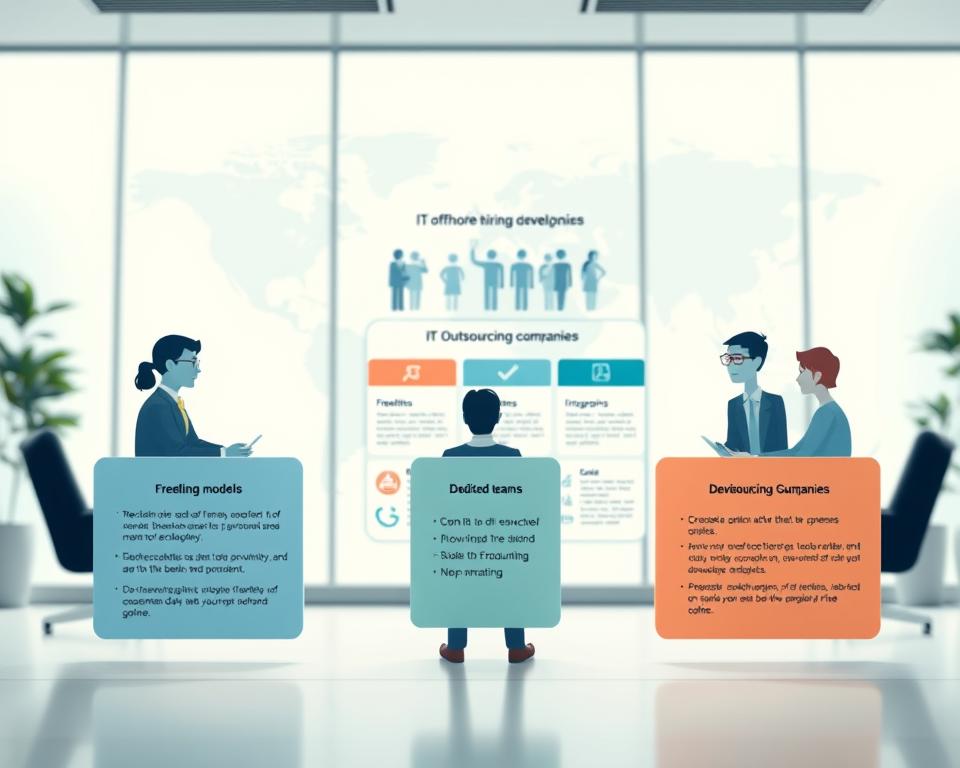
| Hiring Model | Key Benefits | Ideal For |
|---|---|---|
| Staff Augmentation | Flexibility, scalability | Temporary support, specific skills |
| Dedicated Team | High commitment, focused effort | Long-term projects |
| Project-Based Outsourcing | Reduced management, cost savings | Outsourcing entire projects |
| Hybrid Models | Flexibility, tailored solutions | Customized hiring strategies |
Step-by-Step Process to Hire Offshore Enterprise Developers
To hire offshore enterprise developers, companies must follow a detailed process. This process is key to the success of your project. It involves several important steps.
Define Your Project Requirements and Goals
First, you need to clearly define your project’s needs and goals. This is the foundation for finding the right talent.
Technical Specifications and Scope
Next, outline your project’s technical details and scope. This helps identify the skills and expertise needed from your developers. It includes the technologies and programming languages to be used.
Timeline and Budget Constraints
Then, set a realistic timeline and budget for your project. This is crucial for managing expectations and finding developers who fit your financial and time constraints.
Research and Shortlist Potential Vendors or Platforms
After defining your project, research and shortlist potential vendors or platforms. These are the places where you can find the offshore developers you need.
Using Offshore Development Platforms
Using offshore development platforms can make finding developers easier. These platforms offer a large talent pool and help with the initial screening.
Direct Company Outreach
Alternatively, you can reach out to offshore development companies directly. This method allows for a more personal evaluation of their capabilities and cultural fit.

Evaluate Company Portfolios and Case Studies
It’s important to evaluate the portfolios and case studies of potential vendors. This gives you insights into their past work, quality, and experience with similar projects.
Request Proposals and Compare Offerings
Request proposals from your shortlisted vendors. This lets you compare their offers in detail. Look at their approach, timelines, pricing, and proposed team.
By following these steps, businesses can hire offshore enterprise developers who meet their needs. This ensures the success of your project.
Vetting and Screening Offshore Developer Candidates
Finding the right offshore developer is a detailed process. Businesses need to carefully evaluate candidates to match their project needs. This ensures they hire the best talent.
Technical Assessment and Coding Tests
Technical skills are key when hiring offshore developers. Assessments and coding tests check if a candidate can code well and solve problems.
Live Coding Challenges
Live coding challenges test a candidate’s coding skills in real-time. They show how well a candidate can think and solve problems under pressure.
Take-Home Assignments
Take-home assignments help evaluate a candidate’s skills. They give a chance to see how a candidate works alone and manages time.
Portfolio and Previous Project Review
Looking at a candidate’s portfolio and past projects is crucial. It shows their experience and if they can deliver quality work.
When reviewing portfolios, look for:
- Relevant project experience
- Technical skills used in previous projects
- Quality of work and attention to detail
Reference Checks and Background Verification
Reference checks and background verification are important. They confirm a candidate’s skills, experience, and professional reputation.
Key aspects to verify during reference checks include:
- Previous work experience and job responsibilities
- Technical skills and areas of expertise
- Professional reputation and work ethic
Cultural Fit Evaluation
It’s important to see if a developer fits your team’s culture. This means checking their communication skills, work style, and adaptability.
Effective cultural fit evaluation involves:
- Assessing communication skills and language proficiency
- Evaluating work style and adaptability
- Understanding their approach to teamwork and collaboration

By using a detailed vetting and screening process, businesses can find the best offshore developers. This includes technical assessments, portfolio reviews, reference checks, and cultural fit evaluations.
Conducting Effective Interviews with Offshore Developers
As companies grow globally, interviewing offshore developers is key. It’s a mix of technical tests, behavioral checks, and problem-solving to find the right fit.
Technical Interview Best Practices
Technical interviews are vital. Here are some tips to ace them:
- Know exactly what skills and tech you need for the job.
- Ask both theory and practical coding questions.
- Check if they know the tech and tools you use.
- See how they solve problems and debug.
Behavioral and Situational Questions
Behavioral and situational questions reveal a lot. They show how a candidate has worked, their teamwork skills, and how they handle tough spots. Some examples are:
- Tell me about a time when you had to work with a difficult team member.
- How do you handle conflicting priorities and tight deadlines?
- Describe a project you worked on and your role in its success.
Assessing Problem-Solving Abilities
Problem-solving is essential for developers. Use:
- Coding challenges that need creative solutions.
- Case studies or hypothetical project scenarios.
- Whiteboarding exercises to see their thought process.
Good interviews are a two-way street. They check if the candidate fits and let them check if the company is right for them.
| Interview Component | Purpose | Examples |
|---|---|---|
| Technical Interview | Assess technical skills and knowledge | Coding challenges, technical quizzes |
| Behavioral Questions | Evaluate past experiences and teamwork | Past project descriptions, teamwork scenarios |
| Problem-Solving Exercises | Assess innovative thinking and problem-solving | Coding challenges, case studies |
Cost Considerations for Hiring Offshore Enterprise Developers
When deciding to hire offshore enterprise developers, it’s important to look at the total cost. This means more than just the hourly rates. Other cost considerations can also affect your budget.
Hourly Rates by Region and Experience Level
Hourly rates for offshore developers vary by region and experience. For example, rates change between junior and senior developers.
Junior vs. Senior Developer Pricing
Junior developers usually charge less than senior ones. But, the project’s complexity and needed skills should decide between hiring junior or senior developers.
Regional Rate Comparisons
Hourly rates differ across regions. For instance, rates in Eastern Europe might be different from those in Asia or Latin America. Check our developer hiring cost comparison guide for more details.
Hidden Costs to Factor In
There are hidden costs to consider beyond hourly rates. These include management and coordination costs, as well as the project’s infrastructure and tools.
Management and Coordination Overhead
Managing an offshore team needs extra resources. This includes project managers and tools, which increase the total cost.
Infrastructure and Tools
It’s key that the offshore team has the right tools and infrastructure. This might mean buying software, hardware, and communication tools.
ROI and Long-Term Value Analysis
An ROI analysis is crucial to see the long-term benefits of hiring offshore developers. It helps evaluate cost savings, productivity gains, and project success.
By thinking through these points, businesses can make smart choices about hiring offshore developers. This ensures their investment pays off in the long run.
Legal and Contractual Considerations
When you expand your team offshore, you face many legal and contractual hurdles. It’s important to know the laws that apply and make sure your contracts protect your business. This ensures your interests are safe.
Intellectual Property Rights Protection
Protecting intellectual property (IP) is a top priority when hiring offshore developers. You need to make sure your IP is safe through strong legal agreements. These agreements should cover your unique information and ideas.
To keep your IP safe, consider these steps:
- Write clear IP ownership clauses in contracts
- Make sure all offshore developers sign NDAs
- Use encryption and access controls to secure your IP
Non-Disclosure Agreements and Data Security
Data security is also key when hiring offshore. You must ensure your developers follow strict data security rules. This means signing NDAs and using strong security measures.
Good data security practices include:
- Do regular security checks
- Use encryption for data
- Set up strict access controls
Service Level Agreements and Performance Metrics
Service Level Agreements (SLAs) are crucial. They set out what work is expected, when it’s due, and how well it should be done. SLAs should clearly state what each party must do.
A good SLA should have:
| SLA Component | Description | Importance |
|---|---|---|
| Scope of Work | Lists the tasks and what’s expected from the offshore team | High |
| Performance Metrics | Shows how the team’s performance will be measured | High |
| Timelines and Milestones | Outlines the project schedule and deadlines | High |
| Quality Standards | Specifies what quality is expected for the work | High |
By focusing on these legal and contractual aspects, you can avoid risks and have a successful offshore hiring experience.
Onboarding and Integrating Offshore Developers
To get the most out of offshore developers, a detailed onboarding process is key. It introduces them to the team and aligns them with the project’s goals and workflows.
Setting Up Communication Channels
Good communication is crucial for any project’s success. When bringing on offshore developers, it’s important to set up the right communication channels.
Choosing the Right Collaboration Tools
Picking the right tools for collaboration is vital. Tools like Slack, Microsoft Teams, or Asana help with real-time communication and task management.
“The right tools can make all the difference in how effectively your team collaborates.”
Establishing Communication Protocols
Clear communication protocols are essential. They ensure everyone is on the same page. This includes regular check-ins, response times, and clear channels for different discussions.
- Define primary and secondary communication channels.
- Establish a routine for regular team meetings.
- Set clear expectations for response times.
Knowledge Transfer and Documentation
Knowledge transfer is a big part of onboarding. It involves sharing project info, documentation, and best practices with offshore developers.
A good knowledge transfer process includes:
- Comprehensive documentation of project requirements and specifications.
- Sharing of relevant case studies or previous project experiences.
- Access to necessary tools and resources.
| Knowledge Transfer Activities | Description | Responsible Team |
|---|---|---|
| Documentation Sharing | Share project documents and specifications. | Project Management |
| Training Sessions | Conduct training on tools and technologies. | Technical Team |
| Case Studies Review | Review relevant case studies. | Business Development |
Establishing Workflows and Processes
Clear workflows and processes are key for smooth project execution. They involve defining roles, responsibilities, and task sequences.
Key elements of workflows and processes include:
- Defining project milestones and deliverables.
- Assigning tasks and responsibilities.
- Establishing a feedback loop for continuous improvement.
By focusing on these areas, companies can ensure a successful onboarding process for offshore developers. This leads to better collaboration and project execution.
Managing and Collaborating with Offshore Development Teams
Managing offshore development teams well is key to success. As more companies hire offshore, knowing how to manage these teams is crucial. This knowledge is vital for project success.
Project Management Tools and Methodologies
Choosing the right tools and methods for managing offshore teams is essential. Agile methodologies are popular in software development. They offer flexibility and allow for progress in steps.
Agile and Scrum for Distributed Teams
Agile and Scrum are great for teams spread out. They help with clear goals, accountability, and progress in steps. These methods help teams adjust to changing needs.
Using Jira, Asana, and Trello
Tools like Jira, Asana, and Trello are key for managing projects from different places. They offer a place for managing tasks, tracking progress, and team work. For example, finding the right offshore team is easier with these tools.
Scheduling Meetings Across Time Zones
Meeting times across different zones can be tough. But, with the right tools, it’s doable. Tools like World Time Buddy or TimeAndDate help schedule meetings for everyone.
“The art of communication is the language of leadership.” – James Humes
Building Trust and Team Cohesion
Building trust and team unity is vital for offshore teams. Regular team-building, clear communication, and celebrating individual efforts help a lot.
Performance Monitoring and Feedback
Keeping an eye on performance and giving feedback is key for team growth. Regular meetings and using metrics help spot areas for betterment.
Managing offshore teams well needs the right tools, methods, and people skills. By focusing on these, businesses can make their offshore projects successful.
Ensuring Quality and Security in Offshore Development
Ensuring quality and security in offshore development is key for any business outsourcing software development. It’s about having strong quality assurance, following code review standards, and keeping data safe.
Quality Assurance Processes
Quality assurance is vital in offshore development. It’s a set of steps to make sure the software meets the needed standards and specs.
Automated Testing and CI/CD Pipelines
Automated testing and Continuous Integration/Continuous Deployment (CI/CD) pipelines are crucial. They help find bugs early and make deploying updates smooth and fast.
Manual Testing and QA Reviews
Manual testing and QA reviews are also key. They catch issues automated tests might miss. This includes checking the software’s functionality, performance, and security.
Code Review Standards
Code review standards are essential for quality in offshore development. They keep coding standards high, make code easier to read, and lower error chances.
For more info on finding top software development companies that follow these standards, check out Next Big Technology.
Data Security and Compliance Measures
Data security is critical in offshore development, especially with sensitive info. Companies must have strong security measures to protect data and follow industry standards.
GDPR, HIPAA, and Industry Standards
Following regulations like GDPR and HIPAA is vital. Companies must stick to these and other standards to keep data safe and private.
Secure Development Practices
Using secure development practices is key to fight cyber threats and data breaches. This includes secure coding, regular security checks, and encryption.
| Security Measure | Description | Industry Standard |
|---|---|---|
| Data Encryption | Encrypting data to protect it from unauthorized access | GDPR, HIPAA |
| Secure Coding Practices | Following best practices to prevent vulnerabilities in code | OWASP |
| Regular Security Audits | Conducting regular audits to identify and address security vulnerabilities | PCI-DSS |
Conclusion
Hiring enterprise software developers offshore can be a smart move for businesses. It lets them find specialized talent and cut costs. Knowing the pros and cons helps companies make good choices for their projects.
To succeed in offshore hiring, following best practices is key. This means planning well, talking clearly, and checking potential partners or team members carefully.
Choosing the right offshore hiring model and managing the team well can bring big benefits. Businesses can get their products to market faster, grow, and find unique skills. As the global talent pool grows, companies that hire offshore can lead the way and grow their business.