






The world of work is changing fast. Traditional office settings are slowly fading into the past. Modern tech giants like GitLab and Automattic already thrive across several countries without using fixed offices.
This transition allows companies to find great talent by focusing on skills rather than location. Cutting administrative HR overhead is now a major goal for startups that want to grow fast. By using smart tools, firms can simplify remote hiring and onboard experts from anywhere.
Managing distributed teams requires clear communication and strong technical systems. These strategies help leaders create effective groups while staying efficient. Adapting to this model ensures that productivity remains high in a digital world.
Table of Contents
Key Takeaways
- Access a global pool of elite technical talent.
- Reduce costs by eliminating physical office expenses.
- Simplify the recruitment process with automated platforms.
- Improve employee satisfaction through flexible work options.
- Leverage proven frameworks from successful all-remote companies.
- Focus on output and results instead of hours at a desk.
Understanding the Remote Engineering Team Landscape
The world of remote engineering teams is changing fast. Old HR models are fading, and new, lean ways of managing teams are rising. This change is because people want more flexibility, to save money, and to find the best talent worldwide.
The Evolution of Remote Work in Software Development
Remote work is now big in software development. Remote jobs get 2.5× more applicants than jobs that need you to be there in person. Also, 36% of job ads now let you work from anywhere. This is because tech has improved and more people want to work from home.
New tools and platforms have also come up. They help teams that work from different places to work together better.
Why Traditional HR Models Create Overhead for Tech Companies
Old HR models can be a problem for tech companies. They are too rigid and slow to change. This makes things less efficient and more expensive.
Lean team management is a better way. It lets companies move fast and find the right people when they need them.
The Rise of Lean Team Management Approaches
Lean team management is becoming more popular. It aims to cut down on unnecessary costs and make teams work better. This way, companies can build strong teams without the usual HR costs.

Using lean team management, companies can save money, be more agile, and find the best talent. This helps them succeed in business.
Benefits of Building Remote Teams with Minimal HR Infrastructure
Using a lean HR approach for remote teams brings big benefits. It means less need for many HR people and less work for them. This lets companies use their resources better and focus on what’s important.
Significant Cost Savings on HR Personnel and Operations
One big plus of having a small HR team is saving money. Companies can save $11,000 a year for each half-time remote worker. They also save $6,000 to $12,000 on office space for each employee. This money can go to things like making new products, hiring more people, and other key business areas.
Direct Access to Global Engineering Talent
With a remote team, companies can find engineering talent worldwide. This global talent access means they can pick the best people, not just those nearby.

Enhanced Agility and Faster Decision Making
Remote teams with less HR can move faster and make decisions quicker. They don’t get bogged down by the usual HR red tape. This lets them adapt quickly to new project needs and market changes.
| Benefits | Description | Impact |
|---|---|---|
| Cost Savings | Reduced HR personnel and operations costs | $11,000 saved per half-time remote worker annually |
| Global Talent Access | Access to worldwide engineering talent | Better candidate selection |
| Agility | Faster decision-making processes | Improved responsiveness to market changes |
Key Challenges When Building Teams Without Dedicated HR
Remote teams face tough employment issues without HR support. Building a remote engineering team is challenging. It can affect the team’s work and follow laws.
Navigating Multi-Jurisdiction Employment Laws
Dealing with employment laws in many places is a big challenge. Ignoring local laws can cause fines, back pay, and harm to the company’s image. Companies must know the laws in each place their team members work.
Maintaining Consistency in Processes and Standards
Keeping processes and standards the same is hard without HR. It’s tough to make sure everyone follows the same rules. This can cause mistakes and slow things down.

Ensuring Compliance Without Specialist Knowledge
It’s hard to follow laws and rules without expert knowledge. Companies need to keep up with new laws and make sure their teams follow them.
| Challenge | Description | Potential Consequences |
|---|---|---|
| Navigating Multi-Jurisdiction Employment Laws | Understanding and complying with employment laws in multiple countries or regions | Penalties, back pay, reputational damage |
| Maintaining Consistency in Processes and Standards | Ensuring all team members follow the same procedures and adhere to the same standards | Confusion, errors, inefficiencies |
| Ensuring Compliance Without Specialist Knowledge | Staying up-to-date with changing regulations and ensuring compliance | Non-compliance, fines, reputational damage |
Essential Technologies for Streamlined Remote Hiring
Streamlining remote hiring is key for tech companies. It helps them build efficient teams without the costs of traditional HR. The right technologies can greatly improve the recruitment process.
Applicant Tracking Systems for Lean Operations
Applicant Tracking Systems (ATS) are crucial for efficient hiring. They organize candidate applications and simplify the screening process. This ensures no candidate is missed.
Greenhouse and Lever for Growing Teams
Greenhouse and Lever are great for growing teams. They offer features for the whole hiring process, from sourcing to onboarding. These platforms help teams grow their hiring processes efficiently.
BreezyHR and Workable for Budget-Conscious Startups
Startups on a budget can use BreezyHR and Workable. They provide affordable solutions with key features for remote hiring.
Video Interview and Assessment Platforms
Video interview and assessment platforms are essential for remote hiring. They allow companies to conduct technical screenings and interviews remotely. This saves time and resources.
HackerRank and CodeSignal for Technical Screening
HackerRank and CodeSignal are top choices for technical screening. They offer tools to accurately assess a candidate’s technical skills.
By using these technologies, companies can make their remote hiring more efficient and effective.

Strategies to Source Remote Engineering Talent Effectively
To build a strong remote engineering team, companies need new strategies. They must attract top talent from all over the world. Since 89% of applicants come from outside the headquarters, a solid sourcing plan is key.

Tapping Into Developer Communities and Niche Job Boards
Getting involved in developer communities and using niche job boards helps a lot. Sites like Stack Overflow, GitHub, and job boards for remote tech jobs are great resources.
Building Your Employer Brand Through Content and Transparency
A strong employer brand is vital for attracting remote engineers. Create valuable content and share your company culture and values. This builds trust with potential candidates through blog posts, social media, and employee stories.
Creating Referral Programs That Generate Quality Candidates
Referral programs are a smart way to find great candidates. Encourage your team to refer talented engineers. This way, you get candidates vetted by people you trust.
Using LinkedIn and GitHub for Passive Candidate Recruitment
LinkedIn and GitHub are great for finding passive candidates. Use their advanced search tools and join relevant discussions. This helps you connect with top talent who might not be looking for a job.
| Platform | Primary Use | Benefits for Remote Talent Sourcing |
|---|---|---|
| Professional Networking | Advanced search capabilities, professional profiles | |
| GitHub | Code Sharing and Collaboration | Showcases developers’ work, open-source contributions |
| Niche Job Boards | Specialized Job Listings | Targets specific skill sets, remote-friendly job postings |
Designing Efficient Screening and Interview Processes
Building a strong remote team starts with good screening and interviews. Companies need a clear, effective hiring process to find the best talent.
Establishing Standardized Technical Evaluation Criteria
Having a set hiring process helps avoid bias and boosts quality. It’s important to have clear criteria for evaluating candidates. This means defining the skills needed for the job and using these to judge candidates.
Structuring Remote Technical Interviews for Accuracy
Remote interviews need careful planning to be fair and accurate. Live coding sessions and take-home projects are key ways to check a candidate’s skills.
Live Coding Sessions Best Practices
Live coding lets interviewers see a candidate’s coding skills right away. It’s best to give clear instructions, use a team coding space, and have several people review the candidate’s work.
Take-Home Projects vs. Real-Time Assessments
Take-home projects and real-time tests each have their benefits. Projects let candidates work at their own pace, while real-time tests give quick feedback. The choice depends on the job’s needs.
| Assessment Method | Advantages | Disadvantages |
|---|---|---|
| Live Coding Sessions | Real-time assessment, immediate feedback | High pressure, limited time |
| Take-Home Projects | Flexible, allows for more comprehensive assessment | Time-consuming, potential for external help |

Evaluating Cultural Fit in Distributed Teams
It’s key to check if a candidate fits the team’s culture, even if they won’t meet in person. Look at their values, work style, and communication skills. Using remote hiring strategies can help find the right fit.
Build Remote Engineering Team Without HR Overhead: The Complete Framework
To build a remote engineering team without HR overhead, companies need a comprehensive framework. This framework must tackle the unique challenges of managing a remote team.
Creating Your Team Building Roadmap
The first step is to create a team building roadmap. This roadmap outlines goals, objectives, and timelines for your team. It helps identify needed skills, team size, and budget.
Defining Roles with Precision and Clarity
Defining roles clearly is key for a remote team’s success. Detailed job descriptions are essential. They outline expectations, required skills, and responsibilities. Precision in role definition attracts the right talent and avoids confusion.
Establishing Automated Hiring Workflows
Automating the hiring process reduces HR overhead. Tools and technologies streamline the recruitment process.
Email Templates and Communication Sequences
Using email templates and communication sequences keeps communication consistent. This ensures candidates get timely updates and information.
Decision-Making Matrices and Scorecards
Decision-making matrices and scorecards are crucial for fair candidate evaluation. They assess skills and fit based on set criteria, making the selection process efficient and unbiased.
Setting Up Self-Service Documentation Systems
Implementing self-service documentation systems is vital for a remote team. Comprehensive knowledge bases and documentation are key. GitLab’s handbook, over 10,000 pages, shows the importance of detailed documentation in team operations and reducing HR reliance.
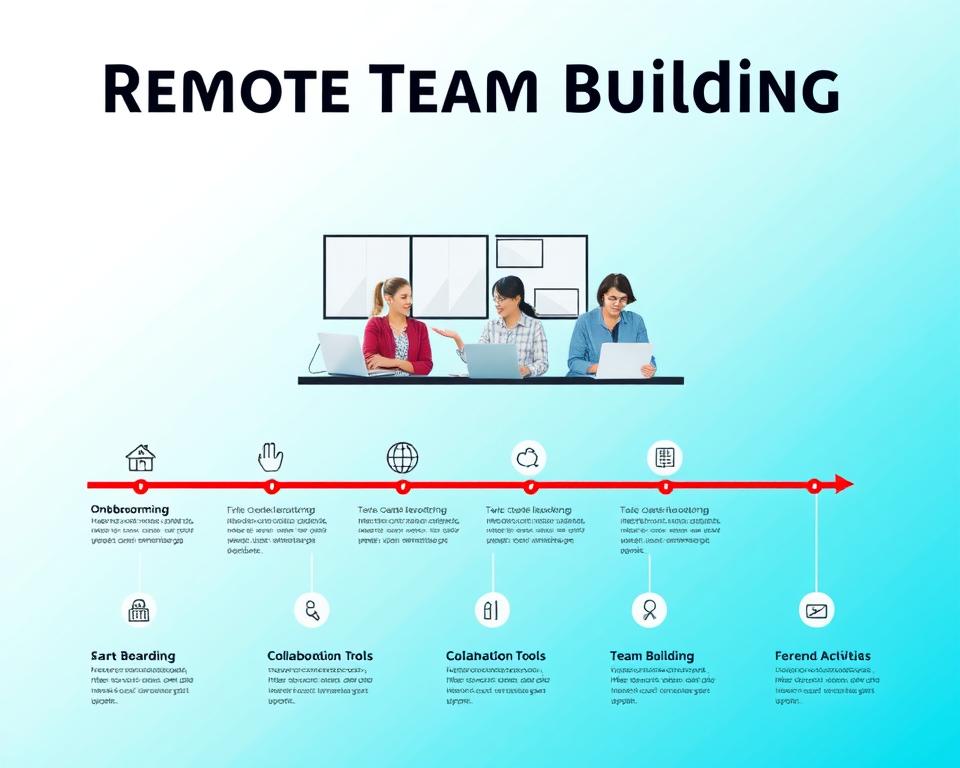
By using this framework, companies can manage remote engineering teams effectively without traditional HR overhead.
Onboarding Remote Engineers Without an HR Department
Bringing new remote engineers into a team can be tough without a clear plan. It’s key to make sure they have what they need to do well. This includes tools, knowledge, and support.
Implementing Self-Service Onboarding Platforms
Self-service onboarding platforms make it easier to welcome new remote engineers. They offer automated steps, easy document access, and a clear introduction to the company’s culture and systems.
Key Features of Self-Service Onboarding Platforms:
- Automated task assignments
- Digital contract signing
- Centralized documentation access
- Customizable onboarding checklists
Creating Comprehensive Knowledge Bases and Wikis
A detailed knowledge base or wiki is a big help for remote engineers. It’s a go-to place for company policies, tech info, and cultural insights.
Technical Documentation and Setup Guides
Good technical guides help new engineers get their workspaces set up. They need to know about the company’s tech stack. This info should be easy to find and kept up to date.
Company Culture and Values Resources
Resources on company culture and values help remote engineers get the company’s vibe. This includes mission statements, team stories, and guides to company traditions.
Data shows that structured onboarding improves retention, with remote hires staying 50% longer when onboarding is structured.
Establishing Buddy Systems and Peer Mentoring Programs
Buddy systems and peer mentoring offer a direct support line for new remote engineers. It makes their onboarding smoother and helps them fit in faster.
| Onboarding Strategy | Benefits |
|---|---|
| Self-Service Onboarding Platforms | Streamlined process, reduced administrative burden |
| Comprehensive Knowledge Bases | Easy access to information, reduced queries |
| Buddy Systems and Peer Mentoring | Personalized support, faster integration |

Legal and Compliance Considerations for Remote Teams
Managing a remote team across many countries is complex. Companies must know the legal rules to avoid problems.
Understanding Employment Classification by Country
How countries classify employment differs a lot. Getting this wrong can lead to audits and fines. For example, in the U.S., the IRS uses a 20-factor test to decide if someone is an employee or contractor.
Contractor vs. Full-Time Employee Determinations
Choosing between contractors and full-time employees is key. Full-time workers get benefits and job security. But, calling someone a contractor when they’re not can cause legal trouble.
| Criteria | Full-Time Employee | Contractor |
|---|---|---|
| Benefits | Eligible for company benefits | Not eligible for company benefits |
| Job Security | Protected by employment laws | No employment law protections |
| Taxes | Taxes withheld by employer | Responsible for own taxes |
Leveraging Employer of Record Services
An Employer of Record (EOR) service can make things easier. Companies like Deel and Remote.com handle employment tasks. They make sure you follow local laws.
Deel and Remote.com for Global Hiring
Deel and Remote.com are great for hiring worldwide. They offer EOR services like payroll and benefits. They also make sure you follow the rules.
Oyster HR and Papaya Global Solutions
Oyster HR and Papaya Global also offer EOR services. They help businesses manage their global teams the right way.
Data Privacy and GDPR Compliance for International Teams
For teams in or with the European Union, following GDPR is essential. You need strong data protection policies and practices.

By understanding employment laws, making smart hiring choices, using EOR services, and following GDPR, remote teams can avoid legal problems. This lets them focus on their main work.
Payroll and Benefits Management Solutions
Managing payroll and benefits for remote teams is complex. It requires solutions that can handle global issues. As teams grow across borders, managing payroll and benefits efficiently is key.
Global payroll platforms are changing how companies manage international workforces. They automate payroll in local currencies, handle taxes, and manage social contributions. This reduces work and cuts down on mistakes.
Global Payroll Platforms That Eliminate Manual Processing
Solutions like Deel and Rippling offer global payroll services. They work with HR systems, giving real-time data and ensuring compliance. These platforms support various payment methods and currencies, making global workforce management easier.
Automated Benefits Administration Tools
Automating benefits for remote teams is vital. Tools like Justworks and Sequoia streamline benefits management. They ensure employees get the benefits they deserve, no matter where they are.
Tax Compliance and Reporting Automation
Tax compliance is a big challenge for global teams. Automated tax tools help deal with complex tax rules across different places. They reduce the risk of not following rules and the penalties that come with it.
Equity Management for Remote Team Members
Managing equity is crucial. Platforms like EquityPlan make managing stock options and equity grants for remote employees easier. They ensure everyone is on the same page and follows the rules.
| Solution Type | Key Features | Benefits |
|---|---|---|
| Global Payroll Platforms | Automated payroll processing, multi-currency support, tax compliance | Reduced administrative burden, minimized errors, compliance assurance |
| Automated Benefits Administration | Streamlined benefits management, location-independent benefits | Improved employee satisfaction, simplified HR processes |
| Tax Compliance Automation | Regulatory compliance, tax reporting, risk reduction | Reduced risk of non-compliance, simplified tax management |
Performance Management for Remote Engineering Teams
Remote work is on the rise, making performance management for engineering teams key. It’s vital for the success and productivity of remote teams.
Establishing Clear Metrics and Key Performance Indicators
To manage performance, setting clear metrics and Key Performance Indicators (KPIs) is crucial. These should align with the team’s goals. It’s important to pick the right metrics that show success.
Engineering-Specific Metrics That Matter
For engineering teams, certain metrics are essential. These include code quality, how often they deploy, and mean time to recovery (MTTR). These metrics show how efficient and effective the team is.
Balancing Output and Impact Measurements
It’s also key to balance output and impact metrics. Output metrics, like the number of commits, show productivity. Impact metrics, like customer satisfaction, show value. This balance ensures the team is both productive and valuable.
Implementing Regular Check-ins and Feedback Systems
Regular check-ins and feedback are crucial for remote teams. They help solve issues quickly and keep everyone on track with project goals.
Using Performance Review Tools and Templates
Using performance review tools and templates makes evaluations easier. These tools help keep assessments consistent and fair.
By using these strategies, remote engineering teams can reach high performance and productivity levels.
Communication and Collaboration Infrastructure
Remote engineering teams need to communicate well to succeed. A good communication and collaboration setup is key. It helps team members work together smoothly, finish projects fast, and stay focused on company goals.
Core Communication Tools for Remote Engineering
Choosing the right communication tools is crucial for remote engineering teams. These tools help with daily chats and building a strong team culture.
Slack and Microsoft Teams Best Practices
Slack and Microsoft Teams are must-haves for quick chats. Best practices include making special channels for topics, using threads for organized talks, and adding tools to make work easier.
Zoom and Google Meet for Video Collaboration
Video conferencing tools like Zoom and Google Meet are vital for face-to-face talks. They help team members connect better and make meetings more productive.
Project Management and Task Tracking Platforms
Good project management is key for remote engineering success. Project management tools help track progress, assign tasks, and set deadlines. Asana, Trello, and Jira are popular choices.
Building Effective Asynchronous Work Practices
Asynchronous work lets team members work on their own and together, no matter where they are. Tools like Notion, Loom, and Slack make it easy to communicate without needing to meet in real-time.
Retention Strategies for Remote Engineers
To build a lasting remote engineering team, companies must focus on keeping talent. Keeping top engineers is key to staying competitive and driving new ideas. Goodretention strategiescover many areas of an engineer’s career and work life.
Career Development Paths Without HR Oversight
It’s vital to have clearcareer development pathsfor remote engineers. This means offering chances to grow, learn, and get mentorship. Companies can use online courses, virtual mentorship, and clear paths for promotions to help engineers advance.
For more on keeping talent, check outthis detailed guide.
Implementing Recognition and Reward Systems
Recognition and rewards are key to motivating remote engineers.
Peer Recognition Programs
Peer recognition programshelp build a sense of community and appreciation. They let engineers praise and reward their colleagues for great work. This creates a positive and supportive team atmosphere.
Performance Bonuses and Equity Incentives
Performance bonuses andequity incentivescan really boost job happiness and keep engineers. These rewards tie engineers’ interests to the company’s success. This motivates them to help the company grow.
Preventing Burnout and Promoting Work-Life Balance
Stopping burnout is key to keeping remote engineers. Companies can supportwork-life balanceby offering flexible hours, wellness programs, and clear work expectations. Studies show remote workers stay longer if they feel included. Investing in connection rituals can also lower turnover.
| Retention Strategy | Benefits |
|---|---|
| Career Development Paths | Growth opportunities, increased job satisfaction |
| Recognition and Reward Systems | Motivation, sense of appreciation, alignment with company success |
| Work-Life Balance Initiatives | Reduced burnout, increased productivity, improved well-being |
Scaling Your Remote Engineering Team Efficiently
Scaling a remote engineering team is complex. It requires balancing growth with operational efficiency. This balance gets harder as teams grow.
Companies like GitLab and Automattic show that remote teams can save a lot. But, scaling them needs careful planning.
Determining When to Add Management Layers
Knowing when to add management is key. As teams grow, more management is needed. This is based on workload, productivity, and communication.
Maintaining Company Culture During Rapid Growth
Keeping company culture strong is vital. Company culture is crucial, and it must be preserved during growth. This is done through good onboarding processes and open communication.
“Culture is not just about foosball tables and free meals; it’s about creating an environment where people can thrive.”
Transitioning from Founder-Led to Process-Driven Hiring
Switching to a process-driven hiring approach is essential. This means setting up clear evaluation criteria and using tech for remote team building.
When to Finally Bring HR In-House
Deciding when to bring HR in-house is important. At first, growth can be managed without HR. But, as operations get complex, HR support is needed.
| Growth Stage | Key Considerations | Action Required |
|---|---|---|
| Early Stage | Establishing company culture, initial hiring processes | Implement foundational processes and tools |
| Scaling Stage | Management layers, process-driven hiring | Add management layers, standardize hiring |
| Mature Stage | HR infrastructure, advanced compliance | Bring HR in-house, enhance compliance measures |
Platform Solutions That Replace Traditional HR Functions
Remote teams are growing fast, and managing them well is key. Companies are now using platform solutions to handle HR tasks. This helps them manage their remote teams effectively.
All-in-One Remote Team Management Platforms
All-in-one platforms are great for managing remote teams. They combine HR tasks like hiring, onboarding, and payroll into one system.
Rippling for Unified HR and IT Management
Rippling is a top choice for managing HR and IT together. It has tools for handling employee data, IT, and HR processes all in one place.
BambooHR for Growing Remote Teams
BambooHR is perfect for growing remote teams. It has features for onboarding, tracking time off, and managing performance. It’s great for businesses that want to simplify HR.
Specialized Tools vs. Comprehensive Solutions
Choosing between specialized tools and all-in-one solutions is important. Specialized tools focus on specific areas, while comprehensive solutions cover more. They can make HR management easier.
Platforms like Gloroots make hiring internationally easier by being the Employer of Record. This shows why all-in-one solutions are key for handling many HR tasks.
Integration Capabilities and Technology Ecosystems
It’s important for a platform to work well with other tools. Companies should find solutions that fit with their current systems. This avoids data silos and improves workflow.
Cost-Benefit Analysis of Platform Investments
Before investing in platforms, do a cost-benefit analysis. Look at the costs versus the benefits like efficiency, less work for admins, and better compliance.
By looking at these points, businesses can choose the right HR solutions. This ensures their investments pay off.
Conclusion
The shift to distributed teams is changing how businesses build their workforce. Now, 36% of job postings offer remote options. Building remote engineering teams without HR overhead is not only possible but also beneficial for many companies.
By understanding the remote engineering team landscape and using the right technologies, companies can create successful remote teams. Hiring, onboarding, and performance management are key in this process.
As remote work’s future unfolds, reducing HR overhead while building high-performing remote engineering teams will become crucial. Companies that adapt will attract global talent and drive innovation.
The key to success is embracing the right tools, processes, and mindset for remote teams. This way, businesses can enjoy the benefits of remote engineering teams while keeping HR costs low.