







Modern clinics are quickly adopting new tools to track health better. These tools help clinics offer a more personalized experience.
This change shifts focus from treating illness to managing health daily. It lets doctors understand each person’s unique needs.
A system built on health technology gives users key insights into their habits. It lets preventive care centers keep track of progress without needing constant visits.
High levels of *patient engagement* keep people motivated to reach their goals. This connection helps spot issues early on.
When people see their own data, they make better choices for their future. This approach makes medicine more collaborative for everyone.
This is a big step forward in how we care for our health. Adopting these innovations leads to a healthier, more informed society.
Table of Contents
Key Takeaways
- Personalized insights allow for better wellness management.
- Proactive monitoring shifts the focus from illness to prevention.
- Enhanced communication strengthens the bond between clinics and patients.
- Real-time data improves the accuracy of medical decision-making.
- Greater autonomy empowers individuals in their personal journey.
- Modern tools streamline the process of long-term wellness oversight.
Transforming Preventive Healthcare Through Digital Innovation
Digital innovation is changing how we approach preventive healthcare. It’s becoming more proactive and tailored to each person. The old way of treating illnesses after they happen is being replaced by a focus on prevention and early action.
Personalized health technology, wearables, AI, and real-world health data are giving us a closer look at our health every day. This change is not just making patients more involved. It’s also helping doctors give care that’s more precise and effective.
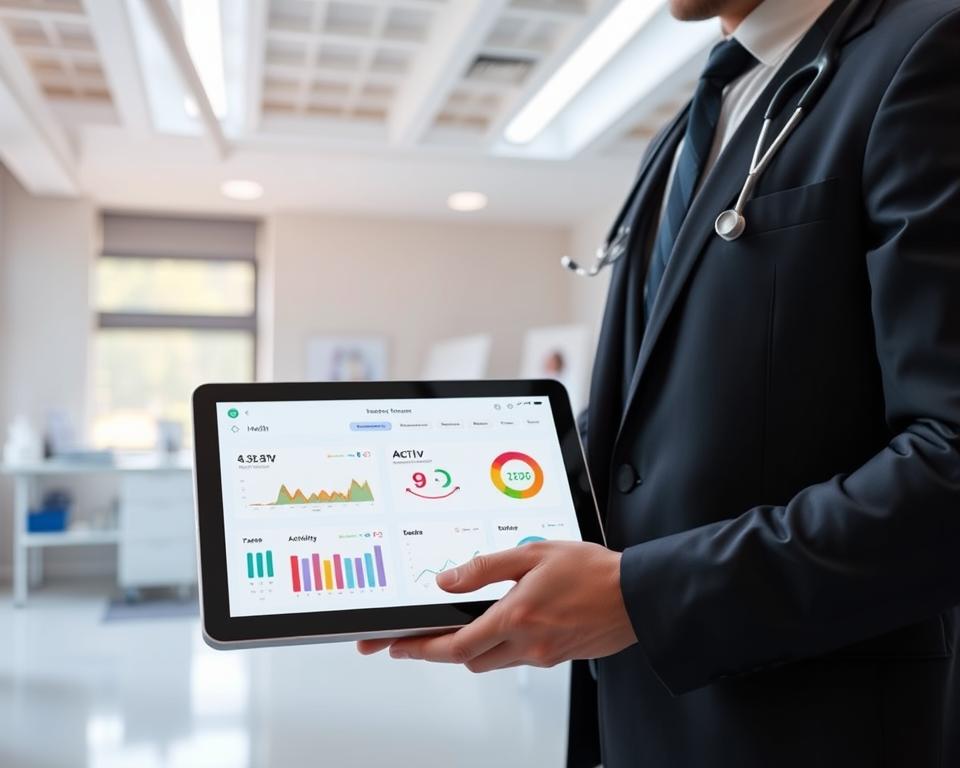
Collecting and analyzing lots of health data is a big part of this change. This data can spot health risks early. It lets us act quickly to improve health outcomes.
Technology plays many roles in preventive healthcare. It:
- Makes patients more engaged with their health
- Helps find health problems early with advanced analytics
- Supports proactive care with ongoing monitoring and alerts
Looking at old and new ways of preventive healthcare shows how much digital innovation has helped:
| Aspect | Traditional Approach | Digital Approach |
|---|---|---|
| Patient Engagement | Limited to periodic check-ups | Continuous through wearables and mobile apps |
| Data Collection | Manual and sporadic | Automated and real-time |
| Health Insights | Based on periodic assessments | Derived from continuous data analysis |
As preventive healthcare keeps evolving, digital innovation’s role is more important than ever. It’s key for healthcare providers and tech creators to work together. They should make solutions that are not just new but also easy to use and get.
Understanding Digital Health Tracking Platforms
Digital health tracking platforms are changing healthcare with new solutions. They use advanced tech like wearables, AI, and data analytics. This gives us detailed health insights.
Defining Modern Health Tracking Solutions
Today’s health tracking solutions can gather and analyze health data in real-time. This helps doctors keep a close eye on patient health. It also helps them make better decisions.
Key characteristics of modern health tracking solutions include:
- Real-time data collection and analysis
- Integration with wearable devices and other health technologies
- Advanced data analytics and AI-driven insights
- Personalized health monitoring and recommendations
The Preventive Care Advantage
Digital health tracking platforms help a lot with preventive care. They can spot health problems early. This can lead to better health and lower costs.
Preventive care benefits include:
| Benefit | Description |
|---|---|
| Early Detection | Identifying health issues before they become severe |
| Personalized Care | Tailoring health advice and interventions to individual needs |
| Cost Savings | Reducing healthcare costs by preventing complications |
Evolution from Reactive to Proactive Healthcare
Digital health tracking platforms are changing healthcare from reactive to proactive. They focus on prevention and early intervention. This improves patient outcomes and care quality.
As noted, “Wearables and AI are making health insights personal by focusing on individual patterns rather than population-level guidance.” This personalized approach is key to proactive healthcare. It helps manage chronic conditions and prevent problems.
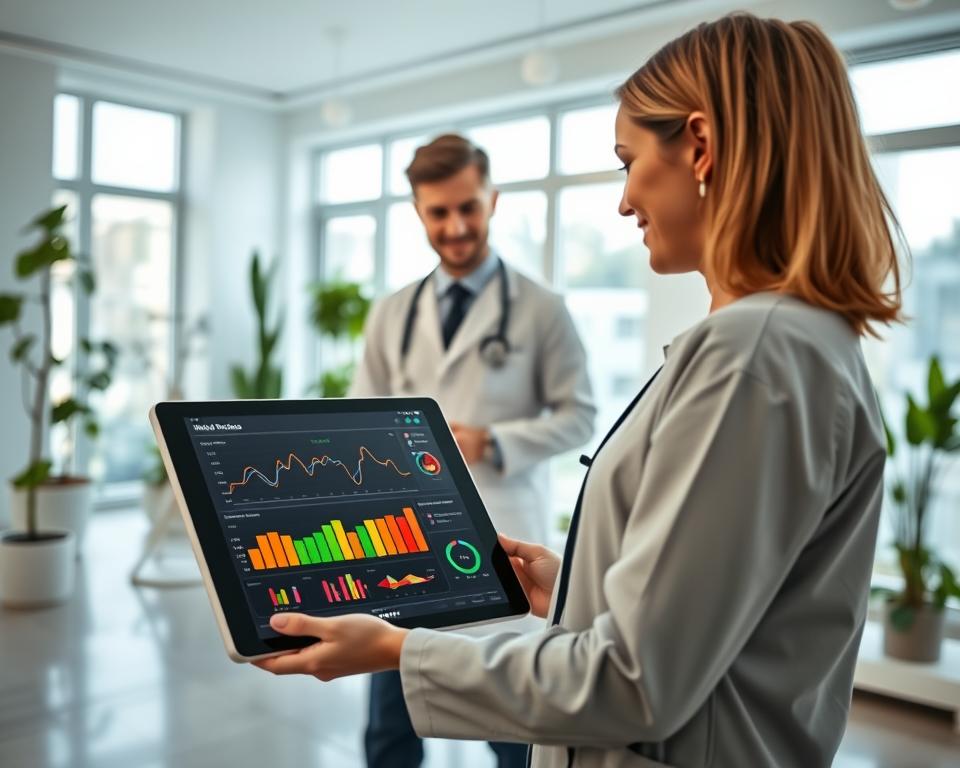
Core Benefits of Digital Health Tracking Platform for Preventive Care Centers
Digital health tracking platforms have changed healthcare delivery. They offer many benefits. These platforms improve patient care and make healthcare operations smoother.

Improved Patient Health Outcomes and Engagement
Digital health tracking platforms help improve patient health outcomes. They allow for constant monitoring and timely help. Patients get involved in their care with personalized dashboards and educational tools.
This approach helps catch health problems early. It leads to better health overall.
Streamlined Clinical Workflows and Efficiency
Digital health tracking platforms streamline clinical workflows. They cut down on paperwork and make healthcare providers more efficient. Automated data and updates help doctors make quick, informed decisions.
This improves the quality of care.
Measurable Cost Reduction and Resource Optimization
Digital health tracking platforms help cut costs. They optimize resources and lower hospital readmissions. The data they provide helps find and fix inefficiencies.
For more on digital health solutions, visit Next Big Technology.
Enhanced Care Coordination Across Teams
Digital health tracking platforms improve care coordination across teams. They give everyone a clear view of patient data. This leads to better teamwork and care.
Patient satisfaction and outcomes improve as a result.
Essential Features and Capabilities
To improve preventive care, a digital health tracking platform needs key features. These features help healthcare providers give better care that focuses on the patient. Insights show that real-time monitoring needs a unified system, strong security, and a focus on the patient.
Continuous Real-Time Health Monitoring
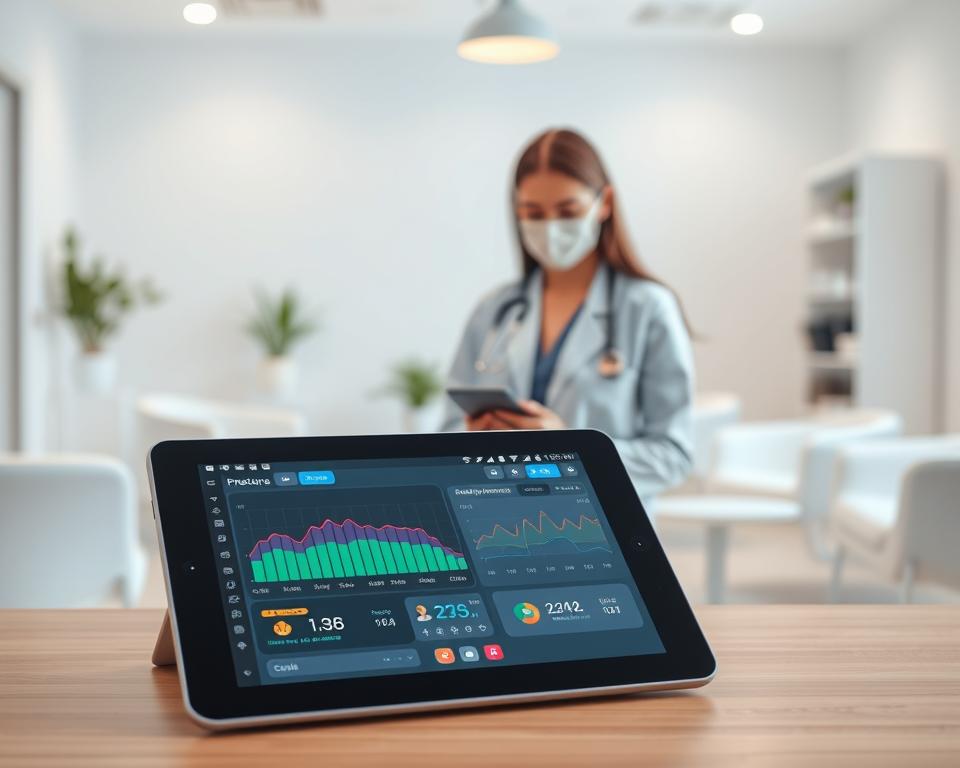
Real-time health monitoring is key for digital health platforms. It lets providers track vital signs and health metrics always. This way, they can act quickly and improve patient results.
Real-time monitoring helps by spotting health problems early. This stops them from getting worse.
Customizable Patient Health Dashboards
Customizable health dashboards are important for patient involvement. They give patients a clear view of their health. This lets them follow their progress and make smart health choices.
By offering personalized insights, these dashboards help patients take a bigger role in their health care.
Advanced Predictive Analytics and Risk Stratification
Predictive analytics and risk stratification are crucial. They help find patients at high risk and plan care for them. By looking at big data, analytics predict health risks. This lets for targeted preventive measures.
This approach lowers the chance of health problems. It also improves patient results.
“The integration of predictive analytics in healthcare has the potential to revolutionize patient care by providing actionable insights that can guide clinical decision-making.”
Intelligent Alert and Notification Systems
Intelligent alert systems are key for quick responses to health crises. They tell providers about big changes in a patient’s health. This lets them act fast.
Using advanced algorithms, these systems cut down on false alarms. They make sure important events are caught.
Technology Infrastructure Requirements
A strong technology infrastructure is key for a digital health tracking platform. It must handle lots of data, offer real-time insights, and work well on different devices. This setup is crucial for effective preventive care centers.
Several important components are needed. A digital health system must balance security with flexibility. This lets patients share data with caregivers or providers, supporting a team-based care approach.
Scalable Cloud-Based Architecture
A scalable cloud-based architecture is essential for digital health tracking. It grows with the user base, keeping the platform fast and reliable. This is important for handling more users without slowing down.
Cloud solutions also save money upfront. They use an operational expenditure model, making it easier for healthcare providers to start using digital health technologies.
Cross-Platform Mobile Applications
Cross-platform mobile applications are key for easy access. Patients and healthcare providers can use the platform on any device. This keeps everyone engaged and helps care teams respond quickly to patient data.
Apps that work on both iOS and Android reach more people. This is important for making healthcare more accessible to everyone, regardless of their device.

Wearable Device and IoT Integration
Wearable devices and IoT technologies let us monitor health continuously. This is especially useful for preventive care, catching health issues early.
Healthcare providers get a full picture of patients’ health from wearable and IoT data. This helps tailor care and improve health outcomes.
API Framework for Extensibility
An API framework is crucial for adapting to healthcare changes. APIs let the platform add new features and services. This keeps it up-to-date with technology.
With a flexible API framework, developers can add custom apps and integrations. This meets the varied needs of healthcare providers and patients.
A modern digital health system needs to balance security with flexibility for patients to share data with caregivers or providers.
In summary, a well-built technology infrastructure is vital for a digital health tracking platform. It needs scalable cloud architecture, mobile apps for all devices, wearable and IoT integration, and an API for growth. This setup supports high-quality preventive care.
Comprehensive Data Collection Strategies
Digital health tracking platforms need to collect many types of data to be successful. They must gather biometric, patient-reported, clinical, and social determinants of health data. This helps preventive care centers offer better services and improve patient health.
Biometric and Physiological Data Capture
Biometric data like heart rate and blood pressure is key to understanding a patient’s health. Wearable devices and IoT technology make it possible to monitor these metrics constantly.
Patient-Reported Outcomes and Surveys
Patient-reported outcomes (PROs) give insights into a patient’s quality of life and satisfaction. Surveys and mobile apps are great for collecting this data.
Clinical Laboratory Integration
Adding clinical lab data gives a fuller picture of a patient’s health. This includes lab results and medication adherence.
Social Determinants of Health Data
Social determinants of health (SDoH) data, like socioeconomic status, are crucial. They help tailor care to each patient’s needs.
| Data Type | Description | Collection Method |
|---|---|---|
| Biometric Data | Heart rate, blood pressure, body temperature | Wearable devices, IoT integrations |
| Patient-Reported Outcomes | Quality of life, symptoms, satisfaction with care | Surveys, mobile applications |
| Clinical Laboratory Data | Lab results, medication adherence | Laboratory information systems integration |
| Social Determinants of Health | Socioeconomic status, education level, environmental factors | Patient surveys, public records integration |
“Comprehensive data collection is the foundation upon which effective preventive care is built.”
Effective data collection strategies are more than just gathering data. They create a complete picture of patient health. This information helps make better care decisions and improves patient outcomes.

Implementation Roadmap for Success
A detailed implementation roadmap is key for healthcare groups to smoothly add a digital health tracking platform. Strong leadership and a clear plan are crucial, studies show.
Initial Assessment and Goal Definition
The first step is to assess the current healthcare state and set clear goals. It’s about knowing where a digital health platform can help.
Stakeholder Analysis
Understanding the needs of all involved is vital. This includes doctors, staff, and patients.
Current State Evaluation
Looking at the current healthcare setup helps spot where the platform can help. This includes workflows, tech, and data handling.
Vendor Selection and Platform Evaluation
Finding the right vendor and checking the platform’s features are key. Look at its scalability and fit with current systems.
Key Selection Criteria
When picking vendors, consider the platform’s functionality, ease of use, security, and support.
Demonstration and Testing Phase
This phase lets organizations see how the platform works in real life. It helps find and fix issues before deciding to use it.

Staff Training and Change Management
Good training and change management are essential. They ensure staff can use the platform well and care improves.
Staged Deployment and Optimization
Starting small helps avoid big disruptions. Begin with a few groups and then expand. This way, you can keep improving and adapting.
With a well-planned roadmap, healthcare groups can get the most from their digital health platform. This leads to better patient care and overall quality.
Data Security, Privacy, and Regulatory Compliance
Data security and privacy are key for a reliable digital health tracking platform. Keeping health info safe is a must for trust between doctors and patients. It’s also a law.
HIPAA Compliance Framework
Any healthcare tech needs a HIPAA compliance framework. This means using the right steps to keep health info safe. For more on making HIPAA-compliant apps, check out this guide.
Multi-Layer Encryption and Security Protocols
Using multi-layer encryption and strong security is key to keep data safe. This includes:
- Encrypting data both at rest and in transit to prevent breaches.
- Using secure ways like HTTPS and SFTP for data transfer.
Data Encryption at Rest and in Transit
Data encryption keeps health info safe from prying eyes. Encrypting data when stored and when moving around is crucial.
Role-Based Access Controls
Role-based access controls (RBAC) limit who can see health info. It’s based on their job in the organization. This cuts down on risks from inside the company.

Audit Trails and Compliance Monitoring
Keeping detailed audit trails and checking for compliance often is important. It helps spot and fix security issues. It also makes sure rules are followed.
Business Associate Agreements
When working with outside vendors, business associate agreements (BAAs) are a must. They spell out who does what with health info. This keeps everyone in the healthcare world on the same page.
Patient Engagement and Self-Management Tools
Digital health platforms are changing how we prevent health problems. They let patients manage their health better. This leads to better health and happier patients.
Interactive Educational Resources
Digital health platforms have cool tools for learning. They use multimedia content like videos and infographics. These make hard health topics easy to understand.
A study on PMC shows these tools really help. They make patients understand and follow their treatment better.
Personalized Goal Setting and Tracking
Setting and tracking personal health goals is key. Digital platforms let patients set goals and see how they’re doing. This works best with data analytics to show how patients are doing.
Secure Messaging and Telehealth Integration
Secure messaging and telehealth are must-haves today. They let patients talk safely with doctors. This cuts down on visits and makes care better.
Gamification and Incentive Programs
Gamification and incentives make health fun. They add a bit of competition and reward. This encourages patients to stick to their plans and live healthier.
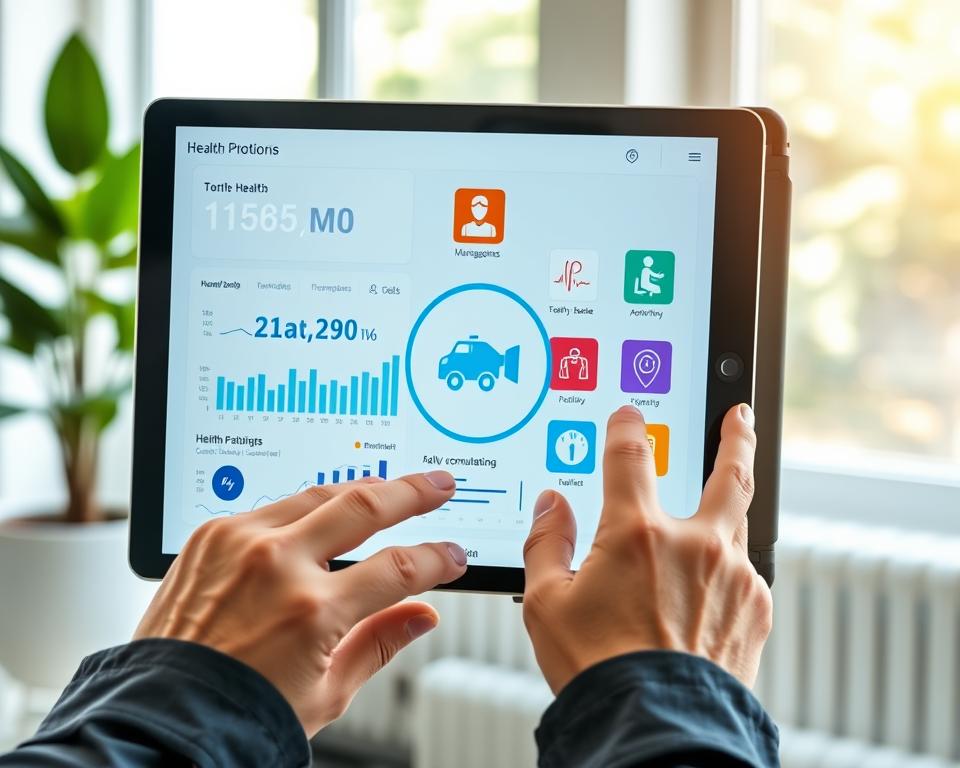
| Feature | Description | Benefit |
|---|---|---|
| Interactive Educational Resources | Multimedia content for patient education | Improved patient understanding and adherence |
| Personalized Goal Setting | Customizable health goals for patients | Enhanced patient motivation and engagement |
| Secure Messaging | Secure communication between patients and providers | Improved care coordination and reduced visits |
| Gamification and Incentives | Programs that motivate patients through rewards | Increased patient participation and healthier behaviors |
Seamless Integration with Healthcare Ecosystems
For a digital health tracking platform to work well, it must connect with the healthcare world. This connection lets health info flow between different providers and systems. It helps in giving complete and coordinated care.
Interoperability is key for smooth connection with healthcare systems. This includes EHRs, lab systems, and health info exchanges. With interoperability, patient data can be shared and used in various healthcare settings.
Electronic Health Record Interoperability
EHR interoperability is a big part of integration. It lets the digital health platform share and get patient data with EHRs. This keeps patient health info current and lets doctors access it when needed.
Laboratory Information System Connectivity
Linking with lab systems is also important. This connection lets the platform get lab results and other data. It gives a fuller picture of a patient’s health.
Practice Management and Billing Integration
Connecting with practice and billing systems is crucial too. It makes admin tasks easier, cuts down on mistakes, and boosts healthcare efficiency.
Health Information Exchange Participation
Being part of health info exchanges (HIEs) is vital. It helps share patient health info safely across different healthcare groups. This improves care coordination and patient results.
In short, working well with healthcare systems is key for digital health platforms. By linking with EHRs, labs, practice systems, and HIEs, they offer better and more coordinated care.
Measuring Return on Investment and Value
To see if digital health tracking platforms are worth it, we need to look at their return on investment and value. We should check their financial, clinical, and operational impacts.
Revenue Enhancement Through Value-Based Care is a key area of focus. Digital health tracking platforms help preventive care centers move to value-based care. This boosts revenue by improving patient outcomes and satisfaction.
Revenue Enhancement Through Value-Based Care
Digital health tracking platforms help healthcare providers give better, patient-centered care. This is rewarded in value-based care models. It can increase revenue through improved patient retention and acquisition and enhanced reimbursement rates for quality care.
These platforms also help with data-driven decision-making. Healthcare providers can make better care plans and improve patient outcomes. This supports revenue growth.
Quantifiable Cost Savings and Efficiency Gains
Another key point is the cost savings and efficiency gains from digital health tracking platforms. They make clinical workflows smoother and cut down on in-person visits. This lowers operational costs.
For example, automated tracking and alerts reduce the work for healthcare staff. They can focus on more important tasks. Early intervention from real-time monitoring also prevents costly complications and lowers hospitalization rates.
Quality Metrics and Performance Improvement
Lastly, we must measure the impact on quality metrics and performance improvement. These platforms give insights into patient health trends. Healthcare providers can spot areas for improvement and act on them.
By tracking KPIs like patient engagement and health outcomes, preventive care centers can improve their care strategies. This leads to better patient outcomes. It also supports ongoing quality improvement efforts.
Addressing Common Implementation Challenges
Healthcare groups moving to digital health tracking face many challenges. These can include tech issues, operational hurdles, and financial worries.
Overcoming Technology Adoption Resistance
Getting staff and patients to accept new tech is a big hurdle. To tackle this, offer detailed training and show the benefits of the digital platform.
- Make sure training fits the needs of all users for easy learning.
- Show how the platform can better patient care and work flow to boost adoption.
Managing Data Migration Complexity
Moving patient data to a new platform is complex. It needs careful planning and execution.
- Data Assessment: Check the quality and amount of data to plan the migration.
- Data Mapping: Match the old data fields with the new platform’s structure for smooth transfer.
- Testing and Validation: Test and validate the data to ensure it’s correct and complete after migration.
Ensuring Sustainable User Engagement
Keeping users engaged is vital for the platform’s success. This can be done by:
- Offering ongoing support and training.
- Listening to feedback and improving the platform.
- Using rewards for regular use.
Budget Constraints and Resource Allocation
Dealing with limited budgets and resources is common. Good planning and prioritization help manage these issues.
Healthcare groups should:
- Do a detailed cost-benefit analysis to justify the investment in the platform.
- Use resources wisely, focusing on key implementation areas.
- Look for funding options and partnerships to help cover costs.
By tackling these challenges, healthcare organizations can make their digital health tracking platforms work smoothly.
Best Practices for Platform Optimization
Digital health tracking platforms are key in preventive care. They work best when optimized well. Knowing what makes a platform great is crucial.
Continuous User Feedback Integration
User feedback is vital for improving digital health tracking platforms. It shows what needs work and keeps the platform up-to-date with user needs.
To make the most of user feedback, preventive care centers should:
- Collect feedback often through surveys and tests
- Look for trends in the feedback
- Make changes based on what users say
Regular Performance Monitoring and Analytics Review
Keeping an eye on how the platform performs is key. It makes sure everything runs smoothly.
Important things to watch include:
| KPI | Description | Target Value |
|---|---|---|
| Platform Uptime | How often the platform is up and running | >99.9% |
| User Engagement | How long users stay on the platform | >30 minutes |
| Data Accuracy | How accurate the data is | >95% |
Ongoing Staff Education and Support
Keeping healthcare staff trained is essential. It helps them use the platform well.
Preventive care centers should hold regular training. This keeps staff current with new features and best practices.
Benefits of ongoing staff education include:
- Higher adoption rates
- Better patient care with data
- More confident staff in using the platform
Emerging Trends and Future Innovations
Healthcare is changing fast with digital transformation. New trends are making care better and more efficient. They are also changing how we prevent health problems.
Artificial Intelligence and Machine Learning Applications
AI and ML are making health tracking smarter. They help predict health issues and tailor treatments. This means doctors can make better decisions and patients get better care sooner.
Key AI and ML Applications:
- Predictive risk stratification
- Personalized treatment recommendations
- Automated data analysis and insights
- Enhanced patient engagement through chatbots and virtual assistants
Social Determinants of Health Integration
Knowing about social determinants of health is key to good care. Digital tools now use this data to give a full picture of patient health. This helps tailor care to each person’s needs.
| SDoH Factors | Impact on Health | Digital Tracking Solutions |
|---|---|---|
| Economic Stability | Affects access to healthcare and health outcomes | Integration with socioeconomic data sources |
| Education | Influences health literacy and preventive care | Personalized educational resources and tracking |
| Environmental Factors | Impacts exposure to health risks | Environmental data integration for risk assessment |
Genomics and Precision Medicine
Genomics and precision medicine are changing care. They let doctors tailor treatments based on genetic information. This makes care more effective and targeted.
Benefits of Genomics in Digital Health Tracking:
- Personalized treatment plans based on genetic profiles
- Early detection of genetic disorders
- Targeted preventive measures
Conclusion
The use of digital health tracking platforms in preventive care centers is changing healthcare. It’s making it better and more efficient.
These platforms bring many benefits. They help patients get better health outcomes and make clinical work easier. They also improve how care is coordinated.
Preventive care centers can offer better care by using new technologies. This includes real-time health monitoring and customizable dashboards. Predictive analytics also play a big role.
Using digital health tracking platforms is a big step forward. It helps healthcare providers move from just treating sickness to preventing it.
As healthcare keeps changing, digital health tracking platforms will be key. They will help drive innovation and improve patient care.