





In today’s complex supply chain, managing partner ties is a big challenge. Keeping costs down and quality up is a major task for every firm in the United States. Many organizations struggle to maintain operational excellence without the right digital tools.
Modern procurement operations need smart tools to stay ahead in a fast-paced market. Creating a custom vendor management software solution helps fix these common issues and improves strategic planning. It allows teams to focus on building value rather than fixing manual errors.
This specialized platform development offers a way to streamline complex tasks easily. It turns messy data into clear paths for long-term growth and efficiency. It ensures that every link in the chain stays strong and reliable for years to come.
Table of Contents
Key Takeaways
- Streamline partner ties effectively across the globe.
- Reduce hidden costs within modern supply chains.
- Boost overall efficiency with automated tools.
- Gain better data visibility for smarter decisions.
- Strengthen business growth through better collaboration.
- Simplify complex tasks within your daily workflow.
Understanding Vendor Management Platforms in Modern Business
In today’s complex business world, Vendor Management Platforms are key for better procurement. They are systems that help manage and improve interactions with suppliers. These platforms handle vendor onboarding, performance monitoring, contract lifecycle management, and collaborative communication.
These platforms make managing vendors easier by offering a single place for all interactions. This helps businesses keep communication clear, follow rules, and make smart choices with up-to-date data.

The importance of these platforms in today’s business is huge. They make operations more efficient and lower risks in managing vendors. They automate tasks and give insights into how vendors are doing, letting businesses focus on big plans.
| Key Features | Benefits |
|---|---|
| Vendor Onboarding | Streamlined registration and compliance |
| Performance Monitoring | Real-time tracking and evaluation |
| Contract Lifecycle Management | Automated contract renewal and compliance |
Using Vendor Management Platforms helps businesses be more open, improve vendor ties, and save money. As the business world keeps changing, these platforms will become even more vital.
The Business Case for Investing in Vendor Management Solutions
In today’s fast-paced world, using vendor management solutions is key to staying ahead. As businesses grow and work with more vendors, managing these relationships gets harder. It’s no longer just helpful but essential.
Challenges of Manual Vendor Management Processes
Handling vendor management manually is time-consuming and prone to errors. This leads to inefficiencies that hurt a company’s profits. Tasks like onboarding vendors and sending renewal notices take up a lot of time.
A Vendor Management System (VMS) makes these tasks automatic. This frees up teams to focus on important tasks. It also cuts down on mistakes and saves time.
Quantifiable Benefits and ROI Expectations
Getting a VMS can bring big benefits, like saving money and improving vendor performance. Businesses can see a big Return on Investment (ROI). This comes from working more efficiently and taking less risk.
Impact on Supply Chain Efficiency
A VMS greatly improves supply chain efficiency. It makes sure vendors are checked, onboarded, and managed well. This keeps quality high and makes customers happier. It also lowers the chance of supply chain problems.

In conclusion, the case for using vendor management solutions is strong. They solve the problems of manual processes, offer clear benefits, and make supply chains better. A VMS is a great tool for any company wanting to improve its buying operations.
Core Features Every Vendor Management Platform Should Include
The success of vendor management depends on the right platform. A good platform makes processes smoother, boosts compliance, and increases efficiency.
Vendor Onboarding and Registration Workflows
An effective vendor onboarding process is key for a good vendor relationship. The platform should let suppliers enter their info directly, cutting down on manual work. It should also guide new vendors through steps like document submission and compliance checks.
Contract Management and Lifecycle Tracking
Contract management is crucial. The platform should help track contracts from start to finish. This includes storing documents, tracking dates, and setting reminders for key milestones.

Performance Monitoring and KPI Dashboards
To check if vendors meet expectations, the platform needs performance monitoring and KPI dashboards. These tools help track vendor performance, spot areas for betterment, and guide decisions based on data.
Document Management and Compliance Tracking
Document management and compliance tracking are key too. The platform should have a central spot for vendor documents and help track compliance with rules and policies.
| Feature | Description | Benefits |
|---|---|---|
| Vendor Onboarding | Streamlined process for vendor registration | Reduced manual data entry, improved compliance |
| Contract Management | Tracking contracts throughout their lifecycle | Better contract visibility, reduced risk |
| Performance Monitoring | Tracking vendor performance against KPIs | Improved vendor performance, data-driven decisions |
| Document Management | Centralized repository for vendor documents | Improved compliance, reduced risk |
Essential Technical Components of Platform Architecture
Building a good Vendor Management Platform starts with a solid architecture. A Vendor Management System (VMS) is key to a strong procurement plan. It works with sourcing, contract management, and supplier development.
The tech behind a VMP is key to making things run smoothly. It helps with better visibility and decision-making. Three main parts make up this tech:
Database Design and Data Management
A good database is essential for keeping track of vendors, contracts, and performance. Efficient data management means quick access to important info. This helps in making smart choices.
User Interface and Experience Considerations
The UI and UX are crucial for a platform that’s easy to use. A user-centric design makes it simple for everyone. This leads to faster adoption and less training.
API Development and Integration Layer
APIs are important for linking the VMP with other systems like ERP and procurement software. A strong API development and integration layer makes data sharing and workflow automation smooth.

By focusing on these key tech areas, companies can build a VMP that works well now and grows with the future.
Selecting the Right Technology Stack
The technology stack for a Vendor Management Platform is key to its success. Platforms may seem the same at first, but their true differences show up later. It’s important to pick the right technology stack for your business needs.
A good technology stack makes the platform strong, flexible, and ready for vendor management’s challenges. You need to think about frontend frameworks, backend technologies, cloud infrastructure, and database systems.
Frontend Frameworks and Libraries
Frontend frameworks and libraries shape the user experience and interface of the platform. React, Angular, and Vue.js are popular. They differ in architecture, state management, and community support.
Backend Development Technologies
Backend technologies handle server-side logic, database integration, and API connections. Node.js, Python with Django or Flask, and .NET Core are top choices. They offer scalability, security, and performance.

Cloud Infrastructure and Hosting Solutions
Cloud infrastructure is vital for scalability and reliability. Amazon Web Services (AWS), Microsoft Azure, and Google Cloud Platform (GCP) are major players. They provide computing, storage, and database services.
Database Management Systems
Database systems are crucial for storing vendor data, contracts, and performance metrics. Relational databases (e.g., MySQL, PostgreSQL) and NoSQL databases (e.g., MongoDB, Cassandra) have their benefits. The choice depends on the platform’s needs.
Choosing the right technology stack is essential. It helps build a Vendor Management Platform that is effective, scalable, and easy to maintain over time.
Custom Vendor Management Platform Development vs Commercial Solutions
Organizations face a big choice when it comes to vendor management. They must decide between a custom platform or a commercial one. This choice depends on their needs, how much they can grow, and their budget.
Choosing between custom development and commercial solutions is complex. It needs a deep look at what each offers. Custom-built platforms fit an organization’s unique needs, offering flexibility and growth that others can’t match.
Benefits of Custom-Built Platforms
Custom-developed platforms have many benefits, including:
- Tailored functionality to meet specific business needs
- Scalability to accommodate growing vendor bases and evolving business requirements
- Integration with existing systems and infrastructure
- Enhanced security and compliance features
These advantages can make operations more efficient and improve vendor management.
When Off-the-Shelf Solutions Make Sense
Commercial vendor management solutions are good for simpler needs. They offer:
- Quick implementation and reduced upfront costs
- Proven functionality and reliability
- Ongoing vendor support and maintenance

The choice between custom and commercial solutions depends on the organization’s needs and goals. As the data shows, “Choosing the right platform isn’t about features. It’s about fit.” The best choice is one that fits well with the team, grows with the organization, and matches current processes.
The Complete Vendor Management Platform Development Process
To make a great Vendor Management Platform, you need a clear plan. It starts with knowing how you manage vendors now. Experts say, “It’s key to understand your current workflows and needs before starting the development process.”Look at where you store supplier info, who works with it, and the problems that come up when someone is out or when you need quick approvals.
Discovery and Requirements Analysis
The first step is to learn about your current vendor management. You need to find out what’s working and what’s not. This helps figure out what your new platform should do.
Talking to people from different parts of your company is important. It helps make a platform that really fits your needs.
System Design and Architecture Planning
After figuring out what you need, it’s time to design the platform. This means making a detailed plan of how it will work. It must be able to grow, be safe, and work with your current systems.
Agile Development and Sprint Cycles
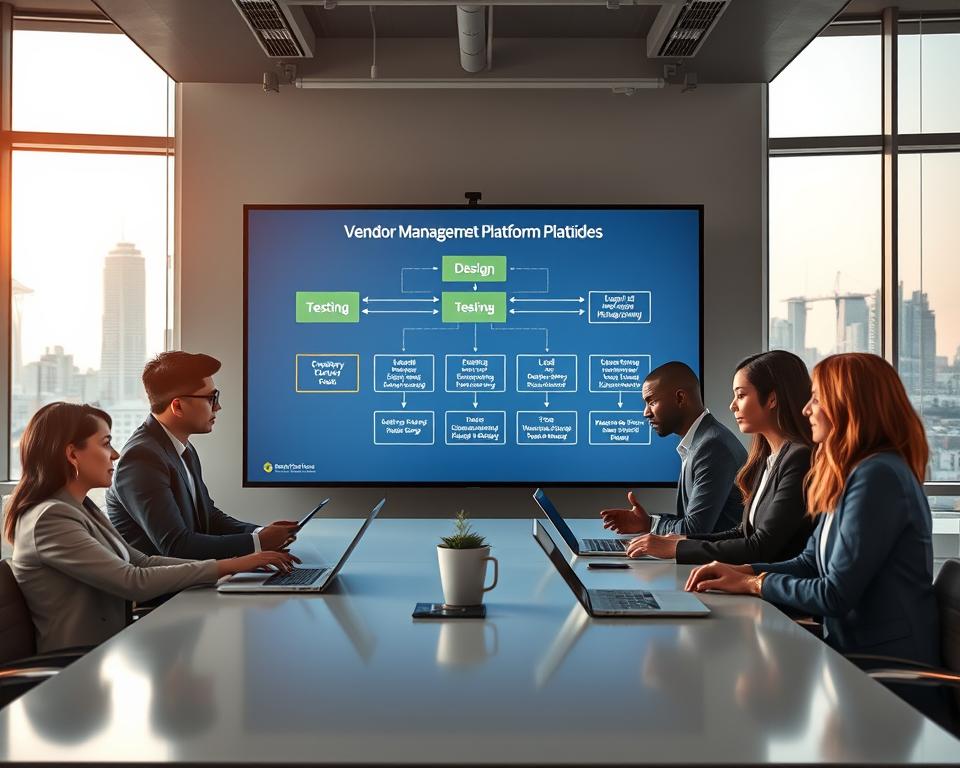
The building phase uses agile methods. This means breaking the work into smaller parts and working on them in cycles. It lets you change things based on feedback.
Agile development means making the platform in small steps. This way, you can keep improving and changing it as needed.
Quality Assurance and User Acceptance Testing
The last step is making sure the platform works well and meets your needs. This includes testing it with real users. It’s all about making sure the platform is good and works right.
“Good testing is key to the platform’s success,” experts say. It affects how happy users are and how well the platform works.
Integrating with Enterprise Resource Planning Systems
Seamless integration with Enterprise Resource Planning (ERP) systems is key for better Vendor Management Platforms. This makes operations smoother, cuts down on errors, and boosts productivity.
There are several ways to connect with ERP systems. These include:
- Native integrations provided by the ERP system or Vendor Management Platform
- API-based integrations for more customized connections
- Third-party integration tools for broader compatibility
ERP System Connectivity Options
The right choice for ERP connectivity depends on the organization’s needs and the systems’ capabilities. API-based integrations are flexible and can be customized to fit specific needs.
Experts say, “ERP integration is not just about connecting systems; it’s about creating a cohesive ecosystem that supports business growth and agility.”
“The future of ERP lies in its ability to integrate with other business systems, creating a seamless flow of information across the organization.”
Financial Software Integration Methods
Integrating financial software with Vendor Management Platforms ensures accurate and up-to-date financial data. This can be done through direct integration with accounting systems or using standardized financial data exchange protocols.

Procurement and Supply Chain System Linkages
Connecting procurement and supply chain systems with Vendor Management Platforms is crucial for a smooth supply chain. This integration allows for real-time updates on vendor performance, inventory levels, and supply chain disruptions.
By linking Vendor Management Platforms with ERP systems, organizations can greatly reduce manual work and technical dependencies. This leads to more efficient and responsive supply chain operations.
Security Architecture and Data Protection Measures
Protecting data in Vendor Management Systems is not just a must; it’s the law. A Vendor Management Platform (VMP) must keep vendor data safe. This includes things like contract details, how well vendors perform, and if they follow the rules.
A strong security setup is key to keeping data safe. It starts with something called data encryption.
Data Encryption Standards and Protocols
Data encryption is crucial for keeping data safe while it’s moving or stored. Advanced Encryption Standard (AES) and Transport Layer Security (TLS) are top choices. They help make sure vendor data stays private and safe.
Multi-Factor Authentication Implementation
Multi-factor authentication (MFA) is another important step. It makes logging in more secure. With MFA, users need more than just a password to get in. This makes it harder for hackers to get into the VMP.
Compliance with GDPR, SOC 2, and Industry Regulations
Following rules like GDPR and SOC 2 is also key. A VMP that follows these rules makes sure vendor data is handled right. This helps avoid big fines.

With these security steps, a VMP can keep vendor data safe. This protects sensitive information and makes sure the VMP follows the law.
Configuring User Roles and Access Control
Setting up user roles and access control is key to a good Vendor Management Platform. It keeps sensitive info safe and boosts work efficiency. This is crucial for both internal teams and vendors.
Experts say, “A strong access control system is vital for a Vendor Management Platform’s integrity.”
“Access control is not just about security; it’s about ensuring that the right information is available to the right people at the right time.”
Administrative Permission Levels
Administrative permission levels are vital for managing a Vendor Management Platform. They decide what users can do, from simple tasks to complex ones like contract management. Clear roles make the VMP secure and efficient.
Vendor Self-Service Portal Features
A vendor self-service portal is a must-have for a modern Vendor Management Platform. It lets vendors update their info, submit documents, and check their performance. This makes the vendor experience better and cuts down on staff work.
Internal Stakeholder Access Management
Managing access for internal stakeholders is also crucial. Different teams need different info; for example, procurement needs vendor data, and finance needs invoicing info. Tailoring access to roles helps stakeholders make better decisions.
Good access control is essential for a Vendor Management Platform’s success. By setting up user roles well, organizations boost security, efficiency, and vendor satisfaction.
Advanced Reporting and Analytics Capabilities
Advanced reporting and analytics are key to successful vendor management. They help companies make smart decisions and grow strategically. By using these tools, businesses can understand how vendors perform, where they spend money, and how efficient they are.
These analytics also help companies check vendor risks, make better sourcing choices, and improve their vendor management. A good Vendor Management Platform should have many reporting and analytics tools to help with these goals.
Real-Time Performance Dashboards
Real-time dashboards give instant insights into important metrics like vendor delivery times and quality. This lets procurement teams spot problems fast and fix them quickly.
For example, a company with a Vendor Management Platform can watch how vendors perform in different places and with different products. This helps manage their global supply chain better.
Customizable Report Builder Tools
Customizable report builder tools let users make reports that fit their needs. This is important because different departments and people have different reporting needs.
With these tools, businesses can make reports on vendor performance, spending, and compliance. This helps make decisions based on data. For instance, a procurement team might use these tools to find ways to save money, possibly linking their findings with financial systems like Microsoft Dynamics 365 Finance.
Predictive Analytics and AI-Powered Insights
Predictive analytics and AI insights are the latest in vendor management analytics. They use past data and trends to predict risks and opportunities. This helps make decisions before they become problems.
For example, predictive analytics can warn about vendor insolvency risks or demand changes. This lets businesses adjust their plans early. This insight is especially useful for managing complex, multi-vendor systems, like those in multi-vendor e-commerce platforms.
The table below shows the main features and benefits of advanced reporting and analytics in Vendor Management Platforms:
| Feature | Description | Benefits |
|---|---|---|
| Real-Time Dashboards | Provide immediate visibility into vendor performance metrics | Quick identification of issues, proactive management |
| Customizable Reports | Allow users to create tailored reports based on specific needs | Flexibility, data-driven decision-making |
| Predictive Analytics | Forecast potential risks and opportunities using historical data and trends | Proactive risk management, strategic planning |
Platform Implementation Strategy and Change Management
A successful Vendor Management Platform implementation needs a solid strategy. This includes deployment, training, and ongoing support. It’s key to manage change well so everyone can use the platform fully.
Phased Deployment Methodology
Phased deployment helps roll out the platform step by step. This method reduces disruption to current processes. It involves:
- Starting with a small pilot group
- Expanding to more departments or locations
- Collecting feedback and monitoring progress
Experts say, “A phased approach lets organizations test and improve their processes. This makes the transition smoother.”
“A phased implementation approach enables organizations to test and refine their processes, ensuring a smoother transition to the new platform.”
User Training Programs and Documentation
Good user training is key to help stakeholders use the platform well. This includes:
| Training Method | Description | Benefits |
|---|---|---|
| Classroom Training | Hands-on sessions for users | Personalized teaching and quick feedback |
| Online Tutorials | Self-paced learning resources | Flexibility and easy access |
| User Guides | Detailed documentation for reference | Quick help for troubleshooting and best practices |
Ongoing Support and Maintenance Planning
Continuous support is vital for quick help and issue resolution. This includes:
- Helpdesk support for immediate help
- Regular software updates and maintenance
- Monitoring the platform’s performance
By using a structured strategy and focusing on change management, organizations can get the most out of their Vendor Management Platform. This leads to a successful transition.
Understanding Development Costs and Budget Planning
The cost of a Vendor Management Platform goes beyond the start. Good budget planning means knowing all costs, from the beginning to ongoing upkeep.
When planning a Vendor Management Platform, several costs are important. These include the team’s salaries, infrastructure, and tech licenses. Also, there are ongoing costs for upkeep and updates.
Development Team and Labor Costs
The team’s cost is a big part of the development costs. It includes salaries for developers, managers, and testers. The platform’s complexity and tech choices affect these costs.
Infrastructure and Technology Licensing
Other costs are for infrastructure and technology licensing. This includes server, database, and third-party tool costs.
Long-Term Maintenance and Enhancement Expenses
| Cost Category | Description | Estimated Annual Cost |
|---|---|---|
| Maintenance | Ongoing support and updates | $50,000 – $100,000 |
| Enhancements | New features and functionality | $20,000 – $50,000 |
| Infrastructure | Server and database costs | $10,000 – $30,000 |
Long-term upkeep and updates are key to keeping the platform current. Budgeting for these costs is vital for budget planning.
Best Practices for Successful Platform Implementation
To get the most out of a vendor management platform, focus on the best practices during setup. A good rollout needs a detailed plan that fits the platform into your current business setup. Early and Continuous Stakeholder Engagement is key for adoption. This means finding important stakeholders, understanding their needs, and keeping them updated during setup.
This way, the platform will meet user needs and everyone will be ready for the changes it brings.
Early and Continuous Stakeholder Engagement
Starting early and keeping stakeholders involved helps solve problems quickly and makes needed changes. This can be done with regular updates, training, and open communication.
Building for Scalability and Future Growth
A platform that can grow is essential for its long-term success. It should be designed to handle more users and systems, and adapt to changing needs. For more on scalable architecture, check outscalable architecture and API integrations.
Establishing Feedback Loops and Continuous Improvement
Having a way to give feedback helps find areas to improve and make smart choices. This means collecting user feedback, watching performance, and using that info to keep getting better.
By sticking to these best practices, companies can make their vendor management platform a success. This will help improve how things work and cut costs.
Conclusion
Vendor Management Systems are key for improving procurement operations and boosting business value. By using these systems in a smart way, companies can achieve more. This is true for both small and big businesses.
A good vendor management platform makes buying things easier. It also helps in building better relationships with suppliers. This leads to a more efficient supply chain.
As markets get more complex, the need for good procurement operations grows. Knowing how to create a Vendor Management Platform is crucial. This knowledge helps companies pick the best solutions for their needs.