







Westgate Technology Corp. creates custom products and embedded software for today’s needs. They offer services with deep expertise. In today’s fast-paced world, quick data processing is key to staying competitive.
Fast processing is crucial for success in our digital era. These tools manage critical tasks where every second counts. Westgate has the knowledge to navigate these complex areas successfully.
Using real-time systems boosts a company’s efficiency and output. A well-run development cycle turns complex ideas into reality for the Internet of Things. This innovation ensures your hardware works flawlessly under pressure.
Table of Contents
Key Takeaways
- Immediate data processing for better performance.
- Precise timing for mission-critical tasks.
- Custom software for complex environments.
- Predictable results in embedded hardware.
- Higher efficiency for modern organizations.
- Expert support for the Internet of Things.
1. Understanding Real-Time Systems and Their Business Impact
For any business looking to get better at what it does, knowing about real-time systems is key. These systems are all about quick and reliable responses to inputs.
What Defines a Real-Time System
A real-time system must give the right response fast. This is vital for tasks where speed matters a lot.
Key characteristics of real-time systems include:
- Deterministic behavior
- Predictable response times
- Reliability and fault tolerance
Hard Real-Time vs. Soft Real-Time Systems
Real-time systems fall into two main types: hard and soft. They differ in how strict their timing needs are.
| Characteristics | Hard Real-Time Systems | Soft Real-Time Systems |
|---|---|---|
| Deadline | Strict deadlines; failure to meet deadlines is unacceptable | Flexible deadlines; missing deadlines is undesirable but not catastrophic |
| Examples | Aerospace, medical devices, industrial control systems | Video streaming, online gaming, virtual reality |
| Consequences of Missing Deadlines | Critical failure or safety risks | Degraded performance or user experience |
The Critical Role of Timing and Predictability
Timing and predictability are at the heart of real-time systems. Tasks must be done on time for these systems to work well.
Predictability means the system can always respond quickly and reliably. This is crucial for tasks where safety and performance are top priorities.

2. How Real-Time System Development Services Transform Business Operations
Real-time system development services are changing how businesses work. They let companies handle data right away and make smart choices. This boosts efficiency, gives a digital edge, and makes customers happier.
Immediate Data Processing and Decision Making
Being able to process data fast helps businesses react quickly. This is key in today’s fast world, where acting fast can mean the difference between success and failure.
Real-time data analytics lets companies watch their operations all the time. They can spot trends and make choices based on data. This makes things run smoother and saves money.
Enhanced Operational Efficiency
Real-time services make businesses run better by automating tasks and using resources wisely. This leads to better efficiency, less waste, and more work done.
One big plus of real-time systems is they offer real-time insights. This helps businesses fine-tune their operations and boost profits.
Competitive Advantages in Digital Markets
In today’s digital world, businesses must be quick and adaptable. Real-time system development services give them the tools to stay on top.
Using real-time data analytics and processing, businesses can stay ahead and strengthen their market spot.
| Competitive Advantage | Description | Benefit |
|---|---|---|
| Real-Time Data Analytics | Enables businesses to monitor operations continuously and make data-driven decisions. | Improved operational efficiency and reduced costs. |
| Enhanced Operational Efficiency | Streamlines operations by automating processes and improving resource allocation. | Increased productivity and reduced waste. |
| Improved Customer Experience | Allows businesses to respond quickly to changing customer needs. | Increased customer satisfaction and loyalty. |
Improved Customer Experience and Satisfaction
Real-time system development services also help improve customer happiness. By giving real-time insights into what customers want, companies can offer better services.
This makes customers happier and more loyal, helping businesses grow and succeed over time.

3. Industries That Rely on Real-Time Systems
Real-time systems are key in many industries. Each one faces its own challenges and needs. These systems help make operations reliable and efficient.

Manufacturing and Industrial Automation
In manufacturing, real-time systems control and monitor production. They handle predictive maintenance, quality control, and supply chain management. This way, manufacturers can work better, cut downtime, and make products of higher quality.
For example, in industrial automation, real-time systems help machines and robots work together smoothly. This makes production flow without a hitch.
Healthcare and Medical Device Applications
The healthcare world needs real-time systems for important tasks. These include patient monitoring, medical imaging, and using diagnostic equipment. Real-time data helps doctors make quick decisions, which can save lives.
Medical devices like heart rate monitors and ventilators need real-time systems. They provide constant, accurate data.
Financial Services and High-Frequency Trading
In finance, real-time systems are vital for high-frequency trading, managing risks, and spotting fraud. They handle huge amounts of data quickly. This lets financial institutions make fast, smart choices and stay ahead.
“The use of real-time systems in high-frequency trading has revolutionized the financial industry, allowing for faster and more informed decision-making.”
Telecommunications and Network Management
Telecom companies use real-time systems to manage network traffic and check performance. They also spot problems early. This keeps networks running smoothly, even when they’re busy.
Real-time monitoring helps with proactive maintenance. It cuts down on network failures and boosts service quality.
Aerospace, Defense, and Transportation
The aerospace and defense sectors need real-time systems for critical tasks. These include navigation, surveillance, and communication. In transportation, they’re used for traffic management, finding the best routes, and keeping everyone safe.
These systems work well even in tough conditions. They’re reliable and precise.
IoT and Smart Infrastructure
The Internet of Things (IoT) and smart projects depend on real-time systems. They process data from sensors and devices. This makes smart cities, buildings, and homes adapt to changes, improving life and efficiency.
Real-time data is essential for IoT. It’s used in smart grids and intelligent transportation systems.
4. Core Technologies Powering Real-Time Systems
Real-time systems need strong core technologies to work well and fast. These technologies are key to making real-time systems reliable and efficient.
Real-Time Operating Systems (RTOS)
Real-Time Operating Systems (RTOS) are made for tasks that need to happen right away. They help ensure that important tasks are done on time.
RTOS has features like task scheduling and interrupt handling. It also manages resources well. You can find RTOS like VxWorks, FreeRTOS, and QNX.
Embedded Systems and Microcontrollers
Embedded systems and microcontrollers are vital for real-time systems. They provide the power and interface needed. These systems are great for tasks where resources are tight.
Microcontrollers, like those from the ARM Cortex series, are popular. They are efficient, reliable, and versatile.
Communication Protocols and Networking
Communication protocols and networking are key for real-time systems to work smoothly. Protocols like CAN, Ethernet, and MQTT help devices talk to each other well.
The right protocol depends on the app’s needs. Things like data rate, latency, and reliability matter.
Edge Computing Infrastructure
Edge computing infrastructure is important for fast and responsive real-time systems. It processes data near the source, cutting down on data transmission to servers.
| Core Technology | Description | Key Features |
|---|---|---|
| RTOS | Manages tasks in real-time | Task scheduling, interrupt handling |
| Embedded Systems | Provides processing power | Specific task execution, resource efficiency |
| Communication Protocols | Enables device communication | Reliability, data rate, latency |
| Edge Computing | Reduces latency | Data processing at the edge, reduced transmission |
5. Types of Real-Time System Development Services
Real-time systems are key in many fields, making specialized services a must. They handle inputs quickly, crucial for applications where timing is everything.
Embedded Real-Time System Development
Embedded systems control devices and machinery with precise control and fast responses. Embedded systems are in consumer electronics and industrial machinery. They need a deep understanding of hardware and software to meet strict timing needs.
In the car world, these systems are in ABS and ECUs. They process sensor data quickly to ensure safety and performance.
Distributed Real-Time Architecture
Distributed systems use many processors or nodes working together. This is key for complex tasks that one processor can’t handle.
In industrial automation, these systems manage multiple machines on a factory floor. They must communicate well and work in real-time.
Real-Time Data Analytics Platforms
Real-time analytics platforms analyze data as it comes in, offering quick insights. They’re crucial in finance, where real-time data analytics can lead to profit or loss.
“The ability to analyze data in real-time is transforming industries by enabling faster and more informed decision-making.”
Mission-Critical System Solutions
Mission-critical systems are vital for an organization or infrastructure. They must be reliable and fault-tolerant, as failure could be severe.
| System Type | Description | Key Features |
|---|---|---|
| Embedded Real-Time Systems | Integral to devices and machinery requiring precise control. | Reliability, Real-Time Processing |
| Distributed Real-Time Architecture | Spans multiple processors or nodes for complex applications. | Scalability, Coordination |
| Real-Time Data Analytics Platforms | Processes and analyzes data as it is generated. | Speed, Insight Generation |
| Mission-Critical System Solutions | Essential for organizational or infrastructure operation. | Reliability, Fault Tolerance |

In conclusion, real-time system development services meet various needs across industries. Knowing these types is vital for businesses to improve with real-time technology.
6. Essential Components of Real-Time System Architecture
Real-time systems need a strong architecture to work well. This architecture has key parts that work together. They make sure the system is reliable and meets its timing needs.
Task Scheduling and Priority Management
Task scheduling is key. It decides when tasks are done. Good task scheduling makes sure important tasks are done on time. Priority management is also important. It sets priorities for tasks based on how urgent and important they are.
- Preemptive scheduling lets higher-priority tasks interrupt lower ones.
- Rate monotonic scheduling sets priorities based on task periods.
- Earliest deadline first scheduling focuses on tasks’ deadlines.
Interrupt Handling Mechanisms
Interrupt handling is crucial. It lets the system quickly respond to events. These events can come from hardware or software and need fast action.
Good interrupt handling includes:
- Interrupt service routines (ISRs) handle interrupts well.
- Sorting interrupts by priority ensures important ones are dealt with first.
Memory Management and Resource Allocation
Good memory management and resource allocation are key for real-time systems. Memory management means giving memory to tasks and freeing it when needed. This keeps the system running smoothly.
Important strategies are:
- Memory pooling reduces waste.
- Static memory allocation avoids runtime problems.
Synchronization and Communication Layers
Synchronization and communication layers help different parts of the system work together. Synchronization stops data from getting mixed up and keeps data the same.
Common ways to sync include:
- Mutexes (mutual exclusion) protect shared resources.
- Semaphores control who gets to use resources.
In summary, real-time system architecture is complex. It needs many key parts to be reliable, efficient, and perform well. By using these parts well, developers can make strong real-time systems for many uses.
7. The Real-Time System Development Lifecycle
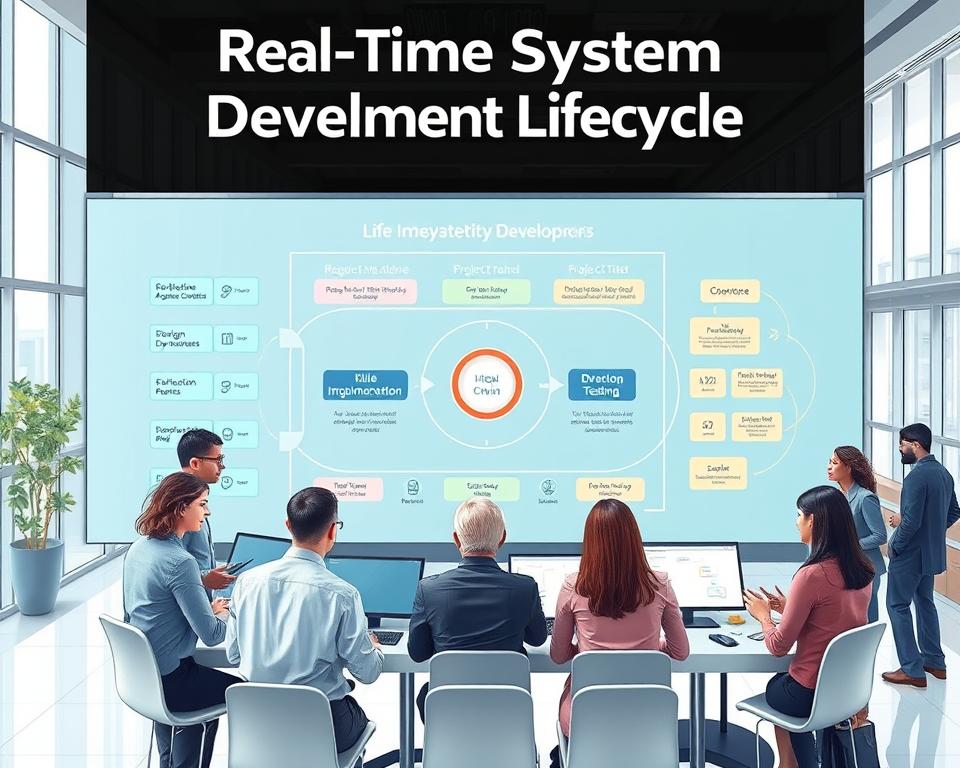
Real-time system development is a detailed process that needs careful planning. It covers several key stages, from the start to ongoing upkeep.
Requirements Gathering and Analysis
The first step is requirements gathering and analysis. This stage is vital as it sets the project’s foundation. It involves getting and analyzing needs from stakeholders to understand the system’s functions and non-functions.
Good requirements gathering makes sure the system meets performance, reliability, and safety standards. It uses methods like interviews, surveys, and workshops to get all the needed information.
System Design and Architecture Planning
After gathering requirements, the next step is system design and architecture planning. This stage creates a detailed design of the system’s architecture. It includes hardware and software components, their interactions, and the system’s behavior.
A good design is key to meeting real-time needs and ensuring the system can grow and be maintained. It needs careful thought about task scheduling, interrupt handling, and resource allocation.
Development and Implementation Phase
The development and implementation phase turns the design into a working system. This stage includes coding, combining hardware and software, and initial tests to check if the system works as expected.
During this phase, developers must follow strict coding standards and best practices. This ensures the system’s reliability and performance.
Rigorous Testing and Validation
Rigorous testing and validation are essential to make sure the real-time system meets its requirements and works right under different conditions. This stage uses various testing methods, like unit testing, integration testing, and performance testing.
Testing in real-time systems is hard because it needs to mimic real-world scenarios and check the system’s response to different stimuli.
Deployment and System Integration
After testing, the system is ready for deployment and system integration. This means installing the system in the target environment and linking it with other systems and infrastructure.
Deployment needs careful planning to avoid downtime and ensure a smooth transition. It also includes training users and providing necessary documentation.
Ongoing Maintenance and Optimization
The last stage is ongoing maintenance and optimization. This involves watching the system’s performance, fixing issues, and improving it to make it more efficient and reliable.
Maintenance is key to keeping the system running well and meeting changing user needs.
Experts say, “A well-planned and executed development lifecycle is key to the success of real-time system projects.” Good lifecycle management ensures real-time systems are delivered on time, within budget, and to the right quality standards.
8. Programming Languages and Development Tools for Real-Time Systems
The success of real-time systems depends a lot on the programming languages and tools used. These systems need to work quickly and accurately. So, picking the right tools and languages is very important.
C and C++ for Embedded Development
C and C++ are top choices for embedded development. They are known for their speed, reliability, and flexibility. These languages let developers get close to the hardware, making code more efficient for real-time needs.
In the automotive and aerospace fields, embedded systems often use C and C++. They are key for the operating systems and apps in these areas.

Ada and Specialized Real-Time Languages
Ada is made for real-time and safety-critical systems. It’s great for complex tasks because of its strong typing and handling of many tasks at once.
In places where safety and predictability are key, like defense and aviation, Ada is a go-to choice.
Development Frameworks and Middleware
Frameworks and middleware are vital in real-time system development. They offer pre-made parts and tools that make building systems easier.
RTOS (Real-Time Operating Systems) like VxWorks and QNX are examples. They give developers a full setup for making real-time apps.
Debugging and Performance Analysis Tools
Debugging and checking performance are key steps in making real-time systems. Tools like Lauterbach TRACE32 and Wind River Workbench offer deep debugging and performance checks.
These tools help find and fix problems. They make sure real-time systems work as they should, meeting their strict deadlines and reliability needs.
9. Key Benefits of Professional Real-Time System Development Services
Professional real-time system development services offer many benefits. They help businesses work more efficiently and stay competitive. This can also improve their financial health.
Access to Specialized Expertise
One big advantage is getting access to specialized expertise. These services have teams with deep knowledge in real-time systems. This expertise ensures systems are built right for the business’s needs.
Accelerated Time-to-Market
These services can accelerate time-to-market for businesses. They use their expertise and resources to speed up development. This is a big plus in fast-moving markets.
Guaranteed Performance and Reliability
Another benefit is guaranteed performance and reliability. Systems are tested and validated to meet high standards. This is crucial for businesses that depend on these systems.
Cost-Effective Development
These services also offer cost-effective development. They use efficient processes and the latest tech to save costs. This way, businesses can save money without sacrificing quality.
Scalability and Future-Ready Solutions
Lastly, they provide scalability and future-ready solutions. Systems are built to grow and adapt with the business. This forward-thinking helps businesses stay ahead and ready for new challenges.

10. Critical Challenges in Real-Time System Development
Creating real-time systems is tough. They need to be reliable and efficient. These systems face many challenges that can affect their performance and how well they work.
Meeting Strict Timing Deadlines
One big challenge is meeting timing deadlines. Real-time systems must act fast when they get input. If they don’t, they might fail or not work well.
Managing System Complexity
System complexity is another big challenge. Real-time systems have many parts that work together. Designing them to be reliable and predictable is key. This means using good design and tools.
Ensuring Deterministic Behavior
Deterministic behavior is crucial. It means the system acts the same way every time. This is important for systems where timing and accuracy matter a lot.
Balancing Performance and Resource Constraints
Real-time systems often have limited resources. They need to work well with less. This means using resources wisely, like processing power and memory.
Integration with Existing Infrastructure
Working with other systems is also a challenge. Real-time systems often need to connect with others. This requires careful planning to keep performance and reliability high.
The challenges of making real-time systems can be summed up as follows:
| Challenge | Description | Impact |
|---|---|---|
| Meeting Strict Timing Deadlines | Responding to inputs and events within a specified time frame | System failure or performance degradation if deadlines are missed |
| Managing System Complexity | Designing and implementing complex interactions between components | Affects predictability and reliability of the system |
| Ensuring Deterministic Behavior | Achieving consistent and predictable system responses | Directly impacts system reliability and predictability |
| Balancing Performance and Resource Constraints | Optimizing performance in resource-constrained environments | Affects overall system efficiency and effectiveness |
| Integration with Existing Infrastructure | Integrating with other systems and infrastructure | Impacts overall system performance and reliability |
11. Real-Time System Security and Reliability
In today’s world, real-time data processing is key. It’s vital to keep these systems safe and reliable. Real-time systems are critical, and failing them can cause big problems. So, we must know the security threats they face and use strong security measures to fight them.
Security Threats in Real-Time Environments
Real-time systems face many security threats. These include cyber-attacks, data breaches, and unauthorized access. These threats can harm the system’s integrity and reliability, leading to failures or malicious activities. For example, a cyber-attack on a real-time system in finance could lead to huge financial losses.
To tackle these threats, we need to understand the types of attacks real-time systems can face. This includes denial-of-service (DoS) attacks, man-in-the-middle (MitM) attacks, and malware infections. Each threat needs a specific plan to keep the system safe.
Implementing Robust Security Protocols
It’s crucial to use robust security protocols to protect real-time systems. This means using firewalls, intrusion detection systems, and encryption. For more on security best practices, check out guidelines for web and mobile app security.
A good security plan also includes regular audits and penetration tests. These help find vulnerabilities before they’re exploited. Being proactive can greatly lower the risk of security breaches.
Fault Tolerance and Redundancy Strategies
Fault tolerance and redundancy are key for reliable real-time systems. By having redundant parts and fault-tolerant designs, systems can keep running even when parts fail.
| Strategy | Description | Benefits |
|---|---|---|
| Redundancy | Duplicating critical components to ensure continued operation in case of failure. | Ensures system availability, reduces downtime. |
| Fault Tolerance | Designing systems to continue operating despite component failures. | Enhances system reliability, minimizes impact of failures. |
Compliance and Safety Standards
Real-time systems must follow safety standards and regulations. This is important for their safety and reliability. For example, in healthcare, real-time systems in medical devices must meet strict safety rules to avoid harming patients.
By following these standards and using strong security, organizations can keep their real-time systems safe. This protects their operations and customers.
12. Best Practices for Implementing Real-Time Solutions
Creating real-time systems needs a careful plan. This plan is based on best practices learned from experience and research. It ensures the systems work well and reliably.
Deterministic Design Principles
Deterministic design is key for real-time systems. It makes sure the system acts as expected. This means setting clear goals and following deterministic design principles during development.
Using these principles helps make systems that meet tight deadlines. They also perform well under different conditions.
Comprehensive Testing Methodologies
Testing real-time systems fully is crucial. It involves unit, integration, and system testing. A variety of testing methodologies are used to cover everything.
Good testing finds and fixes problems early. This reduces the chance of later issues. It makes the system reliable.
Performance Optimization Techniques
Improving real-time system performance is vital. It ensures the system works efficiently and meets deadlines. Techniques like code optimization and resource allocation are used.
Optimizing performance helps achieve low latency and high throughput. This is what real-time apps need.
Documentation and Knowledge Transfer
Good documentation and knowledge sharing are essential. They help maintain and support real-time systems. Comprehensive documentation and team knowledge transfer are key.
Good documentation makes maintenance and updates easier. Knowledge transfer keeps the team’s skills up to date.
Continuous Monitoring and Maintenance
Real-time systems need constant checking and upkeep. Continuous monitoring finds problems quickly. Regular maintenance stops systems from getting worse.
By being proactive, developers keep systems running well for a long time.
13. Choosing the Right Real-Time System Development Service Provider
Choosing the right service provider for real-time system development is crucial. Real-time systems are complex and need a lot of expertise. The right provider can help you meet your business goals.
Evaluating Technical Expertise and Track Record
Look at the service provider’s technical skills and past projects. They should have a good track record in real-time system projects. Their skills should cover all stages, from the start to the end.
Check if they know about RTOS, embedded systems, and communication protocols. Knowing these technologies is key to making reliable systems.
Industry-Specific Experience and Knowledge
It’s important to find a provider that knows your industry well. They can offer solutions that fit your specific needs.
For example, a provider with aerospace and defense experience will understand the strict safety rules of that field.
Development Methodology and Project Management
The provider’s development method and project management are key to success. Look for agile methodologies and a clear project plan.
Quality Assurance Processes
Good quality assurance is essential for reliable systems. Check the provider’s testing and validation steps to see if they meet your standards.
Post-Deployment Support and Maintenance
Support and maintenance are crucial for your system’s long-term success. Check the provider’s support and maintenance plans.
Cost Considerations and ROI
Think about the costs of working with a provider. Look at the total cost and potential return on investment (ROI) to find the best value.
| Evaluation Criteria | Key Considerations | Importance Level |
|---|---|---|
| Technical Expertise | RTOS, Embedded Systems, Communication Protocols | High |
| Industry Experience | Sector-specific knowledge, regulatory compliance | High |
| Development Methodology | Agile, Waterfall, Hybrid | Medium |
| Quality Assurance | Testing, Validation, Certification | High |
| Post-Deployment Support | Response times, maintenance strategies | Medium |
| Cost Considerations | Total cost of ownership, ROI | High |
14. Emerging Trends Shaping Real-Time System Development
New technologies and fresh ideas are changing how we make real-time systems. As tech grows, new trends are key in updating real-time system development.
Artificial Intelligence and Machine Learning Integration
Artificial intelligence (AI) and machine learning (ML) are making real-time systems smarter. AI and ML can quickly sort through lots of data. This helps with things like finding problems early and making better choices.
In places like factories, AI can guess when machines will break down. This cuts down on lost time and boosts work efficiency. In hospitals, ML can quickly look over medical data. This helps doctors make quick, smart decisions.
Edge Computing and Fog Computing
Edge computing and fog computing make systems faster by moving data processing closer to where it happens. This is super important for things like self-driving cars and smart energy systems.
By handling data closer to its source, systems can react quicker. This makes everything run smoother and faster.
5G Networks and Ultra-Low Latency
5G networks are changing how we build real-time systems. They offer super-fast speeds and low delays. This opens up new possibilities for things like emergency communications and virtual reality.
With 5G, we can make systems that need to act fast. This includes things like remote surgeries and smart traffic systems.
Cloud-Native Real-Time Applications
Cloud-native apps are getting more popular. They use cloud tech for better flexibility and growth. Cloud-native systems are more adaptable and reliable.
Cloud-native apps can grow with data needs and stay available. This makes them perfect for real-time systems.
Digital Twin Technology
Digital twin technology is also changing real-time system development. Digital twins are virtual copies of real systems. They help predict and improve how systems work in real-time.
Using digital twins, we can test and refine systems without real-world risks. This leads to better performance and fewer mistakes.
15. Conclusion
Real-time system development is key for businesses needing fast data processing and precise timing. With the help of experts, companies can create efficient systems. These systems help businesses succeed.
There are different ways to achieve real-time capabilities. This includes using special hardware or software solutions like Linux-RT Patch and Xenomai framework. Each method has its own advantages and disadvantages, depending on the specific needs.
For example, Toradex’s work shows how Linux can be used with application processors in real-time applications. By understanding real-time systems and choosing the right approach, businesses can become more efficient and competitive.
In summary, real-time system development is vital for companies wanting to be more responsive and make better decisions. With the right technology and expertise, businesses can use real-time systems to innovate and succeed.