







Today, many entrepreneurs start a subscription model to keep users engaged. This model offers special content or products for a monthly fee. It makes sure loyal followers get top-notch value every month.
Using this approach, founders build strong loyalty and steady income. It’s crucial in unstable markets. Offering ongoing value helps grow a community that trusts your brand.
This guide will show you how to start and manage such platforms well. You’ll learn to turn your idea into a profitable online space that keeps users coming back. Predictable income is a big reason many founders pick this route.
Creating high-quality content shows users the value of their investment every day. Success comes from knowing what your audience needs from their online experience.
Table of Contents
Key Takeaways
- Recurring revenue provides financial stability and easier planning.
- Exclusive content encourages long-term member loyalty and trust.
- Automated systems help simplify growth and user management.
- Growing community loyalty increases brand value and market presence.
- Successful sites solve specific user problems consistently and effectively.
Understanding Subscription-Based Digital Platforms
Subscription-based digital platforms have changed how businesses work and connect with customers. They offer access to products, services, or content for a regular fee. This model works well in many industries, bringing in steady money and keeping customers coming back.
What Makes a Platform Subscription-Based
A platform is called subscription-based if it gives ongoing access for a fee. It can take many forms, like:
- Access to exclusive content, such as premium articles, videos, or podcasts.
- Software or tools that get updated regularly, giving users the newest features and security fixes.
- Membership or community benefits, including special events, discounts, or networking chances.
- Curation services that offer personalized picks of products or content based on what you like.
The main thing about a subscription-based platform is the ongoing value it gives to customers. This makes sure they keep getting something good from their subscription over time.

Types of Digital Subscription Services
Digital subscription services come in many types, each meeting different customer needs. Some common ones are:
- Access-Based Content Subscriptions: These give users access to a big library of content, like streaming services or online papers.
- Software as a Service (SaaS) Platforms: SaaS platforms let you use software online, without having to install it yourself.
- Membership and Community Models: These platforms make members feel part of a group, offering special perks and encouraging community involvement.
- Curation and E-commerce Subscriptions: These services pick products or content based on what you like, giving you a personalized shopping experience.
By knowing the different types of digital subscription services, businesses can find ways to add value for their customers. This helps them build a loyal group of subscribers.
Why Subscription Models Drive Business Success
The move to subscription models is changing the business world. It brings in steady money. This change is more than just a trend; it’s a smart choice with many benefits.
Predictable and Recurring Revenue
Subscription models are great for getting predictable and recurring revenue. This makes it easier for businesses to plan their finances. They can budget better and invest in growth.
With steady income, companies can handle tough times better. They can also grow and improve.
Improved Customer Lifetime Value
Subscription models also help with improved customer lifetime value (CLV). They keep customers coming back for more. This means more money and loyal customers.

Data-Driven Business Intelligence
Also, subscription models give data-driven business intelligence. They offer a lot of data on what customers like and need. This helps businesses improve their services and marketing.
In short, subscription models help businesses succeed. They offer steady income, better customer relationships, and useful data. By using these advantages, businesses can grow and stay ahead in the market.
Identifying Your Market and Target Audience
Finding the right market and audience is key to a successful subscription platform. You need to know the competition, create detailed customer profiles, and check if your platform fits their needs. This ensures your platform meets the expectations of your audience.
Conducting Competitive Market Analysis
Doing a deep dive into the market is crucial. You should look at your competitors, their strengths and weaknesses, and what’s missing. Focus on:
- What your competitors offer and how they price it
- Who your competitors are targeting and what they like
- Current trends and where you can innovate
This helps you stand out and attract your audience.
Creating Customer Personas
Creating customer personas is vital. These are made-up profiles of your ideal customers, based on real data. They help you understand what your customers want, how they behave, and why. Include:
- Basic info like age, gender, and job
- What they value and enjoy doing
- How they use your platform
Good customer personas let you customize your platform and marketing to fit your audience’s needs.
Validating Your Platform Concept
It’s important to check if your platform idea works. You can do this by:
- Asking potential users for feedback
- Testing small versions of your platform
- Looking at market trends and what others are doing
This step reduces the risk of launching a platform that won’t appeal to your audience.

By taking these steps, you can make sure your digital platform meets your audience’s needs. This boosts its chances of success.
Selecting the Optimal Subscription Business Model
Choosing the right subscription model is key for your platform’s growth. There are many models, each suited for different needs. These include access-based content, SaaS, membership and community building, and curated e-commerce experiences.
The model you pick affects your platform’s revenue, customer engagement, and success. Experts say, “The subscription economy is not just about selling subscriptions; it’s about building lasting customer relationships.”
“The key is to find a model that aligns with your platform’s goals and resonates with your target audience.”
Access-Based Content Subscriptions
Access-based content subscriptions give users exclusive content for a fee. This model works well for media companies, online course providers, and news outlets. For example, Netflix and Spotify offer vast content libraries to their subscribers.
Software as a Service (SaaS) Platforms
SaaS platforms deliver software over the internet, no local installation needed. This model is common in the tech industry, with companies like Salesforce and Microsoft offering SaaS solutions. It offers continuous updates, scalability, and cost-effectiveness, appealing to businesses.

Membership and Community Models
Membership and community models focus on building a loyal community. They offer exclusive benefits like premium content, special discounts, or community forums. Patreon is a great example, supporting creators with a membership-based revenue stream.
Curation and E-commerce Subscriptions
Curation and e-commerce subscriptions deliver curated products or services regularly. This model is popular in niches like beauty products, gourmet foods, and pet supplies. Birchbox and Dollar Shave Club have built loyal customer bases using this model.
In conclusion, picking the right subscription business model is crucial. It depends on your platform’s goals, target audience, and market trends. By understanding different models, you can make a choice that boosts your platform’s success.
Essential Features to Build a Subscription-Based Digital Platform
A good subscription platform has strong features for different users. It’s key to add features that keep users coming back. This makes your service a hit.

User Authentication and Account Management
User authentication keeps your platform safe. Use OAuth or social media login for easy sign-up. Good account management lets users update their info and check their subscription.
Subscription Tier Management
Subscription tier management lets you offer different plans. This way, you can reach more people. You can change prices and what each tier gets based on what users want and the market.
For more tips on subscription services, check out how to add subscription services to custom e-commerce.
Content Delivery and Access Control
Secure content delivery and access control protect your digital stuff. A strong system with DRM stops unauthorized use and piracy.
Admin Dashboard and User Analytics
An admin dashboard helps manage your platform. It lets you see what users are doing and make smart choices. User analytics tools show how users behave and what they like. This helps you make your platform better.
With these key features, you can create a subscription platform that’s both useful and fun. It will meet your users’ needs and help your business grow.
Choosing Your Platform Technology Stack
Building a strong subscription-based digital platform starts with picking the right technology stack. This choice is key because it impacts how well the platform works, its security, and how it can grow.
Frontend Frameworks and Libraries
The frontend is where users interact directly. So, choosing the right frontend frameworks and libraries is crucial for a good user experience. Popular choices include React, Vue, and Angular, each with its own strengths and weaknesses.
React, Vue, and Angular Considerations
When picking between React, Vue, and Angular, think about the learning curve, community support, and your project’s needs. For example, React is great for complex, interactive apps because of its component-based architecture and virtual DOM.
“React’s component-based architecture allows for the creation of reusable UI components, making development more efficient and reducing the likelihood of bugs.”
Vue is easier to learn and is known for its simplicity and flexibility. Angular, on the other hand, is a full-featured JavaScript framework that’s perfect for building complex apps.
| Framework | Learning Curve | Community Support |
|---|---|---|
| React | Steep | Excellent |
| Vue | Moderate | Good |
| Angular | Steep | Excellent |
Backend Development Options
The backend is the core of your platform, handling data storage, processing, and communication between the frontend and database. Popular backend options include Node.js, Python, and Ruby on Rails.
Node.js, Python, and Ruby on Rails
Node.js is great for real-time apps because of its non-blocking, event-driven architecture. Python is simple and has lots of libraries, like Django and Flask. Ruby on Rails speeds up development with its convention-over-configuration principle.
For more on choosing the best technology stack for mobile apps, check out this guide.

Database Architecture
The database architecture is key for efficient data storage and retrieval. You must choose between SQL and NoSQL databases based on your data’s structure and scalability needs.
SQL vs. NoSQL Solutions
SQL databases are best for structured data and complex transactions, supporting ACID principles well. NoSQL databases are better for unstructured or semi-structured data, offering flexible schema designs.
- SQL databases: MySQL, PostgreSQL
- NoSQL databases: MongoDB, Cassandra
The right technology stack depends on your project’s needs, your team’s expertise, and the platform’s scalability requirements.
Implementing Payment Processing and Billing Systems
A strong payment and billing system is key for any digital platform. It helps manage payments, subscriptions, and keeps users happy.
When setting up your system, think about a few important things. You need to pick a payment gateway, automate billing, handle payment issues, and manage refunds and cancellations.
Choosing Payment Gateway Providers
Finding the right payment gateway is crucial. It will handle your transactions and keep your data safe.
Stripe, PayPal, and Braintree
Stripe, PayPal, and Braintree are top choices. They offer great features like low fees and strong security. Look at their pricing, payment options, and tech compatibility when picking one.

Setting Up Recurring Billing Automation
Recurring billing makes managing subscriptions easy. It automatically charges customers, saving time and reducing errors.
To set it up, link your payment gateway with your billing system. This means setting up plans, reminders, and handling failed payments.
Handling Payment Failures and Retry Logic
Payment failures happen, but smart retries can help. A good retry system tries again when it makes sense, like when funds are available.
Good retry logic keeps customers from leaving. It’s also important to tell customers about failed payments and how to fix them.
Managing Refunds and Cancellations
Handling refunds and cancellations is key to keeping customers happy. Your system should make it easy to process these and understand customer behavior.
A flexible refund and cancellation policy improves the user experience. It also helps your business reputation.
Developing Pricing Strategies That Maximize Revenue
A good pricing strategy is key for a successful subscription business. It sets the revenue and shapes how customers see and use the service. Using tiered pricing, free trials, freemium models, and pricing psychology can boost revenue and attract more subscribers.
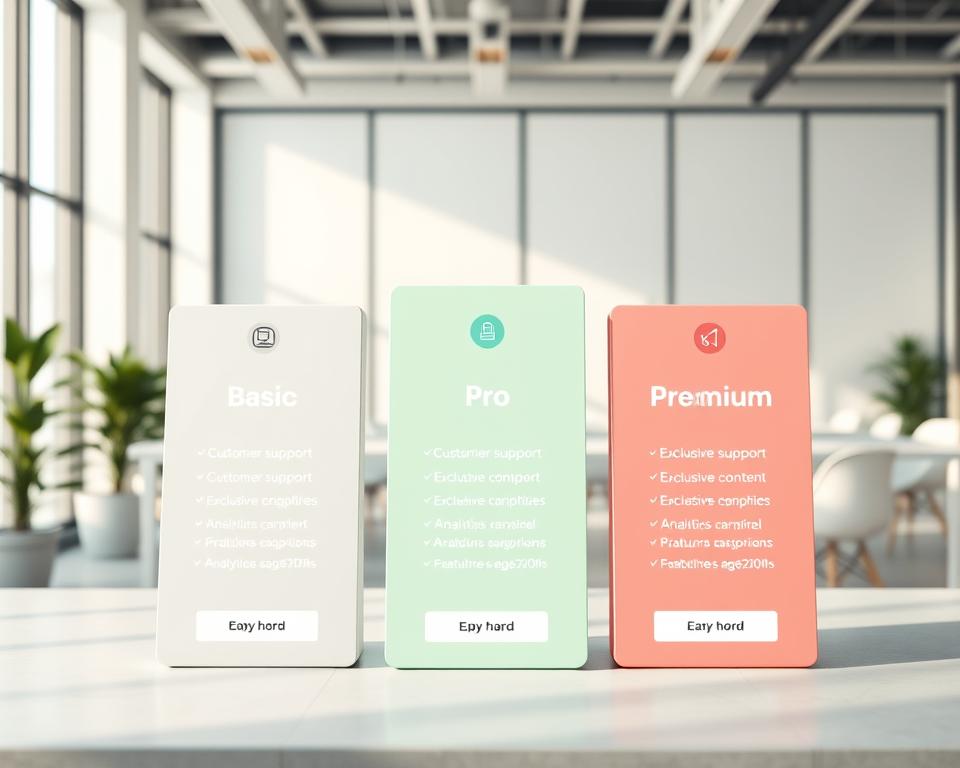
Structuring Tiered Pricing Plans
Tiered pricing offers choices for different needs and budgets, making the service more appealing. By organizing tiers based on value, businesses can target specific markets. For example, a basic tier might have fewer features at a lower cost, while premium tiers offer more at a higher price.
Key considerations for tiered pricing include:
- Clearly defining the features and benefits of each tier
- Ensuring that the differences between tiers are significant and valuable to customers
- Using pricing anchors to make the higher tiers more appealing
Implementing Free Trials and Freemium Tiers
Free trials and freemium tiers help lower the barrier to entry. They let potential customers see the service’s value. A free trial gives full feature access for a short time, while a freemium model offers basic features for free and charges for premium ones.
As Adam Hayes, a financial expert, notes,
“Freemium models have become a staple in the digital economy, allowing companies to build a large user base and convert a portion of them into paying customers.”
Pricing Psychology and Anchoring
Pricing psychology is key in how customers see a service’s value. Anchoring, where a high price is used to make others seem better, can sway decisions. Knowing these psychological factors can help businesses fine-tune their pricing.
For instance, showing a high-end tier at a premium price can make the standard tier seem more affordable by comparison.
Annual Discounts vs. Monthly Flexibility
Annual discounts can encourage longer subscriptions, providing steady revenue. Monthly flexibility, on the other hand, suits those who don’t want long-term commitments. Businesses must balance steady revenue with the flexibility of monthly plans.
A balanced approach might include:
- Offering discounts for annual commitments to encourage long-term subscriptions
- Providing month-to-month plans for customers who value flexibility
Understanding the audience’s needs helps businesses craft pricing strategies that boost revenue and keep customers happy.
Designing Exceptional User Experience
Creating a great user experience is key for a digital platform’s success. It needs a smooth onboarding, easy navigation, and follows mobile-first design. It also must meet accessibility standards.
Several important aspects need focus. First, the onboarding process should be simple. This lets new users quickly get what the platform offers.
Streamlined Onboarding Processes
A good onboarding process keeps users coming back. It should be clear and quick, offer value right away, and guide users well at first.
For example, a service can use a step-by-step onboarding. This introduces features slowly, making it easier and more engaging. A study on building trust in subscription apps shows how important this is.
Intuitive Navigation and Content Organization
Navigation and content organization are key for a good user experience. The platform should be easy to use, with clear categories and simple labels.
Use a simple menu, clear labels, and organize content well. This makes the platform easy to use and understand.

Mobile-First Design Principles
Most users use mobile devices to access platforms. So, designing for mobile first is crucial. This means focusing on small screens and making key features easy to find.
Mobile-first design improves the user experience on phones. It also makes the platform work well on all devices.
Accessibility Standards and Compliance
Following accessibility standards is vital for an inclusive experience. This means following guidelines like the Web Content Accessibility Guidelines (WCAG) 2.1.
By focusing on accessibility, platforms can reach more users. This makes the service better for everyone, improving satisfaction.
Securing Your Platform and Protecting User Data
Keeping your subscription-based platform safe is key to keeping users’ trust. A secure platform protects user data and keeps your business running smoothly.
To ensure strong security, several steps are crucial. These include SSL encryption and HTTPS, two-factor authentication, following privacy laws like GDPR and CCPA, and meeting PCI-DSS standards for payment safety.
Implementing SSL Encryption and HTTPS
SSL encryption is a must for protecting data between your platform and users. HTTPS ensures all communications are encrypted. This makes it hard for hackers to get or change sensitive info.
SSL encryption is not just good practice; it’s essential for any platform that handles user data. Also, search engines favor HTTPS sites, which can help your platform show up more in search results.
Two-Factor Authentication
Two-factor authentication (2FA) adds an extra layer of security to logins. Users need to provide a second verification, like a code sent to their phone or a biometric scan.
With 2FA, you greatly lower the chance of unauthorized access to user accounts. This protects sensitive info and reduces the risk of data breaches.
GDPR, CCPA, and Privacy Compliance
Following privacy laws like GDPR and CCPA is vital for platforms in or serving customers from covered areas.
These laws set strict rules for handling user data. Staying compliant avoids big fines and builds trust with users by showing you care about their privacy.
PCI-DSS Standards for Payment Security
For platforms that deal with payment info, following PCI-DSS is crucial. PCI-DSS outlines secure ways to handle cardholder data.
Meeting PCI-DSS standards is key to reducing data breach risks and keeping financial transactions safe on your platform.
Here’s a comparison of security features across different platforms:
| Security Feature | Basic Platform | Advanced Platform | Subscription-Based Platform |
|---|---|---|---|
| SSL Encryption | Optional | Recommended | Mandatory |
| Two-Factor Authentication | Not Available | Optional | Mandatory |
| GDPR/CCPA Compliance | Not Applicable | Recommended | Mandatory |
| PCI-DSS Compliance | Not Applicable | Recommended for Payment Processing | Mandatory for Payment Processing |
For more on making secure financial and banking apps, check out Next Big Technology.
Building Robust Customer Retention Strategies
To grow, subscription-based platforms need to focus on building strong customer relationships. They must use effective strategies to meet the needs of their users.
Personalization Through Machine Learning
Personalization boosts customer experience and loyalty. Machine learning algorithms help businesses understand user behavior and preferences. This way, they can offer content and recommendations that fit each user.
For example, a streaming service might suggest new shows based on what you’ve watched. This can make users happier and more engaged. Studies show personalized recommendations can keep customers for up to 30% longer.
“Personalization is not just about addressing customers by their names; it’s about understanding their needs and delivering value accordingly.”
Email Automation and Lifecycle Campaigns
Email automation is key to keeping customers engaged. It sends timely and relevant emails based on user actions. This could be when they sign up, renew, or cancel.
Good email campaigns can lower churn rates. For instance, a study on customer retention strategies shows timely and relevant emails are crucial for keeping subscribers.
| Email Campaign Type | Purpose | Impact on Retention |
|---|---|---|
| Welcome Series | Introduce new subscribers to the platform | High |
| Renewal Reminders | Notify users of upcoming renewals | Medium |
| Win-Back Campaigns | Re-engage inactive users | High |
In-App Notifications and Engagement
In-app notifications keep users engaged. They send timely and relevant messages, encouraging more interaction with the platform.
For example, a fitness app might remind users to log their workouts. This improves the user experience and builds a sense of community.
Analyzing Churn Signals and Prevention
Understanding and addressing churn signals is key to preventing customer loss. By analyzing user behavior, businesses can identify and act on patterns that lead to churn.
Common churn signals include decreased usage, negative feedback, and failed payments. Addressing these issues quickly can reduce churn and improve satisfaction.
To implement these strategies, businesses need to understand their customers well. Using data analytics and machine learning helps develop targeted retention plans. These plans drive long-term growth and profitability.
Marketing and Growing Your Subscriber Base
Marketing is key to growing and keeping a subscription service alive. A good marketing plan brings in new subscribers and keeps the ones you have. This builds a loyal community around your service.
Search Engine Optimization for Subscriptions
Getting your platform seen by more people is important. This means making your site easy to find on search engines. You need to do keyword research to see what people are looking for. Then, make your site and content match what they want.
Here are some SEO tips:
- On-page optimization (meta tags, titles, descriptions)
- Content creation (blog posts, guides, resources)
- Technical SEO (site speed, mobile-friendliness, SSL)
- Link building (guest blogging, collaborations)
Content Marketing and Blogging
Content marketing is a great way to draw in and keep subscribers. By making valuable and interesting content, you show you’re a leader in your field.
Here are some content marketing tips:
| Content Type | Description | Benefits |
|---|---|---|
| Blog Posts | In-depth articles on industry topics | Establishes authority, improves SEO |
| Guides and E-books | Comprehensive resources on specific subjects | Captures leads, builds trust |
| Webinars and Videos | Interactive content engaging audiences | Engages audience, demonstrates expertise |
Social Media Community Building
Building a community on social media can really help your platform. You need to make interesting content, talk to your followers, and run ads that target the right people.
Referral Programs and Affiliate Marketing
Referral programs and affiliate marketing are great for growing your subscribers. They let your current subscribers bring in new ones by offering them something in return.
Here’s what makes a good referral program:
- Clear incentives for referrers and referees
- Easy-to-use referral mechanisms
- Tracking and rewarding referrals
Measuring and Analyzing Platform Performance
To see if a subscription-based digital platform is doing well, it’s important to check its performance often. This means looking at key numbers that show how the platform is doing financially and operationally.
Finding and watching the right metrics is key. These numbers help us understand the platform’s current state and guide decisions for the future.
Monthly Recurring Revenue (MRR) and Growth Rate
Monthly Recurring Revenue (MRR) shows the predictable income from subscriptions each month. It’s important to track MRR and its growth rate to see how the platform’s income is doing.
- MRR helps in forecasting future revenue and making budgetary decisions.
- A steady growth rate means the subscriber base is growing.
- Looking at MRR and growth rate together helps understand pricing and marketing success.
Customer Acquisition Cost (CAC) and Payback Period
Knowing the Customer Acquisition Cost (CAC) is key to judging marketing and sales efforts. CAC is the cost to get a new customer. It’s best to compare it with the Payback Period, the time to get back this cost through subscription income.
A lower CAC and shorter Payback Period show good customer acquisition. Businesses should try to lower CAC and increase customer lifetime value.
Churn Rate and Net Revenue Retention
The Churn Rate shows how many subscribers cancel in a set time. It’s crucial because it affects MRR and growth. Net Revenue Retention looks at revenue from existing customers over time, considering upgrades, downgrades, and cancellations.
A low churn rate and high net revenue retention mean a healthy business. It shows customers are happy and keep subscribing.
Customer Satisfaction and Net Promoter Score
Customer Satisfaction is vital for long-term success. It’s often checked through surveys and feedback. The Net Promoter Score (NPS) asks how likely customers are to recommend the service to others.
A high NPS means a loyal customer base. This loyalty can help lower CAC and drive growth.
By watching these metrics closely, businesses can understand their platform’s performance well. This helps make decisions based on data to grow and improve customer satisfaction.
Scaling Infrastructure and Operations
To meet the needs of more subscribers, you must scale your platform. This means using cloud hosting and CDNs, improving database speed, and growing your team. These steps help support your customers better.
Cloud Hosting and CDN Implementation
Cloud hosting is flexible and can handle more traffic. It lets you use more resources when needed, keeping your site fast and reliable. A CDN also helps by storing content closer to users, making your site faster.
Benefits of Cloud Hosting:
- Scalability and flexibility
- High availability and reliability
- Cost-effectiveness
Database Optimization and Caching
As more users join, your database needs to stay fast. This means making your database better with indexes and caching. Caching helps your site respond quicker by storing data that’s often needed.
| Optimization Technique | Description | Benefits |
|---|---|---|
| Indexing | Improving data retrieval speed | Faster query execution |
| Query Optimization | Streamlining database queries | Reduced database load |
| Caching | Storing frequently accessed data | Improved response times |
Team Expansion and Customer Support
As your platform grows, so does the need for better customer support. Adding more support staff and using new technology helps keep customers happy. This includes using ticket systems, live chats, and detailed knowledge bases.
Key Strategies for Effective Customer Support:
- Implementing a multi-channel support system
- Training support staff for better issue resolution
- Utilizing customer feedback for service improvement
Conclusion
Creating a successful subscription-based digital platform is complex. It involves technology, pricing, marketing, and keeping customers. Understanding subscription models is key to building a strong foundation for success.
This article shows how important it is to pick the right model and focus on user experience. A good strategy helps grow your business and increase revenue. It’s all about making your platform user-friendly and valuable.
By using the tips from this article, businesses can build a strong subscription platform. This platform will meet the changing needs of its users. A detailed approach helps companies stay ahead and grow in the digital world.