







In today’s fast-paced business world, AI talent acquisition is key to success. Companies are now looking to hire dedicated AI engineers to boost innovation and growth.
The need for AI development teams is growing. Businesses want to use AI engineering to improve their operations and customer service. Creating a dedicated AI engineering team means knowing the technical skills needed and the different ways to work together.
By grasping the value of AI engineering and how to hire AI developers, companies can make smart choices about their AI talent. This helps them stay competitive in the market.
Table of Contents
Key Takeaways
- Understanding the importance of AI in modern business.
- The roles and responsibilities of AI developers.
- Technical skills required for AI development.
- Different engagement models for AI development.
- Benefits of building a dedicated AI engineering team.
Understanding AI Development and Its Business Impact
AI development is changing the business world with new solutions. Companies need to understand AI’s role in today’s business to stay ahead.
What AI Development Entails in Modern Business
AI development makes smart systems that can do tasks that humans usually do. This includes analyzing data, recognizing patterns, and making decisions. In today’s business, AI helps improve efficiency, cut costs, and make better decisions.
For example, AI chatbots help with customer service 24/7. AI analytics tools also help businesses understand what customers want.

The Strategic Value of AI Implementation
AI’s strategic value is in driving innovation and staying competitive. By using AI, businesses can automate repetitive tasks. This frees up resources for more important projects.
AI also helps find new opportunities and predict market trends. This lets businesses stay ahead. Companies that hire AI engineers can get custom AI solutions.
Industries Benefiting from AI Engineering Teams
Many industries are benefiting from AI teams, like healthcare, finance, and manufacturing. In healthcare, AI helps create personalized treatment plans and predict patient outcomes.
| Industry | AI Applications | Benefits |
|---|---|---|
| Healthcare | Personalized medicine, predictive analytics | Improved patient outcomes, reduced costs |
| Finance | Risk management, fraud detection | Enhanced security, reduced risk |
| Manufacturing | Predictive maintenance, quality control | Increased efficiency, reduced downtime |
These industries, and others, use AI to grow their businesses and work more efficiently. As AI keeps getting better, its role in business will only grow. It’s key for companies to focus on AI to stay competitive.
Core Roles and Responsibilities of AI Developers
AI systems need a team with different roles. AI developers are key in creating and using AI for business needs.
Machine Learning Engineers
Machine learning engineers are vital in AI development. They design and train models to learn from data.
Model Development and Training
They use algorithms and big data to train models. These models make predictions or decisions.
Algorithm Optimization and Deployment
After training, they make algorithms better and put them to work. They make sure models work well in real life.
Data Scientists and AI Researchers
Data scientists and AI researchers are key in AI. They analyze data to find patterns for AI.
Data Analysis and Pattern Recognition
Data scientists find patterns in complex data. They use stats and machine learning to get insights.
Experimental Research and Innovation
AI researchers try new AI techniques. They explore new algorithms and models to improve AI.

AI Software Engineers
AI software engineers make AI work in software. They make sure systems are efficient and grow well.
Application Integration and Development
They add AI to software. They work on making AI part of existing systems or new apps.
System Architecture and Scalability
They design systems for AI apps. They make sure systems are scalable, secure, and efficient for AI.
Essential Technical Skills for AI Engineering Teams
AI engineering teams need a wide range of technical skills. They must handle AI system development and deployment. This includes programming languages, frameworks, mathematics, and cloud infrastructure.
Programming Languages and Frameworks
Programming languages are key for AI development. Python, R, and Java are top choices for AI engineers.
Python, R, and Java for AI Development
Python is favored for its simplicity and vast libraries, like NumPy and pandas. R excels in statistical analysis and data visualization. Java is great for large-scale AI projects due to its robustness and scalability.
TensorFlow, PyTorch, and Keras
TensorFlow, PyTorch, and Keras are vital for AI model building and training. TensorFlow is known for its flexibility and scalability. PyTorch is praised for its ease of use and rapid prototyping. Keras is loved for its high-level API that simplifies development.
| Framework | Key Features | Use Cases |
|---|---|---|
| TensorFlow | Scalability, flexibility | Large-scale AI applications, production environments |
| PyTorch | Ease of use, rapid prototyping | Research, development, and small-scale AI projects |
| Keras | High-level API, simplicity | Prototyping, small to medium-sized AI projects |
Mathematics and Statistical Knowledge
AI engineering requires a solid math and stats background. You need to know linear algebra and calculus. Also, probability and statistical modeling are crucial.
Linear Algebra and Calculus
Linear algebra is key for working with vectors and matrices in AI algorithms. Calculus is used in optimization, like gradient descent, to train AI models.
Probability and Statistical Modeling
Understanding probability and statistical modeling is essential. It helps in developing AI models that can predict and make decisions based on data. This includes Bayesian inference and statistical hypothesis testing.

Cloud Platforms and Infrastructure
Cloud platforms are vital for AI development and deployment. AWS, Google Cloud, and Azure AI Services are leading providers.
AWS, Google Cloud, and Azure AI Services
These platforms offer computing power, storage, and specialized AI services. This includes machine learning and natural language processing.
MLOps and Deployment Tools
MLOps and deployment tools are key for AI model lifecycle management. Tools like MLflow and TensorFlow Extended (TFX) make this process smoother.
Types of AI Development Engagement Models
The world of AI development offers many ways to work together. Each model fits different business needs and goals. It’s important to think about what you need, how much you can spend, and how much control you want.
In-House AI Teams
Having your own AI team means you have full control. It also means you can work closely with your current team. But, it takes a lot of money to hire and train the right people.
Freelance AI Developers
Freelancers are good for saving money and for small projects. They are flexible, but managing them can be hard. Keeping your data safe is also a big concern.
Dedicated AI Development Teams
Dedicated teams offer a good mix of control and flexibility. They are a team of experts who focus only on your project. They bring deep knowledge and are committed for the long haul.
Outsourcing to AI Development Agencies
Working with AI agencies gives you access to the latest tech and skills. It’s great if you don’t have an AI team or want to speed up your projects.
Here’s a quick look at what each model offers:
| Engagement Model | Control Level | Cost | Flexibility |
|---|---|---|---|
| In-House AI Teams | High | High | Low |
| Freelance AI Developers | Low | Medium | High |
| Dedicated AI Development Teams | Medium | Medium | Medium |
| Outsourcing to AI Development Agencies | Low | Variable | High |
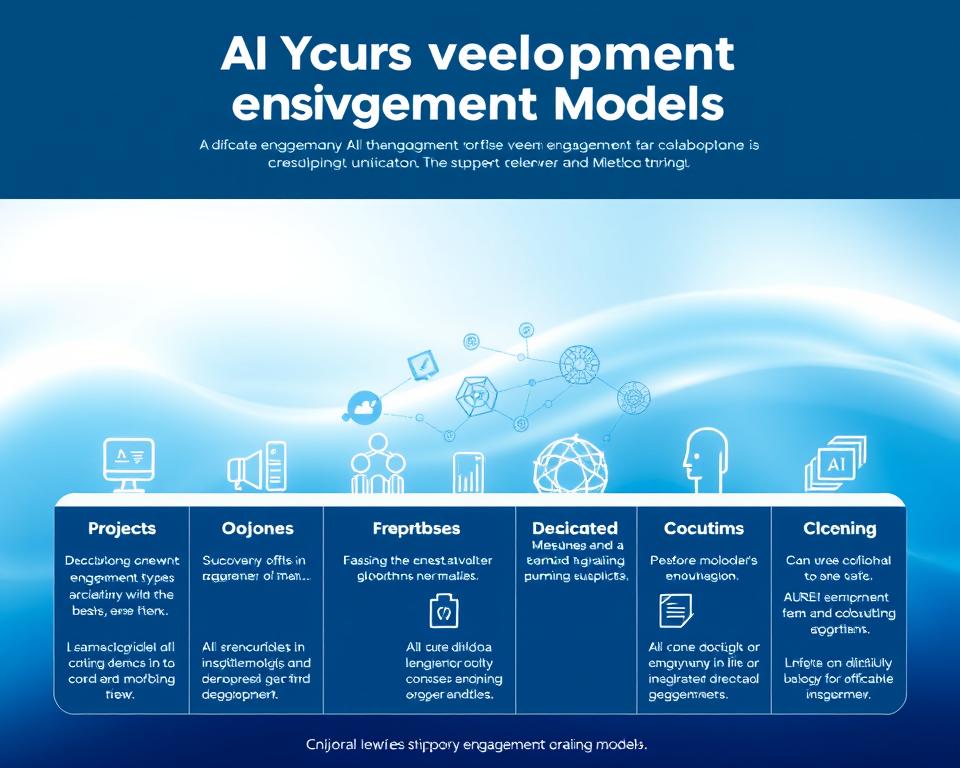
Knowing the good and bad of each model helps businesses make smart choices. These choices should match their goals and how they work.
Benefits of Building a Dedicated AI Engineering Team
Having a dedicated AI engineering team offers many benefits. These include better control and more expertise. This setup helps businesses fully use their AI projects.
Full Control and Seamless Communication
One big plus is having full control over the development process. This ensures the project meets the company’s vision and standards. Also, dedicated teams make seamless communication easier, which is key for AI projects.
Experts say, “Effective communication is the backbone of any successful project, and dedicated teams are no exception.”
“The key to successful AI development lies in the ability to communicate effectively between the development team and the stakeholders.”
Domain Expertise and Long-Term Commitment
Dedicated AI teams bring domain expertise to the table. This is crucial for creating advanced AI solutions. Their long-term commitment means they’re invested in the project’s success, leading to better results.

| Benefits | Description |
|---|---|
| Domain Expertise | Specialized knowledge in AI development |
| Long-Term Commitment | Dedicated team invested in project success |
Cost Efficiency Compared to In-House Hiring
Building a dedicated AI team can be more cost-efficient than hiring in-house. Outsourcing AI development saves on recruitment, training, and staff maintenance costs.
Cost savings are significant. A study found companies can save up to 30% on operational costs by outsourcing AI development.
Scalability and Flexibility Advantages
Dedicated AI teams offer scalability and flexibility. This lets businesses quickly adjust to changing project needs. This is especially useful in AI, where needs can change fast.
- Quickly scale up or down to meet project demands
- Flexibility to adjust project scope and direction
- Ability to integrate new technologies and innovations
In conclusion, a dedicated AI engineering team brings many benefits. These include full control, domain expertise, cost savings, and flexibility. By using these advantages, businesses can succeed in AI and stay competitive.
Hire AI Developers – Dedicated AI Engineering Team Guide: Step-by-Step Process
Building a dedicated AI engineering team requires several key steps. This guide will help you through the important stages of creating such a team.
Defining Your AI Project Requirements
First, you need to clearly define your AI project needs. This means outlining your business objectives and use cases. You also need to understand the technical specifications and constraints.
Business Objectives and Use Cases
Identify the business problems you want to solve with AI. This could be anything from better customer service to more efficient operations. Knowing your use cases helps you figure out the AI solutions you need.
Technical Specifications and Constraints
Next, list the technical needs of your project. This includes data sources, infrastructure, and any current technology. Also, think about any budget limits or legal issues.

Identifying Required Skill Sets
After defining your project, identify the skills needed. This means matching skills to project needs and balancing specialists and generalists.
Matching Skills to Project Needs
Determine the specific skills your project requires. This could be machine learning, natural language processing, or computer vision. Consider the level of expertise, from junior to senior.
Balancing Specialists and Generalists
Specialists have deep knowledge in certain areas, while generalists can handle more tasks. Finding the right mix of these roles is key to your project’s success.
Setting Budget and Timeline Expectations
Setting a realistic budget and timeline is crucial. This involves defining project milestones and deliverables and planning for resource allocation.
Project Milestones and Deliverables
Divide your project into smaller milestones. Clearly define what you expect at each stage. This helps you track progress and make changes when needed.
Resource Allocation Planning
Plan how you will use resources, like people, infrastructure, and budget. Think about how your team can grow and adapt to project changes.
By following these steps, businesses can hire AI developers for a dedicated team. This team will meet project needs and drive success.
Where to Find Qualified AI Developers
Finding skilled AI developers can be tough. But, there are many ways to look. Businesses have several options to find the right talent for their AI projects.
Specialized AI Recruitment Platforms
Specialized AI recruitment platforms are great for companies. They connect businesses with talented AI developers.
Toptal, Upwork, and AI-Specific Job Boards
Platforms like Toptal and Upwork have a variety of AI developers. AI-specific job boards also help find candidates with the right skills for AI projects.
AI Development Companies and Agencies
AI development companies and agencies are another good option. They have experienced developers ready for hire on specific projects.
Vetted Service Providers and Partnerships
Many AI development companies offer vetted service providers. This ensures businesses work with top-quality developers. It’s great for companies needing to grow their AI teams fast.
Professional Networks and Communities
Professional networks and communities are also useful. They let businesses connect with developers who are part of the AI community.
GitHub, Kaggle, and LinkedIn
GitHub and Kaggle are places where AI developers showcase their work. LinkedIn is also key for finding AI professionals, with many listing their skills and experience.
University Partnerships and Research Institutions
University partnerships and research institutions offer a chance to find emerging AI talent. By working with universities, companies can tap into a pool of skilled developers.
Academic Collaborations and Talent Pipelines
Academic collaborations can provide a steady flow of talent. By partnering with universities, companies can find and recruit top AI talent early in their careers.
To show the different ways to find AI developers, here’s a comparison:
| Channel | Benefits | Considerations |
|---|---|---|
| Specialized AI Recruitment Platforms | Access to a large pool of AI talent, streamlined recruitment process | Cost, quality control |
| AI Development Companies and Agencies | Vetted service providers, scalability | Cost, potential for less control over development process |
| Professional Networks and Communities | Direct access to AI professionals, insight into community trends | Time-consuming to navigate, quality control |
| University Partnerships and Research Institutions | Access to emerging talent, potential for innovative solutions | Time and resources required for partnership development, potential for talent to be inexperienced |

Evaluating AI Developer Technical Competencies
Checking AI developers’ skills is complex and needs careful thought. Businesses must use a detailed approach to make sure teams can tackle tough projects.
Portfolio and Project Assessment
Looking at a developer’s portfolio and past projects is key. It shows what they can do.
Reviewing Previous AI Projects and Outcomes
When checking past AI projects, look for success, innovation, and problem-solving. This shows if they can solve real AI problems.
GitHub Repositories and Open Source Contributions
Checking GitHub and open-source work shows their coding, teamwork, and community involvement.

Technical Interview Strategies
Technical interviews are crucial. They test a developer’s knowledge and problem-solving skills.
Assessing Theoretical Knowledge
Interviews should ask about AI concepts, algorithms, and data structures. This tests their understanding.
Problem-Solving and Critical Thinking
Give them hypothetical or real-world problems. This shows their critical thinking and problem-solving.
Practical Coding Challenges and Case Studies
Practical coding challenges and case studies offer hands-on insights. They show how they code and approach AI.
Real-World AI Problem Scenarios
Use real AI problems in coding challenges. This tests their ability to apply their skills in real situations.
Time-Bound Technical Assessments
Time-bound assessments mimic real-world development pressures. They test their ability to work under tight deadlines.
Verification of Certifications and Credentials
Checking a developer’s certifications and credentials is vital. It ensures they have the right qualifications and expertise.
Industry-Recognized AI Certifications
AI certifications from respected industries validate their skills. They show they’re good in specific AI areas.
Academic Qualifications and Research Publications
Looking at their academic background and research shows their foundational knowledge. It shows their contributions to AI.
| Evaluation Criteria | Description | Importance Level |
|---|---|---|
| Portfolio and Project Assessment | Review of previous projects and outcomes | High |
| Technical Interviews | Assessment of theoretical knowledge and problem-solving skills | High |
| Practical Coding Challenges | Hands-on evaluation of coding abilities | Medium |
| Certifications and Credentials | Verification of industry-recognized certifications and academic qualifications | High |
Structuring Your AI Engineering Team
Building an AI engineering team requires careful planning. The project’s complexity and needs determine the team’s size and roles.
Team Size Based on Project Complexity
The team size changes with the project’s scope and complexity. Each project has unique needs.
Small Projects and MVPs
Small projects or MVPs need a smaller team. This team might include a data scientist, AI engineer, and project manager.
Enterprise-Level AI Solutions
Big AI projects need a bigger team. This team includes many data scientists, AI engineers, and software developers, plus support roles.
Essential Roles and Team Composition
Identifying key roles is vital, no matter the project size. The team should match the project’s needs.
Core Technical Positions
Core technical positions are crucial. They include AI engineers, data scientists, and software developers. These roles are key to AI development.
Supporting Roles and Specialists
Supporting roles like data engineers, UX/UI designers, and QA specialists are also essential. They make sure the AI solution is solid, easy to use, and well-tested.
Leadership and Project Management Requirements
Good leadership and project management are key to success. It’s not just about technical skills but also managing the project well.
AI Team Lead Responsibilities
The AI team lead guides the team, makes technical decisions, and keeps the project on track. They need to know AI well and how to manage projects.
Agile Methodologies for AI Development
Agile methodologies help in AI development. They make the team flexible and quick to adapt. This way, the team can meet changing needs and deliver fast.

Cost Factors When Hiring AI Developers
When you hire AI developers, you need to know all the costs. This includes salaries and what it takes to set up their work space. It’s important to budget well for your AI team.
Salary Ranges by Region and Expertise Level
The cost of hiring AI developers changes a lot. It depends on where you are and how skilled they are. Different places have different pay standards.
North America and Western Europe Rates
In North America and Western Europe, AI developers get paid more. This is because there’s a big demand for them. They can earn from $100,000 to over $200,000 a year, based on their skills and experience.
Eastern Europe, Asia, and Latin America Rates
But in Eastern Europe, Asia, and Latin America, the pay is lower. Salaries range from $30,000 to $100,000 a year. This is good for companies looking to save money.
Additional Infrastructure and Tooling Costs
There are more costs besides just salaries. You also need to think about the tools and space they need. This includes computers, GPUs, software, and more.
Computing Resources and GPU Access
AI work needs a lot of computer power, especially GPUs. GPUs can be very expensive, whether you use cloud services or have them in-house.
Software Licenses and Development Tools
You also need special software and tools for AI work. This includes tools for machine learning, data analysis, and keeping track of changes.
Hidden Expenses and Budget Considerations
There are also hidden costs to think about when hiring AI developers.
Training and Continuous Learning
AI is always changing, so your developers need to keep learning. It’s important to invest in their education to keep them up-to-date.
Turnover and Recruitment Costs
When developers leave, it can cost a lot to find new ones. It’s better to keep them happy to avoid these costs.
- Key cost factors to consider when hiring AI developers include:
- Salary ranges by region and expertise level
- Additional infrastructure and tooling costs
- Hidden expenses such as training and turnover costs
Knowing these costs helps businesses plan better for their AI teams. This way, they can do well on projects and keep their teams for the long run.
Best Practices for Onboarding AI Development Teams
Getting AI development teams up to speed is crucial for innovation. A good onboarding process helps them grasp business needs, fit into existing systems, and contribute to projects quickly.
Knowledge Transfer and Documentation
Knowledge transfer is key in onboarding. It means sharing important business info, processes, and project details.
Existing System Architecture Overview
Understanding the system architecture is vital. It shows how their work fits into the bigger picture. This includes:
- Documentation of current systems and infrastructure
- Explanation of data flows and integrations
- Overview of existing technical challenges
Data Access and Security Protocols
AI teams must know about data access and security. This keeps data safe and compliant.
- Training on data handling and security best practices
- Access controls and authentication mechanisms
- Compliance with relevant data protection regulations
Setting Up Development Environments
Creating the right development environments is essential. It lets AI teams work efficiently.
Version Control and Collaboration Tools
Version control and collaboration tools are important. They help with teamwork and managing versions.
- Setting up Git or other version control systems
- Configuring collaboration tools like Slack or Microsoft Teams
- Integrating project management tools like Jira or Trello
Testing and Staging Infrastructure
Testing and staging infrastructure is crucial. It lets AI teams test in environments like production.
- Configuring test environments
- Setting up continuous integration and continuous deployment (CI/CD) pipelines
- Ensuring staging environments are available for pre-production testing
Establishing Communication Protocols
Clear communication is key for AI project success. Good communication protocols keep everyone informed and on the same page.
Daily Standups and Progress Reporting
Daily standups and regular reports track project progress. They help solve issues quickly.
- Implementing daily standup meetings
- Setting up regular progress reporting mechanisms
- Using project management tools to track tasks and milestones
Stakeholder Communication Channels
Clear communication channels are vital. They ensure the right info reaches the right people at the right time.
- Identifying key stakeholders and their communication needs
- Setting up regular update meetings or reports
- Using collaboration tools to facilitate stakeholder communication
By following these best practices, businesses can ensure a smooth onboarding for AI teams. This sets the stage for successful projects and business outcomes.
Managing and Collaborating with Remote AI Teams
Managing remote AI teams needs technical skills, project management, and data security. As AI becomes key in business change, managing remote teams well is crucial.
Project Management Tools and Methodologies
Choosing the right tools and methods for managing AI projects is key. Tools like Jira and Asana are popular for this.
Jira, Asana, and AI Project Tracking
Jira and Asana help track AI project progress and assign tasks. They keep everyone on the same page with project goals.
Scrum and Kanban for AI Development
Scrum and Kanban are great for AI projects. They offer flexibility and help projects grow and improve over time.
Ensuring Data Security and Compliance
Data security is a big deal when working with remote AI teams. It’s important to follow industry rules and keep data safe.
GDPR, HIPAA, and Industry Regulations
Following GDPR and HIPAA is crucial for protecting data. Remote AI teams must know and follow these rules to stay legal.
Secure Data Transfer and Storage
Using secure ways to transfer and store data is essential. This means using encrypted channels and safe cloud storage.
Performance Monitoring and KPIs
Keeping an eye on remote AI teams means tracking important KPIs. These show how well and efficiently they work.
Model Accuracy and Performance Metrics
For AI teams, how accurate and effective their models are is key. These metrics help see if AI models are working well and where they can get better.
Development Velocity and Quality Indicators
Looking at how fast and well a team works gives insights. These KPIs help make informed decisions.
| KPI | Description | Importance |
|---|---|---|
| Model Accuracy | Measures the accuracy of AI models | High |
| Development Velocity | Tracks the speed of development | Medium |
| Quality Indicators | Assesses the quality of the work | High |
Common Challenges in AI Team Hiring and How to Overcome Them
The need for skilled AI experts has made hiring a tough competition. Companies face many hurdles when trying to build their AI teams. These challenges can slow down project progress.
Talent Shortage and Competition
Finding AI talent is hard. To stand out, businesses need to create a strong employer brand. This means showing off their culture, mission, and values to the AI community.
Strategies for Attracting Top AI Talent
There are ways to draw in the best AI experts. Offering competitive compensation packages and growth opportunities can attract them. Also, joining AI events can help meet potential candidates.
Building Employer Brand in AI Community
Being known in the AI world is key. Companies can do this by engaging in online forums, publishing research, and working on open-source projects. This shows their AI expertise and commitment.
For more tips on hiring AI developers, check out this guide or this article.
Skill Gaps and Training Requirements
Companies also face the challenge of skill gaps in their AI teams. This can be solved by upskilling existing team members and offering ongoing education.
Upskilling Existing Team Members
Investing in current employees’ growth can fill skill gaps. This means training them in new AI technologies and encouraging them to attend industry events.
Continuous Education Programs
Keeping AI teams updated with new tech is vital. This can be done through workshops, online courses, and certification programs.
Retention and Team Stability
Keeping AI talent is as crucial as hiring it. To maintain a stable team, businesses must offer career development pathways and competitive pay and benefits.
Career Development Pathways
Clear career paths motivate AI professionals to stay. Companies should have a plan that shows how employees can grow within the company.
Competitive Compensation and Benefits
Offering attractive compensation packages and benefits is key to retaining talent. This includes money, but also benefits like flexible hours and health insurance.
Future Trends in AI Development and Team Building
AI is changing fast, and we need to look at what’s coming next. This includes new trends in AI development and team building. These changes will affect businesses and developers a lot.
Emerging AI Technologies and Specializations
Several new technologies and specializations are shaping AI’s future. Two important areas are:
Generative AI and Large Language Models
Generative AI, like large language models, is changing how we create content and analyze data. These tools can make text and images that seem human-made. This opens up new ways to automate content and do advanced data analysis.
Edge AI and Embedded Systems
Edge AI brings AI to devices, making things faster and more efficient. This is key for things like self-driving cars and smart gadgets that need quick data processing.
The Evolution of AI Development Roles
As AI gets more advanced, the jobs in AI teams are changing too. New skills and specializations are needed:
New Skill Requirements and Specializations
AI systems are getting more complex, so developers need specific skills. For example, knowing about large language models and edge AI is very important. To find the right people, check out The Ultimate Guide to Recruiting AI Engineers and Researchers.
Cross-Functional AI Expertise
AI developers need to know more than just tech. They should also understand the domain they’re working in. This helps AI teams work better with other parts of the business.
Automation and AI-Assisted Development
Automation is becoming a big part of AI development. Here are some key trends:
AI Code Generation Tools
AI tools can now write code for us, making things faster and less prone to mistakes. These tools can create basic code, offer fixes, and even do simple tasks.
AutoML and Low-Code AI Platforms
AutoML and low-code AI platforms make it easier for anyone to build AI solutions. They make it simpler to create, train, and use AI models.
| Trend | Description | Impact |
|---|---|---|
| Generative AI | AI generating human-like content | Automated content creation, advanced data analysis |
| Edge AI | AI on edge devices | Reduced latency, real-time processing |
| AI Code Generation | Automated code generation | Increased efficiency, reduced errors |
| AutoML | Automated machine learning | Easier AI development for non-experts |
Conclusion
Hiring a dedicated AI engineering team is complex. It needs careful planning and thought. By knowing what AI developers do, businesses can create a team that innovates and stays ahead.
To build a successful AI team, you must define project needs and find the right skills. For more details, check out hiring a dedicated development team.
By following this guide, businesses can tackle hiring AI teams’ challenges. A well-organized AI engineering team keeps businesses competitive in the fast-changing tech world.