







Creating an AI chatbot that talks like a human is a big challenge. It needs a good grasp of app development features and the newest AI tech.
To make a great Character AI like app, companies must think about a few important things. These include the tech stack, development cost, and development timeline. Knowing these helps make an app that users will love.
Building a Character AI like app goes through many steps, from the idea to when it’s ready. Breaking it down makes it easier for businesses to handle the AI chatbot development process.
Table of Contents
Key Takeaways
- Knowing the main features of Character AI like apps is key for success.
- The tech stack you choose affects the cost and how long it takes to make.
- Having a good plan for the development timeline helps get the app out on time and saves money.
- AI chatbot development needs a deep understanding of AI and app features.
- Companies must think about several important factors when making a Character AI like app.
Understanding Character AI and Its Market Success
Character AI has changed the tech world with its new chatbot tech. It has grabbed the interest of people all over and caught the eye of businesses too. They see it as a way to better talk to their customers.

What is Character AI?
Character AI is AI that talks like a human. It uses smart tech to make conversations feel real and personal. It’s being used in many fields to make customer service better, keep users interested, and offer help any time.
Key Statistics and User Engagement Metrics
The success of Character AI shows in many ways. Here are some important points:
- High User Retention Rates: People keep coming back to talk to the AI characters.
- Increased Engagement: Users spend more time chatting with AI because it’s fun and interactive.
- Positive User Feedback: People love the personal touch of Character AI and think it’s great.
Why Businesses are Investing in AI Chatbot Applications
Businesses are putting money into AI chatbots like Character AI. They see how it can change customer service and make things better for users. Here’s why:
- Improve Customer Service: AI chatbots can help 24/7, answering questions and fixing problems fast.
- Enhance User Experience: Personal chats with AI can make users happier and more loyal.
- Gain Competitive Advantage: Companies that use Character AI first can stand out by offering cool and unique customer experiences.
The Market Opportunity for AI Character Apps
AI character apps are changing how we use technology. They offer a big chance for developers. These apps use artificial intelligence to make our experience better and create new ways for businesses to make money.

Current Market Size and Growth Projections
The market for AI character apps is big and getting bigger. More people are using these apps and enjoying them a lot.
- Market Size: The global market for AI character apps was valued at $X billion in 2022.
- Growth Projections: It is projected to grow at a CAGR of X% from 2023 to 2030.
- Key Drivers: Advancements in AI, increased smartphone penetration, and the demand for personalized experiences.
Target Audience and User Demographics
Knowing who uses AI character apps is key to their success. The demographics tell us what users like and how they behave.
The main users of AI character apps are:
- Age Group: 18-35 years old, who are tech-savvy and open to new experiences.
- Interests: Gaming, entertainment, and social interaction.
- Platforms: Mobile devices, with a growing interest in wearable technology and smart home devices.
Competitive Landscape Analysis
The market for AI character apps is getting more crowded. New players and old ones are fighting for a share. A competitive analysis helps us see who’s out there and what they’re doing.
| Company | Key Features | Market Strategy |
|---|---|---|
| Company A | Advanced AI, user customization | Freemium model, aggressive marketing |
| Company B | Multi-character conversations, voice chat | Subscription-based, partnerships with entertainment companies |
By knowing the market size, growth, who uses these apps, and who’s competing, businesses can make smart plans. This way, they can take advantage of the AI character app market.
Core Features Required for Character AI Like App Development
A Character AI app needs to offer a rich and immersive experience. It uses advanced AI technologies. To succeed, it must have several key features that keep users coming back.
User Registration and Authentication System
A secure way to sign up and log in is essential. It lets users create accounts, save their progress, and access special content. Using OAuth or social media login makes it easier and more convenient.
AI Character Creation and Customization Tools
Creating and customizing AI characters is the app’s main attraction. Users can design unique characters, choose their personalities, and change their looks. Offering many customization options boosts user engagement and creativity.

Natural Language Processing Integration
Natural Language Processing (NLP) is key for effective user interactions. It lets the app understand and respond to user inputs. Advanced NLP algorithms make interactions more natural and user-friendly.
Multi-Character Conversation Capabilities
Being able to talk to multiple AI characters adds depth to the app. It makes the experience more interactive and immersive. Developers use complex dialogue systems to manage these conversations.
Chat History and Contextual Memory
Keeping track of past conversations is crucial for a smooth user experience. It allows the app to recall previous chats and respond accordingly. This feature makes the app more personalized and engaging.
Search and Discovery Features
Features for searching and discovering content are essential. They help users find new characters or storylines. Good search and recommendation algorithms boost user engagement and encourage exploration.
| Feature | Description | Importance Level |
|---|---|---|
| User Registration | Secure login and profile management | High |
| AI Character Creation | Customization tools for characters | High |
| NLP Integration | Advanced language understanding | High |
| Multi-Character Conversations | Dynamic dialogues with multiple characters | Medium |
| Chat History | Recall previous conversations | Medium |
| Search and Discovery | Content navigation and recommendations | Medium |
Advanced Features to Differentiate Your AI App
To stand out in a crowded market, your AI app needs advanced features. These can be added during app development.
Voice Chat and Speech Recognition
Voice chat and speech recognition make your app more user-friendly. Users can talk to the AI, making it feel more natural. A report shows voice tech will grow, with 8.4 billion units by 2024.
“Voice technology is revolutionizing the way we interact with devices, making it a crucial feature for AI apps.” – Voice Technology Expert
AI-Generated Images and Visual Responses
AI-generated images and visual responses make your app more engaging. The AI can create images based on what users say. This has become popular, with some AI art selling for thousands at auctions.

Emotion Detection and Sentiment Analysis
Emotion detection and sentiment analysis help your AI understand and respond to emotions. This makes the AI more empathetic. It’s especially useful in mental health apps.
“Emotion AI has the potential to revolutionize mental health support by providing empathetic responses.”
Personalized Content Recommendations
Personalized content recommendations make your app more engaging. The AI suggests content based on what users like. This keeps users interested and on the app longer.
Community Features and User-Generated Content
Community features and user-generated content build a sense of community. Users can share and interact with each other. This keeps users coming back and attracts new ones.
Cross-Platform Synchronization
Cross-platform synchronization lets users access their data on any device. This ensures a smooth experience across devices. It’s key in today’s world where we use many devices.
Comprehensive Tech Stack for Character AI App Development
Building a Character AI app requires a mix of frontend, backend, AI, and cloud tech. It’s important to pick the right tech stack for a strong, scalable app that users will love.
Frontend Development Technologies
Frontend tech makes the app’s interface engaging and easy to use. The choice depends on whether you’re making a mobile, web, or both.
Mobile App Frameworks for iOS and Android
For mobile apps, React Native or Flutter are great for cross-platform work. They save time and money. But, native apps using Swift for iOS and Kotlin or Java for Android offer direct hardware access.
Web Application Technologies
For web apps, React, Angular, or Vue.js are top picks. They help build fast, interactive web pages.
Backend Development Infrastructure
The backend is key for your app. It handles data, AI, and user info.
Server-Side Programming Languages
Python, Node.js, and Ruby are great for servers. Python is especially good for AI and ML.
Database Management Solutions
Choosing a good database is vital. NoSQL databases like MongoDB are flexible for big data. SQL databases like PostgreSQL are strong for transactions.
Artificial Intelligence and Machine Learning Components
AI and ML make your app special. They enable smart conversations.
Large Language Models (GPT-4, Claude, Llama)
Using GPT-4 or Llama boosts the app’s chat AI. It understands and responds better.
Natural Language Processing Libraries
NLP libraries like spaCy or NLTK are key for text work. They do sentiment analysis and find entities.
Machine Learning Frameworks (TensorFlow, PyTorch)
TensorFlow and PyTorch are vital for ML. They help develop, train, and deploy AI models.
Cloud Infrastructure and Hosting Solutions
Cloud services like AWS, Google Cloud, or Microsoft Azure are essential. They provide scalability and reliability for your app.
Essential APIs and Third-Party Services
Adding APIs for speech recognition, image processing, or payment gateways improves the app. APIs for weather, news, or other info can also enhance the chat experience.

Step-by-Step Development Process Explained
Creating a Character AI app is a detailed process. It needs careful planning and execution. The process has several key stages, each important for a successful app launch.
Discovery Phase and Requirements Gathering
The discovery phase sets the project’s scope and goals. It includes market research and understanding the target audience. This stage is key to knowing what users need and expect.
User Experience Design and Wireframing
After the discovery phase, UX design and wireframing come next. UX design makes the app interface intuitive and engaging. Wireframing shows the app’s layout and how it works.

Minimum Viable Product Development
The MVP stage creates a basic app with key features. This lets developers test the app with real users. They can then improve it based on feedback before the full launch.
AI Model Selection and Integration
Choosing the right AI model is crucial. The model must understand and respond to user inputs well. It needs training with the right data and fine-tuning.
“The integration of AI models is not just about technology; it’s about creating an experience that feels personal and engaging to the user.” – AI Development Expert
Comprehensive Testing and Quality Assurance
Testing and quality assurance are essential. They ensure the app is stable, performs well, and is secure. This includes functional, usability, and stress testing to find and fix bugs.
| Testing Type | Description | Objective |
|---|---|---|
| Functional Testing | Tests the app’s features and functionalities | Ensure the app works as expected |
| Usability Testing | Evaluates the user experience and interface | Improve user satisfaction |
| Stress Testing | Assesses the app’s performance under extreme conditions | Ensure app stability |
Deployment and App Store Submission
The final stage is deploying the app to app stores. It must meet the stores’ guidelines. This includes a good app description, screenshots, and marketing materials to attract users.
By following these steps, developers can make a Character AI app that works well and is fun to use.
Building Your Development Team
Creating a strong development team is key for a top-notch Character AI app. It needs a mix of skills, from AI engineering to UI/UX design.
Essential Team Members and Their Roles
To make a Character AI app work, you need a team with different skills. Here are the main roles:
Project Manager
A project manager keeps the project on track. They make sure it’s done on time and within budget. They also help teams talk and solve problems.
UI/UX Designers
UI/UX designers make the app easy to use and look good. They focus on the app’s look and how users interact with it.
Mobile and Frontend Developers
These developers work on the app’s front end. They use Swift, Kotlin, or React Native to make it work well on phones.
Backend and API Developers
Backend developers handle the app’s server side. They make sure the app’s data and API work well.
AI and Machine Learning Engineers
AI and ML engineers are vital for the app’s AI. They create models that let the app understand and talk back to users.
Quality Assurance Specialists
QA specialists find and fix bugs. They test the app to make sure it’s good quality.
A Forrester report says AI engineers are now crucial for advanced AI apps.
| Team Member | Key Responsibilities |
|---|---|
| Project Manager | Oversees project timeline, budget, and team coordination |
| UI/UX Designers | Designs user interface and user experience |
| Mobile and Frontend Developers | Develops client-side application |
| Backend and API Developers | Handles server-side data storage and processing |
| AI and Machine Learning Engineers | Develops AI and ML models |
| Quality Assurance Specialists | Tests the app for bugs and performance issues |
In-House Team vs Outsourcing Development
You can choose to build an in-house team or outsource development. Both have their pros and cons.
An in-house team lets you control the process and work closely together. But, it costs a lot to hire and train people.
Outsourcing can save money and bring in more skills. But, it might make communication harder and give you less control.
“Outsourcing can be a strategic move for companies looking to accelerate their development process without the overhead of maintaining a large in-house team.”
Whether to go in-house or outsource depends on your project’s needs, budget, and goals.

Realistic Timeline for Character AI App Development
Knowing the timeline for making a Character AI app is key for businesses and developers. The process has many stages, each with its own challenges and needs.
Planning and Design Phase (4-6 Weeks)
The first step is planning and designing the app’s layout and user interface. This stage is vital for setting the project’s goals and spotting possible hurdles. The team will:
- Do market research and look at competitors
- Make wireframes and prototypes
- Set the technical needs and tech stack
MVP Development Phase (12-16 Weeks)
The MVP phase is about building the app’s main features. It’s crucial for making a working product that can be tested with real users. Key tasks include:
- Creating a user sign-up and login system
- Adding AI tools for character creation and customization
- Putting in natural language processing

Testing and Quality Refinement (4-6 Weeks)
After the MVP is made, the focus is on testing and improving quality. This phase makes sure the app is reliable, safe, and easy to use. Tasks include:
- Doing unit and integration tests
- Carrying out user acceptance testing (UAT)
- Fixing bugs
Deployment and Launch (2-3 Weeks)
The last phase is getting the app ready for the app stores and launch. This includes:
- Getting marketing stuff and launch plans ready
- Submitting the app to the app stores
- Watching how the app does after launch
Critical Factors That Influence Development Timeline
Several things can change how long it takes to make a Character AI app. These include:
| Factor | Description | Impact on Timeline |
|---|---|---|
| Complexity of AI Features | More complex AI features take longer to develop. | High |
| Team Size and Experience | A bigger, more skilled team can work faster. | Medium |
| Technology Stack | The tech stack used can affect how fast it’s developed. | Medium |
| Testing and Quality Assurance | Good testing is important but can make it take longer. | High |
By knowing these factors and stages, businesses and developers can plan and do their Character AI app projects better.
Detailed Cost Analysis for Building a Character AI App
The cost to make a Character AI app changes a lot. It depends on how complex the app is, the tech used, and where the developers are.
Knowing these costs helps with planning your budget. Here’s a look at the main costs for making a Character AI app.
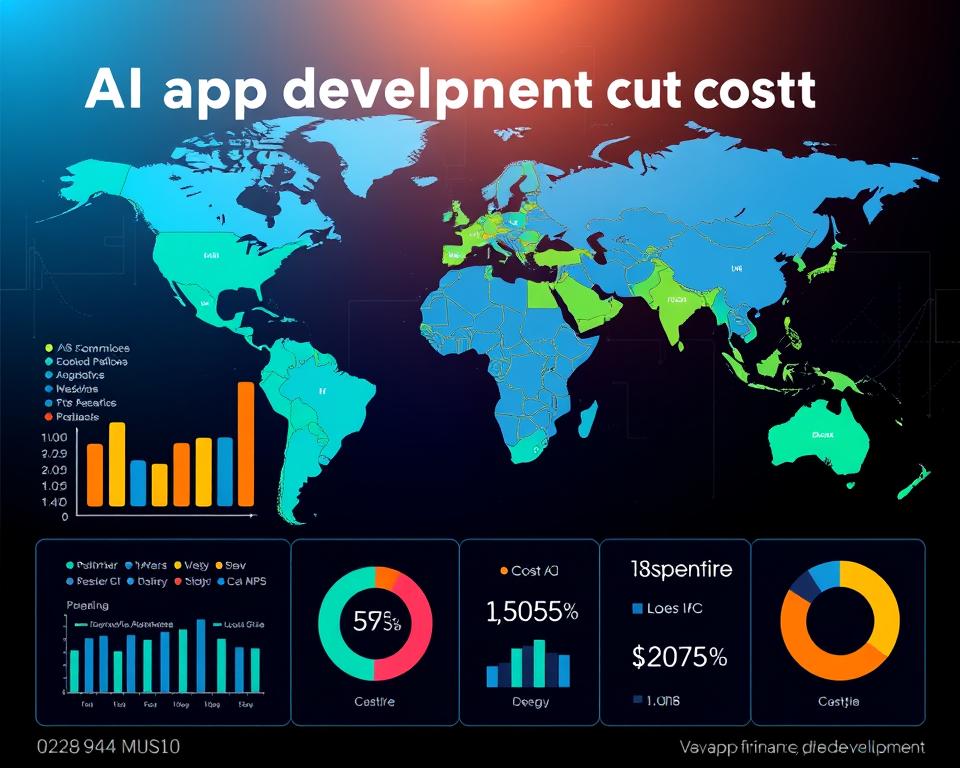
Development Costs by Geographic Region
App development costs vary by region. This is because of labor costs, skill levels, and tech infrastructure differences.
North America Development Rates
In North America, app development costs a lot. Hourly rates are between $100 and $250. The area has skilled developers, but it’s pricey.
Western Europe Pricing
Western Europe also has high app development costs. Rates are between $80 and $200. The work quality is high, but so are the prices.
Eastern Europe Cost Structure
Eastern Europe is cheaper for app development. Rates are between $30 and $75. It’s a popular choice for cost-effective, skilled work.
Asian Market Development Costs
Asia, especially India and the Philippines, offers low app development prices. Rates are $15 to $50. But, quality can vary, so choose vendors carefully.
Cost Breakdown by Development Phase
Development costs can be split by project phase.
- Discovery Phase: Costs range from $5,000 to $15,000 for gathering requirements.
- Design Phase: Creating designs costs $8,000 to $20,000.
- Development Phase: This phase is the most expensive. Costs are $100,000 to $300,000 or more, based on app complexity.
- Testing and Quality Assurance: Making sure the app works well costs $10,000 to $30,000.
Monthly Infrastructure and Maintenance Expenses
After launching, there are ongoing costs. These include infrastructure and maintenance.
- Infrastructure Costs: Hosting and server costs are $1,000 to $5,000 monthly.
- Maintenance and Updates: Keeping the app updated costs $2,000 to $10,000 monthly.
Hidden Costs and Budget Considerations
There are other costs besides development and maintenance.
- Third-Party APIs and Services: Using third-party services adds to the cost.
- Marketing and User Acquisition: Getting users to your app needs a big marketing budget.
- Legal and Compliance Costs: Making sure your app follows rules can cost extra.
Revenue Models for Your AI Character Platform
To make your AI character platform profitable, explore different revenue models. The right strategy can boost your app’s earnings and keep it going strong.
Freemium Model with Premium Subscription Tiers
The freemium model gives a basic version of your app for free. Premium features are available through subscription tiers. This lets users try the app’s main features before paying for more.
Benefits: It draws more users, shows a clear path for upgrades, and brings in steady money.
In-App Purchases and Character Upgrades
In-app purchases let users buy virtual items, upgrades, or extra content. This model keeps users engaged and adds to your income.
Advantages: It boosts user interaction, offers real value, and raises the average revenue per user (ARPU).
Strategic Advertisement Placement
Integrate ads into your app in a way that’s not too pushy but still works. This could be banner ads, interstitial ads, or rewarded video ads.
Key Considerations: Make sure ads don’t ruin the user experience, pick the right advertisers, and keep an eye on ad success.
Enterprise Solutions and API Licensing
Offering enterprise solutions and API licensing can be very profitable. Companies might want to use your AI tech in their platforms or your API for various projects.
Opportunities: Tailored AI solutions for companies, API licensing for developers, and integration with other platforms.
| Revenue Model | Description | Potential Revenue |
|---|---|---|
| Freemium Model | Basic app is free; premium features are paid | High |
| In-App Purchases | Users buy virtual goods or upgrades | Medium to High |
| Advertisement Placement | Ads are integrated into the app | Medium |
| Enterprise Solutions | Custom AI solutions for businesses | High |
Critical Challenges in AI Chatbot Development
Creating AI chatbots comes with big challenges. Developers must tackle these to make these tools work well.
Maintaining AI Response Quality and Coherence
Keeping AI responses good and clear is a big challenge. The chatbot needs to understand the conversation and give answers that are right and interesting. Advanced Natural Language Processing (NLP) is key to this.
To make responses better, using machine learning algorithms helps. These algorithms learn from how users talk to the chatbot. Keeping the AI model updated is also important to keep it working well.
Scaling Infrastructure Without Excessive Costs
As more people use an AI chatbot, it needs more resources. But, it’s hard to grow without spending too much. Cloud-based solutions are a good way to grow without breaking the bank.
Using auto-scaling helps adjust resources as needed. This keeps costs down and makes sure the chatbot works well, even when it’s busy.
Implementing Effective Content Moderation
Keeping the chatbot safe and respectful is very important. Developers need to find ways to keep out bad content and follow rules.
AI-powered moderation tools can help spot and block bad content. But, people need to check these tools to make sure they’re fair and right.
Ensuring Data Privacy and Regulatory Compliance
AI chatbots deal with personal data, so keeping it safe is a must. Developers must follow rules like GDPR and CCPA.
Using robust data encryption and safe storage is key to protecting data. Being open about how data is used and getting user consent is also important.
Building Long-Term User Engagement
Keeping users interested in AI chatbots is vital. It’s about making the experience fun and worth coming back for.
Personalization helps a lot. Tailoring the chatbot’s responses to what the user likes makes the experience better and more fun.
Best Practices for Successful AI App Implementation
To make an AI app a hit, developers need to follow key steps. These steps improve how users feel and how well the app works. Starting with these strategies early on can really boost the app’s success and how many people use it.
Launch with a Focused Minimum Viable Product
Starting with a Minimum Viable Product (MVP) is smart. It lets developers test the app’s main features with little effort. This way, they can get feedback from users early on. This feedback helps them make the app better and add more features.
Establish Continuous User Feedback Loops
It’s important to keep getting feedback from users all the time. This helps developers know what users want and like. They can use surveys, feedback forms, and watch how users act in the app. This way, they can make the app better and keep users happy.
Deploy Multi-Layer Content Filtering Systems
A multi-layer content filtering system keeps the app’s content good and right for users. It uses AI to check and remove bad content. This makes the app a safe and fun place for everyone.
Optimize Response Times and App Performance
Optimizing response times and making the app fast is key to keeping users. Developers should write efficient code, make database queries quick, and use caching. This makes the app fast and easy to use.
Design for Scalability from Day One
Scalability is important from the start. Designing the app to grow well means it can handle more users without slowing down. This involves choosing the right cloud services and infrastructure that can grow with the app.
By following these best practices, developers can greatly improve their AI app’s chances of success. They can create a strong and fun experience for users.
Conclusion
Creating a Character AI app needs a deep understanding of the market and a solid tech base. Knowing the market size and growth helps. It’s also important to know who your audience is and who your competitors are.
The success of a Character AI app depends on its features. These include user sign-up, AI character making, and natural language processing. Features like voice chat and emotion detection can make the app stand out.
To make a Character AI app, follow a clear development plan. Build a team with the right skills and set a realistic timeline. Understanding all costs is key to budgeting.
In short, making a Character AI app is a detailed task. It needs careful planning and the right tech stack. By doing this, businesses can make an app that meets user needs, leading to success.