







The mental health crisis is driving new ideas in digital mental health solutions. A key innovation is the development of AI-powered mental health companion apps. These apps aim to give personalized support and help.
These digital mental health solutions use artificial intelligence to improve well-being. They offer a new way to tackle mental health issues. As technology gets better, it’s important to see how AI can help in mental health care.
Table of Contents
Key Takeaways
- AI mental health companion apps offer personalized support.
- Digital mental health solutions are evolving rapidly.
- AI technology enhances user well-being.
- Mental health care is becoming more accessible.
- Innovative apps are changing the mental health landscape.
The Rising Demand for Digital Mental Health Solutions
The United States is facing a severe mental health crisis. More people than ever need mental health services. Yet, millions struggle to find the care they need.
Mental Health Crisis in America
The mental health crisis in America affects many people. Mental health issues like depression, anxiety, and substance abuse are increasing. The COVID-19 pandemic has made things worse.
Statistics show nearly one in five adults in the U.S. has a mental illness. This highlights the urgent need for effective solutions.
Gap Between Need and Access to Care
There’s a big gap between the need for mental health services and the access to them. Stigma, cost, and geographical constraints stop many from getting help. There’s also a shortage of mental health professionals.
Role of Technology in Bridging the Gap
Technology, especially AI-driven digital mental health solutions, is crucial. These solutions offer accessible, affordable, and anonymous support. They are changing how mental health care is delivered.
AI mental health companion apps provide real-time support. They help users manage their mental health conditions better.
Technology is improving the quality and reach of mental health services. As the demand for digital mental health solutions grows, technology will play a key role in addressing the crisis.
Understanding AI Mental Health Companion Apps
Digital technology has made AI mental health apps very important. These apps help people with mental health problems. They use artificial intelligence for personalized care.
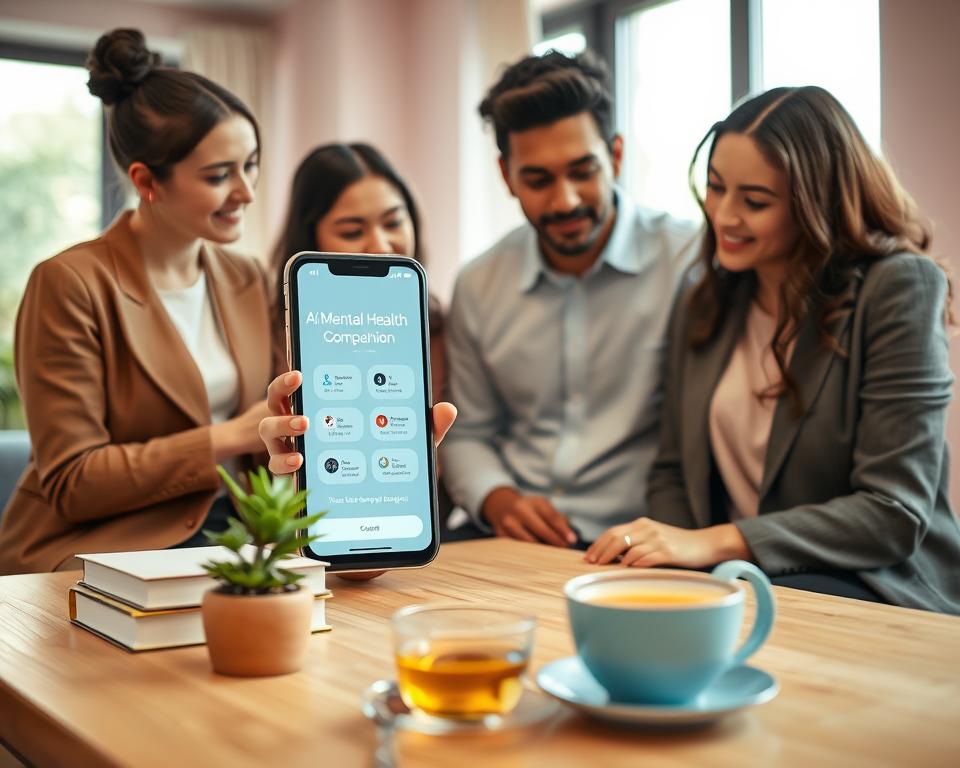
What Are AI Mental Health Companion Apps
AI mental health apps are digital tools that help with mental health. They use artificial intelligence to support users. This includes mood tracking, CBT, and mindfulness exercises.
These apps have chatbots or virtual assistants. They offer companionship and support.
How They Differ from Traditional Telehealth
AI mental health apps are different from traditional telehealth. They don’t need a healthcare professional to work. Instead, they use AI to analyze data and give personalized advice.
This means they can offer 24/7 support and continuous monitoring. They fill the gaps between therapy sessions.
Types of AI Mental Health Applications
There are many types of AI mental health apps. Some focus on mood tracking and emotional support. Others provide cognitive behavioral therapy tools or meditation and mindfulness exercises.
Users can pick the app that fits their needs best.
AI mental health apps can be categorized by their main functions. For example:
- Chatbot-based apps for immediate support
- Comprehensive mental health platforms offering a range of therapeutic tools
- Apps focused on specific mental health conditions, such as anxiety or depression
Knowing about these categories helps users and developers find the best mental health support.
Core AI Technologies Powering Mental Health Apps
Advanced AI technologies are changing how mental health apps work. They help apps understand and respond to user emotions and needs. These technologies are key to creating AI mental health apps that offer personalized support.
Natural Language Processing and Conversational AI
Natural Language Processing (NLP) lets apps understand what users say and respond in a way that feels human. Conversational AI goes further by making these interactions feel like real conversations. This makes talking to mental health apps more natural and helpful.

Machine Learning for Pattern Recognition
Machine learning helps apps spot patterns in how users act and feel. It looks at data over time to catch early signs of mental health problems. This is crucial for offering support before things get worse.
Sentiment Analysis and Emotional Detection
Sentiment analysis lets apps figure out how users are feeling. This way, the app can give more empathetic and fitting help. Emotional detection helps the app understand and respond to feelings even better.
Predictive Analytics for Risk Assessment
Predictive analytics is important for spotting when mental health crises might happen. It looks at past data and risk factors to predict future issues. This helps apps warn users early and prevent serious problems.
Essential Features of AI Mental Health Companion Apps
AI mental health apps have key features for different needs. They offer support and help improve well-being.
24/7 Conversational Support and Crisis Intervention
These apps provide 24/7 conversational support. Users can get help anytime, especially in emergencies. The AI chatbots can spot crisis situations and help right away.
Personalized Therapeutic Interventions
AI apps give personalized therapeutic interventions. They use user data to create custom advice and plans. This makes support more effective.
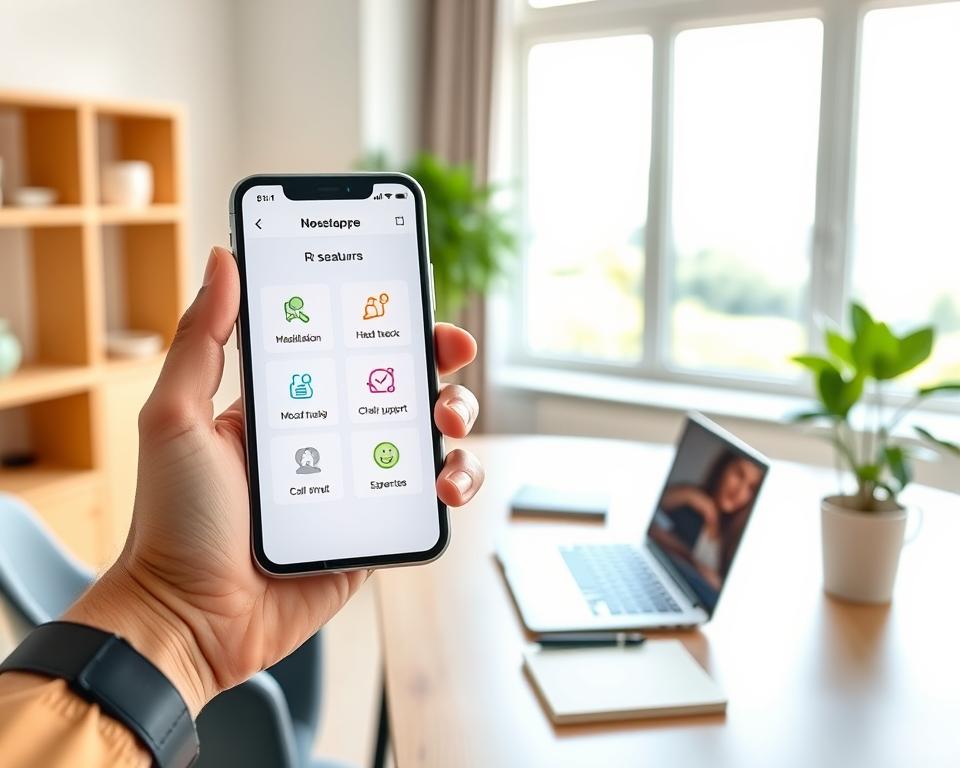
Mood Tracking and Behavioral Monitoring
Mood tracking and behavioral monitoring are key. Users can log their feelings and actions. AI analyzes this data to offer support.
Cognitive Behavioral Therapy Tools
Cognitive Behavioral Therapy (CBT) tools are crucial. CBT helps change negative thoughts. AI apps use CBT in interactive exercises and sessions.
Meditation and Mindfulness Exercises
Meditation and mindfulness are also important. They help manage stress and anxiety. Regular use can improve mental health.
AI mental health apps offer a wide range of support. They combine conversational support, personalized therapy, mood tracking, CBT tools, and mindfulness exercises. This creates a strong support system for mental wellness.
Benefits of AI-Powered Mental Health Support
AI has changed mental health care for the better. AI apps help with many mental health needs. They offer a wide range of support.

Accessibility and Affordability
AI mental health apps are easy to use and affordable. They are cheaper than traditional services. You can use them from anywhere, anytime.
Anonymity and Reduced Stigma
These apps also offer privacy. This helps people feel more comfortable seeking help. It reduces the fear of being judged.
Continuous Monitoring and Early Intervention
AI apps keep track of your mental health. They spot problems early. This means you get help when you need it most.
Scalability of Mental Health Services
AI apps can help many people at once. They don’t have the same limits as traditional services. This makes them great for public health efforts.
In short, AI mental health apps are a big help. They make getting help easier, reduce stigma, and help early. They also reach more people, making mental health care better for everyone.
AI Mental Health Companion App Development Process
Making an AI mental health app needs a detailed plan. It starts with research and ends with the app’s launch. This ensures the app works well and is safe for users.
Research and Planning Phase
The first step is to do deep research and planning. We learn about the people we’re making the app for, what they need, and what apps already exist. It’s key to figure out the key features that will make our app stand out.
Designing User-Centric Interfaces
Creating an app that’s easy to use is crucial. The app should be simple, clear, and work for everyone. Using empathy-driven design helps make an app that meets users’ emotional needs.

Selecting the Right AI Technology Stack
Picking the right AI tech is very important. It affects how well the app works. We choose machine learning algorithms and natural language processing tools to support the app’s features.
Training AI Models with Mental Health Data
The app’s success depends on the data it’s trained with. We use diverse and relevant mental health data to make sure the app can handle different needs well.
Integration with Healthcare Systems
For the app to be truly helpful, it needs to work with healthcare systems. This lets us share data smoothly with doctors, giving users the best care.
By taking these steps, we can make AI mental health apps that are not just new but also safe, effective, and easy to use.
Data Privacy and Security Considerations
AI mental health apps must focus on keeping user data safe. They handle sensitive information, so keeping it private and secure is key.
HIPAA Compliance Requirements
In the United States, AI mental health apps must follow HIPAA rules. HIPAA helps protect patient health info. To meet these standards, apps need to:
- Do regular risk checks
- Use strong security steps
- Have agreements with business partners
- Train their team on HIPAA
A HIPAA Journal report says not following these rules can lead to big fines. Fines can be from $100 to $50,000 per mistake, based on how serious it is.
End-to-End Encryption Implementation
End-to-end encryption is vital for keeping data safe. It makes sure data is unreadable if someone tries to intercept it.
“End-to-end encryption is not just a feature; it’s a fundamental requirement for any application handling sensitive personal data.” – Expert in data security.
| Encryption Method | Description | Benefits |
|---|---|---|
| Transport Layer Security (TLS) | Encrypts data in transit | Protects against eavesdropping and tampering |
| Advanced Encryption Standard (AES) | Encrypts data at rest | High-speed encryption with strong security |
User Consent and Data Governance
Getting clear consent from users is crucial. They need to know how their data is used and protected.
“Transparency in data handling practices is crucial for building and maintaining user trust in AI mental health apps.”
Secure Cloud Infrastructure
AI mental health apps often use cloud services for growth and reliability. Choosing a secure cloud provider is important. They should also add extra security steps like:
- Multi-factor authentication
- Regular security checks
- Plans for data backup and disaster recovery

By focusing on data privacy and security, AI mental health apps can offer a safe space for users to manage their mental health.
Regulatory and Ethical Challenges
Creating AI mental health apps is tough due to many rules and ethics. These apps are getting smarter, so it’s key to follow all the rules and ethics. This ensures they work well and safely.
FDA Classification and Approval Process
One big challenge is figuring out the FDA’s rules for these apps. The FDA sorts devices by risk level. AI mental health apps might be Class II or III, needing different approvals.
Class II apps need a 510(k) notification. Class III apps need a more detailed PMA process. Following FDA rules is vital for approval.

Clinical Validation and Evidence-Based Practices
Another big thing is making sure these apps work. They need clinical trials and evidence-based practices to prove they’re safe and helpful. Developers must team up with health experts for these tests.
Ethical AI in Mental Healthcare
AI in mental health also brings up ethics. It’s important that AI is fair, open, and keeps user data private. Ethical AI means always checking and updating AI models to avoid unfairness and follow ethics.
Liability and Professional Oversight
There are also issues with who’s responsible and who’s watching over these apps. As apps get smarter, figuring out who’s at fault in bad outcomes gets harder. Setting clear rules for who’s in charge and making sure developers have the right insurance is key.
In short, making AI mental health apps is a big job. It involves following FDA rules, proving they work, making sure they’re ethical, and figuring out who’s responsible. By doing these things, developers can make apps that help people.
User Experience and Engagement Strategies
User experience is key to the success of AI mental health apps. These apps need to engage users well to work effectively.
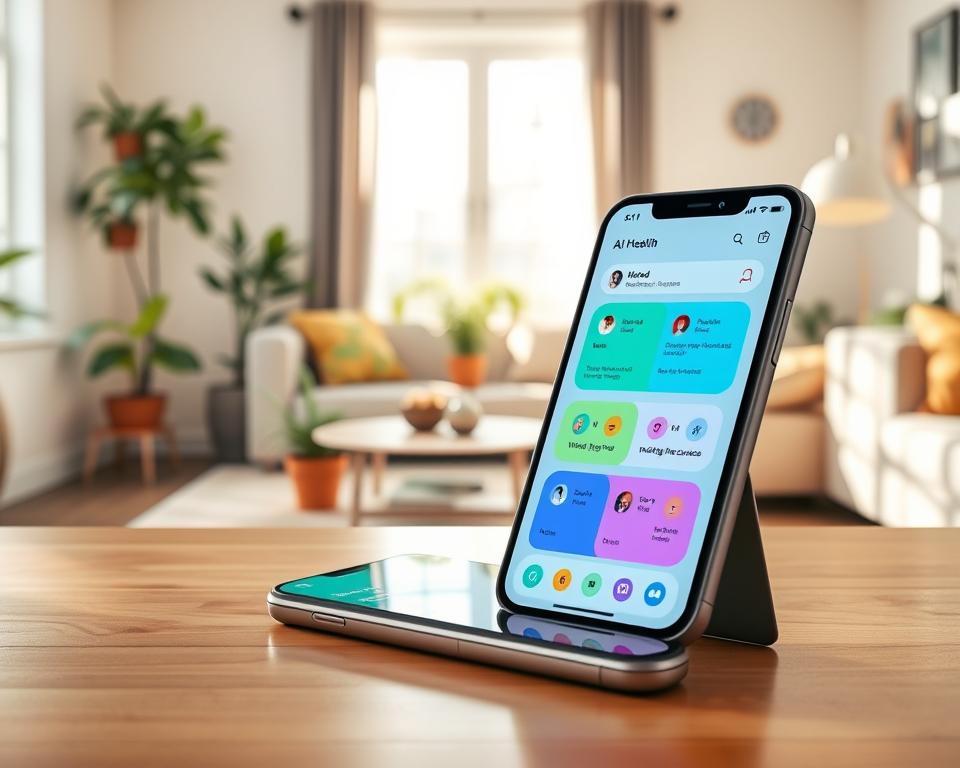
Building Trust Through Empathetic AI
Building trust is crucial. Empathetic AI helps by understanding and responding to emotions. It uses natural language processing (NLP) and machine learning algorithms for personalized interactions.
Empathy is vital in AI mental health support. Studies show users engage more with empathetic systems. AI can be trained to recognize and respond to emotions.
Gamification and Motivation Techniques
Gamification and motivation boost user engagement. Adding game-like elements like rewards and challenges makes the experience fun. It also motivates users to keep practicing.
- Reward systems that acknowledge user progress
- Interactive challenges that promote mental health practices
- Personalized goal-setting to enhance user engagement
Personalization and Adaptive Learning
Personalization is essential in AI mental health apps. They use user data to tailor content and interventions. Adaptive learning adjusts responses based on user feedback.
This approach keeps the app relevant and effective. It also helps identify patterns in user behavior for targeted interventions.
Monetization Models for Mental Health Apps
Mental health apps are getting more popular. Now, developers need to find ways to make money without hurting the app’s value. They aim to keep the app useful and easy to use.
Subscription-Based Pricing
One common way to make money is through subscriptions. Users pay a regular fee for extra features or services. This method has several benefits:
- Predictable Revenue Stream: Subscriptions give a steady income, making it easier to plan finances.
- Enhanced User Engagement: With new content, users stay interested and keep paying.
- Personalization: Subscriptions let developers tailor the app to what users like.
Freemium and Premium Features
The freemium model offers a basic app for free but charges for extra stuff. It’s great for mental health apps because it lets users try before they buy.
Freemium has many advantages:
- Increased User Acquisition: Free apps attract more people.
- Upselling Opportunities: Users who like the free version might pay for more.
- User Experience: Users get to try the app’s main features before upgrading.
B2B Partnerships with Healthcare Providers
Working with healthcare providers is another good way to make money. Developers can offer their apps as part of a bigger care package.
Benefits of B2B partnerships include:
- Expanded Reach: Working with healthcare providers can grow the app’s user base.
- Credibility and Trust: Being linked with respected healthcare groups boosts the app’s reputation.
- Comprehensive Care: B2B partnerships help provide a more complete mental health care package.
In conclusion, mental health app developers have many ways to make money. By knowing the good and bad of each method, they can pick the best fit for their app and users.
Integration with Traditional Mental Healthcare
AI mental health apps are changing how we get mental health care. They work with traditional care to offer better support. This isn’t about replacing old ways but making them better with tech.
Working with licensed therapists is key. AI apps and therapists team up to give users the right care. They do this in many ways, like:
- Sharing app data with therapists for better decisions
- Hosting virtual therapy sessions
- Helping therapists spot trends in data
Hybrid Care Models
Hybrid care models mix AI support with face-to-face therapy. This mix offers flexible, tailored care for everyone.
Hybrid models keep support going all the time. For example, users might chat with an AI bot between therapy sessions. This helps track progress and spot issues for the next session.
| Care Model | Description | Benefits |
|---|---|---|
| Traditional Therapy | In-person therapy sessions with a licensed therapist | Personal interaction, non-verbal cues |
| AI-Driven Support | 24/7 support through AI chatbots and apps | Accessibility, anonymity, continuous support |
| Hybrid Care | Combination of traditional therapy and AI-driven support | Flexibility, personalized care, continuous monitoring |
Referral Systems and Emergency Protocols
Referral systems are vital for the right care at the right time. AI apps can spot crisis situations and send users to help.
Emergency plans are also key. They might include:
- Alerts to emergency contacts or services
- Guided help for users in crisis
- Linking with local emergency systems
By linking AI apps with traditional care, we build a better mental health system. This mix improves care quality and makes it more accessible and personal.
Success Stories and Market Leaders
Many AI-powered mental health apps have made a big impact. They show how AI can really help with mental health. These apps are leading the way in this field.
Woebot Health: CBT-Based AI Chatbot
Woebot Health stands out as an AI mental health app. It uses Cognitive Behavioral Therapy (CBT) to help users. Users can talk about their feelings and get personalized coping strategies.
People like Woebot Health because it really listens. It helps users deal with tough emotions. The app’s use of CBT has shown to improve mental health.
Wysa: AI-Powered Emotional Support
Wysa is known for its caring approach. It uses a chatbot to offer emotional support. The app understands what users say through natural language processing.
Wysa creates a safe place for users to open up. It helps users see patterns in their thoughts and actions. This leads to personal growth and self-awareness.
Replika: Conversational AI Companion
Replika is a chatbot app that feels like a friend. It lets users create a digital friend. This friend can talk and offer emotional support.
The app learns about the user’s likes and interests. This makes the conversations feel more real. Replika is great for those who want a non-judgmental space to share.
Youper: Personalized Mental Health Assistant
Youper is a mental health app that offers tailored help. It has mood tracking, emotional insights, and personalized therapeutic interventions.
Youper helps users understand their feelings and find ways to cope. The app’s AI insights help users see their progress. This boosts motivation and a sense of achievement.
| App Name | Key Features | Approach |
|---|---|---|
| Woebot Health | CBT-based interventions, conversational interface | Cognitive Behavioral Therapy |
| Wysa | Emotional support, natural language processing | Empathetic Conversational AI |
| Replika | Conversational companion, personalized interactions | Digital Companionship |
| Youper | Mood tracking, emotional insights, personalized interventions | Personalized Mental Health Support |
Future Trends in AI Mental Health Technology
AI mental health technology is changing how we care for our minds. New developments will make AI mental health apps better and more helpful. These changes will improve how we use AI to support our mental health.
Advanced Emotion Recognition Technologies
One big step forward is in emotion recognition technologies. These tools are getting smarter, so they can better understand and recognize our feelings. A study found that better emotion recognition in AI apps can lead to better results and more user engagement.
“Emotion recognition is a critical component of effective mental health support, enabling more personalized and empathetic interactions.”
Integration with Wearable Devices
AI mental health apps are now working with wearable devices. These devices track our health and stress levels all the time. This helps us get better support and care for our mental health.
Virtual Reality Therapy Applications
Virtual Reality (VR) therapy is becoming a key part of mental health treatment. VR creates safe spaces for users to face their challenges. It’s shown to be effective in treating anxiety and PTSD, according to experts.
Predictive Mental Health Analytics
Predictive analytics are playing a big role in mental health. AI looks at our data to predict when we might need help. This early warning system helps us get support before things get worse.
As these trends grow, the future of AI mental health tech looks bright. With better emotion recognition, wearable tech, VR therapy, and predictive analytics, AI apps will be more helpful and easy to use.
Conclusion
AI mental health apps are changing how we deal with mental health. They offer personalized support and make help more accessible. As tech grows, these apps will be key in the future of mental health care.
These apps use AI to give 24/7 conversational support and personalized therapy. This makes the experience better and helps more people get the help they need.
We need to tackle the challenges of these apps. This includes keeping data safe, following rules, and proving they work. By doing this, we can make sure these apps are safe and effective, helping alongside traditional care.
The future of mental health will rely more on AI apps. New tech like emotion recognition and virtual reality therapy will help. It’s important to focus on making these apps accessible, scalable, and secure. This will improve mental health care for everyone.