







In today’s fast world, custom booking apps have changed how businesses work. They make it simple for customers to book services and appointments.
The growth of booking app development has changed many fields like healthcare, hospitality, and finance. It helps companies work better and improve how they serve customers.
A good scheduling app makes booking appointments easy. It also cuts down on missed appointments and boosts earnings.
Table of Contents
Key Takeaways
- Efficient management of appointments and services
- Enhanced customer experience through streamlined operations
- Reduced no-shows and increased revenue
- Customization options for businesses to suit their needs
- Integration with existing systems for seamless functionality
1. Understanding Modern Booking & Scheduling Applications
The rise of online booking has changed how businesses work and interact with customers. Today, businesses must use efficient and easy-to-use booking systems. This is because of the digital age we live in.
What is a Booking & Scheduling App?
A booking and scheduling app is software for managing appointments and reservations. It lets customers book services online. This cuts down on manual scheduling and reduces mistakes.
Evolution of Digital Scheduling Solutions
Digital scheduling solutions have grown a lot over time. They’ve moved from simple phone systems to complex online platforms. This change has made it easier for businesses to offer better services to their customers.
| Feature | Description | Benefits |
|---|---|---|
| Online Booking | Allows customers to book appointments online | Increased convenience, reduced no-shows |
| Automated Reminders | Sends reminders to customers about upcoming appointments | Reduced no-shows, improved customer satisfaction |
| Calendar Integration | Integrates with business calendars to ensure accurate scheduling | Reduced scheduling conflicts, improved efficiency |
Why Businesses Need Custom Booking Apps
Custom booking apps meet the specific needs of businesses. They offer a solution that boosts customer experience and makes operations more efficient. By using a custom app, businesses can stand out and have a strong online presence.
Key benefits of custom booking apps include: better customer experience, more efficient operations, and more money from fewer no-shows and cancellations.
2. Key Benefits of Booking & Scheduling App Development
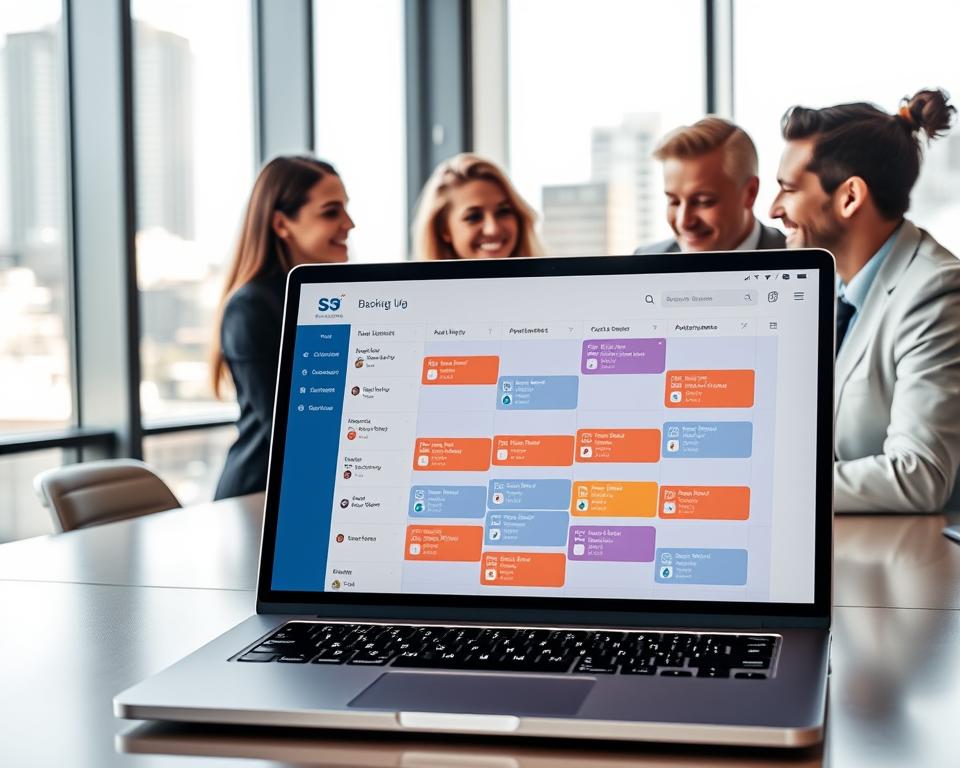
Booking and scheduling apps have changed how businesses work. They offer many benefits that make things better for customers and help businesses run smoother. With scheduling software, companies can make booking appointments easier for everyone.
Enhanced Customer Experience and Convenience
A good booking system lets customers book anytime, anywhere. This makes it easier for them to get what they need quickly. In today’s world, people want things fast and easy.
Operational Efficiency and Time Savings
Using a custom app to schedule appointments saves a lot of time and effort. It lets staff focus on important tasks. This makes things run better and saves a lot of time.
Reduced No-Shows and Cancellations
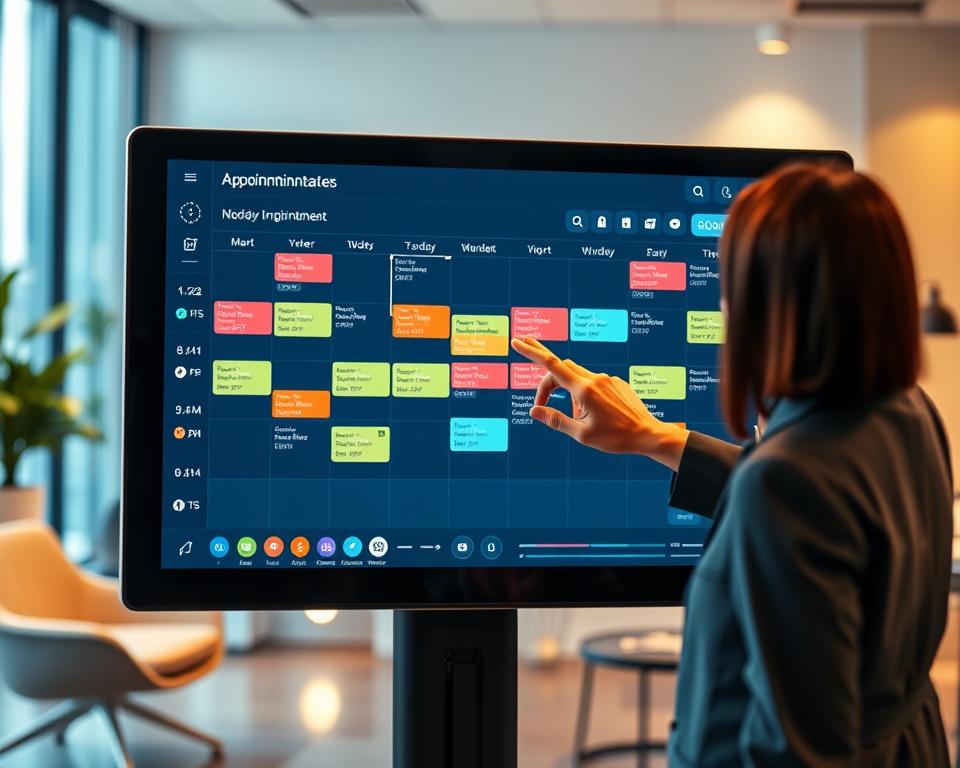
Booking apps send reminders to customers. This cuts down on no-shows and last-minute cancellations. It keeps customers engaged and helps businesses stay on schedule.
Revenue Growth and Business Scalability
By improving scheduling and cutting down on no-shows, businesses can make more money. A flexible booking system also grows with the business. It supports growth without costing too much.
In short, booking and scheduling apps offer many benefits. They improve customer experience, make things run smoother, and help businesses grow. Knowing these benefits helps businesses decide if they should invest in scheduling software.
3. Essential Features for Booking & Scheduling Apps
To make a booking app successful, you need to know what features are key. These features should make the app easy to use and help businesses run smoothly. A good app should meet the needs of both businesses and their customers.
User Registration and Profile Management
A strong user registration system is crucial. It lets users create profiles, save their preferences, and see their booking history.
Social Media Login Options
Adding social media login options makes signing up easier. It lets users log in with their social media accounts. This means they don’t have to remember another username and password.
Customer History and Preferences
Keeping track of customer history and preferences helps businesses offer better services. This information can lead to personalized recommendations or loyalty rewards.
Real-Time Availability and Calendar Integration
Knowing the real-time availability is key. It prevents double bookings and keeps customers informed.
Live Slot Updates
Live slot updates ensure customers can only book available time slots. This reduces the chance of cancellations or no-shows.
Multi-Calendar Synchronization
Syncing with multiple calendars helps businesses manage their schedules better. It avoids conflicts and double bookings.

Automated Notifications and Reminders
Automated notifications and reminders are vital. They keep customers updated about their bookings and any changes.
SMS and Email Alerts
SMS and email alerts are great for keeping in touch with customers. They provide timely updates on bookings.
Push Notifications
Push notifications are a direct way to reach customers. They remind them of upcoming appointments or booking changes.
Payment Processing Integration
Secure payment processing is a must for booking apps. It lets customers pay for services right in the app.
Multiple Payment Methods
Providing various payment options is important. It meets different customer preferences and improves the user experience.
Secure Transaction Processing
Secure transaction processing is crucial. It protects both the business and its customers from fraud.
By adding these key features, businesses can make a booking app that goes beyond what customers expect. This can lead to loyalty and growth.
4. Advanced Features to Consider
When making a custom booking app, think about adding advanced features. These features make the app better and give businesses useful tools. They help improve scheduling and give insights to grow the business.
AI-Powered Scheduling Recommendations
Adding AI for scheduling can make the app better. It suggests the best times for appointments. This is based on staff availability, customer likes, and past data. It makes scheduling easier and more convenient for everyone.
Multi-Location and Staff Management
For businesses with many locations or staff, special features are needed. These include:
- Staff Availability Tracking: Managers can see who’s available in real-time. This makes scheduling easier and flexible.
- Location-Based Service Assignment: Businesses can assign services to specific places. This ensures customers go to the right location for their appointments.
Waitlist and Queue Management
A waitlist and queue system helps with busy times. It lets customers wait for popular services or appointments. When a spot opens up, they get a notification.
Analytics and Reporting Dashboards
Advanced analytics and dashboards give businesses important insights. Key features are:
- Booking Trends and Patterns: Shows when things are busiest, what services are most popular, and how customers behave.
- Revenue and Performance Metrics: Gives details on money made, how staff is doing, and the overall health of the business. This helps make smart decisions.

With these advanced features, businesses can make their booking and scheduling better. This leads to more growth and happy customers.
5. Industries That Benefit from Custom Booking Apps
Many industries use custom booking apps to make scheduling easier and improve customer happiness. These apps help businesses work better, cut down on missed appointments, and make things easier for users.

Healthcare and Medical Services
Healthcare uses custom booking apps to let patients book online. This cuts down on work for staff and shortens wait times. Features like reminders help reduce missed appointments, making schedules more efficient.
Beauty and Wellness Industry
Salons, spas, and wellness centers get a lot from custom booking apps. They let clients book services online, making things easier for them. This also helps businesses manage their staff and resources better.
Professional Services and Consulting
Professionals like lawyers, accountants, and consultants use custom booking apps for client meetings. These apps help organize schedules, send reminders, and even hold virtual meetings.
Hospitality and Restaurant Reservations
Restaurants and hotels use custom booking apps for reservations and table bookings. This optimizes seating and boosts customer service.
Fitness and Sports Facilities
Gyms and sports facilities benefit from custom booking apps. They let members book classes, courts, or sessions. This increases member involvement and helps manage capacity.
By using custom booking apps, businesses in these fields can work more efficiently and make customers happier.
6. Types of Booking & Scheduling Applications
Different businesses need different booking and scheduling solutions. This variety helps companies find the best fit for their needs.
Appointment-Based Booking Systems
These systems are for businesses that need scheduled appointments. This includes medical practices, salons, and spas. They let customers book time slots with specific service providers.
Event and Venue Booking Platforms
Event and venue booking platforms are for businesses that manage event spaces. They allow customers to book venues for events and handle logistics.
Resource and Equipment Scheduling
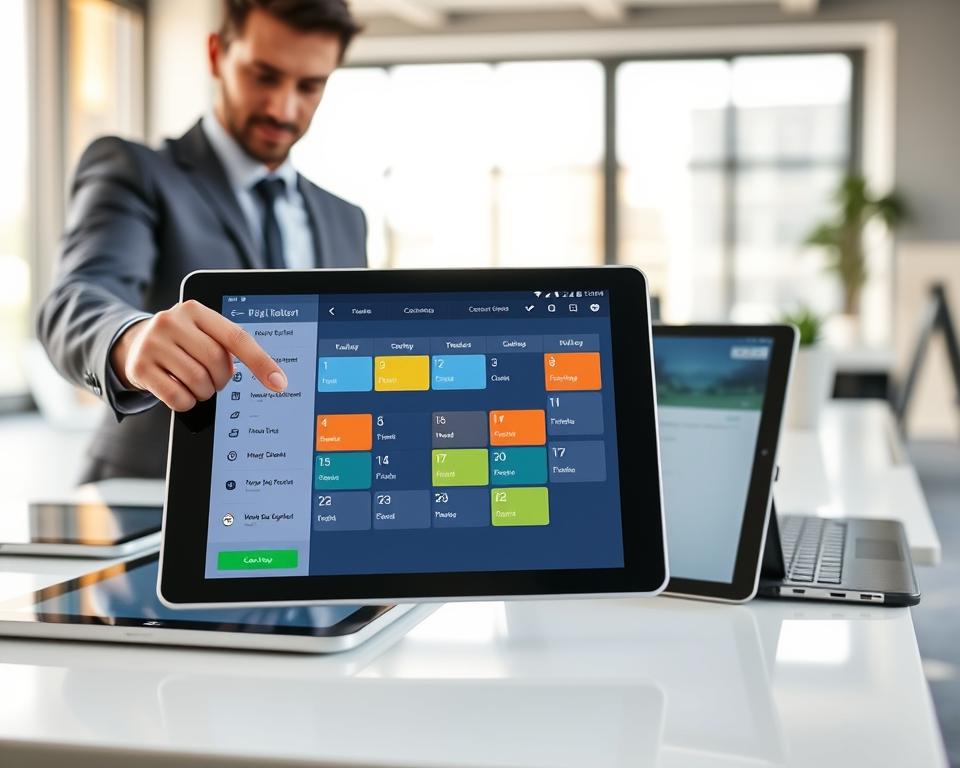
This type manages the booking of resources or equipment. It’s great for companies that need to optimize their assets. This includes meeting rooms, tools, or vehicles.
Class and Session Booking Solutions
These solutions are for businesses offering classes or sessions. This includes fitness centers, educational institutions, or training facilities. They help participants enroll in classes and manage attendance.
In conclusion, the variety of booking and scheduling applications offers businesses flexibility. By choosing the right application, companies can improve customer satisfaction, streamline processes, and drive growth.
7. Planning Your Booking & Scheduling App Development Project
To make a great booking app, start with a good plan. A solid plan makes sure the app works well for both your business and users.
Defining Your Business Requirements
Knowing what your app needs is key. This means:
- Identifying Core Functionality: Figure out the main features your app should have.
- Setting Clear Objectives: Know what you aim to do with your booking app.
Experts say, “A clear project scope is essential for a smooth development process.”
Identifying Target Users and Use Cases
It’s important to know who will use your app. Find out what they need and like to make an app that meets their needs.

Competitive Analysis and Market Research
Doing a competitive analysis and market research is crucial. It helps you see the market and find your place in it.
“Knowing your competition helps you stand out and succeed in the market.”
Creating a Feature Prioritization Matrix
A feature prioritization matrix helps decide which features to focus on first. It’s based on how important and complex they are. This way, you focus on the most valuable features first.
By planning well, your booking and scheduling app project will be well-organized and likely to succeed.
8. The Development Process Explained
Creating a booking and scheduling app is a detailed process. It needs careful planning and execution. This ensures the app meets user needs and offers a smooth experience.
Discovery and Requirements Gathering Phase
The first step is the discovery and requirements gathering phase. This phase is key as it sets the project’s foundation.
Stakeholder Interviews
In this phase, we conduct stakeholder interviews. We aim to understand the app’s business goals and requirements.
Technical Feasibility Assessment
We also perform a technical feasibility assessment. This helps us see if the proposed solution is practical.
UI/UX Design and Prototyping
After gathering requirements, we move to UI/UX design and prototyping. This step is crucial for creating the app’s layout and user experience.
Wireframing and User Flows
We create wireframes and user flows to visualize the app’s layout and navigation.
Interactive Prototypes
Then, we develop interactive prototypes. These prototypes help us test the app’s usability and make any needed adjustments.

Backend Development and Database Architecture
The backend development focuses on server-side logic, database integration, and API connectivity. A well-designed database is key for efficient data storage and retrieval.
Frontend Development and Testing
Frontend development aims to create a user-friendly interface. It ensures the app works well on different devices and browsers.
Unit and Integration Testing
Testing is a vital phase. It includes unit testing, integration testing, and user acceptance testing (UAT). These tests ensure the app works as expected.
User Acceptance Testing
UAT checks if the app meets the requirements and is ready for launch.
By following this structured process, developers can build a booking and scheduling app that is both functional and user-friendly.
9. Technology Stack for Booking Apps
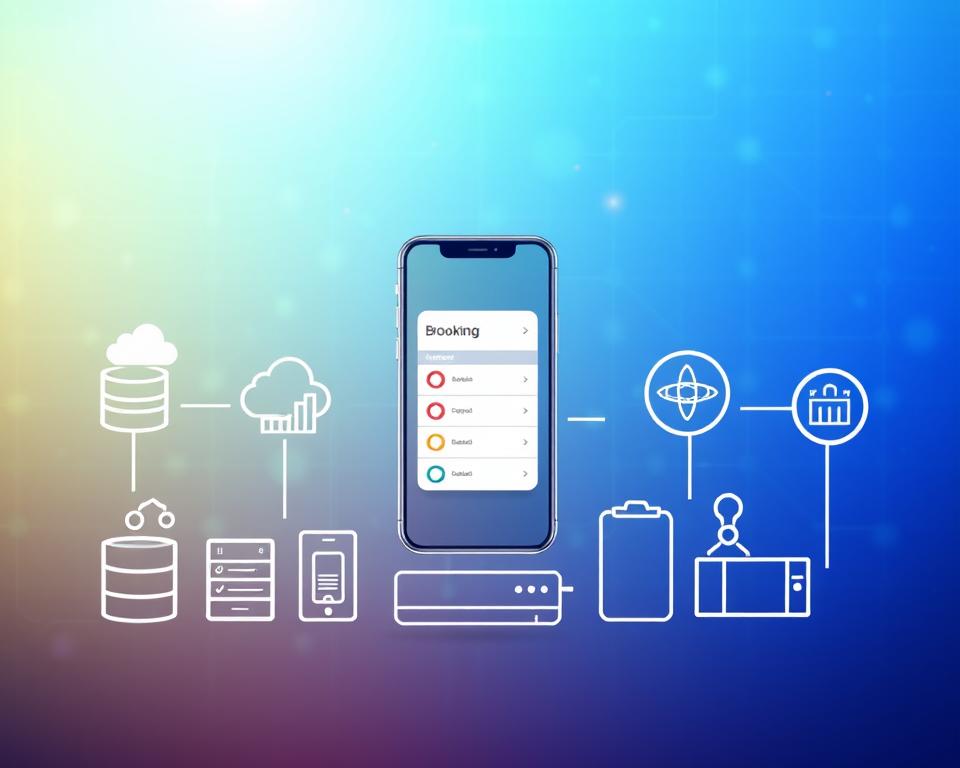
Choosing the right technology stack is key for a successful booking app. It affects the app’s performance, scalability, and security. This makes it a crucial part of the development process.
Frontend Technologies and Frameworks
The frontend of a booking app is what users see and interact with. Popular frontend technologies include:
React, Angular, and Vue.js
These JavaScript frameworks help build dynamic and responsive user interfaces. React is known for its component-based architecture. Angular focuses on structure. Vue.js is simple and easy to integrate.
React Native and Flutter for Mobile
For mobile apps, React Native and Flutter are top choices. They allow for cross-platform development, reducing the need for separate codebases for iOS and Android.
Backend Languages and Platforms
The backend manages data, processes requests, and connects with third-party services. Common backend technologies include:
Node.js, Python, and Ruby on Rails
Node.js is known for its scalability and performance. Python is simple and has powerful frameworks like Django. Ruby on Rails is easy to use and fast to develop.
PHP and .NET Options
PHP is mature with many frameworks and CMS options. .NET is great for building Windows-based applications.
Database Solutions and Cloud Infrastructure
Effective data management is essential for booking apps. Popular database solutions include:
PostgreSQL, MongoDB, and MySQL
PostgreSQL is reliable and supports complex queries. MongoDB is flexible with NoSQL data. MySQL is widely adopted and easy to use.
AWS, Google Cloud, and Azure
Cloud providers like AWS, Google Cloud, and Azure offer scalable and secure hosting environments.
Third-Party APIs and Integrations
Integrating third-party APIs can enhance a booking app’s functionality. This includes payment gateways and calendar integrations.
| Technology | Description | Use Case |
|---|---|---|
| React | JavaScript library for building user interfaces | Frontend development |
| Node.js | JavaScript runtime for server-side development | Backend development |
| MongoDB | NoSQL database for flexible data storage | Data management |
10. Mobile vs Web vs Hybrid Solutions
Choosing between native mobile, web, or hybrid solutions is key for a booking and scheduling app. Each option has its own advantages and disadvantages, which we’ll explore here.
Native Mobile App Development
Native mobile apps are made for specific mobile systems, like iOS or Android.
iOS Swift Development
iOS apps use Swift for a smooth user experience.
Android Kotlin Development
Android apps use Kotlin for strong performance and device integration.
Progressive Web Applications
Progressive Web Apps (PWAs) are web-based but feel like native apps.
Cross-Platform Development Approaches
Cross-platform development lets you create apps for many platforms from one codebase.
React Native Benefits
React Native lets developers make apps for iOS and Android from one codebase.
Flutter Advantages
Flutter offers customizable widgets for building native apps.
| Development Approach | Pros | Cons |
|---|---|---|
| Native Mobile | High performance, direct hardware access | Higher development cost, platform-specific |
| Progressive Web Apps | Easy deployment, cross-platform compatibility | Limited access to device hardware |
| Cross-Platform | Single codebase, faster development | Potential performance issues, limited native features |
11. Integration Capabilities
Integration capabilities are key to a booking app’s success. They make the app work better with other services. This improves how users experience the app.
Calendar Synchronization
Calendar sync is a must for booking apps. It lets users link their schedules with Google Calendar, Outlook, and Apple Calendar. Calendar synchronization helps avoid double-booking and missed appointments by sending timely reminders.
Payment Gateway Integration
Payment gateways are crucial for booking apps. They let users pay directly in the app. Some popular ones are:
- Stripe and PayPal for credit card payments
- Square for in-person payments
- Braintree for complex payment solutions
Stripe and PayPal Integration
Using Stripe and PayPal makes payments safe and easy. They support many payment methods and currencies.
Square and Braintree Options
Square is great for in-person sales. Braintree offers advanced payment options, including many payment types.
CRM and Marketing Tool Connections
Connecting with CRM systems and marketing tools helps manage customer interactions. This integration offers:
- Automated data syncing
- Deeper customer insights
- More targeted marketing
Communication Platform APIs
Booking apps can also connect with communication platforms. This boosts user engagement. For example:
Twilio for SMS
Twilio lets apps send automatic SMS reminders. This keeps users informed.
SendGrid for Email
SendGrid is a reliable email service. It sends important emails and promotions.
With these integrations, booking apps become more useful and user-friendly. This leads to better business outcomes.
12. Security and Compliance Considerations
Security and compliance are key in booking app development. These apps deal with sensitive user data, making them a target for cyber threats.
Data Protection and Privacy Standards
Data protection is crucial in booking and scheduling apps. Developers must follow strict privacy standards to keep user info safe.
GDPR Compliance
Apps for European users must follow GDPR compliance. This means using data minimization, getting clear user consent, and making data portable.
CCPA Requirements
Apps for California users need to meet the California Consumer Privacy Act (CCPA). This act gives users control over their data, like access and deletion rights.
Payment Security and PCI Compliance
Secure payment processing is essential for booking apps. PCI-DSS compliance is needed for apps handling credit card info.
HIPAA Compliance for Healthcare Apps
Healthcare booking apps must follow HIPAA compliance. This includes strong access controls and encryption to protect patient data.
User Authentication and Authorization
Good user authentication and authorization are key. They prevent unauthorized access to sensitive data.
Two-Factor Authentication
Two-factor authentication (2FA) adds extra security. It requires a second verification, like a code sent to a phone.
Role-Based Access Control
Role-Based Access Control (RBAC) limits access based on user roles. This reduces the risk of data breaches.
By focusing on security and compliance, developers can earn user trust and protect against threats.
13. Cost Factors in Booking & Scheduling App Development
Several key elements influence the overall cost of developing a booking and scheduling application. Understanding these factors is essential for businesses to budget effectively and make informed decisions.
Complexity and Feature Set Impact
The complexity and the number of features in your app significantly affect development costs. More complex features require more time and resources.
Basic vs Advanced Feature Costs
Basic features like user registration and simple booking functionality are less expensive than advanced features such as AI-powered scheduling recommendations.
Custom Development vs Ready Solutions
Choosing between custom development and ready-made solutions also impacts costs. Custom solutions are more expensive but offer tailored functionality.
Development Team Structure and Rates
The structure and rates of your development team play a crucial role in determining costs.
In-House vs Outsourcing
Deciding whether to hire an in-house team or outsource development affects costs. Outsourcing can be more cost-effective.
Freelancers vs Development Agencies
Choosing between freelancers and development agencies impacts the quality and cost of development. Agencies offer a comprehensive service but at a higher cost.
Platform Choice and Maintenance Costs
Selecting the right platform for your app and considering maintenance costs are vital for long-term budgeting.
Timeline and Budget Estimation
Creating a detailed timeline and budget estimation helps in planning and managing the development process effectively.
14. User Experience Design Best Practices
To stand out in a competitive market, businesses must focus on intuitive app design. A well-designed booking and scheduling app boosts user satisfaction. It also increases engagement and keeps users coming back.
Simplifying the Booking Flow
Making the booking process easier is key to a better user experience. This can be done by:
- Minimizing Steps to Completion: Shortening the booking process to fewer steps.
- Clear Call-to-Action Buttons: Using clear and prominent CTAs to guide users.
Mobile-First Design Principles
Most users access booking apps on their mobile devices. So, designing for mobile first is crucial. This means designing for smaller screens and then scaling up for larger devices.
Accessibility and Inclusive Design
Making sure the app is accessible to all users is a legal must and a best practice. This includes:
- WCAG Compliance Standards: Following Web Content Accessibility Guidelines.
- Supporting Users with Disabilities: Adding features for users with different disabilities.
By following these user experience design best practices, businesses can make booking and scheduling apps that are easy to use and competitive.
15. Post-Launch Optimization and Maintenance
After launching a booking and scheduling app, it’s important to keep it running well. This means making sure it still meets user needs and works smoothly. It takes ongoing effort to keep this up.
Performance Monitoring and Analytics
Keeping an app running well means watching its performance all the time. This includes:
- Tracking key performance indicators (KPIs) such as user acquisition costs, retention rates, and session lengths.
- Analyzing user behavior to identify trends and areas for improvement.
Tracking Key Performance Indicators
KPIs give us important insights into how our app is doing. Regular monitoring helps us make smart choices to improve user experience and efficiency.
User Behavior Analysis
It’s key to understand how users use our app. User behavior analysis shows us where we can do better, helping us focus on making things better.
User Feedback and Iterative Improvements
Getting feedback from users is crucial. It helps us find out what needs to get better. We use this feedback to make iterative improvements to the app, making it better for users.
Regular Updates and Feature Enhancements
To stay ahead, we need to keep updating and adding new features. This could mean adding new features, making existing ones better, or working with other services.
Technical Support and Bug Fixes
Offering technical support is key to solving user problems fast. We also fix bugs quickly to keep things running smoothly for users.
Transforming Businesses with Custom Booking & Scheduling Apps
Custom booking & scheduling apps are changing how businesses work and connect with customers. They make scheduling easier, cut down on no-shows, and boost customer happiness. These apps are key for many industries.
Booking & scheduling apps offer many benefits. They save time, increase revenue, and help businesses grow. With features like AI scheduling, managing multiple locations, and analytics, businesses can get even better.
In short, investing in custom booking apps can really help a business. As technology gets better, these apps will keep changing industries. It’s a great time for businesses to use and improve these solutions.


