







The world of finding new talent is changing fast with AI recruitment tools. Companies are now focusing on making their hiring easier. This is why recruitment app development is key to their plans.
AI is changing how companies find new team members. It makes hiring faster and better. This helps businesses grow by getting the right people.
Table of Contents
Key Takeaways
- AI recruitment is transforming the talent acquisition landscape.
- Recruitment app development is crucial for streamlining hiring processes.
- AI-powered solutions enhance the efficiency and effectiveness of hiring.
- Organizations are leveraging AI to improve their recruitment strategies.
- Talent acquisition is becoming more precise with AI-driven technologies.
The Evolution of Recruitment: Why AI-Powered Solutions Matter
AI has changed the game in talent acquisition technology. Companies now need fast and smart hiring to keep up. AI helps them sift through lots of data to make smart choices.
“AI is changing recruitment by offering tools that learn and adapt,” says a top HR tech expert. It can handle big data, spot trends, and predict outcomes well.

The evolution of recruitment moves from old ways to new, smart systems. AI tools do tasks like screening resumes and scheduling interviews. This lets recruiters do more important work that needs human touch.
AI also cuts down on bias in hiring. It uses algorithms that look at skills, not just who you are. This makes teams more diverse and creative, key for success.
It’s clear that AI-powered recruitment is essential for businesses to get the best talent. Using AI in hiring makes processes better, saves money, and boosts growth.
Understanding AI Recruitment Applications and Their Market Impact
AI is changing how companies hire people. It’s making the hiring process faster and better. AI tools are now key in finding the right talent.

What Defines an AI Recruitment App
An AI recruitment app uses smart tech to help find and hire the best candidates. It can intelligently parse resumes and match candidates with job openings. It even does initial interviews.
These apps have cool features like finding candidates, screening them, and predicting who will do well.
Current Market Growth and Adoption Rates
The market for AI recruitment apps is booming. More companies want to hire better and faster. Studies show the global AI recruitment market will grow a lot in the next few years.
Companies want to stay ahead, save money, and find better employees. This is why AI recruitment apps are becoming more popular.
Industry-Specific Applications
AI recruitment apps are used in many fields. Each industry has its own needs and challenges. For example, in tech, AI helps find people with the right skills.
In healthcare, AI makes sure hiring meets rules and makes the process smoother for doctors and nurses.
Transformative Benefits of AI in Recruitment Processes
AI is changing recruitment, making it more efficient, fair, and of higher quality. It helps companies improve their hiring, benefiting both the company and the candidates.
Dramatic Time and Cost Savings
AI cuts down the time it takes to hire someone by a lot. It automates tasks like screening resumes and conducting initial interviews. This lets recruiters focus on more important tasks.
Studies show AI can cut hiring time by up to 50% and costs by up to 30%. It does this by quickly processing applications and removing unnecessary steps.
| Recruitment Metric | Traditional Method | AI-Powered Method |
|---|---|---|
| Time-to-Hire | Average 30-60 days | Reduced to 15-30 days |
| Hiring Costs | $3,000 – $5,000 per hire | $2,000 – $3,000 per hire |
| Candidate Quality | Variable, dependent on manual screening | Improved through AI-driven matching |
Superior Candidate Quality and Fit
AI tools analyze lots of data to find the best candidates. They look at skills, experience, and fit with the company culture. This leads to better job matches and lower turnover.
Improved candidate quality comes from AI’s detailed analysis. It matches candidates with jobs based on many factors. This leads to happier employees and less turnover.

Elimination of Unconscious Hiring Bias
AI reduces unconscious bias by focusing on clear criteria. It hides personal info during initial screenings. This makes hiring more diverse and fair.
Improved Candidate Experience
AI chatbots and virtual assistants make the hiring process better. They give updates, answer questions, and guide candidates. This makes candidates happier and boosts the company’s image.
Using AI in recruitment makes hiring more efficient, fair, and engaging. As AI gets better, it will change how companies find talent even more.
Must-Have Features in Modern AI Recruitment Applications
Modern AI recruitment apps are changing the hiring game. They bring new features that make hiring easier and more personal. These apps aim to make the hiring process more efficient and effective.
Intelligent Resume Parsing and Screening
AI recruitment apps use Natural Language Processing (NLP) to read resumes. They find important info and match candidates with job needs. This saves time for recruiters, letting them focus on important tasks.
- Automated resume screening
- Keyword extraction and matching
- Ranking candidates based on relevance
AI-Powered Candidate Matching and Ranking
AI-powered matching goes beyond just resumes. It uses machine learning algorithms to find the best candidates. It looks at online presence, skills, and more to match candidates perfectly.
- Advanced candidate profiling
- Predictive modeling for candidate success
- Personalized job recommendations

Conversational AI Chatbots for Engagement
Conversational AI chatbots change how we talk to candidates. They offer real-time interaction and feedback. They answer questions, guide through the application, and even do initial interviews.
Predictive Analytics and Hiring Insights
Predictive analytics gives data-driven insights for better hiring. It looks at past data and trends to predict candidate success. This helps recruiters make smarter choices.
- Data analysis for hiring trends
- Predictive modeling for candidate fit
- Insights for strategic hiring decisions
Automated Interview Scheduling and Management
Automated interview scheduling makes setting up meetings easy. It works with calendars, sends reminders, and keeps everyone informed.
- Streamlined interview scheduling
- Automated reminders and notifications
- Integration with calendar systems
These features make AI recruitment apps essential for hiring. They improve the hiring process and the candidate experience. As hiring evolves, AI will be key in shaping the future.
Core AI Technologies Powering Recruitment Solutions
AI in recruitment is powered by key technologies that improve hiring. These technologies work together to make the recruitment process smoother and more effective.
Natural Language Processing for Resume Analysis
Natural Language Processing (NLP) is key in analyzing resumes for recruitment. It helps understand and parse large amounts of resume data. This way, recruiters can quickly spot the best candidates.
NLP extracts important details like work history, skills, and education. It creates a database of candidates, making it easier to search and filter.

Machine Learning Algorithms for Candidate Prediction
Machine Learning (ML) algorithms are crucial for predicting candidate success. They analyze past hiring data and candidate profiles. This helps predict which candidates will do well in a role.
ML models help recruiters make better choices. They reduce the chance of bad hires and improve hiring quality.
Computer Vision for Video Interview Assessment
Computer Vision technology is used to assess video interviews. It looks at facial expressions, body language, and speech. This gives insights into a candidate’s personality and fit.
This technology allows for a deeper evaluation of candidates. It goes beyond their resume and cover letter.
Sentiment Analysis and Personality Profiling
Sentiment Analysis and personality profiling are AI techniques for understanding candidates. They analyze communication and language to guess a candidate’s personality and job fit. This helps make hiring decisions that match the company’s culture.
The use of these AI technologies is changing recruitment. It makes hiring more efficient and effective. As AI grows, recruitment solutions will get even better, leading to better hires.
AI Recruitment App Development: A Comprehensive Roadmap
Creating an AI recruitment app needs a smart plan. It combines the latest tech with design that puts users first. This roadmap shows the main steps to make a top-notch AI recruitment app.
Discovery Phase and Requirements Gathering
The first step is the discovery phase. Here, we figure out what the app will do, who it’s for, and what it needs to do. We do market research, look at what others are doing, and talk to people involved to get all the details.
Key activities during this phase include:
- Defining the app’s core features and functionalities
- Identifying the target user personas
- Establishing the project’s technical and business requirements
UX/UI Design and Prototyping
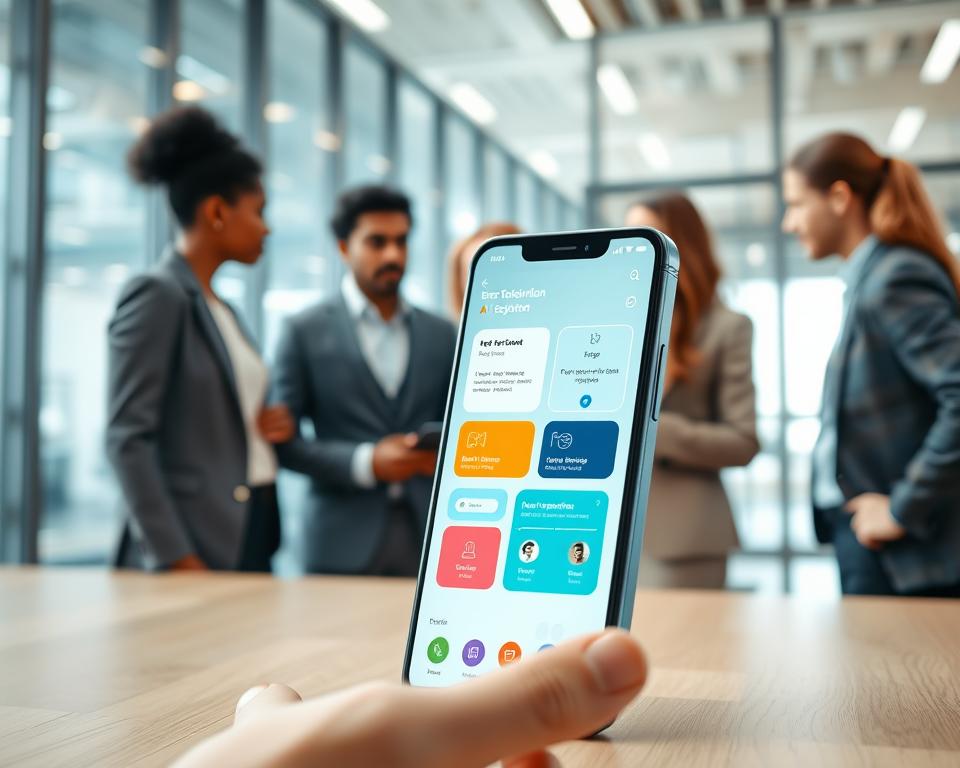
After we know what we need, we start designing. We make a design that’s easy to use and makes the hiring process smoother.
“A well-designed UX/UI is crucial for the success of any recruitment app, as it directly impacts user satisfaction and retention.” – Industry Expert
AI Model Selection and Training
Choosing and training AI models is key. We pick the right algorithms and train them with the right data. This makes sure the app can find and match candidates well.
Full-Stack Development and Integration
Now, we build the app’s front and back ends. We add the AI models, make the interface, and connect everything smoothly.
Key technologies used in this phase include:
- Frontend frameworks like React or Angular
- Backend infrastructure using Node.js or Python
- Database solutions such as MongoDB or MySQL
Testing, Validation, and Deployment
The last step is testing and validation. We check the app’s work, security, and how it runs. Then, we put it live for everyone to use.
“Thorough testing is essential to identify and fix bugs, ensuring a smooth user experience.”
Technical Architecture and Technology Stack Considerations
A well-planned technical architecture is key for AI recruitment apps. It supports the app’s growth, connects with other systems, and ensures a smooth user experience.
Frontend Frameworks and Mobile Development
Choosing the right frontend framework is vital. React and Angular are top choices, known for their strong support and communities. For mobile apps, Flutter or React Native are great, as they work on multiple platforms.

Backend Infrastructure and Cloud Services
The backend is crucial for data handling, AI model integration, and growth. Cloud services like AWS, Google Cloud, and Microsoft Azure are essential. They provide the scalability and reliability needed for AI recruitment apps.
AI Frameworks and Machine Learning Platforms
For AI, TensorFlow and PyTorch are top picks. They help create and use machine learning models for tasks like resume analysis and candidate matching.
Experts say, “The future of recruitment is heavily dependent on AI and machine learning”. So, using the right AI frameworks is key to staying ahead.
Database Solutions for Recruitment Data
Database solutions must handle large recruitment data securely. NoSQL databases like MongoDB are great for their flexibility and ability to grow with diverse data.
By picking and combining these technical parts wisely, developers can create AI recruitment apps that are both effective and easy to use.
Seamless Integration with Existing HR Ecosystems
AI is changing how we hire, making it key to work well with current HR systems. AI recruitment apps need to fit in with what we already use. This makes hiring smoother and more efficient.
Applicant Tracking System Connectivity
AI apps must connect with Applicant Tracking Systems (ATS). This lets them share candidate info automatically. It cuts down on manual work and makes hiring faster.
HRIS and Payroll System Integration
It’s also important for AI apps to work with HR Information Systems (HRIS) and payroll. This makes adding new employees easier and less prone to mistakes. It keeps employee data correct everywhere.
Job Board and Social Media Platform APIs
AI apps should also link up with job boards and social media. This lets companies reach more people with their job ads. It helps find more candidates.
The table below shows the main integrations and their benefits:
| Integration Type | Benefits |
|---|---|
| Applicant Tracking System (ATS) | Automated candidate data synchronization, reduced manual entry |
| HRIS and Payroll Systems | Smooth transition of new hires, reduced administrative burdens |
| Job Boards and Social Media | Broader job posting reach, increased candidate pool |

By working well with current HR systems, companies can get the most out of AI for hiring. This leads to better and faster hiring processes.
Data Security, Privacy, and Compliance Requirements
AI recruitment apps are becoming more common. This raises big concerns about keeping candidate data safe and private. These apps deal with lots of sensitive info, making them a target for hackers and data breaches.
Ensuring Compliance with Data Protection Regulations
Companies must follow strict data protection rules when using AI for hiring. A major rule is the General Data Protection Regulation (GDPR) in the European Union.
GDPR and International Data Protection Standards
The GDPR has strict rules for handling personal data. AI hiring apps need to collect and use data wisely. They should only get and use data that’s really needed for a good reason. Following GDPR helps build trust with job seekers.
EEOC Compliance and Anti-Discrimination Laws
In the U.S., AI hiring tools must follow EEOC rules to avoid unfair hiring. They must make sure AI doesn’t show bias based on things like race or gender. It’s important to check AI systems often to find and fix any biases.
Secure Data Storage and Encryption Protocols
Keeping candidate data safe is key. This means using strong encryption and secure ways to access data. Regular checks and tests help find and fix any weak spots.

Putting data security first helps protect job seeker info and boosts a company’s image. As AI changes how we hire, keeping data safe is more important than ever.
Overcoming Challenges in AI Recruitment Implementation
AI is changing how we hire, but it comes with its own set of challenges. To make AI recruitment work, we need to tackle a few big hurdles.
Addressing Data Quality and Algorithm Bias
One big challenge is making sure the data used to train AI is good. Data quality affects how well AI makes hiring decisions. Companies must check their data to make sure it’s right and fair.
Algorithm bias is another big problem. It can lead to unfair hiring. Companies need to check their AI for bias and fix it when they find it.
| Challenge | Impact | Mitigation Strategy |
|---|---|---|
| Data Quality Issues | Inaccurate Recruitment Decisions | Robust Data Validation |
| Algorithm Bias | Discriminatory Hiring Practices | Regular Auditing and Bias Correction |
Managing User Adoption and Change Resistance
Bringing AI into hiring means changing how we do things. To get everyone on board, companies need to train their teams well. They also need to manage the change smoothly.
“The key to successful AI adoption is not just about implementing the technology, but also about managing the change that comes with it.”
Ensuring Transparency and Explainability
As AI gets more common in hiring, it’s key to be open and clear about how it works. Companies should focus on making AI systems that explain their choices well.
Balancing Automation with Human Touch
AI can make hiring better, but we can’t forget the human touch. It’s important to use AI to help, not replace, human recruiters.
By tackling these challenges, companies can make the most of AI in hiring. This will make hiring faster and better.
Real-World Success Stories and Use Cases
Many companies have made AI recruitment apps a key part of their hiring. This has changed how they find and hire talent. It makes the process faster and better.
Enterprise-Scale Implementation Examples
Big companies are leading the way in using AI for hiring. A top tech firm cut their hiring time by 40% with an AI app. The AI looked through many resumes to find the best candidates. This saved time and led to better hires.
Another big company used AI to find more candidates.
“The AI recruitment app helped us discover highly qualified candidates who were not visible through traditional sourcing methods,”
Small and Medium Business Applications
AI recruitment apps help small and medium businesses too. A retail SMB saw a 30% increase in good candidates with AI. The app did initial checks, letting the HR team focus on important tasks.
Industry-Specific Success Stories
AI recruitment apps are made for different industries. In healthcare, AI finds candidates with special skills. This helps healthcare providers fill important jobs fast.
These stories show AI recruitment apps work well in many places and sizes. As AI gets better, we’ll see more new uses.
Investment Analysis: Cost Factors and Expected ROI
Investing in AI recruitment app development needs a deep look at costs and expected returns. Companies looking into AI recruitment tools face a mix of upfront costs, ongoing expenses, and possible financial gains.
Development Cost Components and Pricing Models
The costs for an AI recruitment app break down into several parts:
- Technology Infrastructure: The cost of servers, cloud services, and other tech needed for the app.
- AI Model Development: Costs for creating and training AI models for tasks like resume parsing and candidate matching.
- Software Development: Expenses for designing and building the app’s interface, backend, and features.
Pricing for AI recruitment apps varies. You might see subscription models, per-user fees, or pricing based on job postings or candidates.
Ongoing Maintenance and Upgrade Expenses
After the app is built, there are ongoing costs. These include:
- Maintenance and updates to keep the app working with new tech.
- Training AI models to get better and keep up with recruitment trends.
- Customer support and service costs.
These costs help keep the app working well and users happy.
Measuring and Maximizing Return on Investment
To see ROI, track important metrics like:
- Time-to-hire cuts
- Better candidate quality
- Cost savings from less manual work
To boost ROI, keep an eye on these metrics. Improve AI models and tweak the app to meet user needs.
By understanding costs and aiming for high ROI, companies can make AI recruitment tech a worthwhile investment.
Future Trends Shaping AI Recruitment Technology
New technologies are changing the recruitment world, making it better and more tailored. We’re seeing big changes coming in AI for hiring.
Generative AI and Advanced Conversational Interfaces
Generative AI is changing how we find the right people for jobs. It makes job ads that fit the company’s needs and the candidate’s skills. This tech helps match people better and keeps them interested.
Blockchain for Credential Verification
Blockchain could make checking candidate credentials safer. It’s like a digital record book that proves who you are. This means employers can trust what candidates say, cutting down on fake info.
Virtual Reality and Metaverse Recruitment
VR and the Metaverse are bringing new ways to meet candidates. Companies can show off their work places in VR. This lets candidates see if they’d fit in, making hiring better and more personal.
| Trend | Description | Potential Impact |
|---|---|---|
| Generative AI | Personalized job descriptions and candidate engagement | Improved candidate matching and reduced time-to-hire |
| Blockchain | Secure verification of candidate credentials | Reduced fraud and increased trust in candidate qualifications |
| Virtual Reality | Immersive recruitment experiences | Enhanced candidate experience and better cultural fit assessment |
These new trends are changing hiring for the better. They make it faster, safer, and more personal. As AI grows, combining it with other tech will shape the future of finding the right people for jobs.
Conclusion
AI has changed how companies hire people. It makes hiring better, faster, and fairer. This is thanks to AI tools like natural language processing and machine learning.
These tools help make hiring easier for everyone. They make the process smoother for both job seekers and employers. This leads to better matches and happier workplaces.
AI is making hiring even more advanced. It will keep changing how we find and hire the right people. This means more investment and new ideas in AI recruitment apps.
In short, AI is making a big difference in hiring today. It automates tasks and gives insights that help make better hiring choices. Looking ahead, AI will keep shaping the future of hiring.