







Artificial Intelligence (AI) is changing many fields, like retail, healthcare, and education. In retail, AI makes shopping better by offering personalized items and managing supply chains well.
In healthcare technology, AI helps doctors make better diagnoses and care for patients. In education, AI makes learning fit each student and handles boring tasks.
AI is making these areas work better and opening up new chances for growth and new ideas.
Table of Contents
Key Takeaways
- AI is changing retail by making shopping more personal.
- Healthcare is getting better with AI, thanks to better diagnoses and care.
- AI in education helps with learning that fits each student and handles tasks.
- These fields are seeing big improvements in how well they work and innovate.
- AI is leading the way for future growth and progress.
The Evolution of Artificial Intelligence
Looking back at AI history, we see a slow but steady growth. It has changed how we live and work. This has led to today’s tech advancements.
From Theory to Practical Applications
AI moved from just ideas to real uses. It started in labs and in talks. But, with better computers and storage, it entered our daily lives.
The Current AI Landscape
Today, AI is growing fast. It’s changing many fields. In healthcare and finance, AI makes things better and faster.

| Year | Milestone | Impact |
|---|---|---|
| 1950s | First AI programs developed | Laid the foundation for AI research |
| 2010s | Deep learning techniques emerged | Enabled complex AI applications |
| 2020s | AI integration into mainstream industries | Transformed business operations and customer experiences |
The current AI trends show a push for smarter AI. AI that can learn and talk to us better. We’ll see new uses of AI in many areas soon.
Understanding AI Technologies Powering Modern Industries
Modern industries are changing fast thanks to AI technologies. These tools make things more efficient and creative. They also open up new ways to do business.

Machine Learning and Deep Learning
Machine Learning (ML) and Deep Learning (DL) are key in AI. They help with data analysis and spotting patterns. ML lets systems learn from data. DL uses neural networks to understand complex patterns.
Natural Language Processing
Natural Language Processing (NLP) lets machines talk like humans. It’s used in chatbots, understanding feelings in text, and translating languages.
Computer Vision and Image Recognition
Computer Vision helps machines see and understand pictures. It’s used in image recognition, finding objects, and in self-driving cars.
AI technologies are leading to new ideas in many fields. They make things work better, improve how we interact with customers, and create new products and services.
AI in eCommerce: Transforming Online Shopping
AI is changing the way we shop online, offering new chances for both retailers and shoppers. It does this by analyzing lots of data, guessing what we might want, and making our shopping more personal.
Key Benefits for Retailers and Consumers
AI in eCommerce brings many advantages, like better customer experience through tailored suggestions and quicker service. Stores get to work more efficiently and learn a lot about what their customers like. A retail expert says, ”
AI is changing how we know our customers and make our services fit their needs.
”
Implementation Considerations
When adding AI to online stores, there are important things to think about. These include keeping customer data safe, fitting AI with current systems, and making sure it keeps getting better. To succeed in eCommerce innovation, it’s key to pick AI wisely, focusing on how it improves the 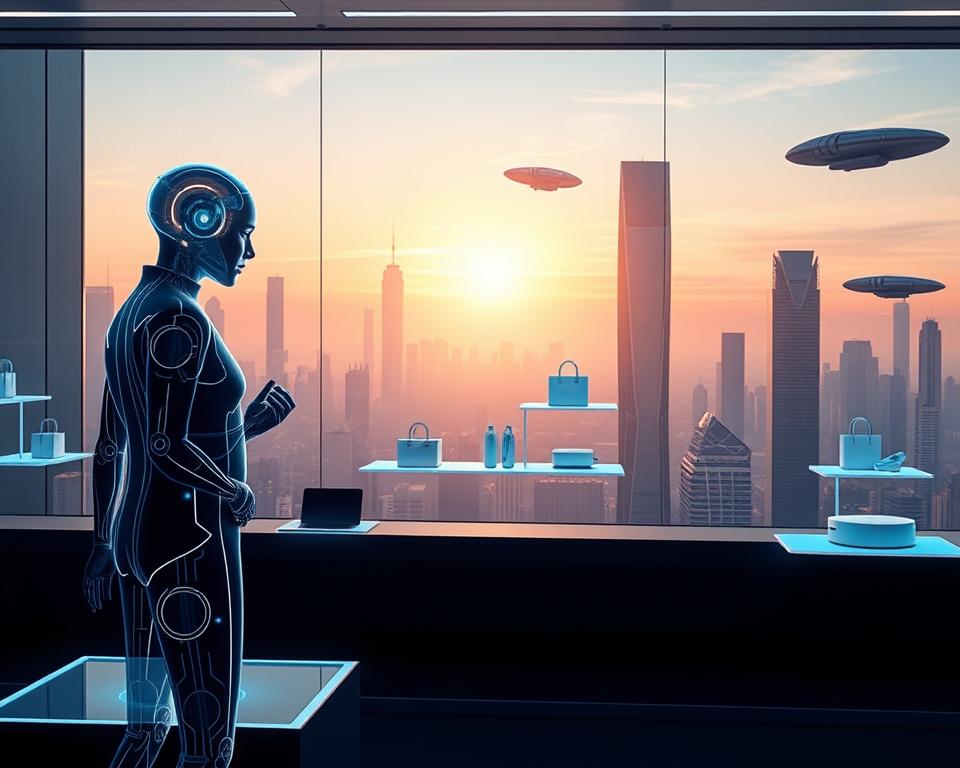 can give stores a big edge over their rivals.
Personalized Shopping Experiences Through AI
Personalized shopping is now common in online stores, thanks to AI. This change is making shopping more engaging and boosting sales for stores.

Recommendation Engines and Product Discovery
AI-powered recommendation engines lead in personalizing online shopping. They look at what customers buy and like to suggest products that fit. This makes shopping easier and more fun.
Amazon shows how good product suggestions can increase sales and keep customers coming back.
“The secret to great personalization is knowing what customers want and using AI to give them what they need,” says a retail expert.
Dynamic Pricing Strategies
AI is also changing how prices are set. It looks at market trends, what others charge, and what customers want. This way, prices can change quickly to make more money and stay competitive.
- Real-time market analysis
- Competitor price tracking
- Demand forecasting
Using AI for pricing helps online stores stay on top while keeping prices fair for customers.
AI-Powered Customer Service in eCommerce
AI is changing how eCommerce talks to its customers. It uses tech like chatbots and virtual assistants to improve customer support. This makes customer service better.
Chatbots and Virtual Assistants
Chatbots and virtual assistants lead the way in AI customer service. They offer 24/7 customer support. They answer questions, solve problems, and help with products.
For example, chatbots help with order tracking and returns processing. Virtual assistants give personalized product tips.
| Feature | Chatbots | Virtual Assistants |
|---|---|---|
| Customer Support | 24/7 Query Resolution | Personalized Assistance |
| Order Management | Order Tracking | Product Recommendations |
Sentiment Analysis for Customer Feedback
Sentiment analysis is key in AI customer service. It looks at customer feedback to see if it’s positive, negative, or neutral. This helps businesses identify areas for improvement and see how happy customers are.

By using sentiment analysis, eCommerce companies can quickly address customer concerns. This makes customers happier and more loyal.
Supply Chain Optimization with AI
AI is changing how companies manage their supply chains. It helps with inventory, demand forecasting, and logistics. Advanced algorithms and machine learning make data-driven decisions possible.
Inventory Management and Demand Forecasting
AI boosts inventory management by predicting demand better. It looks at past sales, seasonal trends, and outside factors like weather. Effective demand forecasting helps keep the right amount of stock. This cuts down on stockouts and overstocking.
| AI Application | Benefits |
|---|---|
| Demand Forecasting | Reduces stockouts and overstocking |
| Inventory Optimization | Lowers holding costs and improves cash flow |
Logistics and Delivery Optimization
AI is key in making logistics and delivery better. It looks at traffic, weather, and more to find the best routes and times. 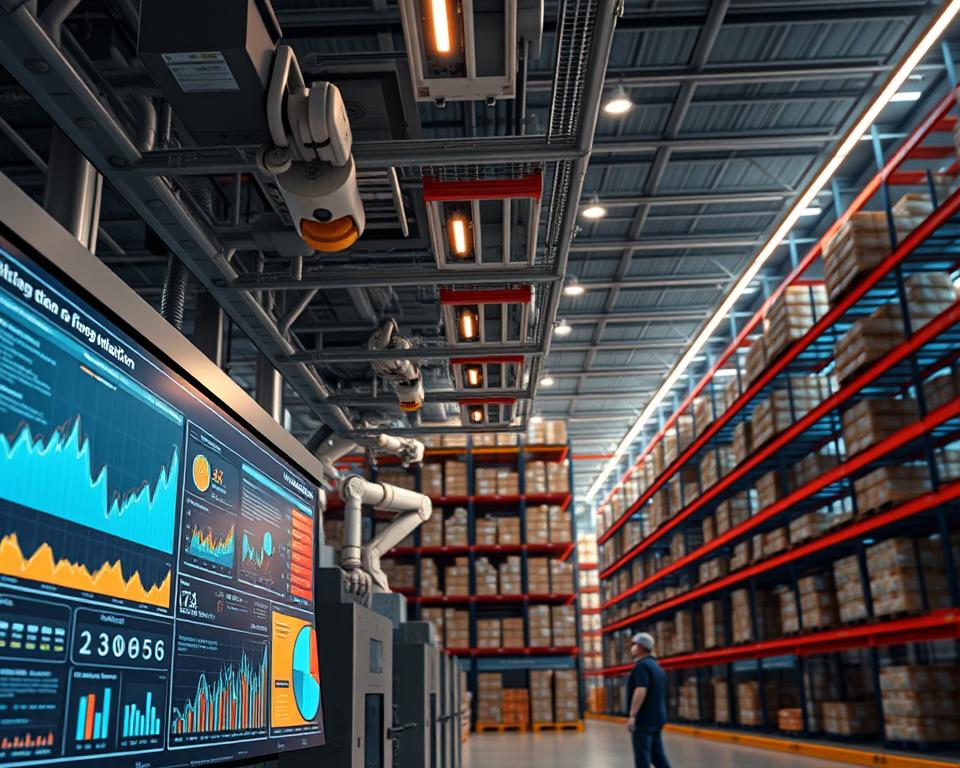
- Route optimization reduces delivery times and costs.
- Real-time tracking improves customer satisfaction.
- Predictive maintenance reduces logistics disruptions.
Using AI for supply chain optimization brings big wins. Businesses see better efficiency, happier customers, and more profits.
AI in Healthcare: Revolutionizing Patient Care
AI is changing patient care in big ways. It makes diagnoses more accurate, makes clinical work easier, and tailors treatments to each patient. Healthcare technology is growing fast, with AI leading the charge.

Transforming Healthcare Delivery Models
AI is redefining how we deliver healthcare. It allows for remote monitoring, predictive analytics, and personalized medicine. This change is boosting patient results and cutting healthcare costs.
Regulatory and Compliance Considerations
Using AI in healthcare brings up big questions about rules and keeping patient data safe. It’s key to follow rules like HIPAA to protect patient info. Compliance with these laws is essential for AI to work well in healthcare.
AI-Driven Diagnostics and Medical Imaging
AI is changing medical imaging, helping doctors diagnose diseases better. It makes diagnostic images clearer and speeds up diagnosis.

AI algorithms can analyze complex images like X-rays and MRIs with great precision. This helps spot diseases early and track how they progress and respond to treatment.
Early Disease Detection and Prevention
AI is great at finding diseases like cancer and heart problems early. It spots tiny changes in images that humans might miss. This means doctors can act fast.
Key benefits include better accuracy, faster diagnosis, and better patient care. For example, AI in mammography cuts down on wrong positives and negatives in breast cancer checks.
Radiology and Imaging Enhancements
AI is making radiology better by improving image quality and automating analysis. It gives doctors personalized insights. AI points out important areas, making diagnosis easier.
AI in radiology is set to grow, thanks to deep learning and computer vision. This will make radiologists even better at their jobs and improve patient care.
Personalized Treatment Plans and Drug Discovery
AI is changing the pharmaceutical world. It makes personalized medicine and speeds up drug discovery. This change comes from AI’s ability to look at lots of data, find patterns, and predict outcomes that were once impossible.

Precision Medicine Applications
Precision medicine means treating each patient based on their unique needs. AI helps by looking at genetic profiles, medical histories, and lifestyle data. It suggests treatment plans that fit each patient best.
Key benefits of precision medicine include better health outcomes, lower healthcare costs, and happier patients. AI helps doctors give more targeted and effective treatments.
Accelerating Pharmaceutical Research
AI is also changing pharmaceutical research. It makes the drug discovery process faster and cheaper. Traditional methods take a long time and cost a lot because they involve testing thousands of compounds.
“AI has the potential to reduce the time it takes to bring a new drug to market by up to 50%.”
AI speeds up pharmaceutical research. This means new treatments can reach patients quicker, improving health outcomes.
AI in Education: Reshaping Learning Environments
AI is changing how we learn, making education more flexible. It’s making learning experiences better and is being used more in schools. AI helps solve old problems and boosts learning results.
Addressing Educational Challenges with AI
AI tackles big issues like personalized learning, intelligent tutoring, and automated grading. It looks at lots of data to find where students need help. Then, it gives advice to both students and teachers.
Implementation Strategies for Educational Institutions
To use AI in schools, places need to follow some steps. These include:
- Buying AI tools and platforms for education
- Teaching teachers about AI
- Keeping data safe and private
As
“The future of education lies in its ability to adapt to the needs of individual learners.”
Using AI well can help schools meet this goal.
Personalized Learning Experiences
AI technology is changing education, making learning personal. It creates learning spaces that fit each student’s needs and abilities. This makes learning more meaningful for everyone.
Adaptive Learning Platforms
Adaptive learning platforms use AI to adjust lessons based on how well a student does. This keeps students at the right level, keeping them interested and eager to learn.
These platforms have cool features like:
- Real-time checks on what students know and can do
- Learning paths made just for each student
- Feedback for students and teachers all the time
Student Performance Prediction and Intervention
AI can predict how well students will do, helping catch those who might struggle. This early help lets teachers give focused support. It helps students do better overall.
| Predictive Analytics Capabilities | Educational Benefits |
|---|---|
| Early spotting of students at risk | Strategies to help them catch up |
| Insights into how students are doing | Teachers can make better choices |
AI-Enhanced Educational Tools and Resources
AI is changing education with new tools and resources. It makes learning better and more accessible. These changes improve education quality and make it more open to everyone.
Intelligent Tutoring Systems
Intelligent tutoring systems use AI for personalized learning. They adjust to each student’s pace and learning style. AI-powered tutoring greatly boosts student success.
Content Creation and Curriculum Development
AI helps create educational content and curricula. It analyzes data to make learning materials for each student or group. This personalized approach makes learning better.
Accessibility and Inclusive Learning
AI tools make education more accessible and inclusive. For example, AI tools help students with disabilities. They offer real-time transcription services or language translation. This way, all students get a fair chance to learn.
| AI-Enhanced Tool | Description | Benefit |
|---|---|---|
| Intelligent Tutoring Systems | Personalized learning experiences | Improved student outcomes |
| AI-powered Content Creation | Customized learning materials | Enhanced learning experience |
| Accessibility Tools | Real-time transcription and translation | Inclusive education |
Use Cases of AI in eCommerce, Healthcare, and Education: Cross-Industry Insights
AI has made a big impact in eCommerce, healthcare, and education. Looking at how AI is used in these areas gives us valuable insights. We can learn from these examples to improve AI use in the future.
Common Implementation Challenges
Even with AI’s benefits, industries face common hurdles. Data quality and availability are key. Good data is crucial for AI to work well.
- Insufficient data can lead to biased AI systems.
- Poor data quality can result in inaccurate predictions or decisions.
- Integration with existing systems and infrastructure can be complex.
Overcoming these challenges needs a smart plan for data and AI development.
Ethical Considerations Across Industries
Ethical issues with AI are a big worry in all fields. Problems like bias in AI decision-making, privacy concerns, and job displacement must be tackled. It’s important for AI to be clear, fair, and protect user privacy.
“The development and deployment of AI must be guided by ethical principles that prioritize human well-being and safety.” – Expert in AI Ethics
By tackling these ethical issues, we can create AI that’s not just useful but also ethical and sustainable.
Conclusion
Artificial Intelligence is changing the game in eCommerce, Healthcare, and Education. The AI future looks bright, promising big changes through technological innovation. AI is making shopping more personal and helping doctors diagnose diseases better.
AI is making things more efficient and opening up new chances for growth. We need to tackle the challenges and ethics of AI. This way, we can enjoy its benefits while avoiding its downsides.
Knowing how AI works today helps businesses and schools use it wisely. As AI gets better, it will keep changing industries. It will shape our future and change how we work and live.