







The way we travel is changing with Mobility-as-a-Service (MaaS). It combines different transport services into one easy platform.
MaaS is making city travel better, more green, and easier. It uses advanced technologies to make planning and paying for trips simple. Users can do it all through one app.
Developing MaaS apps is all about making things better for users. As more people want MaaS, it’s key to know how to make good MaaS apps.
Table of Contents
Key Takeaways
- MaaS integrates various transportation services into a single platform.
- MaaS offers a more efficient and sustainable transportation alternative.
- MaaS app development focuses on optimizing user experience.
- Advanced technologies are leveraged to provide a seamless user experience.
- MaaS is revolutionizing urban transportation.
Understanding Mobility-as-a-Service in Modern Transportation
Cities are getting bigger, and Mobility-as-a-Service (MaaS) is a key solution. It offers a complete travel experience. MaaS is more than just a new tech; it’s a big change in how we use transport.
What is Mobility-as-a-Service
Mobility-as-a-Service (MaaS) combines different transport ways into one platform. It lets users plan, book, and pay for trips in one app. This makes travel easier and more efficient.
Core Concept and Definition
MaaS mixes public, private, and shared transport into one platform. It lets users pick the best transport for their needs. This could be a taxi, ride-share, public transit, bike-share, or car rental.
How MaaS Differs from Traditional Transportation
MaaS is different from old ways of getting around. It doesn’t need separate payments or planning for each transport type. Users can use many transport options in one place, without needing a car.

The Evolution of Urban Transportation
Urban transport has changed from single-mode to multi-modal solutions. As cities grow, they need better transport systems.
From Single-Mode to Multi-Modal Solutions
Oldly, cities used single transport ways like cars or buses. But, as cities get bigger, these ways cause more traffic and pollution. MaaS helps by mixing different transport ways for a better travel experience.
The Role of Digital Transformation
Digital tech is key to MaaS. It uses data, AI, and apps to link transport modes smoothly. This tech gives real-time info, better routes, and easy payments, making MaaS work.
“The future of transport is about the journey, not just the mode. MaaS is changing travel to be easier, greener, and more connected.” –
Why MaaS Apps are Transforming the Industry
MaaS apps are changing transport by helping users and providers. They make travel planning easier for users and open new chances for providers.
Benefits for End Users
- Convenience: Access to many transport modes in one place.
- Cost-effectiveness: Users find the best deals for their trips.
- Time-saving: Easy planning and booking save time.
Advantages for Transportation Providers
| Provider Type | Benefits |
|---|---|
| Public Transit Agencies | More riders, happier customers |
| Ride-sharing Companies | More customers, better fleet use |
| Bike-share and Car Rental Services | More visibility, more bookings |
The Growing MaaS Market and Business Opportunities
The world is moving towards better, greener ways to get around. This change is pushing the MaaS market forward. It’s all about making cities better, thanks to new tech and what people want.

Global Market Size and Projections
The MaaS market is growing fast all over the world. Let’s look at how big it is now and how big it will be by 2030.
Current Market Valuation
In 2023, the MaaS market is worth about $8.5 billion. This shows how more cities are using MaaS platforms.
Expected Growth Through 2030
Experts think the MaaS market will grow by 32% each year from 2023 to 2030. By 2030, it could be worth over $50 billion.
Key Market Drivers in the United States
Several things are making the MaaS market grow in the U.S. Urban traffic and green concerns are big factors. So are government plans and smart city projects.
Urban Congestion and Environmental Concerns
Many U.S. cities face big traffic problems. This makes travel slow and life less enjoyable. MaaS offers a solution by giving people many transport choices, cutting down on car use and pollution.
Government Initiatives and Smart City Programs
The U.S. government is pushing for smart cities. It’s backing projects that help mix up transportation services. This helps MaaS companies grow and improve their services.
Target User Demographics and Behaviors
Knowing who uses MaaS is key for providers. The main users are city workers and people who travel every day. Also, those who care about the planet.
Urban Commuters and Daily Travelers
City workers and daily travelers use MaaS the most. They want easy, reliable, and fast ways to get around. They like having everything in one place.
Environmentally Conscious Consumers
More people want to travel green. MaaS that offers green options, like electric cars and bike-sharing, attracts them.
Essential Features of a Successful MaaS Application
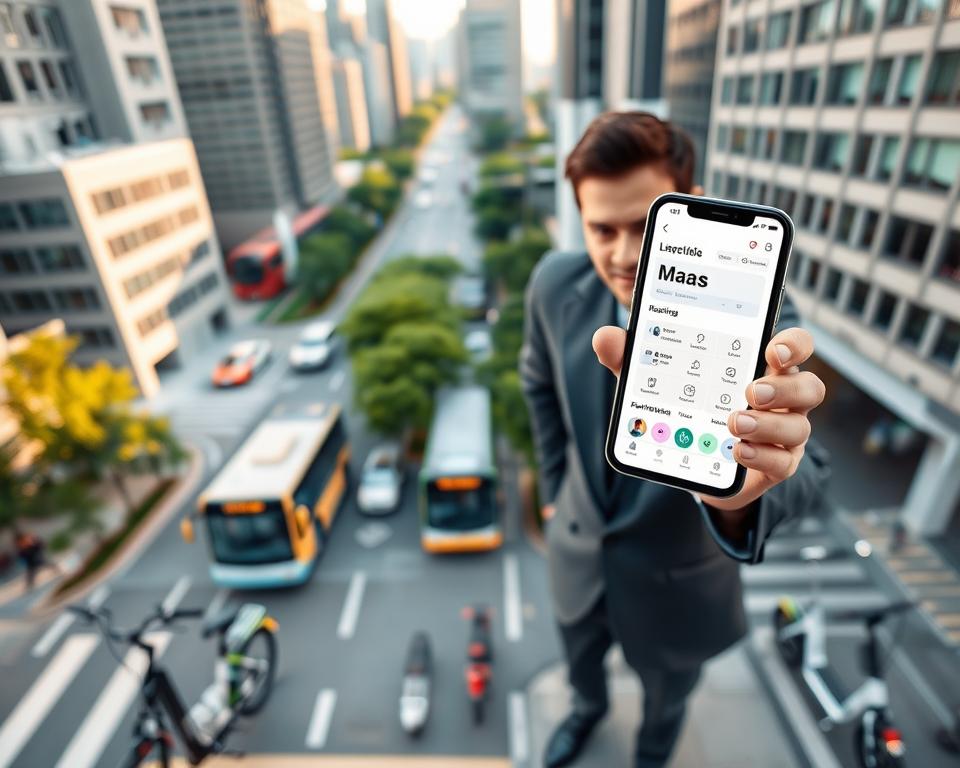
A good MaaS app must link different transport modes, plan trips in real-time, and have a single payment system. It should meet various user needs for a smooth travel experience.
Multi-Modal Transportation Integration
A top feature of a MaaS app is mixing different transport types. This lets users plan and pay for trips using various means.
Public Transit Systems
Linking with public transit lets users check schedules, plan routes, and buy tickets in the app.
Ride-Sharing and Taxi Services
Adding ride-sharing and taxi services makes travel more flexible. This boosts the app’s convenience.
Bike and Scooter Sharing
Bike and scooter sharing options are eco-friendly. They give users more choices for short trips.
Car Rental and Carsharing Options
For longer trips or more space, car rental and carsharing in the app offer flexibility.
Real-Time Journey Planning and Routing
Real-time planning is key for a MaaS app. It helps users make smart travel choices.
Smart Route Suggestions
The app suggests efficient routes based on traffic data. This cuts down travel time and improves the user experience.
Live Traffic and Delay Updates
Live traffic and delay updates help users adjust plans. This minimizes travel disruptions.
| Feature | Description | Benefit |
|---|---|---|
| Multi-Modal Transportation | Integration of various transport modes | Enhanced user convenience |
| Real-Time Journey Planning | Live updates and smart routing | Reduced travel time |
| Unified Payment System | Single wallet for all services | Simplified payment process |
Unified Payment and Ticketing System
A unified payment system is crucial for a smooth user experience. It lets users pay for all transport needs in one place.
Single Wallet for All Services
A single wallet makes managing expenses easier. It helps users track and pay for trips more effectively.
Multiple Payment Methods
Supporting various payment methods adds flexibility. It lets users choose their preferred payment option.
User Profile and Preferences Management
Effective user profile and preferences management offer a personalized experience. It meets individual user needs.
Personalized Travel Preferences
The app stores user preferences. It suggests travel options that fit their needs and habits.
Saved Locations and Frequent Routes
Users can save locations and routes. This makes planning trips quicker and more efficient.
Trip History and Analytics Dashboard
A trip history and analytics dashboard gives users insights into their travel. It helps them make better transportation choices.
Advanced Functionality for Competitive Advantage
In the fast-changing MaaS world, having advanced features is key. Developers need to add cutting-edge tools to make the app better for users and more efficient.
AI-Powered Route Optimization
AI-Powered Route Optimization is a big deal in MaaS app making. It uses smart algorithms to find the best routes based on real-time traffic.
Machine Learning Algorithms for Efficiency
Machine learning is essential for smart route planning. It looks at lots of data, like past traffic and road conditions, to suggest the best paths.
Dynamic Rerouting Capabilities
Dynamic rerouting is a big part of AI-Powered Route Optimization. It keeps an eye on traffic and suggests new routes to avoid jams.

Predictive Analytics for Demand Forecasting
Predictive analytics is key for planning MaaS services. It uses past data and other factors to predict when and where people will need rides.
Peak Time Predictions
Knowing when it’s busy helps MaaS services plan better. They can make sure they have enough vehicles for busy times.
Service Availability Forecasting
Forecasting service availability is also crucial. It helps MaaS services manage their fleet and avoid service disruptions.
| Feature | Description | Benefits |
|---|---|---|
| AI-Powered Route Optimization | Uses machine learning to optimize routes in real-time | Reduces travel time, decreases congestion |
| Predictive Analytics | Forecasts demand and service availability | Improves resource allocation, enhances service reliability |
| Carbon Footprint Tracking | Monitors and reports environmental impact | Promotes eco-friendly choices, supports sustainability goals |
Carbon Footprint Tracking
Tracking carbon footprint is getting more important in MaaS apps. It helps users see how their travel affects the environment and choose greener options.
Environmental Impact Metrics
Metrics like CO2 emissions and energy use are key for tracking carbon footprint. They help users understand their environmental impact.
Eco-Friendly Route Recommendations
Recommending eco-friendly routes is a great feature. It helps users choose paths that are better for the planet.
Subscription and Loyalty Programs
Subscription and Loyalty Programs boost user engagement and keep them coming back. Offering different levels and rewards encourages frequent use.
Tiered Membership Options
Tiered membership lets users pick what fits their needs best. This makes them happier and more likely to stay subscribed.
Reward Points and Incentives
Rewards for using the app or inviting friends are great motivators. They help build a loyal user base and grow the app.
Technical Architecture for Mobility-as-a-Service App Development
A good technical architecture is key for a successful MaaS app. It includes frontend tech, backend setup, database design, and cloud choice. All these parts are important for a smooth user experience.
Frontend Technologies and Frameworks
Choosing the right frontend tech and frameworks is crucial. It makes the MaaS app user-friendly and fast.
There are many frontend development options. You can go for native or cross-platform development.
Native vs Cross-Platform Development
Native development means making separate apps for each platform. This is done using specific programming languages and tools.
Cross-platform development lets you create one app for many platforms. This is done with tools like React Native and Flutter.
React Native and Flutter for MaaS Apps
React Native and Flutter are top picks for MaaS app development. They offer fast, good-looking apps.
React Native uses JavaScript and React, great for those who know these. Flutter has lots of widgets for custom UIs.
Progressive Web App Considerations
Progressive Web Apps (PWAs) are another good choice. They give a web app feel that can be installed on devices.

Backend Infrastructure Requirements
The backend is the heart of a MaaS app. It handles data, storage, and connects to transport services.
A strong backend is key for app reliability and growth.
Microservices Architecture Benefits
Using amicroservices architecture breaks the backend into smaller services. This makes it easier to develop and scale each part.
This approach also makes the app more flexible and less complex.
Node.js, Python, and Java for Backend
Popular backend languages areNode.js,Python, andJava. Each has its own strengths.
Node.js is great for real-time apps. Python is simple with lots of libraries. Java is strong and scalable.
API Gateway Implementation
AnAPI gateway is the first point for clients. It routes requests and handles tasks like security and limits.
Having an API gateway is key for managing microservices. It ensures safe access to backend resources.
Database Design for MaaS Systems
Good database design is essential for MaaS apps. It stores and manages lots of data.
The choice between relational and NoSQL databases depends on the app’s needs.
Relational vs NoSQL Databases
Relational databases are good for structured data. NoSQL databases are flexible for big amounts of unstructured data.
Real-Time Data Storage Solutions
For apps needing fast data processing, in-memory databases or streaming platforms are best. They offer fast performance and low latency.
Cloud Platform Selection
Choosing the right cloud platform is vital. It ensures the app’s scalability, reliability, and security.
Major cloud providers offer services for MaaS systems’ complex needs.
Amazon Web Services for Scalability
Amazon Web Services (AWS) is a top choice. It has scalable infrastructure and many services for computing, storage, and databases.
Google Cloud Platform Features
TheGoogle Cloud Platform (GCP) has advanced analytics and machine learning. It’s great for MaaS apps needing data insights.
Microsoft Azure Capabilities
Microsoft Azure offers a strong cloud environment. It’s especially good for apps in the Microsoft ecosystem.
Critical Third-Party Integrations
A Mobility-as-a-Service (MaaS) app’s success depends on its third-party integrations. These integrations are key to a seamless and helpful experience for users.
Transportation Provider APIs
Connecting with transportation APIs is crucial for a MaaS app. It allows users to access many travel options. This includes:
- Public Transit Data Feeds: Real-time bus and train schedules.
- Ride-Sharing Platform Integration: Book rides directly in the app.
- Micro-Mobility Service Connections: Connects bike and scooter sharing for the last mile.

Mapping and Geolocation Services
Accurate mapping and geolocation services are essential. This includes:
- Google Maps API Integration: Detailed maps and routes.
- Mapbox for Custom Mapping: Custom maps for a better user interface.
- GPS and Location Tracking: Precise tracking for updates.
Payment Gateway Integration
Secure payment integration is vital for a smooth user experience. This includes:
- Stripe and PayPal Implementation: Multiple payment options for convenience.
- Digital Wallet Support: Pay with digital wallets like Apple Pay or Google Pay.
Communication and Notification Systems
Good communication and notification systems keep users updated. This includes:
- Push Notifications for Updates: Real-time updates on trip changes or disruptions.
- SMS and Email Alerts: Alternative channels for important updates.
By integrating these critical services, a MaaS app can provide a comprehensive, user-friendly, and efficient transportation solution.
Step-by-Step MaaS App Development Process
Creating a successful MaaS app starts with detailed market research and feasibility checks. This thorough process makes sure the app meets user needs and stands out in the market.
Market Research and Feasibility Analysis
First, it’s key to do deep market research and check if the project is feasible. This step helps understand the competition, who the app is for, and if it can be made.
Competitor Analysis
Looking at competitors means studying their good and bad points, and their strategies. This helps make your app different and find its unique selling points.
Target Market Identification
Finding the right market means knowing who will use the app, what they like, and how they behave. This is vital for making an app that users will love.
Technical Feasibility Assessment
Checking if the app can be made involves looking at the tech needed, the infrastructure, and the skills required.

Requirement Gathering and Feature Prioritization
After researching the market, the next step is to gather what the app needs and decide which features are most important. This includes talking to stakeholders, making a feature list, and picking the MVP features.
Stakeholder Interviews
Talking to stakeholders helps understand what they want from the app.
Feature Matrix Creation
A feature matrix helps organize and rank features by how important and complex they are.
MVP Feature Selection
Picking MVP features means choosing the most essential ones for the app’s first version.
| Feature | Priority | Complexity |
|---|---|---|
| Multi-Modal Transportation Integration | High | Medium |
| Real-Time Journey Planning | High | High |
| Unified Payment System | Medium | Low |
UI/UX Design and Prototyping
With features decided, designing the app’s look and feel comes next. This includes making user journey maps, wireframes, and interactive prototypes.
User Journey Mapping
User journey mapping helps understand the user’s experience at every touchpoint.
Wireframing and Mockups
Creating wireframes and mockups means designing the app’s layout and interface.
Interactive Prototype Development
Building an interactive prototype lets stakeholders test and check the app’s functionality and user experience.
MVP Development and Testing
The MVP development phase uses agile methods to build the app, then tests it with real users.
Agile Development Methodology
Agile development means working in small, flexible steps, allowing for quick changes.
Sprint Planning and Execution
Sprint planning sets the work for a sprint, while execution is the actual doing of the work.
Beta Testing with Real Users
Beta testing releases the MVP to a small group to get feedback and find bugs.
Full-Scale Development and Quality Assurance
After the MVP is tested, the app is fully developed, tested, and assured of quality.
Feature Expansion Based on Feedback
Adding features based on feedback means using user suggestions and improvements from beta testing.
Comprehensive Testing Protocols
Testing includes various types, like functional, performance, and security checks.
Performance Optimization
Improving performance means making the app faster, more responsive, and better for users.
Launch and Post-Launch Support
The last step is launching the app and supporting it afterward. This includes marketing, getting users, and keeping the app updated.
App Store Submission Process
Submitting the app to stores means getting ready with materials like screenshots and descriptions.
Marketing and User Acquisition
Marketing and getting users are key to attracting and keeping users.
Continuous Monitoring and Updates
Keeping an eye on the app’s performance and user feedback is important. Updates include fixing bugs and adding new features.
Monetization Strategies for MaaS Platforms
As MaaS grows, finding good ways to make money is key. MaaS platforms need to find many ways to earn money while still helping their users.
Commission-Based Revenue Model
A common way for MaaS platforms to make money is by charging a commission. This means they get a part of the money made from each trip booked through the app.
Transaction Fee Structure
The fee for using the platform can change based on the service type or how often it’s used. For example, they might charge more for luxury services.
Partner Revenue Sharing
Working with transport providers to share profits is another strategy. This can make the service better and increase earnings.
Subscription Plans and Premium Features
Offering special plans and features for a fee is also a good idea. Users get more for a regular payment.
Freemium Model Implementation
The freemium model lets users use basic features for free but charges for extra ones. This can attract more users and get some to pay for more.
Monthly and Annual Subscription Tiers
Having both monthly and yearly plans can meet different user needs. Yearly plans often come with discounts, encouraging longer use.
Advertising and Partnership Revenue
MaaS platforms can also make money from ads and partnerships. This includes ads in the app and sponsored transport options.
In-App Advertising Opportunities
Ads in the app can be targeted to match what users like and how they travel. This makes ads more effective for advertisers.
Sponsored Transportation Options
Brands can promote their services directly in the app. This improves the user experience and brings in more money.
Data Monetization Opportunities
Using data to make money is becoming more popular for MaaS platforms. They can sell anonymized data to others.
Anonymized Traffic Pattern Insights
Insights from anonymized data can help cities and transport companies improve their services.
Urban Planning Data Services
Providing detailed data to cities can help them plan and manage their transport better.
| Monetization Strategy | Description | Potential Revenue |
|---|---|---|
| Commission-Based | Charge transportation providers a commission per transaction. | High |
| Subscription Plans | Offer users unlimited or premium transportation options for a recurring fee. | Medium to High |
| Advertising | Display targeted ads within the app. | Medium |
| Data Monetization | Sell anonymized and aggregated data to third parties. | Medium to High |

Security, Privacy, and Compliance Considerations
Mobility-as-a-Service platforms need strong security, privacy, and compliance. They handle sensitive data and money, so they must be very secure.
Data Protection and User Privacy Standards
Keeping user data safe is key in MaaS app development. Several important steps are needed:
- End-to-End Encryption: Data sent between devices and the MaaS platform must be encrypted.
- User Consent Management: Users must know how their data is used and give clear consent.
- Data Minimization: Only collect data needed for the app’s work.
End-to-End Encryption Implementation
End-to-end encryption keeps user data safe and private. It encrypts data at the user’s device, so only they and the MaaS platform can see it.
User Consent Management
Telling users how their data is used is crucial. Privacy policies must be clear, and consent must be given clearly.
Data Minimization Principles
Collecting only necessary data makes the app safer and builds trust with users.

Payment Security and PCI DSS Compliance
Handling money safely is vital for MaaS apps. This means:
- Secure Payment Processing: Use secure payment gateways that meet standards.
- Tokenization and Card Data Security: Use tokens to protect financial info.
Secure Payment Processing
Following Payment Card Industry Data Security Standards (PCI DSS) is a must for handling credit card info.
Tokenization and Card Data Security
Tokenization replaces real card data with a unique token, making it safer from breaches.
GDPR and Regional Regulations
MaaS apps must follow many rules, like the General Data Protection Regulation (GDPR) in Europe.
- California Consumer Privacy Act Compliance: Follow CCPA rules for California users.
- Right to Data Deletion: Let users delete their personal data.
Cybersecurity Best Practices
Strong cybersecurity is key to protect against breaches and keep users trusting the app.
- Regular Security Audits: Do security checks often to find weak spots.
- Penetration Testing: Test the app’s defenses by simulating attacks.
- Incident Response Planning: Have a plan ready for when security issues happen.
Overcoming Common MaaS Development Challenges
Creating a successful MaaS app faces several hurdles. It needs to link many transport services, handle real-time data, and offer a smooth user experience.
Managing Multiple API Integrations
One big challenge is dealing with many API connections. This means linking different transport APIs, mapping services, and payment systems.
API Versioning and Compatibility
API updates and keeping things compatible are key. Developers must keep up with new API versions and ensure old ones still work.
Handling API Downtime
When APIs go down, it hurts the user experience. Good error handling and backup plans can help fix this.
Ensuring Real-Time Data Accuracy
Having accurate, real-time data is crucial. Wrong data can make users unhappy and lose trust.
Data Synchronization Strategies
Good data syncing keeps information current and correct across all services.
Fallback Mechanisms for Data Failures
Having backup plans for data issues ensures users keep getting service.
Scalability and Performance Optimization
Scalability is key for MaaS apps to grow with more users and data.
Load Balancing Implementation
Load balancing spreads the work across servers, preventing any one server from getting too busy.
Caching Strategies for Speed
Caching makes apps faster by cutting down on repeated data requests.
Database Query Optimization
Improving database queries boosts app speed and cuts down on delays.
The table below shows main strategies for tackling MaaS development challenges:
| Challenge | Strategy | Benefit |
|---|---|---|
| Managing Multiple API Integrations | API Versioning and Compatibility | Avoids integration issues |
| Ensuring Real-Time Data Accuracy | Data Synchronization Strategies | Maintains data accuracy |
| Scalability and Performance Optimization | Load Balancing Implementation | Distributes workload efficiently |
User Adoption and Retention Strategies
Getting users to stick with a MaaS app is vital for its success.
Onboarding Optimization
Improving the sign-up process boosts user adoption.
Engagement and Re-Engagement Campaigns
Keeping users interested with regular campaigns helps keep them coming back.
Cost Factors in MaaS App Development
Understanding the cost factors in MaaS app development is key for budgeting and success. A Mobility-as-a-Service app needs a big investment in different areas.
Development Team Structure and Rates
The cost of a MaaS app depends on the development team’s structure and rates. Choosing between an in-house team or outsourcing affects the budget a lot.
In-House vs Outsourced Development
Deciding between in-house and outsourced development depends on several factors. These include project complexity, needed expertise, and budget. In-house offers control, while outsourcing can save costs and provide specialized skills.
Typical Hourly Rates in the United States
Hourly rates for developers in the United States vary. They depend on location, experience, and technology stack. Here’s a breakdown:
| Role | Hourly Rate Range |
|---|---|
| Junior Developer | $50 – $75 |
| Mid-Level Developer | $75 – $125 |
| Senior Developer | $125 – $200 |
Team Composition Requirements
A MaaS app development team needs a mix of skills. This includes frontend and backend developers, UI/UX designers, QA engineers, and project managers. The team size varies based on project needs.
Technology Stack Impact on Budget
The technology stack choice greatly affects the budget. Costs include licensing fees for third-party services and the choice between open-source and proprietary solutions.
Licensing Costs for Third-Party Services
Third-party services like mapping and payment gateways may have licensing fees. These fees can increase the overall cost. It’s important to consider these costs early on.
Open Source vs Proprietary Solutions
Open-source solutions can save money but might need more customization. Proprietary solutions offer more support but cost more upfront.
Ongoing Maintenance and Updates
Keeping a MaaS app updated is vital for its success. This includes bug fixes, security patches, and new features.
Bug Fixes and Security Patches
Regular updates are needed to fix bugs and security issues. A budget for ongoing maintenance is crucial.
Feature Enhancement Costs
As user needs change, adding new features is necessary. This requires ongoing investment in development resources.
Marketing and User Acquisition Costs
Attracting and keeping users is key for a MaaS app’s success. Marketing and user acquisition costs are significant and should be included in the budget.
Digital Marketing Budgets
Digital marketing, like social media ads and SEO, needs a dedicated budget.
Customer Acquisition Cost Projections
Understanding the cost of getting new customers is vital. This involves analyzing marketing spend and user acquisition metrics.
Best Practices and Success Factors
The success of a MaaS app relies on key elements. These elements improve user experience and make the app more efficient. Developers should focus on best practices that meet the needs of all users.
User-Centric Design Principles
Designing a MaaS app with the user in mind is crucial. It’s important to create an interface that is easy to use and accessible to everyone.
Simplicity and Intuitiveness
A simple and intuitive design makes it easy for users to navigate the app. This can be achieved by:
- Using clear and concise language in the UI
- Implementing a straightforward navigation menu
- Providing visual cues for user guidance
Accessibility Standards
It’s important to make sure the app is accessible to all users, including those with disabilities. This involves:
- Following Web Content Accessibility Guidelines (WCAG)
- Implementing features like font size adjustment and screen reader compatibility
Seamless Onboarding Experience
The onboarding process is key to keeping users. A smooth onboarding experience can be achieved by reducing registration steps and offering interactive tutorials.
Minimal Registration Friction
Reducing the steps needed for registration improves user experience. This can be done by:
- Implementing social media login options
- Minimizing the number of required fields
Interactive Tutorials
Interactive tutorials help users understand the app’s features. This can be done through:
- Guided tours of the app’s main features
- Tooltips and contextual help
Continuous Performance Monitoring
Monitoring the app’s performance is crucial for improvement. This involves tracking key performance indicators (KPIs) and using analytics tools.
Key Performance Indicators
KPIs give insights into the app’s success. Common KPIs for MaaS apps include:
- User retention rates
- Average session duration
- Transaction success rates
Analytics Tools and Dashboards
Analytics tools and dashboards help in understanding data and making decisions. Popular tools include:
- Google Analytics
- Custom-built dashboards
Building Strategic Partnerships
Strategic partnerships are essential for a MaaS app’s success. This includes working with transportation providers and city governments.
Transportation Provider Relationships
Partnering with transportation providers ensures a wide range of services. This involves:
- Integrating various transportation modes
- Negotiating favorable terms and conditions
City Government Collaborations
Collaborating with city governments offers valuable insights and support. This includes:
- Participating in urban planning initiatives
- Accessing government data for better service planning
Leveraging User Feedback for Improvement
User feedback is a valuable resource for improving the app. This involves using in-app feedback mechanisms and analyzing user reviews.
In-App Feedback Mechanisms
In-app feedback tools allow users to report issues or suggest improvements. This can be achieved through:
- Feedback forms within the app
- Rating systems
Review Analysis and Action Plans
Analyzing user reviews and creating action plans helps address user concerns. This involves:
- Regularly reviewing user feedback
- Implementing changes based on user suggestions
Conclusion
Mobility-as-a-Service (MaaS) is changing how we travel. It makes getting around easier, more efficient, and better for the planet. MaaS App Development is key to combining different travel options into one easy-to-use platform.
The future of travel is bright with MaaS. It offers real-time planning, one payment system, and travel tailored to you. This is making city travel better.
As cities grow, so will the need for good MaaS apps. Using AI and predictive analytics, MaaS can make travel smoother, cut down on traffic, and help the environment.
MaaS has huge potential to change how we move. With ongoing innovation, we’ll see even better travel options. This will make city living better and help our planet.