





Finding the right RAG Development Company helps businesses use artificial intelligence with confidence. These solutions connect generative models with private data, so every answer stays accurate and grounded in reality.
Adding your internal knowledge base can improve automated interactions. This approach helps organizations accelerate growth while keeping high reliability standards. A trusted RAG Development Company helps you manage complex technical systems with confidence.
This guide explains the main stages of building intelligent systems. It covers architecture, security protocols, evaluation metrics, and cost management. Our goal is to give you clear criteria for informed business application decisions.
Table of Contents
Key Takeaways
- Retrieval-augmented systems connect generative AI to your specific business data.
- These solutions drastically improve the accuracy and relevance of AI responses.
- Proper architecture and security are foundational to successful implementation.
- Evaluating costs and performance metrics is essential for long-term success.
- Selecting the right partner ensures your project aligns with organizational goals.
Why Businesses Are Investing in Retrieval-Augmented Generation
Retrieval-augmented generation is becoming the gold standard for companies that need accurate digital operations. As organizations adopt artificial intelligence, they may find standard models lack context for professional tasks. By adopting RAG development, firms can connect general knowledge with proprietary information.

How RAG Connects Generative AI With Trusted Business Data
Traditional AI models rely solely on training data, which may be months or years old. This creates a blind spot for businesses needing real-time access to internal documents, policy manuals, or customer records. Retrieval-augmented generation links the model with your private data repositories.
When a user asks a question, the system searches your secure database for relevant facts. It then sends this information to the language model, which creates a response. This process helps the AI use verified documents instead of its own memory.
Why Grounded Responses Matter for Enterprise Applications
In a corporate setting, accuracy is a requirement, not just a preference. Providing grounded AI answers prevents common “hallucinations,” when AI confidently states incorrect information. Employees and customers trust technology more when answers use actual company data.
“The future of enterprise AI lies in systems that can prove their work by citing the exact documents they used to form an answer.”
Where RAG Delivers More Value Than a Standalone Language Model
Standalone models work well for creative writing and general brainstorming, but often fail with specific business logic. They cannot know your company’s unique pricing structure or the latest updates to your internal compliance policies. RAG development adds context that makes AI useful for daily operations.
| Feature | Standalone Model | RAG-Enabled System |
|---|---|---|
| Data Source | Static Training Data | Live Business Databases |
| Accuracy | Prone to Hallucinations | High (Grounded in Facts) |
| Context | General Knowledge | Company-Specific Context |
| Updates | Requires Retraining | Instant Data Refresh |
By implementing grounded AI answers, your business gains an edge through speed and precision. This approach ensures your AI investment delivers measurable value by using data you already own.
What a RAG Development Company Does
A professional firm turns your business goals into practical, high-performing AI workflows. Its team connects technology to your specific operational needs instead of delivering separate technical parts.
Experts manage the full application lifecycle, helping keep your AI a reliable business asset. They connect complex data systems with interfaces that users can understand.
Translating Business Goals Into an AI Solution Strategy
Successful RAG development starts with a clear understanding of your business challenges. Consultants work with stakeholders to find where AI can help most, from automating customer support to streamlining internal research.
This discovery phase stops teams from building technology without a clear purpose. The team creates a roadmap focused on accuracy, scalability, and measurable business results.

Designing Retrieval, Generation, and Evaluation Workflows
A strong architecture needs careful planning for retrieving and processing information. Experts in RAG consulting build pipelines that give the language model relevant context before it creates an answer.
“The true power of AI in the enterprise lies not in the model itself, but in the quality of the data it retrieves and the rigor of the evaluation process.”
These workflows use automated tests to confirm that answers rely on your proprietary information. This rigorous evaluation separates a prototype from a production-ready tool.
Connecting AI Applications to Proprietary Data Sources
Your business data is valuable, and RAG solutions are built to use it securely. Development teams index many data formats, including PDFs, internal wikis, and structured databases.
They help the system navigate your knowledge base with precision. This integration lets AI provide fast, accurate, and context-aware answers.
Supporting Deployment, Monitoring, and Continuous Improvement
The work continues after the application goes live. A reliable partner provides ongoing support so the system evolves with your business needs.
- Monitoring: Tracking performance metrics to identify potential bottlenecks.
- Maintenance: Updating data indexes as your internal content changes.
- Optimization: Refining retrieval strategies based on real-world user feedback.
Continuous improvement matters because user expectations and operating needs change over time. With a proactive approach to RAG solutions, your organization stays ahead while keeping AI tools effective.
Core Components of a Reliable RAG Architecture
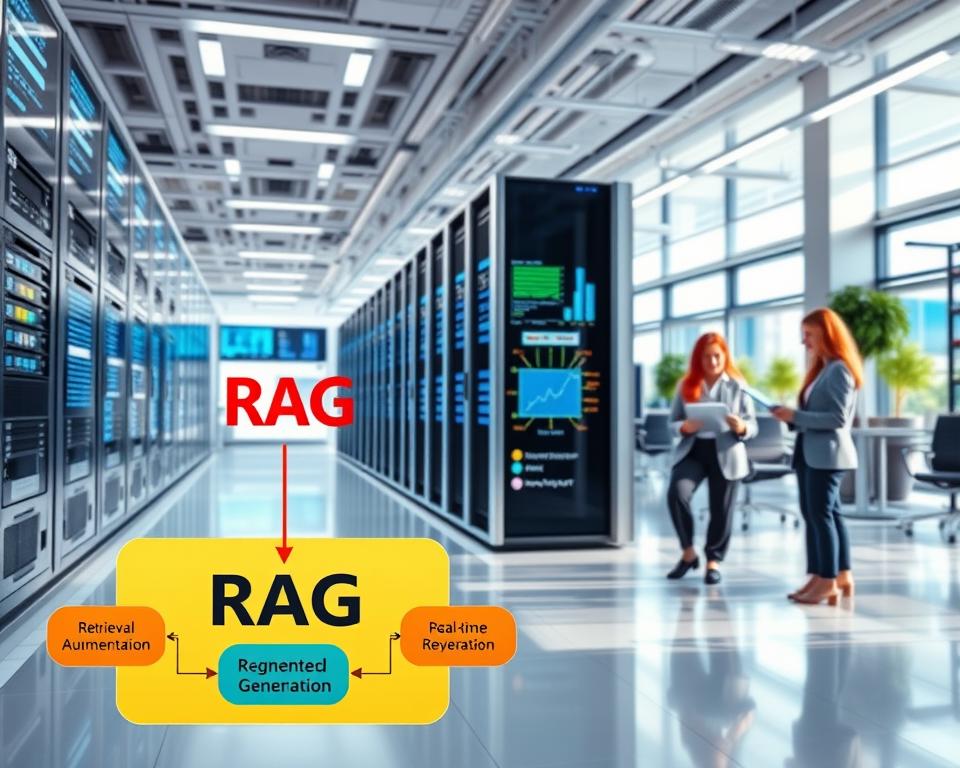
A robust RAG architecture connects private business knowledge with the power of generative AI. Careful pipeline design helps the system give accurate, grounded answers instead of unsupported guesses. This framework must fit your content formats, security needs, and growth goals.
Document Ingestion and Data Preprocessing
The process starts by collecting raw data from sources such as PDFs, internal wikis, and databases. Effective preprocessing cleans this information by removing noise, including broken formatting and irrelevant headers. This step matters because high-quality input directly affects the final output’s reliability.
Chunking Strategies for Different Content Types
After cleaning, break the data into smaller, manageable pieces called chunks. The best strategy depends on whether you process long legal contracts or short technical manuals. Proper chunking gives the model enough context without irrelevant details overwhelming it.
Embedding Models and Vector Representations
After chunking, specialized embedding models convert your data into numerical vectors. These vectors show your text’s meaning in a high-dimensional space. This mathematical form helps the system find relevant information by meaning, not exact word matches.
Vector Databases, Metadata, and Search Indexes
A high-performance RAG vector database serves as central storage for these embeddings. By attaching metadata to vectors, you can filter results by date, department, or document type. Indexing greatly improves retrieval speed and precision.
Prompt Construction and Large Language Model Generation
The final stage sends retrieved context and the user’s query to a Large Language Model. Careful prompt construction tells the model to use only the provided data for its response. This grounding process makes a RAG vector database solution valuable for enterprise applications because it minimizes hallucinations and ensures accuracy.
How RAG Applications Retrieve More Relevant Information
The secret to a high-performing AI lies in how it searches through your proprietary documents. When an application understands the intent behind a query, it provides far more accurate results than a simple database lookup. Advanced retrieval techniques help businesses deliver grounded, trustworthy answers every time.
Semantic Search for Meaning-Based Retrieval
Semantic search helps AI look beyond exact matches and understand the main idea behind a user’s question. It maps data into mathematical space, where related ideas sit close together. If a user asks about “company benefits,” the system can find documents about “health insurance” or “retirement plans.”

Keyword Search for Exact Terms and Identifiers
Sometimes, precision requires searching for specific text strings. Keyword search remains the gold standard for finding exact product codes, serial numbers, or specific legal identifiers. Combining keyword search with conceptual understanding creates a system that is both flexible and precise.
“The goal of information retrieval is not just to find data, but to provide the right answer at the right moment.”
Hybrid Search That Combines Multiple Retrieval Methods
A hybrid search approach often balances these two methods well. It blends semantic understanding with traditional keyword matching to capture context and specific details. This dual-layered strategy helps prevent critical information from being overlooked.
Reranking Results Before Response Generation
After the initial search finds potential documents, reranking acts as a final quality filter. It evaluates each result against the user’s query and prioritizes the most accurate information. Reranking significantly improves the quality of the context passed to the language model, leading to better final outputs.
Filtering by Permissions, Date, Department, and Document Type
To protect security and relevance, developers often apply metadata filters during retrieval. These controls let the system ignore outdated files or restrict access based on user permissions. Filtering by department or document type ensures employees receive information that is both authorized and timely.
RAG Development Company Services
A dedicated RAG Development Company builds infrastructure that connects large language models with private business documents. With expert help, organizations can turn scattered information into one clear system that supports better decisions.

Custom RAG Application Development
Every business faces unique challenges that need tailored AI solutions. Professional RAG application development builds systems that match your workflows and data structures.
This process starts by choosing an architecture that helps AI models retrieve accurate information. Custom retrieval logic can reduce errors and improve the quality of generated answers.
Enterprise Knowledge Base Construction
A strong knowledge base supports every successful AI initiative. Experts organize unstructured data, including PDFs, wikis, and internal reports, into a format AI can search.
This structure helps the system understand your business context. When data is indexed correctly, AI can give precise answers based on your company’s verified facts.
Conversational AI and Internal Assistant Development
An AI knowledge assistant acts as a force multiplier for your workforce. Through conversation, employees can quickly find policies, procedures, and technical documentation without searching endless folders.
These assistants handle complex questions by combining information from multiple sources. This saves time and lets your team focus on high-impact tasks instead of searching for information.
RAG API and Workflow Integration
Seamless integration helps maintain efficiency across your existing software ecosystem. A team uses RAG application development to connect AI models with CRM, ERP, and project management tools via secure APIs.
This connection keeps your AI solution updated in real time. Automated data flow creates a unified environment where intelligence remains available wherever employees work.
Performance Optimization and Application Maintenance
Deployment is not the end of the work. Continuous monitoring tracks latency, token usage, and the relevance of retrieved information.
Regular maintenance keeps AI accurate as your business data changes. Developers tune performance to keep the system fast, reliable, and cost-effective over the long term.
| Service Category | Primary Focus | Business Benefit |
|---|---|---|
| Custom Development | Tailored Architecture | High Accuracy |
| Knowledge Base | Data Structuring | Contextual Clarity |
| Conversational AI | User Interaction | Increased Productivity |
| Maintenance | System Reliability | Long-term ROI |
Data Preparation for Accurate RAG Responses
Effective RAG data preparation turns raw documents into reliable business insights. Messy sources can produce confusing or inaccurate answers. Cleaning data helps keep AI a trusted partner for your team.

Auditing Data Quality Before Model Integration
Before connecting documents to an AI model, perform a thorough audit. Check for missing files, broken links, and incomplete records that could cause hallucinations. A full audit shows whether your knowledge base can support real-world queries.
Cleaning Duplicated, Outdated, and Conflicting Content
Redundant information can confuse language models and cause inconsistent responses. Remove duplicate files and outdated policy documents that no longer match business standards. Resolve conflicts between document versions to maintain one source of truth.
“Data quality is the silent engine of artificial intelligence. If you feed your models low-quality information, you will inevitably receive low-quality results, regardless of how advanced your algorithms are.”
Preserving Tables, Images, Headers, and Document Context
Many developers strip away formatting during ingestion. Preserve tables, images, and headers because they often hold critical data points. Keeping the original structure helps AI understand how information connects.
Adding Metadata That Improves Retrieval Precision
Metadata guides AI toward the right information faster. Tag documents with categories, dates, and ownership details to improve the relevance of retrieved results. This organization makes RAG data preparation effective for scaling enterprise solutions.
Managing Access Control at the Document and User Levels
Build security directly into your data architecture. Ensure the system follows existing permissions, so users see only authorized information. Strong access controls prevent sensitive data leaks and ensure compliance with internal privacy policies.
| Data Feature | Raw Data State | Prepared Data State |
|---|---|---|
| Document Structure | Unstructured/Lost | Preserved/Semantic |
| Information Accuracy | Conflicting/Outdated | Verified/Current |
| Retrieval Speed | Slow/Inaccurate | Fast/Precise |
| Access Security | Open/Unrestricted | Role-Based/Secure |
Clean, organized business data helps ground answers in reality. Prioritizing RAG data preparation builds a foundation for trust and long-term value for your organization.
Choosing Models and Infrastructure for a RAG Solution
A strong AI solution depends on how well its language model and data storage work together. The right choices keep your system accurate, scalable, and cost-effective as business needs grow.
Selecting a Large Language Model for the Use Case
Your use case guides the choice of a Large Language Model (LLM). Complex analysis may need a large model, while other tasks need smaller, faster models with lower latency.
Precision is paramount when using proprietary business data. Balance instruction following with hallucination risk, so the model stays grounded in your context.
Comparing Hosted and Self-Hosted Model Options
Hosted models offer quick access to advanced capabilities without heavy hardware maintenance. Self-hosted models provide total data sovereignty for organizations with strict regulatory requirements.
| Feature | Hosted Models | Self-Hosted Models |
|---|---|---|
| Setup Speed | Very Fast | Slow |
| Data Privacy | Moderate | High |
| Maintenance | Low | High |
Choosing an Embedding Model for Search Quality and Cost
Embedding models connect human language with data that machines can read. A high-quality model helps your system retrieve relevant information for each search query.
Premium models offer better semantic understanding but often cost more to run. Test different models to balance search accuracy and operational budget.

Evaluating Vector Database Options
A robust RAG vector database supports the retrieval process. It enables lightning-fast similarity searches across millions of data points. The LLM then receives the correct context each time.
When Managed Cloud Infrastructure Makes Sense
Managed cloud services suit teams that want to focus on application development instead of infrastructure management. They offer automatic scaling and high availability for projects that must reach the market quickly.
When a Private Deployment Is More Appropriate
Private deployments are needed when organizations handle highly sensitive or classified information. Keeping your RAG vector database and models in a secure environment maintains control over data access and security protocols.
RAG Development Company Approaches for Industry-Specific Solutions
Implementing enterprise RAG requires a clear understanding of each organization’s workflows and regulations. Every industry faces different limits, so a generic AI model may not meet professional standards. Industry-specific retrieval keeps AI grounded in verified, proprietary data.
Healthcare Applications With Privacy and Clinical Accuracy Requirements
Medical work demands extremely accurate answers. An enterprise RAG system must protect patient privacy and follow strict rules, including HIPAA. Links to trusted clinical databases help providers give safe, evidence-based support.
Financial Services Solutions for Policies, Research, and Compliance
Financial institutions need precise information to manage risk and meet regulations. Our approach places internal policy documents and market research in a secure retrieval framework. Analysts can search complex data sets, with every answer fully traceable to official company sources.
Legal Applications for Contract and Case Document Analysis
Legal teams manage large document collections that demand extreme precision. Our specialized tools let attorneys search thousands of contracts and case files in seconds. This enterprise RAG capability cuts manual review time while maintaining the confidentiality of sensitive client information.
Retail and E-Commerce Applications for Product and Customer Support
Retailers need fast, accurate answers to customer questions to increase sales and satisfaction. By indexing product catalogs and support manuals, our systems give shoppers instant, relevant responses. This seamless experience keeps customers engaged and informed throughout their buying journey.
Manufacturing Applications for Technical Manuals and Field Operations
Field technicians often work where quick access to technical data is critical. Our systems let staff search large libraries of equipment manuals and maintenance logs while working. This enterprise RAG strategy puts the right information at workers’ fingertips, improving efficiency and safety across operations.
Enterprise Use Cases for Retrieval-Augmented Generation
The power of enterprise RAG comes from connecting large language models to private data for precise answers to complex questions. It replaces generic responses with answers supported by verified internal documents. This helps teams work faster while preserving accuracy across every department.
Employee Knowledge Assistants
An AI knowledge assistant serves as a hub for company policies, HR guidelines, and internal wikis. Employees can ask natural language questions instead of searching endless folders. They get quick, accurate results, save administrative time, and help new hires onboard more effectively.
Customer Service and Support Copilots
Support teams often face vast libraries of service manuals and troubleshooting guides. With retrieval-augmented generation, support copilots can surface exact steps for resolving customer issues. This helps agents provide consistent, approved information in every interaction.
Sales Enablement and Proposal Assistance
Sales teams can use these tools to create strong proposals from successful bids and current product specifications. Using approved marketing materials, the AI crafts compelling narratives that match brand standards. This speeds the sales cycle and improves win rates.
Research, Reporting, and Competitive Intelligence
Analysts can use an AI knowledge assistant to combine large amounts of market data and internal reports. The system finds trends and summarizes key findings, helping teams make data-driven decisions in minutes instead of days. This capability is essential for staying ahead in fast-moving industries.
Technical Troubleshooting and Operations Support
Field technicians and operations staff often need quick access to technical manuals. Enterprise RAG lets them query complex schematics and maintenance logs on mobile devices. Reliable information reduces downtime and improves field safety.
| Use Case | Primary Benefit | Data Source |
|---|---|---|
| Employee Support | Faster Onboarding | HR & Policy Docs |
| Customer Service | Higher Resolution Rate | Service Manuals |
| Sales Enablement | Increased Efficiency | Product & Bid Data |
| Operations | Reduced Downtime | Technical Schematics |
Security, Privacy, and Compliance in RAG Development
When you add generative AI to your workflow, security must be the foundation of every choice. A strong RAG security framework helps your organization use large language models without exposing sensitive information. These safeguards build customer trust and protect your intellectual property from potential threats.
Protecting Sensitive Business and Customer Information
Your business data is your most valuable asset. Encrypt data at rest and in transit to prevent unauthorized access. Data masking techniques hide personally identifiable information from unauthorized users during the generation process.
Preventing Unauthorized Retrieval From Connected Data
Many enterprises must ensure users access only information they are authorized to see. Advanced RAG security protocols enforce document-level permissions that match existing identity management systems. This setup helps the AI retriever follow user roles and prevents confidential records from reaching unauthorized personnel.
Reducing Prompt Injection and Data Leakage Risks
Malicious actors may manipulate AI models through prompt injection attacks. Developers must use strict input validation and output filtering to stop these threats. A secure sandbox environment helps prevent the model from leaking sensitive internal data or creating harmful content.
Supporting U.S. Privacy and Industry Compliance Requirements
Understanding regulations is vital for every U.S.-based organization. Your AI architecture must align with standards such as HIPAA, GDPR, or SOC2, depending on your industry. Proactive compliance mapping helps data practices meet legal obligations while maintaining high performance.
Audit Logs, Access Policies, and Human Review Workflows
RAG security also requires transparency. Detailed audit logs let your team track every query and response, creating a clear trail for security investigations. Human-in-the-loop review workflows add oversight and help keep AI-generated outputs accurate and safe before reaching the end user.
Measuring RAG Quality and Business Performance
To ensure your AI delivers real value, you must track performance and accuracy. A comprehensive RAG evaluation strategy checks whether your system provides reliable, evidence-based insights that support business goals.
Evaluating Retrieval Relevance and Context Coverage
Every successful system must find the right information. Measure whether retrieved documents contain the answers needed for a user’s query. Context coverage ensures the system gathers enough relevant data for a complete picture, not one misleading snippet.
Testing Answer Accuracy, Completeness, and Grounding
After retrieval, the model must combine the information accurately. We look for grounding, meaning the response stays supported by the source documents. A complete answer covers every part of the question without missing key details or adding unverified information.
Tracking Hallucination Rates and Unsupported Claims
Even the best models can make mistakes. Track how often the system creates hallucinations—claims the AI states confidently but cannot find in your source data. These unsupported claims help you refine retrieval logic and keep the model within your proprietary knowledge base.
Monitoring Latency, Token Usage, and Operating Costs
Efficiency matters as much as accuracy in production. Track how long users wait for answers, since high latency can frustrate employees and customers. Tracking token usage also helps manage operating costs and keep infrastructure sustainable as usage grows.
Creating Evaluation Datasets From Real Business Questions
Generic benchmarks often miss details from your industry. Custom datasets based on real questions from your team show how the system performs in daily business situations. This approach to RAG performance optimization targets the specific challenges your business faces.
- Relevance: Does the retrieved data match the user intent?
- Accuracy: Is the final answer factually correct based on the source?
- Efficiency: Are latency and token costs within acceptable limits?
- Reliability: How often does the system avoid hallucinations?
Common RAG Challenges and How Development Teams Address Them
Even advanced retrieval-augmented generation systems face problems with complex enterprise data. These tools have great potential, but developers must manage technical issues to keep systems reliable. This work requires an ongoing commitment to quality, not a one-time fix.
Incomplete or Poorly Structured Source Data
Raw data often comes in formats that AI cannot parse well. Messy tables and broken headers can stop systems from finding useful insights. Cleaning and preprocessing data before it enters the vector database is essential.
Irrelevant Context Returned by the Retriever
Sometimes, the system retrieves information that relates to the topic but offers little useful context. This occurs when search settings are too broad or poorly defined. Development teams use advanced reranking algorithms to rank accurate snippets before the model creates its final response.
Conflicting Information Across Multiple Documents
Large organizations often keep several versions of the same policy, which can cause confusion. Contradictory facts can make it hard for AI to identify the current source. Metadata tagging tracks document dates and authority levels, helping the system choose reliable information.
Slow Responses During High-Volume Usage
Latency can rise when many users query the system at once. Engineers often use caching strategies for common questions to maintain speed. This keeps the system responsive during peak business hours without reducing output quality.
Model Answers That Sound Confident but Lack Evidence
A major AI development risk is that models may hallucinate or make unsupported claims. Developers counter this risk with strict grounding protocols requiring citations from specific source documents for every claim. Teams validate responses against original data to keep final output accurate and trustworthy.
Ultimately, RAG performance optimization is an essential engineering discipline. By monitoring these metrics, organizations can improve their systems and provide precise, evidence-based answers for business goals.
Building a RAG Solution From Discovery to Production
Building effective RAG solutions starts with your data and ends with measurable business impact. This structured approach aligns your investment with organizational goals and reduces technical risks.
Defining Users, Workflows, and Success Criteria
The first step in any RAG implementation is identifying users and the problems they need to solve. Map workflows where AI can add the most value, such as customer support or internal knowledge retrieval.
Define success criteria before writing any code. Measurable benchmarks show whether the final product meets stakeholder needs and provides a clear return on investment.
Creating a Focused Proof of Concept
A RAG proof of concept connects theory with reality. This early phase tests retrieval quality, security protocols, and technical feasibility in a controlled setting.
A focused scope helps you find bottlenecks quickly without a major infrastructure overhaul. This stage confirms whether your models can ground answers in proprietary data.
Testing With Representative Data and User Queries
Test your system with real-world business data instead of simple examples. Representative queries show how the model handles complex, nuanced, or unclear requests from actual users.
“The true measure of an AI system is not how it performs on perfect data, but how it handles the messy, real-world information that drives your business every day.”
Scaling the Architecture for Production Workloads
Once your RAG proof of concept succeeds, focus on scaling the architecture for production. Optimize vector databases, reduce retrieval latency, and support high-volume use without losing accuracy.
Strong infrastructure supports reliable RAG solutions. Ensure deployment can grow with business needs while meeting strict security and compliance standards.
Establishing Ownership for Ongoing Improvements
A successful RAG implementation is never truly finished. Assign clear ownership to monitor performance, update data sources, and improve the model through user feedback.
Continuous improvement supports long-term success. Treat your AI system as a living product so it stays accurate, relevant, and valuable as your business evolves.
| Phase | Primary Goal | Key Deliverable |
|---|---|---|
| Discovery | Define business needs | Workflow roadmap |
| Prototyping | Validate feasibility | Functional POC |
| Production | Scale and optimize | Deployed application |
| Maintenance | Ensure accuracy | Performance reports |
How to Select the Right RAG Development Company
When you seek RAG consulting, choose partners who value business results over buzzwords. Choosing the right RAG Development Company requires careful review of technical skill and strategic fit. You need a partner who can turn your proprietary data into reliable, grounded insights.
Reviewing Experience With Similar Data and Use Cases
Begin by checking each partner’s work in your specific industry. A strong provider can show success with similar formats, including technical manuals, legal contracts, or clinical records.
Request case studies showing how they solved real-world problems. Proven experience in your sector shows they understand domain-specific terminology and regulatory requirements.
Assessing Technical Expertise Across the Full RAG Stack
A capable RAG Development Company should know the full architecture, from data ingestion through model generation. They should clearly explain choices involving vector databases, embedding models, and chunking strategies.
Avoid vendors that use generic, one-size-fits-all solutions. Choose teams that can customize retrieval, keeping your AI application accurate and contextually relevant.
Asking About Security, Testing, and Deployment Practices
Security is essential when handling enterprise data. Make sure your partner uses strict protocols for data privacy, access control, and protection from prompt injection attacks.
Ask about their testing methods. A reliable team will use rigorous evaluation frameworks to measure hallucination rates and answer grounding before production.
“Quality is not an act, it is a habit.”
Comparing Communication, Timelines, and Engagement Models
Clear communication supports every successful RAG consulting engagement. Check how the team manages updates and whether stakeholders receive a dedicated point of contact.
Discuss their preferred engagement model, such as fixed-price projects or a time-and-materials approach. Make sure their timeline fits your internal business goals and operational capacity.
Looking for Transparent Pricing and Measurable Deliverables
Avoid providers who make vague promises about AI capabilities without clear metrics. Expect a roadmap with specific, measurable deliverables for every development lifecycle stage.
Transparent pricing supports long-term planning. A professional partner will give a detailed cost breakdown, including infrastructure, model usage, and ongoing maintenance requirements.
Expected Costs, Timelines, and Return on Investment
Understanding the costs and timelines of modern AI projects helps organizations set realistic goals. Each project differs, but understanding the financial drivers behind RAG implementation helps leaders use resources wisely. Clear goals help businesses turn their investment into measurable growth.
Factors That Influence RAG Development Costs
The total RAG development cost depends largely on the complexity of your existing data ecosystem. Clean, structured data takes less time to integrate than messy documents that need extensive cleaning. High security and complex compliance needs may require more engineering hours to protect data privacy.
Your language model choice and expected user traffic also affect costs. An application serving thousands of concurrent queries needs stronger architecture than a simple internal tool. Evaluation depth and ongoing support needs also affect the final budget.
Typical Phases From Prototype to Enterprise Deployment
Most successful projects follow a clear path to maintain quality at every stage. Discovery defines success criteria and identifies key user workflows. Then, rapid prototyping tests the core logic with representative data.
After the prototype succeeds, the team moves to production implementation. This stage builds scalable infrastructure, connects enterprise systems, and includes rigorous testing. After launch, continuous monitoring and optimization help maintain strong performance.
Infrastructure, Model, Data, and Maintenance Expenses
Budgeting for RAG implementation requires more than planning for initial development fees. Include cloud infrastructure, vector database hosting, and large language model API usage. Data preparation and regular updates also keep the system accurate over time.
Maintenance is a critical part of the total cost, but teams often overlook it. Regular performance audits and model fine-tuning keep the system reliable as business data changes. These investments prevent technical debt and keep your AI solution competitive.
| Cost Category | Primary Driver | Impact Level |
|---|---|---|
| Data Preparation | Data Quality & Volume | High |
| Infrastructure | Traffic & Latency | Medium |
| Model Usage | Token Consumption | Medium |
| Maintenance | System Updates | Low |
Estimating Value Through Productivity and Service Improvements
Teams often measure return on investment through saved time and better service quality. Automating routine research lets employees focus on strategic work instead of manual data retrieval. This change raises team productivity and reduces operational bottlenecks.
Furthermore, RAG implementation improves customer satisfaction through faster, more accurate support responses. When an AI assistant gives grounded, evidence-based answers, it builds trust with employees and clients. Ultimately, a reliable AI solution can far outweigh the initial RAG development cost.
Conclusion
Modern enterprises face a turning point: data access now shapes competitive success. A skilled RAG Development Company can connect raw information with useful insights for your organization. By linking generative AI to proprietary data, you create grounded AI answers for your specific operational needs.
Success requires more than technical implementation. It also requires clean data, strong security, and rigorous evaluation protocols to support long-term growth and innovation. A strategic approach keeps your AI tools accurate, reliable, and aligned with core business objectives.
Choosing the right partner helps you navigate this complex landscape. Seek experts who understand your industry and offer transparent, measurable results. Intelligent RAG solutions help teams work smarter and faster. They turn internal knowledge into a powerful asset that accelerates growth across every department.