






Hiring dedicated developers for software projects is now a global trend. Companies look for talent worldwide. The hiring costs can change a lot. This depends on the developer’s location, experience, and the project’s technology needs.
It’s important for businesses to understand these factors. The rates for dedicated developers vary greatly by region. Knowing these differences helps companies make better hiring choices.
Table of Contents
Key Takeaways
- Factors influencing the cost of hiring dedicated developers include location, experience, and technology stack.
- Global rates for dedicated developers vary significantly across different regions.
- Understanding these variations is key to making informed decisions about outsourcing software development.
- Strategies for optimizing hiring costs will be explored, including regional breakdowns.
- The importance of considering the technology stack in hiring decisions.
Understanding the Global Developer Hiring Landscape
For businesses looking to outsource software development, it’s key to grasp the global developer hiring scene. This scene is complex, influenced by location, experience, and technology stacks.
The trend of global developer hiring has changed a lot in recent years. More companies are choosing remote and dedicated teams. This move is driven by the need for specialized skills and the perks of outsourcing to tap into a wider talent pool.

One big challenge in this hiring scene is dealing with the varied costs of hiring developers from different places. The cost to hire dedicated developers can change a lot. This depends on location, experience, and technology stack.
| Region | Average Hourly Rate | Key Skills in Demand |
|---|---|---|
| North America | $50-$100 | Cloud Computing, AI, Cybersecurity |
| Western Europe | $40-$90 | Full-Stack Development, DevOps, Data Science |
| Eastern Europe | $20-$50 | Backend Development, Mobile App Development, Testing |
| Asia-Pacific | $15-$40 | Frontend Development, Full-Stack Development, Blockchain |
The software development trends also shape the global developer hiring scene. Trends like cloud adoption, AI growth, and cybersecurity demand are pushing for specialized skills.
To tackle this complex scene well, businesses need to keep up with trends and challenges. Knowing what affects hiring costs and quality helps companies make better choices when outsourcing software development projects.
Key Factors That Influence Developer Hiring Costs
Knowing what affects developer hiring costs is key for businesses wanting to grow their teams worldwide. The cost of hiring developers varies a lot. This is due to several important factors.
Experience Level and Seniority
The experience level and seniority of developers greatly impact hiring costs. More experienced developers, especially those with a strong track record, earn more. For example, a senior developer with over 5 years of experience in React or Node.js will cost more than a junior developer. Businesses must consider the benefits of hiring experienced developers against the costs.
Let’s look at the hiring process. Companies seek developers with specific skills. The cost to hire dedicated web developers varies with their experience and seniority.
Technical Skills and Specializations
The technical skills and specializations needed for a project also affect hiring costs. Developers with expertise in in-demand areas like AI/ML, blockchain, or cloud computing are pricier. The project’s complexity and need for specialized skills can increase costs.

Geographic Location and Economic Factors
Geographic location is a major factor in developer hiring costs. The cost of living, economic conditions, and wage rates in different areas influence hiring costs. For instance, hiring developers from regions with a lower cost of living, like Eastern Europe or Asia, can be cheaper than hiring from North America or Western Europe.
Industry Demand and Market Competition
Industry demand and market competition also shape developer hiring costs. In areas with high demand and a shortage of skilled developers, wages are higher. In contrast, areas with less demand or a surplus of developers may have lower costs. Businesses must keep up with market trends to make smart hiring choices.
Cost to Hire Dedicated Developers Worldwide: Regional Breakdown
Regional differences greatly affect the cost of hiring dedicated developers. The prices vary a lot across North America, Europe, Asia, and Latin America.
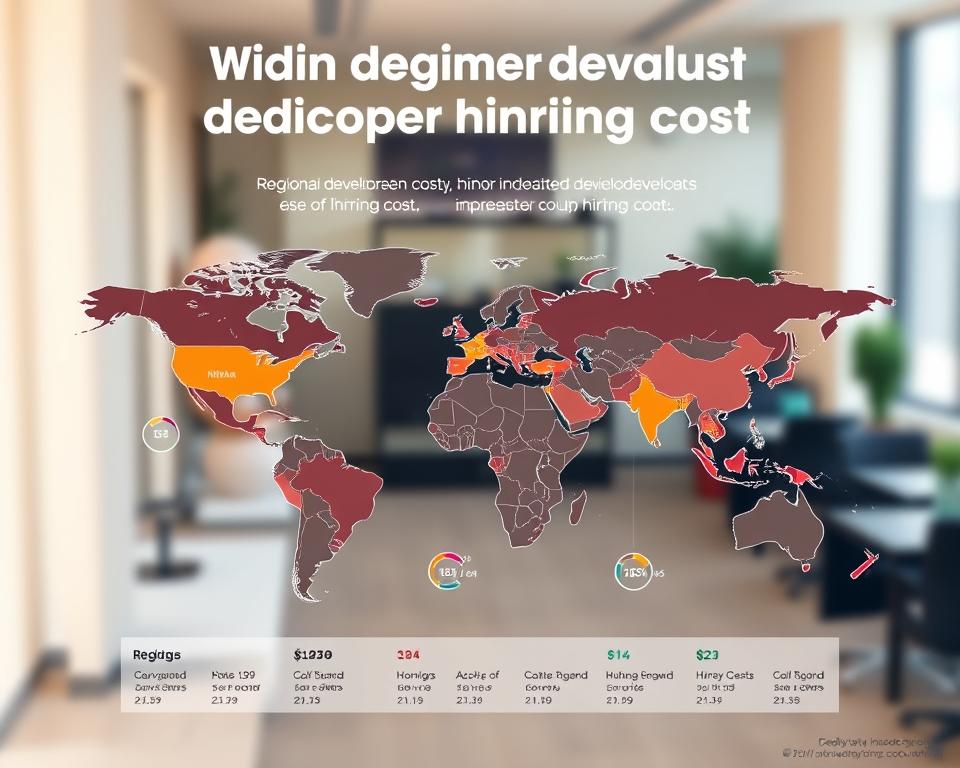
Many factors influence the cost of hiring dedicated developers. These include the local economy, cost of living, and availability of skilled workers. Here’s a look at the average costs in different regions:
- North America: This region has some of the highest rates for dedicated developers. This is because of the high cost of living and strong economy.
- Europe: Europe’s rates vary widely. Western Europe tends to be pricier than Eastern Europe.
- Asia: Countries like India and the Philippines offer lower rates. This makes Asia a favorite for businesses looking to outsource.
- Latin America: This region is becoming more affordable for hiring dedicated developers. Countries like Brazil and Argentina offer good value for money.
It’s important for businesses to understand these regional differences. By knowing the costs in each area, companies can choose the best place to outsource. This helps balance cost with quality of work.
North America Developer Rates
North America, including the United States and Canada, has a wide range of developer rates. This is due to different economic factors. The tech scene in the region, from Silicon Valley to new tech centers, adds to the complexity of costs.
United States Developer Costs by Region
The United States plays a big role in the global tech world. Developer rates change a lot depending on the region. Places like San Francisco, New York, and Seattle have higher costs because of the demand for tech skills and living expenses.

The table below shows the average hourly rates for developers in different U.S. areas.
| Region | Average Hourly Rate |
|---|---|
| West Coast (San Francisco, Seattle) | $75-$125 |
| Northeast (New York, Boston) | $70-$120 |
| Southern States | $55-$95 |
| Midwest | $50-$90 |
Canada Developer Costs
Canada is also a big tech center, with Toronto and Vancouver growing fast. Developer rates in Canada are often lower than in the U.S. But, the quality of life and talent pool make it competitive.
The average hourly rates for developers in major Canadian cities are as follows:
| City | Average Hourly Rate |
|---|---|
| Toronto | $60-$100 |
| Vancouver | $65-$110 |
| Montreal | $50-$90 |
Knowing these regional differences is key for businesses hiring developers in North America. It helps them decide where to set up their development teams.
Western Europe Developer Rates
Developer rates in Western Europe vary due to location and economic conditions. The area includes many countries, each with its own costs for hiring developers.
United Kingdom Developer Costs
The UK is a key tech hub in Western Europe. Costs for developers in the UK change based on location. London is usually pricier than other cities.
Average Hourly Rates in the UK:
| Developer Type | London | Other UK Cities |
|---|---|---|
| Junior Developer | £25-£35 | £20-£30 |
| Mid-Level Developer | £40-£60 | £30-£50 |
| Senior Developer | £80-£120 | £60-£100 |
Germany and Nordic Countries
Germany and the Nordic countries boast strong tech industries. Their developer costs are competitive, with Germany being particularly strong.
Average Hourly Rates in Germany and Nordic Countries:
| Country | Junior Developer | Mid-Level Developer | Senior Developer |
|---|---|---|---|
| Germany | €30-€45 | €50-€75 | €90-€140 |
| Nordic Countries | €35-€50 | €60-€90 | €100-€160 |

France, Netherlands, and Southern Europe
France, the Netherlands, and Southern Europe also have growing tech scenes. Their developer costs vary. These areas offer both urban and rural settings, affecting hiring costs.
Average Hourly Rates in France, Netherlands, and Southern Europe:
| Country | Junior Developer | Mid-Level Developer | Senior Developer |
|---|---|---|---|
| France | €25-€40 | €45-€70 | €80-€130 |
| Netherlands | €30-€45 | €50-€75 | €90-€140 |
| Southern Europe | €20-€35 | €35-€60 | €60-€100 |
Eastern Europe Developer Rates
Eastern Europe is now a top spot for finding affordable developer talent. Countries like Poland and Ukraine have lower costs but still offer great skills. This makes them perfect for businesses wanting to hire developers without breaking the bank.
Poland and Czech Republic
Poland and the Czech Republic are big names in Eastern Europe’s tech scene. Poland, especially, is growing fast in tech, with Krakow and Warsaw leading the way in software development.
Developer Costs in Poland: Developers in Poland charge between $25 and $50 an hour. This price varies based on their experience and the tech they use.
The Czech Republic also has good rates, with hourly costs between $30 and $60. Both countries offer a great mix of cost and quality, making them favorites among European businesses.
| Country | Average Hourly Rate | Monthly Cost for a Full-Time Developer |
|---|---|---|
| Poland | $25-$50 | $4,000-$8,000 |
| Czech Republic | $30-$60 | $5,000-$10,000 |
Ukraine and Romania
Ukraine and Romania are also key players in Eastern Europe’s tech world. Ukraine is known for its skilled developers and low rates.
Developer Costs in Ukraine: Rates in Ukraine start at $15 an hour and go up to $30. This makes it a great choice for businesses watching their budget.
Romania is another good option, with rates between $20 and $40 an hour. Both countries are seeing more outsourcing work because of their skilled developers and business-friendly environments.

Hungary and Bulgaria
Hungary and Bulgaria are the last on our list of Eastern European countries for developer services. Hungary is all about innovation and has seen a lot of tech investment.
Developer Costs in Hungary: Hourly rates in Hungary are between $25 and $45.
Bulgaria, with its low labor costs, offers rates from $15 to $30 an hour. Both countries are good for businesses looking to grow their development teams without spending too much.
Asia-Pacific Developer Rates
The Asia-Pacific region is a hotbed for tech innovation. It offers a wide range of developer costs, from very affordable to high for specialized skills. The rates vary based on experience, technology, and where you are in the region.

India Developer Costs
India is a top spot for finding skilled developers at good prices. Rates there can be between $15 and $50 an hour. Indian developers are experts in many areas, like Java, Python, and cloud computing.
Philippines and Vietnam
The Philippines and Vietnam are also great for outsourcing. They offer good value for money. In the Philippines, rates are $10 to $30 an hour. Vietnam is similar, with rates from $15 to $35 an hour. Both countries are growing in tech, focusing on software and IT.
China, Singapore, and Australia
But, countries like China, Singapore, and Australia have different rates. China’s rates vary from $10 to $50 an hour, depending on location. Singapore and Australia, being more developed, charge more, from $50 to $150 an hour. These countries are known for top-notch development work, especially for complex projects.
The Asia-Pacific region’s varied rates make it a great place for businesses to find developers. Knowing what affects these rates helps companies plan their development budgets better.
Latin America Developer Rates
Latin America is becoming a top spot for tech talent, with great developer rates. The area’s growing tech scene is drawing businesses. They want to hire skilled developers at rates that are often better than in North America or Western Europe.
Brazil and Argentina
Brazil and Argentina lead in Latin America’s tech development. Brazil’s large market and established tech ecosystem attract many. The cost to hire a developer in Brazil can be between $2,500 to $5,000 monthly, based on experience and tech.
Argentina offers rates similar to Brazil, from $2,000 to $4,500 monthly. Both countries have a strong tech presence, making their tech scenes vibrant.

Mexico and Colombia
Mexico and Colombia are key players in Latin America’s tech world. Mexico’s proximity to the US and its growing tech industry make it a favorite for nearshore development. Rates in Mexico range from $2,000 to $4,000 monthly.
Colombia, known for its innovative tech scene, especially in Medellín, offers rates from $1,800 to $3,500 monthly. Both countries are growing in popularity for tech outsourcing.
Chile and Costa Rica
Chile and Costa Rica are known for their stable economies and are becoming tech hubs. Chile’s rates range from $2,200 to $4,200 monthly. Costa Rica’s rates are a bit lower, from $1,800 to $3,800 monthly.
- Developer rates in Latin America are influenced by cost of living, technology demand, and economic conditions.
- Countries with a higher cost of living, like Brazil and Argentina, have higher rates.
- Nearshore locations like Mexico are popular because of their proximity to the US and cultural affinity.
Developer Costs by Programming Language and Technology Stack
Knowing the costs of different programming languages and technology stacks is key for budgeting. The tech stack and programming languages needed for a project greatly affect the cost of hiring developers worldwide.

Frontend Developer Costs
Frontend developers use React, Angular, and Vue.js to build user interfaces and client-side logic. The cost to hire them varies based on their skills in these frameworks.
- React developers are in high demand, with costs ranging from $50 to $150 per hour, depending on experience.
- Angular developers, known for their complexity, can command higher rates, often between $75 to $200 per hour.
- Vue.js developers, while less in demand than React or Angular, still require significant expertise, with hourly rates between $40 to $120.
Backend Developer Costs
Backend developers work on server-side logic, database integration, and API connectivity. They use technologies like Node.js, Python, Java, and PHP.
- Node.js developers are highly sought after, with hourly rates ranging from $50 to $150.
- Python developers, known for their versatility, can earn between $60 to $180 per hour.
- Java developers, with their complex skill set, often command higher rates, between $70 to $200 per hour.
- PHP developers, while still in demand, may see lower rates, typically between $30 to $100 per hour.
Full-Stack Developer Costs
Full-stack developers handle both frontend and backend development. They are highly versatile, but their costs can be higher.
Hourly rates for full-stack developers can range from $75 to $250, depending on their expertise and the technologies they work with.
Mobile App Developer Costs
Mobile app developers specialize in iOS, Android, React Native, and Flutter. Their costs vary based on the platform and technology.
- iOS developers, with their expertise in Swift and Objective-C, can command hourly rates between $70 to $200.
- Android developers, proficient in Java and Kotlin, may see rates between $60 to $180 per hour.
- React Native and Flutter developers, due to their cross-platform capabilities, are increasingly in demand, with rates ranging from $50 to $150 per hour.
A recent industry report highlights, “The choice of technology stack can significantly impact the cost of developer hires. It’s essential to choose the right technologies for your project needs.”
Specialized Developer Roles and Their Costs
Today, specialized developer roles are key in the tech world. Their costs change based on many factors. As more businesses go digital, they need developers with specific skills. This has made hiring these experts more expensive.
DevOps and Cloud Engineers
DevOps and cloud engineers are crucial for software systems to run smoothly. They know how to connect development and operations. They also understand cloud platforms well.
Hiring these experts can cost between $120,000 and over $250,000 a year in the U.S. This depends on their experience and where they are located.
Data Scientists and Machine Learning Engineers
Data scientists and machine learning engineers help businesses understand data and create smart systems. Their skills are needed in many fields.
They can earn between $100,000 and over $200,000 a year. More experienced or those in high-demand places get paid more.
Blockchain and Web3 Developers
Blockchain technology is growing, and so is the need for developers skilled in it. Their knowledge is key for companies using blockchain.
The cost to hire these developers varies. Salaries range from $80,000 to over $180,000 a year. This depends on location and experience.
Cybersecurity Specialists
Cybersecurity specialists protect businesses from online threats. They keep networks, systems, and data safe. They are very important.
They can earn between $90,000 and over $200,000 a year. This depends on their skills and the job’s complexity.
| Specialized Role | Average Annual Salary Range (USD) |
|---|---|
| DevOps and Cloud Engineers | $120,000 – $250,000 |
| Data Scientists and Machine Learning Engineers | $100,000 – $200,000 |
| Blockchain and Web3 Developers | $80,000 – $180,000 |
| Cybersecurity Specialists | $90,000 – $200,000 |
Hiring Models and Their Cost Implications
It’s important to know the different hiring models to figure out the cost of hiring dedicated developers. The model you choose can greatly affect your spending. So, it’s key to look at all your options carefully.
Full-Time Dedicated Developers
Choosing full-time dedicated developers means hiring them as permanent team members. This approach brings stability and ensures they’re always there for your team.
Advantages: Full-time developers commit long-term, blend well with your team, and often do better work because they’re always there.
Cost Implications: You’ll pay for their salary, benefits, training, and equipment. Plus, they might get bonuses and other perks, which add to the cost.
Part-Time and Hourly Engagement
Part-time or hourly hiring is flexible and might save you money. It’s good for projects with changing needs or when you need someone for a short time.
Benefits: This model lets you scale up or down easily and only pay for the hours worked.
Cost Considerations: While it can be cheaper, managing part-time or hourly workers can be tough. You might need to watch over them more to keep quality high.
Project-Based Hiring
Project-based hiring means hiring developers for a specific project. It’s best for projects with clear goals and timelines.
Pros: It gives you a clear plan of work, fixed costs, and makes developers responsible for their results.
Cost Factors: Costs are usually set for the project’s length, but changes can add to the bill.
Staff Augmentation vs. Managed Development Teams
Staff augmentation adds developers to your team for a short time to help with capacity or skills. Managed development teams are full teams working for a service provider.
| Criteria | Staff Augmentation | Managed Development Teams |
|---|---|---|
| Control | You manage the developers directly. | The service provider manages the team. |
| Cost | Costs include developer salaries and benefits. | Costs are typically a fixed project fee or monthly retainer. |
| Flexibility | High flexibility in scaling the team. | Less flexible; the team is usually fixed. |
In summary, the hiring model you pick greatly affects the cost of hiring dedicated developers. Knowing the different models and their costs helps businesses make smart choices that fit their budget and project needs.
Hidden Costs of Hiring Dedicated Developers
Hiring dedicated developers comes with more than just an hourly rate. Many hidden expenses can increase the total cost. These costs can surprise businesses, even if the initial quote seems good.
Recruitment and Onboarding Expenses
Finding the right talent costs a lot upfront. This includes job posting fees, agency fees, and time from your team. Onboarding costs also add up, with training, equipment, and team integration.
Infrastructure, Tools, and Software Licenses
Dedicated developers need specific tools and software to work well. This includes high-performance hardware, project management tools, and software licenses. The costs depend on the technology and team size.
Management and Communication Overhead
Managing a team of developers is a big job. It includes regular meetings, updates, and solving problems. Good communication is key, and tools like Slack or Trello help, but they cost too.
Legal and Compliance Costs
Following labor laws, tax rules, and protecting intellectual property adds to the cost. Businesses must think about legal issues, especially if developers are in different countries. For more on working with a dedicated team, visit Next Big Technology.
Knowing these hidden costs helps businesses budget better for projects. This way, they can avoid surprises and make better hiring decisions.
Freelance Developers vs. Development Agencies vs. In-House Teams
Choosing between freelance developers, development agencies, and in-house teams depends on several factors. These include budget, project complexity, and required expertise. Each option has its advantages and disadvantages, which are crucial to understand for making an informed decision.
Cost Comparison and Value Analysis
The cost is a significant factor when deciding between freelance developers, development agencies, and in-house teams. Freelance developers charge hourly rates that can range from $25 to $100 per hour. This depends on their expertise and location. Development agencies offer a more comprehensive service, with costs varying widely based on the project’s scope and the agency’s reputation.
| Hiring Option | Cost Range | Project Suitability |
|---|---|---|
| Freelance Developers | $25-$100/hour | Small to medium projects |
| Development Agencies | $5,000-$50,000+ | Medium to large projects |
| In-House Teams | Salary + benefits | Long-term, complex projects |
For a detailed guide on hiring app and web development experts, visit Next Big Technology.
Quality, Reliability, and Accountability
Quality, reliability, and accountability vary significantly across these hiring options. Freelance developers can offer high-quality work but may lack the resources and backup that an agency provides. Development agencies typically have a team with diverse skills, ensuring a more comprehensive approach to project development.
“The key to successful project execution lies in understanding the strengths and weaknesses of each hiring option and aligning them with your project needs.”
When to Choose Each Hiring Option
The choice between freelance developers, development agencies, and in-house teams should be based on the project’s specific requirements. Freelance developers are ideal for small, short-term projects or when you need a specific skill set. Development agencies are better suited for larger, more complex projects that require a team with diverse expertise.
In conclusion, understanding the differences between freelance developers, development agencies, and in-house teams is crucial for making an informed hiring decision. By considering factors such as cost, quality, and project requirements, businesses can choose the most appropriate hiring option for their software development needs.
Strategies to Optimize Developer Hiring Costs
Managing costs in developer hiring is key. It’s about using global time zones and building lasting partnerships. These strategies help cut costs without losing quality.
Leveraging Time Zone and Geographic Arbitrage
Time zone arbitrage is a top way to cut costs. It means hiring developers in different time zones. This way, you can work around the clock without extra overtime.
For example, a U.S. company can team up with Asian developers during their day. Then, the U.S. team can take over, speeding up the project.
Building Long-Term Development Partnerships
Creating long-term partnerships with developers saves money. These partnerships mean you understand each other better. You won’t need to spend as much on training new people.
Also, over time, you can negotiate better rates. The developer becomes a key part of your team.
Hybrid Team Models with Mixed Seniority Levels
Using hybrid team models with different levels of experience is smart. It balances costs by mixing junior and senior developers.
- Junior developers do basic tasks at a lower cost.
- Senior developers handle complex tasks that need their expertise.
Using Trial Periods and Phased Hiring
Try trial periods and phased hiring to check if developers fit. This way, you can make sure they’re right for your team before committing.
| Hiring Strategy | Benefits | Cost Impact |
|---|---|---|
| Trial Periods | Check developer skills and fit | Less risk of bad hires |
| Phased Hiring | Grow your team as needed | More control over your budget |
By using these strategies, you can lower your developer hiring costs. You’ll also improve your team’s efficiency and productivity.
Best Practices for Hiring Dedicated Developers
To create a top-notch development team, it’s key to follow the best practices in hiring dedicated developers. This means using a detailed approach. It includes checking technical skills, setting up clear contracts, using the right communication tools, and making sure the team fits well together.
Technical Vetting and Assessment Processes
Technical vetting is a vital step in hiring dedicated developers. It’s about checking if candidates have the right skills for your project. Good technical vetting means:
- Looking at their past work and projects
- Doing coding tests and interviews
- Checking how they solve problems and adapt
For more details on technical vetting, check out our full guide to hiring dedicated developers.
Contract Structures and Payment Terms
Having clear contract structures and payment terms is crucial for working well with dedicated developers. This includes:
- Being clear about the project’s scope, timelines, and what needs to be done
- Setting up how and when payments will be made
- Adding in rules about who owns the project’s ideas and keeping things secret
Communication Tools and Project Management
Using the right communication tools and project management strategies is key for working together smoothly. This means:
- Using tools like Slack, Trello, or Asana for teamwork
- Having regular meetings and updates
- Keeping everything open and clear
Cultural Fit and Team Integration
It’s important to make sure the cultural fit and team integration are right for your project’s success. This includes:
- Checking if the potential hire fits with your team’s culture
- Creating a team that works well together
- Planning activities to help the team bond
By following these best practices for hiring dedicated developers, you can build a team that does great work.
How to Calculate Your Total Cost of Hiring Developers
To plan your budget well, you need to know the total cost of hiring developers. This includes both direct and indirect costs of the hiring process.
Direct Costs Breakdown
Direct costs are what you pay directly for hiring developers. These are:
- Developer salaries or hourly rates
- Recruitment agency fees
- Cost of training and onboarding
- Equipment and software expenses
Here’s a sample breakdown of direct costs for hiring developers:
| Cost Component | Estimated Cost |
|---|---|
| Developer Salary | $60,000 – $100,000 per year |
| Recruitment Agency Fees | 15% – 20% of developer’s first-year salary |
| Training and Onboarding | $1,000 – $3,000 per developer |
| Equipment and Software | $2,000 – $5,000 per developer |
Indirect and Operational Costs
Indirect costs are not directly tied to hiring but still affect the cost of having developers. These include:
- Management and communication overhead
- Project management tools and software
- Office space and utilities
- Other operational expenses
As Forbes points out, “The total cost of owning IT projects includes not just the initial price, but also ongoing maintenance, support, and upgrade costs.”
“The hidden costs of IT projects can be substantial, often exceeding initial estimates by a significant margin.”
ROI Calculation and Budget Planning Framework
To make sure hiring developers is worth it, you need to calculate the ROI. This means comparing the benefits against the total costs.
- Benefits: Increased productivity, improved project quality, and faster time-to-market
- Costs: Direct and indirect costs of hiring developers
By looking at both direct and indirect costs, businesses can make a detailed budget plan. This ensures their projects are successful.
Conclusion
Hiring dedicated developers needs careful thought about costs and factors. Knowing the different pricing models and rates helps businesses plan better. This way, they can make smart choices and stay within their budget.
Looking at experience, skills, and where they are from helps cut costs. Using strategies like time zone arbitrage and building lasting partnerships can also help. For more tips, check out Codiant’s blog.
It’s not just about finding the cheapest option. It’s about finding the right balance between cost and skill for your project. This way, businesses get the most value from their investment in dedicated teams.