







In today’s fast-paced digital world, businesses are always looking to improve their mobile app development skills. One smart way to do this is by adding skilled professionals to their teams. These experts can bring new ideas and make things more efficient.
Getting Flutter developers on board can really change the game for companies wanting top-notch, cross-platform mobile apps. By adding these experts, businesses can use Flutter’s strong framework. This means faster app development and better user experiences.
As more people want mobile apps, team augmentation is becoming a key strategy for businesses. By working with the right experts, companies can hit their mobile app goals better.
Table of Contents
Key Takeaways
- Boost your mobile app development skills with skilled Flutter developers.
- Use Flutter’s strong framework for quicker app making and smoother user experiences.
- Stay ahead in the market by using team augmentation strategies.
- Reach your mobile app goals more effectively with the right team.
- Enhance your business’s digital presence with high-quality, cross-platform mobile apps.
What Is Flutter and Why It Matters for Mobile Development
Flutter is changing the game in mobile app development. It lets developers make apps for mobile, web, and desktop from one codebase. Google developed Flutter as an open-source UI software development kit.
Flutter makes app development easier without losing performance. It offers a wide range of widgets and customizable UI components. This helps create beautiful apps that work well on different platforms. It’s great for businesses that want to release apps on both iOS and Android without extra work.

Flutter’s fast development cycle is a big plus. Its hot reload feature lets developers see changes instantly, without restarting the app. This makes app development and debugging much quicker, perfect for businesses with tight deadlines.
Flutter also has a big community of developers. They add new packages and plugins, helping Flutter grow. Google’s support ensures Flutter keeps getting better, meeting the needs of developers and businesses.
“Flutter has been a game-changer for our mobile app development. The ability to deploy on both iOS and Android from a single codebase has saved us time and resources.” –
Here are the main benefits of using Flutter for mobile app development:
- Cross-platform development capability
- Fast development cycle with hot reload
- Rich set of customizable UI widgets
- Growing community and Google’s support
- High-performance applications
Using Flutter helps businesses meet their mobile app goals more efficiently. Whether it’s creating a new app or updating an old one, Flutter is key to the future of mobile development.
Understanding Mobile App Team Augmentation
Team augmentation changes how businesses tackle mobile app development. It lets companies bring in specialized skills when needed. This way, projects get done well and on time.
How Team Augmentation Works
It’s about adding outside experts to your team to cover skill gaps. This is great for projects needing Flutter development or for when workloads get too high. Roles like software developers, QA testers, and UX/UI designers benefit from temporary help.
First, you figure out what your project needs. Then, you find a service provider to get the right people. These new team members work well with your team, making sure everything runs smoothly.

The Team Augmentation Advantage
There are many good things about team augmentation. It helps projects move faster, improves quality, and saves money. It also lets companies adjust their team size as needed.
Another big plus is getting talent from all over the world. You’re not stuck by where you are. This means you can find the best people for the job, leading to better results.
| Advantages | Description | Benefits |
|---|---|---|
| Specialized Skills | Access to experts with specific knowledge | Improved project quality, faster completion |
| Flexibility | Ability to scale teams according to project needs | Cost savings, adaptability to changing project requirements |
| Global Talent Access | No geographical limitations in finding talent | Best available talent, diverse perspectives |
Key Benefits of Hiring Flutter Developers Through Team Augmentation
Team augmentation is a smart way to hire Flutter developers. It gives businesses the flexibility and skills they need to win in today’s market. This model helps companies boost their mobile app development without the hassle of finding employees.

Cost Efficiency and Budget Optimization
Hiring Flutter developers through team augmentation saves money. Businesses only pay for what they need, when they need it. This way, they avoid the costs of full-time employees, training, and equipment.
- Reduced overhead costs
- No long-term employment commitments
- Flexibility to scale up or down as project needs dictate
Access to Global Talent Pool
Team augmentation opens up a global talent pool of skilled Flutter developers. This lets businesses find top talent anywhere, using their skills to make projects succeed.
By tapping into a global talent pool, companies can:
- Find specialists with specific skill sets
- Benefit from diverse perspectives and experiences
- Enhance the quality of their mobile app development projects
Scalability and Flexibility
Team augmentation is great for businesses with changing project needs. It lets them grow their team for big launches or shrink it during slow times. This model makes it easy to adjust the development team.
“The ability to scale our development team quickly was crucial for meeting our project deadlines. Team augmentation made it possible to adapt to changing requirements without compromising on quality.” –
By using team augmentation, businesses get a flexible, cost-effective, and skilled team. This helps drive their mobile app development projects to success.
Essential Skills to Look for When You Hire Flutter Developers
When you hire Flutter developers, it’s key to find the right skills for your app project. Modern apps are complex, needing more than just basic coding skills.
Core Technical Competencies
Flutter developers need strong skills to build and keep up complex apps. Focus on Dart programming and state management.
Dart Programming Mastery
Dart is Flutter’s language. Knowing Dart well is crucial for fast, scalable apps. Look for developers who know Dart’s ins and outs.
State Management Expertise
State management is vital in Flutter apps. It’s about how the app’s state changes. Developers should know various methods like Provider and Riverpod.
Mobile Development Knowledge
Flutter developers also need to understand mobile app development. They should know how to integrate with different platforms for a smooth user experience.
Platform-Specific Integration
Even with Flutter’s cross-platform abilities, sometimes specific integration is needed. Developers should know how to use native modules and optimize for Android and iOS.

The table below lists the key skills to look for in Flutter developers:
| Skill Category | Specific Skills | Importance Level |
|---|---|---|
| Core Technical Competencies | Dart Programming Mastery | High |
| Core Technical Competencies | State Management Expertise | High |
| Mobile Development Knowledge | Platform-Specific Integration | Medium |
By looking for these skills, you can make sure your Flutter team can create top-notch, scalable apps.
Flutter Developer Experience Levels: What Your Project Needs
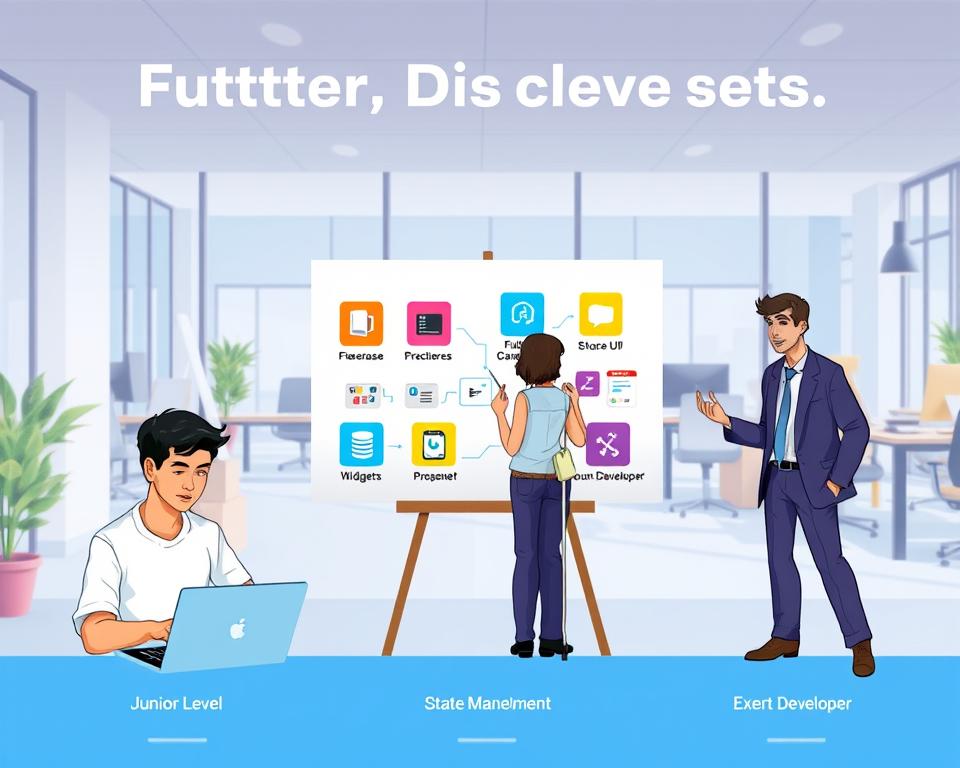
Finding the right Flutter developer experience level is key for project success. The experience of developers greatly affects the quality, speed, and final result of your Flutter project.
Junior Flutter Developers
Junior Flutter developers have less than two years of experience. They are often new to Flutter or recent graduates. They bring fresh ideas and a willingness to learn, which is great for projects needing guidance.
They’re best for projects with clear tasks and lots of support. Junior developers can do simpler tasks and are often cheaper, fitting well within tight budgets.
Mid-Level Flutter Developers
Mid-level Flutter developers have two to five years of experience. They know Flutter and Dart well, having worked on many projects. This experience helps them solve problems and understand mobile app development better.
Mid-level developers are flexible and can tackle complex tasks. They can design UI/UX, integrate APIs, and improve app performance. They’re a good match for most projects, balancing cost and skill.
Senior Flutter Developers
Senior Flutter developers have over five years of experience. They know Flutter, Dart, and mobile development well. They’re not just good at coding but also have strong design and architecture skills. They can lead projects and teach junior developers.
For big, important projects or apps that need to grow and stay easy to maintain, choose senior developers. They can design the app, manage the team, and make sure everything is done right.
For more information on hiring Flutter app developers, check out this detailed guide.
Hire Flutter Developers – Mobile App Team Augmentation: The Complete Process
Hiring Flutter developers for your team is a detailed process. It starts with knowing what you need for your project. Then, it moves to adding new team members to your workflow.
Defining Your Project Requirements and Scope
First, you need to know what your project needs. This means figuring out the skills you need, the work scope, and what you want to achieve. DevTeam.Space can help by matching you with the right Flutter developers. They have experience with AI features and more.
To get your project requirements right, think about these:
- What features and functions do you want in your app?
- What platforms do you need to support?
- What’s your timeline and budget?
Selecting the Right Augmentation Partner
Finding the right team augmentation partner is key. Look for someone with a good track record and skilled Flutter developers. Check their expertise, past work, and what clients say.
| Criteria | Description | Importance Level |
|---|---|---|
| Technical Expertise | Proficiency in Flutter and related technologies. | High |
| Portfolio | Previous projects and success stories. | Medium |
| Client Testimonials | Feedback from previous clients. | High |
Interviewing and Technical Vetting
After finding potential developers, interview and vet them. This step is important to make sure they have the right skills.
Focus on these during interviews:
- Check their Flutter knowledge.
- Test their problem-solving skills with coding challenges.
- Look at their past projects.
Onboarding and Team Integration
Once you’ve picked the right developers, onboard and integrate them. Good onboarding helps them understand your project and team.

- Give them all the project details.
- Have orientation sessions to introduce them to the team.
- Set clear expectations and communication channels.
Team Augmentation vs. Outsourcing vs. In-House Hiring
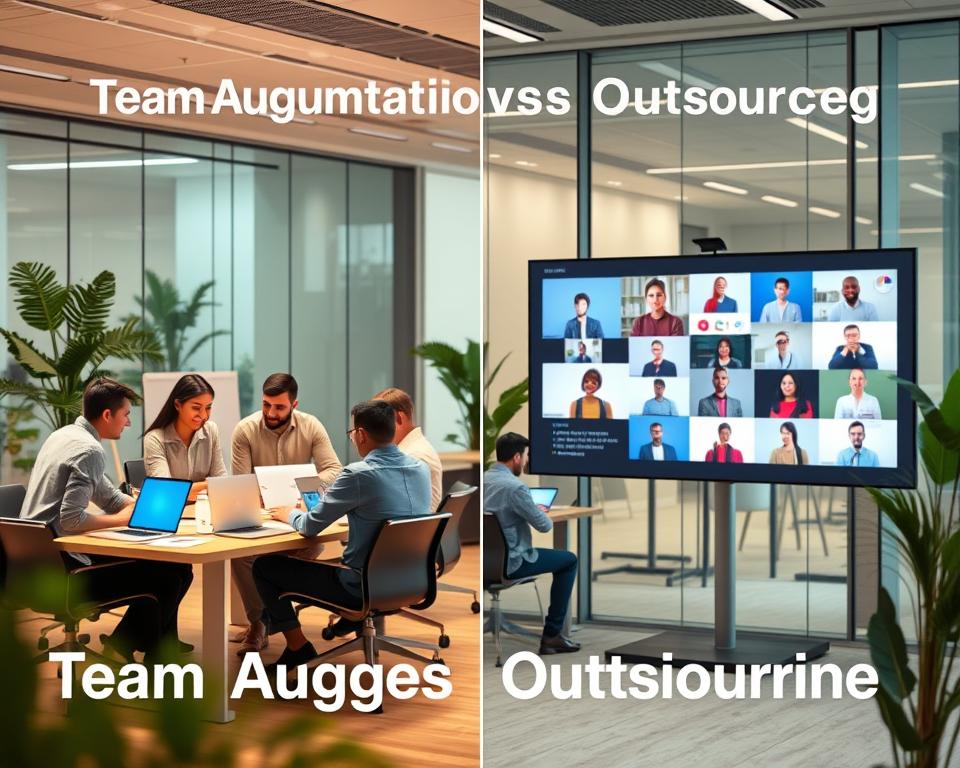
Businesses often face a big decision in mobile app development. They must choose between team augmentation, outsourcing, or hiring in-house. Each option has its pros and cons, and knowing these differences is crucial.
Team Augmentation Advantages
Team augmentation brings many benefits. It offers flexibility and scalability. You can quickly adjust your team size as your project grows or shrinks. This method also lets you tap into a global talent pool, finding top developers anywhere.
Another big plus is cost efficiency. Hiring developers on a project basis saves you money. You avoid long-term costs like benefits and training.
When Outsourcing Makes Sense
Outsourcing is good for businesses without the right skills or resources. A reputable development agency can help you create a top-notch app. This way, you can leverage their expertise and experience.
“Outsourcing can be a strategic move for companies looking to accelerate their mobile app development without investing in long-term resources.”
But, outsourcing needs careful thought. You must pick the right vendor, manage the project well, and communicate clearly. Setting clear expectations is key to a successful project.
In-House Hiring Considerations
In-house hiring gives you direct control over the development process. It also means you can work closely with your team. But, it’s costly. You’ll need to invest in recruitment, training, and infrastructure.
When thinking about in-house hiring, weigh the benefits of control and teamwork. Consider the costs and challenges of building and keeping a development team.
Cost Considerations When Hiring Flutter Developers
When hiring Flutter developers, cost is a big factor. It’s important for businesses to know how much they’ll spend. This helps them stay within their budget and find the right talent.

Global Rate Benchmarks by Region
The cost of hiring Flutter developers changes by region. Living costs, demand, and expertise levels all play a part.
North American Rates
In North America, especially the U.S., rates are high. The average hourly rate is between $75 and $150. A study shows top talent in the U.S. can cost more.
Eastern European Rates
Eastern Europe offers lower rates for Flutter developers. Countries like Poland, Ukraine, and Romania have skilled developers at lower costs. Rates here are $25 to $50 per hour, making it a budget-friendly option.
Asian Market Rates
The Asian market, including India and Vietnam, is also cost-effective. Rates start at $15 to $30 per hour. But, consider time zone and language differences.
“With competitive rates starting near $25.5 per hour, you get high-value, remote FlutterFlow development without a lengthy search.”
Pricing Models and Contract Structures
It’s key to know the different pricing models and contract types. Common ones include:
- Hourly Rate: Charging per hour worked, great for projects with changing needs.
- Fixed Price: A set amount for the whole project, offering cost certainty but needs a clear scope.
- Retainer: A recurring fee for ongoing work, ensuring a steady flow of projects.
Choosing the right model depends on the project, client needs, and developer preferences.
How to Effectively Integrate Augmented Flutter Developers Into Your Team
To get the most out of your augmented team, focus on seamless integration and onboarding. Adding augmented Flutter developers to your team can be tricky. But with the right strategies, you can make the transition smooth and enjoy the benefits of team augmentation.
Onboarding Best Practices
A good onboarding process is key to getting new team members up to speed fast. Here are some best practices to consider:
- Provide comprehensive documentation about your project, including its goals, timelines, and technical requirements.
- Organize an orientation session to introduce the new developers to your team’s workflow, tools, and communication channels.
- Assign a mentor or buddy to guide the new developers through the initial stages and answer any questions they may have.
- Set clear expectations regarding roles, responsibilities, and performance metrics.
For more insights on hiring experienced Flutter developers, you can visit Next Big Technology for valuable resources.
Building Team Cohesion
Building a cohesive team is essential for successful project execution. Here are some strategies to foster team cohesion:
- Encourage regular team meetings and stand-ups to keep everyone aligned and informed.
- Promote a culture of collaboration and open communication.
- Organize team-building activities to help developers get to know each other beyond work-related topics.
- Recognize and reward outstanding performance to boost morale and motivation.
Effective integration of augmented Flutter developers can significantly enhance your team’s capabilities. By following these best practices, you can ensure a seamless onboarding process and build a cohesive team that delivers high-quality results.
| Integration Strategy | Description | Benefits |
|---|---|---|
| Comprehensive Onboarding | Detailed documentation and orientation | Faster ramp-up, reduced errors |
| Mentorship Program | Assigning a mentor for guidance | Improved knowledge transfer, better support |
| Regular Team Meetings | Frequent stand-ups and updates | Enhanced collaboration, aligned goals |

Managing Remote Flutter Development Teams
Managing remote Flutter teams is key to making high-quality mobile apps on time and on budget. With more tech jobs going remote, companies need to change how they manage teams. This ensures everyone works well together and gets things done.
Communication and Collaboration Tools
Good communication and teamwork are the heart of any remote team. For Flutter teams, this means using tools for talking, managing projects, and keeping track of changes.
- Communication Platforms: Slack or Microsoft Teams help with quick messages, video chats, and sharing screens. This keeps everyone connected and on the same page.
- Project Management Tools: Jira, Trello, or Asana help organize tasks, track progress, and set deadlines. This keeps projects moving forward.
- Version Control Systems: Git and GitHub or GitLab are key for managing code. They let many developers work on the same project without problems.
Performance Tracking and Accountability
To make sure remote Flutter developers meet their goals, you need to track their performance and hold them accountable. This means setting clear goals, watching how they do, and giving feedback often.
| Performance Metric | Description | Tracking Tool |
|---|---|---|
| Code Quality | Following coding standards and best practices | SonarQube, CodeFactor |
| Task Completion Rate | How many tasks are done on time | Jira, Trello |
| Code Review Feedback | How good and helpful code review feedback is | GitHub, GitLab |
By using these strategies and the right tools, businesses can manage their remote Flutter teams well. This leads to high productivity and quality in mobile app projects.
Common Challenges in Flutter Team Augmentation and How to Overcome Them
Adding Flutter developers to a team can face challenges like communication issues and code quality problems. As more companies use Flutter for apps, it’s key to know these problems and how to fix them.
Overcoming Communication Barriers
Good communication is vital for any project’s success. With remote Flutter developers, communication barriers can pop up due to time zone, language, or cultural differences.
“The art of communication is the language of leadership.” – James Humes
To beat these barriers, you should:
- Use tools like Slack or Microsoft Teams for clear communication.
- Have regular video meetings for face-to-face talks and team unity.
- Set clear goals and expectations to avoid confusion.
For example, a company wanting to hire Flutter developers can start by having a strong onboarding process. This should include detailed project briefings and introductions to the team.
Ensuring Code Quality and Standards
Keeping code quality and standards high is crucial for any project. When adding new team members, it can be hard to make sure they follow the coding rules.
| Code Quality Aspect | Best Practices |
|---|---|
| Code Reviews | Regular code reviews to catch errors and ensure adherence to coding standards. |
| Coding Standards | Document and share coding standards with the team to maintain consistency. |
| Automated Testing | Implement automated testing to reduce manual errors and improve code reliability. |
By following these best practices, teams can keep code quality high, even with new members.
Managing Knowledge Transfer
Knowledge transfer is key when adding to a team. It’s important to make sure the new team members’ knowledge is shared well with the existing team for project success.
Good ways to share knowledge include:
- Pair programming for hands-on learning.
- Documenting project architecture, code, and processes.
- Regular sessions and workshops for knowledge sharing.
By using these methods, companies can tackle the usual problems of Flutter team augmentation. This ensures projects are successful.
Industries and Use Cases for Flutter Mobile App Development
Mobile technology is getting better, and Flutter is leading the way in app development. It’s great for making apps that work on many devices. This makes it a top pick for companies wanting top-notch apps.
E-Commerce and Retail Applications
Flutter is big in e-commerce and retail for making apps that people love. It’s good at making apps look great and work smoothly. This helps businesses get more customers and sell more.
Key benefits for e-commerce and retail include:
- Enhanced user experience through smooth animations and transitions
- Faster development cycles due to Flutter’s hot reload feature
- Consistent branding across both iOS and Android platforms
Fintech and Banking Solutions
Fintech and banking use Flutter for apps that are safe and fast. Its strong design and ability to add complex tools are perfect for these areas.
“Flutter’s ability to deliver high-quality, natively compiled applications makes it a compelling choice for fintech companies looking to provide secure and reliable mobile banking solutions.”
Key advantages for fintech and banking include:
- High-security standards through native compilation
- Complex financial transaction handling
- Customizable UI to meet stringent brand guidelines
Healthcare and Telemedicine
In healthcare and telemedicine, Flutter helps make apps for better patient care. It’s good at handling tough tasks and follows important health rules.
Notable applications include:
- Telemedicine platforms with integrated appointment scheduling
- Patient management systems with secure data storage
- Health monitoring apps with real-time data analytics
As Flutter gets better, more industries will use it. This will help businesses keep up with the mobile world.
Evaluating Flutter Development Agencies and Talent Providers
Finding the right Flutter development agency or talent provider is key to a successful mobile app project. With many choices, knowing what to look for is crucial.
Key Evaluation Criteria
When checking out Flutter development agencies and talent providers, focus on a few important things. These include:
- Technical Expertise: Make sure they know Flutter well and have used the right tools and technologies.
- Portfolio and Case Studies: Look at their past work to see if they can deliver quality projects.
- Client Testimonials and Reviews: Check what others say about their reliability, communication, and meeting deadlines.
- Development Process and Methodologies: Understand how they work, including Agile, Git, and testing.
- Support and Maintenance: See if they can help with updates and fixing issues after the app is built.
Questions to Ask Potential Partners
To really get to know a Flutter development agency or talent provider, ask the right questions. Some important ones include:
- Can you show me some Flutter projects you’ve done, and what was your role?
- How do you keep up with Flutter and related tech?
- What’s your development process, and how do you ensure quality?
- How do you communicate and work with clients, especially if you’re remote?
- What support and maintenance do you offer after the app is built?
By carefully looking at Flutter development agencies and talent providers, and asking the right questions, businesses can choose wisely. This leads to successful mobile app projects.
Future of Flutter Development and Team Augmentation Trends
Flutter’s popularity keeps growing, changing the mobile app development world. More businesses are using it, leading to a higher need for Flutter experts. Team augmentation is now a key strategy for companies wanting to grow their teams fast with skilled people.
Flutter’s future depends on its ability to keep up with new tech and trends. Thanks to Google’s support and a big community, Flutter is set to stay a top choice for apps. Cross-platform development is getting more important as companies want to reach more users with their apps.
Another big trend in Flutter is adding Artificial Intelligence (AI) and Machine Learning (ML) to apps. As Flutter grows, we’ll see more tools that make app making easier. For companies wanting to hire app developers, knowing these trends is key.
Team augmentation trends are moving towards more flexible and remote work. With more people working from home, companies are open to global talent. This change is making companies look for better ways to work together and manage projects.
Looking ahead, Flutter will keep being a big part of the app world. By keeping up with new trends and tech, businesses can stay ahead in a tough market.
Conclusion
Hiring Flutter developers can really boost your app development. They use Dart and Flutter’s rich widget library. This helps create top-notch apps for Android, iOS, web, and desktop.
For more on why Flutter developers are great, check out this detailed analysis. Adding Flutter experts to your team can help you grow, save money, and get apps out faster. As more people want apps that work on many platforms, using Flutter is a smart choice for businesses.