






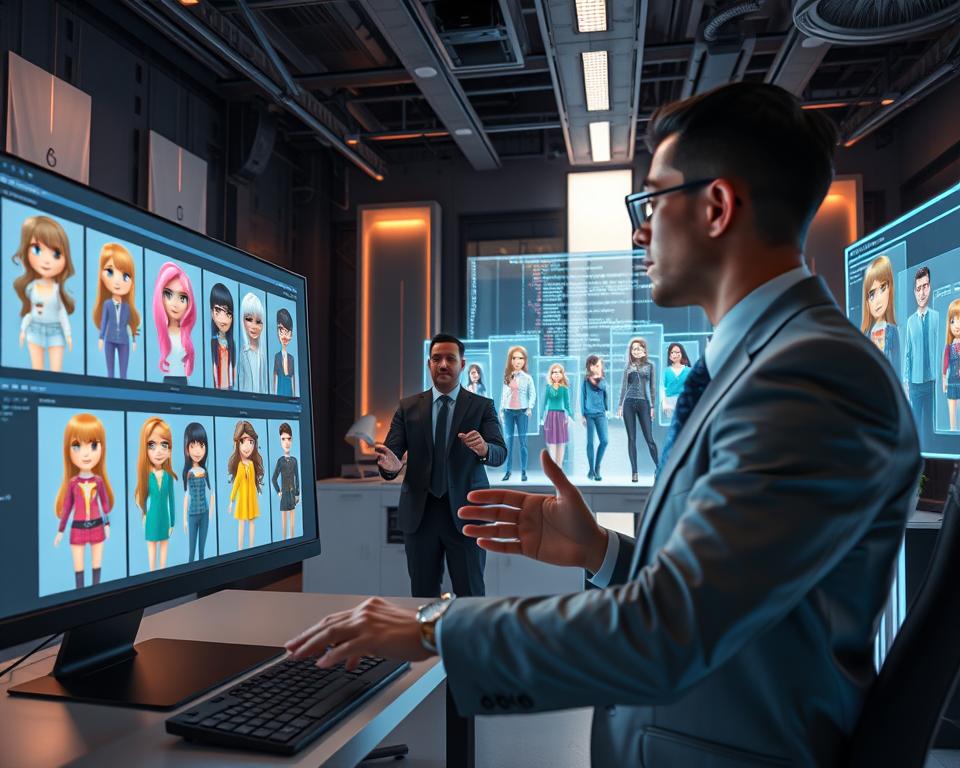
The rise of digital avatar creation is changing how businesses talk to customers. With personality replication technology, companies can now offer personalized experiences. These experiences mimic human conversations and behaviors.
This new tech has big impacts across many industries. It lets businesses give unique and fun experiences. As AI clone app development grows, we’ll see even more cool uses.
Table of Contents
Key Takeaways
- Digital avatars can revolutionize customer interactions
- Personality replication technology enables human-like conversations
- AI clone app development has vast industry applications
- Personalized experiences drive business engagement
- New use cases are emerging with advancements in AI clone technology
What Are AI Personality Clone Apps
AI-driven personality clones are changing how we interact online. These apps use advanced AI to create digital beings that feel like real people. This makes our online experiences much better.

Defining Digital Personality Replication
Digital personality replication makes digital beings act like humans. This technology is changing many fields, from customer service to entertainment. It makes interactions more fun and personal.
Key aspects of digital personality replication include:
- Advanced conversational capabilities
- Emotional intelligence integration
- Voice and speech pattern analysis
Experts say, “Creating digital beings with human-like personalities is a game-changer. It makes online interactions more natural and enjoyable.”
The Evolution from Chatbots to Personality Clones
Chatbots have evolved into AI personality clones. Early chatbots were basic and lacked a personal touch. Now, AI clones can understand and answer complex questions.
This change is thanks to better natural language processing and machine learning. AI clones offer a more personalized experience than ever before.
“The future of digital interaction lies in creating entities that can understand and replicate human emotions, making interactions more natural and engaging.”
Real-World Examples of Personality Clone Technology
AI personality clone technology is used in many ways. Here are a few examples:
| Application | Description |
|---|---|
| Virtual Assistants | AI-powered assistants that can perform tasks and provide information in a personalized manner. |
| Customer Service Bots | Advanced chatbots that can handle customer inquiries with a human-like touch. |
| Digital Legacy Preservation | Platforms that allow individuals to preserve their digital legacy by creating a digital clone of themselves. |
These examples show how versatile and powerful AI personality clone technology is. It’s being used in many industries.
How AI Personality Cloning Technology Works
To understand AI personality cloning, we need to look at its main parts. This technology uses advanced tools to make AI act like humans.
Natural Language Processing and Understanding
Natural Language Processing (NLP) is key to AI personality cloning. It lets the AI get and understand human language. NLP uses special algorithms to break down language into parts it can use.
This part is vital for making AI that can talk to us in a way that feels real. It does this by:
- Tokenization: breaking down text into individual words or tokens
- Part-of-speech tagging: identifying the grammatical category of each word
- Named entity recognition: identifying specific entities like names and locations
Machine Learning Models for Personality Capture
Machine learning models help capture what makes us unique. They learn from big datasets to understand our personalities.
Deep Learning Neural Networks
Deep learning neural networks are great at finding complex patterns. They have many layers that help the AI learn and show off our personality’s details.
Transformer-Based Architectures
Transformer-based architectures have changed NLP a lot. They’re good at handling sequential data, which is key for AI to talk like us.
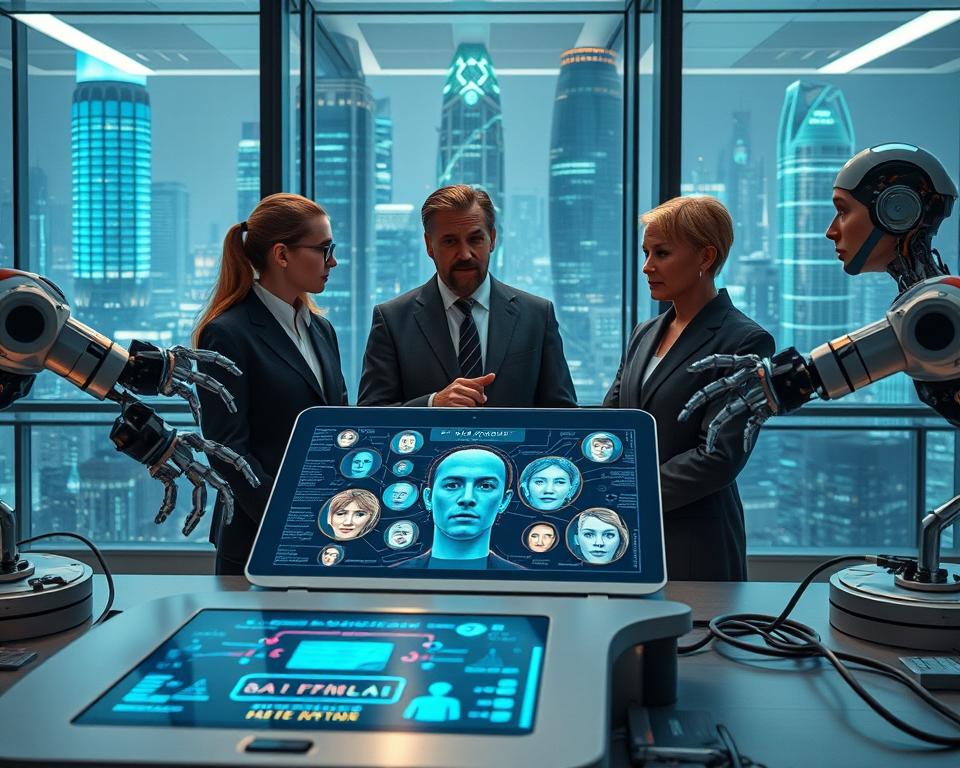
Voice and Speech Pattern Analysis
Understanding a person’s voice is also important. This lets the AI mimic how we speak.
This includes:
- Pitch and tone analysis
- Speech rate and rhythm analysis
- Accent and dialect identification
Behavioral Pattern Recognition Systems
Behavioral pattern recognition systems help the AI act like us. They look at how we interact, what we like, and our habits.
By combining these technologies, AI apps can make digital versions of us. These versions can talk and act like us in a very realistic way.
Essential Features of AI Personality Clone Apps
AI personality clone apps work well because of their advanced chat skills and key features. These features help them offer personalized experiences to users.
These apps aim to mimic human-like talks, making them more fun and real. They use different technologies to get what users say and respond in a way that feels right.
Advanced Conversational Capabilities
AI personality clone apps are great at talking thanks to Natural Language Processing (NLP) and machine learning. These tools help the AI understand and answer complex questions.
They can have contextual conversations, remembering what happened before. This makes the chat more personal and fun.
Voice Synthesis and Replication Technology
Being able to make and copy human voices is key. This lets AI personality clones talk to users in a way that feels more personal.
This tech uses complex algorithms to mimic human speech. It makes talking to AI personality clones feel more natural.
Emotional Intelligence Integration
Emotional intelligence is important for AI personality clone apps. It lets them understand and respond to how users feel, making interactions more empathetic.
They use advanced tech to recognize and respond to emotions. This makes their interactions more supportive.
Memory and Context Retention Systems
Memory and context systems are crucial for a smooth user experience. They let AI personality clones remember past talks and keep the conversation going smoothly.
By remembering what happened before, AI personality clones can give more relevant answers. This makes users more engaged and happy.
| Feature | Description | Benefit |
|---|---|---|
| Advanced Conversational Capabilities | Sophisticated NLP and machine learning algorithms | More natural and engaging interactions |
| Voice Synthesis and Replication | Mimics human voice tone, pitch, and cadence | Personalized and relatable communication |
| Emotional Intelligence Integration | Sentiment analysis and emotional recognition | Empathetic and supportive interactions |
| Memory and Context Retention | Remembers previous interactions and maintains context | Seamless and personalized user experience |
AI Personality Clone App Development Process
Creating AI personality clone apps is a detailed process. It starts with planning and goes through several key steps. These include finding out what the app will do, testing it, and making sure it works well.
Discovery and Strategic Planning Phase
The first step is figuring out what the app will do and who it’s for. Defining clear objectives is key. This helps make an app that meets user needs and is unique.
- Identify the app’s primary function and goals
- Determine the target audience and their preferences
- Outline the key features and functionalities
Data Collection and Preparation
Gathering data is a crucial part of making an AI app. The quality and amount of data affect how well the AI works.
Text-Based Data Gathering Methods
To get the data, you need to collect written content. This can be social media posts, emails, and other written communications.
Audio and Video Sample Collection
You also need audio and video to capture a person’s voice and speech. High-quality recordings are important for a realistic clone.

Model Training and Fine-Tuning Procedures
After getting the data, you train the AI model. This uses machine learning to teach the AI to mimic the desired traits.
- Train the model using the collected data
- Fine-tune the model to improve accuracy and performance
- Continuously update the model with new data to maintain relevance
Testing and Quality Assurance Protocols
The last step is testing and quality assurance. This makes sure the app works right and is easy to use.
- Conduct thorough testing of the app’s features and functionalities
- Identify and fix any bugs or issues
- Ensure compliance with relevant standards and regulations
By following these steps, developers can make AI apps that are not just functional but also fun and lifelike.
Technical Requirements and Infrastructure Needs
Creating AI personality clone apps needs careful planning. A strong infrastructure is key to handle the complex tasks involved. This ensures the apps work well.
Hardware and Computing Resources
Building AI apps requires a lot of hardware and computing power. High-performance GPUs and CPUs are crucial for training AI models. They help in processing complex data quickly.
| Hardware Component | Description | Importance Level |
|---|---|---|
| High-Performance GPUs | Accelerates the training of AI models | High |
| Multi-Core CPUs | Handles complex computations and multitasking | High |
| Ample RAM | Ensures smooth operation during model training | Medium |
Software Frameworks and Development Tools
Software frameworks are vital for AI app development. TensorFlow and PyTorch are top picks. They are flexible and have strong community support.
TensorFlow and PyTorch Implementations
TensorFlow and PyTorch are great for AI tasks. TensorFlow is scalable. PyTorch is easy to use and quick to prototype.
GPT-Based Models and Alternatives
GPT models excel in natural language tasks. They can understand and create text like humans. BERT and RoBERTa also offer top-notch language skills.

Cloud Services and Scalability Solutions
Cloud services are essential for AI app scalability. They manage traffic and user loads. AWS, Google Cloud, and Azure offer solutions for computing, storage, and databases.
Data Storage and Security Infrastructure
Data security is crucial for AI apps. Protecting user data is a top priority. Encryption, access controls, and regular audits keep data safe.
Use Cases and Applications Across Industries
AI Personality Clone Apps are changing many industries. They make customer experiences better and help businesses work more smoothly. This is true for many different sectors.
Entertainment and Digital Content Creation
In entertainment, these apps create digital avatars for movies and games. They can look, sound, and act like real people. This opens up new ways to make content.
For example, a digital clone of a famous person can be in educational videos or museum shows. It makes learning fun and interactive.
Customer Service and Virtual Assistance
AI Personality Clone Apps are changing customer service. They offer help any time of day. These virtual helpers can answer many questions, from simple to complex.
This makes customers happier and helps human helpers do less work. Big companies like Amazon and Apple are already using this tech.

Education and Training Applications
In schools, these apps make learning more personal. They adjust to how each student learns best. This makes learning more fun and effective.
For instance, an AI clone of a historical figure can teach history in a new way. It makes learning more engaging.
Healthcare and Mental Wellness Support
AI Personality Clone Apps are also helping in healthcare. They offer therapy and support to patients. It’s a safe place for people to share their feelings.
This is especially good for those who don’t want to talk to a real therapist. It’s a non-judgmental space.
Personal Digital Legacy Preservation
Another important use is preserving personal legacies. These apps create digital copies of people. This way, their personality, knowledge, and experiences can live on.
It’s a meaningful way for families to remember their loved ones. It keeps their memory alive for future generations.
Benefits of Implementing AI Personality Clone Technology
AI personality clone technology brings many benefits. It makes user experiences better and helps businesses run smoother. By using this tech, companies can talk to customers in a more personal way and make their processes more efficient.
Personalized User Experiences at Scale
AI personality clones are great at giving personalized experiences to lots of people at once. They use smart algorithms to understand what each user wants and respond in a way that feels just right.

24/7 Availability and Instant Response
AI personality clones work all the time, so users get answers right away. This instantaneity makes users happy and helps human customer support agents not have to work as hard.
Cost Efficiency for Businesses
Using AI personality clones can save businesses a lot of money. By automating customer support and other tasks, companies can cut down on costs.
Enhanced User Engagement and Retention
The personalized touch of AI personality clones makes users more engaged. When a system gets what you need and responds well, you’re more likely to stick around.
| Benefit | Description | Impact |
|---|---|---|
| Personalized Experiences | Tailored interactions based on user data | Increased user satisfaction |
| 24/7 Availability | Instant responses to user queries | Reduced workload on human support |
| Cost Efficiency | Automation of customer support | Reduced operational expenses |
| Enhanced Engagement | Personalized interactions | Increased user retention |
Challenges in Developing AI Personality Clone Apps
Creating AI personality clone apps is tough due to several big issues. As more people want these apps, it’s important to know what challenges come with them. This knowledge helps in making and using these apps well.
Data Quality and Quantity Requirements
Getting good data to train AI models is a big challenge. Data quality is key because it affects how well the AI works. The data needs to be varied, well-labeled, and match the app’s purpose.
“The quality of the data used to train AI models directly impacts their performance,” experts say. It’s hard to make sure the data is unbiased and shows the right personality traits.
Capturing Nuanced Personality Traits
It’s hard to catch the fine details of a person’s personality. You need smart machine learning to grasp and mimic human behavior and speech. Emotional intelligence is key for a believable AI personality.

Maintaining Consistency Across Interactions
Keeping the AI personality consistent is crucial for a good user experience. It needs smart algorithms that remember past talks. This makes the AI seem real and helpful.
- Implementing robust context retention mechanisms
- Ensuring consistent tone and language usage
- Adapting to user feedback and preferences
Technical Complexity and Resource Demands
Building AI personality clone apps is very technical and needs a lot of resources. It involves natural language processing and voice synthesis, among other things. The skills and tools needed are vast.
As AI tech gets better, solving these problems is essential. By tackling these issues, developers can make apps that are more advanced and fun to use.
Ethical and Legal Considerations
AI personality clone apps raise many ethical and legal issues. These issues affect developers, users, and regulators. It’s important to understand and solve these problems as these technologies become more common.
Consent and Permission Requirements
Getting consent from people whose personalities are cloned is key. It’s important to tell them how the AI clone will be used. Also, who will see it and how their privacy will be protected.
Privacy and Data Protection Compliance
AI clone apps deal with a lot of personal data. Keeping this data private and following the law is crucial. Developers must follow rules like the GDPR in the EU and the CCPA in California, USA.
GDPR and CCPA Requirements
The GDPR and CCPA have strict rules for data privacy. For example, the GDPR needs clear consent for data use. The CCPA lets people know what data is collected and opt-out of its sale.
| Regulation | Key Requirements | Implications for AI Clones |
|---|---|---|
| GDPR | Explicit consent, data minimization, right to erasure | Must get clear consent for data use in AI clones, limit data collection, and allow data deletion. |
| CCPA | Right to know, right to opt-out of sale, right to delete | Must tell users about data collection, offer opt-out options, and delete data on request. |
Data Handling Best Practices
To follow data protection laws, developers should use strong data handling practices. This includes encryption, secure storage, and regular checks to make sure they’re following the rules.
“The future of AI personality clones depends on our ability to balance innovation with ethical responsibility.”
Deepfake Concerns and Misuse Prevention
There’s a big worry about AI clones being used for deepfakes. Developers need to add safety measures. This includes strong checks to make sure the technology is used right.
Intellectual Property and Likeness Rights
Protecting intellectual property and likeness rights is also important. Developers must make sure AI clones don’t break these rights.
By tackling these ethical and legal issues, developers can build trust in AI clone technology. This ensures it’s developed and used responsibly and sustainably.
Current Market Trends and Industry Outlook
The interest in AI-driven digital personas is changing the market. Technology is getting better, and people want these apps more. They are used in many areas now.
Growing Demand in Enterprise Solutions
Businesses are using AI to improve customer service and make things more efficient. They want to give personalized customer experiences and efficient virtual assistance. They put AI clones in customer support to help 24/7.
Consumer Market Adoption Rates
More people are using AI apps to create digital personas. They like to make digital versions of celebrities or themselves. The entertainment value and personalization are big reasons why.
Key Players and Competitive Landscape
The market is getting more competitive. Big names like Google, Amazon, and Microsoft are leading. But startups are also playing a big role, offering unique features.
Projected Market Growth Through 2030
Experts say the market will grow a lot by 2030. Better AI and more people using these apps will help. It will also grow into new areas like education, healthcare, and personal digital legacy preservation.
In summary, the AI personality clone app market is set to grow a lot. New technology and more demand will drive this growth. We’ll see new uses and applications in the future.
Cost Factors in AI Personality Clone App Development
Creating AI-powered personality clone apps involves several costs. Businesses need to know these expenses to plan their budgets well.
Development Team and Expertise Costs
The cost of the development team is a big factor. A team skilled in AI, machine learning, and software development is needed.
The cost can change based on location, experience, and team size. For example, hiring in the U.S. or Western Europe might be pricier than in other places.
Infrastructure and Computing Expenses
Infrastructure and computing costs are also key. AI apps need strong systems to handle and store lots of data.
This includes server, cloud, and data storage costs. The complexity of AI models and user interactions affect these expenses.
| Infrastructure Component | Estimated Cost | Scalability |
|---|---|---|
| Cloud Services | $5,000 – $20,000/month | High |
| Server Costs | $3,000 – $10,000/month | Medium |
| Data Storage | $1,000 – $5,000/month | High |
Licensing and Third-Party API Costs
Licensing and third-party API costs are important too. Many apps use APIs for things like natural language processing or voice synthesis.
These APIs have fees that depend on how much you use them. It’s important to include these costs in your budget.
Ongoing Maintenance and Update Requirements
Finally, there are ongoing maintenance and update costs. AI models need regular updates to stay effective.
This means ongoing investment in data, model training, and software updates.
Knowing these costs is key for businesses wanting to make AI personality clone apps. By looking at team costs, infrastructure, licensing, and updates, businesses can plan better.
Best Practices for Successful Development
Creating successful AI personality clone apps needs a smart plan. This plan should include several key steps. By following these steps, developers can make AI clones that offer personalized experiences and meet user needs well.
Define Clear Objectives and Use Cases
Before starting, it’s important to define clear objectives and know the specific use cases for the AI clone app. This makes sure the development stays focused and meets its purpose.
“The key to successful AI development lies in understanding the problem you’re trying to solve and the value you’re trying to deliver.” –
Prioritize Data Quality Over Quantity
The data quality used to train AI models is very important. Prioritizing data quality over quantity helps the AI understand and answer user questions well.
- Ensure data accuracy and relevance
- Use diverse data sets to improve model robustness
- Regularly update and refine the data to adapt to changing user behaviors
Implement Robust Security Measures
It’s crucial to have robust security measures to protect user data and keep trust in the AI clone app. This means following data protection laws and using advanced security steps.
| Security Measure | Description |
|---|---|
| Data Encryption | Protects user data both in transit and at rest |
| Access Controls | Limits access to authorized personnel only |
| Regular Audits | Ensures compliance with security standards |
Plan for Continuous Learning and Improvement
AI personality clone apps need to learn and improve continuously. This means updating the AI models with new data and improving their performance based on user feedback.
Ensure Transparency with End Users
Transparency is key to building trust with users. Developers should make sure users know how their data is used. They should also clearly explain the AI’s capabilities and limits.
- Clearly disclose data usage policies
- Provide users with control over their data
- Explain the AI’s decision-making processes
By following these best practices, developers can make AI personality clone apps that meet and exceed user expectations. These apps will provide personalized and engaging experiences while keeping high standards of security and transparency.
Conclusion
AI personality clone app development is changing how we use technology. It brings us personalized experiences we never thought possible. As this area grows, we’ll see new uses in entertainment, customer service, education, and healthcare.
The possibilities for AI personality clone tech are endless. We might see better natural language processing, emotional understanding, and recognizing behaviors. Developers can make apps that really meet our needs and help businesses grow.
As AI personality clone apps become more popular, developers must focus on quality data and security. They also need to be open with users. This way, we can fully enjoy the benefits of these apps and have a more personal experience.


