






In the modern business landscape, a professional and informative consulting website serves as a cornerstone for establishing credibility, attracting clients, and showcasing expertise. Whether you’re a seasoned consultant or just starting out, a well-designed website can play a pivotal role in growing your consulting practice. This comprehensive guide explores the essential features, cost considerations, and step-by-step process involved in developing an impactful consulting website.
Table of Contents
Introduction to Consulting Website Development
- Understanding Consulting Websites: Defining the role of websites in promoting consulting services.
- Significance of Consulting Websites: Building trust, demonstrating expertise, and expanding reach.
Key Features of Consulting Websites
Clear Value Proposition:
- Elevator Pitch: Communicating your consulting services and value succinctly.
- Unique Selling Points: Highlighting what sets your consultancy apart from competitors.
- Client Benefits: Describing the benefits clients will gain from your services.
Service Offerings:
- Service Pages: Detailing the consulting services you provide.
- Service Descriptions: Explaining each service’s scope, process, and outcomes.
- Case Studies: Presenting real-world examples of successful projects.
Client Testimonials:
- Client Feedback: Showcasing positive testimonials from satisfied clients.
- Success Stories: Sharing how your consulting led to tangible results for clients.
- Video Testimonials: Incorporating videos for authentic client endorsements.
Expertise Showcase:
- Team Profiles: Introducing consultants with their expertise and credentials.
- Credentials and Certifications: Displaying relevant qualifications and certifications.
- Thought Leadership: Sharing articles, whitepapers, or blog posts on industry trends.
Contact and Inquiry:
- Contact Information: Providing clear contact details for inquiries.
- Contact Form: Offering a user-friendly form for potential clients to reach out.
- Consultation Booking: Allowing clients to book consultation appointments online.
Blog and Resources:
- Insightful Blog: Sharing expertise through regular blog posts on industry topics.
- Educational Resources: Offering downloadable guides, ebooks, or webinars.
- News and Updates: Providing updates on industry news and trends.
Responsive Design:
- Mobile Compatibility: Ensuring seamless navigation and readability on mobile devices.
- Adaptive Layout: Adapting design elements for different screen sizes.
Call to Action (CTA):
- Free Consultation: Offering a prominent CTA for a complimentary consultation.
- Newsletter Signup: Allowing users to subscribe for updates and insights.
- Service Inquiry: Encouraging visitors to inquire about specific services.
Factors Influencing Consulting Website Development Cost
- Design Complexity: The intricacy of branding elements, graphics, and layout.
- Functionality: Adding booking systems, testimonials, and interactive forms.
- Content Volume: Developing extensive service descriptions, case studies, and resources.
- Custom Development: Incorporating unique features or integrations.
- Mobile Responsiveness: Ensuring the website is optimized for various devices.
- Ongoing Maintenance: Regular updates, security checks, and content management.
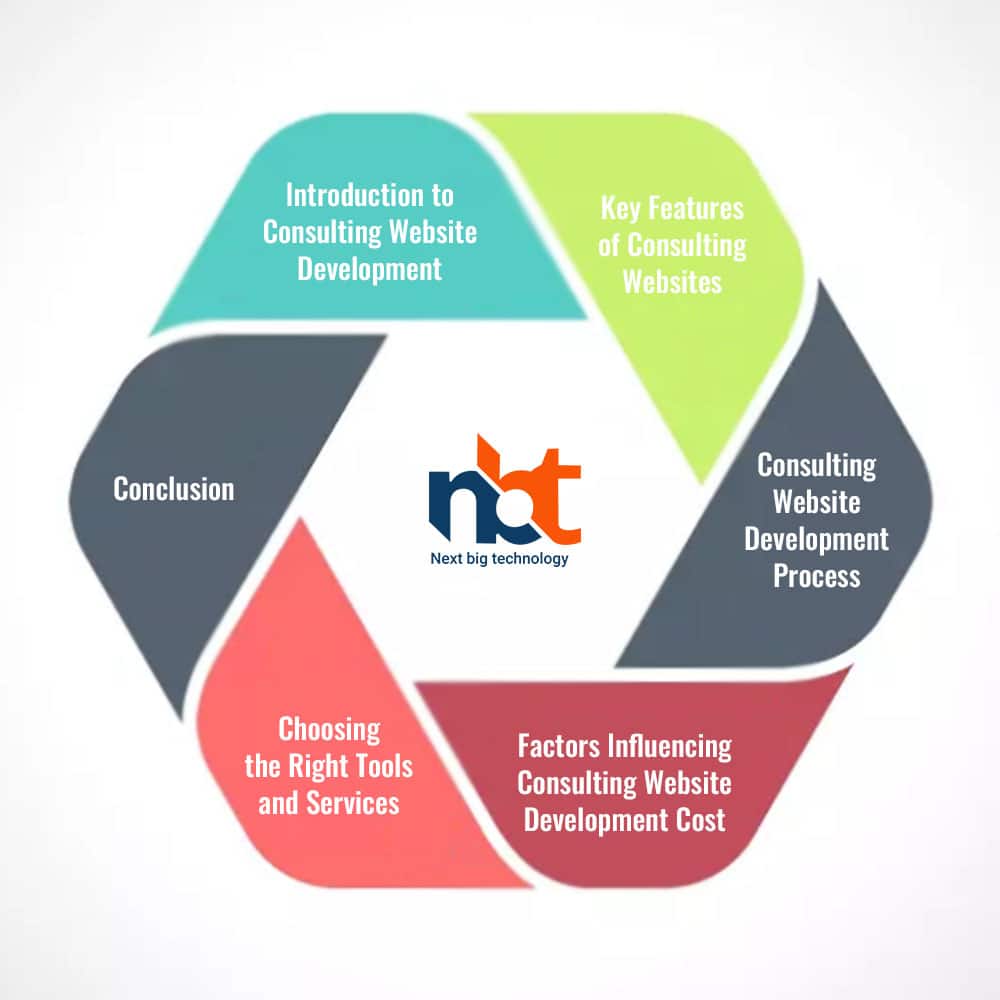
Consulting Website Development Process
1. Planning Phase
- Define Website Goals: Identify the purpose, target audience, and business objectives.
- Service Strategy: Plan the consulting services you will offer and how they’ll be presented.
- Branding Identity: Establish a consistent brand identity, including colors and typography.
- Technology Selection: Choose a suitable content management system (CMS) or development platform.
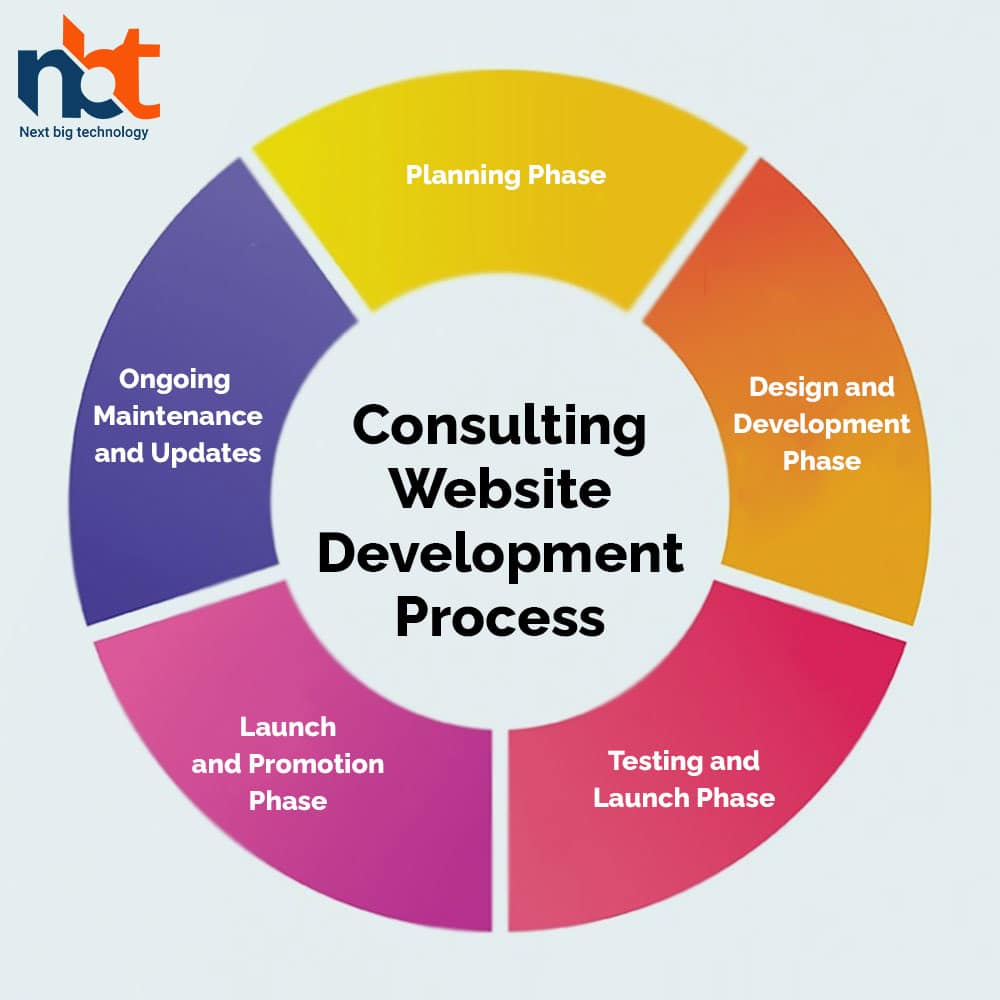
2. Design and Development Phase
- User Experience Design: Design an intuitive and visually appealing interface.
- Content Creation: Develop high-quality content aligned with your consulting focus.
- Service Presentation: Create detailed pages for each consulting service.
- Expert Profiles: Craft informative profiles of your consulting team members.
- Custom Development: Integrate booking systems, contact forms, and other functionalities.
3. Testing and Launch Phase
- Quality Assurance: Test all features, forms, and interactive elements thoroughly.
- User Testing: Invite colleagues or volunteers to navigate the website and provide feedback.
- Mobile Testing: Ensure optimal performance on various mobile devices.
- Content Review: Proofread content for accuracy, grammar, and clarity.
- Security Checks: Implement security measures to safeguard user data.
4. Launch and Promotion Phase
- Final Deployment: Upload the website to the chosen hosting server.
- Announce the Launch: Promote the website through social media, email marketing, and professional networks.
- Client Onboarding: Provide guidance on navigating the website and booking consultations.
- Analytics Setup: Implement tracking tools to monitor website traffic and user engagement.
5. Ongoing Maintenance and Updates
- Regular Content Updates: Keep the blog, resources, and service descriptions current.
- Technical Support: Address technical issues and inquiries promptly.
- Performance Optimization: Regularly optimize website speed and loading times.
- Security Measures: Implement regular updates and security patches.
6. Choosing the Right Tools and Services
- Content Management Systems (CMS): Explore options like WordPress, Joomla, or custom development.
- Booking and Appointment Systems: Consider tools for online appointment scheduling.
- Branding and Design Tools: Utilize graphic design software for branding elements.
- Content Creation and Editing: Employ professionals for content writing and proofreading.
- Analytics and Reporting Tools: Implement tools for monitoring website performance and user behavior.
Conclusion
In conclusion, a well-designed consulting website is a crucial asset for showcasing your expertise, attracting clients, and building a professional image. The features you incorporate, the design complexity, and the ongoing maintenance all contribute to the overall cost. By following a structured development process, utilizing appropriate tools, and prioritizing user experience, you can create a powerful online platform that elevates your consulting practice and drives business growth


