







Modern machine learning products need more than clever algorithms. They need a reliable framework that connects data science with production environments.
Teams must align model artifacts with strong infrastructure. This keeps each release stable and supports high performance.
Effective delivery depends on coordinating code, training sets, and protective measures. These engineering habits create a repeatable path to success. This guide shows how DevOps for AI Applications: CI/CD, Security and Deployment connects these processes for safer, faster results.
Table of Contents
Key Takeaways
- Successful machine learning requires tight integration between data pipelines and production systems.
- Automated workflows help teams manage model versions with greater consistency.
- Prioritizing protective controls early prevents vulnerabilities in live environments.
- Monitoring performance metrics allows for rapid adjustments to changing real-world data.
- Standardized release cycles turn complex technical tasks into predictable business outcomes.
Why DevOps Matters for AI Applications
AI-driven products need a strong framework that connects traditional engineering with data science. Standard software uses fixed logic, but intelligent systems need a flexible approach for constant change. Using AI DevOps helps teams manage this complexity without losing quality or speed.
How AI Systems Differ From Traditional Software
Traditional software releases usually move code through a pipeline. AI systems combine datasets, feature logic, model weights, and specific prompts. Even when application code stays unchanged, shifting training data can greatly change model behavior.
This sensitivity makes predictability difficult for engineering teams. Without a clear process, a model may work perfectly in a notebook but fail on real-world data. Using MLOps helps teams track changes and keep performance steady across environments.

Where Models, Data, Code, and Infrastructure Intersect
Modern AI delivery depends on several moving parts working closely together. You deploy more than a binary: you deploy data pipelines, model artifacts, and serving infrastructure. When teams isolate these parts, the risk of failure rises sharply.
Effective AI DevOps brings these parts together in a controlled way. Treating data and models like code creates one trusted source of truth. This approach improves versioning and makes production debugging easier.
Business Benefits of a Repeatable AI Delivery Process
A repeatable delivery process supports a successful MLOps strategy. It lowers release risk by automating routine tasks and sending each deployment through a tested path. This consistency helps teams test ideas faster while protecting reliability.
Beyond technical stability, these workflows improve teamwork between data scientists and software engineers. When everyone follows one process, communication gaps shrink and projects move faster. The following table shows key differences between traditional software and AI-based systems:
| Feature | Traditional Software | AI-Based Systems |
|---|---|---|
| Primary Driver | Static Code | Data and Model Weights |
| Testing Focus | Functional Logic | Accuracy and Bias Metrics |
| Failure Mode | Code Bugs | Data Drift and Skew |
| Release Cycle | Code-Centric | Model-Centric |
DevOps for AI Applications: CI/CD, Security and Deployment
AI applications are complex, so they need a specialized workflow beyond traditional software engineering. Implementing DevOps for AI Applications: CI/CD, Security and Deployment requires a view of the entire lifecycle. This approach keeps every component, from raw data to the final inference service, stable and secure.
The Core Capabilities of an AI DevOps Workflow
An effective AI DevOps workflow must manage more than application code. It must validate data schemas, monitor model metrics, and verify container images. Automated checks help teams catch errors before production.
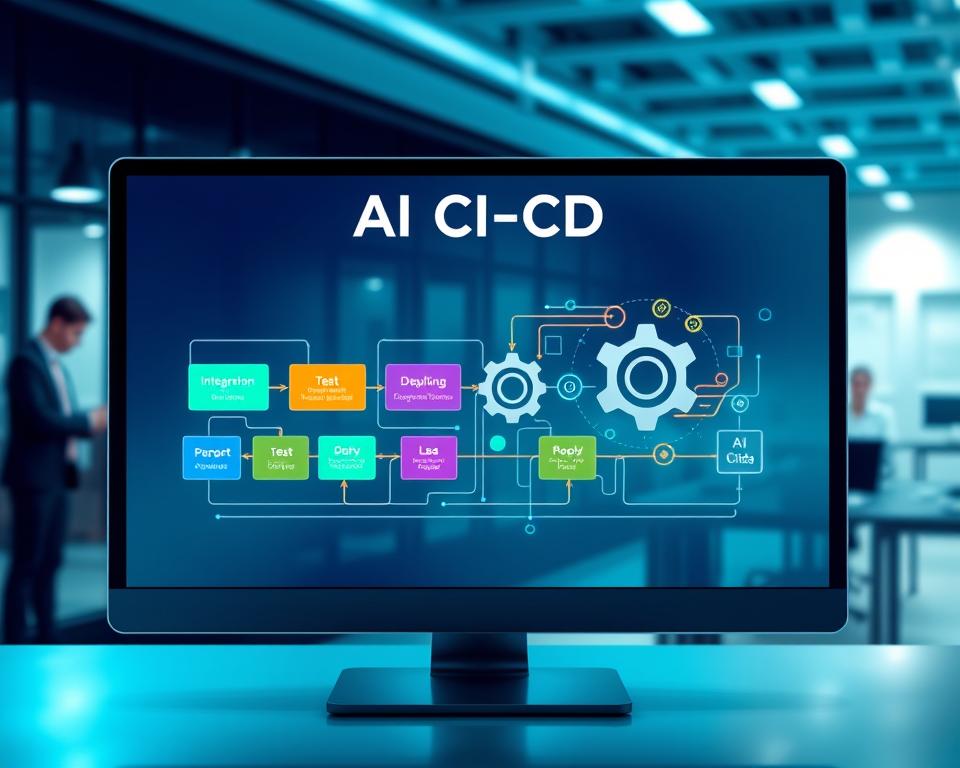
This process relies on a robust AI CI/CD pipeline that treats models as first-class citizens. It keeps infrastructure definitions and deployment policies consistent across every development stage. Integrated checks greatly reduce unexpected behavior in production.
How CI/CD, MLOps, and Platform Engineering Work Together
Successful delivery depends on close teamwork among three distinct disciplines. Platform engineering provides the reusable environments developers need for safe experiments. MLOps manages training jobs and model versioning.
Together, these teams create a smooth path from research to production. The following table shows how these components differ from standard software practices:
| Component | Traditional Software | AI-Driven Systems |
|---|---|---|
| Primary Artifact | Compiled Code | Code, Data, and Models |
| Testing Focus | Functional Logic | Accuracy and Data Drift |
| Deployment | Application Updates | Model and Service Updates |
| Infrastructure | Standard Compute | GPU-Accelerated Clusters |
Balancing Development Speed With Model Reliability
Many organizations struggle to move quickly without reducing model quality. The secret is establishing automated quality gates as a safety net for every release. These gates block faulty models from deployment while letting developers iterate quickly.
Treating model quality as mandatory, not an afterthought, helps teams scale effectively. This balance supports rapid innovation while keeping the final product reliable for end users. Ultimately, a disciplined approach to AI DevOps turns complex challenges into repeatable business successes.
Designing an AI Delivery Architecture
A well-designed AI delivery architecture bridges experimental research and reliable production services. Clear, manageable workflow stages reduce technical debt and help teams work faster. This structure keeps systems resilient as models become more complex.

Separating Application, Model, Data, and Infrastructure Pipelines
Reliable machine learning model deployment depends on separate core components. Treat application code, model artifacts, training data, and infrastructure as independent parts. This separation lets data scientists improve models without redeploying the entire application stack.
Independent pipelines let you update a model or refresh data without restarting the whole system. This modularity is essential for keeping production services highly available. It also lets specialized teams focus on their areas while protecting system integrity.
Choosing Between Managed Cloud Services and Self-Hosted Platforms
Choosing where to host AI workloads means balancing operating effort and total control. Managed cloud services scale quickly and include monitoring, helping you reach market faster. They often handle the hard work of security and resource management.
Self-hosted platforms offer deep customization and may cost less at massive scale. However, a dedicated team must manage updates, security patches, and hardware maintenance. Choose based on your team’s size and long-term technical goals.
Creating Consistent Development, Staging, and Production Environments
Consistent environments help prevent the dreaded “it works on my machine” syndrome. Mirrored development, staging, and production setups make your machine learning model deployment process predictable. They support strict testing before code or models reach end users.
Infrastructure as Code With Terraform
Terraform lets you define cloud resources as version-controlled code. This makes infrastructure reproducible and documented while removing manual configuration errors. You can create identical environments in minutes, a huge advantage for testing new model versions.
Container Packaging With Docker
Docker packages services with all their runtime dependencies. Containerized models and applications run the same way in every environment. This reliability matters when moving from a local development laptop to a high-performance production cluster.
Source Control for Code, Data, and Models
Effective version control supports every successful MLOps strategy. Treating your AI ecosystem as code helps you audit, revert, and scale projects with confidence. It gives every team member one trusted source of truth.

Managing Application Code With Git
Git is the industry standard for tracking application code, configuration files, and infrastructure definitions. It gives developers a clear history that teams can review. This transparency supports debugging and long-term project stability.
Versioning Datasets and Features With DVC
Standard repositories handle text well but struggle with massive binary files. DVC tracks large datasets and feature inputs without bloating your main repository. It creates lightweight pointers linking code to the exact training data version, ensuring perfect reproducibility.
Tracking Model Artifacts and Experiment Metadata With MLflow
When training begins, you need to capture its results. MLflow records experiment parameters, performance metrics, and final model artifacts. It lets data scientists compare runs side by side and choose the most effective model version for production.
“Reproducibility is not just a best practice; it is the foundation of trust in any automated AI system.”
Defining Repository Policies for Reproducibility
To keep your workflow clean, enforce strict repository policies. Each team should require meaningful pull requests, documented dependencies, and immutable references for production assets. These standards prevent configuration drift and let any team member recreate a specific model state.
| Tool | Primary Use Case | Key Benefit |
|---|---|---|
| Git | Source Code | Change History |
| DVC | Data & Features | Large File Handling |
| MLflow | Model Artifacts | Experiment Tracking |
Building Continuous Integration Pipelines for AI
A strong AI CI/CD pipeline catches errors before they become costly production issues. Testing early helps teams find code, data, or configuration defects before training jobs or deployment cycles begin.

Automating Code Quality and Dependency Checks
High standards begin with automated linting and static analysis. These tools keep code clean and readable, supporting long-term project health.
Also, automated testing for AI must include dependency vulnerability scanning. Checking libraries during every commit helps prevent compromised code from entering your environment.
Validating Data Schemas and Pipeline Inputs
Data drives every machine learning system, but it can change often. Strict schema validation ensures pipelines process only data that meets set quality standards.
If input data differs from expected formats, the pipeline should fail at once. This model validation step prevents “garbage in, garbage out” problems that could cause silent production failures.
Testing Training Jobs Without Wasting Compute
Training models can cost much money and time. To save resources, validate training logic with small, representative datasets instead of full-scale production data.
Mocking external services and feature stores lets you test orchestration without unnecessary cloud costs. This approach gives data scientists and engineers fast feedback.
Unit Tests for Preprocessing and Inference Logic
Unit tests check individual functions, such as data transformation scripts or custom loss functions. They verify that logic works as expected in different edge cases.
Integration Tests for Feature Stores and Model Services
Integration tests ensure that models work correctly with external components. They verify feature-store access and communication with an API endpoint.
Smoke Tests for Containerized Deployments
Smoke tests provide a final sanity check for containerized applications. They confirm that services start correctly and answer basic health checks before staging.
| Test Type | Primary Goal | Execution Speed | Resource Usage |
|---|---|---|---|
| Unit Tests | Logic Verification | Very Fast | Minimal |
| Integration Tests | System Connectivity | Moderate | Low |
| Smoke Tests | Deployment Health | Fast | Low |
Using GitHub Actions, GitLab CI/CD, or Jenkins
Managing these tasks requires a reliable CI/CD platform. Whether you choose GitHub Actions, GitLab CI/CD, or Jenkins, the goal is to automate the entire lifecycle.
These platforms let you define complex workflows that start automatically after code changes. By centralizing your automated testing for AI, you create a transparent, reproducible process that scales with your team’s needs.
Testing Models Before They Reach Production
Moving a model into production is a high-stakes step that requires thorough model validation. Training accuracy alone rarely guarantees success in the real world. Before users interact with it, ensure the system behaves predictably under many conditions.

Measuring Accuracy, Precision, Recall, and Business Metrics
Technical metrics help show how well a model learns. Accuracy is a common starting point, but precision and recall often matter more for classification tasks. Always align these technical indicators with your specific business goals to ensure the model actually solves the intended problem.
For example, a fraud detection system might favor high recall to catch more bad transactions. A recommendation engine, however, might favor precision so users see only relevant content. Balancing these metrics helps your AI deliver real value.
Testing for Bias, Fairness, and Performance Across Groups
A model may perform well overall yet fail specific user groups. Subgroup testing can reveal bias and unfair outcomes. Fairness is not just a compliance requirement; it is a core component of product quality.
“Testing is the only way to ensure that your AI systems are as reliable and fair as the data they were trained on.”
Detecting Data Drift and Training-Serving Skew
Even a high-performing model can weaken as real-world data changes. Use checks for model drift to find when input data shifts from the training distribution. Training-serving skew occurs when training features differ from inference features, causing unexpected errors.
Evaluating Latency, Throughput, and Resource Consumption
Operational performance matters as much as predictive accuracy. Test the model under heavy traffic to ensure it meets latency requirements. Monitor memory use and inference costs to avoid costly surprises after launch.
| Metric Category | Primary Focus | Goal |
|---|---|---|
| Predictive | Accuracy, Precision, Recall | High Model Quality |
| Operational | Latency, Throughput | System Stability |
| Financial | Inference Cost, Memory | Resource Efficiency |
Setting Quality Gates for Automated Promotion
The final pipeline step is setting strict quality gates. These checkpoints block models that miss your predefined thresholds for fairness, performance, or drift. Adding automated testing for AI creates a repeatable workflow, reduces human error, and sends only reliable models to production.
Securing AI Code, Data, and Infrastructure
As AI becomes central to business operations, strong AI security practices must protect every layer of your stack. Protecting your machine learning environment involves more than firewalls. It is modern engineering that covers source code through user inputs.

Protecting Secrets, Credentials, and API Keys
Hardcoding sensitive information creates a major risk and can cause data breaches. Always store secrets, credentials, and API keys in dedicated secret-management systems, such as HashiCorp Vault or AWS Secrets Manager.
These tools keep sensitive keys out of source code repositories. Dynamic secrets let you rotate credentials automatically, which greatly reduces an attacker’s opportunity.
Scanning Dependencies, Containers, and Infrastructure as Code
Automated scanning is vital to AI security. Regularly check application dependencies for known vulnerabilities to prevent supply chain attacks.
Also, scan container images and Infrastructure as Code (IaC) templates. This finds misconfigurations before production and keeps your deployment environment hardened against common threats.
Applying Least-Privilege Access With Identity and Access Management
Broad permissions for pipelines and services create unnecessary risk. Apply the principle of least-privilege access through strong Identity and Access Management (IAM) policies.
Limiting each service’s access reduces the impact of a compromised component. Carefully defining roles ensures training pipelines use only the data buckets they need.
Encrypting Training Data, Model Artifacts, and Network Traffic
Data protection is essential in modern AI workflows. Ensure all training data and model artifacts are encrypted at rest with industry-standard protocols.
Also, encrypt all network traffic between services in transit. This stops unauthorized parties from intercepting sensitive information moving through your infrastructure.
Reducing Risks From Prompt Injection and Malicious Inputs
Generative AI models face unique threats, including prompt injection. In this attack, users try to change a model’s behavior. Use input validation and sanitization layers to filter malicious queries before they reach your model.
Monitor user inputs for suspicious patterns to stay ahead of changing attack vectors. Building a resilient defense against these inputs helps protect the integrity of your AI services.
Maintaining Audit Logs and Incident Response Procedures
Even with strong defenses, prepare for unexpected events. Detailed audit logs help your team trace actions and find the root cause of security events.
Establish clear incident response procedures to handle compromises quickly. A documented plan helps your team act decisively to protect systems and data during an emergency.
Governing Data and Model Artifacts
Trust in artificial intelligence begins with strong documentation and clear ownership of digital assets. Effective model governance supports your AI strategy and makes each system decision explainable and compliant. Careful oversight turns complex machine learning workflows into transparent, reliable business processes.
Documenting Data Sources, Consent, and Retention Rules
Every successful AI project starts with high-quality data handled ethically. Document where your training data came from, and keep all required consent forms on file. Also define clear retention policies so you do not keep sensitive information beyond the time required by law.
Maintaining Model Cards and Dataset Documentation
Standardized documentation helps prevent knowledge silos within your organization. Model cards give a brief summary of a model’s intended use, limitations, and performance metrics. Dataset documentation should also detail the following:
- Data collection methods and sampling techniques.
- Known biases or gaps in the training set.
- Preprocessing steps applied to the raw data.
- Version history and update frequency.
Tracing Lineage From Training Data to Production Predictions
Traceability matters when you investigate unexpected model behavior. Record artifact lineage to connect each production prediction to its exact training dataset and code version. This deep visibility lets your team quickly troubleshoot incidents and maintain high reliability.
Managing Model Registries, Approval States, and Ownership
A centralized registry is the single source of truth for all deployed assets. Define clear approval states, such as “Draft,” “Staging,” or “Production-Ready.” Assign each artifact an owner so a designated team remains accountable for model performance and security updates.
Supporting Regulatory and Internal Compliance Reviews
Robust model governance makes audits and internal reviews easier. A complete audit trail for your data and model lifecycle helps you show compliance with industry regulations. This proactive approach protects your organization from legal risks and builds a culture of accountability and excellence across technical departments.
Automating Continuous Delivery and Model Promotion
Successful AI teams treat model promotion as a strict, automated process, not a manual handoff. With continuous delivery, each model update is tested, checked, and prepared for real-world use. This process lowers error risks and helps teams maintain high standards for AI services.
Defining Development, Staging, and Production Promotion Paths
A strong pipeline moves artifacts through separate environments to protect stability. Development supports fast changes, while staging mirrors production and finds integration issues early. Production serves end users with high availability and strong performance.
Using Approval Gates for High-Risk Model Changes
Not every update should go live automatically. High-risk changes, including new data sources or major prediction shifts, need human oversight. Approval gates provide safety by requiring stakeholders to review performance metrics before production promotion.
Automating Model Registry Transitions With MLflow
MLflow offers one central place to manage model lifecycles. Its registry tracks statuses, such as “Staging” or “Production,” and starts workflows after transitions. This keeps teams aligned about the active version.
Packaging Inference Services With Docker and Kubernetes
Consistent environments matter when models move between systems. Docker packages inference code so developer laptops and cloud environments match. Kubernetes manages these containers, supporting reliable, scalable enterprise-grade machine learning model deployment.
Separating Application Releases From Model Releases
One effective strategy separates application code from model artifacts. Then, you can update a model without redeploying the full application stack. Independent model services let teams roll back or update parts with little downtime.
| Stage | Primary Goal | Validation Method |
|---|---|---|
| Development | Rapid Experimentation | Unit Tests |
| Staging | Integration Testing | Performance Benchmarks |
| Production | User Inference | Monitoring & Drift Detection |
Choosing Reliable AI Deployment Strategies
Reliable machine learning model deployment starts with infrastructure that fits your business needs. Your prediction service can shape how well your application works in the real world. The right architecture keeps your system responsive and cost-effective.
When to Use Batch Inference, Real-Time APIs, or Streaming
Batch inference suits scheduled work when results can wait, such as nightly report generation. Real-time APIs deliver low-latency responses for interactive user decisions. Streaming architectures process constant event flows, making them ideal for fraud detection or live sensor data analysis.
Comparing Blue-Green, Canary, and Rolling Deployments
Deployment strategies control how new model versions reach users. Blue-green deployments switch traffic between two identical environments, offering safe rollback if issues arise. Canary releases shift a small traffic share, while rolling deployments replace instances one by one to maintain availability.
Using Feature Flags for Safer Model Rollouts
Feature flags let you turn model versions on or off without redeploying your entire application. This supports controlled activation and lets you test new logic with specific user segments. It provides a safety net, so you can disable a problematic model when performance metrics drop.
Scaling Inference With Kubernetes and Horizontal Pod Autoscaling
Kubernetes provides the orchestration power needed to manage complex AI workloads at scale. Horizontal Pod Autoscaling can add or remove containers based on CPU or memory demand. This keeps your machine learning model deployment stable during unexpected traffic spikes.
Deploying Serverless Workloads With AWS Lambda or Google Cloud Run
Serverless platforms like AWS Lambda or Google Cloud Run offer a hands-off approach for smaller or intermittent workloads. You pay only for used compute time, which helps control costs during unpredictable traffic. These services suit lightweight models that do not need constant, high-performance infrastructure.
Handling GPU Scheduling and Specialized Hardware
Deep learning models often need specialized hardware, such as GPUs, to meet strict latency requirements. Effective Kubernetes scheduling ensures expensive resources go only to pods that need them. Balancing workload size and hardware costs helps maintain a sustainable AI budget.
| Strategy | Best Use Case | Latency | Cost Efficiency |
|---|---|---|---|
| Batch | Offline Processing | High | High |
| Real-Time | Interactive Apps | Very Low | Moderate |
| Streaming | Live Data Streams | Low | Moderate |
| Serverless | Variable Traffic | Moderate | High |
Monitoring Production Models and AI Services
Effective AI monitoring connects infrastructure health with actual model intelligence. Traditional software needs uptime checks, but machine learning systems need deeper insight into how data changes outputs. Combining infrastructure metrics with model insights helps teams keep services reliable and accurate.
Tracking Service Health, Latency, Errors, and Availability
A strong deployment starts with standard service observability. Track latency, error rates, and availability to keep the API responsive for users. These metrics provide the first defense against infrastructure failures and network bottlenecks.
Monitoring Prediction Quality and Model Drift
Beyond uptime, watch for model drift, which happens when input data changes statistically. If real-world data no longer matches the training set, inaccurate results can reduce business value. Proactive AI monitoring helps find these shifts before they affect end users.
Observing Token Usage, Costs, and Response Safety for Generative AI
Generative AI brings challenges such as token use and possible safety violations. Track costs per request to control cloud budgets. Monitor harmful or biased outputs to keep applications safe and compliant with company policies.
Centralizing Logs, Metrics, and Traces With OpenTelemetry
Using OpenTelemetry unifies logs, metrics, and traces in one operational view. This framework helps you connect a user request with model inference and system resource use. Centralization makes debugging much easier.
Creating Actionable Alerts With Prometheus and Grafana
Visualizing data through Grafana dashboards makes performance trends easy to spot. With Prometheus, you can create automated alerts when thresholds are exceeded. This helps your team respond quickly instead of waiting for user complaints.
Connecting Monitoring Signals to Retraining Workflows
The goal is a feedback loop that lets monitoring data trigger automated retraining. When you detect significant model drift, the system can start a new training pipeline with updated data. This keeps models fresh and accurate without constant manual work.
| Metric Category | Key Indicators | Primary Goal |
|---|---|---|
| Infrastructure | CPU, RAM, Latency | System Stability |
| Model Performance | Accuracy, Drift, Bias | Prediction Quality |
| Business/Cost | Token Usage, Cloud Spend | Budget Efficiency |
| Safety | Toxicity, Hallucinations | Risk Mitigation |
Managing Reliability, Costs, and Rollbacks
Keeping AI applications available and affordable is a major operations challenge. Strong AI reliability needs active monitoring and careful infrastructure management. Clear goals help protect user trust when technical problems occur.
Defining Service-Level Objectives for AI Workloads
Service-Level Objectives (SLOs) create a clear way to measure success. Set targets for availability, latency, and error rates to align your team. Track prediction freshness for applications that need timely results.
Building Fallbacks for Model, Provider, and Dependency Failures
Even strong systems can face unexpected downtime. Using fallback models or secondary providers keeps services running during outages. Cached results provide temporary protection when key dependencies fail.
Rolling Back Models Without Losing Application Compatibility
Fast rollbacks matter when a new model performs poorly. Keep inference interfaces consistent across versions to protect connected applications. versioned APIs let you return to a stable state without redeploying the whole application.
Controlling Cloud Spend With Resource Limits and Autoscaling
AI workloads can become costly without control. Strict resource limits help prevent extra costs during training or inference spikes. Autoscaling matches computing power to demand while supporting AI reliability and budget control.
Planning Disaster Recovery for Data, Registries, and Inference Services
A strong disaster recovery plan protects the full machine learning lifecycle. Back up training datasets, model registries, and deployment settings regularly. This preparation helps restore services quickly after a major system failure.
| Strategy | Primary Benefit | Implementation Focus |
|---|---|---|
| SLO Monitoring | Performance Clarity | Latency and Error Rates |
| Fallback Logic | System Resilience | Provider Redundancy |
| Resource Limits | Cost Efficiency | Autoscaling Policies |
| Disaster Recovery | Data Integrity | Backup and Restoration |
Building an AI DevOps Team and Operating Model
Long-term AI reliability depends on daily teamwork among developers, data scientists, and platform engineers. When these groups work in silos, projects can stall or fail to reach production. A shared operating model gives everyone a clear role throughout a model’s lifecycle.
Shared accountability helps teams move faster while protecting high standards. Teams must replace informal hand-offs with clear, repeatable processes that support transparency and communication.
Clarifying Responsibilities Across Developers, Data Scientists, and Platform Engineers
Successful AI DevOps needs a clear division of labor. Data scientists focus on model architecture, feature engineering, and training experiments. Software developers integrate models into existing applications and keep the code clean and maintainable.
Platform engineers provide the foundation through infrastructure, CI/CD pipelines, and security guardrails. When roles overlap, teams must define who owns the final deployment. Clear ownership prevents confusion and gives each system component a dedicated steward.
Establishing Pull Requests, Reviews, and Release Ownership
Informal knowledge is the enemy of consistency. Required pull requests and peer reviews for code and model changes create a quality-focused paper trail. These reviews act as a gatekeeper, catching errors before they affect users.
Assign release ownership to specific individuals or squads. This accountability ensures someone always manages the health of a model in production. Standardizing these practices turns tribal knowledge into a repeatable framework that scales with your business.
Creating Runbooks for Deployments, Incidents, and Retraining
When problems arise, teams need a plan they can use immediately. Runbooks guide deployments, production incidents, and automated retraining workflows. They remove guesswork during high-pressure situations.
Documented procedures help teams respond confidently to drift or service outages. Well-maintained runbooks support AI reliability during unexpected system failures or data anomalies.
Starting Small With a Practical AI DevOps Roadmap
Do not automate everything at once. Choose one high-value use case and build a simple pipeline around it. Add basic automated checks and monitoring to confirm the model works in real-world settings.
Follow a staged AI DevOps roadmap so your team can learn and adapt. After mastering the basics, expand platform capabilities for more complex models and larger datasets. This gradual approach builds trust and helps infrastructure grow with business needs.
Conclusion
Successful AI delivery needs one approach that connects data science and operations. Mastering DevOps for AI Applications: CI/CD, Security and Deployment takes more than automated scripts. It requires a culture where teams use versioned data, strict quality gates, and observable services.
Reliable models grow when you value transparency and reproducibility over speed alone. Strong security protocols and clear governance protect user privacy and business integrity. This framework keeps every model deployment predictable and safe.
Begin with small, steady changes to your current workflow, building repeatable processes for quick rollbacks and consistent monitoring. A structured approach to DevOps for AI Applications: CI/CD, Security and Deployment helps engineers innovate with confidence. These foundational practices start your path to scalable AI today.