







Today’s software needs to change fast to stay popular. Users want systems that learn and improve. This is why we need smart systems that handle many tasks at once.
Building these complex systems is a big trend in app development. By using multi-agent AI, developers make different parts of a tool talk to each other. These advanced structures are key for faster and more reliable user experiences.
Experts say that working together helps solve hard coding problems. When you build with these methods, your software can grow a lot. This approach changes the digital world for companies in the United States.
It’s important to know how these parts work together for any new project. It makes sure every part of the system works well together. This focus on smart design leads to better results for the user.
Table of Contents
Key Takeaways
- Collaborative systems improve how users interact with software.
- Integrated frameworks provide better scalability for growing platforms.
- Intelligent logic helps solve complex problems with high precision.
- Modern software relies on connected models to stay competitive.
- Smart design leads to faster project results and lower costs.
- Effective communication between digital units boosts overall speed.
Understanding Multi-Agent AI Systems in Modern Applications
Multi-agent AI systems are changing how we design and use modern apps. These systems have many AI agents working together. They can do things that one agent alone can’t.
What Are Multi-Agent AI Systems
Multi-agent AI systems have many AI agents that work together. They interact with each other and their surroundings to reach their goals. Experts say that for complex tasks, we need different agents to specialize in different areas.
These systems break down big tasks into smaller ones. Each agent does a specific job, like analyzing data or making decisions. This way, they can handle complex tasks more effectively.

Why Multi-Agent Architectures Matter for Applications
Multi-agent architectures are key for solving complex problems. They use different AI agents to bring in various skills and knowledge. This makes apps more functional, perform better, and adapt easier.
Key benefits of multi-agent architectures include:
- Enhanced problem-solving capabilities through division of labor
- Improved adaptability to changing conditions or requirements
- Increased scalability by adding or removing agents as needed
Key Differences from Single-Agent Systems
Single-agent systems have one AI doing everything. This can be a problem in complex situations. Multi-agent systems, on the other hand, spread tasks among many agents.
The main differences are:
- Complexity Handling: Multi-agent systems can handle more complex tasks by dividing them.
- Specialization: Different agents can focus on different areas, making tasks more efficient.
- Scalability: Multi-agent systems can grow by adding new agents, making them more adaptable.
Core Components of Multi-Agent Architectures
Understanding the core components is key to designing efficient multi-agent AI architectures. These parts work together to help the system reach its goals. They do this through coordinated actions and smart decision-making.
Agent Types and Their Functional Roles
In multi-agent systems, different agents are made for specific tasks. The type of agent needed depends on the application’s needs and the task’s complexity.
Reactive Agents
Reactive agents act on their environment without keeping track of their state. They are simple, quick, and good for tasks needing fast responses.
Deliberative Agents
Deliberative agents keep track of their environment and make decisions through reasoning. They are good for complex tasks and strategic planning.
Hybrid Agent Models
Hybrid agents mix the traits of reactive and deliberative agents. They offer a balance between quick action and planning. This makes them versatile for many applications.
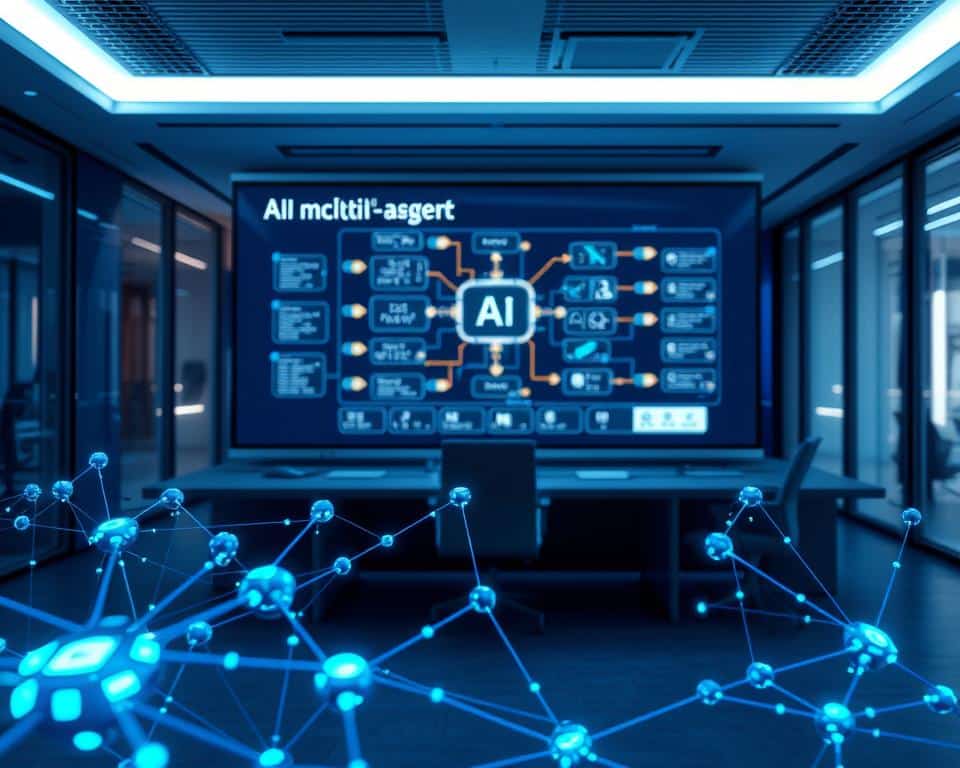
In a customer service AI system, different agents handle various tasks. For example, Ingestor, Summarizer, Prioritizer, and Formatter agents each play a key role in handling customer inquiries.
Communication Layers and Interfaces
Effective agent communication is crucial in multi-agent systems. The communication layers and interfaces help agents share information. This enables them to work together and achieve their goals.
Good communication interfaces are vital. They make sure agents understand each other and respond correctly. This is essential for the system’s success.
Shared Resources and Knowledge Bases
Multi-agent systems often use shared resources and knowledge bases to store and access information. These shared resources help agents use common data. This reduces redundancy and boosts system efficiency.
A well-organized knowledge base is crucial. It supports agents’ decision-making and ensures the system works well together.
Fundamental Design Principles for Multi-Agent Systems
Building strong multi-agent AI systems needs key design rules. These rules help make the system work well, stay easy to fix, and grow as needed. They are key to making sure the system is effective and can handle new challenges.
Autonomy and Independent Decision-Making
Autonomy is at the heart of multi-agent systems. It lets each agent decide based on its own knowledge and goals. This way, the system can change quickly without needing a boss.
Independent decision-making comes from smart algorithms and learning. Agents learn from their surroundings and change their plans as needed.
Modularity and Separation of Concerns
Modularity is key in multi-agent systems. It means each part of the system does one thing well. This makes the system easier to fix and grow.
Using Docker helps make the system more modular. It puts each agent and its needs into its own box, making things simpler.
Scalability and System Flexibility
Scalability is important for multi-agent systems. It lets the system grow and handle more work as needed. Flexibility comes from being able to change and add new parts easily.
Using microservices architecture helps with scalability. It lets each part grow or change on its own, without messing up the whole system.
Interoperability Standards
Interoperability is crucial for multi-agent systems. It means different parts can talk and work together smoothly. Following standards makes it easier to add new agents and systems.
Standards like API-based interfaces and message-based communication protocols help a lot. They make sure all parts can share information and work together well.
| Design Principle | Description | Benefits |
|---|---|---|
| Autonomy | Agents make independent decisions based on local knowledge and goals. | Dynamic response to changing conditions, reduced need for centralized control. |
| Modularity | Separation of concerns, with each agent or module handling specific tasks. | Improved maintainability, scalability, and flexibility. |
| Scalability | The system can handle increased loads and expand its capabilities. | Enhanced performance, ability to adapt to growing demands. |
| Interoperability | Agents and components can communicate and work together effectively. | Seamless integration of diverse agents and systems, improved coordination. |
Agent Communication Patterns and Protocols
Agent communication patterns and protocols are key to a multi-agent system’s success. They help agents work together smoothly. This is crucial for tackling complex tasks.
Synchronous vs Asynchronous Communication
Agents can talk in two ways: synchronous or asynchronous. Synchronous means agents talk directly and wait for answers. It’s good for simple tasks but can slow down complex systems.
Asynchronous communication lets agents keep working without waiting. It’s better for big, complex systems where agents do many things at once. This makes systems more responsive and scalable.
Message-Based Communication Systems
Message-based communication is common in multi-agent systems. Agents share info through messages, following certain rules.
Message Queues and Event Buses
Message queues and event buses help with message-based systems. Message queues let agents send and get messages without waiting. Event buses help distribute events, making systems more flexible.
For example, Genkit uses message-based communication. It helps define tools for sub-agents and manage their interactions. This makes multi-agent systems more flexible and scalable.
Request-Response Patterns
The request-response pattern is basic in message-based systems. An agent asks for info and waits for an answer. It’s good when an agent needs specific info from another.
Blackboard Systems and Shared Memory Approaches
Blackboard systems use a shared memory space for communication. Agents post and get info from this space. It’s great for sharing complex data or when communication patterns aren’t set.
API-Based Agent Interactions
API-based interactions offer a structured way for agents to talk. APIs help agents work together by hiding their details. This makes it easier to mix different agents into one system.
Using standard API protocols helps ensure agents from different techs can work together. This makes systems more interoperable.

Coordination Mechanisms Between Agents
In multi-agent AI systems, coordination is key for smooth interactions. It’s crucial for success in complex tasks.
Centralized Coordination with Orchestrator Agents
Centralized coordination uses an orchestrator agent to lead other agents. It makes decision-making easier by focusing it in one place.
The orchestrator handles tasks, solves conflicts, and meets system goals. It’s great for tasks that need a clear leader.
Decentralized Coordination Through Negotiation
Decentralized coordination lets agents negotiate to agree. This method is flexible and works well in changing situations.
Agents share their goals and information to make decisions together. This way, they can adapt quickly to new situations.
Hybrid Coordination Models
Hybrid models mix centralized and decentralized methods. They offer structure and flexibility, making them versatile.
For example, a system might have a central leader for big tasks but let agents discuss smaller ones. This mix can handle complex, changing environments well.
Task Allocation and Workflow Management
Good task allocation and workflow management are essential. Agents need to assign tasks well and manage workflows to meet goals.

| Coordination Mechanism | Description | Advantages |
|---|---|---|
| Centralized | Uses an orchestrator agent for coordination | Simplifies decision-making, clear hierarchy |
| Decentralized | Rely on negotiation among agents | Flexible, adaptable to dynamic environments |
| Hybrid | Combines centralized and decentralized approaches | Balances structure and flexibility |
The right coordination method depends on the task’s complexity, the need for autonomy, and the environment’s dynamics.
Designing Multi-Agent AI Architectures for Apps: A Structured Approach
Creating multi-agent AI systems is complex. It starts with analyzing needs and identifying agents. This method makes sure the system works well and can grow, fitting the app’s needs.
Requirements Analysis and Agent Identification
The first step is to analyze what the system needs to do. This means breaking down tasks into roles for different agents.
Defining System Objectives
It’s important to know what the system aims to do. For example, in a customer service app, it might be to help users automatically.
Decomposing Tasks into Agent Responsibilities
After setting goals, tasks are split among agents. This makes it clear what each agent does. A table can help show this.
| Task | Agent Responsibility |
|---|---|
| Customer Inquiry Handling | Customer Support Agent |
| Issue Escalation | Escalation Agent |
| Feedback Collection | Feedback Agent |
Establishing Agent Roles and Boundaries
It’s key to define each agent’s role clearly. This avoids confusion and keeps the system working smoothly.
Experts say, “Clear roles are essential for a multi-agent system’s success.”
“Agents should work based on their skills and the task needs.”
Designing Communication Workflows
Agents must communicate well. This means mapping data flow and setting message formats.
Mapping Data Flow Between Agents
Knowing how data moves between agents is important. A diagram can show these interactions.

Setting message formats and protocols is crucial. This ensures agents talk clearly to each other.
Using standards like JSON or XML helps agents work together better.
Planning System Integration Points
Lastly, plan how the system will connect with other parts of the app. This is about where the system will interact with other systems.
By following this method, developers can build strong, scalable AI systems. These systems work well with the app’s other parts.
Popular Architecture Patterns for Multi-Agent Systems
In the world of multi-agent systems, several architecture patterns stand out. They help create sophisticated AI applications. These patterns give agents a structure to interact, coordinate, and reach complex goals.
Hierarchical Agent Architectures
Hierarchical architectures have a tree-like structure. Higher-level agents oversee lower-level ones. This pattern is great for tasks needing a clear hierarchy and quick decision-making. For example, the Concierge AI uses this pattern to handle user requests well.
Peer-to-Peer Agent Networks
In peer-to-peer networks, all agents are equal and can talk directly to each other. This setup is flexible and resilient because there’s no single point of failure. But, it can be hard to manage and coordinate many agents.
Layered Architecture Patterns
Layered architectures split agents into different layers, each with its role. This pattern is good for complex systems. It lets different layers handle different tasks, like data processing and user interaction.
Microservices-Based Agent Deployment
The microservices architecture breaks agents into independent services that talk to each other through simple protocols. This method is scalable and flexible. It lets developers update or replace agents without disrupting the whole system. For more on microservices, check out this resource.
| Architecture Pattern | Key Features | Advantages | Challenges |
|---|---|---|---|
| Hierarchical | Tree-like structure, clear chain of command | Efficient decision-making, easy to manage | Less flexible, dependent on top-level agents |
| Peer-to-Peer | Equal status among agents, direct communication | Flexible, resilient to failures | Difficult to coordinate, potential for conflicts |
| Layered | Distinct layers for different responsibilities | Organized, scalable | Can be complex to design, layer dependencies |
| Microservices-Based | Independent services, lightweight communication | Highly scalable, flexible | Complex to manage, service coordination challenges |
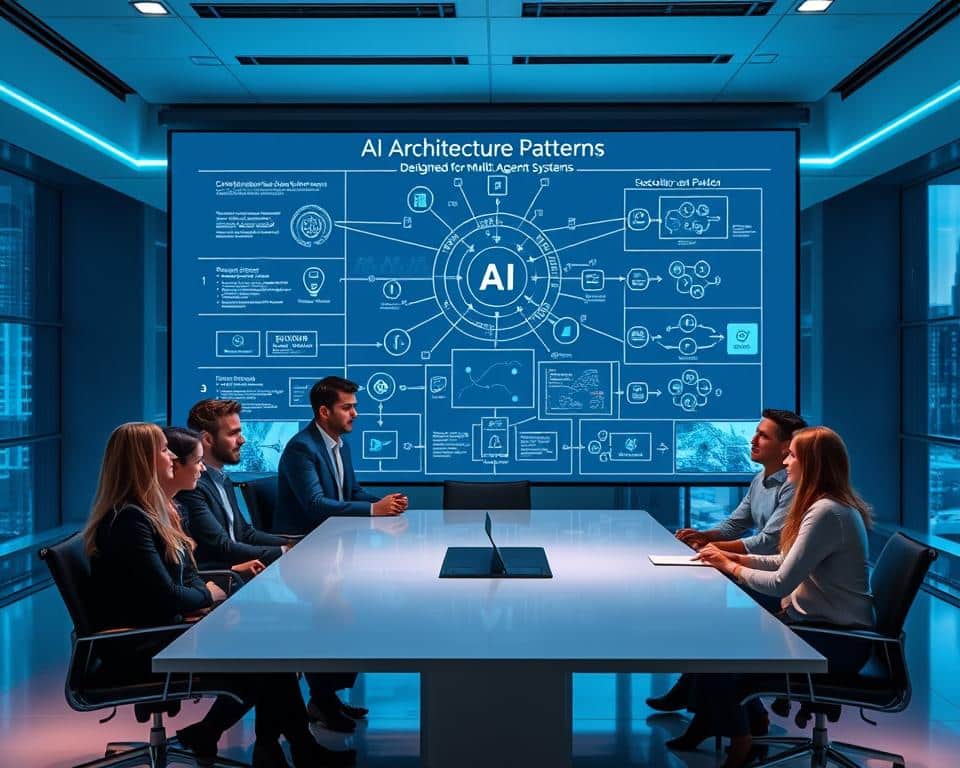
Each architecture pattern has its own strengths and weaknesses. The right pattern depends on the application’s needs and goals. Understanding these patterns helps developers build better multi-agent systems.
Frameworks and Tools for Building Multi-Agent Applications
As multi-agent AI grows, so does the need for special tools. These tools help manage the complexity of these systems. They let developers focus on creating advanced AI apps.
There are many frameworks for multi-agent AI, each with its own strengths. The right framework can change how an app is developed, how it grows, and how easy it is to keep it running.
LangGraph for Agent Workflow Orchestration
LangGraph helps manage complex agent workflows. It makes it easy to set up and run detailed workflows. LangGraph is great at handling complex rules and decisions, perfect for apps that need to make smart choices.
Using LangGraph makes building multi-agent systems easier. It gives a clear way to organize agent workflows. This makes apps more stable and easier to grow.

Microsoft AutoGen Framework
Microsoft AutoGen is a full package for making multi-agent apps. It has tools and libraries that make development simpler. AutoGen supports many AI models and frameworks, making it a good choice for developers.
AutoGen is very customizable. This lets developers adjust it to fit their needs. This is especially useful in multi-agent systems, where agents can have different roles.
CrewAI for Role-Based Agent Teams
CrewAI is made for teams of agents with specific roles. It makes it easier to manage complex systems. CrewAI’s focus on roles makes managing large teams simpler, helping to create more advanced AI apps.
CrewAI makes apps more modular and easier to keep up. This is key in multi-agent systems, where things can get very complex.
Semantic Kernel and Agent Integration
The Semantic Kernel is a solid base for combining AI agents. It’s flexible and can handle many AI models. The Semantic Kernel is great at dealing with complex data and giving insights, perfect for apps that need to understand data deeply.
Using the Semantic Kernel, developers can build systems that are smart and effective with complex data.
Custom Framework Considerations
While frameworks like LangGraph, AutoGen, and CrewAI are powerful, sometimes a custom framework is needed. Creating a custom framework lets developers tailor it exactly to their needs, offering a lot of flexibility and control.
But making a custom framework is a big job. It needs a lot of knowledge and resources. It’s important to think about the benefits and costs, and how it will work with other systems.
Real-World Use Cases and Applications
Multi-agent AI systems are changing many sectors. They make interactions smarter and more independent. This technology is used in many ways, from better customer service to easier data analysis.
Intelligent Customer Service Systems
Multi-agent AI is changing customer service. It creates smart systems for handling customer questions and problems. For example, a system can have agents for tech support, billing, and product info.
These agents work together to give full support. This ensures customers get the right help quickly.
A study on evaluating AI agents shows good results. Multi-agent systems in customer service improve response times and make customers happier.
Automated Content Creation Pipelines
Multi-agent AI is also used in content creation. It can have agents for research, writing, editing, and formatting. Together, they make engaging content like news and blog posts.
This method speeds up content creation. It also makes content more personal and tailored to different audiences. A daily digest system is an example of how well it works.
Complex Data Analysis and Research Assistants
In data analysis and research, multi-agent AI is very helpful. It can have agents for collecting, cleaning, analyzing, and visualizing data. These agents help in finance, healthcare, and marketing by giving deep insights.
A travel assistant app is an example. It can handle complex questions and give personalized advice.
Software Development and Code Generation
Multi-agent AI is also changing software development. It has agents for understanding needs, generating code, debugging, and testing. This helps teams work faster and make better software.
This technology makes software development more efficient and of higher quality. As it grows, we’ll see more uses in different fields.
State Management and Context Handling
Managing state and context is key for making multi-agent AI systems work well. As these systems get more complex, managing state and context becomes more important. This section looks at how to tackle these challenges and find solutions.
Agent Memory Systems and Persistence
Agent memory systems are vital for keeping track of context and state. They can be divided into short-term and long-term memory.
Short-Term Working Memory
Short-term memory in agents is for storing info needed right now. It’s crucial for agents to react quickly to what’s happening. For example, a chatbot might remember what a customer asked to answer better.
Long-Term Memory Storage
Long-term memory stores info for a long time. It includes things like user preferences and past interactions. Good long-term memory helps agents give personalized experiences and make smart choices based on what they’ve learned before. A virtual assistant might remember a user’s daily routine to give better advice.
Context Sharing Across Agent Boundaries
In multi-agent systems, sharing context is key. It makes sure all agents understand the current situation. This can be done through messages, shared knowledge, or blackboard systems. For example, in a complex task, sharing context helps agents know what others have done.
A good example of context sharing is in AI-driven mobile apps. Here, agents work together for a smooth user experience. By sharing context, they can act in sync, making interactions smoother.
Session Management in Multi-Agent Conversations
Managing sessions is important in multi-agent systems, especially in chatbots. It keeps the conversation going across different interactions and agents. Good session management makes conversations flow smoothly and agents respond correctly.
One way to manage sessions is for the client to keep a record of the conversation. This is helpful when client and server talks are stateless. It lets the client give the server the right context to answer well.
Handling Stateful vs Stateless Agents
Stateful and stateless agents are different in multi-agent systems. Stateful agents keep their own state, making management harder but allowing for more complex behavior. Stateless agents get their context from outside, making them simpler but adding complexity to the system.
Choosing between stateful and stateless agents depends on what the application needs. It’s about balancing complexity, scalability, and performance. Knowing these trade-offs is key to designing good multi-agent AI systems.
Testing and Monitoring Multi-Agent Systems
Testing and monitoring are key in making multi-agent AI systems work well. These systems are getting more complex. So, it’s important to make sure they are reliable, perform well, and can grow.
Unit Testing Strategies for Individual Agents
Unit testing checks if each agent in a system works right. It tests each agent alone under different situations. Good unit testing includes:
- Mocking outside parts to focus on the agent’s own code
- Testing with different inputs to see how it handles them
- Checking if all parts of the agent are tested well
Integration Testing for Agent Interactions
Integration testing looks at how agents work together and with their surroundings. It’s important to find problems that happen when agents are together. Key parts include:
- Testing how agents talk to each other and share messages
- Checking if agents can work together smoothly and solve problems
- Seeing how the system does under different network conditions
End-to-End System Testing
End-to-end testing checks the whole system in real-life situations. It makes sure the system does what it’s supposed to and works well. This includes checking its performance, how it grows, and if it’s reliable.
Performance Monitoring and Observability Tools
Performance monitoring and observability tools are crucial for keeping multi-agent systems running smoothly. They help find problems, fix them, and make the system better.
Distributed Tracing
Distributed tracing helps monitor and understand complex systems like multi-agent architectures. It shows how agents interact and helps solve hard problems.
Metrics and Logging
Metrics and logs are important for knowing how a multi-agent system is doing. Metrics give numbers on how well the system is doing. Logs show what’s happening and any errors. Together, they help keep the system running well and fix problems fast.
By using good testing and monitoring tools, developers can make sure multi-agent systems are reliable and efficient. This makes the system better, easier to keep up, and more scalable.
Security and Privacy in Multi-Agent Architectures
As multi-agent AI systems grow in use, security and privacy become key issues. These systems are complex and autonomous, posing unique challenges. Keeping interactions between agents safe and private is essential.
“Security is not just a feature, it’s a fundamental requirement for any AI system,” experts say. This is especially true for multi-agent systems. Here, multiple agents interact and make decisions. This means a strong security framework is needed to handle the risks.
Agent Authentication and Authorization Mechanisms
Strong agent authentication and authorization mechanisms are vital. This means checking who agents are and what they can do. Methods like token-based authentication and role-based access control help achieve this.
In a customer service app, agents have different levels of access to data. Role-based access control makes sure agents only see what they need. This reduces the chance of data breaches.
Securing Inter-Agent Communication Channels
Keeping communication between agents safe is crucial. Encryption protocols like TLS protect data in transit. Secure messaging protocols also keep communication safe and private.
The article on AI-powered cybersecurity highlights the need for advanced security measures.
Data Privacy and Compliance Requirements
Multi-agent systems handle sensitive data, making data privacy and compliance critical. Following laws like GDPR and CCPA is essential. This includes using data minimization, getting consent, and being transparent about data use.
For example, agents handling personal data should anonymize or pseudonymize it. This reduces the risk of violating privacy laws.
Preventing Prompt Injection and Agent Manipulation
Agents can be vulnerable to prompt injection attacks, where malicious inputs change their behavior. Using strong input validation and sanitization helps. Also, watching for suspicious patterns in agent interactions can help catch attacks early.
By tackling these security and privacy issues early, developers can create more reliable multi-agent AI systems. It’s important to think about security at every stage of development. This ensures these complex systems are trustworthy and safe.
Common Challenges and Practical Solutions
Creating effective multi-agent AI systems faces several challenges. These systems are powerful but also introduce complexities not seen in single-agent systems.
Managing Agent Conflicts and Deadlocks
Managing conflicts and deadlocks between agents is a big challenge. Deadlocks happen when agents can’t move because they’re waiting for each other to release resources.
Strategies to tackle this include:
- Implementing a deadlock detection mechanism
- Using negotiation protocols to resolve conflicts
- Designing agents with conflict resolution strategies
Optimizing Performance and Resource Utilization
Multi-agent systems can be very resource-intensive. To optimize performance, it’s important to use resources efficiently without losing functionality.
Key optimization techniques include:
- Load balancing across agents
- Efficient communication protocols
- Resource allocation strategies
Ensuring System Reliability and Fault Tolerance
It’s crucial to make multi-agent systems reliable and fault-tolerant for successful use.
Error Handling Strategies
Good error handling is key for system reliability. This means detecting errors, isolating faulty agents, and recovering from failures.
Graceful Degradation
Designing systems that can degrade gracefully is important. This way, the system stays functional even when some agents fail.
For instance, in a customer service system, if one agent fails, others can still provide service, but with less capability.
Cost Management and Token Optimization
Managing costs is vital, especially with systems using external APIs or token-based services. Optimizing token usage can greatly reduce costs.
Strategies for cost management include:
- Minimizing unnecessary API calls
- Implementing token caching mechanisms
- Optimizing agent interactions to reduce token usage
Conclusion
Creating effective multi-agent AI architectures is key for making smart apps. These apps can handle complex tasks. Developers need to know the basics, design rules, and how agents work together.
Using multi-agent AI in app making makes systems smarter. They can adjust to different situations, making things better for users and work more efficiently. For example, smart customer service and automated content creation benefit a lot from this technology.
To use multi-agent AI well, picking the right tools and frameworks is crucial. Tools like LangGraph and Microsoft AutoGen help a lot. Also, solving problems like security, privacy, and making things run smoothly is important. This way, developers can fully use multi-agent AI in their work.
As AI keeps getting better, keeping up with new developments is essential. This helps in making apps that stand out and are ahead of the game.