






In today’s fast-paced world, scaling engineering teams is key for quick project delivery. McKinsey research shows that teams that scale well deliver software 2.4 times faster. They also have 60% fewer production incidents.
Staff augmentation services provide a flexible way for engineering teams to meet changing project needs. By adding skilled professionals to existing teams, businesses can boost productivity and better project results.
Table of Contents
Key Takeaways
- Staff augmentation services help businesses scale engineering teams efficiently.
- Scaling teams well means faster software delivery and fewer production issues.
- Adding skilled professionals to teams boosts productivity and project success.
- Staff augmentation is a flexible solution for adapting to project changes.
- Companies that scale teams well see big benefits in software development.
Understanding Staff Augmentation in Modern Engineering
Staff augmentation is key for tech companies wanting to grow their engineering teams. It lets businesses add outside talent to their teams. This way, they can tackle big projects without having to hire full-time.
What is Staff Augmentation
Staff augmentation is a flexible way to staff projects. It brings in outside experts for specific tasks. This method helps companies get the skills they need without the long hiring process.

The Evolution of Engineering Team Scaling
Engineering team scaling has changed a lot over time. Before, companies built their teams by hiring in-house. But now, with more demand for special skills and less tech talent, staff augmentation is the go-to choice.
| Aspect | Traditional Hiring | Staff Augmentation |
|---|---|---|
| Flexibility | Limited | High |
| Cost | High Recruitment Costs | Reduced Overhead |
| Access to Talent | Limited by Local Talent Pool | Global Talent Access |
With staff augmentation, companies can grow their engineering teams better. They can tap into a global talent pool and save on hiring costs.
Why Companies Scale Engineering Teams with Staff Augmentation Services
Companies are now using staff augmentation services to grow their engineering teams. This method is key to tackling the tech world’s challenges.

Addressing the Tech Talent Shortage in the United States
The tech talent shortage in the U.S. is a big problem for companies wanting to grow. Staff augmentation solves this by tapping into a global talent pool. This way, companies can find the right skills fast.
Studies show companies struggle with long hiring times, high talent costs, and project risks. Staff augmentation helps avoid these issues. It ensures projects are done on time and within budget.
Maintaining Competitive Advantage Through Rapid Scaling
In today’s fast tech world, staying competitive means scaling engineering teams fast. Staff augmentation lets companies quickly meet market and tech changes. This keeps them ahead of rivals.
Supporting Innovation Without Long-Term Commitments
Innovation is vital for tech companies to stay current. Staff augmentation offers access to specialized skills for projects, not permanent jobs. This flexibility lets companies try new tech without the cost of permanent hires.
Core Benefits of Engineering Staff Augmentation
As technology advances, companies are using staff augmentation to get specialized skills. This method helps them boost their engineering abilities without the long-term hiring commitments.
Immediate Access to Specialized Technical Skills
Staff augmentation gives immediate access to skilled engineers. This means projects can start right away. It’s great for projects needing unique technical skills that the company might not have.
Flexible Resource Management
With staff augmentation, companies can scale their engineering teams as needed. This flexibility helps use resources well and adapt to project changes quickly.

Reduced Recruitment and Hiring Costs
Using staff augmentation can reduce recruitment and hiring costs a lot. The provider handles the hard parts like finding, interviewing, and training, saving time and money.
Faster Time-to-Market for Products
Quickly building a team of skilled engineers helps companies speed up product development. This faster time-to-market is key in today’s fast-paced tech world, where being first can give a big edge.
In summary, the main benefits of engineering staff augmentation are getting specialized skills, managing resources well, cutting costs, and speeding up product development. By using this approach, companies can stay competitive and reach their engineering goals more effectively.
Staff Augmentation vs. Traditional Hiring Models
Companies face a big choice when they need to grow their engineering teams. They can pick between staff augmentation and traditional hiring. This choice affects how well they work, their money, and how much risk they take.
Comparing Time Investment and Efficiency
Traditional hiring takes a long time, often months to fill key spots. But, staff augmentation lets companies add skilled engineers in weeks. This means they can get their products to market faster.
This quick growth helps businesses meet market needs fast.
Financial Implications and Budget Planning
The money side of hiring is different between staff augmentation and traditional methods. Staff augmentation costs are usually easier to predict. Companies can plan their budgets for the skills they need without big long-term deals.
For more on cost differences, check out the comparison between staff augmentation and managed services here.
Risk Management Considerations
Risk management is where staff augmentation stands out. It helps companies avoid the risks of long hiring times and the costs of bad hires. 
Knowing these differences helps businesses make smart hiring choices. They can match their hiring plans with their goals and how much risk they can handle.
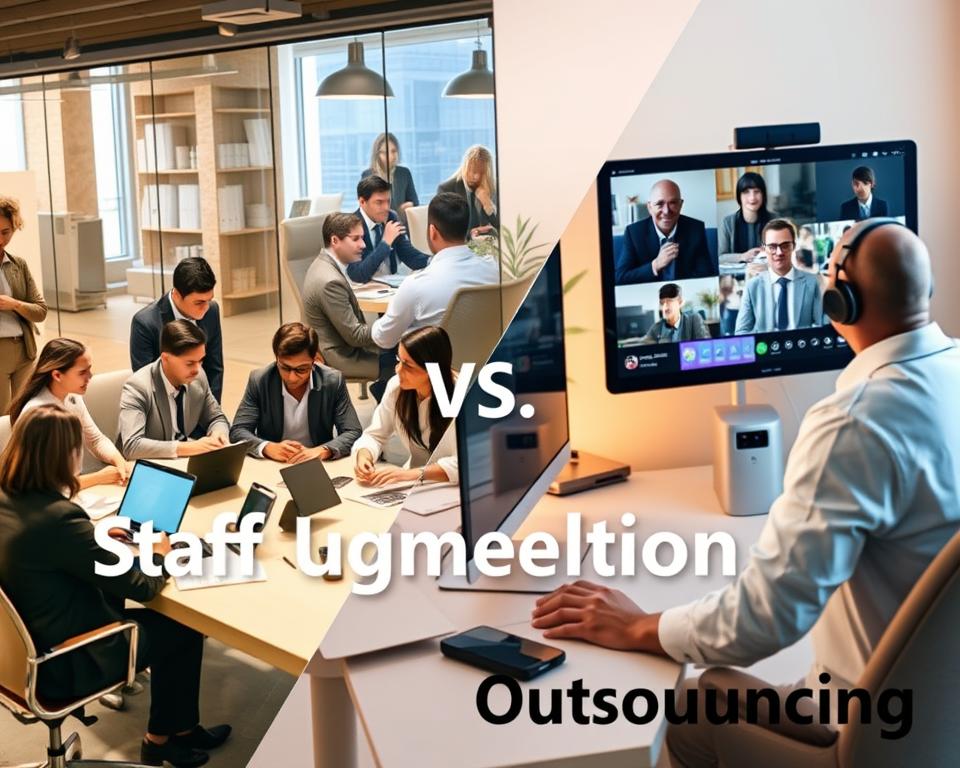
Staff Augmentation vs. Outsourcing and Managed Services
In engineering project management, knowing the differences between staff augmentation, outsourcing, and managed services is key. These strategies help companies grow their engineering teams but vary in control, management, and fit with company culture.
Control and Management Differences
Staff augmentation lets companies keep control over projects by adding external engineers to their teams. This way, businesses manage both their own staff and the augmented team together. This ensures consistent project direction and oversight.
On the other hand, outsourcing and managed services mean giving project control to outside providers. This can lead to less direct control over the project’s day-to-day work.
Integration with Company Culture
Staff augmentation is great for seamless integration of external engineers into a company’s culture. These engineers work with the in-house team, adopting the same processes and cultural norms. This integration boosts collaboration and ensures the augmented staff shares the company’s goals and values.
While outsourcing and managed services providers may try to fit in, they can’t match the level of integration staff augmentation offers. Choosing staff augmentation helps companies use external talent while keeping control and cultural cohesion. This is vital for successful project execution.
Engineering Roles Ideal for Staff Augmentation
Many engineering roles are perfect for staff augmentation. This helps companies grow their teams well and fast.
Software Engineers and Full-Stack Developers
Software engineers and full-stack developers are very sought after. They can create, test, and keep software running. This is key for projects needing special tech skills.
Cloud Architects and DevOps Engineers
Cloud architects and DevOps engineers are key in today’s IT world. They design and manage cloud setups and ensure smooth DevOps work. This is super useful for companies using cloud tech.

Data Engineers and Machine Learning Specialists
Data engineers and machine learning experts are vital for using data and AI. They handle data, create and use AI models, and help find new business ideas.
Quality Assurance and Automation Engineers
QA and automation engineers are key for making sure software is good and reliable. They test, use automation, and help with the software development process. This keeps software up to high standards.
Cybersecurity Experts
Cybersecurity experts are crucial in today’s digital world. They keep networks, systems, and data safe. This is important for companies to protect their stuff and follow security rules.
Choosing the right engineering roles for staff augmentation helps companies meet their project needs. It boosts their tech skills and leads to business success.
Strategic Scenarios for Implementing Staff Augmentation
Staff augmentation is key when you know exactly when to use it. It helps companies tackle engineering challenges and grow their business.
Project-Based Engineering Initiatives
It’s great for projects that need special skills for a short time. Companies can add experts to their teams. This way, they can finish projects well without hiring full-time staff.
Technology Migration and Modernization
When updating technology, staff augmentation brings the needed skills. It helps with cloud migration, updating old systems, and integrating new tech.

Scaling During Growth Phases
For companies growing fast, staff augmentation is a quick fix. It lets them expand their engineering teams fast. This way, they meet demand without hiring delays.
Filling Critical Skill Gaps
It’s also good for filling skill gaps in teams. By adding specialists, companies boost their skills. This leads to better project results.
Knowing when and how to use staff augmentation helps businesses reach their engineering goals.
The Staff Augmentation Implementation Process
The staff augmentation process is key to growing engineering teams. It includes several important steps. These steps help the new staff fit well into the team.
Step 1: Defining Technical Requirements and Scope
Starting with technical requirements is essential. It means making clear job descriptions and setting project timelines.
Creating Detailed Role Specifications
It’s important to make detailed role specifications. These should list the needed skills, experience, and duties. This helps find the right people for the job.
Setting Timeline and Duration Expectations
It’s crucial to set clear timeline and duration expectations. This helps manage project goals and deadlines. It keeps everyone on the same page.
| Role Specification | Timeline Expectation | Duration |
|---|---|---|
| Software Engineer | Immediate Start | 6 months |
| DevOps Engineer | 2 weeks | 9 months |
| QA Engineer | 1 month | 3 months |
Step 2: Partner Selection and Vetting
Finding the right partner is crucial. Look for partners known for quality technical talent. For more on building a tech team, visit Next Big Technology.
Step 3: Candidate Evaluation and Technical Interviews
After choosing a partner, evaluate candidates through technical interviews. This makes sure they have the right skills for the job.
Step 4: Onboarding and Integration
The last step is onboarding the new staff. Give them the tools and info they need for a smooth start. A well-integrated team is key to success.

Building High-Performance Hybrid Engineering Teams
The success of hybrid engineering teams relies on good communication, an inclusive culture, and shared goals. As more companies move to hybrid models, it’s key to know how to build top teams.
Establishing Communication Protocols
Good communication is the heart of any team’s success. For hybrid engineering teams, this means:
Daily Standups and Collaboration Tools
Using daily standups and tools like Slack or Microsoft Teams boosts communication and keeps projects on track.
Documentation Standards
Having clear documentation standards helps everyone stay in sync. This cuts down on confusion and boosts team efficiency.

Creating Inclusive Team Culture
An inclusive culture is crucial for hybrid teams. It means promoting diversity, equity, and inclusion. It also means making sure everyone feels valued and part of the team.
Aligning Goals and Expectations
It’s important to align goals and expectations across the team. This helps everyone work towards the same goals. Clear, measurable goals and regular check-ins are key.
By focusing on these areas, companies can create hybrid engineering teams that innovate and succeed.
Managing Augmented Engineers Effectively
To get the most out of staff augmentation, companies need to manage augmented engineers well. This means setting clear goals, giving them the right tools, and keeping everyone accountable.
Setting Clear Performance Metrics
It’s important to have clear goals for augmented engineers. This includes specific project targets, quality standards, and deadlines. Clear goals help everyone work together towards the project’s success.
Providing Necessary Tools and Access
Augmented engineers need the right tools and access to do their jobs well. This means giving them the software, hardware, and project documents they need. Having the same access as in-house employees helps them fit in better and work more efficiently.
Regular Feedback and Performance Reviews
Regular feedback and reviews are key to managing augmented engineers. They help spot areas for improvement, solve problems quickly, and celebrate successes. Good feedback keeps augmented engineers performing at their best and helps them meet project needs.
Maintaining Team Accountability
Keeping the team accountable is crucial when managing augmented engineers. This means defining roles, tracking progress, and fixing any issues. By keeping augmented staff accountable, companies can ensure projects are done right.
Managing augmented engineers well is essential for staff augmentation success. By using these strategies, companies can get the most out of staff augmentation and reach their project goals.
Cost Considerations and Budget Planning
To get the most from staff augmentation, companies need to focus on cost considerations and budgeting. Good financial planning helps organizations use staff augmentation services wisely. It keeps their expenses in check.
Understanding Pricing Models
Staff augmentation pricing can change a lot, based on the provider and the services needed. There are two main pricing types: hourly and monthly rates.
Hourly vs. Monthly Engagement Rates
Hourly rates are best for short-term or specific projects. Monthly rates offer a steady cost for longer periods.
Contract Duration Impact on Costs
Contract length affects costs too. Longer contracts might get better rates. Companies should think about their project needs to pick the best pricing model.
Total Cost of Ownership Analysis
Doing a total cost of ownership (TCO) analysis is key to knowing the real cost of staff augmentation. It looks at direct costs of the staff and indirect costs like management and infrastructure.
| Cost Component | Description | Estimated Cost |
|---|---|---|
| Direct Labor Costs | Costs for the augmented staff | $50,000 – $100,000 |
| Management Overhead | Costs for managing the staff | $10,000 – $20,000 |
| Infrastructure Expenses | Costs for equipment and software for the staff | $5,000 – $10,000 |
ROI Calculation for Staff Augmentation
To figure out the ROI for staff augmentation, compare the benefits from the staff to the total costs. Use this budgeting template to track your ROI.
By looking at pricing models, doing a detailed TCO analysis, and figuring out ROI, companies can make smart choices about staff augmentation. This ensures they meet their financial goals.
Legal and Compliance Requirements in the United States
The legal rules for staff augmentation in the United States are complex. They require careful attention to many compliance areas. As companies grow their engineering teams, knowing and following these laws is key.
Worker Classification and Tax Implications
Classifying workers correctly is a major legal issue. Calling employees independent contractors can cause big legal and money problems. The IRS uses a 20-factor test to decide if someone is an employee or contractor.
Key factors influencing worker classification include:
- Degree of control over work performed
- Opportunity for profit or loss
- Permanency of the working relationship
- Skill required for the work
Intellectual Property Rights and Agreements
Protecting intellectual property (IP) is very important in staff augmentation. Companies must make sure IP rights are clear in contracts with augmented staff.
Essential elements of IP agreements include:
- Clear definition of IP ownership
- Confidentiality and non-disclosure clauses
- Provisions for handling inventions and creations
Data Protection and Security Compliance
Data protection is a critical compliance area. Staff augmentation means sharing sensitive data with outside workers. This requires strong data security steps.
GDPR and CCPA Considerations
For companies dealing with EU citizens’ or California residents’ data, following GDPR and CCPA rules is a must. This includes making the right data processing agreements and being open about how data is handled.
Industry-Specific Regulations
Different industries have their own rules for data security and privacy. For example, healthcare must follow HIPAA, and finance must follow GLBA.
| Regulation | Industry | Key Requirements |
|---|---|---|
| HIPAA | Healthcare | Protect patient health information |
| GLBA | Financial Services | Safeguard customer financial information |
| GDPR | General | Protect EU citizens’ personal data |
In conclusion, understanding the legal and compliance landscape is crucial for staff augmentation success. By knowing how to classify workers, protecting IP, and keeping data safe, businesses can avoid risks and grow their engineering teams well.
Selecting the Right Staff Augmentation Provider
Finding the right staff augmentation provider is key to your project’s success. The right one can boost your team’s skills. The wrong choice can cause delays and inefficiencies.
Essential Evaluation Criteria
When looking at potential providers, focus on these important factors:
Technical Expertise and Talent Pool Quality
Check if the provider knows the tech your project needs. For example, if you’re moving to the cloud, they should know cloud tech well.
Replacement and Support Policies
Make sure the provider can quickly replace staff who aren’t doing well. They should also offer good support during the project.
Track Record and Client References
Look at the provider’s past work and what clients say. A good provider has a strong track record and can share references. Check their success stories and client feedback.
| Evaluation Criteria | Importance Level | Example Assessment |
|---|---|---|
| Technical Expertise | High | Check for relevant tech stack experience |
| Talent Pool Quality | High | Review resumes and conduct interviews |
| Replacement Policies | Medium | Understand their replacement process and timeframe |
| Track Record | High | Verify client references and case studies |
Questions to Ask During Provider Selection
Ask potential providers about their experience with similar projects. Also, ask about their approach to talent acquisition and quality and timely delivery strategies. For more insights, check out Choosing the Right Staff Augmentation Provider.
Warning Signs of Unreliable Providers
Watch out for providers who:
- Promise quick results or guaranteed success
- Are unclear about their pricing or processes
- Have bad client references or failed projects
By carefully evaluating these points and knowing the warning signs, you can find a provider that fits your project goals and improves your team’s skills.
Overcoming Common Staff Augmentation Challenges
Staff augmentation is helpful but comes with challenges. Companies growing their engineering teams face issues that can affect project timelines and quality. It’s important to manage these challenges well.
Addressing Time Zone and Communication Issues
Managing time zone differences is a big challenge. It can make real-time communication hard. To solve this, companies can set overlapping work hours. This way, team members in different time zones can work together during the same hours.
Managing Cultural and Work Style Differences
Cultural differences can also be a challenge. It’s key to create an inclusive team culture that values everyone’s background and work style. Cultural sensitivity training and team-building activities can help build unity and understanding.
Ensuring Code Quality and Standards Compliance
Keeping code quality high is crucial when adding new staff. Setting clear coding standards and doing regular code reviews helps meet quality benchmarks.
Handling Knowledge Transfer and Documentation
Good knowledge transfer is essential for staff augmentation success. Using strong documentation practices and regular knowledge-sharing sessions helps everyone stay on the same page.
By tackling these challenges head-on, companies can make the most of staff augmentation. This way, they can reach their project goals efficiently.
“The key to successful staff augmentation lies in understanding and mitigating its inherent challenges.” –
Best Practices for Sustained Staff Augmentation Success
To get the most out of staff augmentation, companies need to follow best practices. These practices help ensure long-term success. Success in staff augmentation requires a thoughtful plan that goes beyond the start.
Treating Augmented Staff as True Team Members
It’s important to make augmented staff feel like part of the team. This means giving them the same access to resources as everyone else. It also means encouraging them to work together and making them feel included.
By doing this, companies can unlock the full potential of their augmented staff.
Implementing Robust Knowledge Management
Good knowledge management is key to keeping things running smoothly and preventing knowledge loss. This can be done by documenting processes and holding regular knowledge-sharing sessions. Using collaboration tools also helps.
Planning for Succession and Continuity
Companies should have a plan for when team members leave. This plan should identify key roles and develop talent within the company. It should also have a plan for when team members move on.
Scaling Augmentation Strategy with Business Growth
As a business grows, its staff augmentation strategy needs to grow too. This means regularly checking in with business needs and adjusting the strategy as needed. It’s important to make sure the strategy still fits with the company’s goals.
By following these best practices, companies can make staff augmentation a long-term success. This helps drive business growth.
Conclusion
Staff augmentation is key for companies wanting to grow their engineering teams fast. It lets businesses bring in outside talent to speed up innovation and improve software development.
This method offers many advantages. It gives quick access to specialized skills, flexible team management, and cuts down on hiring costs. It helps companies stay competitive in the fast-changing tech world.
Staff augmentation is a smart choice for companies facing the challenges of growing their engineering teams. It helps teams work better together and encourages innovation.
In short, staff augmentation is a smart way to grow engineering teams and boost innovation. As technology keeps changing, using this flexible and efficient method is vital for businesses to stay ahead.