







The rise of newsletter platforms has changed how creators and businesses reach their audiences. Substack, a leading platform, has made it easier for writers and leaders to earn from their work.
As more people want similar platforms, knowing about app development is key. It’s important to think about the features that keep users interested, the cost of making the app, the tech stack needed, and the timeline for its launch.
Creating a Substack-like app needs a good grasp of the tech and what both creators and readers want.
Table of Contents
Key Takeaways
- Understanding the Substack model and its implications for businesses and creators.
- The importance of features, cost, tech stack, and timeline in app development.
- Considerations for developing a successful newsletter platform.
- The role of technology in shaping the future of content creation.
- Key factors to consider when launching a Substack-like application.
Understanding Substack and the Newsletter Platform Market
The newsletter platform market is booming, with Substack leading the way. It lets creators make money from their content easily. Substack makes it simple for writers and creators to publish and share newsletters.

What Makes Substack a Market Leader
Substack’s success comes from a few key points. Firstly, its ease of use lets writers start newsletters without tech skills. Its monetization model lets creators charge for content, changing the game for creators.
- Simple and intuitive interface for creators
- Robust monetization options through paid subscriptions
- Effective distribution and discovery features
The Rise of the Creator Economy and Newsletter Monetization
The creator economy is growing fast, with more people using Substack to make money. This is because they want financial independence and to connect with their audience. Newsletter monetization is key, letting creators earn from their work.
- Increased demand for direct-to-consumer content
- Growing importance of email newsletters as a medium
- Rise of paid subscription models for exclusive content
Why Businesses Are Building Substack Alternatives
Even with Substack’s success, businesses want to create their own platforms. They aim to offer customized features or solutions that Substack doesn’t have. This lets businesses tap into the growing demand for newsletter platforms.
They want more customization options, better integration with their systems, and to serve specific markets better.
Business Case for Developing a Substack-Like Platform
Newsletter monetization is on the rise, making a platform like Substack very appealing. The creator economy is booming. Content creators are always looking for new ways to make money. A Substack-like platform can offer a solid solution for creators to share and earn from their content.
Revenue Generation and Monetization Models
Creating a Substack-like platform can lead to a lot of money. There are many ways to make money, such as:
- Subscription-based models: Creators can charge for premium content.
- Paid newsletters: Writers can get money from readers for exclusive content.
- Sponsored content: Brands can pay to reach specific audiences.
This variety of ways to make money can attract many creators and businesses.

Competitive Advantages of a Custom Platform
Building a custom Substack-like platform has many benefits. These include:
- Customization: You can make the platform fit your audience’s needs.
- Integration capabilities: It can work well with other tools and services.
- Brand identity: You can create a unique brand that stands out.
Experts say, “A custom platform lets you be more flexible and innovative. This helps you stay ahead in the market.” (Source: Industry Report)
“The key to success in the creator economy is providing platforms that empower creators to build sustainable businesses.” (
)
Target Audience and Market Opportunities
Knowing who to target is key for a Substack-like platform. The main audience includes:
- Content creators: Writers, bloggers, and journalists wanting to make money from their work.
- Businesses: Companies looking to use newsletters for marketing and engaging with customers.
By focusing on these groups, a Substack-like platform can tap into the growing demand for newsletter services. This can help it become a strong player in the market.
Core Features for Your Substack-Like Application
A Substack-like platform needs to have many features. These help with creating content, managing subscriptions, and sending out newsletters. They make sure both creators and readers have a smooth experience.
User Authentication and Profile Management
User authentication is key for any subscription service. It makes sure only the right people can see premium content and manage their subscriptions. A good system should have:
- Secure login and registration processes
- Password recovery and reset options
- Profile customization to enhance user engagement
Content Creation and Rich Text Editor
A rich text editor is vital for creators to make great content. It should have many formatting options, such as:
- Text styling and alignment tools
- Image and media embedding capabilities
- Draft saving and revision history

Subscription Management and Tiered Access
Good subscription management is important for making money from content. The platform should have tiered access. This lets creators offer different content or perks based on the subscription level.
| Subscription Tier | Benefits | Price |
|---|---|---|
| Basic | Access to basic content | $5/month |
| Premium | Access to premium content, exclusive newsletters | $10/month |
| Pro | All premium benefits, plus personalized support | $20/month |
Email Newsletter Distribution System
An effective email newsletter system is crucial for sending content to subscribers. It should have high deliverability rates and follow email rules.
Key features of the email newsletter system include:
- Customizable newsletter templates
- Scheduling and automation capabilities
- Analytics for tracking open rates and engagement
Advanced Features to Enhance Platform Functionality
There are many advanced features that can make your Substack-like app better. These features improve how users experience your app. They also give valuable insights to writers and admins, helping your platform succeed.
Analytics Dashboard for Writers and Administrators
An analytics dashboard is key for any newsletter app. It gives writers and admins insights into how subscribers interact with content. This helps them make their content better and engage more with their audience.
What makes a good analytics dashboard includes:
- Tracking how many new subscribers you get
- Looking at email open and click-through rates
- Tracking how much money you make
- Getting demographic info to make content more targeted

Payment Processing and Subscription Billing
Good payment processing and subscription billing systems are essential. They handle recurring payments and subscriptions smoothly. Your system should work with many payment gateways, handle different currencies, and make it easy for subscribers to pay.
Important things to think about for payment processing include:
- Working with popular payment gateways like Stripe and PayPal
- Supporting many currencies and following tax laws
- Automating billing and managing subscriptions
- Keeping user data safe during payment
Community Engagement Tools and Comment Systems
Community engagement is key to building a loyal reader base. Tools like comment systems, forums, and social sharing buttons help create a community. They make users feel connected to each other.
Good community tools include:
- Comment sections where users can discuss
- Buttons to share content on social media
- Polls and surveys to get feedback
- Connecting with social media for more engagement
Mobile Application Support
In today’s world, having a mobile application is important. A mobile app gives users a personalized and easy way to read content on their phones or tablets. It makes reading on the go easier.
Important things to consider for mobile app support include:
- Creating native apps for iOS and Android
- Using cross-platform development to save money
- Sending push notifications for updates
- Allowing users to read offline for a better experience
Content Management System Requirements
The heart of any newsletter platform is its content management system. It must be both strong and easy to use. A good CMS is key for creating, managing, and sharing content smoothly.
Draft Management and Publishing Workflows
Draft management is key for writers and editors to work well together. The CMS should let users easily make, edit, and save drafts. A solid publishing workflow helps content get reviewed, approved, and published on time.
Tools like version control, comments, and @mentions make teamwork better and the publishing process smoother.

Media Library and Asset Management
A good media library is essential for keeping track of images, videos, and audio. The CMS should handle many file types and offer tools for editing images and adding captions.
Good asset management means media files are easy to find and use in different parts of the platform.
Content Scheduling and Automation
Content scheduling lets writers plan and automate their posts ahead of time. This is great for keeping a regular schedule, which keeps readers coming back.
The CMS should let users schedule posts for later, set up recurring posts, and share on social media automatically.
SEO Optimization Features
SEO optimization is vital for making newsletter content more visible online. The CMS should have SEO tools like keyword research and meta tags editing.
It should also help users check their content’s SEO and suggest ways to improve.
Tech Stack for Substack Like App Development – Features, Cost, Tech Stack & Timeline
Choosing the right tech stack is key for a Substack-like app. It affects performance, cost, and how long it takes to develop. The tech stack you pick impacts your app’s success.
Frontend Technologies
For the frontend, you can use React, Vue.js, or Next.js. Each has its own benefits:
- React is great for building reusable UI components and handling state changes well.
- Vue.js is progressive and flexible, making it easy to work with other projects.
- Next.js boosts SEO and performance with server-side rendering and static site generation.

Backend Technologies
The backend is crucial for your app, handling data and communication. Popular choices are Node.js, Python, or Ruby on Rails:
- Node.js is perfect for real-time apps, offering non-blocking I/O and a vast package ecosystem.
- Python is simple and widely used in data science and machine learning.
- Ruby on Rails is great for quick development, following the convention over configuration principle.
Database Options
Choosing the right database is essential for storing and managing data. You can pick relational databases like PostgreSQL or MySQL, or NoSQL databases like MongoDB:
- PostgreSQL is a powerful, open-source relational database with advanced features.
- MongoDB is a popular NoSQL database, ideal for large amounts of unstructured data.
- MySQL is a widely-used relational database management system known for its reliability.
Cloud Infrastructure
For hosting, consider AWS, Google Cloud, or Microsoft Azure. These platforms offer scalable resources, security, and various services:
- AWS provides a wide range of services, including computing, storage, and databases.
- Google Cloud is known for its AI and machine learning capabilities, along with robust data analytics tools.
- Microsoft Azure offers a comprehensive cloud platform with strong integration with Microsoft products.
By carefully choosing your tech stack, you can build a Substack-like app that scales, performs well, and grows in the future.
Email Infrastructure and Delivery Architecture
Email infrastructure and delivery architecture are key to newsletter platforms. A good email system makes sure newsletters reach subscribers quickly and correctly.
Email Service Providers: SendGrid, Mailgun, or Amazon SES
Picking the right Email Service Provider (ESP) is vital for your newsletter’s success. SendGrid, Mailgun, and Amazon SES are top choices. Each has its own strengths and benefits.
| ESP | Key Features | Pricing |
|---|---|---|
| SendGrid | Email delivery, scalability, analytics | Starts at $19.95/month |
| Mailgun | Email sending, tracking, APIs | Starts at $35/month |
| Amazon SES | High deliverability, cost-effective, scalable | Pay-as-you-go pricing |
A SendGrid report says, “Email is a key channel for businesses. 64% of marketers find it the most effective for making money.”
“Email is a critical channel for businesses, with 64% of marketers saying it’s their most effective channel for revenue generation.”
Ensuring High Deliverability Rates
Keeping deliverability rates high is crucial for a healthy email system. To do this, follow best practices like:
- Authenticating emails using SPF and DKIM
- Keeping your email list clean
- Avoiding spam triggers
- Watching bounce and complaint rates

Managing Email Lists and Segmentation
Good email list management means segmenting your audience. This way, you can send content that’s more relevant. It helps keep people interested and reduces the chance they’ll stop getting your emails. Strategies include:
- Segmenting by what subscribers like
- Using data to make content personal
- Keeping your email list up to date
By using these methods, you can boost your email deliverability and make your campaigns more effective.
Payment and Subscription Infrastructure
Creating a solid payment system is key for any Substack-like app. It’s the core of how creators get paid from their subscribers. This system makes sure transactions run smoothly.
Integrating Stripe, PayPal, or Braintree
First, you need to link a reliable payment gateway. Stripe, PayPal, and Braintree are top choices. Each has its own strengths:
- Stripe: Easy to set up and has a strong API, Stripe supports many payment methods and currencies.
- PayPal: A trusted name, PayPal offers flexible payment options.
- Braintree: Part of PayPal, Braintree has a full payment platform with advanced tools.
Handling Recurring Billing and Subscription Logic
Managing subscriptions is vital for steady income. Your system must handle:
- Automated billing cycles
- Managing different subscription levels
- Dealing with failed payments and retries
- Handling changes in subscription plans
Revenue Sharing and Payout Systems
For platforms with many creators, a fair revenue-sharing model is essential. It should track earnings, subtract fees, and pay creators on time. A clear and quick payout system keeps creators happy and trusting the platform.
Tax Compliance and Financial Reporting
Keeping up with taxes is crucial for financial health. Your system should handle tax calculations, create financial reports, and show revenue trends. This helps with taxes and planning for the future.
| Payment Gateway | Key Features | Transaction Fees |
|---|---|---|
| Stripe | Robust API, multi-currency support | 2.9% + $0.30 per transaction |
| PayPal | Trusted brand, flexible payment solutions | 2.9% + $0.30 per transaction |
| Braintree | Comprehensive payment processing, advanced features | 2.9% + $0.30 per transaction |

Development Process and Timeline Breakdown
Creating a Substack-like app is a detailed process. It needs careful planning and execution. Knowing the steps and timeline helps manage expectations and resources well.
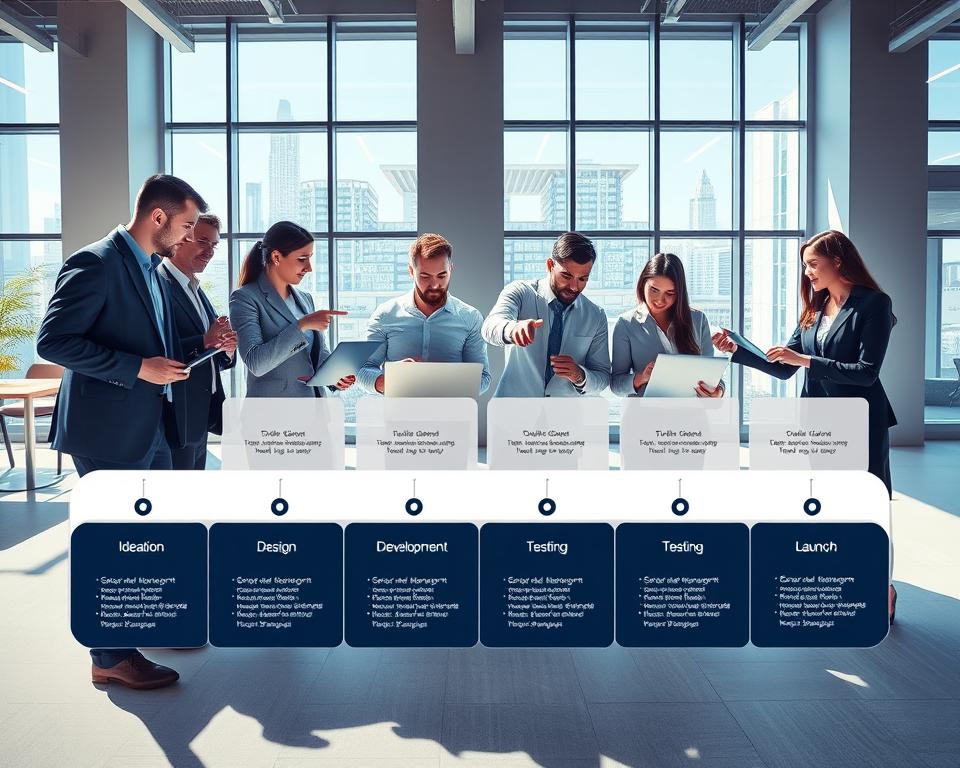
Discovery and Requirements Gathering (2-3 weeks)
The first step is to gather requirements and understand the audience’s needs. This stage is key for setting the project’s scope and spotting challenges. Key activities include market research, competitor analysis, and stakeholder interviews.
UI/UX Design and Prototyping (3-4 weeks)
After gathering requirements, the next step is designing a user-friendly interface. This involves making wireframes, prototypes, and detailed designs. A good UI/UX is essential for keeping users engaged.
Backend and Frontend Development (12-16 weeks)
The development phase is the longest part. It includes both backend and frontend work. Backend focuses on server logic, database, and API. Frontend creates the user interface. This phase needs skilled developers and thorough testing for a smooth user experience.
Quality Assurance and Testing (3-4 weeks)
After development, testing is done to find and fix bugs. It checks for compatibility and performance. Quality assurance is key for a reliable product.
Deployment and Launch (1-2 weeks)
The last stage is deploying the app and making it public. It includes setting up infrastructure and planning for support. A successful launch needs careful planning to ensure a smooth experience.
In summary, making a Substack-like app is complex. It requires detailed planning, skilled work, and thorough testing. Understanding the process and timeline helps manage resources and expectations for a successful launch.
Comprehensive Cost Analysis for Development
When planning to create a Substack-like app, a detailed cost analysis is key. Knowing all the costs helps in setting a budget and making smart decisions about the project’s scope and timeline.
Development Team Costs by Region
The cost of a development team changes a lot depending on where they are from. For example, developers in North America often charge more than those in Eastern Europe or Asia. A Glassdoor report shows that in the U.S., a software developer’s average salary is about $114,000. In India, it’s much lower, around $7,000 a year.
When setting your development budget, remember these regional differences. They can greatly affect your development cost. Companies need to balance the benefits of hiring locally against the savings of outsourcing.
Third-Party Services and API Costs
Costs for third-party services and APIs are also important. These include email providers like SendGrid or Mailgun, and payment gateways like Stripe or PayPal. These tools are crucial for the platform’s functionality.
For instance, email service providers charge based on email volume. SendGrid offers discounts for sending more emails. These costs can add up, especially for platforms expecting a large user base.
Infrastructure and Hosting Expenses
Infrastructure and hosting costs are also key. Cloud providers like AWS, Google Cloud, or Microsoft Azure offer scalable solutions but at different prices. The choice of provider and the scale needed can greatly affect costs.
AWS Pricing notes that you only pay for what you use, without long-term contracts. This pay-as-you-go model can manage costs well if planned carefully to avoid surprises.
Total Investment: MVP vs Full-Featured Platform
Businesses must choose between an MVP or a full-featured platform. An MVP costs less upfront and focuses on core features for early feedback and iteration.
Forbes says an MVP attracts early users and validates the product idea early. This approach can cut initial development costs and allow for budget flexibility as the platform grows.
A full-featured platform costs more upfront but offers a more complete solution from the start. The choice depends on the business’s goals, budget, and market conditions.
Building Your Development Team
Creating a development team is key to making your Substack-like app real. You’ll make important choices that affect your project’s success.
Essential Roles: Developers, Designers, and QA Engineers
A good development team has different roles. Developers write the code for your app. They are frontend, backend, or full-stack, each important in their own way.
Designers work on the app’s look and feel. They make sure it’s nice to look at and easy to use.
QA Engineers test the app, find bugs, and check if it’s up to standard. They’re key to a quality product.
In-House Development vs Outsourcing Agencies
Choosing between in-house or outsourced development is a big decision. In-house development means more control and a tight team.
Outsourcing gives you more skills and can speed up work. Think about what your project needs.
Freelancers vs Dedicated Development Teams
Deciding between freelancers or a dedicated team is also important. Freelancers are good for specific tasks or short projects. They’re flexible and skilled.
A dedicated team offers a unified effort. They work together, leading to better results.
In summary, building a development team needs careful thought. Consider the roles, in-house vs outsourcing, and freelancers vs dedicated teams. The right team can make your app a reality.
Overcoming Development Challenges and Implementation Best Practices
To succeed in the newsletter market, developers face many challenges. They must make their platform scalable and secure. A solid development plan is essential for overcoming these challenges and achieving success.
Scalability Planning for Growing User Bases
Scalability is key for a Substack-like platform’s success. As more users join, the platform must handle more traffic and data well. To do this, developers should:
- Implement load balancing to spread traffic across servers.
- Use cloud services like AWS or Google Cloud for auto-scaling.
- Make database queries and schema design faster for data retrieval.
Security Measures and Data Protection Compliance
Protecting user data is crucial. Developers must use strong security measures to prevent data breaches and follow laws like GDPR and CCPA. Important steps include:
- Encrypting data at rest and in transit.
- Using secure login methods like OAuth or JWT.
- Doing regular security checks and penetration tests.
Data protection compliance is more than avoiding fines. It’s about earning your users’ trust. By focusing on security, you build a safe and reliable platform that keeps users coming back.
Performance Optimization Strategies
Improving performance is vital for a smooth user experience. Ways to boost performance include:
- Reducing and compressing images and CSS files.
- Using caching to lessen server load.
- Employing CDNs to cut down latency.
By focusing on performance optimization, developers can keep their platform fast, even when it’s busy.
Post-Launch Support and Iteration
Support after launch is crucial for a Substack-like platform’s success. This means:
- Listening to user feedback and analytics to find areas to improve.
- Updating the platform with new features and fixes.
- Helping users quickly through various channels.
Continuous iteration based on user feedback is essential. It keeps the platform competitive and meets changing user needs.
Conclusion
Creating a Substack-like app needs careful planning and a solid tech stack. You must also follow a detailed development process. This way, you can build a platform that writers and readers will love.
The success of your app depends on a smooth user experience, strong content management, and good ways to make money. Adding features like user login, content tools, and subscription options is key. This helps keep users coming back for more.
Starting your own project? Use the tips from this article to make your app stand out in the newsletter world. With the right steps, you can build a community of writers and readers. And you’ll have a successful Substack-like app.