






In today’s digital world, application maintenance cost is key for businesses with mobile apps. These apps are crucial for their operations.
As tech gets better, apps need regular updates, bug fixes, and performance boosts. This keeps them competitive.
Budgeting for app maintenance is essential. It makes sure your app meets user needs and stays safe.
This article will look at what makes app maintenance cost high. It will also share tips on budgeting for these costs.
Table of Contents
Key Takeaways
- Understanding the factors that contribute to app maintenance cost
- The importance of budgeting for application maintenance
- Strategies for reducing app maintenance expenses
- Best practices for maintaining a mobile app
- Key considerations for businesses when budgeting for app maintenance
Understanding App Maintenance: Beyond Development
App maintenance is key to the app lifecycle, going beyond the initial development. Businesses invest in mobile and web apps. They must also plan for ongoing costs and efforts to keep apps running well and securely.

The App Lifecycle and Maintenance Phases
The app lifecycle has many stages, from idea to launch and beyond. Maintenance phases are essential. They keep the app working, safe, and competitive. This includes updates, bug fixes, security patches, and performance boosts.
“Maintaining an app is costly, but it’s crucial,” says a top app development expert. “It ensures the app meets user needs and business goals.”
Why Ongoing Maintenance Is Critical for Business Success
Ongoing maintenance is key for business success. It affects user happiness and keeps them coming back. Regular upkeep keeps the app working with new systems and devices, avoiding technical debt.
- Improves user experience with updates and bug fixes
- Keeps security up to date and compliant
- Ensures compatibility with new tech
By focusing on ongoing maintenance, businesses protect their investment. They boost customer happiness and drive long-term success.
The True Cost of Neglecting App Maintenance
Not keeping an app up to date can cause big problems. This includes security vulnerabilities and unhappy users. An app that’s not updated is easy prey for hackers, risking data breaches and money loss.
Security Vulnerabilities and Their Financial Impact
Security issues in an app can hurt a business’s wallet. Hackers might get into your data, causing big costs. A data breach can also harm your company’s image, losing customer trust.

User Abandonment and Revenue Loss
Ignoring app upkeep can lead to users leaving and losing money. If an app is slow or full of bugs, people will stop using it. This not only means lost sales but also hurts your brand’s image.
| Consequence | Impact |
|---|---|
| Security Breaches | Financial Loss, Reputation Damage |
| User Abandonment | Revenue Loss, Negative Reviews |
| Technical Debt | Increased Maintenance Costs, Complexity |
Technical Debt Accumulation
Also, ignoring app upkeep builds up technical debt. This is the cost of quick fixes that need to be fixed again later. Over time, this debt grows, making updates harder and more expensive.
In short, ignoring app maintenance can lead to serious problems. These include security issues, users leaving, and technical debt. Businesses need to keep their apps updated to avoid these big costs.
Breaking Down App Maintenance Cost: What Businesses Should Budget For
It’s key for businesses to break down app maintenance costs into parts. This helps them plan budgets and keep apps working well. Maintenance includes fixing bugs, updating software, and improving user experience.
Essential vs. Growth-Oriented Maintenance Expenses
Maintenance costs fall into two main groups: essential and growth-oriented. Essential expenses keep the app running, like fixing bugs and updating security. Growth-oriented expenses add new features and improve user experience.
Knowing the difference helps businesses decide where to spend. Essential costs keep the app working now. Growth-oriented costs help it grow and stay competitive.
Fixed vs. Variable Maintenance Costs
App maintenance costs can be fixed or variable. Fixed costs don’t change much, like server fees and salaries. Variable costs change with the work needed, like fixing bugs or adding new features.
| Cost Type | Description | Examples |
|---|---|---|
| Fixed Costs | Costs that remain constant over time | Server hosting fees, subscription services, maintenance personnel salaries |
| Variable Costs | Costs that fluctuate based on maintenance activity | Bug fixing, new feature implementation, security incident response |
Industry Benchmarks for Maintenance Budgets
Industry benchmarks help businesses set app maintenance budgets. Costs vary by app complexity and user base. A common rule is to spend 15% to 20% of the development cost each year.
For example, if an app cost $100,000 to make, budget $15,000 to $20,000 yearly for upkeep. But, actual costs can differ.
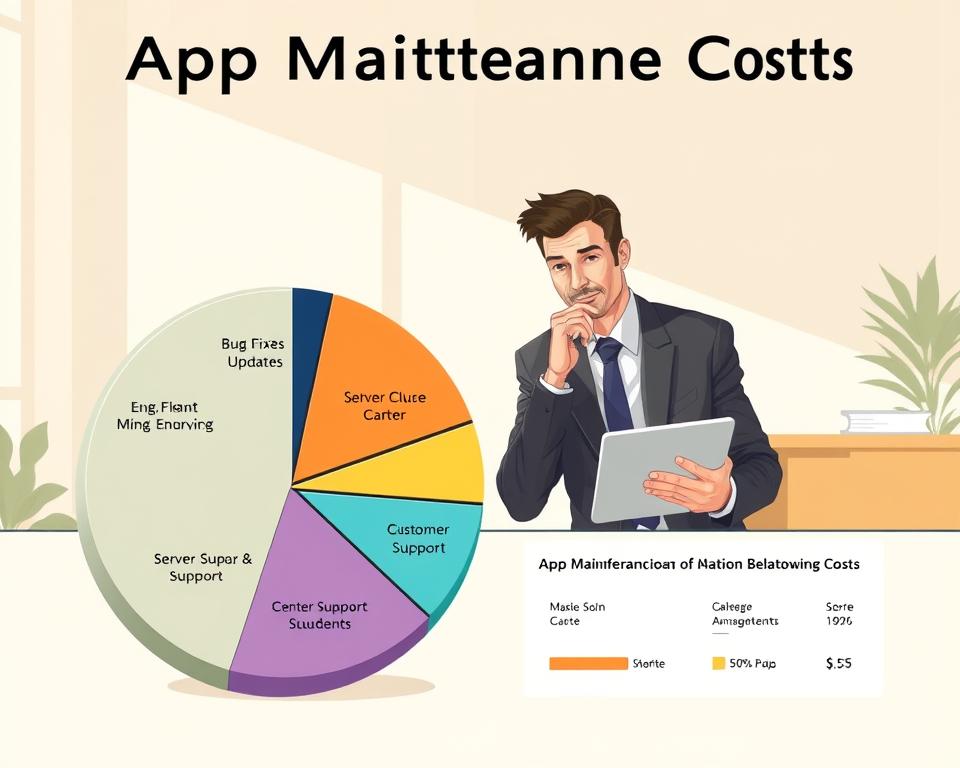
Understanding app maintenance costs and using industry benchmarks helps businesses budget better. This ensures their apps stay competitive and functional.
Maintenance Considerations for Different App Types
It’s important for businesses to know how to maintain different types of apps. Each app has its own needs based on its purpose, users, and how it works.
Mobile App Maintenance Specifics
Keeping mobile apps working right means they must be compatible with many devices and systems. Apps need updates to work with new operating systems and devices. For example, when a new iOS or Android comes out, apps must be updated to stay compatible.
Key considerations for mobile app maintenance include:
- OS version compatibility
- Device fragmentation
- App store guidelines compliance
Web Application Maintenance Requirements
Web apps need regular upkeep to stay safe, fast, and work with different browsers. Updates are key to fixing security issues and making the app better for users.
Keeping up with browser changes is important. When new browser versions come out, web apps must be tested and updated to work well.
| Maintenance Aspect | Mobile Apps | Web Applications |
|---|---|---|
| OS/Browser Compatibility | High | High |
| Security Updates | Regular | Continuous |
| User Interface Updates | Periodic | Frequent |
Enterprise Software Maintenance Considerations
Keeping enterprise software running well is complex. It’s because it’s deeply connected to business operations. Maintenance ensures the software stays in line with business needs, is secure, and follows rules.
“Effective maintenance of enterprise software is not just about fixing bugs; it’s about ensuring the software continues to support business objectives and adapts to changing regulatory landscapes.”
Key aspects include:
- Integration with other business systems
- Compliance with industry regulations
- Customization to meet evolving business needs

In conclusion, the upkeep needs of mobile apps, web apps, and enterprise software are quite different. Knowing these differences helps businesses use their resources wisely. This ensures their apps keep working well and meet business needs.
Technical Updates and Bug Fixes: Core Maintenance Expenses
Keeping an app running smoothly is all about regular updates and fixing bugs. These are key expenses that help an app last longer and work better.
Operating System Compatibility Updates
When operating systems change, apps need to keep up. This means regular updates to the app’s codebase to work well on new OS versions. Not updating can upset users and create security risks.
Bug Resolution and Performance Optimization
Finding and fixing bugs is a big part of app care. It involves thorough testing and debugging to make the app better and faster. Keeping the app running smoothly is key.

Third-Party API and Library Updates
Many apps use third-party APIs and libraries to work. Keeping these up-to-date is crucial for security and performance. Old APIs and libraries can cause problems and harm the user experience.
Important things to think about for updates and bug fixes include:
- Regularly reviewing and updating the app’s codebase
- Implementing a robust testing and debugging process
- Staying current with the latest OS versions and third-party components
By focusing on these key areas, businesses can keep their apps safe, efficient, and easy to use.
Security Maintenance: Protecting Your Investment
Security maintenance is key to keeping businesses safe from cyber threats. It makes sure the app and its data stay safe, private, and available.
Regular Security Audits and Penetration Testing
Security audits and penetration testing are vital. Security audits find weak spots in the app’s setup. Penetration testing mimics real attacks to test the app’s defenses.

“Penetration testing is a critical component of our security strategy. It helps us identify vulnerabilities before they can be exploited by malicious actors.”
Compliance Updates and Data Protection
Following rules is important to avoid legal and financial trouble. Compliance updates keep the app in line with new rules, like GDPR and HIPAA. Protecting user data is also crucial.
| Compliance Standard | Description | Impact on Application |
|---|---|---|
| GDPR | General Data Protection Regulation | Requires enhanced data protection measures |
| HIPAA | Health Insurance Portability and Accountability Act | Mandates secure handling of health information |
Emergency Security Patch Budgeting
Even with the best plans, security breaches can happen. Emergency security patch budgeting sets aside funds for quick fixes. It means having a plan and a team ready to act fast.
In summary, keeping security up is a big job that needs constant effort and money. By focusing on regular checks, updates, and being ready for emergencies, companies can lower the risk of security problems and keep their valuable assets safe.
Infrastructure and Hosting Costs
Expenses for infrastructure and hosting are key for any business wanting a strong online presence. These costs can greatly affect a company’s IT spending and profits.
Server and Cloud Service Expenses
Server and cloud service costs are big parts of infrastructure costs. Companies must choose between buying servers or using cloud services. Cloud services offer flexibility and scalability, letting businesses adjust as needed.

Database Management and Scaling Costs
Good database management is vital for keeping data safe and operations smooth. As businesses grow, their databases must also grow, adding costs. Scaling costs can be lowered by using efficient database management and scalable solutions.
Content Delivery Network (CDN) Expenses
A Content Delivery Network (CDN) is key for fast content delivery worldwide. CDNs improve user experience but add to costs. They are a part of the overall infrastructure cost.
Understanding and managing these costs helps businesses optimize their IT budgets. This improves their digital strategy.
User Experience Enhancements and Feature Updates
Businesses need to focus on improving user experience and adding new features. Regular updates fix problems and add value. This makes the app more appealing to users.
UI/UX Refreshes and Their ROI
A UI/UX refresh makes the app look modern and easier to use. Investing in a UI/UX refresh can yield a substantial return on investment (ROI). It keeps users coming back and attracts new ones.
The benefits of a UI/UX refresh can be seen in many ways. These include better user engagement, higher satisfaction, and more revenue. A good refresh can also make the app stand out in the market.

New Feature Development vs. Maintenance
It’s important to balance adding new features with keeping the app running smoothly. New features can draw in users, but maintenance keeps things working right.
Choosing how to use resources is key. A well-maintained app is a strong base for new features. Without maintenance, new features can’t succeed, and the app’s quality drops.
| Aspect | New Feature Development | Maintenance |
|---|---|---|
| Purpose | Attracts new users and drives engagement | Ensures existing features function smoothly |
| Resource Allocation | Requires significant upfront investment | Ongoing resource allocation |
| Impact | Can drive revenue and user growth | Prevents technical debt and user frustration |
User Feedback Implementation Costs
Using user feedback is key to improving the app. It involves listening to users, deciding what to change, and making those changes.
The cost of using user feedback can change based on the needed changes. Investing in user feedback can lead to significant long-term benefits. These include happier users and more loyalty.
To make the most of user feedback, focus on changes that fit your product strategy. Choose feedback that will have the biggest impact on the user experience.
Support and Customer Service Expenses
Creating an app is just the start. It also means dealing with ongoing costs for support and customer service. Businesses need to think about these expenses to keep users happy.

Technical Support Team Costs
Hiring a tech support team is key to support expenses. They need salaries, training, and tools to solve user problems. The cost depends on the team size and app complexity.
Customer Service Tools and Infrastructure
Businesses also need to invest in customer service tools and systems. This includes software for handling tickets, live chats, and CRM systems. These tools help manage customer interactions well.
Knowledge Base and Documentation Maintenance
A good knowledge base and documentation help cut down on support requests. The cost of making and keeping these resources up-to-date is part of customer service expenses. It covers both the initial setup and ongoing upkeep.
By planning for these costs, businesses can offer top-notch support and service. This helps their app succeed.
Calculating ROI for App Maintenance Investments
Businesses must understand how to calculate the ROI for app maintenance. They need to compare the financial benefits of maintenance to its costs.
Measuring the Business Impact of Maintenance Activities
It’s important to measure the business impact of maintenance. This can be done by tracking KPIs like user engagement and revenue. By linking these KPIs to maintenance, businesses can see its impact.
For example, if a maintenance update makes the app more stable, it can lead to happier users. This can result in more positive reviews and higher revenue.
Risk Mitigation Value Assessment
Assessing the value of risk mitigation is key to ROI for app maintenance. Regular maintenance helps avoid risks like security breaches. This can save businesses from huge costs.
A security breach can cause financial losses and damage to customer trust. By comparing these costs to maintenance costs, businesses can see the ROI.
Long-term Cost Savings from Regular Maintenance
Regular maintenance can save businesses money in the long run. It keeps the app running smoothly, avoiding costly fixes. It also makes the app last longer, delaying the need for a new one.
By being proactive with maintenance, businesses can save money. This makes their maintenance investments worthwhile.
Budgeting Models for App Maintenance
App maintenance budgeting isn’t a one-size-fits-all deal. It needs careful thought about the app type and its users. As apps are key in business and customer interaction, picking the best budgeting models is crucial.
There are many budgeting models for app upkeep, each with its pros and cons.
Percentage-Based Budgeting Approaches
One common method is the percentage-based budgeting. It sets aside a certain percent of the app’s original cost each year for upkeep. Experts say to budget 15-20% of the original cost annually for maintenance. This method is simple but might not cover unexpected costs or app changes.
Fixed vs. Flexible Maintenance Budgets
Choosing between a fixed or flexible maintenance budget is another key decision. A fixed budget offers stability in planning, while a flexible budget can adjust with the app’s performance and business needs.
“A flexible budget is great for apps with fast-changing needs or in competitive markets.”
- Fixed budgets are simpler to manage and stable financially.
- Flexible budgets adapt to changing situations.
Prioritization Frameworks for Limited Budgets
For businesses with tight budgets, prioritization frameworks are essential. These frameworks help pinpoint the most important upkeep tasks. By focusing on security, user experience, and business impact, limited budgets can be used wisely.
| Prioritization Factor | Description | Impact |
|---|---|---|
| Security | Fixing security issues | High |
| User Experience | Improving app usability and speed | Medium |
| Business Impact | Updates that meet business goals | High |
In summary, picking the right app maintenance budgeting model depends on the app’s needs, the business’s finances, and upkeep priorities. With the right model, businesses can keep their apps successful and relevant.
Cost Optimization Strategies for App Maintenance
Effective cost optimization for app maintenance requires smart planning and technology. By choosing the right strategies, companies can cut their maintenance costs. They can also keep their apps strong and competitive.
Preventative Maintenance to Reduce Long-term Costs
Preventative maintenance is all about being proactive. It includes regular updates, security patches, and performance tuning. This approach helps avoid expensive emergency fixes, saving money in the long run.
Automation and DevOps Implementation
Automation and DevOps make maintenance smoother. They reduce manual work and errors. Automation tools do repetitive tasks, and DevOps helps teams work better together.
Outsourcing vs. In-house Maintenance Teams
Choosing between outsourcing or in-house teams depends on several factors. Outsourcing can save on labor costs and offer specialized skills. On the other hand, in-house teams give more control and quicker responses.
| Strategy | Cost Savings | Implementation Complexity |
|---|---|---|
| Preventative Maintenance | High | Medium |
| Automation and DevOps | Medium | High |
| Outsourcing | Medium | Low |
Understanding each strategy’s pros and cons helps businesses make better choices.
Conclusion: Creating a Sustainable App Maintenance Budget
Creating a sustainable app maintenance budget is key for businesses. It ensures apps keep delivering value over time. App maintenance includes updates, security patches, and improving user experience.
A good app maintenance budget helps businesses use resources wisely. It reduces risks and saves money in the long run. Knowing what app maintenance costs involve helps in planning a budget.
To have a sustainable budget, businesses should look at industry standards. They should also focus on what’s most important and find ways to save money. This way, apps stay safe, efficient, and meet business goals.
By focusing on app maintenance and setting a proper budget, businesses can get the most out of their investment. This leads to ongoing success in the digital world.


