






Table of Contents
Understanding Monolithic and Microservices Architectures
What is a Monolithic Architecture?
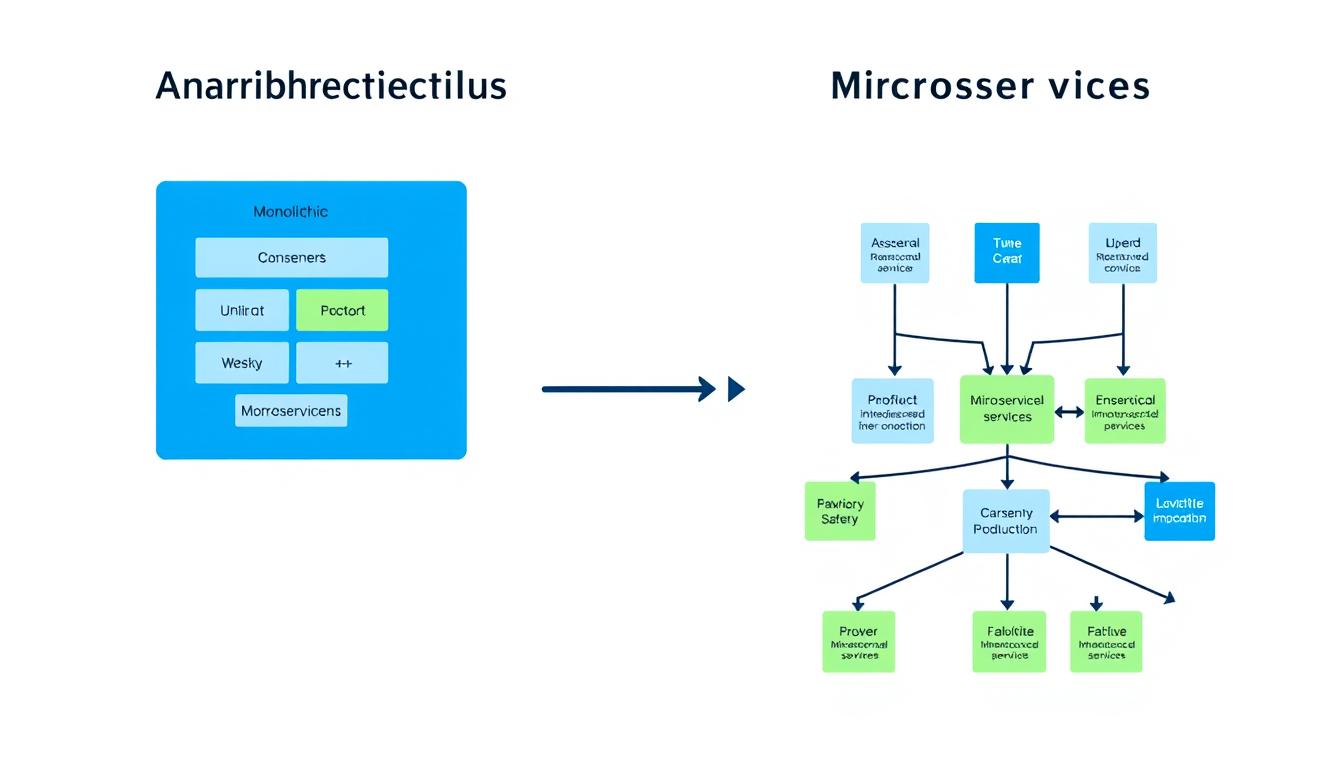
A monolithic architecture is like a single, large house where all rooms and functions exist under one roof. In software terms, it’s a traditional unified model where all components of an application are interconnected and interdependent, functioning as a single unit with one codebase. When you need to update any part of the application, you must rebuild and redeploy the entire system.
Think of a monolithic application as a chocolate cake where all ingredients are mixed and baked together. You can’t easily remove or replace just the chocolate without affecting the entire cake.
What is a Microservices Architecture?
Microservices architecture, by contrast, resembles a housing complex with multiple independent units that communicate with each other. Each microservice is a small, self-contained service focused on doing one thing well. These services communicate through well-defined APIs and can be developed, deployed, and scaled independently.
Using our food analogy, microservices are like a bento box with separate compartments for different dishes. You can easily replace or upgrade one dish without disturbing the others.
Monolith vs Microservices: Key Differences
| Characteristic | Monolithic Architecture | Microservices Architecture |
| Development Complexity | Simpler initial development | More complex setup and coordination |
| Deployment | Single deployment unit | Multiple independent deployments |
| Scalability | Must scale entire application | Can scale individual services as needed |
| Technology Stack | Single technology stack | Can use different technologies per service |
| Resilience | Single point of failure | Isolated failures |
| Team Structure | Centralized teams | Distributed, autonomous teams |
Pros and Cons Comparison

Advantages and Disadvantages of Monolithic Architecture
Monolith Advantages
- Simpler development process and learning curve
- Easier debugging and testing with a single codebase
- Faster performance for smaller applications (fewer network calls)
- Simplified deployment with a single executable or directory
- Lower initial complexity and operational overhead
- Easier to implement end-to-end testing
Monolith Disadvantages
- Limited scalability as application grows
- Entire application must be redeployed for any change
- Technology stack is fixed for the entire application
- Code becomes increasingly complex over time
- Reliability issues (one bug can crash the entire system)
- Challenging for large teams to collaborate efficiently
Advantages and Disadvantages of Microservices Architecture
Microservices Advantages
- Independent scaling of individual services
- Technology flexibility for each service
- Parallel development by multiple teams
- Isolated failures don’t affect the entire system
- Easier continuous deployment and integration
- Better suited for complex, evolving applications
Microservices Disadvantages
- Increased complexity in service coordination
- More challenging to test across service boundaries
- Network latency and reliability concerns
- Data consistency challenges across services
- Higher operational overhead and monitoring needs
- Requires mature DevOps practices and culture
Need help evaluating your architecture options?
Download our free Architecture Decision Framework to assess which approach best fits your project requirements, team structure, and business goals.
When to Choose Each Architecture
Ideal Use Cases for Monolithic Architecture
When to Choose a Monolith:
- Startups and MVPs – When you need to validate your idea quickly with minimal overhead
- Simple applications – For applications with limited complexity and well-defined scope
- Small development teams – When your team size doesn’t warrant the coordination overhead of microservices
- Limited scalability needs – For applications with predictable and moderate load requirements
- Tight budgets – When initial development and operational costs need to be minimized
“We started with a monolith because it allowed us to iterate quickly and get to market faster. As a startup, this was crucial for validating our business model before investing in a more complex architecture.”
Ideal Use Cases for Microservices Architecture
When to Choose Microservices:
- Large, complex applications – For systems with multiple distinct business domains
- High scalability requirements – When different components have varying load patterns
- Large development teams – For organizations with multiple teams that need to work independently
- Frequent deployments – When you need to update components independently and frequently
- Diverse technology needs – When different parts of your application benefit from different tech stacks
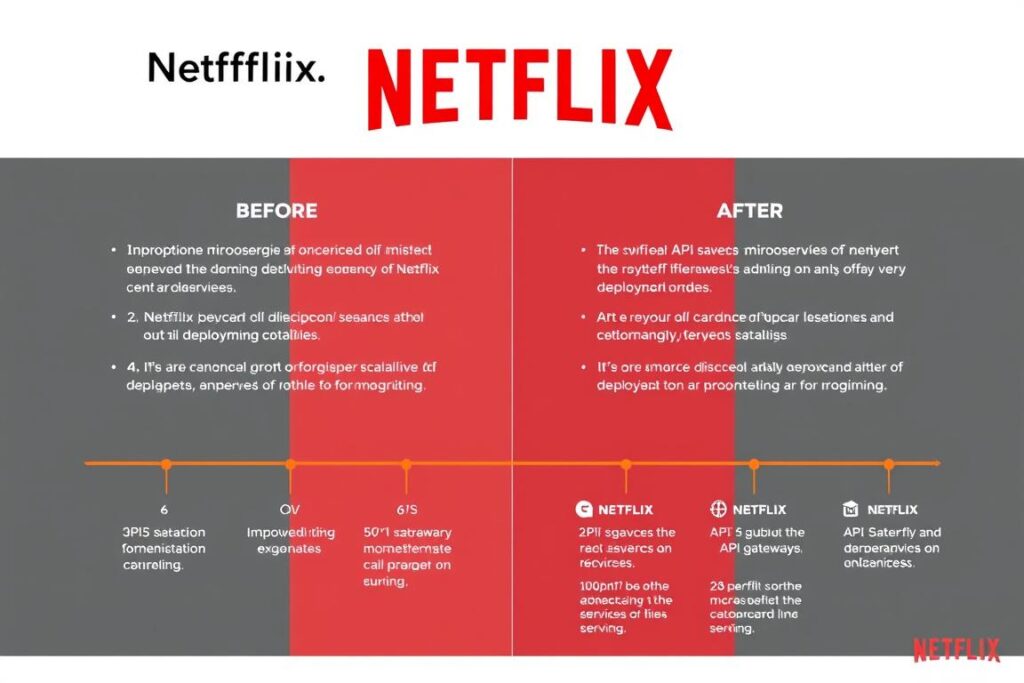
“Netflix’s migration to microservices enabled us to scale individual components independently and deploy thousands of times per day. This would have been impossible with our previous monolithic architecture.”
Real-World Examples
Monolithic Success Stories
Not every successful application needs microservices. Many companies continue to thrive with well-designed monolithic architectures:
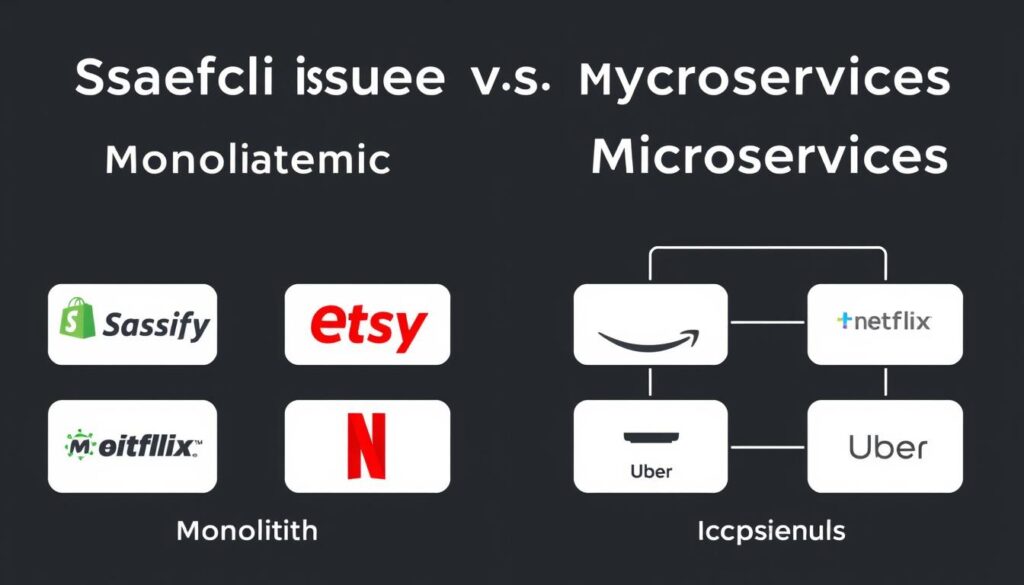
- Basecamp – The project management tool maintains a monolithic Rails application, focusing on simplicity and developer productivity
- Shopify – Started as a monolith and has selectively extracted services only where necessary
- Etsy – Maintained a monolithic architecture for years while scaling to millions of users
Microservices Success Stories
These companies successfully transitioned to microservices to solve specific scaling and development challenges:
- Netflix – Migrated from monolith to 700+ microservices to support global streaming
- Amazon – Decomposed its monolithic retail platform into thousands of microservices
- Uber – Moved from a monolith to microservices to support rapid global expansion
Migration Considerations: From Monolith to Microservices
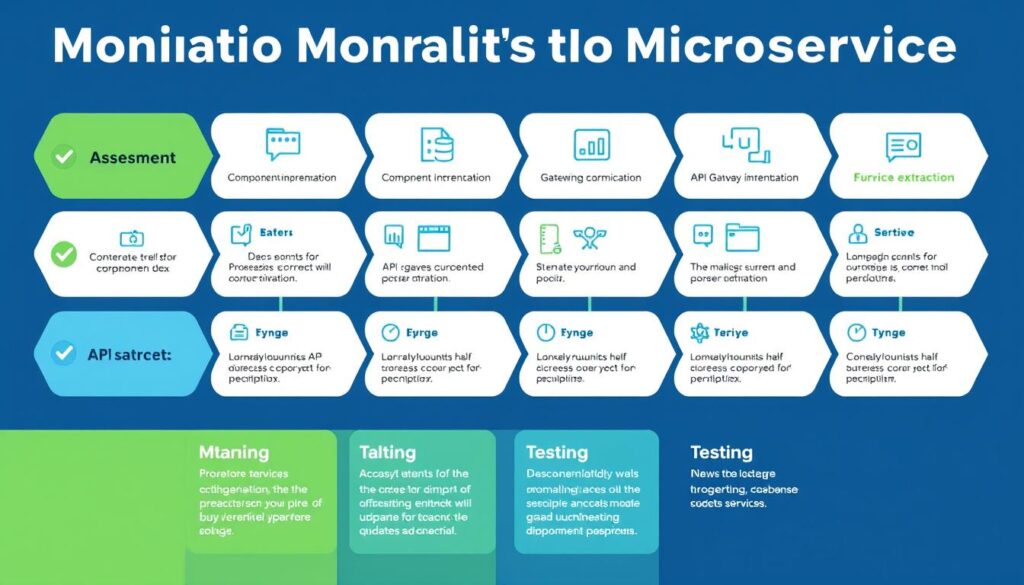
Transitioning from a monolith to microservices is rarely an all-or-nothing proposition. Most successful migrations follow an incremental approach, breaking off services one by one while maintaining system stability.
Key Steps in the Migration Process
- Assess your monolith – Understand dependencies and identify bounded contexts within your application
- Implement an API gateway – Create a single entry point that will route requests to either the monolith or new microservices
- Break out services incrementally – Start with less critical, loosely coupled components
- Establish service boundaries – Define clear interfaces and communication protocols between services
- Implement inter-service communication – Choose appropriate synchronous (REST, gRPC) or asynchronous (message queues) communication methods
- Set up distributed data management – Decide on data ownership and consistency strategies
- Build robust CI/CD pipelines – Automate testing and deployment for each service
- Implement monitoring and observability – Ensure you can track performance and troubleshoot issues across services
Migration Challenges to Anticipate
- Increased operational complexity during transition
- Data consistency and transaction management across services
- Network reliability and latency issues
- Service discovery and load balancing
- Monitoring and debugging distributed systems
Planning a migration to microservices?
Download our Migration Readiness Assessment to evaluate your organization’s preparedness and identify potential challenges before you begin.
Hybrid Approaches: The Best of Both Worlds
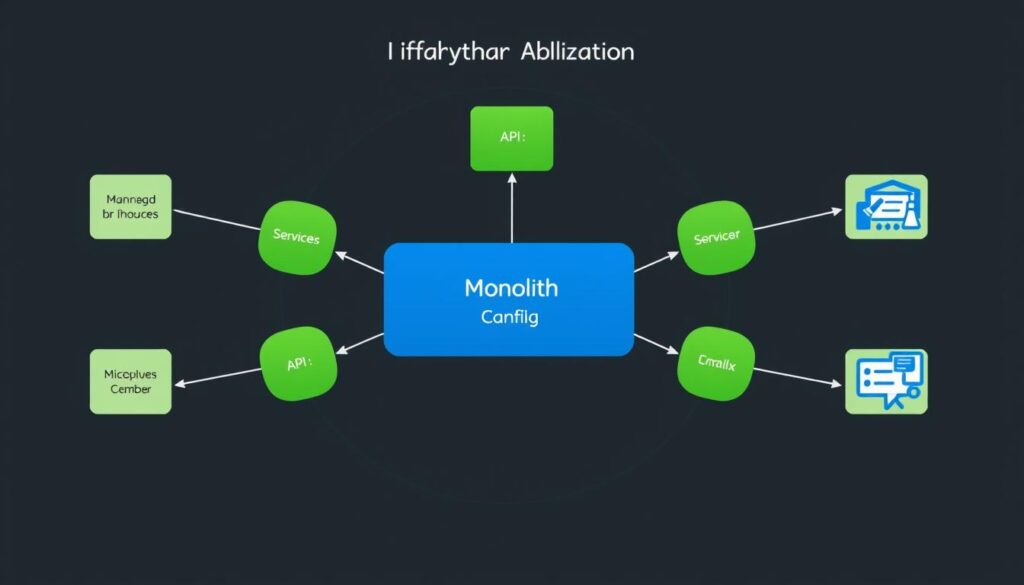
Many organizations find that a hybrid approach offers a pragmatic middle ground. This typically involves maintaining a monolithic core while developing new capabilities as microservices or gradually extracting services from the monolith.
Common Hybrid Patterns
The Strangler Fig Pattern
Named after the strangler fig vine that gradually overtakes its host tree, this pattern involves incrementally replacing specific functions of the monolith with microservices until the original monolith is “strangled” and can be decommissioned.
The UI Composition Pattern
Keep the core business logic in a monolith while breaking the user interface into micro frontends that can be developed and deployed independently by different teams.
The API Gateway Pattern
Implement an API gateway that routes requests to either the monolith or microservices, allowing for a gradual transition while providing a unified interface to clients.
The Sidecar Pattern
Attach auxiliary services (sidecars) to the main monolithic application to handle cross-cutting concerns like logging, monitoring, or security without modifying the monolith itself.
Decision Framework: Making the Right Choice

Choosing between monolithic and microservices architecture isn’t a one-size-fits-all decision. Consider these key factors to determine the best approach for your specific situation:
| Factor | Favor Monolith When… | Favor Microservices When… |
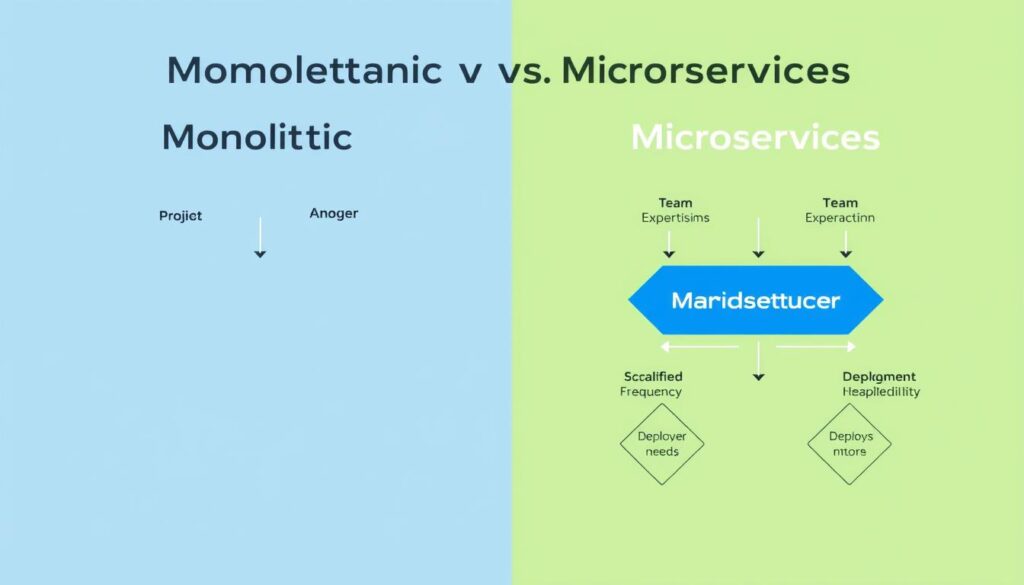
| Project Size | Small to medium application with clear boundaries | Large, complex application with distinct domains |
| Team Size | Small team (1-10 developers) | Multiple teams working in parallel |
| Deployment Frequency | Infrequent releases (weekly/monthly) | Frequent releases (daily/hourly) |
| Scalability Needs | Predictable, moderate scaling requirements | Unpredictable, high scaling needs for specific components |
| Technical Expertise | Limited DevOps and distributed systems experience | Strong DevOps culture and distributed systems expertise |
| Time to Market | Need to launch quickly with limited resources | Can invest in initial architecture for long-term agility |
Frequently Asked Questions
Can hybrid architectures work effectively in practice?
Yes, hybrid architectures can be highly effective and represent a pragmatic approach for many organizations. They allow you to maintain the simplicity of a monolith for stable parts of your application while leveraging microservices for components that need independent scaling or frequent updates.
Many successful companies operate with hybrid architectures, gradually moving from monoliths to microservices over time rather than attempting a “big bang” migration. This approach minimizes risk and allows teams to learn and adapt as they go.
How do I know if my team is ready for microservices?
Your team is likely ready for microservices if:
- You have established DevOps practices and automation
- Your developers understand distributed systems concepts
- You have experience with containerization and orchestration
- Your organization can support autonomous teams
- You have monitoring and observability solutions in place
If these elements aren’t present, consider building these capabilities before fully committing to microservices, or start with a small, non-critical microservice as a learning opportunity.
What are the hidden costs of microservices that teams often overlook?
Teams often underestimate several costs associated with microservices:
- Operational complexity – Managing dozens or hundreds of services requires sophisticated tooling and expertise
- Inter-service communication overhead – Network latency and reliability become significant factors
- Monitoring and debugging complexity – Tracing issues across service boundaries requires specialized tools
- Data consistency challenges – Maintaining consistency across distributed databases is complex
- Learning curve – Teams need time to adapt to distributed systems thinking
- Infrastructure costs – Running many small services can be more expensive than a single optimized monolith
Learn from real-world architecture transformations
Download our collection of case studies featuring companies that successfully navigated the transition between architectural styles.
Conclusion: Making the Right Architecture Choice

The choice between monolithic and microservices architecture isn’t about following trends—it’s about selecting the approach that best aligns with your business goals, team capabilities, and project requirements.
For many organizations, the journey begins with a monolith that enables rapid development and validation of business ideas. As complexity grows and specific scaling needs emerge, a gradual transition to microservices for select components often makes sense.
Remember that architectural decisions are rarely permanent. The most successful organizations maintain flexibility and adapt their approach as their needs evolve. Whether you choose a monolith, microservices, or a hybrid approach, focus on building a system that supports your business objectives while enabling your team to work effectively.
“Choose the architecture that solves your actual problems, not the problems you think you might have someday.”
By understanding the strengths and limitations of each approach, you can make an informed decision that sets your project up for long-term success.


