







Table of Contents
Introduction to Next.js 13.4
Next.js, a powerful React framework, has revolutionized web development with its seamless combination of server-side rendering (SSR), static site generation (SSG), and other cutting-edge features. The latest version, Next.js 13.4, introduces a host of new functionalities and improvements that further streamline the development process and enhance performance. This article delves into the key features and benefits of Next.js 13.4, making it clear why this update is a significant milestone for developers.
Enhanced Performance and Optimization
Performance is a critical aspect of web development, and Next.js 13.4 continues to prioritize this. The new version introduces advanced optimizations that significantly reduce build times and improve runtime performance. The enhanced automatic static optimization feature ensures that pages that can be statically generated are identified and optimized, leading to faster load times and better user experiences.
Improved Caching Mechanisms
Next.js 13.4 introduces sophisticated caching mechanisms that allow developers to leverage edge caching and revalidation strategies more effectively. With smarter caching policies, developers can ensure that their applications deliver the freshest content without compromising on speed. This improvement is particularly beneficial for content-heavy applications and e-commerce platforms where data changes frequently.
TurboPack: The New Build Tool
One of the standout features of Next.js 13.4 is the introduction of TurboPack, a new build tool designed to replace Webpack. TurboPack is built with performance in mind, offering faster builds and improved developer experience. It leverages parallel processing and modern caching techniques to significantly reduce build times, making it a game-changer for large-scale projects with complex build requirements.
Compatibility and Migration: While TurboPack offers substantial benefits, the Next.js team has ensured that the transition from Webpack is smooth. Developers can gradually migrate their projects to TurboPack without major disruptions. This compatibility consideration underscores the framework’s commitment to developer convenience and ease of use.
Enhanced Developer Experience
Next.js 13.4 brings several updates aimed at enhancing the developer experience. The new version includes improved error handling and debugging capabilities, making it easier for developers to identify and fix issues. The updated development server provides more detailed logs and error messages, helping developers quickly understand what went wrong and how to resolve it.
Advanced TypeScript Support: TypeScript has become an essential tool for modern web development, and Next.js 13.4 doubles down on its support. The new version offers enhanced TypeScript integration, including better type-checking and more comprehensive type definitions. This improvement allows developers to catch errors earlier in the development process, leading to more robust and maintainable code.
New API Routes and Middleware
API routes in Next.js have always been a powerful feature, enabling developers to build serverless functions with ease. In version 13.4, API routes are more powerful and flexible than ever. The new middleware support allows developers to implement custom logic before a request is processed, providing more control over the request-response lifecycle.
Improved Middleware Capabilities: The improved middleware capabilities in Next.js 13.4 enable developers to create more sophisticated applications. Middleware can be used for tasks such as authentication, logging, and input validation, ensuring that applications are secure and maintainable. The ability to chain middleware functions opens up new possibilities for handling complex workflows and enhancing application functionality.
Enhanced Performance Features in Next.js 13.4

Next.js has consistently been at the forefront of modern web development, offering developers a robust framework to build efficient, scalable, and high-performing applications. The release of Next.js 13.4 brings a host of enhanced performance features that further cement its reputation as a top choice for developers. This article delves into the key performance improvements in Next.js 13.4, highlighting how they can benefit your projects.
Optimized Server Components: One of the most significant updates in Next.js 13.4 is the enhanced support for server components. Server components allow developers to offload heavy computations and data fetching to the server, resulting in faster load times and improved client-side performance. This separation of concerns ensures that only minimal JavaScript is sent to the client, reducing the overall bundle size and enhancing the user experience.
Benefits of Server Components
- Reduced Bundle Size: By handling more logic on the server, the client-side JavaScript payload is significantly reduced, leading to faster page loads.
- Improved SEO: Since server components render on the server, the initial HTML sent to the client is more complete and easily crawlable by search engines, improving SEO performance.
- Enhanced Security: Keeping sensitive logic on the server reduces the risk of exposing critical code to the client, enhancing the overall security of the application.
Improved Data Fetching with React Server Components (RSC): Next.js 13.4 introduces better integration with React Server Components (RSC), allowing for more efficient data fetching. This improvement means that data can be fetched at the server level, reducing the need for client-side API calls and thus lowering the time to interactive (TTI).
Advantages of Improved Data Fetching
- Faster Time to Interactive (TTI): By reducing the need for client-side data fetching, pages become interactive more quickly.
- Lower Latency: Data is fetched as close to the source as possible, minimizing latency and improving overall application speed.
- Simplified Codebase: Centralizing data fetching logic on the server can lead to a cleaner, more maintainable codebase.
Enhanced Image Optimization
Next.js has always been known for its excellent image optimization capabilities, and version 13.4 takes this a step further. The new release includes more advanced image optimization techniques, such as better handling of next-gen image formats (e.g., WebP and AVIF), which provide superior compression without compromising quality.
Image Optimization Enhancements
- Automatic Format Selection: Next.js can now automatically select the most efficient image format for each browser, ensuring optimal performance.
- Improved Lazy Loading: Enhanced lazy loading techniques ensure that off-screen images are only loaded when they enter the viewport, reducing initial load times.
- Better Cache Management: Improved caching strategies ensure that optimized images are served efficiently, reducing load on the server and speeding up content delivery.
Streamlined Middleware
Next.js 13.4 introduces more powerful and flexible middleware capabilities, allowing developers to write custom middleware for handling various tasks such as authentication, logging, and request modification. This streamlined approach ensures that middleware can be executed quickly and efficiently, reducing overhead and improving application performance.
Middleware Improvements
- Faster Execution: Optimized middleware execution ensures that requests are processed quickly, enhancing overall performance.
- Enhanced Flexibility: Developers can now write more complex middleware logic without impacting performance, allowing for greater customization and control.
- Better Integration: Improved integration with existing Next.js features ensures that middleware can be seamlessly incorporated into any application.
New Data Fetching Capabilities
In the rapidly evolving digital landscape, data fetching capabilities have become the cornerstone of modern web development. As businesses strive to deliver seamless user experiences, the need for efficient and innovative data retrieval methods has never been greater. This article explores the latest advancements in data fetching, highlighting how they enhance performance, security, and user satisfaction.
Understanding Data Fetching
Data fetching refers to the process of retrieving data from a server to a client-side application. Traditionally, this has been achieved through synchronous requests, where the client waits for the server response before proceeding. However, this method can lead to delays and a poor user experience, especially with large data sets.
The Evolution of Data Fetching
- Asynchronous Requests: Asynchronous JavaScript and XML (AJAX) introduced the capability to fetch data without reloading the entire webpage. This was a game-changer, allowing for more dynamic and responsive applications.
- RESTful APIs: Representational State Transfer (REST) APIs revolutionized data fetching by providing a standardized way to access resources. RESTful services use HTTP requests to GET, POST, PUT, and DELETE data, facilitating efficient communication between client and server.
- GraphQL: Developed by Facebook, GraphQL is a query language that allows clients to request only the data they need. This reduces the amount of data transferred over the network and improves performance. GraphQL’s flexibility and efficiency have made it a popular choice for modern web applications.
- WebSockets: For real-time data fetching, WebSockets provide a persistent connection between client and server. This is ideal for applications requiring live updates, such as chat applications and live sports scores.
- Server-Sent Events (SSE): SSE allows servers to push updates to the client automatically. Unlike WebSockets, which are bidirectional, SSE is a one-way communication from server to client, making it perfect for applications like news feeds and stock tickers.
New Data Fetching Capabilities
- Edge Computing: Edge computing brings data fetching closer to the user by processing data at the network’s edge. This reduces latency and improves load times, as data does not need to travel long distances. Content Delivery Networks (CDNs) are a prime example of edge computing, caching content geographically closer to users.
- Service Workers: Service workers act as a proxy between the web application and the network. They enable offline capabilities by caching assets and handling network requests, providing a smooth user experience even with intermittent connectivity.
- Incremental Static Regeneration (ISR): ISR allows developers to update static content after a page has been built and served. This combines the benefits of static site generation (fast load times and SEO advantages) with the ability to serve up-to-date content. Platforms like Next.js have pioneered this capability, offering a powerful tool for modern web development.
- Data Pre-fetching: Data pre-fetching involves loading data ahead of time, based on user behavior predictions. This proactive approach can drastically reduce perceived load times, as data is ready when the user needs it. Techniques like predictive pre-fetching and resource hints (e.g.,
<link rel="prefetch">) are employed to enhance user experience. - Client-Side Rendering (CSR) and Server-Side Rendering (SSR): While CSR relies on the browser to build the user interface, SSR builds the interface on the server and sends it to the client. Combining both techniques, often referred to as hybrid rendering, allows for fast initial loads and dynamic content updates, optimizing both performance and SEO.
Improved Server-Side Rendering

In the ever-evolving world of web development, delivering fast, responsive, and SEO-friendly websites is paramount. Server-Side Rendering (SSR) has long been a critical technique to achieve these goals. However, recent advancements have led to improved SSR techniques that offer even greater benefits. In this article, we’ll delve into what improved server-side rendering is, its advantages, and how it can be implemented to enhance web performance and search engine optimization.
What is Server-Side Rendering?
Server-Side Rendering is the process of rendering web pages on the server instead of in the user’s browser. When a user requests a page, the server processes the HTML and sends the fully rendered page to the client. This contrasts with Client-Side Rendering (CSR), where the browser downloads JavaScript and renders the page on the client side.
Benefits of Improved Server-Side Rendering
- Enhanced Performance: Improved SSR can significantly reduce the time it takes for a webpage to load. By delivering a fully rendered page from the server, the initial load time is reduced, leading to a faster Time to First Byte (TTFB) and better user experience.
- Better SEO: Search engines like Google can crawl and index server-rendered pages more efficiently. Improved SSR ensures that all content is available at the time of crawling, improving the chances of higher search rankings.
- Improved User Experience: Faster load times and immediate content delivery enhance the overall user experience. Users are less likely to abandon a site that loads quickly and provides a seamless browsing experience.
- SEO Benefits: Search engines prioritize fast-loading, content-rich websites. Improved SSR ensures that search engines can quickly access and index your content, improving visibility and rankings.
Key Techniques for Improved Server-Side Rendering
- Hydration: After the initial HTML is rendered on the server, hydration is the process of attaching event listeners and making the page interactive on the client side. Improved SSR techniques optimize hydration to ensure a seamless transition from static HTML to a fully interactive page.
- Code Splitting: This technique involves breaking down your JavaScript into smaller chunks that can be loaded on-demand. By splitting the code, you ensure that the server only sends the necessary JavaScript for the initial render, reducing load times and improving performance.
- Caching: Implementing smart caching strategies can significantly enhance SSR performance. By caching rendered HTML pages or parts of them, you reduce the server load and ensure faster delivery of content to users.
- Streaming: Instead of sending the entire page as a single response, streaming allows you to send the HTML in chunks as it is rendered. This enables the browser to start displaying content to the user while the rest of the page is still being processed, leading to perceived faster load times.
- Static Site Generation (SSG) Hybrid: Combining SSR with SSG allows you to pre-render pages at build time and serve them as static files. This hybrid approach can offer the best of both worlds—fast initial loads from static files and dynamic content updates via SSR.
Implementing Improved SSR
To implement improved SSR in your projects, consider the following steps:
- Choose the Right Framework: Frameworks like Next.js for React, Nuxt.js for Vue, and Sapper for Svelte offer built-in support for SSR with optimization features. These frameworks simplify the implementation of improved SSR techniques.
- Optimize Your Server: Ensure your server is optimized for handling SSR workloads. Use efficient caching mechanisms, leverage Content Delivery Networks (CDNs), and ensure your server infrastructure is robust.
- Monitor and Analyze: Use performance monitoring tools to track the performance of your server-rendered pages. Analyze metrics like TTFB, First Contentful Paint (FCP), and interaction delays to identify areas for improvement.
- SEO Best Practices: Ensure that your SSR implementation adheres to SEO best practices. Use semantic HTML, ensure your metadata is correctly configured, and use server-side redirects to handle routing effectively.
Integration with New React Features
In the ever-evolving landscape of web development, staying ahead of the curve is paramount. With technologies advancing at a rapid pace, developers are constantly seeking ways to enhance user experiences, streamline workflows, and improve overall efficiency. Enter React, a JavaScript library that has revolutionized the way developers build user interfaces. But React itself doesn’t stand still; it continues to evolve with new features and updates, offering developers even more tools to create dynamic and responsive applications.
In this article, we delve into the significance of integrating new React features into your projects and explore how they can elevate your development process to new heights.
Understanding React’s Evolution
React has come a long way since its inception. From its component-based architecture to its virtual DOM implementation, React’s core principles have remained steadfast. However, what sets React apart is its commitment to innovation. With each new release, the React team introduces enhancements and features designed to address common pain points and empower developers.
The Benefits of Integration
Integrating new React features into your projects offers a myriad of benefits. Firstly, it ensures that your applications are leveraging the latest advancements in web development technology. By staying abreast of React’s updates, you can take advantage of performance optimizations, new APIs, and improved developer tools, resulting in faster, more efficient development cycles.
Moreover, integrating new React features allows you to future-proof your applications. As the web ecosystem continues to evolve, having a codebase that is adaptable and scalable is essential. By incorporating the latest React features, you can ensure that your applications remain relevant and maintainable in the long run.
Exploring New Features
Now, let’s take a closer look at some of the recent additions to the React library and how they can enhance your development workflow:
- Concurrent Mode: Concurrent Mode is a new experimental feature in React that aims to improve the responsiveness and interactivity of applications, particularly those with complex user interfaces. By enabling Concurrent Mode, developers can prioritize rendering updates, resulting in smoother user experiences and reduced jank.
- Suspense: Suspense is another groundbreaking feature introduced in React, which simplifies data fetching and code splitting. With Suspense, developers can declaratively specify loading states for asynchronous data, leading to cleaner and more maintainable code.
- Server Components: Server Components represent a paradigm shift in React development, allowing developers to offload rendering work to the server. This can result in significant performance gains, particularly for applications with large client-side payloads.
Best Practices for Integration
While integrating new React features into your projects can be exciting, it’s essential to approach it methodically. Here are some best practices to consider:
- Evaluate Compatibility: Before adopting new features, assess their compatibility with your existing codebase and dependencies. Conduct thorough testing to identify any potential conflicts or regressions.
- Start Small: Begin by integrating new features into smaller, isolated components or modules. This allows you to familiarize yourself with their behavior and implications without risking the stability of your entire application.
- Stay Informed: Keep abreast of React’s official documentation, release notes, and community discussions to stay informed about upcoming features and best practices.
Updated Build and Deployment Processes

In today’s fast-paced technological landscape, businesses are constantly striving to stay ahead of the curve by optimizing their development workflows. One crucial aspect of this optimization is the enhancement of build and deployment processes. As software projects grow in complexity and scale, it becomes imperative to update these processes to ensure efficiency, reliability, and scalability. In this article, we’ll delve into the latest strategies and best practices for streamlining your build and deployment processes.
- Embrace Continuous Integration and Continuous Deployment (CI/CD): Adopting CI/CD practices can significantly improve the efficiency of your build and deployment processes. With CI, developers integrate their code into a shared repository several times a day, ensuring early detection of integration errors. CD, on the other hand, automates the deployment process, allowing for rapid and frequent releases. By implementing CI/CD pipelines, teams can achieve faster time-to-market, higher quality software, and reduced manual errors.
- Containerization with Docker and Kubernetes: Containerization has revolutionized the way applications are deployed and managed. Docker provides a lightweight, portable environment for packaging applications and their dependencies into containers. Kubernetes, on the other hand, offers powerful orchestration capabilities for automating deployment, scaling, and management of containerized applications. By leveraging Docker and Kubernetes, organizations can achieve greater agility, scalability, and consistency in their deployment processes.
- Infrastructure as Code (IaC): Traditional manual provisioning of infrastructure is error-prone and time-consuming. IaC enables infrastructure configuration to be expressed as code, allowing for automated provisioning and management of infrastructure resources. Tools like Terraform and AWS CloudFormation facilitate the creation of reproducible infrastructure, enabling teams to version control, test, and deploy infrastructure changes with ease. By treating infrastructure as code, organizations can ensure consistency, reliability, and scalability in their deployment processes.
- Automated Testing: Robust testing is essential for ensuring the quality and reliability of software deployments. Automated testing frameworks such as Selenium, JUnit, and pytest enable teams to automate various levels of testing, including unit tests, integration tests, and end-to-end tests. By integrating automated testing into the CI/CD pipeline, teams can detect bugs early in the development cycle, reduce manual effort, and increase confidence in their deployments.
- Monitoring and Logging: Monitoring and logging are crucial for gaining visibility into the performance and health of deployed applications. Tools like Prometheus, Grafana, and ELK stack enable teams to monitor key metrics, detect anomalies, and troubleshoot issues in real-time. By implementing comprehensive monitoring and logging solutions, organizations can proactively identify and address issues before they impact end-users, ensuring a seamless deployment experience.
Optimizations for Static Site Generation
In today’s fast-paced digital landscape, having a website that loads quickly and efficiently is paramount. Static site generation (SSG) has emerged as a powerful solution to achieve this goal, offering numerous advantages over traditional dynamic websites. However, to fully harness the potential of SSG, it’s crucial to implement optimization techniques that enhance performance, user experience, and search engine visibility. In this article, we’ll explore some key optimizations for static site generation that can elevate your website to new heights.
- Content Delivery Network (CDN) Integration: One of the primary benefits of SSG is its ability to generate pre-built HTML files that can be served directly to users. By integrating a CDN into your static site setup, you can further improve loading times by caching content across distributed servers worldwide. This ensures that users receive your website’s content from the server closest to them, reducing latency and improving overall performance.
- Image Optimization: Images are often the largest assets on a website and can significantly impact loading times. To optimize images for static sites, consider compressing them without sacrificing quality using tools like ImageOptim or TinyPNG. Additionally, lazy loading techniques can be implemented to defer the loading of images until they are needed, further reducing initial page load times.
- Minification and Concatenation: Minifying and concatenating CSS, JavaScript, and HTML files can drastically reduce file sizes and the number of HTTP requests required to load a page. This optimization technique involves removing unnecessary characters such as white spaces, comments, and line breaks from code files, resulting in smaller file sizes and faster load times.
- Cache Control: Implementing proper cache control headers ensures that returning visitors can load your website even faster by storing static assets in their browser cache. By specifying the appropriate cache expiration times for different types of content, you can strike a balance between freshness and performance, ensuring that users always have access to the latest version of your site while minimizing load times.
- Responsive Design: With the proliferation of mobile devices, ensuring that your static site is responsive and mobile-friendly is essential. Utilize responsive design principles and frameworks like Bootstrap or Foundation to create a seamless browsing experience across various screen sizes and devices. This not only improves user experience but also contributes to better search engine rankings, as Google prioritizes mobile-friendly websites in its search results.
- SEO Best Practices: While static sites are inherently lightweight and fast, implementing SEO best practices is still crucial for improving search engine visibility. Ensure that your site’s metadata, including titles, descriptions, and headings, are optimized with relevant keywords to improve organic search rankings. Additionally, consider generating a sitemap.xml file and submitting it to search engines to facilitate crawling and indexing of your content.
- Continuous Integration and Deployment (CI/CD): Leveraging CI/CD pipelines automates the process of building, testing, and deploying updates to your static site, ensuring rapid iteration and seamless deployment. Tools like GitLab CI/CD or GitHub Actions can be used to automate tasks such as minification, cache busting, and CDN invalidation, streamlining the optimization process and enhancing overall efficiency.
Changes to Routing and Navigation
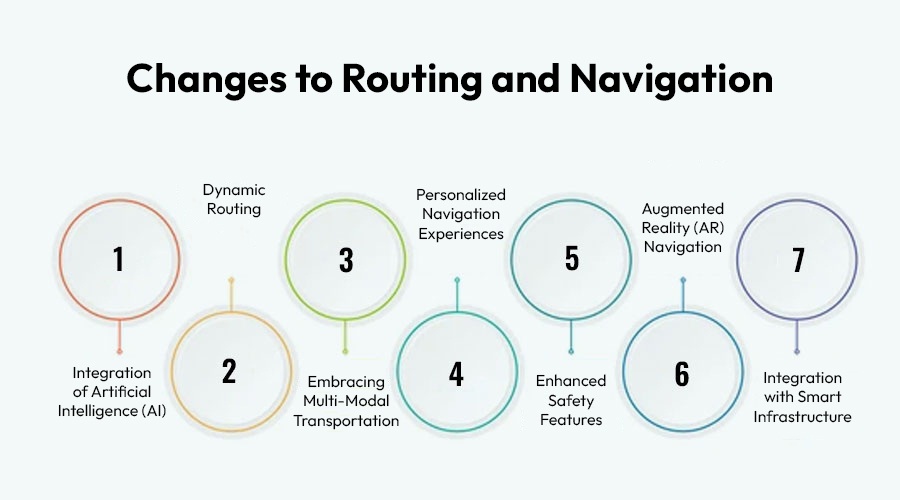
In today’s fast-paced world, where every second counts and efficiency is paramount, advancements in technology have revolutionized how we navigate our surroundings. From GPS systems guiding us through city streets to complex routing algorithms optimizing logistics networks, the way we get from point A to point B has undergone significant changes in recent years. Let’s delve into some of the key transformations shaping the landscape of routing and navigation.
- Integration of Artificial Intelligence (AI): One of the most significant shifts in routing and navigation is the integration of artificial intelligence. AI algorithms analyze vast amounts of data in real-time, enabling more accurate predictions of traffic patterns, weather conditions, and optimal routes. This technology not only helps individuals reach their destinations faster but also aids businesses in streamlining their supply chains and delivery processes.
- Dynamic Routing: Traditional navigation systems relied on static maps and predefined routes. However, with the advent of dynamic routing, navigation platforms can adapt to changing conditions on the fly. Whether it’s avoiding accidents, road closures, or heavy congestion, dynamic routing algorithms continually adjust the recommended path to ensure the most efficient journey.
- Embracing Multi-Modal Transportation: Modern commuters often utilize a combination of transportation modes, such as walking, cycling, driving, and public transit, to reach their destinations. Routing and navigation systems now integrate multi-modal options, providing users with comprehensive route suggestions that incorporate various transportation methods. This approach promotes sustainability, reduces congestion, and offers greater flexibility to travelers.
- Personalized Navigation Experiences: Gone are the days of generic route recommendations. Today’s navigation systems leverage user preferences, historical data, and real-time feedback to deliver personalized experiences. Whether it’s avoiding toll roads, prioritizing scenic routes, or selecting EV charging stations, users can tailor their navigation settings to align with their individual needs and preferences.
- Enhanced Safety Features: Safety is paramount in routing and navigation. Modern systems not only prioritize the fastest or shortest routes but also consider factors such as road conditions, accident hotspots, and crime rates to ensure safer journeys. Additionally, features like lane departure warnings, speed limit alerts, and driver fatigue detection further enhance road safety for all users.
- Augmented Reality (AR) Navigation: Augmented reality is transforming how we perceive and interact with our surroundings. AR navigation overlays digital information onto the real world, providing users with intuitive visual cues and directions. Whether it’s highlighting points of interest, guiding pedestrians through urban environments, or enhancing driver awareness, AR navigation enhances the overall navigation experience.
- Integration with Smart Infrastructure: The rise of smart cities and IoT (Internet of Things) technology has paved the way for seamless integration between navigation systems and smart infrastructure. Traffic lights, road signs, and even vehicles themselves can communicate with navigation platforms, providing real-time data exchange and enabling smoother traffic flow and congestion management.
Top Next.js developments Companies
In the realm of web development, Next.js has emerged as a game-changer, revolutionizing the way web applications are built. With its robust features and flexibility, it has garnered widespread adoption among developers and businesses alike. In this article, we’ll delve into the top Next.js development companies that are leading the charge in creating exceptional digital experiences.
-
Next Big Technology:

Focus Area
- Mobile App Development
- App Designing (UI/UX)
- Software Development
- Web Development
- AR & VR Development
- Big Data & BI
- Cloud Computing Services
- DevOps
- E-commerce Development
Industries Focus
- Art, Entertainment & Music
- Business Services
- Consumer Products
- Designing
- Education
- Financial & Payments
- Gaming
- Government
- Healthcare & Medical
- Hospitality
- Information Technology
- Legal & Compliance
- Manufacturing
- Media
- Chop Dawg: Specializing in custom software development, Chop Dawg has carved a niche for itself in the Next.js ecosystem. Their team of experienced developers leverages the power of Next.js to build cutting-edge web solutions tailored to clients’ unique requirements. From startups to enterprises, Chop Dawg delivers top-notch Next.js development services, helping businesses stay ahead in today’s competitive digital landscape.
- Cleveroad: With a proven track record of delivering innovative web solutions, Cleveroad ranks among the top Next.js development companies globally. Their expertise in Next.js development enables them to create dynamic and responsive web applications that engage users and drive business growth. By leveraging the latest technologies and best practices, Cleveroad ensures that each project they undertake exceeds client expectations in terms of performance and functionality.
- Codebrahma: Codebrahma is renowned for its proficiency in Next.js development, offering end-to-end services ranging from consulting to deployment. Their team of skilled developers excels at building scalable and feature-rich web applications using Next.js, enabling clients to unlock new opportunities in the digital landscape. With a focus on user experience and performance optimization, Codebrahma delivers solutions that resonate with audiences across various industries.
- Brainhub: Brainhub emerges as a leading Next.js development company, known for its commitment to delivering high-quality solutions that drive business results. Their team combines technical expertise with creative flair to develop immersive web experiences powered by Next.js. Whether it’s building a progressive web app or revamping an existing website, Brainhub empowers clients to stay ahead of the curve with innovative Next.js solutions.

FAQs On Next.js Developments
Are you considering using Next.js for your web development projects but have some burning questions? You’re not alone. Next.js, with its growing popularity in the web development community, often raises several queries among developers. In this article, we’ll address some of the most frequently asked questions (FAQs) regarding Next.js development to help you make informed decisions and streamline your development process.
What is Next.js? Next.js is a React framework that enables developers to build server-side rendered (SSR) and static websites with ease. It simplifies the process of creating dynamic web applications by providing built-in features like automatic code splitting, server-side rendering, and hot module replacement.
How does Next.js differ from traditional React? While both Next.js and React are JavaScript frameworks for building user interfaces, they serve different purposes. React is primarily a library for building single-page applications (SPAs), whereas Next.js extends React by adding server-side rendering capabilities, making it ideal for building complex and SEO-friendly web applications.
What are the advantages of using Next.js?
- Improved Performance: Next.js optimizes performance by enabling server-side rendering, which reduces time to first byte (TTFB) and improves perceived page load times.
- SEO-Friendly: Server-side rendering ensures that search engines can crawl and index your website effectively, leading to better search engine optimization (SEO) performance.
- Simplified Routing: Next.js simplifies routing with its file-based routing system, allowing developers to organize their codebase efficiently.
- Automatic Code Splitting: With Next.js, code splitting is built-in, enabling only the necessary code to be loaded for each page, resulting in faster load times.
Is Next.js suitable for large-scale applications? Yes, Next.js is well-suited for large-scale applications. Its built-in features like server-side rendering, automatic code splitting, and optimized performance make it ideal for handling complex projects with ease. Additionally, Next.js provides scalability and flexibility, allowing developers to efficiently manage and scale their applications as they grow.
Can I deploy Next.js applications to various hosting platforms? Absolutely! Next.js applications can be deployed to a wide range of hosting platforms, including Vercel, Netlify, AWS, and more. Next.js offers flexible deployment options, allowing developers to choose the platform that best suits their project requirements and workflow preferences.
How can I integrate Next.js with other technologies? Next.js integrates seamlessly with various technologies, including GraphQL, TypeScript, Redux, and more. Whether you need to fetch data from a GraphQL API, manage application state with Redux, or utilize TypeScript for type safety, Next.js provides comprehensive documentation and examples to help you integrate seamlessly with your preferred technologies.
Is Next.js suitable for e-commerce websites? Yes, Next.js is a great choice for building e-commerce websites. Its server-side rendering capabilities ensure fast page loads, optimal SEO performance, and a seamless user experience—all essential factors for successful e-commerce platforms. Additionally, Next.js offers flexibility and scalability, allowing developers to customize and scale their e-commerce applications to meet evolving business needs.
Thanks for reading our post “What’s New in Next.js 13.4?”. Please connect with us to learn more about Best Next.js Development.


