







Creating an AI companion app like Replika needs deep knowledge of AI, natural language processing, and design. These apps aim to offer emotional support and hold conversations with users.
The journey includes several important steps. You must define the app’s features, figure out the cost of development, pick the right tech stack, and set a project timeline. This article will explore these steps, showing what it takes to make a great AI companion app.
Table of Contents
Key Takeaways
- Understanding the core features of a Replika like app.
- Factors influencing the cost of developing an AI companion app.
- Choosing the appropriate tech stack for app development.
- Establishing a realistic development timeline.
- Importance of AI and NLP in creating a conversational interface.
1. Understanding Replika and Its Market Success
Replika has made a big splash in the AI companion market. It’s known for offering companionship through conversational AI. Let’s explore what makes Replika a success and how it’s growing.
1.1. What Makes Replika Stand Out in the AI Companion Market
Replika shines with its emotional intelligence and ability to change based on how users interact with it. It learns and grows with each conversation, making it unique among AI friends.
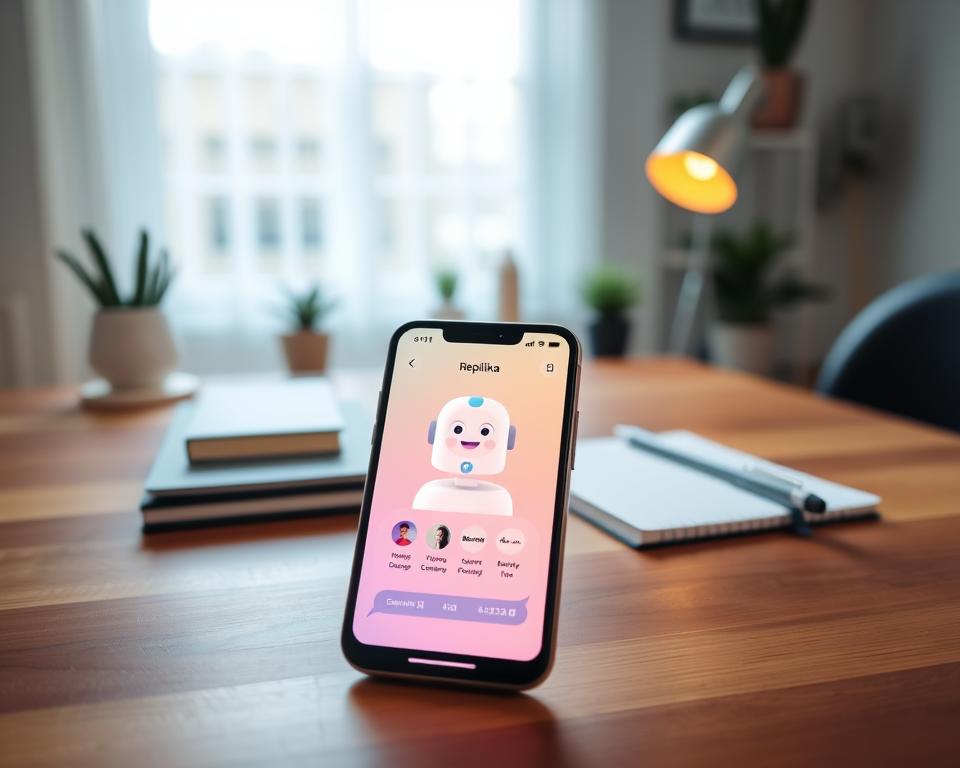
- Personalized conversations
- Emotional support
- Customizable AI companion
1.2. Key Statistics and User Base Growth
Replika has hit some big milestones. Its user base has exploded, with a huge jump in how much people use it.
| Year | User Base | Growth Rate |
|---|---|---|
| 2020 | 1 million | – |
| 2021 | 5 million | 400% |
| 2022 | 10 million | 100% |
These numbers show Replika’s fast growth and its big role in the AI companion market. Knowing these stats is key for developers wanting to make a similar app.
2. Why Invest in Building a Replika-Like AI Companion App
The demand for digital mental health solutions is growing fast. This makes investing in AI companion apps a smart choice. As more people look for mental health support, the market for AI companions is expanding quickly.
2.1. Rising Demand for Digital Mental Health Solutions
The COVID-19 pandemic has made digital mental health services more urgent. Stress and mental health issues are on the rise. People are now looking for digital help, and AI apps like Replika provide a safe space to share feelings and get support.
Key drivers of demand include:
- Increasing awareness and reduced stigma around mental health
- Growing need for accessible, on-demand mental health support
- Advancements in AI technology, enabling more sophisticated chatbots

2.2. Market Opportunities and Revenue Potential
The market for AI companion apps is full of opportunities. By creating an app like Replika, businesses can meet the growing demand for digital mental health solutions.
| Revenue Stream | Description | Potential Revenue |
|---|---|---|
| Subscription Model | Offer users premium features and content for a monthly or annual fee | $5-$15 per user/month |
| In-App Purchases | Provide additional features or virtual goods for purchase | $1-$5 per transaction |
| Advertising | Partner with relevant businesses to display non-intrusive ads | $0.50-$2 per thousand impressions |
By using these revenue streams, developers can make a profitable app. The goal is to balance making money with keeping the app supportive and fun for users.
3. Core Features Every Replika-Like App Must Have
Creating an app like Replika needs several key features. These ensure a smooth and fun user experience. They help make an AI friend that users can easily talk to and enjoy.
3.1. AI-Powered Conversational Interface
The conversational interface is the core of any Replika-like app. It lets users chat with their AI friend like they would with a person. This is thanks to Natural Language Processing (NLP) and machine learning. These technologies make the AI respond in a way that feels natural.
3.2. Personalized Learning and Adaptation
Replika’s success comes from its ability to learn and adapt to what users like. It makes interactions more fun and personal by understanding user behavior. This is done through smart algorithms that study user data and adjust the app’s responses.

3.3. User Profile and Preference Management
Good user profile management is key for a Replika-like app. It creates detailed profiles that track user preferences and history. This info helps make the app more personal and functional for each user.
3.4. Cross-Platform Synchronization
Cross-platform synchronization lets users access their AI friend on any device. Whether it’s a phone, tablet, or computer, the app’s data stays in sync. This ensures a smooth experience no matter where you are.
| Feature | Description | Benefit |
|---|---|---|
| AI-Powered Conversational Interface | Enables natural interaction with the AI companion | Enhances user engagement |
| Personalized Learning and Adaptation | Tailors the app’s responses to user behavior | Improves user satisfaction |
| User Profile and Preference Management | Captures user data for personalized experiences | Boosts user retention |
| Cross-Platform Synchronization | Syncs user data across devices in real-time | Ensures a seamless user experience |
4. Advanced Features to Differentiate Your AI Companion App
To stand out in the AI companion app market, advanced features are key. They boost user engagement and offer a personalized experience. This makes your app unique compared to others.
4.1. Voice and Video Interaction Capabilities
Adding voice and video interaction makes the app more engaging. Users can talk or video call their AI friend, making it feel more real.
Advanced speech recognition is vital for clear voice chats. It lets the AI understand and answer user questions well, for a smooth experience.
4.2. 3D Avatar Creation and Customization
Letting users create and customize 3D avatars boosts engagement. It lets them make their AI friend look like them, making it more fun and real.
The customization options are wide, from faces to clothes. Users have many choices to make their avatar unique.

4.3. Emotional Intelligence and Mood Recognition
Adding emotional intelligence to your app lets it understand and react to feelings. This makes the chat more caring and helpful.
Mood recognition tech lets the AI see how you feel. It can pick up on text, voice, or facial expressions and respond well.
4.4. Activity Suggestions and Daily Check-ins
Offering activity suggestions based on what you like can keep you interested. The AI can suggest things like meditation or reading, just for you.
Daily check-ins let the AI keep track of your progress. It can offer support and change suggestions based on what you say, helping you stay motivated.
5. Natural Language Processing and AI Capabilities
The heart of any AI companion app is its Natural Language Processing (NLP) skills. These skills let it understand and answer user questions well. NLP is a part of AI that helps computers talk to humans in their own language.

5.1. Contextual Understanding and Memory Retention
An AI companion app needs to get context and remember past talks. It uses complex NLP to understand what users mean and keep track of conversations. Contextual understanding makes the app’s answers more accurate and relevant. Memory retention lets it remember what users like and what they’ve talked about before.
5.2. Sentiment Analysis Integration
Sentiment analysis is key in NLP for AI companion apps. It figures out how users feel from what they say. This way, the app can respond in a way that feels more caring and fitting, making the user’s experience better. For example, if someone sounds sad or upset, the app can be more supportive.
5.3. Multi-Language Support
To reach users all over the world, apps need to support many languages. This means translating the app and making sure its NLP can handle different languages. Advanced NLP models can learn from many languages, making the app available to more people and growing its user base.
By improving NLP, developers can make AI companion apps that interact more like humans. This leads to happier and more engaged users.
6. User Experience Design for AI Companion Apps
Creating an AI companion app needs a deep understanding of user experience. This ensures the app is engaging and easy to use. A good user experience is key to keeping users and making the app successful.
Designing an AI companion app involves several important aspects. These include conversational UI, onboarding strategies, and privacy-first design. Each of these elements is crucial for making an app that users will enjoy and keep using.
6.1. Conversational UI Best Practices
A conversational UI is central to any AI companion app. It lets users interact naturally and easily. To design a great conversational UI, follow these best practices:
- Use clear and concise language in your app’s responses.
- Implement a robust Natural Language Processing (NLP) system to understand user inputs accurately.
- Provide users with options to guide the conversation and make it more engaging.
- Ensure the app’s tone and personality align with your brand identity.
As Nielsen Norman Group notes, “Conversational interfaces should be designed to be highly usable, with a focus on the user’s goals and tasks.” This highlights the importance of understanding user needs in designing a conversational UI.

6.2. Onboarding and User Engagement Strategies
Effective onboarding and user engagement strategies are crucial for an AI companion app’s success. These strategies help users grasp the app’s capabilities and encourage continued use.
Some effective onboarding strategies include:
- Provide a guided tour of the app’s features and functionalities.
- Offer personalized content and recommendations based on user preferences.
- Use interactive tutorials to teach users how to use the app effectively.
To keep users engaged, consider adding features like daily check-ins, activity suggestions, and rewards for achieving milestones.
“The key to successful user engagement is to provide value to the user through personalized experiences and meaningful interactions.”
6.3. Privacy-First Design Approach
A privacy-first design approach is vital for building trust with users. It involves being open about data collection and usage, giving users control over their data, and ensuring the security of user information.
To implement a privacy-first design, consider the following:
- Clearly communicate your data policies and practices to users.
- Provide users with options to manage their data and privacy settings.
- Implement robust security measures to protect user data.
By prioritizing user privacy, you can create a trustworthy and reliable AI companion app. Users will feel comfortable using it.
7. Technology Stack for Frontend Development
Choosing the right frontend technology is key for a Replika-like AI app. It must perform well and work on different platforms. The tech stack affects the app’s feel, how long it takes to make, and upkeep costs.
React Native for Cross-Platform Mobile Apps
React Native is a top choice for making mobile apps that work on both iOS and Android. It uses JavaScript and React for a single codebase.
Key Benefits of React Native:
- Cross-platform compatibility
- Fast development and hot reloading
- Large community and extensive libraries
- Cost-effective
A developer said, “React Native has changed the game for us. It lets us update features on both iOS and Android at the same time.”
“React Native’s code sharing has cut our development time and costs in half.”
Flutter as an Alternative Framework
Flutter is a strong option for cross-platform apps, made by Google. It uses Dart and has many widgets for beautiful interfaces.
| Feature | React Native | Flutter |
|---|---|---|
| Programming Language | JavaScript | Dart |
| Performance | Good | Excellent |
| Learning Curve | Moderate | Steep |
Web Application Technologies
For web apps, React, Angular, and Vue.js are top picks. They help make web interfaces that work well with backend services.

When picking a frontend tech stack, think about your team’s skills, project needs, and if you need it to work on different platforms. React Native and Flutter are great for mobile apps. React, Angular, and Vue.js are best for web apps.
8. Backend Architecture and Infrastructure
The backbone of any successful AI companion app is its backend. A well-designed backend handles user data, provides a smooth experience, and ensures the app can grow. It’s key to the app’s success.
Node.js and Python for Server-Side Development
Node.js and Python are top picks for server-side work. Node.js is great for real-time apps because it handles many connections at once. Python is loved for its ease and the many libraries it offers, like Django and Flask.
Node.js is perfect for AI apps because it keeps the app running smoothly. Python is great for handling complex data, making it ideal for AI and machine learning.
RESTful API and GraphQL Implementation
Both RESTful API and GraphQL have their perks. RESTful APIs are simple and easy to scale. GraphQL is more flexible and efficient, making it better for complex data.
GraphQL is great for AI apps because it fetches complex data in one go. This makes the app faster. RESTful APIs are better for simple data needs.
Microservices Architecture Benefits
A microservices architecture is a big plus for AI apps. It lets different parts of the app be worked on and scaled separately. This makes the app more resilient and flexible.
Microservices let teams work on different parts of the app at the same time. They use the best tech for each part. This is super helpful for complex apps like AI companions.

In short, a strong backend is crucial for AI companion apps. Using Node.js, Python, RESTful APIs, GraphQL, and microservices makes apps scalable, efficient, and user-friendly.
9. AI and Machine Learning Technology Stack
To make an AI companion engaging and interactive, you need advanced AI and machine learning. The tech stack for these areas is wide and includes key parts. These parts help build complex AI abilities.
9.1. OpenAI GPT Models and Alternatives
The OpenAI GPT models are great for making conversational AI. They can understand and create text like humans. You can also tweak them for different uses, making them very useful. Other models like BERT and RoBERTa also offer top-notch natural language skills.
9.2. TensorFlow and PyTorch for Custom AI Models
TensorFlow and PyTorch are top picks for making custom AI models. TensorFlow is big on scalability and works well in production. PyTorch is known for being easy to use and quick to prototype. Both are key for building complex neural networks.

9.3. Natural Language Processing Libraries
NLP libraries like NLTK, spaCy, and Stanford CoreNLP offer tools for language tasks. They help with things like breaking down text and figuring out emotions. These libraries are essential for AI companions that can understand human language.
9.4. Speech Recognition Technologies
Speech recognition technologies let AI companions get what you say. Tools like Google Cloud Speech-to-Text and Microsoft Azure Speech Services are key. They make the AI more accessible and friendly to use.
By using these technologies together, developers can make AI apps that are smart and interactive. These apps can also understand and meet user needs in a personal way.
10. Database and Storage Solutions
Effective database and storage solutions are key for AI companion apps. They help manage user data and ensure the app can grow. As apps like Replika become more popular, they need to handle more data and user interactions.
Reliable data management is vital for any AI companion app. It means storing user data securely and making it easy to access and manage. The right database and storage solutions can greatly impact the app’s performance and user experience.
10.1. PostgreSQL and MongoDB for Data Management
Two top database solutions are PostgreSQL and MongoDB. PostgreSQL is a reliable, open-source database system that handles big data well. MongoDB is great for unstructured data and flexible schema designs.
A recent survey found PostgreSQL is very popular among developers. It’s known for handling complex queries and large datasets.
“The versatility of MongoDB makes it an ideal choice for applications that require rapid iteration and flexible data modeling.”
10.2. Redis for Caching and Real-Time Features
Redis is an in-memory data store used as a database, message broker, or caching layer. It’s perfect for AI apps needing fast data and low latency.
- High performance
- Flexible data structures
- Pub/sub messaging capabilities
10.3. Cloud Storage for Media Files
For media files like images and videos, cloud storage is best. Cloud providers like AWS S3 and Google Cloud Storage offer scalable, secure storage.
Using these solutions, developers can create AI apps that are scalable and reliable. As AI companions become more popular, having a strong infrastructure is key for success.
11. Replika Like App Development – Features, Cost, Tech Stack & Timeline Overview
Creating a Replika-like AI app is complex. It involves many aspects like features, cost, tech stack, and timeline. We’ve seen how a successful AI app needs a detailed approach.
11.1. Complete Feature Set Summary
A Replika-like app must have many features for a great user experience. The core features include an AI chat, learning, and personalization. It also has user profiles and syncs across devices.
Advanced features add more value. These include voice and video chats, 3D avatars, emotional intelligence, and daily activities. These features make the app more engaging.
11.2. Comprehensive Cost Analysis
The cost to make a Replika-like app varies. It depends on the features, tech stack, and the team’s skills. A detailed cost analysis should cover development, design, testing, and updates.
11.3. Technology Stack Recommendations
Choosing the right tech stack is key for a Replika-like app. For the frontend, React Native or Flutter are good for mobile apps. For the backend, Node.js or Python work well.
The database and storage choices also matter. Options like PostgreSQL, MongoDB, and cloud services affect the app’s performance and growth.
11.4. Realistic Timeline Expectations
Building a Replika-like app takes a lot of time. The development timeline can be months to a year or more. It depends on the project’s complexity and scope.
A realistic timeline includes planning, design, MVP, full app, and testing and launch phases. Each phase is crucial for a successful app.
12. Detailed Cost Breakdown for Development
Understanding the costs of making a Replika-like app is key for developers and investors. The cost can be high, so breaking it down into parts is important.
MVP Development Investment
Creating a Minimum Viable Product (MVP) is a smart way to test the market. It uses minimal resources. The MVP’s development cost includes:
Basic Features and Functionality Costs
- AI-Powered Conversational Interface: A basic AI that can talk to users.
- User Profile and Preference Management: A system for managing user profiles and preferences.
- Cross-Platform Synchronization: Making sure user data is the same on all platforms.
The cost for these basic features is between $30,000 and $60,000. This depends on how complex it is and the technology used.
Design and UX Investment
A good design and user experience are crucial for the app’s success. The design and UX investment includes:
- UI/UX Design: Creating a user-friendly and engaging interface.
- Visual Design: A design that looks good and fits the app’s brand.
This can cost between $10,000 to $20,000.
Full-Scale Application Development Expenses
After the MVP is tested, the next step is to make a full app with more features. This includes:
Advanced AI Integration Costs
Improving the AI to offer more advanced interactions, such as:
- Emotional Intelligence: AI that understands and responds to emotions.
- Multi-Language Support: Making the app work in many languages.
The cost for advanced AI can be from $50,000 to $100,000.
Platform-Specific Development
Creating features for specific platforms and making sure it works well on different devices.
This adds $20,000 to $40,000 to the total cost.
Ongoing Operational Costs
After launching the app, there are ongoing costs:
Cloud Hosting and API Expenses
Costs for hosting the app on cloud services and using APIs for various functions.
These costs can be $5,000 to $10,000 a month, based on how big it is and how much it’s used.
Maintenance and Updates
Keeping the app running smoothly and adding new features is important.
In conclusion, the cost to make a Replika-like app can vary a lot. It can be from $100,000 for an MVP to $500,000 or more for a full app. This depends on the features, how complex it is, and the technology used.
13. Development Timeline and Milestones
Knowing the development timeline is key for a Replika-like app’s success. A well-planned process makes sure the app is strong and easy to use. This leads to a better experience for users.
13.1. Phase 1: Discovery and Planning (2-3 weeks)
The first step is to figure out the project’s scope and goals. This phase is vital for spotting challenges and setting a clear path for development. It includes market research, looking at competitors, and finding the app’s unique selling point.
13.2. Phase 2: UI/UX Design (3-4 weeks)
Next, focus on designing a user-friendly UI/UX. This means making wireframes, prototypes, and detailed designs that show the app’s look and feel. A good design keeps users engaged and happy.
Luca Cernobbio, CEO of Replika, said,
“The key to a successful AI companion app lies in its ability to understand and respond to user emotions effectively.”
This shows how important design is for a great user experience.
13.3. Phase 3: MVP Development (3-4 months)
The MVP phase is about creating a basic app with main features. It’s tested early to see if the idea works, get feedback, and make changes before adding more features.
13.4. Phase 4: Full Application Development (6-9 months)
After the MVP is tested, the app is fully developed. More features are added, and the app is improved based on feedback. This phase is key for making the app better, scalable, and user-friendly.
In this phase, the team focuses on adding important features, improving AI, and ensuring the app is top-notch in performance and security.
13.5. Phase 5: Testing and Launch (1-2 months)
The last phase is all about testing and launching the app. Bugs are fixed, and the app is released on different platforms. Before launch, a marketing plan is made, analytics tools are set up, and support plans are planned.
As the timeline moves forward, staying flexible and adapting to changes is crucial. This ensures a smooth launch and a great user experience.
14. Monetization Strategies for Sustainable Growth
To grow in the AI companion app market, new ways to make money are needed. Good money-making plans help earn income and keep the app alive for a long time.
14.1. Freemium Model Implementation
The freemium model gives a basic app for free but charges for extra features. It’s great for getting lots of users. Some of these users might pay for more.
Benefits of the Freemium Model:
- Attracts a large user base
- Provides an opportunity to upsell premium features
- Enhances user experience through feature differentiation
14.2. Tiered Subscription Plans
Tiered subscription plans offer different services at different prices. This meets various user needs and budgets, increasing earnings.
Key Considerations:
- Clearly define the features and benefits of each tier
- Ensure the pricing strategy is competitive
- Provide flexibility for users to upgrade or downgrade
14.3. Premium Features and In-App Purchases
Premium features and in-app purchases can really increase income. These might include extra AI tools, custom options, or special content.
| Feature | Description | Price |
|---|---|---|
| Advanced AI Insights | Provides deeper analysis and recommendations | $4.99 |
| Custom Avatar Creation | Allows users to create personalized avatars | $2.99 |
| Premium Support | Offers priority customer support | $9.99/month |
By using these money-making strategies, AI companion apps can grow and stay competitive.
15. Challenges and Solutions in AI Companion App Development
AI companion apps face many challenges, like keeping data privacy and making interactions feel real. These apps are now a big part of our daily lives. It’s key to solve these problems to keep users’ trust.
15.1. Data Privacy and GDPR Compliance
Ensuring data privacy and following GDPR rules is a big challenge. Developers need to use strong encryption, keep data safe, and get clear consent from users.
To follow GDPR, developers should:
- Do regular data checks to stay compliant
- Use data only when needed
- Make sure users know how their data is used
15.2. Creating Authentic Human-Like Interactions
It’s important to make human-like interactions to keep users interested. This means using natural language processing (NLP) well and understanding and reacting to user feelings.
| Feature | Description | Benefit |
|---|---|---|
| NLP Capabilities | Advanced language understanding | More natural user interactions |
| Emotion Recognition | Ability to detect user emotions | Personalized responses |
15.3. Scaling AI Infrastructure Efficiently
As more people use these apps, scaling the AI infrastructure is a big challenge. It’s important to make sure the system can handle more users without slowing down.
To scale well, developers should:
- Use cloud services for easy resource management
- Use load balancing to spread out traffic
- Make AI models work better
15.4. Content Moderation and Safety Measures
Content moderation is key to keep AI apps safe and respectful. This means using AI tools and human checks to find and fix bad content.
By tackling these challenges and finding good solutions, developers can make AI apps that are not just useful but also safe and fun to use.
16. Selecting the Right Development Team
Finding the right team is key to a successful AI app. A good team knows AI and machine learning well. They make sure your app is new and works well.
Essential Technical Expertise Requirements
Look for a team with AI and machine learning skills. These are the basics for a Replika-like app. They should know natural language processing (NLP) and sentiment analysis for a real conversation.
The team should also know how to make cross-platform apps. This lets your app work on many devices. They should also know cloud services and database management for handling data and growing your app.
Portfolio and Case Study Evaluation
Check a team’s portfolio and case studies to see what they can do. Look for AI app experience and how innovative their projects are.
Case studies show how they solve problems and deliver results. Listen to testimonials and feedback from past clients to see their professionalism and quality.
Communication and Project Management Approach
Good communication is crucial for your project’s success. Your team should talk clearly and keep you updated on the project.
A strong project management plan is also important. Look for teams that use agile methodologies. This lets your project change and grow as needed.
By focusing on these points, you can find a team that meets your technical needs. They will also help your project go smoothly and succeed.
17. Conclusion
Creating a Replika-like AI companion app needs a deep understanding of the market. It also requires a strong feature set and a well-thought-out tech stack. The demand for digital mental health solutions is growing, offering a big chance for investors and developers.
A good AI companion app should have key features like AI-powered chat, personalized learning, and syncing across devices. Adding advanced features like voice and video calls, 3D avatars, and emotional intelligence can make your app stand out.
Choosing the right tech stack is key. Options like React Native and Flutter are good for the frontend, while Node.js and Python work well for the backend. A well-designed backend and AI tech stack ensure a smooth and engaging user experience.
Monetization plans, like freemium models and tiered subscriptions, need careful thought for growth. It’s also important to tackle challenges like data privacy and content moderation to create a safe app.
In summary, making a Replika-like app is a challenging but rewarding project. By understanding the market, picking the right features and tech, and planning for monetization and challenges, developers can make a successful AI companion app that meets user needs.


