






The rise of on-demand service booking solutions has changed how we deal with local businesses. Now, people want easy and simple ways to get what they need. This is why local service booking app development is key in today’s digital world.
More and more, people use mobile apps for their daily tasks. This makes it vital to create strong and effective app development plans. A good local service booking app makes it easy to find and book services. This boosts customer happiness and helps businesses grow.
Table of Contents
Key Takeaways
- Local service booking apps are becoming increasingly popular due to their convenience and user-friendly interfaces.
- The demand for on-demand service booking solutions is driving the growth of the local service booking app market.
- A well-designed app can enhance customer satisfaction and drive business growth.
- Robust app development strategies are crucial for success in the competitive local service booking market.
- Effective local service booking apps can streamline the process of finding and booking services.
Understanding Local Service Booking Applications in Today’s Digital Economy
In today’s digital world, local service booking applications are key for both users and service providers. They change how we get and give services, helping the economy a lot.
The rise of local service booking apps comes from new user habits and tech progress. People love booking services online, whether at home or on the move.
- More people using smartphones
- More demand for on-demand services
- More use of digital payments
- Better app designs for users
These apps not only alter how we act but also open new chances for service providers. With booking solutions, businesses can run smoother, handle bookings better, and make customers happier.
The digital economy is all about fast service and info exchange, and local service apps are right in the middle. As the digital world keeps changing, these apps will play a bigger part in the future of service delivery.
The Growing Market Demand for Service Booking Solutions
The digital economy is changing fast, and so is the demand for service booking apps. This growth comes from how people behave, new tech, and the need for easy and quick service use.
Consumer Behavior Shifts Toward Mobile Booking
Mobile devices have changed how we book services. Mobile booking applications are now the top choice for many. They’re easy to use and let you book services anytime, anywhere.
A Pew Research Center survey shows 77% of Americans have a smartphone. This makes mobile apps key for booking services. The trend towards mobile booking is likely to keep growing.
“The on-demand economy is redefining how people live, work, and interact with services. Mobile applications are at the forefront of this change, offering consumers unprecedented convenience and flexibility.”
Industry Growth Statistics and Projections
The service booking industry has grown a lot lately. It’s expected to keep growing. A market study says the global online on-demand home services market will grow 15.4% from 2023 to 2030.
| Year | Market Size (USD Billion) | Growth Rate (%) |
|---|---|---|
| 2023 | 100 | 12 |
| 2025 | 125 | 15 |
| 2030 | 200 | 18 |
Market Opportunities Across Service Categories
There’s a big demand for service booking solutions in many areas. This includes home maintenance, healthcare, and professional services. Businesses in these fields can grow by creating their own booking apps.
Companies like TaskRabbit and Thumbtack have done well by using the service booking model. They show how businesses can grow by meeting changing customer needs.

Understanding the market demand and how people behave can help businesses create effective booking solutions. This way, they can meet their customers’ evolving needs.
Essential Features for Local Service Booking App Development
To make a local service booking app successful, you need key features. These features help both service providers and customers. They make the app easy to use, work well, and successful.
User Registration and Profile Management
A good user registration process is key. It lets users make profiles, save preferences, and see their booking history. Profile management helps users update their info for easier future bookings.
Real-Time Booking and Scheduling System
A real-time booking system is the app’s core. It lets users pick a service provider and time slot to book instantly. This system must be easy and quick for a great user experience.
Payment Gateway Integration
Adding a secure payment gateway is crucial. It lets users pay for services easily and safely. Payment security is important to gain user trust.
Rating and Review Functionality
The rating and review system lets users share their service experiences. It’s key for keeping service quality high and helping others make good choices.
Here’s a quick look at the essential features and their benefits:
| Feature | Description | Benefit |
|---|---|---|
| User Registration and Profile Management | Allows users to create profiles and manage their information. | Simplifies future bookings and enhances user experience. |
| Real-Time Booking and Scheduling | Enables instant booking and scheduling of services. | Provides a seamless and efficient booking process. |
| Payment Gateway Integration | Facilitates secure transactions within the app. | Offers convenience and builds trust with users. |
| Rating and Review Functionality | Allows users to provide feedback on services received. | Helps maintain quality standards and informs potential customers. |

Advanced Capabilities That Set Your App Apart
To stand out in the competitive landscape of local service booking apps, incorporating advanced capabilities is crucial. These features not only enhance the user experience but also provide a competitive edge. They make the app more intuitive, accessible, and user-friendly.
AI-Powered Service Recommendations
Integrating AI-powered service recommendations can significantly improve user engagement. The app analyzes user behavior and preferences to suggest relevant services. This personalized approach can lead to increased customer satisfaction and loyalty.
Geolocation and Service Provider Mapping
Geolocation technology allows the app to identify the user’s location and provide services based on proximity. This feature is particularly useful for local service booking apps. It enables users to find nearby service providers quickly. By integrating maps, users can visually locate service providers, enhancing the overall user experience.
Push Notifications and Reminders
Push notifications and reminders play a vital role in keeping users engaged with the app. Timely reminders about upcoming bookings or special promotions can encourage users to continue using the app. Moreover, push notifications can be used to inform users about new services or features, keeping them updated and interested.
Multi-Language and Multi-Currency Support
To cater to a broader audience, incorporating multi-language and multi-currency support is essential. This feature allows users from different regions to use the app comfortably, expanding its reach. By supporting multiple languages, the app can tap into diverse markets, while multi-currency support facilitates transactions across different countries.
| Advanced Capability | Description | Benefit |
|---|---|---|
| AI-Powered Recommendations | Personalized service suggestions based on user behavior | Increased user engagement and satisfaction |
| Geolocation and Mapping | Proximity-based service provider identification | Enhanced user experience through quick service discovery |
| Push Notifications and Reminders | Timely updates and reminders for bookings and promotions | Improved user retention through regular engagement |
| Multi-Language and Multi-Currency Support | Support for various languages and currencies | Expanded market reach and facilitated international transactions |
Technical Architecture and Technology Stack Selection
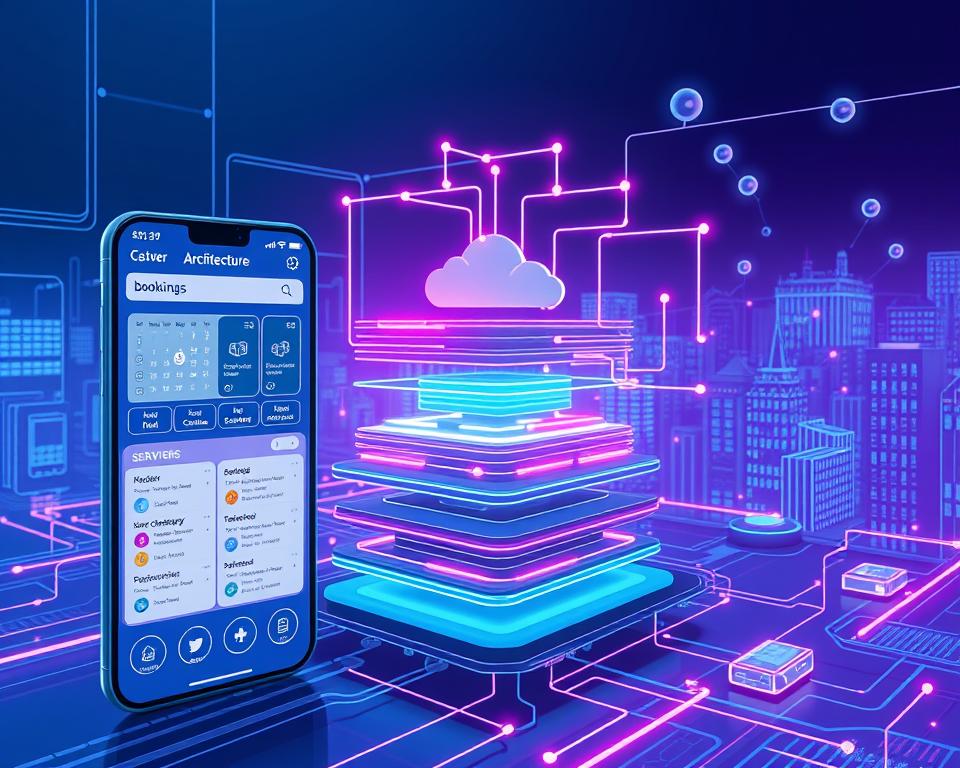
Choosing the right technical architecture and technology stack is key for a local service booking app. It affects the app’s performance, security, and future growth. The right choice makes the app efficient and scalable.
Frontend Development Technologies
The frontend is where users interact. React Native and Flutter are great for cross-platform apps, giving a native feel. For web apps, Angular and Vue.js are top picks for their strength and growth potential.
Backend Infrastructure Options
The backend is the app’s core, handling data and communication. Node.js is favored for its scalable design. Other choices include Django for Python users and Ruby on Rails for Ruby fans.
Database Management Systems
Choosing a database is crucial for storing and getting data. Relational databases like MySQL and PostgreSQL work well for structured data. NoSQL databases like MongoDB are better for unstructured data.
Cloud Hosting Solutions
Cloud hosting offers a scalable and reliable setup for apps. Big cloud providers like AWS, Google Cloud, and Microsoft Azure provide computing, storage, and database services. They help manage and deploy local service booking apps smoothly.
The Complete Development Process from Concept to Launch
Creating a local service booking app is a complex journey. It involves many important stages. Each step is crucial for the app’s success in a crowded market.
Market Research and Competitive Analysis
First, it’s essential to do market research and competitive analysis. This helps find the right audience and understand their needs. It also shows what competitors are doing well and not so well.
Researching the market means looking at what people like and don’t like. This info helps decide what features to include in the app.

Wireframing and UI/UX Design
After the research, it’s time for wireframing and UI/UX design. Wireframing makes a basic layout of the app. UI/UX design makes it look good and easy to use.
A great design keeps users happy and coming back. It makes sure the app is simple to use, so new users can get started quickly.
Development Phases and Agile Sprints
The development work is split into agile sprints. This way, the app gets better bit by bit. It lets developers change things as needed and make a top-notch app.
In each sprint, certain parts of the app are worked on, tested, and improved. This keeps the app up to standard and bug-free.
Quality Assurance and Testing Protocols
Quality assurance is all about making sure the app works well. It checks for bugs, makes sure it works on different devices, and meets all the requirements.
There are many tests, like unit testing and user acceptance testing (UAT). These tests make sure the app is reliable and works well.
App Store Deployment Strategy
The last step is putting the app in the app stores. A good app store deployment strategy means making the app’s listing appealing. This includes using the right keywords, writing a good description, and using great screenshots.
Also, developers should be ready to keep an eye on the app after it’s launched. They should be ready to make updates and fix any problems that come up.
Designing User Experience for Service Providers and Customers
Creating a user-friendly experience is vital for both service providers and customers. It makes sure customers can easily find and book services. At the same time, it helps service providers manage their work efficiently.

Dual-Panel Interface Architecture
A dual-panel interface keeps service listings and booking management separate. This design makes it easier for users to find services and manage bookings. It also reduces clutter and improves navigation.
Simplified Booking Flow Optimization
Streamlining the booking flow is key to a smooth experience. It means fewer steps and less information to fill out. Clear instructions at each step help improve booking rates and customer happiness.
Dashboard Analytics for Service Providers
Dashboard analytics help service providers track their performance. They can see job completion rates, customer feedback, and earnings. This information helps them improve their services and maintain high standards.
By focusing on these design aspects, local service booking apps can enhance the experience for everyone. This leads to happier customers, increased loyalty, and success for the app.
Revenue Models and Monetization Strategies
A local service booking app’s success depends on its ability to make money. It needs different ways to earn revenue. This ensures the app stays financially healthy and keeps growing.
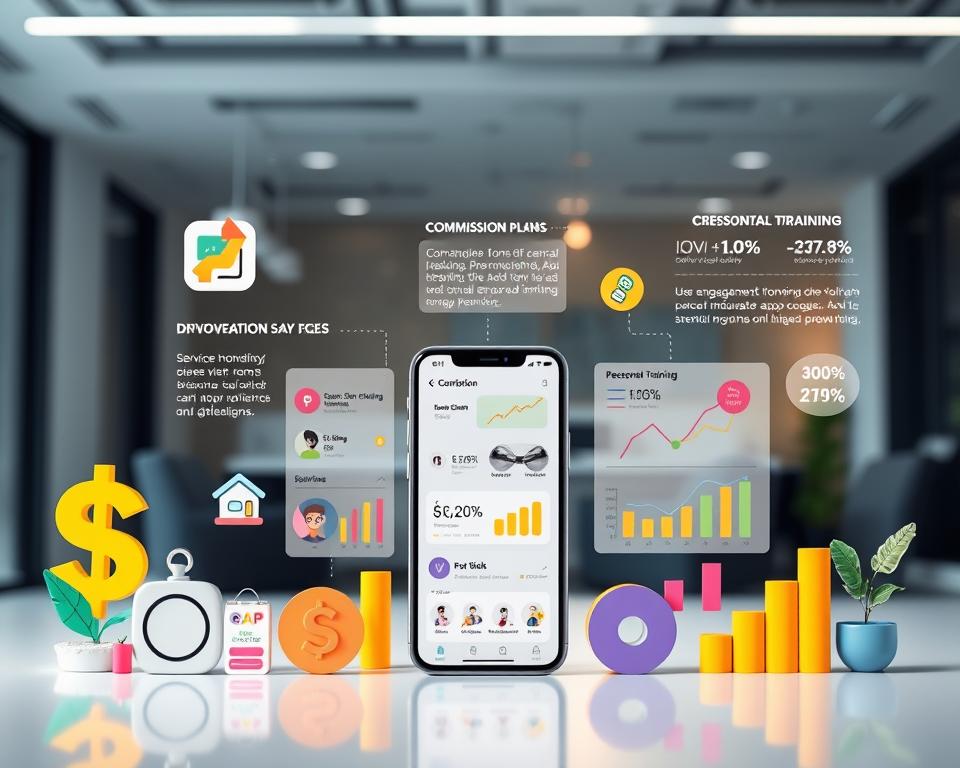
Commission-Based Revenue Structure
Many apps use a commission-based model. This means they charge service providers a part of the money made from each booking. Apps like TaskRabbit and Thumbtack have made this work well. They help both customers and service providers.
The amount charged as commission can change a lot. It depends on the service and the app’s goals. For example, a cleaning service app might charge less than a luxury service app.
| Service Category | Average Commission Rate |
|---|---|
| Home Cleaning | 15%-20% |
| Luxury Services | 25%-30% |
| Handyman Services | 18%-22% |
Subscription Plans for Service Providers
Subscription plans are another way to make money. These plans give service providers more benefits. For example, they might get seen more, get better support, or access special features.
There can be different levels of subscription. This lets service providers pick what fits their business and budget best.
Advertisement and Promotional Opportunities
Apps can also make money from ads and promotions. By adding ads, developers can earn more. These ads can be based on what the user likes and needs.
Working with businesses for promotions is also a good idea. This can include sponsored listings or special deals. It helps the app make money and gives users and partners value.
Premium Feature Upgrades
Apps can also make money by offering extra features for a fee. These could be things like better booking options or more support. This lets users pay for what they want.
This way, apps can meet the needs of more users. Some might want free services, while others are willing to pay for more. It makes users happier and brings in more money.
Cost Factors and Budget Planning for App Development
Knowing the costs of app development is key for good budget planning. Making a local service booking app needs a detailed budget. This budget must consider many factors that affect the total cost.
Development Team Structure and Regional Rates
The cost of app development changes based on the team and where they are. A team might include developers, designers, project managers, and quality assurance experts.
Regional rates vary widely based on the team’s location. For example, teams in North America or Western Europe cost more than those in Eastern Europe or Asia. Here’s a table showing average hourly rates for developers in different places:
| Region | Average Hourly Rate ($) |
|---|---|
| North America | 100-150 |
| Western Europe | 80-120 |
| Eastern Europe | 30-60 |
| Asia | 20-50 |
Feature Complexity Impact on Budget
The complexity of features also affects the budget. Features like real-time booking and AI-powered recommendations need more time and skills, raising costs.
Prioritizing features by their complexity and importance helps manage the budget. Starting with essential features first can be a smart strategy.
Ongoing Maintenance and Update Costs
Keeping the app updated is vital for its success. This includes server upkeep, bug fixes, and updates for new OS versions.
For ongoing maintenance, set aside a portion of the initial cost each year. About 15-20% of the initial cost is a common rule of thumb.
Hidden Expenses to Anticipate
There are hidden costs to watch out for. These include marketing, user support, and legal fees.

Understanding these costs helps developers plan a realistic budget for their app project.
Security Measures and Data Protection Compliance
Security and data protection are key in making local service booking apps. Keeping user data safe is crucial for trust and following rules.
Payment Security and PCI DSS Compliance
Payment security is a big deal in local service booking apps. Apps need to follow the Payment Card Industry Data Security Standard (PCI DSS) for safe transactions. This means:
- Using strong encryption for data in transit and at rest.
- Keeping systems up to date to avoid security holes.
- Doing regular security checks and tests.
Following PCI DSS helps apps avoid data breaches and keeps financial info safe.
User Data Encryption Standards
Encrypting user data is a basic security step. It keeps sensitive info safe from hackers. Local service booking apps should use end-to-end encryption for all data exchanges. This way, even if data is caught, it can’t be read without the right key.
GDPR and Privacy Regulations
Apps must follow the General Data Protection Regulation (GDPR) and other privacy laws, especially in the European Union. Important GDPR rules include:
- Getting clear consent from users before using their data.
- Telling users how their data is used and stored clearly.
- Ensuring users can access and delete their data.
By focusing on security and data protection, local service booking apps can earn user trust. They also avoid big financial and reputation losses from not following rules.
Marketing Strategies for Successful App Launch
Marketing is key for a local service booking app’s launch. It boosts user adoption and keeps them coming back. A smart marketing plan helps the app reach its audience and stand out.
Pre-Launch Beta Testing Programs
Before launching, beta testing is essential. It lets developers check the app, find bugs, and get feedback. This makes the app better, improves user experience, and builds excitement.
- Identify and fix bugs before the official launch
- Gather valuable feedback from beta testers to improve the app
- Create a buzz around the app through early user engagement
App Store Optimization Techniques
App Store Optimization (ASO) boosts the app’s visibility in stores. It involves tweaking the title, description, and keywords for better search rankings. Keeping a high rating is also important.
- Optimize the app’s title and description with relevant keywords
- Use high-quality screenshots and promotional images
- Encourage users to leave reviews and ratings
Digital Marketing and Social Media Campaigns
Digital marketing and social media are crucial for app promotion. Using Facebook, Instagram, and Twitter can expand the audience. Engaging content, targeted ads, and influencer marketing help attract and keep users.
Key strategies include:
- Creating engaging content that resonates with the target audience
- Running targeted ad campaigns on social media platforms
- Collaborating with influencers to promote the app
Referral Programs and User Acquisition
Referral programs are great for getting new users. They encourage current users to invite others, growing the app’s base naturally. Offering rewards for referrals can spark user participation.
Benefits of referral programs include:
- Increased user acquisition through word-of-mouth marketing
- Improved user retention by rewarding loyal users
- Cost-effective marketing strategy compared to traditional advertising
Successful Case Studies in Service Booking Applications
Looking at successful service booking apps can teach developers a lot. The world of service booking apps has changed a lot. Now, many platforms serve different needs.
TaskRabbit, Thumbtack, and Handy are three big names in this field. Each has its own way of succeeding.
TaskRabbit’s Marketplace Approach
TaskRabbit changed how we handle our tasks. It’s a marketplace where users post tasks and get bids from Taskers. This connects people who need help with those who can offer it.
TaskRabbit’s wide range of services is key to its success. From furniture assembly to house cleaning, it’s a go-to for many. This variety boosts customer happiness and keeps them coming back.
Thumbtack’s Lead Generation Strategy
Thumbtack works differently, focusing on lead generation for professionals. It connects customers with professionals, charging them for leads, not taking a cut on the work.
This approach works well. It lets professionals pick their projects, avoiding too much work. Customers get many bids, and professionals find good opportunities.
Handy’s On-Demand Service Model
Handy is known for its on-demand household services. It makes booking cleaning and handyman services easy, thanks to its simple interface.
Handy’s quality control is a big reason for its success. It checks service providers well. This builds trust with users, leading to more business and good word-of-mouth.
By studying these examples, developers can learn what makes a service booking app successful. Whether it’s a marketplace, lead generation, or on-demand services, knowing the strengths of each can help create new apps.
Future Trends Shaping Service Booking Technology
The world of service booking tech is changing fast. New trends are coming that will change the game. It’s key for developers and businesses to keep up with these changes.
Emerging Technologies are key in shaping service booking’s future. Three big trends are augmented reality for previews, blockchain for clear transactions, and voice-activated booking.
Integration of Augmented Reality for Service Previews
Augmented Reality (AR) is set to make service booking better. It lets customers see services before they book. This is especially useful in home decor, where you can see how a service looks in your home first.
Benefits of AR in Service Booking include happier customers and fewer returns. This is because customers know exactly what to expect from a service.
Blockchain for Transparent Transactions
Blockchain tech makes transactions safe and clear. For service booking, it ensures payments are secure and both sides keep their promises.
| Benefits | Description |
|---|---|
| Security | Blockchain ensures secure transactions |
| Transparency | All transactions are recorded publicly |
| Reliability | Reduces the risk of transaction failures |
Voice-Activated Booking Systems
Voice assistants are making booking services easier. This trend is growing, with more apps adding voice-activated features.
Advantages of voice-activated booking include ease and access. It makes booking services simple and convenient, even when you’re on the move.
- Convenience
- Accessibility
- Hands-free operation
As these trends grow, they’ll change service booking tech. They offer new ways for businesses to improve their services and better serve their customers.
Conclusion
Local service booking apps are changing how we deal with service providers today. The need for these apps is rising, thanks to people’s love for mobile booking.
A good app needs basic features like user sign-up, booking in real-time, and payment options. Adding smart features like AI suggestions and maps can make your app stand out.
Knowing how to build and make money from these apps is key. As tech gets better, using new tools like augmented reality and blockchain will be important.
The future looks bright for apps that help people book local services. By focusing on making the app easy to use, safe, and well-marketed, businesses can thrive in the digital world.


