







The logistics industry is changing fast with AI technologies. Studies show AI has made things more efficient and made customers happier.
Development of logistics tracking apps is key in supply chain management. These apps let us track and improve logistics in real-time. This makes customers happier and saves money.
Table of Contents
Key Takeaways
- AI technologies are revolutionizing the logistics industry.
- Logistics tracking apps improve supply chain management.
- Real-time tracking enhances customer experience.
- AI adoption in logistics leads to increased efficiency.
- Logistics tracking apps reduce operational costs.
Transforming Logistics Management Through AI Technology
AI technology is changing logistics management by making things more visible and improving customer happiness. It’s not just a trend; it’s essential for companies to keep up in today’s fast-paced market.
A report by McKinsey shows AI can make logistics better by increasing visibility, cutting costs, and boosting customer satisfaction. The potential for AI to change logistics is huge, with uses from predictive analytics to automated decisions.
“The use of AI in logistics can lead to significant improvements in operational efficiency, cost reduction, and enhanced customer experiences.”
AI plays a big role in changing old logistics ways. It does many things, like:
- Predictive maintenance and demand forecasting
- Real-time shipment tracking and visibility
- Intelligent route optimization
- Automated exception management
| AI Application | Benefit | Impact |
|---|---|---|
| Predictive Maintenance | Reduced Downtime | Increased Operational Efficiency |
| Real-Time Tracking | Improved Visibility | Enhanced Customer Satisfaction |
| Intelligent Routing | Optimized Routes | Reduced Fuel Consumption and Costs |
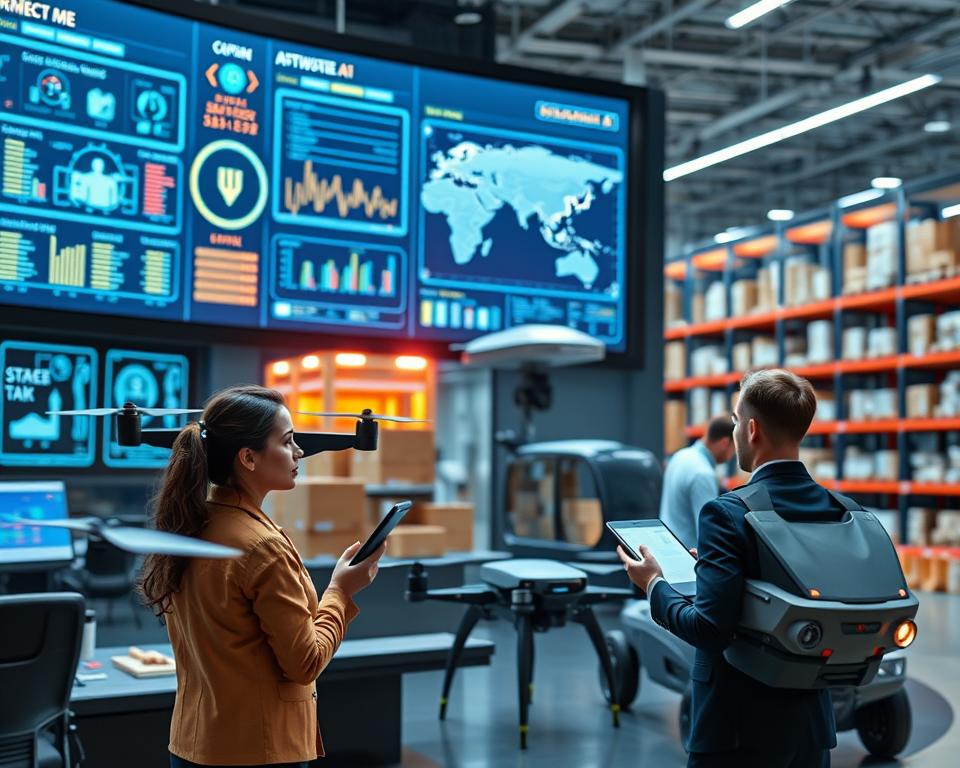
Changing logistics management with AI is more than just using new tools. It’s about changing how we manage logistics. As the industry keeps changing, companies that use AI will be ready for new challenges.
Understanding AI Logistics Tracking App Development
The rise of AI in logistics tracking apps is changing how businesses handle their supply chains. These apps use AI to track shipments in real-time, predict delivery times, and handle exceptions automatically. This makes operations more efficient and keeps customers happy.
What Makes a Logistics Tracking App AI-Powered
An AI-powered logistics tracking app uses machine learning, natural language processing, and computer vision. It offers predictive delivery times and real-time updates. These features set AI apps apart from old tracking systems.
These apps analyze lots of data, like past shipments, traffic, and weather. They can spot potential delays and suggest new routes. This smart approach helps logistics companies manage their chains better, cutting down on delays and boosting efficiency.

The Difference Between Traditional and AI-Driven Tracking Systems
Old logistics tracking systems depend on manual entry and basic tech, leading to errors and delays. On the other hand, AI-driven tracking systems use IoT sensors, GPS, and machine learning for accurate, real-time tracking and smart analytics.
The main differences are:
- Accuracy: AI systems track more accurately because they analyze current data.
- Predictive capabilities: AI can forecast delays and offer new routes, avoiding problems.
- Automation: AI handles exceptions automatically, cutting down on manual work.
Switching to AI-driven tracking can make logistics companies more efficient, save money, and make customers happier.
The Business Case for AI-Powered Logistics Tracking
AI-powered logistics tracking offers a strong business case. It brings significant ROI and boosts operational efficiency. As logistics tasks grow more complex, companies are using AI to make their processes smoother and better serve their customers.
Critical Pain Points in Modern Logistics Operations
Modern logistics operations face many challenges, including:
- Inaccurate Tracking: Manual tracking often leads to mistakes and delays.
- Lack of Visibility: Limited real-time tracking can cause worry for both logistics providers and their customers.
- Inefficient Routing: Poor routing can increase fuel costs and extend delivery times.
AI-powered logistics tracking solves these issues. It offers accurate, real-time tracking and uses predictive analytics.

ROI Expectations from AI Implementation
Studies show that AI in logistics can lead to big ROI in a few years. The ROI depends on the operation’s size, logistics network complexity, and the AI solutions used.
| ROI Metric | Pre-AI Implementation | Post-AI Implementation |
|---|---|---|
| Average Delivery Time | 5 days | 3 days |
| Fuel Costs | $100,000/month | $80,000/month |
| Customer Satisfaction | 80% | 95% |
Industry-Specific Applications and Opportunities
AI-powered logistics tracking benefits various industries, including:
- E-commerce: Real-time tracking and predictive delivery analytics improve customer experience.
- Manufacturing: AI-driven supply chain visibility ensures timely delivery of components.
- Pharmaceuticals: Temperature-controlled logistics and precise tracking meet regulatory needs.
By using AI-powered logistics tracking, businesses in these sectors can achieve new efficiencies, cut costs, and enhance customer satisfaction.
Essential Features of AI Logistics Tracking Applications
Logistics companies are now using AI tracking apps to improve their work. These apps have many features that make logistics better and more reliable.
Real-Time Shipment Tracking and Visibility
Real-time shipment tracking is a key feature of AI apps. It lets businesses keep an eye on their shipments all the time. They get updates on where their goods are and their status.
- Live updates on shipment locations
- Real-time notifications for delays or changes
- Enhanced visibility across the entire supply chain
Predictive Delivery Analytics and ETA Calculations
AI’s predictive analytics help guess delivery times better. It looks at past data, traffic, and weather to predict delays and suggest new routes.
- Data-driven ETA calculations
- Predictive maintenance for vehicles
- Proactive management of potential disruptions
Intelligent Route Optimization
Intelligent route optimization is another key feature. It uses AI to find the best delivery routes. This cuts down fuel use, emissions, and delivery times.

Automated Exception Management
AI apps also have automated exception management. It finds and handles issues like delays, damages, or shipment problems automatically.
- Automated alerts for exceptions
- Streamlined resolution processes
- Reduced manual intervention
Smart Inventory Tracking and Warehouse Management
Lastly, smart inventory tracking and warehouse management help manage inventory better. AI systems track inventory, monitor warehouse work, and improve storage and retrieval.
- Real-time inventory tracking
- Optimized warehouse operations
- Improved inventory accuracy
AI Technologies That Power Logistics Tracking Apps
Modern logistics tracking apps rely on advanced AI technologies. These tools help businesses run smoother and make customers happier. They offer real-time updates, predictive insights, and make decisions automatically.
Machine Learning Algorithms for Demand Forecasting
Machine learning is key for predicting demand. It helps logistics companies get ready for changes in demand. By looking at past data and current trends, these algorithms forecast demand accurately.
Machine learning in demand forecasting offers:
- Better accuracy in demand prediction
- Quick response to market changes
- Better use of resources
Computer Vision for Barcode and Package Recognition
Computer vision makes tracking packages easier and less prone to errors. It quickly reads barcodes and package details. This boosts the efficiency of logistics.
Natural Language Processing for Customer Service Automation
Natural language processing (NLP) automates customer service. It answers customer questions instantly, enhancing their experience. NLP chatbots handle various customer queries, from tracking to problem-solving.
NLP technology helps logistics companies:
- Offer 24/7 customer support
- Quickly respond to customer inquiries
- Boost customer satisfaction
IoT Sensors and Edge Computing Integration
IoT sensors and edge computing enable real-time monitoring of logistics. IoT sensors track shipment conditions like temperature and location. Edge computing processes this data locally, cutting down on delays and improving responses.
IoT sensors and edge computing benefits include:
- Real-time monitoring of shipment conditions
- Fast data processing
- Quick response to logistics issues
Measurable Benefits of AI Logistics Tracking Solutions
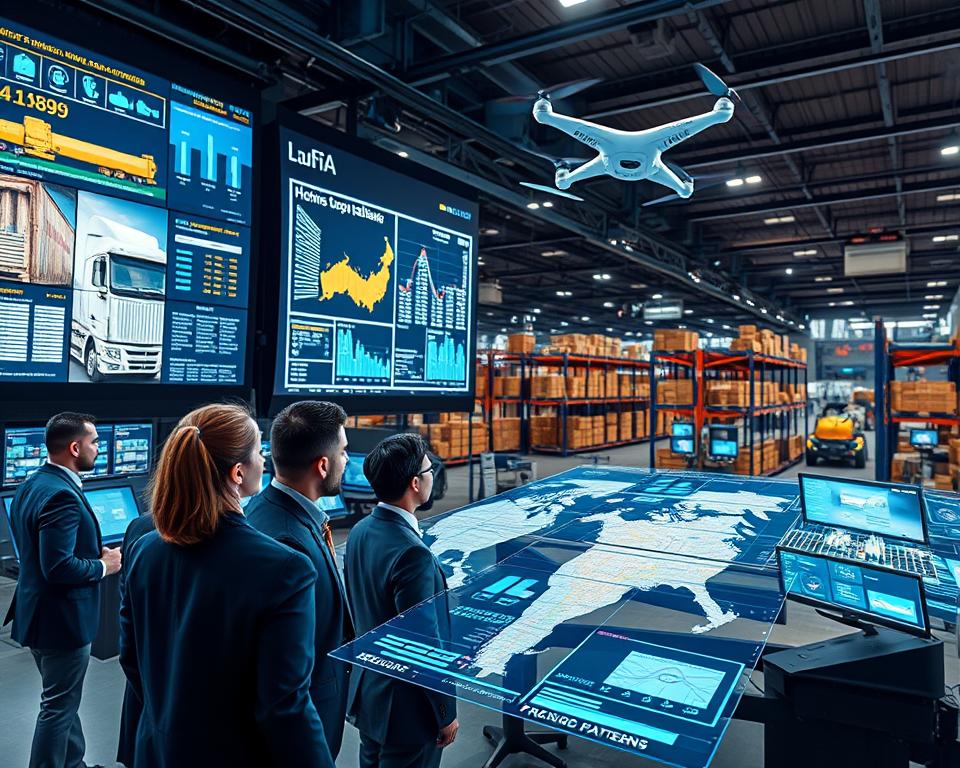
AI technology has changed the game for logistics companies. It brings unmatched efficiency and clarity to the supply chain. AI in logistics tracking has made big strides in many areas.
Operational Efficiency Gains and Time Savings
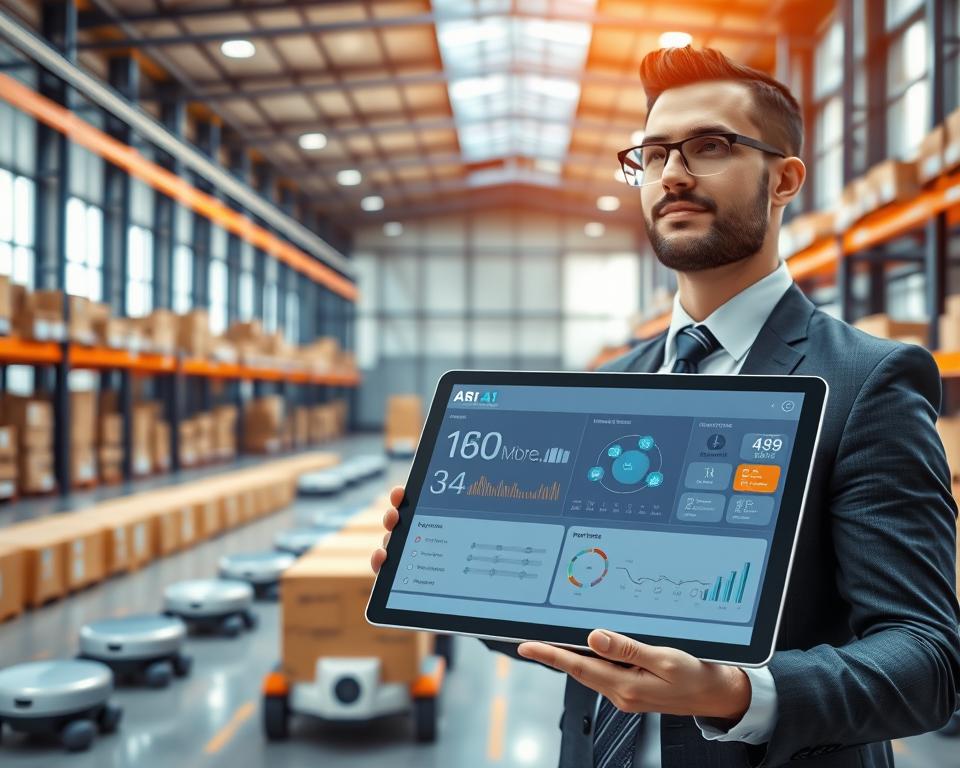
AI tracking solutions automate tasks, saving time on tracking shipments. This boost in operational efficiency lets companies handle more without needing more staff.
AI can spot delays and find new routes fast. This helps keep the supply chain running smoothly.
Cost Reduction Through Smart Resource Allocation
AI tracking helps manage resources better by giving insights into shipments. This smart resource allocation cuts down on costs like fuel, labor, and equipment.
- Optimized routing cuts down on fuel use
- Predictive maintenance lowers equipment downtime
- Efficient labor allocation slashes overtime costs
Enhanced Customer Experience and Transparency
AI tracking gives customers live updates on their shipments. This boosts customer experience by making things clearer. Customers get alerts about any changes in delivery status.
This transparency builds trust and keeps customers happy. It helps logistics companies keep their customers longer.
Improved Accuracy and Reduced Human Error
AI tracking cuts down on human mistakes. AI systems handle big data fast and accurately. This means fewer errors in tracking and delivering shipments.
For example, AI barcode scanning and package recognition cut down on sorting mistakes. This ensures packages get to the right place.
Step-by-Step AI Logistics Tracking App Development Process
Creating an AI logistics tracking app requires a deep understanding of the development process. It starts with analysis and ends with deployment. This journey includes several key stages that are vital for the app’s success.
Business Analysis and Requirements Gathering
The first step is to do a detailed business analysis and gather requirements. It’s important to know the logistics operation’s specific needs. This includes the goods being transported, delivery routes, and existing infrastructure.
Identifying key performance indicators (KPIs) is also crucial. These KPIs will measure the app’s success.
“Understanding the business requirements is the foundation upon which a successful AI logistics tracking app is built.”
Strategic Planning and Architecture Design
After the analysis, strategic planning and architecture design come next. A detailed plan is made for the app’s structure and integration with existing systems. The design should focus on scalability, security, and adaptability to future changes.
User Interface and Experience Design
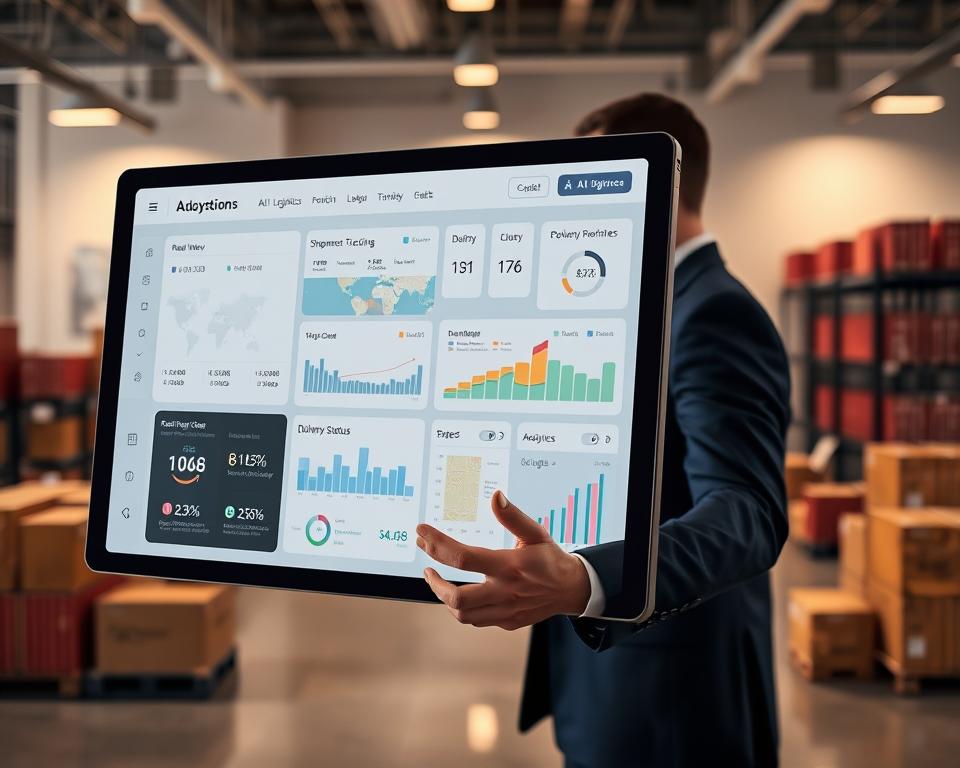
The UI/UX design is a critical part of the app. It should be intuitive, making it easy for users to track shipments and access information. A good design boosts user adoption and satisfaction.
AI Model Development and Training
Developing and training AI models is key to the app’s effectiveness. These models help with predictive analytics, like forecasting delivery times and spotting disruptions. The models’ accuracy relies on the quality of the training data.
Application Development and Integration
The app’s development involves combining AI models, UI/UX design, and backend infrastructure. Integrating with systems like ERP and WMS is also crucial.
Quality Assurance and Testing Protocols
Before deployment, the app must go through quality assurance and testing. This includes functional, performance, and security testing. It ensures the app works as expected and is secure.
| Testing Type | Description |
|---|---|
| Functional Testing | Verifies that the application functions as expected, meeting the specified requirements. |
| Performance Testing | Evaluates the application’s performance under various conditions, such as high traffic or large data volumes. |
| Security Testing | Assesses the application’s security, identifying vulnerabilities and ensuring data protection. |
Deployment and Go-Live Strategy
The last step is deploying the app and planning the go-live strategy. This includes planning the rollout, training users, and monitoring performance after launch. A well-planned deployment minimizes disruptions and ensures a smooth transition.
By following this step-by-step process, organizations can create an AI logistics tracking app that meets their specific needs.
Choosing the Right Technology Stack
The technology stack for AI logistics tracking apps is key to their success. It affects how well the app works and grows. A good stack lets the app handle lots of data, run complex AI, and be easy to use.

Mobile Development Platforms and Frameworks
When making mobile apps, picking the right tools is important. Here are some top picks:
- React Native: It lets you build apps for both iOS and Android at the same time, saving time and money.
- Flutter: It makes fast, beautiful apps with lots of features.
- Xamarin: It helps you share code for different platforms, making development easier.
Cloud Infrastructure Solutions
Cloud services are crucial for making apps scalable and reliable. Here are some top cloud options:
- AWS (Amazon Web Services): It has everything you need, from computing to storage and databases.
- Microsoft Azure: It’s a strong cloud platform with top AI and machine learning tools.
- Google Cloud Platform: It’s great for data analysis and machine learning.
AI and Machine Learning Libraries
Libraries for AI and machine learning are vital for smart apps. Here are some top ones:
- TensorFlow: It’s open-source and perfect for machine learning and deep learning.
- PyTorch: It’s easy to use and flexible for building models.
- Scikit-learn: It has many algorithms for different tasks like classification and clustering.
Database Technologies for Scalable Performance
Choosing the right database is crucial for handling big data. Here are some top picks:
- NoSQL databases like MongoDB and Cassandra for unstructured data.
- Relational databases like PostgreSQL and MySQL for structured data.
- Time-series databases like InfluxDB for efficient data storage and queries.
By picking the right tech stack, developers can make apps that grow, work well, and give real-time insights.
Investment Requirements and Cost Breakdown
Investing in AI logistics tracking app development comes with various costs. These costs depend on several factors. These include the app’s complexity, the technology used, and the team’s expertise.
Development Phase Costs by Complexity
The development phase is a big part of the overall cost. The app’s complexity, including features and AI integration, affects these costs.
- Basic apps with few features: $50,000 – $100,000
- Moderate complexity apps with standard AI features: $100,000 – $250,000
- High complexity apps with advanced AI and integration: $250,000 – $500,000+
AI Integration and Training Expenses
AI integration is key for logistics tracking apps. Costs include data prep, model training, and testing.
AI integration costs can range from $20,000 to $100,000 or more. This depends on the model’s complexity and data volume.
Infrastructure and Hosting Costs
Infrastructure and hosting costs depend on cloud services, server needs, and data storage.
| Cloud Service | Estimated Monthly Cost |
|---|---|
| AWS | $1,000 – $5,000 |
| Google Cloud | $1,200 – $6,000 |
| Azure | $1,500 – $7,000 |
Ongoing Maintenance and Support Budget
Ongoing maintenance and support are key for app success. They include updates, bug fixing, and user support.
It’s wise to set aside 15-20% of the initial cost each year for maintenance and support.
Overcoming Integration and Implementation Challenges
Logistics companies face big hurdles when trying to use AI for tracking. It’s hard to link AI tracking apps with current systems.
Connecting with Existing ERP and WMS Systems
One big challenge is linking AI tracking apps with ERP and WMS systems. To solve this, using API-based integration is a good idea. It makes data sharing smooth.
Another way is to use middleware solutions. They help connect different systems, making integration easier.
| Integration Method | Description | Benefits |
|---|---|---|
| API-based Integration | Direct data exchange between systems via APIs | Real-time data sync, reduced manual errors |
| Middleware Solutions | Using intermediary software to connect different systems | Simplified integration, enhanced compatibility |
Managing Multi-Carrier API Integration
Handling many APIs from different carriers is tough. A unified API gateway can help manage all these APIs at once. It makes integration simpler.
Standardizing API documentation helps too. It makes integrating with different carriers easier and less complicated.
Handling Data Quality and Migration Issues
Data quality and moving data to new systems can be a problem. To fix this, focus on data cleansing and validation. This ensures the data is good.
Having a robust data migration strategy is key. It includes steps like data mapping and verification. This makes sure data moves correctly to the new system.
By tackling these challenges, logistics companies can use AI for tracking. This improves their work and makes customers happier.
Security Standards and Regulatory Compliance
AI in logistics has made security and regulation more critical than ever. AI tracking apps deal with a lot of sensitive data. Keeping this data safe and private is essential.
Data Encryption and Privacy Protection
Data encryption is key to keeping logistics data safe. It protects data both when it’s moving and when it’s stored. Companies use TLS for data in transit and AES for data at rest.
Key Considerations for Data Encryption:
- Implementing end-to-end encryption for all data transmissions
- Using secure key management practices
- Regularly updating encryption protocols to counter emerging threats
GDPR, CCPA, and Industry-Specific Regulations
Companies in the European Union must follow the GDPR. Those in California must comply with the CCPA. There are also rules for specific industries, like hazardous materials transport.
| Regulation | Key Requirements | Impact on Logistics |
|---|---|---|
| GDPR | Data minimization, consent, data subject rights | Requires careful handling of customer data, potentially impacting marketing and customer service practices |
| CCPA | Disclosure of data collection, opt-out rights, non-discrimination | Impacts data collection practices and customer privacy notices |
Secure Authentication and Role-Based Access
Secure authentication is crucial to stop unauthorized access to tracking systems. Role-Based Access Control (RBAC) limits user access to what they need. This lowers the risk of data breaches.
By focusing on security and following regulations, logistics companies can avoid legal issues. They also gain customer and partner trust. This boosts their market position.
Industry Use Cases and Success Stories
AI logistics tracking apps are changing how businesses work. They help in many areas, like e-commerce and pharmaceuticals. These apps make operations better and customers happier.
E-Commerce and Last-Mile Delivery Optimization
E-commerce leaders are using AI to improve last-mile delivery. They use real-time tracking and predictive analytics. This gives customers accurate delivery times and updates.
For example, Amazon uses AI to make deliveries better. It makes customers happier and saves money by using smart routes and less fuel.
Manufacturing Supply Chain Visibility
In manufacturing, AI apps make supply chains clearer. They let companies track goods in real-time. This helps them quickly respond to demand changes and manage inventory better.
AI apps also help spot supply chain problems early. This lets manufacturers fix issues before they get worse.
Temperature-Controlled Pharmaceutical Logistics
The pharma world needs exact temperature control for sensitive products. AI apps with IoT sensors watch temperature changes. This keeps products safe and meets rules.
This is key for keeping medicines effective and following rules.
Fleet Management and Transportation Services
Fleet management gets a boost from AI apps. They help optimize routes, cut fuel use, and boost driver safety. AI also predicts when vehicles might break down, reducing downtime.
This makes fleets run smoother and more efficiently.
Emerging Trends Shaping AI Logistics Solutions
The logistics industry is on the verge of a big change, thanks to AI technology. Several key developments are set to change how logistics operations are managed and optimized.
Autonomous Vehicle Integration and Smart Routing
One exciting trend is the use of autonomous vehicles in logistics. Companies are testing trucks and drones to cut costs and speed up deliveries. Smart routing technologies are also being developed to make routes more efficient and reduce emissions.
Blockchain for Enhanced Supply Chain Transparency
Blockchain technology is becoming more popular in logistics. It offers a secure and transparent way to track shipments and verify transactions. This can help reduce fraud and build trust among supply chain partners.
Digital Twin Technology for Logistics Simulation
Digital twin technology creates virtual replicas of physical assets. It lets logistics companies simulate and analyze different scenarios. This is useful for optimizing warehouse operations and predicting potential issues.
| Emerging Trend | Potential Impact | Implementation Timeline |
|---|---|---|
| Autonomous Vehicles | Reduced labor costs, increased delivery speed | 2025-2030 |
| Blockchain | Enhanced supply chain transparency, reduced fraud | 2023-2028 |
| Digital Twin Technology | Optimized logistics operations, predictive analytics | 2024-2032 |
As these trends evolve, they will deeply impact the logistics industry. Companies that adopt these technologies early will have a competitive advantage.
Choosing Your AI Logistics App Development Partner
Finding the right development partner is key for your AI logistics app’s success. They should have technical skills, know the logistics industry well, and be innovative.
When looking for a partner, consider a few important things. You need to check their technical skills, AI knowledge, and experience in logistics.
Key Criteria for Vendor Selection
Choosing a vendor for your AI logistics app involves several steps. You should look at:
- Technical skills in AI and machine learning
- Experience in logistics and supply chain apps
- Success in delivering projects on time
- Ability to work with current systems
- Following industry standards and laws
Evaluating Technical Capabilities and AI Expertise
A good partner should have strong technical capabilities and AI expertise. They should know about machine learning, data analysis, and cloud computing.
It’s also important to see if they can create AI models. These models should help predict delivery times, find the best routes, and handle unexpected issues.
Assessing Industry Experience and Client References
Industry experience is very important. A partner with logistics experience will understand your challenges and know how to solve them.
Looking at client references can give you a good idea of a vendor’s work. Check for success stories or testimonials that show their ability to complete similar projects.
By looking at these points, you can find a partner who can help you succeed with your AI logistics app.
Best Practices for Successful Implementation
Using AI logistics tracking apps can really boost your business. It makes things run smoother and keeps customers happy. To get the most out of it, you need a solid plan.
Developing a Phased Deployment Roadmap
Starting with a phased rollout is key. It lets you introduce the app bit by bit. This way, you can test each step without causing too much trouble.
- First, look at how your logistics work now
- Then, pick the best spots for AI
- Make a plan with clear goals
- Make sure you have the right people and tools for each step
Training Teams and Managing Change
Teaching your team and handling change is crucial. Everyone needs to get how the new system works and why it’s good.
Good change management means talking clearly, training well, and helping out as you go.
Establishing KPIs and Performance Metrics
To see if your app is working, you need to track important things. These could be:
| KPI | Description |
|---|---|
| On-Time Delivery Rate | How often you meet delivery deadlines |
| Shipment Visibility | How well you can track and watch shipments |
| Cost Savings | How much money you save thanks to AI |
Continuous Improvement and System Optimization
Keeping your app up to date is essential. You should always check how it’s doing, listen to what users say, and make changes when needed.
By always looking to improve, your app will stay top-notch and do its job well.
Conclusion
The logistics industry is changing fast with AI logistics tracking apps. These new tools are making a big difference in how we manage logistics. They bring many benefits and open up new chances for growth.
Logistics companies can work better, save money, and make customers happier with AI. AI apps help track shipments in real time, predict delivery times, and find the best routes. These are just a few of the cool things they can do.
The future of logistics looks bright with AI. As AI gets better, it will keep changing the industry. Companies that use AI will stay ahead and succeed in the long run.
AI logistics tracking has huge potential to bring new ideas and growth to the sector. Its effects will be seen everywhere in the industry.