






In today’s world, businesses want to make mobile applications to stay ahead. They use offshore mobile app development to find talent worldwide without spending too much.
Choosing to hire offshore mobile app developers opens up a world of skills. This guide will show you how to hire offshore. It will cover the good and bad sides to help you decide wisely.
Table of Contents
Key Takeaways
- Understanding the benefits of offshore mobile app development
- Identifying the right offshore developers for your project
- Best practices for successful offshore hiring
- Common challenges in offshore mobile app development
- Strategies for effective project execution
Why Businesses Choose to Hire Offshore Mobile App Developers
Businesses choose offshore mobile app developers for many reasons. They get access to a wide range of skills and experience. This choice is driven by several key benefits.
Cost Efficiency and Budget Optimization
Cost efficiency is a big reason for choosing offshore development. Labor costs differ greatly around the world. By hiring developers from countries with lower costs, businesses save a lot of money.
For example, a US company can hire developers from Eastern Europe or Asia for less than they would locally. This saves money that can be spent on other important business areas.
| Region | Average Hourly Rate |
|---|---|
| North America | $50-$100 |
| Eastern Europe | $25-$50 |
| Asia | $15-$30 |
Access to Global Talent Pool
Offshore development lets businesses tap into a global talent pool. This means finding developers with the latest skills and knowledge. It’s great for companies working on complex or innovative apps.
“The ability to access a global talent pool has been a game-changer for our business. We’ve been able to find experts in technologies that were previously hard to find locally.”
By using this global talent pool, businesses can build a team with the exact skills needed. This ensures their app is top-notch.
Faster Time-to-Market
Offshore development also means a faster time-to-market. Companies can speed up their projects with offshore developers. This is crucial in today’s fast digital world.
Being the first to market is a big advantage. With offshore development, businesses can work around the clock. They use different time zones to their advantage.

Understanding the Mobile App Development Landscape
The world of mobile app development is changing fast. New tech and how people use apps are driving these changes. When companies want to hire mobile app developers from other countries, they need to know what’s happening in the field.

Current Market Trends in Mobile Development
The mobile app market is going through big changes. Several important trends are coming up:
- Increased Focus on User Experience (UX): Developers are now focusing more on making apps easy and fun to use.
- 5G Technology: 5G is making apps work faster and better, opening up new possibilities.
- Artificial Intelligence (AI) and Machine Learning (ML): AI and ML are being used to make apps more personal and useful.
- Enhanced Security Measures: Developers are working hard to keep user data safe, thanks to growing privacy concerns.
The Rise of Cross-Platform Solutions
One big trend is the growth of cross-platform solutions. Tools like React Native and Flutter let developers make apps that work on both iOS and Android. This saves time and money.
Here are some benefits of cross-platform development:
- Apps can hit the market faster because they work on many platforms with one codebase.
- It’s cheaper because you don’t need to maintain separate codes for each platform.
- Users get a consistent experience no matter what device they’re on.
As the mobile app world keeps changing, businesses need to keep up. Knowing the latest trends and using cross-platform solutions helps companies make smart choices when hiring developers from other countries.
Types of Mobile App Developers You Can Hire
Choosing the right developer for your mobile app is key. It depends on your app’s needs, like the platform and features.
iOS Developers
iOS developers make apps for Apple devices. They need:
- Swift and Objective-C Expertise: Knowing these languages is crucial for top iOS apps.
- Apple Ecosystem Knowledge: They must understand Apple’s rules and design to meet standards.
Android Developers
Android developers build apps for Android devices. They should know:
- Kotlin and Java Proficiency: Being good at Kotlin and Java is key for strong Android apps.
- Google Play Store Guidelines: They need to follow Google Play Store rules for app publication.

Cross-Platform Developers
Cross-platform developers make apps for both iOS and Android. They use frameworks like:
- React Native Specialists: React Native uses JavaScript and React for cross-platform apps.
- Flutter Developers: Flutter is a Google tool for making apps for mobile, web, and desktop.
Full-Stack Mobile Developers
Full-stack developers can handle everything from the app’s look to its server-side logic. They’re skilled in both front-end and back-end tasks.
Knowing about different developers helps businesses choose the right one. This ensures their app project is done well.
Essential Skills to Look for in Mobile App Developers
Mobile app development needs a mix of technical and soft skills. These skills are key to making high-quality apps. When you hire offshore mobile app developers, look for a blend of skills. This blend helps them design, develop, and deploy apps well.
Technical Programming Skills
Technical programming skills are the core of mobile app development. Developers need a solid base in programming languages, frameworks, and libraries.
Programming Languages Mastery
Knowing programming languages like Java, Swift, Kotlin, or React Native is essential. Developers should be good with the languages your project needs.
Framework and Library Knowledge
Knowing frameworks and libraries is key for efficient app development. Familiarity with tools like Android SDK, iOS SDK, or third-party libraries helps create strong and scalable apps.
UI/UX Design Understanding
Understanding UI/UX design is crucial for making apps easy to use and nice to look at. Developers should design interfaces that are both beautiful and functional.
Problem-Solving and Analytical Abilities
Problem-solving and analytical skills are vital for mobile app developers. They help developers fix, improve, and refine their code. This ensures apps work well.
Version Control and Collaboration Tools
Knowing version control systems like Git and collaboration tools like Jira or Asana is important. It helps with teamwork and managing projects well.
To show how important these skills are, here’s a table. It highlights key skills and their role in mobile app development:
| Skill | Description | Relevance |
|---|---|---|
| Programming Languages | Mastery of languages like Java, Swift, or Kotlin | High |
| UI/UX Design | Understanding of design principles for user-friendly interfaces | High |
| Problem-Solving | Ability to debug and optimize code | High |
| Version Control | Familiarity with systems like Git | Medium |
| Collaboration Tools | Knowledge of tools like Jira or Asana | Medium |

Top Offshore Locations for Hiring Mobile App Developers
Offshore hiring for mobile app development is getting more popular. Many regions are now top choices for businesses. Each location has its own benefits and advantages.
Eastern Europe
Countries like Ukraine, Poland, and Romania are big in mobile app development. Technical expertise and education are key here.
Technical Expertise and Education
Developers from Eastern Europe have strong technical skills. They often have degrees from top universities. This means they’re very good at making mobile apps.
Time Zone Compatibility
Eastern Europe’s time zone works well with Western Europe and the US. This makes it easier to work together on projects.
Asia
Asia, including India, the Philippines, and Vietnam, has a lot of talented developers. It’s known for its large talent pool and cost advantages.
Large Talent Pool
Asia has a huge number of skilled developers. This is great for businesses looking to hire offshore teams. It means there are many options available.
Cost Advantages
Developers in Asia are often more affordable. Yet, they don’t sacrifice quality for lower prices.
Latin America
Latin American countries like Argentina, Brazil, and Mexico are becoming more popular. They offer cultural alignment with US markets and convenient time zones.
Cultural Alignment with US Markets
Latin America is culturally close to the US. This makes communication and working together easier.
Convenient Time Zones
The time zones in Latin America match well with the US. This allows for real-time work and helps avoid time zone problems.

Offshore Hiring Models Explained
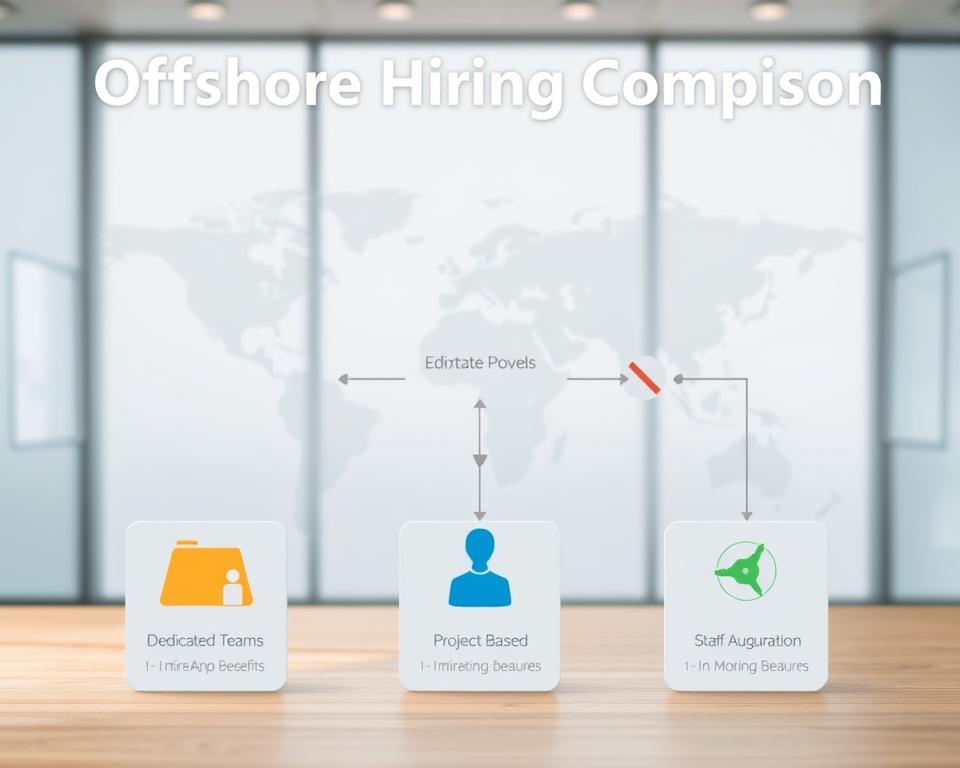
Businesses have many offshore hiring models to choose from. These include dedicated team, fixed price, and time and material models. Each model meets different business needs and project requirements.
Dedicated Team Model
The dedicated team model means hiring a team of developers for a specific project. It’s great for long-term projects needing a lot of expertise and teamwork.
When to Use This Model
Use this model for projects with a clear scope and timeline. It’s perfect for businesses needing to create complex apps with many features.
Benefits and Considerations
This model offers focused expertise, streamlined communication, and flexibility. But, it needs careful management to keep the team working well and the project on track.
Fixed Price Project Model
The fixed price model hires developers for a project with a set scope and timeline. The project cost is fixed, giving the business cost certainty.
Best for Defined Scope Projects
It’s best for projects with a clear scope, timeline, and budget. It’s great for businesses wanting to avoid financial risks and have a solid project plan.
Time and Material Model
The time and material model hires developers based on project time. It offers flexibility and scalability, letting businesses adjust their team as needed.
Flexibility and Scalability
This model is good for businesses with projects that change or need to scale quickly. It supports agile project management and adapting to changing project needs.
To show the differences, here’s a comparison:
| Model | Best For | Key Benefits |
|---|---|---|
| Dedicated Team | Long-term projects with complex requirements | Focused expertise, streamlined communication |
| Fixed Price | Projects with well-defined scope and timeline | Cost certainty, reduced financial risk |
| Time and Material | Projects with changing requirements or needing scalability | Flexibility, scalability, agile project management |
Step-by-Step Process to Hire Mobile App Developers – Offshore Hiring Guide
Hiring offshore mobile app developers requires several key steps. These steps help ensure the project’s success. By following them, businesses can find and hire the right talent for their needs.
Define Your Project Requirements
First, clearly define your project needs. This includes the technical details, budget, and timeline.
Technical Specifications
Specify the app’s technical needs. This includes the platforms, technologies, and features needed. This clarity helps find the right developers.
Budget and Timeline
Set a realistic budget and timeline. This helps filter candidates and ensures the project meets expectations.
Research and Shortlist Candidates
After defining your project, research and shortlist candidates. Use various platforms and criteria for screening.
Platforms to Find Developers
Use LinkedIn, Upwork, and GitHub to find candidates. Each platform offers unique benefits, expanding your talent pool.
Screening Criteria
Screen candidates based on experience, technical skills, and past success. This step is key to finding the best developers.

Conduct Technical Interviews
Technical interviews are crucial. They assess coding skills, problem-solving, and experience.
Coding Tests and Challenges
Give coding tests and challenges. They evaluate practical skills and coding standards.
Problem-Solving Assessments
Include problem-solving assessments. They show the candidate’s critical thinking and innovation.
Evaluate Portfolios and References
Finally, review the candidates’ portfolios and references. This gives insight into their past work and client satisfaction.
Past Project Analysis
Analyze past projects. This shows the candidate’s experience, skills, and work quality.
Client Testimonials
Client testimonials are valuable. They reveal the candidate’s professionalism, work ethic, and ability to meet expectations.
Cost Breakdown: What to Expect When Hiring Offshore
When you think about offshore mobile app development, it’s key to understand the costs. Knowing these costs helps with budgeting and project success.
Hourly Rates by Region
The cost of hiring offshore mobile app developers changes a lot by region. Here’s a look at what you might pay per hour:
Eastern Europe Pricing
In Eastern Europe, like Ukraine, Poland, and Romania, rates are competitive. You can expect to pay between $25 to $50 an hour. This region is known for skilled developers and good prices.
Asian Market Rates
Asia, including India, the Philippines, and Vietnam, has a wide range of rates. Rates can be from $15 to $40 an hour. This depends on the location and the developer’s skills.
Latin American Pricing
Latin America, like Argentina, Brazil, and Mexico, has rates from $20 to $45 an hour. This region is valued for its cultural connection to North America and growing tech talent.

Hidden Costs to Consider
There are hidden costs when hiring offshore mobile app developers. These include:
Management Overhead
Managing an offshore team needs extra resources. This includes project managers and tools, adding to costs.
Communication Tools and Infrastructure
Good communication tools and infrastructure are key for offshore work. This includes video conferencing, project management tools, and secure data transfer.
Cost vs. Quality Balance
Finding the right balance between cost and quality is important. While cheaper options might seem appealing, quality matters. Investing in experienced developers might cost more but can lead to better apps and lower maintenance costs.
When looking at offshore options, think about the total cost of ownership. This includes development, maintenance, and potential rework. A complete view helps make a budget-friendly yet quality-focused choice.
Vetting and Screening Offshore Developers
When you hire offshore developers, it’s key to check their skills and fit well with your team. This helps you make smart choices and boosts your app development success.
Technical Assessment Tests
Technical tests are a big part of checking developers. They show if a developer knows certain programming languages and platforms well.
Code Quality Evaluation
Looking at code quality is very important. It shows how well a developer codes, pays attention to details, and solves problems.
Platform-Specific Knowledge Tests
Tests for specific platforms like iOS or Android are crucial. They make sure the developer can create top-notch mobile apps.
| Platform | Test Type | Description |
|---|---|---|
| iOS | Swift Programming | Evaluates knowledge of Swift programming language |
| Android | Kotlin Programming | Assesses proficiency in Kotlin programming language |
Code Review and Quality Checks
Checking code and quality is essential. It makes sure developers meet high standards. This includes looking at code samples and how well they work.

Cultural Fit and Communication Skills
It’s also important to check if developers fit in with your team. This ensures they can work well together and understand your needs.
Language Proficiency Assessment
Checking language skills is key. It makes sure developers can talk clearly with your team. This is about their language skills.
Work Style Compatibility
Checking if developers fit your team’s work style is crucial. This helps ensure everyone works smoothly together and gets the job done well.
By carefully checking offshore developers, you can find the best talent for your app projects. This leads to success in your mobile app development.
Legal and Contractual Considerations
When you hire offshore developers for mobile apps, it’s not just about their skills. You also need to think about legal and contract details. This ensures your project goes smoothly and your interests are protected.
Intellectual Property Rights Protection
Keeping your intellectual property safe is crucial. You must take strong steps to protect your business’s rights.
Copyright and Ownership Clauses
It’s vital to have clear copyright and ownership clauses in your contracts. These clauses make sure your business owns the app, its code, and design.
Work-for-Hire Agreements
Work-for-hire agreements are also key. They legally confirm that the app belongs to your business. This helps avoid future disputes over who owns the app.
Non-Disclosure Agreements
Non-disclosure agreements (NDAs) are essential for keeping your project secret. NDAs make sure the developers can’t share your project’s details.
Confidentiality Requirements
Make sure your NDA clearly states what’s confidential. It should also explain how the developers must protect this information.
Contract Terms and Service Level Agreements
Clear contract terms and service level agreements (SLAs) are vital. They outline what work needs to be done, who does it, and when it’s due.
Deliverables and Deadlines
Your contract should list what needs to be done and when. This keeps everyone on the same page about project goals and deadlines.
Payment Terms and Milestones
Link payments to specific milestones. This way, you pay for quality work as it’s done. It helps control costs and keeps the team motivated.
As Mark Cuban, entrepreneur and investor, once said,
“The most important thing is to be able to execute on your vision, and to be able to execute on it quickly.”
Having solid legal and contract plans is crucial for making your vision a reality with offshore developers.
| Contractual Aspect | Description | Importance Level |
|---|---|---|
| Intellectual Property Rights | Protection of IP through copyright and ownership clauses | High |
| Non-Disclosure Agreements | Ensuring confidentiality of project information | High |
| Contract Terms and SLAs | Outlining scope, deliverables, deadlines, and payment terms | High |
Managing Communication Across Time Zones
Working with teams from different time zones can be tricky. It’s key to keep communication smooth. This is crucial for offshore hiring success.
Establishing Overlapping Work Hours
To work well together, teams need to overlap their work hours. This makes collaboration easier and speeds up work.
Scheduling Regular Sync Meetings
Regular meetings keep everyone on the same page. They help solve problems, track progress, and plan for the future.
Best Communication Tools and Platforms
Choosing the right tools is important for clear communication. Slack and Microsoft Teams are great for messaging and sharing files. Zoom and Google Meet are perfect for video calls.
Slack and Microsoft Teams
These platforms make team work easy. They offer messaging, file sharing, and connect with other tools.
Zoom and Google Meet
Video calls are key for face-to-face talks. They help build strong team bonds and improve communication.
Asynchronous Communication Tools
Tools like email and project management software are also important. They keep teams updated without needing to be online at the same time.
Setting Clear Communication Protocols
Clear rules for talking are essential. They prevent mistakes and make sure issues get fixed fast. This includes setting response time expectations and escalation procedures for big problems.
Response Time Expectations
Knowing how fast team members will reply helps manage expectations. It ensures communication is on time.
Escalation Procedures
A clear plan for serious issues means problems get solved fast. This keeps the project running smoothly.
Project Management Best Practices for Offshore Teams
To make offshore teams successful, strong project management is key. It helps teams work together well, use resources wisely, and deliver top-notch results.
Agile Methodology Implementation
Agile methods are vital for managing offshore teams. They are flexible and work in cycles. This way, teams can quickly adapt to changes and priorities.
Sprint Planning and Execution
Sprint planning is a big part of Agile. It sets clear goals for each sprint. This makes sure the team knows what to focus on and what to achieve.
Daily Stand-ups
Daily stand-up meetings keep the team moving and solve problems. They let team members share their progress, talk about challenges, and stay in sync.
Task Tracking and Milestone Management
Tracking tasks and milestones is crucial for keeping projects on track. Tools like Jira and Trello help teams manage tasks and milestones better.
Jira and Trello Integration
Using Jira and Trello together makes task management smooth. Jira is great for complex projects, while Trello is simpler and based on Kanban.
Progress Dashboards
Progress dashboards show the project’s status clearly. This lets stakeholders see how things are going and make informed decisions.
| Tool | Feature | Benefit |
|---|---|---|
| Jira | Complex project management | Enhanced tracking and reporting |
| Trello | Kanban boards | Visual task management |
| Progress Dashboards | Visual progress tracking | Improved transparency and decision-making |
Regular Progress Reviews
Regular progress reviews are key to keeping projects on track. They offer a chance for feedback, adjustments, and growth.
Weekly Status Reports
Weekly status reports update stakeholders on the project’s progress. They highlight what’s been done and what needs work.
Sprint Retrospectives
Sprint retrospectives are a key Agile practice. They help teams look back, find ways to improve, and make changes for the next sprint.
Ensuring Quality and Code Standards
To make top-notch mobile apps, focusing on quality assurance and code standards is key. It’s important to make sure the code is easy to maintain, runs well, and follows the best practices. This is essential for any mobile app project’s success.
Code Review Processes
A strong code review process is crucial for high-quality code. This means:
- Peer Review Systems: Other developers reviewing code helps find mistakes, makes code easier to read, and checks if it follows coding standards.
- Automated Code Analysis Tools: Using tools that check code for problems like syntax errors, security issues, and performance issues can greatly improve code quality.
Testing and QA Protocols
Thorough testing is key to make sure the mobile app works as it should and is free from bugs. This includes:
- Unit Testing Requirements: Writing unit tests checks if each part of the app works right.
- Integration and User Acceptance Testing: Integration testing makes sure all parts work together well. User acceptance testing checks if the app meets user needs.
For more insights on hiring the right development team, you can refer to top questions to ask before hiring an app development.
Performance Monitoring
It’s important to watch how the mobile app performs to find and fix problems that might affect user experience. This involves:
- App Performance Metrics: Tracking things like how fast it loads, how often it crashes, and how users interact with it helps find areas to improve.
- Bug Tracking and Resolution: Having a good bug tracking system makes sure problems are found and fixed quickly, keeping users happy.
By focusing on quality assurance, code review, testing protocols, and performance monitoring, developers can make sure their mobile apps are reliable, efficient, and give a great user experience.
Common Challenges in Offshore Hiring and Solutions
Companies are turning to offshore hiring for mobile app development. This move can save costs and tap into a global talent pool. Yet, it comes with unique challenges that can affect project success.
Language and Communication Barriers
Language and communication barriers are major hurdles in offshore hiring. Clear communication is key to project success. Language differences can cause misunderstandings and delays.
Strategies to Overcome Language Issues
To tackle language barriers, several strategies can be used. Providing language training for both teams can improve communication. Using translation tools and encouraging clear communication also helps. For more tips on managing offshore teams, see this guide.
Cultural Differences
Cultural differences can affect team dynamics and project outcomes. It’s important to understand these differences to foster a collaborative work environment.
Understanding Work Culture Variations
Different cultures have different work ethics and communication styles. Knowing these differences helps in managing offshore teams better.
Building Cross-Cultural Understanding
To build a cohesive team, cross-cultural understanding is crucial. Cultural sensitivity training and team-building activities can promote collaboration across cultures.
Quality Control Issues
Ensuring quality in offshore projects can be tough due to process and standard differences.
Implementing Rigorous QA Processes
To keep quality high, businesses should have strict QA processes. This includes regular code reviews, testing, and monitoring project progress. For more on hiring local or offshore developers, read this article.
Time Zone Management
Managing time zone differences is key to efficient workflows and meeting project timelines.
Creating Efficient Workflows
To manage time zones well, businesses should have overlapping work hours for real-time collaboration. Using project management tools for asynchronous work also boosts productivity across time zones.
Documentation Best Practices
Good documentation is essential for offshore projects. It includes detailed project plans, progress reports, and knowledge bases. This helps reduce misunderstandings and ensures project continuity.
Building Long-Term Relationships with Offshore Developers
Creating a strong bond with offshore developers is key to your mobile app’s success. It’s about building a team culture and offering chances for growth.
Creating a Unified Team Culture
It’s important to unite your team, no matter where they are. You can do this with virtual team-building and making them part of your company’s culture.
Virtual Team Building Activities
Virtual events like online game nights or team lunches can bring your team closer. Tools like Slack or Microsoft Teams help with communication and teamwork.
Inclusion in Company Culture
Inviting offshore developers to company celebrations and updates makes them feel valued. This can boost their commitment to your project.
Professional Development Opportunities
Training and skill improvement can motivate offshore developers to do their best. Investing in their growth can make them happier and less likely to leave.
Training and Skill Enhancement
Access to online courses or workshops keeps developers up-to-date with new tech and trends. This benefits both the developers and your project’s quality.