







The rise of marketplace platforms has changed how we connect with expert services. As more people seek specialized skills, the app development world is adapting.
A local expert marketplace connects skilled pros with clients. It’s a big hit, with many platforms popping up for different industries and needs.
Table of Contents
Key Takeaways
- The demand for expert services is driving the growth of marketplace platforms.
- App development is crucial for the success of these platforms.
- Local expert marketplaces offer a unique opportunity for professionals and clients to connect.
- The rise of these platforms is transforming the way businesses operate.
- Marketplace app development requires careful planning and execution.
Understanding Local Expert Marketplace Apps
Local expert marketplace platforms are changing the service industry. They connect customers with skilled professionals. This makes it easier for people and businesses to find the right talent.

What Is a Local Expert Marketplace Platform
A local expert marketplace platform is an online or mobile service. It connects customers with local experts offering specialized services. Experts can showcase their skills, build profiles, and get job offers or bookings.
These platforms act as an intermediary. They manage transactions, communications, and offer tools for project management and payment processing. They make it easier for experts and customers to connect.
Types of Local Expert Services Covered
Local expert marketplace platforms offer a wide range of services. They cater to different customer needs. Some common categories include:
- Home improvement and repair services
- Professional consulting (legal, financial, marketing)
- Health and wellness services (personal training, nutrition planning)
- Creative services (graphic design, writing, photography)
- Technical services (IT support, software development)
These categories are just a few examples. The specific services offered can vary widely.
How These Platforms Connect Experts with Customers
Experts and customers connect through several key features:
- Profile and Portfolio Management: Experts can create detailed profiles showcasing their skills and experience.
- Smart Matching Algorithms: Platforms use algorithms to match customer requests with suitable experts.
- Review and Rating Systems: Customers can leave reviews and ratings, building trust and credibility.
- Secure Payment Processing: Transactions are managed through the platform, ensuring secure payments for experts.
These features create a robust ecosystem. It benefits both service providers and clients, making it easier to find and engage with local expertise.
Market Opportunity and Business Case
The gig economy is growing fast, and so is the demand for local expert services. This makes local expert marketplaces key for connecting experts with customers. They offer specialized services that people need.

Current Market Size and Growth Projections
The local expert marketplace is worth billions now. It’s expected to grow even more, with a high compound annual growth rate (CAGR) in the coming years. This growth comes from more people wanting on-demand services and using digital platforms to find them.
Key statistics driving this growth include:
- Increasing smartphone penetration
- Rising demand for specialized services
- Expansion of the gig economy
Consumer Behavior Trends in the United States
In the United States, people are looking for convenience and personalized services. They’re turning to online platforms to find and book local experts. This is because it’s easy to use and they can see reviews from others.
Notable trends include:
- Increased use of mobile apps for service booking
- Higher expectations for customer service and support
- Growing reliance on online reviews for decision-making
Competitive Advantages of Custom Solutions
Custom solutions give a competitive edge in the local expert marketplace. They offer tailored experiences that meet the needs of both experts and customers. This includes personalized matching, customized booking, and integrated payment systems.
The benefits of custom solutions include:
- Enhanced user experience through tailored features
- Increased customer retention through personalized services
- Improved operational efficiency for service providers
Essential Features for Local Expert Marketplace App Development
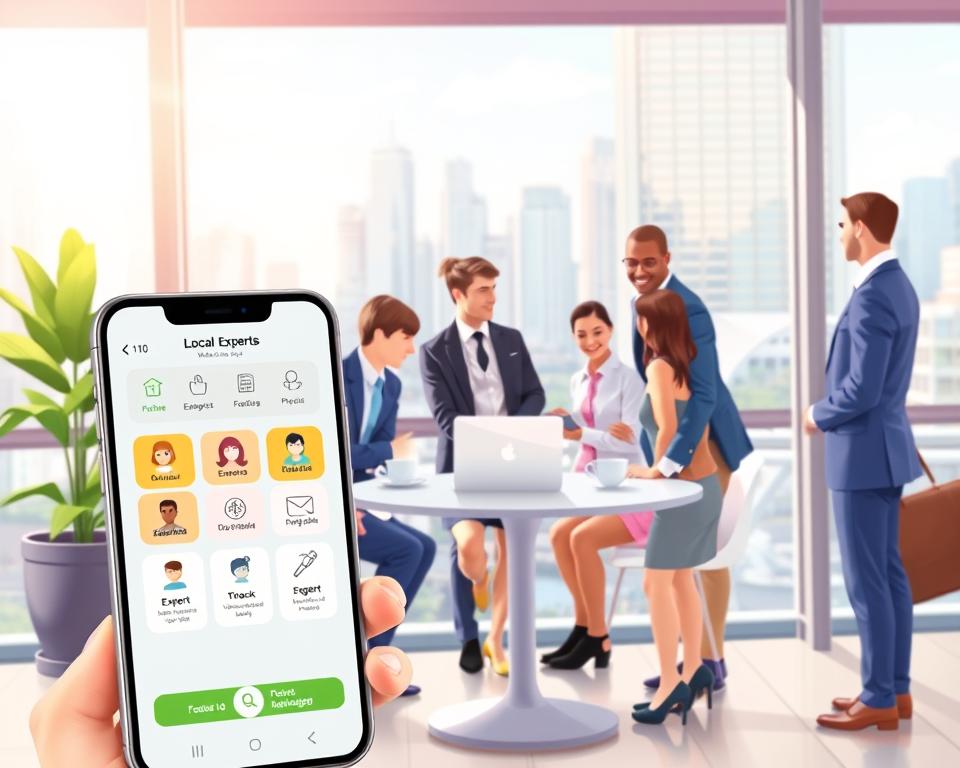
To make a Local Expert Marketplace App successful, you need to add key features. These features improve user experience and help experts and customers interact smoothly. A good app keeps users coming back by offering a smooth experience.
Expert Profile and Portfolio Management
A strong expert profile and portfolio management system is key. It lets experts display their skills, experience, and past work. This helps customers make better choices.
- Detailed profiles with qualifications and certifications
- Portfolio galleries for visual representation of work
- Client testimonials and ratings
Smart Search and Matching Algorithms
Smart search and matching algorithms are crucial for finding the right expert. They look at location, expertise, availability, and ratings.
- Location-based search for local experts
- Filtering options based on expertise and ratings
- Real-time availability checks
Integrated Booking and Scheduling System
An integrated booking and scheduling system makes hiring an expert easy. It lets customers book services and schedule appointments right in the app.
- Calendar integration for experts
- Real-time booking notifications
- Automated reminders for upcoming appointments
Real-Time Communication Tools
Real-time communication tools make talking between customers and experts easy. This is key for clear communication and building trust.
- In-app messaging
- Video call integration
- Push notifications for new messages
Review and Rating Mechanisms
A clear review and rating mechanism builds trust and credibility. It lets customers rate their experiences and give feedback on services.
- Rating systems for services and experts
- Text-based review sections
- Moderation tools for managing inappropriate content
User Experience Design Principles
In the competitive world of marketplace apps, user experience design is key. A good user experience boosts satisfaction, keeps users coming back, and increases engagement.
Mobile-First Design Strategy
Today, most people use apps on their phones. A mobile-first design strategy makes sure the app works well on small screens. This gives users a smooth experience, no matter where they are.
For a mobile-first design, consider these:
- Simplify navigation and content
- Make images and media load fast
- Make sure it’s easy to use with touch

Simplifying the Booking Journey
The booking process is crucial in a Local Expert Marketplace App. Making it simple is key to reducing friction and boosting conversion rates. Here’s how:
- Shorten the booking process
- Give clear info on services and experts
- Show real-time availability and scheduling
Building Trust Through Design Elements
Trust is essential for a marketplace app’s success. Design elements can greatly impact trust. Here’s how to build it:
- Be clear and transparent with policies
- Use high-quality images and professional branding
- Include user reviews and ratings
Accessibility Standards and Best Practices
Making the app accessible to everyone is a must. Following accessibility standards like WCAG 2.1 is important. Here are some best practices:
- Provide alternative text for images
- Ensure good color contrast and readability
- Support keyboard navigation and screen readers
By focusing on these design principles, a Local Expert Marketplace App can stand out. It will drive user engagement and lead to success.
Technology Stack and Architecture
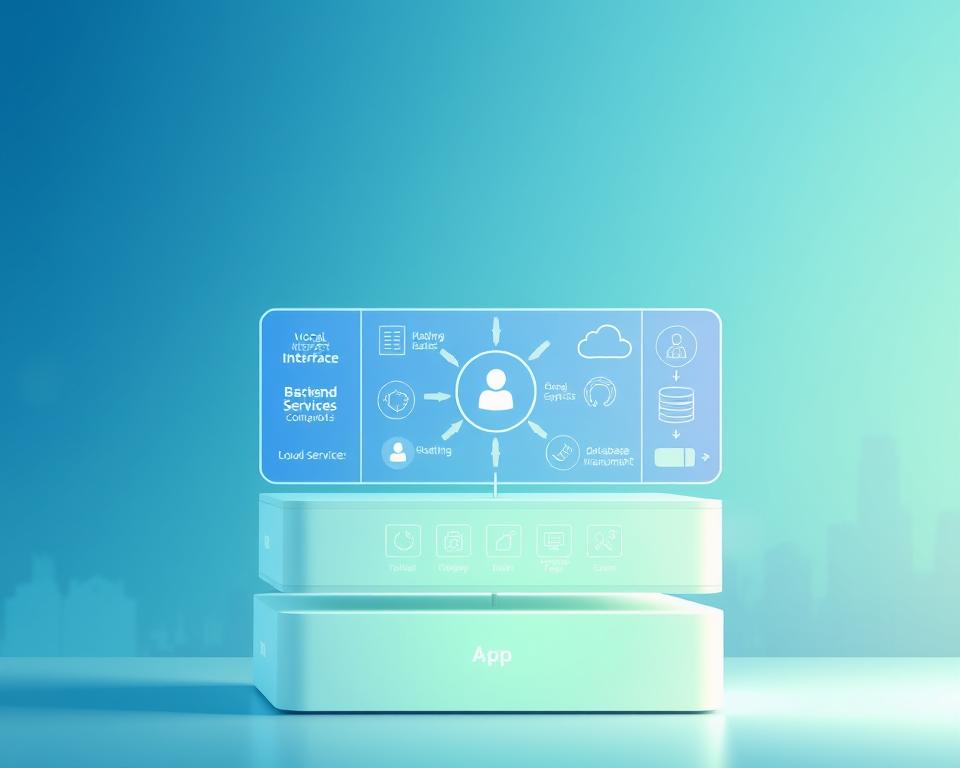
The tech stack and architecture of a Local Expert Marketplace app are key to its success. A good tech stack ensures the app can handle more users, offer a smooth experience, and keep data safe.
Frontend Development Technologies
Choosing the right tech for the frontend is important. It makes the app look good and work well. Two top choices are:
- React Native: Makes apps for iOS and Android with one codebase.
- Flutter: Google’s open-source framework for mobile, web, and desktop apps.
React Native for Cross-Platform Development
React Native is great because it lets you share code across platforms. This saves time and money. It also has a big community for help.
Flutter as an Alternative Framework
Flutter is known for its cool widgets and tools. Its “hot reload” feature lets developers see changes right away. This makes building apps faster.
Backend Infrastructure
The backend is crucial for the app’s functionality. It deals with data, storage, and server-client communication. Two top choices are:
- Node.js and Express Framework: Perfect for apps that need to update fast, thanks to Node.js’s architecture.
- Python with Django or Flask: Python frameworks are strong on security and good for complex tasks.
Node.js and Express Framework
Node.js is great for handling lots of requests at once. Express makes web app development easier.
Python with Django or Flask
Django offers a lot out of the box. Flask is more flexible and simple.
Database Management Systems
Choosing the right database is essential. You can pick from MySQL, PostgreSQL, or MongoDB. Each has its own benefits based on your data needs.
Cloud Hosting Solutions
Cloud hosting makes apps scalable and reliable. It also saves money on infrastructure. AWS, Google Cloud, and Microsoft Azure are top providers.
By picking the right tech stack, developers can build a Local Expert Marketplace app. This app will grow and stay strong over time.
Payment Processing and Financial Management
Effective payment processing is key for any Local Expert Marketplace App. It makes transactions smooth between customers and experts. It also builds trust and credibility.

Integrating Secure Payment Gateways
Using a reliable payment gateway is crucial for secure transactions. Stripe, PayPal, and Square are popular choices. They offer strong security and meet industry standards.
The payment gateway should support many payment methods. This includes credit cards, digital wallets, and bank transfers. It helps serve a wide range of customers.
Implementing Escrow Systems
An escrow system holds payments until services are done. It protects both parties. Experts are motivated to complete tasks, and customers know their payments are safe.
Escrow systems reduce disputes and boost trust in the platform.
Automated Payout Distribution
Automating payouts to experts simplifies finances. The system should handle different payout methods and currencies.
Automated payout systems save time and reduce errors. Manual processing can be prone to mistakes.
Handling Refunds and Disputes
A clear refund and dispute policy is essential. The system should make it easy to start refunds and disputes. It should also have a clear way to communicate solutions.
A dedicated support team can greatly improve customer satisfaction. It builds trust in the platform.
Security Features and Data Protection
It’s key to have strong security in local expert marketplace apps. These apps deal with personal and financial info. So, keeping this data safe is very important.
User Authentication and Authorization
User authentication and authorization are big security steps. They check who you are and what you can do in the app. Using 2FA, biometrics, and OAuth makes things safer.
Best practices for user authentication include:
- Implementing strong password policies
- Using secure protocols for authentication (e.g., HTTPS)
- Regularly updating and patching authentication mechanisms
Data Encryption Standards
Data encryption is a must. It keeps data safe when it’s moving or sitting still. AES is a top choice for encrypting data.
| Encryption Type | Description | Use Case |
|---|---|---|
| Symmetric Encryption | Uses the same key for encryption and decryption | Encrypting data at rest |
| Asymmetric Encryption | Uses a pair of keys: one for encryption and another for decryption | Secure data transmission, digital signatures |
GDPR and CCPA Compliance
Following GDPR and CCPA rules is a must for apps in the EU and California. These laws set strict rules for handling data and privacy.
Key compliance requirements include:
- Getting clear consent for data use
- Telling users how data is used
- Supporting user rights like erasure
Background Check Integration for Experts
Adding background checks for experts boosts trust in the app. It can check certifications, criminal history, or watchlists.

By focusing on security and data protection, apps can earn user trust. This keeps info safe and helps them stay ahead in the market.
The Development Process Step by Step
Creating a Local Expert Marketplace App is a detailed process. It makes sure the app is useful and easy to use. This is key for a platform that works well and is liked by users.
Requirements Gathering and Market Research
The first step is requirements gathering and market research. We learn about the audience, their needs, and the competition. It’s important to find out what features and services users want most.
Market research shows trends and opportunities. This helps make the app stand out.
Wireframing and Prototype Development
After gathering requirements, we move to wireframing and prototype development. Wireframing shows the app’s layout and how users will move through it. It’s vital for seeing the app’s structure and making changes before starting to build it.
A prototype lets stakeholders try the app. Their feedback helps improve the app’s function and feel.

Agile Development Methodology
The development uses an Agile methodology. This method is flexible, collaborative, and always improving. It helps adapt to changes and ensures the process is ongoing and incremental.
Agile breaks down work into smaller parts. It prioritizes tasks based on their value and complexity.
Quality Assurance and Testing Phases
Quality assurance and testing are essential. This phase checks the app thoroughly. It finds and fixes bugs, makes sure it meets standards, and offers a good user experience.
Testing includes different types, like functional, performance, and security tests. This makes sure the app is strong and reliable.
Beta Launch and Feedback Integration
The last step before the big launch is the beta launch. The app is shared with a small group to get feedback. This feedback is crucial for making last-minute changes and ensuring the app meets user needs.
The insights from the beta launch help refine the app. They fix any remaining problems and get it ready for a successful launch.
Monetization Models and Revenue Streams
It’s important to know the different ways to make money in a Local Expert Marketplace App. A good plan helps the app stay financially strong. It also makes sure users get value from both experts and customers.

Commission-Based Pricing Structure
A common way apps make money is through a commission model. The app takes a part of the money made between experts and customers. This way, the app makes money when its users do well, encouraging quality services.
Subscription Tiers for Service Providers
Service providers can get steady income through subscription tiers. These offer different levels of service, tools, and support. This lets experts pick what’s best for their business, keeping them happy and loyal.
Premium Features and Add-Ons
Premium features and add-ons can make the app better and bring in more money. For customers, this might mean faster booking or better expert profiles. For experts, it could be special marketing tools or extra support.
Advertising and Sponsored Listings
Advertising and sponsored listings are also good ways to make money. Businesses can promote their services or highlight certain experts. This brings in revenue while still offering value to users. But, it’s important to do it right so it doesn’t ruin the user experience.
In summary, using a mix of these monetization models can make a Local Expert Marketplace App financially strong. By understanding what experts and customers need, the app can make money while keeping users happy.
Cost Breakdown and Budget Planning
Knowing the costs of making a Local Expert Marketplace App is key to its success. A good budget plan helps finish the project on time and within budget.
Development Team Composition and Rates
A team for a Local Expert Marketplace App includes project managers, designers, developers, and more. Their rates change based on their location, experience, and tech needs.
Here’s a breakdown of development team costs:
- Project Manager: $50-$100 per hour
- UI/UX Designer: $30-$75 per hour
- Frontend/Backend Developers: $40-$100 per hour
- QA Engineers: $30-$60 per hour
As “the cost of development is not just about the technology, but also about the people behind it” (source: Industry Expert).
MVP Versus Full-Featured Platform Costs
Choosing between an MVP and a full-featured platform affects your budget. An MVP is cheaper because it has fewer features.
MVP costs range from $50,000 to $150,000, based on complexity and features.
Third-Party Service and API Expenses
Adding third-party services and APIs makes your app better. But, they also add costs like subscription fees and customization expenses.
Examples of third-party services include:
- Payment gateways like Stripe or PayPal
- Mapping services like Google Maps
- Social media integrations
Ongoing Maintenance and Support Budget
After it’s built, your app needs ongoing care. This includes server upkeep, bug fixes, and updates.
Plan to spend 15-20% of the initial cost each year for maintenance and support.
“Regular maintenance is key to ensuring the longevity and success of your app,” says a seasoned developer.
Understanding these costs helps you plan a detailed budget for your Local Expert Marketplace App.
Scaling Your Marketplace Platform
A scalable infrastructure is key for a successful marketplace. It allows for smooth growth and expansion. As your platform grows, it’s vital to have plans for handling more traffic and user demands.
Infrastructure Scalability Planning
Planning for infrastructure scalability is crucial. It ensures your platform can grow without losing performance. This includes:
- Checking your current infrastructure’s capacity
- Using cloud-based solutions for flexibility
- Applying load balancing to manage traffic well
- Investing in strong database management systems
By focusing on these areas, you can build a scalable infrastructure that supports your platform’s growth.
Expanding to Multiple Geographic Regions
Expanding to new regions can boost your user base and revenue. Key steps include:
- Doing market research to understand local needs
- Adapting your platform to local laws and regulations
- Translating your platform into local languages
- Partnering with local experts to improve services
Adding New Service Categories
Diversifying your services can attract new users and boost engagement. This involves:
- Finding emerging trends and market demand
- Working with new experts to add service categories
- Creating targeted marketing for new services
By adding new service categories, you can meet more user needs, improving their experience.
Performance Optimization Strategies
To keep your platform competitive and fast, use these strategies:
- Regularly check platform performance and user feedback
- Optimize code and database queries for speed
- Use caching to lower load times
- Do A/B testing to find areas for improvement
By focusing on these strategies, you can greatly improve your platform’s performance and user satisfaction.
Launch Strategy and User Acquisition
A good launch strategy is key for a local expert marketplace app. It focuses on creating a two-sided marketplace. This means attracting both experts and customers to make the platform lively and active from the start.
Building a Two-Sided Marketplace
To succeed, balance is crucial. You need to recruit experts and attract customers well. This balance ensures experts get clients and customers find a variety of services.
Key Strategies for Building a Two-Sided Marketplace:
- Start with a good number of experts
- Have a strong onboarding process for everyone
- Offer good rates or bonuses for early users
- Use targeted ads to draw in both sides
Expert Recruitment and Onboarding
Getting the right experts is key for your app. The quality and variety of experts affect the user experience and the app’s appeal.
Effective Expert Recruitment Tactics:
| Recruitment Channel | Description | Potential Reach |
|---|---|---|
| Social Media Campaigns | Targeted ads on platforms like LinkedIn and Facebook | High |
| Professional Networks | Leveraging industry connections and associations | Medium |
| Influencer Partnerships | Collaborating with influencers in relevant niches | High |
Customer Acquisition Channels
Getting customers is just as important. You need a variety of ways to reach them effectively.
Customer Acquisition Strategies:
- Improve visibility with SEO
- Use paid ads on Google and social media
- Start referral programs for word-of-mouth
- Use content marketing to build trust
Retention and Engagement Tactics
Keeping users is vital for your app’s success. Good retention and engagement strategies can make users loyal.
Retention Strategies:
- Keep the app updated with new features
- Offer personalized service recommendations
- Run reward programs for regular users
- Listen to feedback to improve the app
Key Performance Metrics and Analytics
To measure a Local Expert Marketplace App’s success, it’s key to watch key performance metrics. These metrics show how well the app is doing.
They help us see where we are now and guide us for the future.
Tracking User Engagement and Activity
User engagement shows if the app is working well. Looking at daily active users (DAU), monthly active users (MAU), and average time spent on the app tells us a lot.
- DAU shows daily use.
- MAU gives a monthly view of users.
- Average time on the app shows how interesting it is.
Monitoring Transaction Volume and GMV
Transaction volume and Gross Merchandise Value (GMV) are key. They show how much money the app makes.
Keeping an eye on these helps us see the app’s financial health.
- Transaction volume is the number of bookings or services.
- GMV is the total value of these transactions, showing revenue.
Measuring Customer Satisfaction Scores
Customer satisfaction is crucial for success. Looking at Net Promoter Score (NPS) and customer reviews helps us see how happy users are.
“Customer satisfaction is not just about meeting expectations; it’s about exceeding them.” –
High satisfaction scores mean the app is doing well and meeting user needs.
Analyzing Expert Performance Metrics
Experts’ performance is also important. Looking at expert rating, completion rate, and response time helps us see how they’re doing.
By analyzing these, we can ensure top-notch services and a strong network of experts.
Conclusion
Creating a local expert marketplace app can change how we find skilled people nearby. It’s important to know the market, key features, and tech needed. This way, businesses can make a successful platform.
A good app makes it easy to find and book experts. It’s great for both users and service providers. As more people want these apps, adding new features and tech is key.
The future of these apps is bright, with chances to grow in new places and services. Businesses should focus on making the app user-friendly, secure, and scalable. This will help them stand out in a fast-changing market.
As the market grows, keeping an eye on important metrics is vital. This helps businesses make smart choices and grow their app. By using data, they can improve and succeed in the app development world.


