







The use of AI-powered astrology in mobile apps is changing how we see and use astrological information. An AI astrology app gives users a personal touch. It offers insights tailored to their birth charts and astrological signs.
Astrology app development has grown a lot in recent years. This is because more people are interested in astrology and AI technology is getting better. AI helps these apps give more precise and personal readings.
Table of Contents
Key Takeaways
- Understanding the role of AI in modern astrology
- Exploring the features of a typical AI astrology app
- Learning about the technologies used in astrology app development
- Discovering the benefits of developing an AI astrology app
- Identifying the target audience for such apps
The Rising Demand for AI-Powered Astrology Apps
The need for AI-powered astrology apps is increasing. People want more accurate and personal astrological advice. This is because astrology is getting more popular, and apps make it easy to use.
Astrology has always been interesting to many. It gives insights into who we are, our relationships, and what the future holds. Now, with AI technology, astrology apps are more accessible and easy to use.

What makes AI-powered astrology apps so appealing is their ability to give personalized astrological insights. These apps use machine learning and natural language processing. They offer advice and predictions based on what they know about each user.
Having astrological guidance right on your phone is also a big plus. Users can check daily horoscopes, get birth chart analysis, and find out who they’re compatible with. All from their mobile devices.
Moreover, AI in astrology apps makes predictions more accurate. AI looks at lots of data and finds patterns. This means users get advice that’s more precise and relevant.
As more people want AI-powered astrology apps, we see a new world where technology meets astrology. This is creating a space where users can find guidance and insight in a new and exciting way.
What Makes AI Astrology Apps Different from Traditional Astrology Platforms
AI has changed astrology, making it more personal and fun. Unlike old astrology sites, AI apps use new tech for better insights.
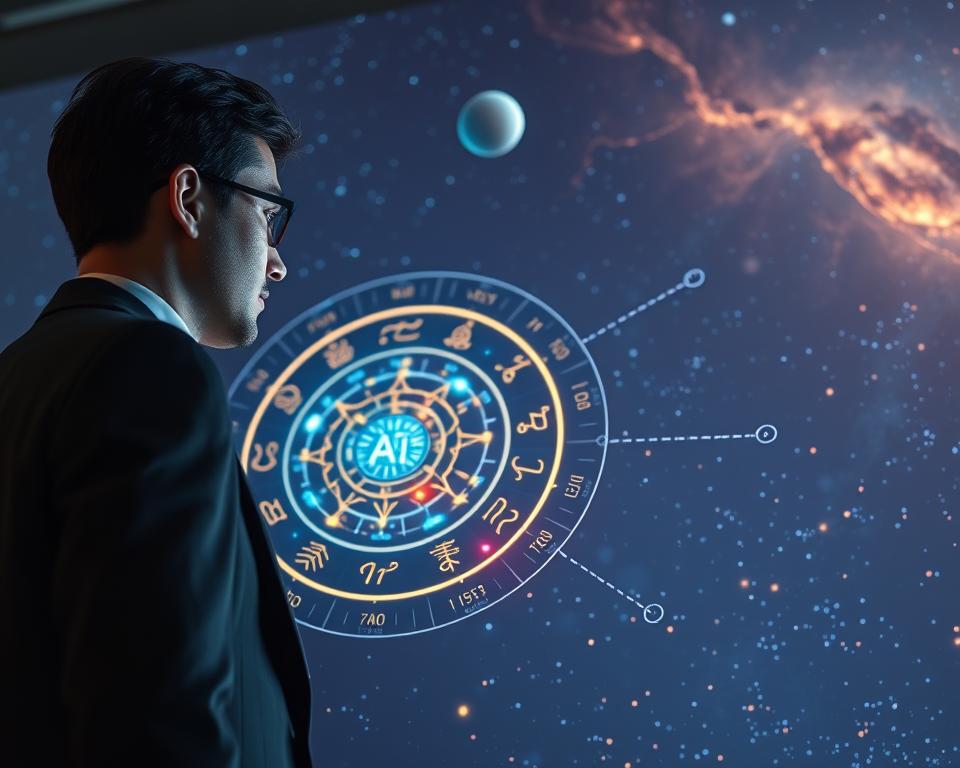
Machine Learning for Personalized Predictions
Machine learning is key in AI apps. It uses your data for predictions that are spot on. This is better than old ways.
An AI app can look at your birth chart and give you daily horoscopes just for you. This makes the app more useful and fun.
Natural Language Processing for User Interactions
Natural Language Processing (NLP) makes talking to AI apps easy. You can ask questions and get answers in a way that feels natural.
NLP chatbots understand and answer your questions. This makes the app easier to use and more enjoyable.
Real-Time Data Analysis and Pattern Recognition
AI apps use real-time data analysis to keep up with new astrological info. They find patterns and trends that old methods miss.
This means AI apps can give you timely insights and alerts. It keeps you in the loop and makes using the app more exciting.
Essential Features for AI Astrology App Development
A successful AI astrology app needs a good set of features. These should include daily horoscopes, birth chart analysis, and compatibility matching. These features attract users and give them a personalized experience. This makes the app more engaging and useful.
Personalized Daily Horoscopes
Daily horoscopes are a key feature in astrology apps. They give users insights into their day based on their zodiac sign. To improve this, apps can offer:
- Zodiac-Based Predictions: Tailor horoscopes to the user’s zodiac sign, providing specific advice and forecasts.
- Life Area Forecasts: Offer predictions that cover various aspects of life, such as love, career, and health, giving users a comprehensive view of their day.
Birth Chart Generation and Analysis
Birth chart generation and analysis is vital. It gives users deep insights into their astrological profile. This can be done through:
- Natal Chart Interpretation: Analyze the user’s birth chart to reveal personality traits, strengths, and potential challenges.
- Planetary Position Tracking: Track the positions of planets and their influences on the user’s life, offering a dynamic view of astrological influences.
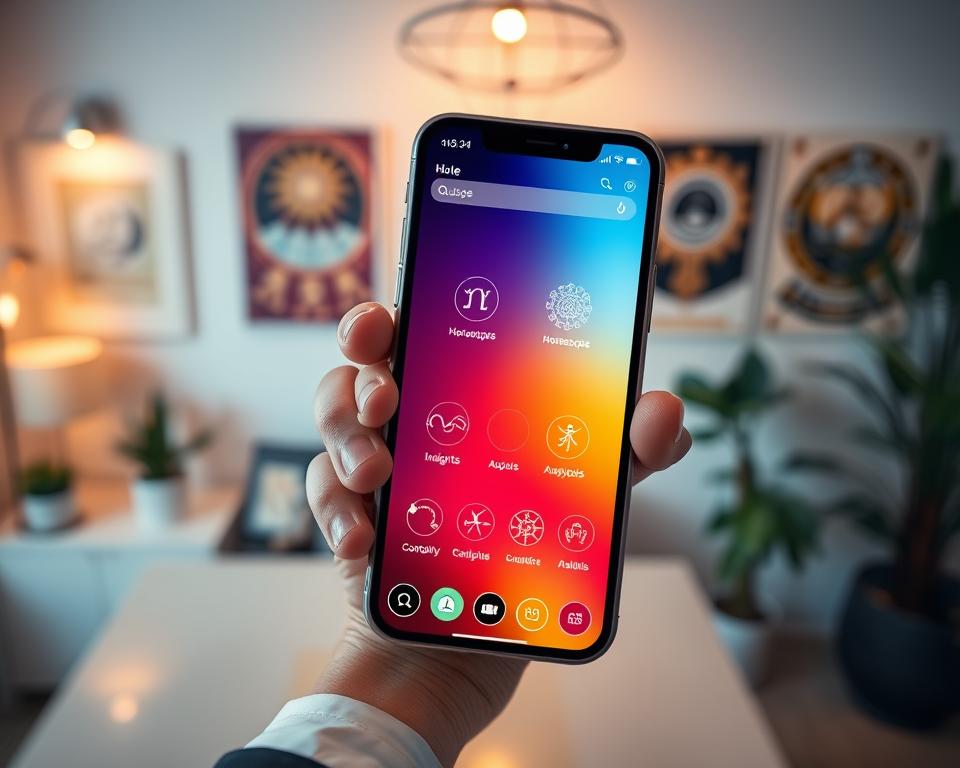
Compatibility Matching
Compatibility matching is a favorite feature. It helps users understand their relationships better. By analyzing the birth charts of two individuals, the app can show their compatibility. It highlights areas of harmony and potential conflict.
AI-Powered Chatbot for Astrological Guidance
An AI-powered chatbot can greatly improve user experience. It offers personalized astrological guidance. The chatbot can answer user queries, provide advice based on their astrological profile, and even suggest meditation or affirmations.
Advanced AI Technologies Used in Astrology Apps
Astrology apps now use top AI tech for better predictions. These tools help analyze complex data and spot patterns. This makes insights available that were once out of reach.
Deep Learning Algorithms
Deep learning algorithms are key for astrology apps. They learn from lots of data, getting better over time. This boosts the apps’ predictive power.
Neural Networks for Pattern Recognition
Neural networks are great at finding patterns. In astrology apps, they help spot complex patterns in user data. This leads to more accurate predictions.
Recurrent Neural Networks for Time-Series Analysis
Recurrent Neural Networks (RNNs) are perfect for analyzing data over time. They help astrology apps make predictions based on past trends.

Predictive Analytics
Predictive analytics is a big deal in astrology apps. It uses user data and astrological info to forecast future events. It also gives personalized advice.
Computer Vision for Palm and Face Reading
Computer vision is used for palm and face reading in astrology apps. It analyzes images to reveal insights into a user’s personality and destiny.
Sentiment Analysis for User Feedback
Sentiment analysis helps understand user feedback. It shows how users feel about the app. This info helps improve the app’s features and user experience.
With these advanced AI technologies, astrology apps offer a more detailed and personal experience. They stand out from traditional astrology platforms.
User Experience Design Considerations
The design of AI astrology apps greatly affects how users feel and stay with the app. A good app design attracts and keeps users interested over time.
Intuitive Onboarding Process
An easy onboarding process is key for new users to get the hang of the app. It should include interactive tutorials, clear steps, and not ask for too much info at first.
Visual Chart Representations
Visual charts are vital for showing complex astrological data in simple terms. Interactive and dynamic charts make the app more engaging and personal.

Personalization Features
Personalization lets users make the app their own, improving their experience. This can include custom dashboards, horoscopes, and recommendations.
Push Notifications and Engagement Strategies
Good push notifications and strategies keep users interested and coming back. Relevant and timely notifications, along with rewards for regular use, are key.
| Feature | Description | Benefit |
|---|---|---|
| Intuitive Onboarding | Simplifies initial app interaction | Reduces user drop-off |
| Visual Charts | Presents complex data in an accessible format | Enhances user understanding and engagement |
| Personalization | Tailors the app experience to individual users | Increases user satisfaction and retention |
| Push Notifications | Keeps users informed and engaged | Encourages regular app use |
Data Requirements for Building an AI Astrology App
Creating an AI astrology app needs high-quality and varied data. It must have a wide range of data types to give accurate and personal astrological insights.
Astronomical Data Integration
Astronomical data is key for any astrology app. It allows for precise calculations and predictions. This includes:
Ephemeris Data
Ephemeris data shows the positions of stars and planets at set times. It’s essential for creating accurate birth charts and predicting planetary movements.
Planetary Transit Information
Planetary transit info helps understand the current and future positions of planets. It’s useful for making timely astrological predictions.

Historical Astrological Records
Historical astrological records are crucial for training AI models. They include past astrological events, their meanings, and outcomes.
User Behavior and Feedback Data
User behavior and feedback data are key for personalizing the app. They help understand user preferences and improve the app’s accuracy over time.
| Data Type | Description | Usage in AI Astrology App |
|---|---|---|
| Astronomical Data | Includes ephemeris and planetary transit information | Used for generating birth charts and making astrological predictions |
| Historical Astrological Records | Past astrological events and their interpretations | Trains AI models to recognize patterns and make predictions |
| User Behavior and Feedback Data | User interactions and feedback provided | Personalizes the app experience and improves accuracy |
An AI astrology app can offer a detailed and personal experience by using these data types. The quality and accuracy of the data are crucial for the app’s success in providing valuable insights.
Step-by-Step Development Process
Creating an AI-powered astrology app starts with market research. It’s important to know who your users are, what they like, and what’s already out there. This helps make an app that really stands out.
Market Research and Planning
Market research is key to figuring out what features your app should have. You need to know what users want, what’s popular in astrology, and what apps already offer. Planning with this info ensures your app meets user needs and stays ahead of the competition.
Technical Architecture Design
Choosing the right tech for your app’s technical architecture is crucial. You need to pick the best backend, database, and frontend tech. This will help your app work well and grow as needed.

AI Model Training and Testing
The AI model is at the heart of your astrology app. It makes personalized predictions and insights. Training this model needs a big dataset of astrological data.
Dataset Preparation
Dataset preparation means getting and cleaning astrological data, user birth details, and more. It’s important to make sure this data is right and complete for the model to work well.
Model Validation
Model validation tests the AI model with new data to check its accuracy. This step is key to making the model as good as it can be.
App Development and Integration
After the AI model is ready, it’s time to build the app. This includes making the user interface, adding the AI model, and making sure it works well on all devices.
Quality Assurance and Launch
Quality assurance means testing the app to find and fix any problems. Once it’s perfect, it’s ready to be released in app stores.
Choosing the Right Technology Stack
Creating an AI astrology app needs a good technology stack for growth and smoothness. This stack includes frontend and backend tech, AI tools, and cloud services. Each part is key to the app’s success and user happiness.
Frontend Technologies
Frontend tech makes the app’s look and feel. The choice depends on the platform (iOS, Android, or both) and the team’s skills.
React Native and Flutter
React Native and Flutter are top picks for making apps for both iOS and Android. They save time and money by using one code for both. React Native uses JavaScript and JSX, while Flutter works with Dart.
Swift and Kotlin
Swift is for iOS apps, and Kotlin is for Android. They offer the best performance and direct access to hardware. This is great for apps needing complex native features.
Backend Infrastructure
The backend is vital for handling data, AI, and server logic. The tech used here impacts the app’s growth, safety, and speed.
Node.js and Python
Node.js and Python are top backend picks. Node.js is good for real-time apps because of its design. Python is great for AI and data science thanks to its libraries.
Django and Flask Frameworks
Django and Flask are Python frameworks for strong backend services. Django is high-level and complete. Flask is flexible and perfect for small apps or quick tests.
AI Frameworks and Libraries
AI tools and libraries are crucial for adding machine learning to the app.
TensorFlow and PyTorch
TensorFlow and PyTorch are top AI frameworks. TensorFlow is scalable and ready for production. PyTorch is easy to use and great for quick prototyping.
Scikit-learn and OpenCV
Scikit-learn is a Python library for machine learning. OpenCV is for computer vision, handling images and videos.
Cloud Services and Databases
Cloud services give scalable hosting, data storage, and AI model processing. The right cloud and database are key for managing data and growth.
AWS, GCP, and Azure are popular cloud options. They offer many services like compute, storage, and AI/ML tools.

Choosing the right tech stack is crucial for a strong, scalable, and efficient AI astrology app. It meets user needs and stands out in the market.
Monetization Strategies for AI Astrology Apps
Monetizing AI astrology apps needs a smart plan. It’s all about making money without upsetting users. The right strategy can make the app both profitable and loved by users.
Freemium Model
The freemium model gives a basic app for free. Then, it asks for money for extra features. This way, many users try the app, and some pay for more.
Subscription Plans
Subscription plans bring in steady money. They come in different levels to meet various user needs.
Monthly and Annual Tiers
Having both monthly and yearly plans meets different user likes. This can also boost subscription numbers.
Premium Feature Access
Offering special features or content can make users pay more. It also keeps them coming back for more.
| Subscription Tier | Features | Price |
|---|---|---|
| Basic | Daily Horoscopes, Basic Chart Analysis | $4.99/month |
| Premium | Advanced Chart Analysis, Personalized Predictions, Ad-free Experience | $9.99/month |
| Pro | All Premium Features, Personalized Coaching, Priority Support | $19.99/month |
In-App Purchases
In-app purchases let users buy specific features or content. This can include extra astrological insights or special reports.
Advertisement Integration
Adding ads can bring in more money. But, it’s important to place them carefully. Too many ads can turn users off.

By mixing these strategies, developers can make a successful AI astrology app. It will meet user needs and keep them happy.
Privacy and Data Security Considerations
AI astrology apps are getting more popular. It’s important to keep user data safe. These apps deal with a lot of personal info, so they need strong security.
User Data Protection
Keeping user data safe is key. This means using robust encryption methods and safe storage. Developers must protect user info from hackers and follow data protection laws.
“The privacy and security of user data are fundamental to maintaining trust in AI astrology apps.” To do this, developers use advanced security like two-factor authentication and regular checks.
GDPR and Compliance Requirements
The General Data Protection Regulation (GDPR) is strict about data protection. AI astrology apps must follow it to operate legally. This includes being open about how data is handled, getting clear consent, and letting users control their data.
- Implement data protection by design and default
- Conduct regular Data Protection Impact Assessments (DPIAs)
- Appoint a Data Protection Officer (DPO) where necessary
Secure Payment Processing
For apps with premium services or in-app buys, secure payment processing is essential. Using trusted payment gateways keeps user financial info safe. Following standards like PCI-DSS is important for secure payments.
Data Encryption Standards
Data encryption is crucial for AI astrology apps. Using industry-standard encryption protocols like TLS and AES helps protect data. Keeping encryption up to date is also vital.
“Encryption is not just a technical requirement; it’s a fundamental aspect of data security that protects user trust.”
By focusing on privacy and security, AI astrology apps can meet legal standards. They also gain loyal users by showing they care about protecting personal info.
Cost Breakdown and Development Timeline
Knowing the costs and time needed is key for a successful AI astrology app. It’s important to break down expenses and set a realistic timeline. This is because using AI and making the app easy to use requires careful planning.
Development Team Structure
An AI astrology app needs a team with different skills. Key roles include AI/ML engineers, software developers, UI/UX designers, and astrology experts.
Required Roles and Expertise
AI/ML engineers work on the app’s AI models. Software developers make sure the app works well. UI/UX designers create an easy-to-use interface. Astrology experts add the needed knowledge for accurate predictions.
In-House vs Outsourcing
Choosing between an in-house team or outsourcing depends on several factors. In-house teams offer better control and communication. Outsourcing can save money and bring in specialized skills.
Technology and Infrastructure Costs
Technology and infrastructure costs are high for an AI astrology app. These include cloud services, data storage, and AI framework licenses. Cloud services like AWS or Google Cloud provide scalable infrastructure for data processing.
Expected Timeline for MVP and Full Launch
The time needed to develop an AI astrology app varies. It depends on the app’s complexity and the team’s size and experience. An MVP can take 3 to 6 months. A full launch might take 6 to 12 months or more.
Understanding these factors helps developers plan and execute their app’s development. This ensures a successful launch and a great user experience.
Marketing Your AI Astrology App
A good marketing plan is key to getting your AI astrology app noticed. You need to use different strategies to make your app stand out. This includes making it easy to find, engaging, and a great experience for users.
App Store Optimization
App Store Optimization (ASO) is crucial for your app to be found in app stores. It means making your app’s title, description, and keywords match what people are looking for. Good ASO can really help your app show up higher in search results.
- Do deep research on keywords to find the right ones.
- Use those keywords in your app’s title and description.
- Post high-quality screenshots and promotional images.
Social Media Marketing Strategies
Social media is a big chance to promote your AI astrology app. By making interesting content and using the right platforms, you can draw in and keep users. Instagram and TikTok are great for reaching younger people.
Instagram and TikTok Campaigns
It’s important to post visually appealing content on these platforms. Share daily horoscopes, behind-the-scenes looks, and user stories to get more followers.
- Use hashtags to make your posts more visible.
- Work with influencers and astrology fans.
- Run ads to find new users.
Community Building
Creating a community around your app can make users loyal and keep them coming back. Make a place where people can talk about astrology, share their stories, and get help.
- Start social media groups or forums for your community.
- Host webinars or Q&A sessions with astrology experts.
- Encourage users to share their content and feature it.
Influencer Partnerships
Working with influencers in the astrology field can spread the word about your app. Pick influencers who share your values and are really into astrology.
- Find influencers with a big following in astrology.
- Work together on content that shows off your app.
- Keep an eye on how well these partnerships work.
Content Marketing and SEO
Writing great, informative content about astrology can draw people to your app. SEO can help make this content easier to find online.
- Start a blog with articles on astrology and horoscopes.
- Make sure your content has the right keywords.
- Use links to your app in your content.
Challenges and Solutions in AI Astrology App Development
Creating an AI astrology app is a complex task. It requires understanding both AI technology and astrology. This makes it a challenging project.
Accuracy and Reliability Concerns
Ensuring accurate and reliable astrological predictions is a big challenge. To solve this, developers should test their app thoroughly. They also need to update their AI models regularly with new data.
| Challenge | Solution |
|---|---|
| Inaccurate Predictions | Regular Model Training and Validation |
| Reliability Concerns | Continuous Data Updates and Testing |
User Retention Strategies
Keeping users interested is key to an app’s success. For AI astrology apps, this can be done through gamification and personalized content.
Gamification Elements
Gamification makes the app more fun. For an AI astrology app, this could include daily challenges and rewards. Leaderboards can also be a great feature.
Personalized Engagement
Personalization keeps users coming back. By analyzing user behavior, the app can offer content tailored to their interests. This makes the experience more enjoyable.
Scaling AI Infrastructure
As more users join, the app’s infrastructure needs to grow. Scaling the AI infrastructure is crucial. Cloud services can help with this, offering scalable solutions.
Managing User Expectations
It’s important to manage what users expect. Clear descriptions and tutorials can help. They ensure users know what the app can and cannot do.
By tackling these challenges and using the suggested solutions, developers can make a top-notch AI astrology app. This app will meet user needs and stand out in the market.
Future Trends in AI-Powered Astrology Applications
AI-powered astrology is changing fast. New tech will make astrological predictions better and more fun. We’ll see big changes in how we get and use astrological info.
Augmented Reality Integration
Augmented Reality (AR) is coming to AI astrology apps. AR will make astrological charts come alive. Imagine pointing your phone at the sky and seeing stars and planets right there.
Voice-Activated Astrological Assistants
Voice-activated assistants are becoming big in AI astrology. They give you astrological advice just by talking to them. It’s great for those who like listening or are always on the move.
Blockchain for Transparency and Verification
Blockchain technology could make AI astrology more trustworthy. It helps keep astrological data safe and true. This could make users more confident in their readings.
Integration with Wearable Devices
AI astrology apps will soon work with wearable devices. You’ll get astrological tips and updates right on your watch. It’s all about making your astrological journey more personal.
These trends are exciting for the future of AI astrology. We can look forward to more fun, accurate, and tailored experiences.
Conclusion
AI astrology apps are changing how we use astrology. They make it more personal and easy to get. These apps use advanced AI like machine learning and natural language processing.
These tools give users accurate and tailored insights. As AI astrology app development grows, we’ll see new features. The future of astrology apps looks bright, with possibilities like augmented reality and voice-activated assistants.
Developers can make apps that meet and exceed user needs. As more people want AI astrology apps, the industry will grow and innovate.