







The rise of AI-powered chatbot technology has changed how businesses talk to their customers. It offers 24/7 support and makes things easier for users. Today, companies use chatbot app development company services to make smart systems. These systems can understand and answer questions like a person.
AI chatbot development means creating and using advanced algorithms. These algorithms help machines talk like humans. They give personalized and quick customer service.
Table of Contents
Key Takeaways
- AI chatbot app development revolutionizes customer interaction.
- Businesses leverage chatbot app development companies for 24/7 support.
- AI-powered chatbots enhance user experience through human-like responses.
- Intelligent systems improve customer service efficiency.
- Personalized customer service is a key benefit of AI chatbot development.
What Is AI Chatbot App Development
AI chatbot app development is about creating smart systems that talk like humans. It uses natural language processing (NLP) and machine learning (ML). These technologies help chatbots understand and answer user questions well.
To make AI chatbots for apps, you need to know a lot about AI. A report by Grand View Research says the global chatbot market will hit USD 10.5 billion by 2026. It’s growing fast, at a CAGR of 24.3%.

- Understanding user intent through NLP
- Developing conversational flows
- Integrating with backend systems for data retrieval
- Ensuring security and privacy
As noted by
“The future of customer service is not just about resolving issues, but about creating an experience that delights customers.” –
AI chatbot apps bring many benefits. They improve customer service, cut costs, and grow with your business. Here’s a table comparing traditional customer service with AI chatbot systems:
| Feature | Traditional Customer Service | AI Chatbot-Based System |
|---|---|---|
| Availability | Limited by business hours | 24/7 availability |
| Response Time | Delayed responses | Instant responses |
| Cost | Higher operational costs | Lower operational costs |
Using AI chatbot tech can greatly boost your customer service and work efficiency. The development process includes many steps, from planning to keeping the chatbot running smoothly.
Why Businesses Need AI Chatbot Apps
In today’s market, businesses must use AI chatbot apps to stay competitive. They offer seamless customer service and boost operational efficiency. The benefits include better customer service, cost savings, and the ability to grow.
Enhanced Customer Service Availability
AI chatbot apps provide 24/7 customer support. This means customer questions are answered quickly and efficiently. It boosts customer happiness and strengthens the brand image.
Chatbots can handle many customer queries at once. This reduces the workload for human support agents. It makes the customer service process more efficient.

Cost Reduction and Efficiency
Using AI chatbot apps can cut down on operational costs. They automate routine customer support tasks. This means companies don’t need as many customer support teams, saving on labor costs.
AI chatbots also reduce the costs of customer service. They provide fast and accurate answers to customer questions. This cuts down the need for expensive human help.
| Cost Reduction Strategies | Benefits |
|---|---|
| Automating Customer Support | Reduced Labor Costs |
| Quick Query Resolution | Lower Operational Expenses |
| Increased Efficiency | Improved Customer Satisfaction |
Scalability and Growth Support
AI chatbot apps are scalable, perfect for growing businesses. They can handle more customer inquiries without needing more resources. This ensures businesses can keep providing great customer service as they expand.
By using AI chatbot apps, businesses can improve their customer service and save money. This makes AI chatbot technology crucial for success in today’s competitive world.
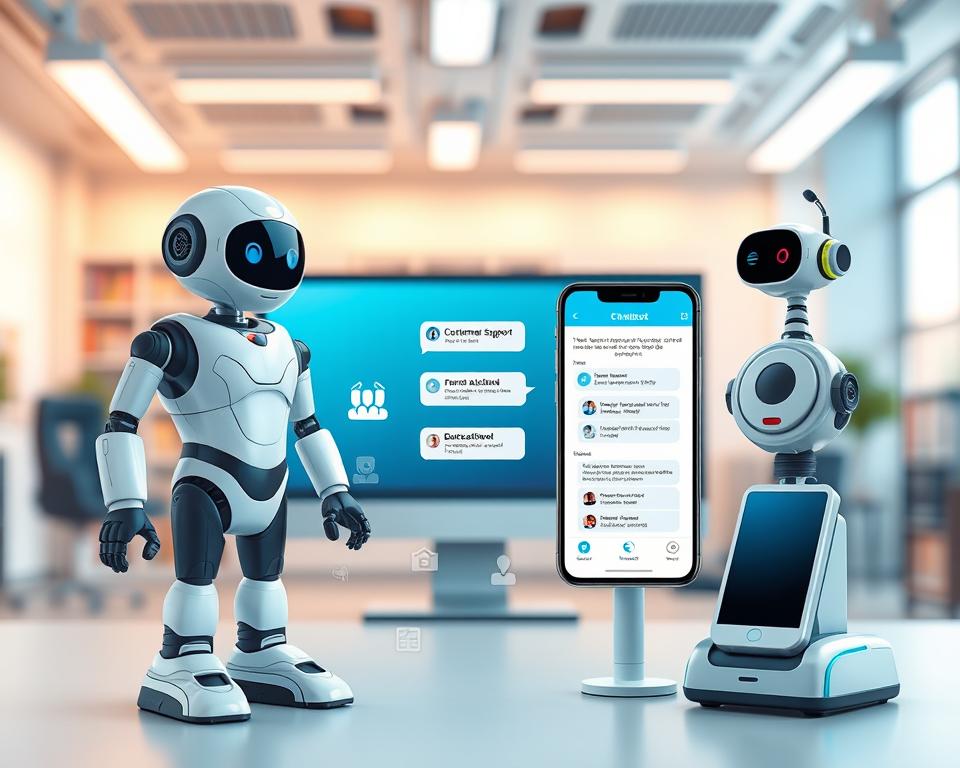
Types of AI Chatbots for App Development
The world of AI chatbot app development is full of variety. Each type meets different business needs. Knowing the types is key for businesses to add AI chatbots to their apps.
Rule-Based Chatbots
Rule-based chatbots work based on set rules and do specific tasks. They are great for simple questions and often help with customer support. These chatbots follow a set path, with each conversation step planned ahead.
A report shows rule-based chatbots can handle up to 80% of basic customer support. This makes them very useful for companies.
AI-Powered Conversational Chatbots
AI-powered chatbots use machine learning and natural language processing (NLP) to talk like humans. They get better with time, making them good for complex customer service needs.
“AI-powered chatbots are changing customer service. They offer personalized and quick help.”
Hybrid Chatbot Solutions
Hybrid chatbots mix rule-based and AI-powered chatbots. They use rules for simple tasks and AI for harder ones. This way, businesses get the best of both worlds, offering better customer service.
By knowing the different AI chatbot types, businesses can choose the right one for their apps. This improves their customer service.
Key Features of Modern AI Chatbot Apps
The latest AI chatbot apps have cool features that change how businesses talk to customers. These features make the user experience better and give businesses insights into what customers like.
Natural Language Processing Capabilities
One big feature is Natural Language Processing (NLP). NLP lets chatbots understand and answer user questions well. This makes talking to chatbots smooth and easy.

Multi-Channel Integration
Modern AI chatbot apps also let businesses talk to customers on different platforms. This includes social media, messaging apps, and websites. It means customers can chat with businesses in their favorite ways.
Personalization and Context Awareness
AI chatbot apps now offer personalization and context awareness. They use user data to give personalized advice and answers. This makes talking to chatbots more fun and useful.
Analytics and Reporting Tools
Another key feature is analytics and reporting tools. These tools help businesses understand how users interact with them. This info helps businesses get better at serving customers and making users happier.
In short, the latest AI chatbot apps have cool features like NLP, multi-channel integration, personalization, and analytics. These features are changing how businesses talk to customers. By using these features, businesses can offer better, more personal, and effective customer experiences.
Essential Technologies Behind AI Chatbot App Development
Several key technologies are vital for AI chatbot app development. They help chatbots understand, learn, and respond to user interactions well.
Machine Learning Frameworks
Machine learning frameworks are key for AI chatbots to learn from user interactions and get better over time. These frameworks offer tools and libraries to build, train, and deploy machine learning models.
TensorFlow and PyTorch
TensorFlow and PyTorch are top choices for AI chatbot development. TensorFlow is known for its large community and tools. PyTorch is loved for its simplicity and flexibility.
Scikit-learn for Classical ML
Scikit-learn is crucial for classical machine learning tasks. It has many algorithms for tasks like classification, regression, and clustering. This makes it very useful for chatbot development.
Natural Language Understanding Engines
Natural Language Understanding (NLU) engines are key for chatbots to understand user queries. These engines use various techniques to grasp the meaning and context of user inputs.
Transformer Models and BERT
Transformer models, especially BERT (Bidirectional Encoder Representations from Transformers), have changed NLU. BERT’s ability to understand word context has greatly improved chatbot accuracy.
GPT-Based Language Models
GPT-based language models are another type of NLU engine. They have shown great ability in generating human-like responses. These models are trained on vast text data and can produce relevant and coherent responses.
Cloud Infrastructure and APIs
Cloud infrastructure and APIs are crucial for deploying and managing AI chatbot apps. They provide scalability, security, and integration capabilities.
Cloud platforms offer services like compute power, storage, and database management. APIs help integrate with other services and systems, making the chatbot more functional.

Popular Platforms for Building AI Chatbot Apps
Building AI chatbot apps is easier with many popular platforms. These tools help developers create, deploy, and manage chatbots well.
Dialogflow by Google
Dialogflow, made by Google, is a top choice for making chatbots. It works with voice and text and is great for customer service and virtual assistants. Dialogflow’s link to Google services makes it a favorite among developers.

Microsoft Bot Framework
The Microsoft Bot Framework is a strong tool for chatbot making. It has everything needed to build, test, and deploy chatbots. It supports many channels, like Skype and Slack, for wide reach.
IBM Watson Assistant
IBM Watson Assistant is known for its smart AI. It helps make chatbots that can handle tough questions and answer them right. It’s safe and scalable thanks to IBM’s cloud services.
Amazon Lex
Amazon Lex is an AWS service for making chatbots. It uses the tech behind Amazon Alexa. It works well with other AWS services, boosting its power.
These platforms have changed how we make AI chatbot apps. They offer many tools and services that make the process easier. With these platforms, developers can make chatbots that are smarter, friendlier, and more useful.
The AI Chatbot App Development Process
The AI chatbot app development process is detailed and structured. It ensures a high-quality chatbot is delivered. This process has several stages, from planning to deployment, each crucial for success.
Requirements Analysis and Planning
The first step is requirements analysis and planning. This stage is key as it sets the project’s foundation.
Defining Business Objectives
Defining clear business objectives is essential. It’s about understanding what the organization wants to achieve with the chatbot. This could be better customer service or cost savings.
Identifying Target User Personas
Identifying the target user personas is also vital. This means creating detailed profiles of users. It includes their needs, preferences, and behaviors.
Design and User Experience Mapping
After analyzing requirements, the next step is design and user experience mapping. This stage focuses on creating a smooth user experience.
Conversation Flow Design
Designing the conversation flow is about making interactions logical and intuitive. It involves mapping conversations and ensuring the chatbot responds correctly.
UI/UX Considerations
User interface (UI) and user experience (UX) are key to making the chatbot friendly and engaging. A visually appealing and easy-to-use interface is crucial.

Development and Integration
The development stage brings the chatbot to life. It involves developing its capabilities and integrating it with systems. Ensuring it performs as intended is also part of this stage.
Testing and Quality Assurance
Testing and quality assurance are essential. They ensure the chatbot works as expected. Various tests, like functional and usability testing, are conducted.
Deployment and Maintenance
Finally, the chatbot is deployed and maintained. Deployment makes it available to users. Maintenance includes updates and fixing issues to meet user needs.
| Development Stage | Description | Key Activities |
|---|---|---|
| Requirements Analysis and Planning | Laying the foundation for the chatbot project | Defining business objectives, identifying target user personas |
| Design and User Experience Mapping | Crafting the conversation flow and user experience | Conversation flow design, UI/UX considerations |
| Development and Integration | Bringing the chatbot to life and integrating it with necessary systems | Developing chatbot capabilities, system integration |
| Testing and Quality Assurance | Ensuring the chatbot works as expected | Functional, usability, and performance testing |
| Deployment and Maintenance | Making the chatbot available and maintaining it | Deployment, updates, issue resolution |
Industries Benefiting from AI Chatbot Apps
Many industries are using AI chatbot apps to make their work easier and improve how they talk to customers. Chatbot tech is flexible and works well in different fields, bringing big advantages.
E-commerce and Retail
In e-commerce and retail, AI chatbots give shoppers personalized experiences, help with tracking orders, and offer support. E-commerce chatbots boost sales by suggesting products based on what customers like and have looked at.

Healthcare and Telemedicine
The healthcare world gets better with AI chatbots, thanks to better patient care and help with early diagnosis. Chatbots can set up appointments, remind patients about meds, and share basic health info. This makes patients happier and more informed.
Banking and Financial Services
In banking and finance, AI chatbots answer customer questions, help with transactions, and give financial tips. They also spot fraud by watching transactions and warning customers about odd activity.
Travel and Hospitality
The travel and hospitality sector uses AI chatbots to better serve customers. They give travel tips, help with bookings, and offer help anytime, anywhere. Chatbots also handle customer complaints well.
By using AI chatbot tech, businesses in these fields can work more efficiently, make customers happier, and stay ahead in their markets.
Cost Factors in AI Chatbot App Development
The cost to make an AI chatbot app depends on several key factors. Businesses need to consider these to make a good budget.

Development Complexity and Features
The cost of making a chatbot changes based on its complexity and features. Simple chatbots with basic functions cost less. But, advanced AI chatbots with features like NLP and ML are pricier.
Platform and Technology Choices
Choosing the right platform and technology also affects the cost. Making a chatbot for many platforms (like iOS, Android, web) costs more than for one. Using advanced tech like ML frameworks and NLP engines also raises the price.
Ongoing Maintenance and Updates
After launching, keeping the chatbot up-to-date is key. This includes server costs, update and upgrade expenses, and improving its performance over time.
Knowing these cost factors helps businesses plan and budget for their AI chatbot app projects better.
Best Practices for Successful AI Chatbot Implementation
To make the most of AI chatbot tech, companies need to follow key steps. These steps improve user experience and meet business goals, leading to success.
Define Clear Objectives and Use Cases
First, set clear goals and specific tasks for your chatbot. Know what it will do and how it fits with your systems. This way, your chatbot will be useful and valued by users.
Focus on User Experience Design
A great user experience is key for a chatbot’s success. Make the interface easy to use and the conversations natural. Design should be simple and clear, helping users easily get what they need.
Implement Continuous Learning Mechanisms
AI chatbots should get better with time. Use continuous learning to improve their understanding and responses. Machine learning helps them learn from user interactions and feedback.
Provide Human Handoff Options
AI chatbots are great for many tasks, but sometimes humans are needed. Offer options to talk to a person for complex issues. This mix of AI and human support works well.
By sticking to these best practices, businesses can make their AI chatbot projects a success. They’ll get a great user experience and big business benefits.
Customization Options in AI Chatbot App Development
AI chatbot app development lets businesses customize to fit their needs. This flexibility is key for businesses wanting to get the most out of AI chatbot apps.
Brand Voice and Personality
One important option is setting the chatbot’s brand voice and personality. This means creating a tone and language that matches the brand’s identity. It also needs to connect with the target audience.
A well-crafted brand voice can boost user engagement. It makes the experience more personalized.
To achieve this, businesses can:
- Define a unique tone that reflects their brand’s personality
- Use language that is consistent with their brand’s voice
- Incorporate brand-specific terminology and jargon
Custom Workflows and Logic
Custom workflows and logic are crucial for a chatbot to handle complex business processes. Tailoring the chatbot’s decision-making and workflows ensures it meets specific operational needs.
Some key aspects of custom workflows include:
- Defining specific business rules and logic
- Creating conditional responses based on user input
- Integrating with backend systems for data retrieval and processing
Integration with Existing Systems
Integrating chatbots with existing systems is essential for their full potential. This includes connecting with CRM systems, payment gateways, and database and ERP systems.
CRM Integration
CRM integration lets chatbots access customer data. This provides a more personalized experience and better customer service.
Payment Gateway Connectivity
By integrating with payment gateways, chatbots can handle transactions directly. This improves the user experience and makes payments smoother.
Database and ERP Systems
Connecting chatbots to database and ERP systems allows for real-time data access. This leads to more accurate and informed interactions.
By using these customization options, businesses can create AI chatbot apps that meet their specific needs. This enhances customer engagement, improves operational efficiency, and drives business growth.
Security and Privacy Considerations
Keeping user interactions safe and private is key in AI chatbot app development. These apps deal with more sensitive user data as they grow. So, strong security steps are a must.
Data Encryption and Protection
Data encryption is vital for chatbot security. It keeps user info safe from hackers. There are two main points to focus on:
End-to-End Encryption
End-to-end encryption keeps data safe from start to finish. It means even if data is caught in transit, it’s unreadable without the right key.
Secure Data Storage
After reaching the chatbot’s servers, data must be stored safely. This means using top-notch encryption and secure databases. These are checked often for weaknesses.
GDPR and Compliance Requirements
Chatbot makers must follow data protection laws like the GDPR in the EU. This means being open about how data is handled, getting user consent, and meeting data rights.
User Authentication and Authorization
Strong user checks are essential for chatbot safety. They make sure only the right people can see or do things in the chatbot.
By focusing on data encryption, regulatory compliance, and user authentication, developers can make their AI chatbots safer. This not only guards user data but also builds trust in the tech.
Measuring AI Chatbot Performance and Success
Checking how well AI chatbots work is key for businesses to better serve their customers. It’s important to watch and study different performance signs.
Key Performance Indicators
Key Performance Indicators (KPIs) are essential for judging how well AI chatbots do their job. These signs show how well the chatbot talks to users.
Response Time and Accuracy
Response time shows how fast a chatbot answers questions. Accuracy checks if the answers are right and helpful.
Conversation Completion Rate
The conversation completion rate shows how often a chatbot finishes talking without needing a human. This is important for seeing if the chatbot can solve problems on its own.
| KPI | Description | Importance |
|---|---|---|
| Response Time | Measures the time taken to respond to user queries | High |
| Accuracy | Assesses the correctness of chatbot responses | High |
| Conversation Completion Rate | Percentage of conversations completed without human intervention | Medium |
User Satisfaction Metrics
User happiness is a big deal when it comes to chatbot performance. Things like user feedback, satisfaction surveys, and Net Promoter Score (NPS) show how happy users are.
Conversation Analytics
Looking at how conversations go, finding where they might stop, and understanding what users do helps make the chatbot better. This makes talking to the chatbot a better experience for users.
By looking at these signs, businesses can really see how their AI chatbots are doing. This helps them make smart choices to improve their customer service.
Common Challenges in AI Chatbot Development
Creating advanced AI chatbots is tough. They must handle complex queries and meet user expectations. As more businesses use them, solving these problems is urgent.
Understanding Complex User Queries
One big challenge is making chatbots understand complex user questions. It’s not just about finding keywords. They need to grasp the context and what the user really wants.
Key Strategies:
- Implementing advanced NLP capabilities
- Training models on diverse datasets
- Continuously updating and refining the chatbot’s understanding
Maintaining Conversation Context
Keeping a conversation’s context is key for a good user experience. The chatbot must remember past talks and adjust its answers.
Effective context management uses smart algorithms and memory tricks for smooth chats.
| Context Management Techniques | Description |
|---|---|
| Session-based Context | Stores user interaction data for the duration of a session |
| Persistent Context | Remembers user preferences and interactions across sessions |
Handling Multilingual Requirements
As companies grow globally, chatbots must support many languages. It’s not just about translating. They must also grasp cultural differences and local speech.
Best Practices:
- Use machine learning models trained on diverse linguistic datasets
- Implement cultural sensitivity in responses
- Continuously update language models to adapt to new expressions and slang
Managing User Expectations
It’s vital to manage what users expect from chatbots. They want accurate answers quickly and on point.
By tackling these issues, developers can make chatbots better. They will be more helpful for both businesses and users.
Future Trends in AI Chatbot Technology
AI chatbot technology is on the verge of a big change. This is thanks to new advancements in machine learning and natural language processing. Several key trends are emerging that will shape AI chatbots in different industries.
Voice-Enabled Chatbot Interfaces
The rise of voice-enabled devices has made chatbots with voice commands more popular. Voice-enabled chatbot interfaces offer a more natural and intuitive way to interact. This trend will keep growing, with better speech recognition technology making voice interactions more accurate and efficient.
Emotional Intelligence and Sentiment Analysis
Future AI chatbots will understand and respond to user emotions better. This will make interactions more empathetic and personalized. By analyzing user sentiment, chatbots can adapt to meet user needs more effectively.
Advanced Personalization with Predictive AI
The use of predictive AI in chatbots will lead to advanced personalization. Chatbots will anticipate user needs and offer proactive support. This will be based on analyzing user behavior and preferences, providing tailored recommendations and solutions.
Integration with Augmented Reality
Another trend is the integration of chatbots with augmented reality (AR) technology. This will create immersive and interactive experiences for users. The combination of AI chatbots and AR could revolutionize industries like retail and education.
Conclusion
AI chatbot app development is changing how businesses talk to their customers. It’s important to know the basics, tech, and trends in chatbot making. This way, companies can better serve their customers, save money, and make their users happy.
As chatbot tech keeps getting better, it’s key for businesses to keep up. With the right strategy, companies can build chatbots that really work for them.
The future of AI chatbot apps is bright. Trends like voice commands, feeling understanding, and getting to know you better are coming. These will make chatbots smarter and easier to use.


