







In today’s fast-paced startup ecosystem, speed is key to success. Being able to quickly create and launch a minimum viable product (MVP) is vital. It helps secure funding, gather user feedback, and improve the product-market fit.
Startups can use lean startup principles and agile development methodologies to quickly test their ideas. This way, they can adapt to market changes fast. It lets entrepreneurs focus on the most important features for their users. This reduces the risk of failure and makes the final product better.
Table of Contents
Key Takeaways
- Rapid MVP development enables startups to quickly validate their ideas.
- Lean startup principles and agile methodologies facilitate adaptability.
- Focus on core features improves product quality and reduces risk.
- Speed is crucial in the competitive startup ecosystem.
- MVP approach allows for iteration based on user feedback.
The 90-Day App Development Challenge
Startups have a tight deadline to create their apps. In today’s fast world, getting a minimum viable product (MVP) out quickly is key to success.
Why Speed Matters in Today’s Startup Ecosystem
Speed is vital for startups. It lets them grab market chances and meet investor needs. Two main reasons show why speed is important:
Market Opportunity Windows
Startups must release their apps before the chance to do so ends. Waiting too long can mean missing out and losing market share.
Investor Expectations and Funding Cycles
Investors want to see progress and success in a certain time frame. If apps are late, funding and confidence can drop.

The Cost of Delay in App Development
Waiting to develop apps can cost a lot. These costs fall into two main areas:
Financial Implications
Delayed apps can lead to higher costs, less money, and smaller market share.
Competitive Disadvantages
Apps released fast get ahead, while late ones let others take the lead.
| Costs of Delay | Financial Implications | Competitive Disadvantages |
|---|---|---|
| Delayed Launch | Increased development costs, reduced revenue | Loss of market share, competitive disadvantage |
| Timely Launch | Reduced development costs, increased revenue | Market share gain, competitive advantage |
Understanding the MVP (Minimum Viable Product) Philosophy
The Minimum Viable Product (MVP) philosophy has changed how startups make products. It focuses on creating a product with just enough features to please early customers. This way, startups can learn and improve their products quickly.
Core Principles of MVP Development
MVP development follows key principles to help startups create products. Two main areas are important: Feature Prioritization Techniques and The Build-Measure-Learn Cycle.
Feature Prioritization Techniques
Feature prioritization is about picking the most important features for early users. Methods like the MoSCoW method, Kano model, and user story mapping help choose the right features.
The Build-Measure-Learn Cycle
The Build-Measure-Learn cycle is a feedback loop. It involves building the product, checking how it does, and learning from the results. This cycle helps startups make smart choices and tweak their product plans.
Common MVP Misconceptions
Despite its fame, the MVP approach is often misunderstood. Two big misconceptions are the difference between Minimum and Incomplete, and the Quality Standards for MVPs.
Minimum vs. Incomplete
An MVP is not about releasing a half-done product; it’s about launching a product that’s good enough to attract early users. The goal is to include the minimum features needed to do this.
Quality Standards for MVPs
While an MVP doesn’t have to be flawless, it must meet quality standards. It should be reliable, stable, and offer a good user experience. This ensures user satisfaction and gets valuable feedback.
| MVP Aspect | Description | Importance |
|---|---|---|
| Feature Prioritization | Identifying critical features for early adopters | High |
| Build-Measure-Learn | Feedback loop for product improvement | High |
| Quality Standards | Ensuring reliability and user satisfaction | Medium |

Pre-Development Planning: Weeks 1-2
Before starting the development, it’s key to plan your app’s strategy and what makes it special. This early stage is crucial for your app’s success in the 90-day development cycle.
Defining Your App’s Core Value Proposition
Your app’s core value proposition is what makes it stand out. To figure it out, you need to do a deep analysis.
Problem-Solution Fit Analysis
This step is about finding the problem your app solves and making sure it meets your audience’s needs. A good problem-solution fit is key to creating an app that meets market needs.
Unique Selling Points Identification
Your Unique Selling Points (USPs) are what make your app different. Finding your USPs helps craft a strong marketing strategy to draw in early users.
Market Research and Competitor Analysis
Doing deep market research and competitor analysis is crucial. It helps you understand your audience and the competition. This info refines your app’s value and marketing strategy.

Setting Clear Development Milestones
To keep your project on track, setting clear milestones is essential. This means creating a 90-day plan and defining what success looks like.
Creating a 90-Day Roadmap
A detailed roadmap helps everyone see the development path. A well-thought-out roadmap is crucial for finishing the MVP on time.
Defining Success Metrics
It’s important to define success metrics for your app. This includes setting key performance indicators (KPIs) that match your business goals.
Build Your Startup App in 90 Days: Our Rapid MVP Approach
Our Rapid MVP Approach helps startups build apps in just 90 days. This quick process ensures they can hit the market fast. It uses the right Team Structure and Resource Allocation for a quick product launch.
Overview of the 90-Day Timeline
The 90-day timeline is split into clear phases. Each phase has important tasks that move the project forward.
Phase Breakdown and Key Deliverables
The process starts with planning and research. Then comes design, core development, testing, and launch prep. Each step has key milestones for the project’s success.
Critical Path Management
Managing the critical path is key to keeping the project on track. It involves identifying and prioritizing tasks that affect the timeline.
Resource Allocation and Team Structure
Good Resource Allocation and a clear Team Structure are crucial for success.
Essential Roles and Responsibilities
The team includes project managers, developers, designers, and QA engineers. Each role plays a part in the project’s progress.
Outsourcing vs. In-house Development
Choosing between outsourcing and in-house development depends on the project’s needs and budget. Both methods can work well if managed right.
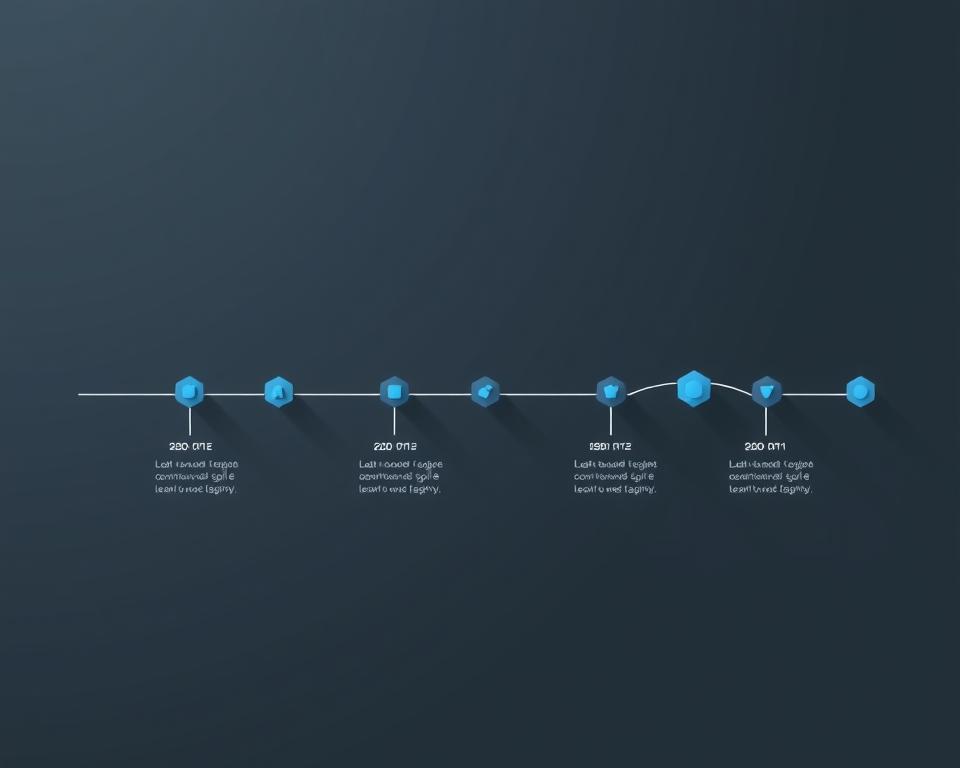
Startups can build their apps in 90 days with our Rapid MVP Approach. Understanding the timeline, allocating resources well, and structuring the team right are key.
Choosing the Right Tech Stack for Rapid Development
In rapid app development, the tech stack is key. It can make or break your project’s success.
Frontend Frameworks for Quick Implementation
For frontend development, React and Flutter are top picks. React uses a component-based architecture for faster development. Flutter offers a wide range of pre-designed widgets.
React vs. Flutter vs. Native Development
Deciding between React, Flutter, and native development depends on your project. React is great for complex web apps. Flutter shines in cross-platform development.
Backend Solutions That Scale
Serverless architecture is a top choice for backend solutions. It’s scalable and cost-effective. This approach lets you focus on code without server worries.
Serverless Architecture Benefits
Serverless architecture offers automatic scaling and lower costs. It also speeds up deployment cycles.
Database Selection Criteria
When picking a database, think about data structure, scalability, and query complexity. These factors are crucial.
Development Tools That Accelerate Production
The right development tools can greatly speed up production. Tools like version control and CI/CD pipelines make development smoother.

Design Sprint: Weeks 3-4
Weeks 3-4 focus on the design sprint. This is when we apply user experience basics. We turn ideas into prototypes that users love.
User Experience (UX) Fundamentals
User experience is key for a great app. In the design sprint, we aim for a smooth user journey. User personas and journey mapping are vital tools.
User Personas and Journey Mapping
We create detailed user personas to understand our audience. Journey mapping shows how users interact with our app. This ensures our app meets their needs.
Creating Wireframes and Prototypes
Next, we make wireframes and prototypes. We start with low-fidelity wireframes. These show the app’s basic structure and functions.
Low-Fidelity to High-Fidelity Progression
As design improves, we move to high-fidelity prototypes. These include detailed visuals and interactions. This helps us test and refine the app’s user experience.

User Testing on a Tight Schedule
User testing is vital in the design sprint. We use guerrilla testing methods to get quick feedback.
Guerrilla Testing Methods
Guerrilla testing means testing our prototypes with users in public or online. It helps us quickly see if our design works.
Implementing User Feedback
We use feedback from user testing to improve our design. This process makes sure our app is user-focused and meets market needs.
As
“The best way to predict the future is to invent it.” – Alan Kay
, our design sprint aims to create a future where our app excites users and leads the market.
Core Development Phase: Weeks 5-8
The planning phase is done, and now we start the core development phase. This phase is all about setting up the development environment and adding key features. It’s important because it builds the app’s foundation and how users will experience it.
Setting Up Development Environment
A good development environment is key for teamwork and keeping track of changes. Version control systems like Git let many developers work together smoothly.
Version Control and Collaboration Tools
Tools like GitHub or Bitbucket are vital for managing code versions. They make teamwork easy and help track changes.
Implementing Essential Features
The team picks features based on their importance and how they affect the user. A Feature Prioritization Matrix helps find out which features are most important.
Feature Prioritization Matrix
This matrix looks at how valuable features are to users and the business. It makes sure the most important features get made first.
Technical Debt Management
It’s important to manage technical debt to avoid future problems. This means choosing between the best development practices and quicker fixes that need to be improved later.

Daily Stand-ups and Progress Tracking
Daily meetings keep the team on the same page and informed about progress. Burndown charts and velocity metrics show how well the team is doing and the project’s status.
Burndown Charts and Velocity Metrics
These tools help track the project’s progress against the timeline. They allow for adjustments to keep the project on track.
This phase focuses on these key areas. It prepares the app for a successful launch within 90 days.
Agile Development Practices for Startups
In today’s fast-paced startup world, Agile development is key. It helps build apps that meet user needs. Agile lets startups adapt quickly, deliver value fast, and keep improving their products.
Implementing Scrum for Small Teams
Scrum is a top Agile framework for small teams. It focuses on teamwork, accountability, and making progress towards clear goals.
Roles and Ceremonies
Scrum has three main roles. The Product Owner sets the product’s direction. The Scrum Master helps the process. The Development Team does the work. Key ceremonies include Sprint Planning, Daily Scrum, Sprint Review, and Sprint Retrospective.
Sprint Planning and Execution
Sprint Planning is crucial. It sets goals for the next sprint. The team picks tasks and promises to finish them within the sprint time.
Time-boxing and Story Points
Scrum uses time-boxing, with sprints lasting 2-4 weeks. Story Points help estimate task complexity. This lets the team plan and set realistic goals.
Adapting to Changes Without Losing Momentum
Agile values change. Startups must adapt quickly to new info, market shifts, or customer feedback. This keeps their development on track.
Scope Management Techniques
Good scope management keeps momentum. It’s about prioritizing features, managing expectations, and deciding what to include in the sprint.
According to
Ken Schwaber, co-creator of Scrum, “Scrum is not a methodology, it’s a framework for developing and sustaining complex products.”
This shows Scrum’s flexibility and adaptability.
| Agile Practice | Description | Benefit |
|---|---|---|
| Sprint Planning | Setting goals for the upcoming sprint | Clear direction and focus |
| Daily Scrum | Team synchronization and progress update | Improved communication and collaboration |
| Sprint Review | Demonstrating the product increment | Stakeholder feedback and validation |

Common Pitfalls and How to Avoid Them
Starting a startup app comes with many challenges. The right strategies can help overcome these hurdles. Knowing these challenges is key to a successful app project.
Scope Creep Management
Scope creep happens when a project’s scope grows too much. This can cause delays and increase costs. It’s important to manage scope creep to stay on schedule.
Using the MoSCoW Method
The MoSCoW method helps prioritize project needs. It sorts features into ‘Must-haves’, ‘Should-haves’, ‘Could-haves’, and ‘Won’t-haves’. This way, teams focus on the most important features first.
Technical Challenges and Workarounds
Technical issues are common in app development. Identifying these problems early and having solutions ready can lessen their effect. This might mean using flexible development methods or advanced tools.

Team Burnout Prevention
Team burnout is a big risk in fast projects. Keeping a sustainable pace is crucial for a healthy team.
Sustainable Pace Strategies
Good pace strategies include regular breaks and flexible hours. They also mean keeping the workload manageable. This keeps the team productive and happy throughout the project.
By knowing these common pitfalls and how to avoid them, teams can greatly improve their chances of launching a startup app on time.
Quality Assurance on a Timeline: Weeks 9-10
Quality assurance is key in app development, especially in a tight 90-day timeline. Weeks 9-10 are crucial for ensuring the app’s quality. This phase is vital for finding and fixing problems before launch.
Automated Testing Strategies
Automated testing is a big part of our quality assurance. It helps us test many things quickly and efficiently.
Unit and Integration Testing
Unit testing checks each app part. Integration testing makes sure these parts work well together. An expert says, “Automated testing saves time and cuts costs.”
“Automated testing is not just about finding bugs; it’s about ensuring the reliability and stability of the application.”
Manual Testing Priorities
Manual testing is also key, even with automated testing. It checks how users feel about the app and finds issues automated tests might miss.
User Flow Validation
Manual testers check if the app is easy to use. They look at usability, navigation, and overall experience.
Bug Tracking and Resolution
Tracking and fixing bugs is very important in this phase. We focus on bugs that affect the user experience the most.
Severity-based Prioritization
We sort bugs by how serious they are. We fix the most critical ones first. This makes the app better for users.
User Feedback Integration: Weeks 11-12
In the final stretch of our 90-day development cycle, user feedback is key. It shapes the app’s success. This phase is critical for refining the app based on real user experiences.
Beta Testing Strategies
Beta testing is a vital step. It involves releasing the app to a small group to gather feedback. This feedback helps us understand how well the app works and how users feel about it.
Closed vs. Open Beta Approaches
There are two main beta testing methods: closed and open beta. A closed beta tests the app with a small, chosen group. An open beta lets more users try the app, giving a wider range of feedback.
Collecting and Prioritizing Feedback
Getting feedback right is crucial. We use feedback collection tools like surveys and analytics software. These tools help us understand what users need.
Feedback Collection Tools
Tools like UserVoice and SurveyMonkey are key. They help us sort, prioritize, and fix user issues efficiently.
Making Critical Adjustments
After collecting feedback, we make important changes. We use rapid iteration techniques to update the app quickly. This way, we can launch the app without delays.
Rapid Iteration Techniques
Rapid iteration means making quick changes based on feedback. Agile methods and CI/CD help us improve the app fast.
Preparing for Launch: Week 13
The 13th week is a key moment in our fast MVP development journey. It’s time to get ready for launch. This phase includes important steps for a successful app launch.
App Store Optimization
It’s crucial to make your app easy to find in app stores. This means doing keyword research well. It helps your app show up in searches.
Keyword Research and Implementation
Good keyword research finds out what people search for. Use these keywords in your app’s title, description, and metadata. This boosts your app’s visibility.
Marketing Materials and Landing Page
Creating eye-catching marketing materials and a landing page is key. Your landing page should clearly show what your app offers. This grabs potential users’ interest.
Conversion-Optimized Content
Your landing page should turn visitors into users. Use simple language and a clear call-to-action (CTA). This encourages visitors to download or learn more about your app.
Launch Checklist
A detailed launch checklist is vital. It covers both technical and marketing sides. This includes finalizing your app’s listing, testing your landing page, and planning your marketing.
Technical and Marketing Readiness
Make sure your app works well and is stable. Also, check the user experience. For marketing, have all your promotional materials and campaigns ready.
The Launch Week Strategy
A successful app launch needs a strong launch strategy. It should cover many areas, like press outreach and real-time analytics.
Coordinating Your Launch Activities
Effective launch coordination includes several key steps:
- Crafting a compelling press release
- Timing your social media campaign
Press and Media Outreach
Reaching out to media and influencers boosts your app’s visibility. Make sure your press release is short and shows your app’s unique value.
Social Media Campaign Timing
Timing is key in social media. Use a content calendar to plan your posts and keep engagement high.
Monitoring Performance and User Adoption
It’s important to track your launch’s success. Look at performance metrics and user adoption rates.
Real-time Analytics Setup
Setting up real-time analytics lets you see how users behave right after launch. This helps you spot and fix problems fast.
Immediate Post-Launch Fixes
Even with thorough testing, issues can pop up after launch. Being ready to fix them quickly is crucial.
Hotfix Deployment Process
Having a hotfix deployment process lets your team fix problems fast. This keeps users happy and reduces downtime.
Measuring Success: Post-Launch Metrics
After launching your app, it’s key to check its success. You’ve spent a lot of time and money on your Minimum Viable Product (MVP). Now, it’s important to see how it does in the market.
Key Performance Indicators for New Apps
To see if your app is doing well, you need to watch Key Performance Indicators (KPIs). One important KPI is the Acquisition, Activation, and Retention (AAR) framework.
Acquisition, Activation, Retention (AAR)
Acquisition means getting new users. Activation is making sure they have a good first experience. Retention is keeping them coming back. Watching AAR shows where you can get better.
User Engagement Analytics
It’s important to know how users interact with your app. Looking at session duration and frequency tells you a lot about user engagement.
Session Duration and Frequency
Session duration shows how long users stay engaged. Session frequency tells you how often they come back. These metrics help you understand what users like.
Conversion and Retention Metrics
Conversion metrics show how many users do what you want them to. Retention metrics tell you how well your app keeps users. Both are important for your app’s success.
Monetization Benchmarks
Knowing how your app makes money is crucial. Look at revenue per user (RPU) and average revenue per daily active user (ARPDAU). These metrics help you make more money from your app.
Planning Version 2.0: The Road Ahead
Planning for Version 2.0 is key to your startup app’s success and growth.
Prioritizing Features for the Next Iteration
To pick the right features, use data to guide you.
Data-Driven Feature Selection
Look at user feedback, market trends, and how your app performs. This helps choose the best features for the next update.
- Review user feedback and analytics data
- Identify key performance indicators (KPIs)
- Assess competitor features and market trends
Scaling Your Infrastructure
As more users join, you need to grow your infrastructure to handle the demand.
Preparing for User Growth
Scaling means more than just adding servers. It’s also about making your app run smoother.
| Infrastructure Component | Scaling Strategy |
|---|---|
| Server Capacity | Cloud-based auto-scaling |
| Database | Sharding and replication |
Building on User Feedback
User feedback is crucial for your app’s next version.
Creating a Product Roadmap
A good product roadmap shows your app’s future plans.
“A product roadmap is a shared source of truth that aligns the organization around short and long-term goals.”
By focusing on features, infrastructure, and feedback, you can make a strong plan for Version 2.0. This will help your app keep growing and succeeding.
Conclusion
Startups can quickly test their ideas with a rapid MVP development approach. This method helps them find product-market fit in just 90 days. It focuses on the most important features and changes based on what users say.
Agile development is key in this process. It makes it easy to adjust to new information quickly. This way, startups can avoid launching products that don’t meet user needs.
Getting an app ready for launch takes careful planning and constant improvement. Knowing how to use rapid MVP development, lean startup ideas, and agile methods is crucial. This knowledge helps startups succeed in today’s competitive app world.