







The year 2025 will see big changes in mobile app development. New tech like Artificial Intelligence (AI) and Augmented Reality/Virtual Reality (AR/VR) will lead the way.
5G networks will soon be everywhere. This means mobile apps will get much better. They’ll work faster and connect better, giving users a smoother experience. Also, the Internet of Things (IoT) will bring new uses for mobile apps. Think smart homes and industrial monitoring.
These tech advances will change the mobile app world a lot. Developers will have to keep up to make apps that are fun and useful. They’ll need to meet the changing needs of users.
Table of Contents
Key Takeaways
- The integration of AI and AR/VR will revolutionize mobile app development.
- 5G networks will enable faster and more reliable mobile app experiences.
- IoT will open up new opportunities for mobile apps in various industries.
- Developers must adapt to the changing technological landscape to stay competitive.
- The future of mobile apps will be shaped by the convergence of these emerging technologies.
The Evolution of Mobile App Development
Mobile app development has changed a lot over the years. This change is thanks to new technology and what users want. Now, we have complex systems that link many services and devices together.
From Simple Apps to Complex Ecosystems
At first, mobile apps were simple and did just a few things. Now, apps are advanced systems that mix services, devices, and data for a smooth experience. For example, one app can control smart home gadgets, track health, and handle mobile payments.
Key Drivers of Mobile App Innovation
Several things make mobile apps better. Technological progress, like AI, AR/VR, and 5G, lets developers make more complex and engaging apps. Also, how users act and what they expect drives developers to keep improving apps.
So, the world of mobile apps keeps getting better. Users get to enjoy more advanced and connected experiences.
The Current State of Mobile App Industry in 2024
The mobile app industry in 2024 is changing fast. It’s moving towards better user experiences. With new tech, the industry is growing and changing a lot.
Market Size and Growth Projections
The mobile app market is growing a lot. It’s expected to hit $407.31 billion by 2026. This growth comes from more people using smartphones and apps for shopping, gaming, and social media.
| Segment | 2024 Projection | CAGR (2021-2026) |
|---|---|---|
| Gaming Apps | $128.5 billion | 14.2% |
| E-commerce Apps | $102.4 billion | 13.8% |
| Social Media Apps | $50.1 billion | 12.5% |
User Behavior and Expectations
Users now want more from apps. They want them to be easy to use, safe, and useful. The new 5G tech is also changing what users expect, making apps faster and more complex.
Key user expectations include:
- Seamless user experience
- Enhanced security features
- Personalized content
Top Mobile App Trends 2025 (AI, AR/VR, 5G, IoT): An Overview
Emerging technologies like AI, AR/VR, 5G, and IoT are changing the mobile app world in 2025. They’re making user experiences better and opening new ways for businesses to connect with customers.

Why These Technologies Are Dominating the Future
AI, AR/VR, 5G, and IoT are leading because they offer personalized, immersive, and seamless experiences. AI apps learn what users like and give them what they want. AR/VR brings new levels to gaming, education, and shopping, making things more fun.
5G is making mobile apps faster and more reliable, perfect for streaming and real-time apps. IoT is turning phones into control centers for smart homes and gadgets, making life easier.
Interconnectivity Between Emerging Technologies
AI, AR/VR, 5G, and IoT work together to create something amazing. For example, AI makes AR/VR more real and interactive. 5G helps data move quickly between devices and the cloud, supporting IoT.
This teamwork is driving new ideas. It lets developers make more advanced and connected apps. These apps can change industries and improve how we use our phones.
Artificial Intelligence Revolution in Mobile Apps
AI is changing mobile apps, making them more personal and efficient. It’s not just improving what we already have. It’s also bringing new features we never thought possible.
Generative AI and Content Creation
Generative AI is a big deal in making content for mobile apps. It can create top-notch images, videos, and text based on what users like or want.
Text-to-Image and Text-to-Video Features
Text-to-image and text-to-video features are changing how we use apps. They let users make complex visuals just by typing what they want.
AI-Generated App Content
AI is making more content for apps, making it dynamic and tailored to each user. This means apps can change and adapt without needing a human to do it.
Predictive Analytics and Personalization
Predictive analytics, thanks to AI, is making apps more personal. They can guess what users will do next and adjust accordingly. This makes the app experience better for everyone.
| Feature | Description | Benefit |
|---|---|---|
| Personalized Recommendations | AI-driven suggestions based on user behavior | Enhanced User Engagement |
| Predictive Maintenance | Proactive identification of potential issues | Reduced Downtime |
| Customized Content | Dynamic content generation based on user preferences | Increased User Satisfaction |
AI-Powered Voice Assistants and Interfaces
AI voice assistants are changing how we talk to apps. They can understand us, do tasks, and give us info. This makes using apps easier and more convenient.
The future of mobile apps is all about AI. As AI gets better, apps will get even more advanced. They’ll offer richer, more tailored experiences for everyone.
Machine Learning Advancements for Mobile Applications
Machine learning is changing mobile apps, making them smarter and more personal. This change comes from two main areas: on-device ML and computer vision.
On-Device ML Processing
On-device ML processing makes apps faster and safer. It keeps data on your phone, not in the cloud. This means better privacy and quicker actions.
Benefits of on-device ML include:
- Improved data privacy
- Reduced latency
- Enhanced security
Computer Vision Applications
Computer vision is a part of machine learning used in mobile apps. It lets devices understand what they see.
Object Recognition Capabilities
Object recognition is key in computer vision. It lets apps spot objects, people, and actions. This is used in shopping, managing stock, and even in healthcare and security.
Facial Recognition Enhancements
Facial recognition has gotten better, making mobile apps more secure. Now, apps can recognize faces more accurately. This makes logging in easier and safer.
These technologies are changing mobile apps. They offer users better, more secure, and more personal experiences.
Augmented Reality (AR) Transforming User Experiences
The arrival of Augmented Reality (AR) is changing how we experience things in many fields. It adds digital info to our real world, making our interactions more engaging.

Retail and Shopping
In retail, AR is making a big splash. AR for Retail lets shoppers try products virtually. For example, IKEA uses AR to show how furniture fits in your home before you buy it.
This approach boosts customer happiness and cuts down on returns. As Retail Tech grows, we’ll see even more exciting shopping experiences. Mary Meeker says, “Augmented Reality is going to change how we interact with the world.”
“Augmented Reality is going to change the way we interact with the world.” – Mary Meeker
Navigation and Location-Based AR Services
AR for Navigation is also making waves. It offers real-time directions and info about your area, making getting around easier. Google Maps now has an AR mode that guides you with your phone’s camera.
This tech isn’t just for getting around. It also gives you info on nearby places or special deals at local shops.
Education and Training
AR for Education is changing learning by making it more fun and interactive. AR lets you see and interact with 3D models of complex topics. This makes learning more engaging.
For instance, medical students can practice surgeries with AR, improving their skills safely. As AR gets better, we’ll see more cool uses in education and training.
Virtual Reality (VR) Beyond Gaming
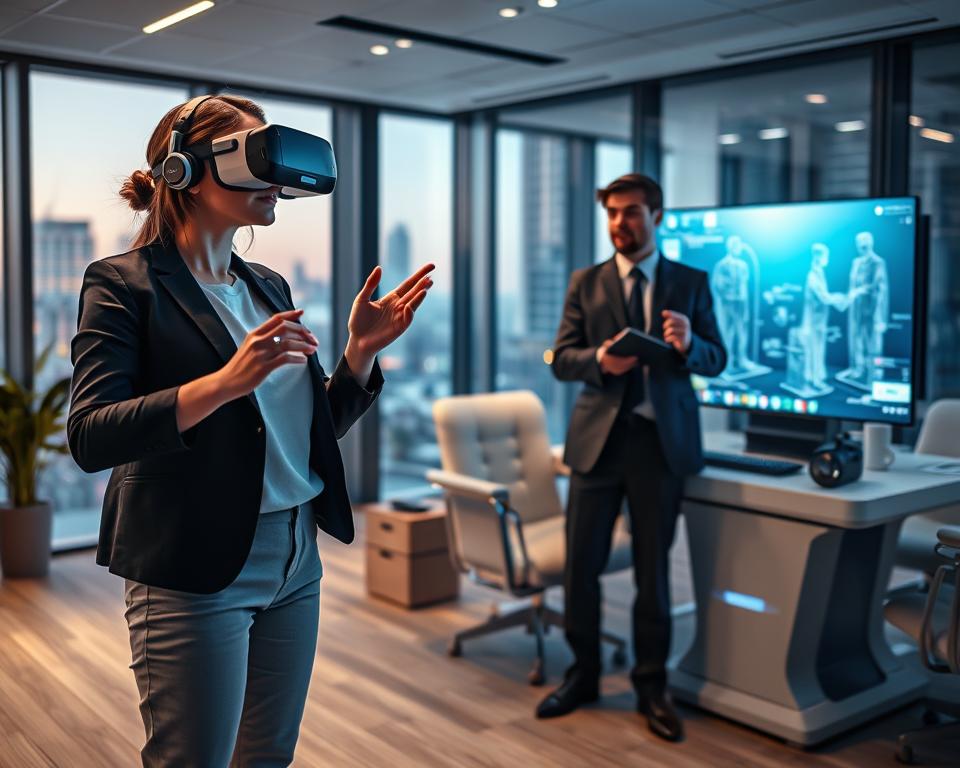
Virtual Reality is more than just gaming. It’s becoming a key tool for socializing and business needs. As VR tech gets better, it’s changing many areas, making things better for users and helping people work together.
VR Social Platforms and Communities
VR is changing how we socialize by creating real-like spaces for meeting and sharing. VR social platforms are getting popular for their fun and engaging way of connecting. They’re not just for fun; businesses use them for team activities and projects too.
Enterprise VR Applications
Businesses are using VR in many ways, changing how they work. From better customer experiences to improving internal tasks, Enterprise VR is making a big difference.
Virtual Meetings and Collaboration
VR is making virtual meetings better than regular video calls. It lets teams work together better, no matter where they are.
Training Simulations
VR is also great for training. It creates real-like training spots, improving skills and saving money. This is super helpful in fields like healthcare and manufacturing.
As VR keeps getting better, it will open up even more chances for socializing and business uses.
Mixed Reality (MR) and the Metaverse Connection
Mixed Reality (MR) is becoming a key part of the Metaverse. It makes experiences more immersive and interactive. The Metaverse, a shared virtual space, is getting easier to access thanks to MR tech.
This mix is changing how we use digital content. It’s making it more engaging and interactive.
Mobile Gateways to the Metaverse
Mobile devices are key to making the Metaverse available to more people. MR technology lets mobiles blend the physical and digital worlds. This is done through the device’s camera, sensors, and processing power.
Apps like Pokémon Go have shown MR’s power. They bring digital objects into our world. As MR tech gets better, we’ll see more ways to interact with the Metaverse on mobiles.
Cross-Platform MR Experiences
MR’s biggest plus is its ability to work across different platforms. This means you can use the Metaverse on any device, like mobiles, PCs, or VR headsets.
| Platform | MR Experience | Device Compatibility |
|---|---|---|
| Mobile | Interactive MR apps | Smartphones, Tablets |
| PC | Advanced MR software | Desktops, Laptops |
| VR Headset | Immersive MR environments | VR headsets |

The table shows how different platforms offer unique MR experiences. These can all be part of the Metaverse. This cross-platform use is key for a unified virtual space.
As MR tech improves, the Metaverse will play a bigger role in our lives. It will change how we work, play, and connect with others.
5G Technology Enabling New App Capabilities
The arrival of 5G networks is changing how apps are made. It brings fast data transfer and low latency. This is set to change the mobile app world a lot.
Ultra-Low Latency Applications
5G’s big plus is its ultra-low latency. This is great for apps that need quick data processing. For example:
- Gaming applications
- Virtual reality experiences
- Mission-critical communications
Ultra-low latency makes apps more responsive and fun. It opens up new chances for developers.
Edge Computing and 5G Synergy
5G and edge computing work together well. Edge computing makes apps faster by processing data near the user. This is good for apps that need:
- Real-time data analytics
- Instant decisions
- Less bandwidth use
Edge computing and 5G make a strong team for fast apps.
High-Definition Streaming and Real-Time Processing
5G also makes high-definition streaming and real-time processing possible. This is key for many apps, like:
Cloud Gaming Advancements
With 5G, cloud gaming gets better. It offers top-notch gaming without needing strong local hardware.
4K and 8K Video Streaming
5G’s high bandwidth supports 4K and 8K video streaming. This means better video quality and a more fun watch.
In short, 5G is leading to new app features. It’s changing how we use digital content.
Internet of Things (IoT) Integration with Mobile Apps
The mix of IoT and mobile apps is opening up new chances for creativity and user interaction. With more IoT devices around, mobile apps are changing to work with them. This makes things better for users and adds more features.
Smart Home Control Centers
Mobile apps are now key for managing smart home gadgets. They let users control lights, temperature, security, and entertainment from afar. For example, SmartThings lets users manage their smart home from one place.
- Remote monitoring and control of smart devices
- Automated routines for enhanced convenience
- Energy efficiency through optimized device usage
Wearable Technology Ecosystem
Wearable tech, like smartwatches and fitness trackers, is key to the IoT world. Mobile apps linked to wearables give users live health and fitness info. For instance, Apple Health tracks health metrics, offering tips for better habits.
- Health and fitness tracking
- Notification management
- Personalized recommendations based on user data
Industrial IoT Mobile Solutions
In industrial areas, IoT and mobile apps boost work efficiency. Apps can watch equipment, track stock, and manage tasks live. Companies like GE Digital offer IoT solutions for better work and less downtime.
By linking IoT with mobile apps, businesses can work better and innovate more. As IoT tech grows, we’ll see even more advanced mobile app connections.
Blockchain and Cryptocurrency Features in Apps
As we move towards a more decentralized digital ecosystem, blockchain and cryptocurrency features are being integrated into mobile apps. This integration is opening up new possibilities for secure, transparent, and user-centric applications.
The incorporation of blockchain technology allows for decentralized data storage and transaction processing, enhancing security and reducing the risk of single-point failures. Cryptocurrency features, on the other hand, enable new models for user engagement and monetization within apps.
Decentralized Apps (DApps) Going Mainstream
Decentralized Apps, or DApps, are applications that run on a blockchain network rather than a centralized server. This architecture provides several benefits, including enhanced security, transparency, and user control over data. DApps are gaining traction across various sectors, from finance to gaming.
The mainstream adoption of DApps is driven by their potential to offer more secure and equitable services. For instance, decentralized finance (DeFi) applications provide financial services without the need for traditional intermediaries, reducing costs and increasing accessibility.
NFT Integration and Digital Ownership
Non-Fungible Tokens (NFTs) have emerged as a significant application of blockchain technology in mobile apps. NFTs represent unique digital assets, enabling creators to monetize their work and providing users with verifiable ownership of digital content.
NFT integration in mobile apps is transforming industries such as art, music, and entertainment. For example, artists can now create and sell unique digital art pieces, while fans can purchase and own exclusive content from their favorite creators.
| Feature | Blockchain Benefit | App Example |
|---|---|---|
| Decentralized Data Storage | Enhanced Security | Secure Messaging Apps |
| NFT Integration | Digital Ownership | Digital Art Marketplaces |
| Cryptocurrency Transactions | Fast, Secure Transactions | DeFi Applications |
Super Apps and App Consolidation
The rise of super apps is changing the mobile app world. Super apps are all-in-one platforms that offer many services. They make it easy for users to get what they need in one place.
This shift is because multi-service platforms are so convenient. They let users access different services without having to download many apps.
Multi-Service Platforms
At the core of super apps are multi-service platforms. These platforms bring together services like messaging, shopping, and payments into one app.
| Service | Description | Example |
|---|---|---|
| Messaging | Allows users to communicate | |
| E-commerce | Enables shopping within the app | Alipay |
| Payments | Facilitates financial transactions | Paytm |
Regional Super App Variations
Super apps vary by region, meeting local needs. For example, WeChat and Alipay are big in Asia. Other areas are creating their own super apps too.
Privacy and Security Innovations
Mobile apps are getting better, and so are their privacy and security. With more cyber threats around, developers must use new security steps.
Zero-Knowledge Proofs and Enhanced Encryption
Zero-knowledge proofs (ZKPs) are a big deal for app privacy. They let you check information without sharing the data. This keeps your info safe. Also, new encryption like homomorphic encryption is being used to protect your data even more.
Biometric Authentication Advancements
Biometric authentication is getting popular in apps. It’s safer than old password systems. You see this with better facial and fingerprint scans, and even tracking how you move.
Facial and Fingerprint Recognition
Facial and fingerprint tech has gotten a lot better. It’s quicker and more accurate. It’s also more secure than old ways of logging in.
Behavioral Biometrics
Behavioral biometrics look at how you act, like how you type or walk. It adds extra security. It keeps checking you as you use the app, keeping you safe all the time.
Accessibility and Inclusive Design Trends
As we move towards a more digitally inclusive world, accessibility and inclusive design trends are becoming paramount in mobile app development. The emphasis is on creating apps that are not only functional but also accessible to everyone, regardless of their abilities.
Voice-First Interfaces
One of the significant trends in accessibility is the adoption of voice-first interfaces. This technology allows users to interact with apps using voice commands. It makes it easier for individuals with disabilities to navigate and use mobile applications.
Voice-first interfaces are not just about accessibility; they also enhance user experience by providing a hands-free mode of interaction. This is particularly useful in situations where users need to multitask or are unable to use their hands.
“The future of mobile apps lies in voice-first interfaces, making technology more accessible and user-friendly for everyone.”
Adaptive Technologies for All Users
Adaptive technologies are being integrated into mobile apps to cater to a wide range of user needs. These technologies include features like text-to-speech, font size adjustment, and high contrast mode. They enhance the usability of apps for users with different abilities.
| Feature | Description | Benefit |
|---|---|---|
| Text-to-Speech | Converts written text into spoken words | Aids users with visual impairments or reading difficulties |
| Font Size Adjustment | Allows users to adjust the font size according to their preference | Helps users with visual impairments or those who prefer larger text |
| High Contrast Mode | Changes the color scheme to improve visibility | Assists users with visual sensitivities or impairments |
By incorporating these adaptive technologies, developers can create more inclusive mobile apps. These apps cater to a broader audience, enhancing overall user satisfaction and engagement.
Industry-Specific Mobile App Trends
Mobile apps are changing how businesses work and connect with people. As tech gets better, various fields use apps to better their services and make things easier for users.
Healthcare and Telemedicine
The healthcare world is moving fast towards telemedicine, with apps at the center. Telemedicine apps let patients talk to doctors online, see their health records, and get care tailored to them. AI and ML in these apps help doctors make better diagnoses and improve health outcomes.
Fintech and Banking
In fintech and banking, apps are changing how we do money stuff. Mobile banking apps let us do things like contactless payments, digital wallets, and manage our money ourselves. Blockchain technology is making money safer and more open.
Education and E-Learning
The education field is also seeing big changes with mobile apps, especially in e-learning. E-learning apps offer fun learning experiences, virtual classrooms, and learning plans just for you. AR and VR make learning more fun and effective.
These trends show how mobile tech is being used in many areas. They drive new ideas and make things better for everyone.
Conclusion
The mobile app world is changing fast, thanks to new tech like AI, AR/VR, 5G, and IoT. Looking ahead to 2025, these trends will keep shaping the industry. They will open up new possibilities and make apps better for users.
AI and machine learning are changing mobile apps a lot. They help with things like predicting what users want, making apps more personal, and creating smart voice assistants. AR and VR are also becoming more popular, changing how we shop, learn, and get medical care.
5G technology is bringing ultra-fast apps, edge computing, and better streaming. As we get closer to 2025, mobile apps will get even more immersive, personal, and connected. The mix of new tech will keep pushing the limits of what’s possible, helping businesses stay ahead.
The Top Mobile App Trends 2025 will be key in shaping the future of mobile apps. Businesses need to keep up with these trends to stay competitive. By using the latest tech, developers can make apps that meet the fast-changing needs of users.