






The modern business world is all about flexibility and skill. Gartner says over 70% of companies will use cloud services by 2025. This means they’ll need more outside IT talent.
Companies face a big choice: staff augmentation or in-house hiring. Knowing the costs of each is key to making the right choice for their goals.
This article compares these two hiring models. We look at their costs, benefits, and what decides between them.
Table of Contents
Key Takeaways
- Understanding the costs of staff augmentation and in-house hiring is crucial for businesses.
- The choice between hiring models depends on several factors, including business needs and budget.
- Staff augmentation offers flexibility and access to specialized talent.
- In-house hiring provides control over the hiring process and company culture.
- A comprehensive cost analysis is necessary to determine the best hiring model.
Understanding Staff Augmentation and In-House Hiring Models
Businesses today face many choices when it comes to hiring. They must decide between staff augmentation and in-house hiring. Each option has its own benefits and drawbacks, and the right choice depends on the company’s needs.

Defining Staff Augmentation as a Workforce Strategy
Staff augmentation lets companies hire outside experts to join their team. These professionals work on specific projects and follow the company’s workflow. This way, businesses can get the skills they need without a long-term commitment.
Using staff augmentation, companies can adjust their team size based on project needs. This makes it easier to manage workloads and find specialized skills for short-term projects.
Traditional In-House Hiring Explained
In-house hiring means hiring full-time employees who become part of the company’s team. This gives companies more control over their staff and allows for direct management. Employees hired in-house are seen as long-term investments, helping the company grow over time.
In-house hiring comes with higher costs, including recruitment, training, and ongoing expenses like benefits and taxes. But it also means having a dedicated team that understands the company’s culture and goals.
Fundamental Differences Between the Two Approaches
The main difference between staff augmentation and in-house hiring is how they manage the workforce. Staff augmentation offers flexibility and scalability, helping companies quickly adjust to project changes. In contrast, in-house hiring provides stability and control, allowing for a cohesive team that knows the company well.
It’s important for businesses to understand these differences to make the right choice for their workforce strategy. By considering their specific needs and goals, companies can pick the hiring model that best fits their objectives, whether it’s the flexibility of staff augmentation or the stability of in-house hiring.
Direct Compensation Costs: Salaries, Rates, and Wages
When deciding between staff augmentation and in-house hiring, businesses must look at direct compensation costs. These costs include salaries, hourly rates, and project-based rates. They differ a lot between staff augmentation and hiring employees directly.
Hourly and Project-Based Rates for Augmented Staff
Staff augmentation means hiring professionals on an hourly or project basis. For example, hiring a software developer from India can cost between $27,000 to $53,000 monthly. Outsourcing the same project might cost $45,000 to $90,000 monthly. These rates are often lower because of the global talent pool and no long-term contracts.
Key benefits of hourly and project-based rates include:
- Flexibility in workforce scaling
- No long-term employment contracts
- Access to global talent
Annual Salary Structures for In-House Employees
In-house employees are usually hired on an annual salary. This includes base pay, bonuses, and benefits. A software developer in the United States can earn between $100,000 to over $200,000 annually. Companies also have to consider costs for benefits, training, and other employee-related expenses.
Comparing Compensation Models Across Experience Levels
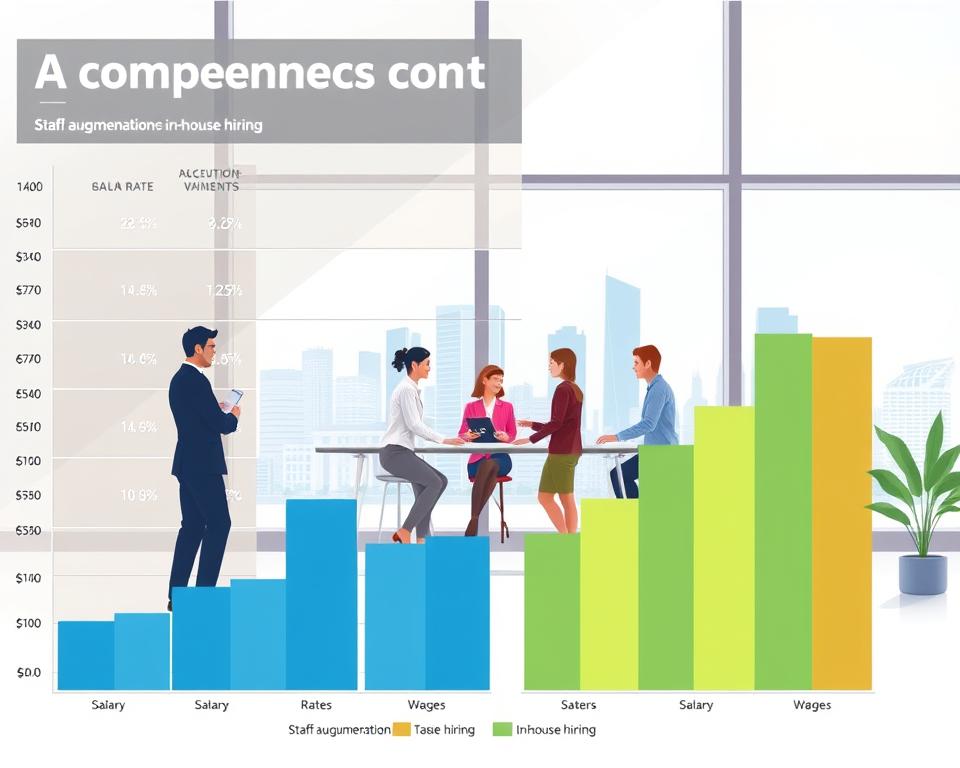
Compensation costs change a lot based on experience level for both staff augmentation and in-house hiring. For entry-level, staff augmentation might be more affordable because of lower training costs. For senior-level, in-house hiring could be more cost-effective over time because of less need for constant rehiring and training.
The comparison of compensation models across experience levels reveals:
- Entry-level: Staff augmentation is often more cost-effective
- Mid-level: Costs are relatively comparable between the two models
- Senior-level: In-house hiring may be more cost-effective in the long term
Understanding these differences helps businesses make better hiring decisions. They can balance short-term needs with long-term financial goals.
Employee Benefits and Insurance Cost Analysis
Salaries are just part of the story when it comes to hiring employees. Benefits and insurance costs add up, making the total cost of hiring higher. It’s key to think about these extra costs when deciding between hiring in-house or using staff augmentation.
Health Insurance Premiums and Medical Benefits
Health insurance is a big perk for in-house employees. Employers usually pay a lot of the premium costs. The cost can be high, especially for family plans, which can be over $20,000 a year.

Retirement Contributions and Pension Plans
Retirement plans like 401(k) or pension plans are common benefits. They help attract and keep good employees. Employers might even match employee contributions, which increases the total compensation.
Paid Time Off, Sick Leave, and Holiday Pay
Employees also get paid time off, sick leave, and holiday pay. These benefits are important for work-life balance but add to the cost. Companies must also consider the cost of covering for absent employees.
Additional Perks and Wellness Programs
Companies often offer extra perks and wellness programs. These can include gym memberships and mental health support. While they cost money, they help create a better work environment and keep employees happy and productive.
In summary, the cost of benefits and insurance is a big part of the hiring decision. Companies need to weigh these costs when choosing between in-house hiring and staff augmentation.
Recruitment Expenses and Hiring Process Costs
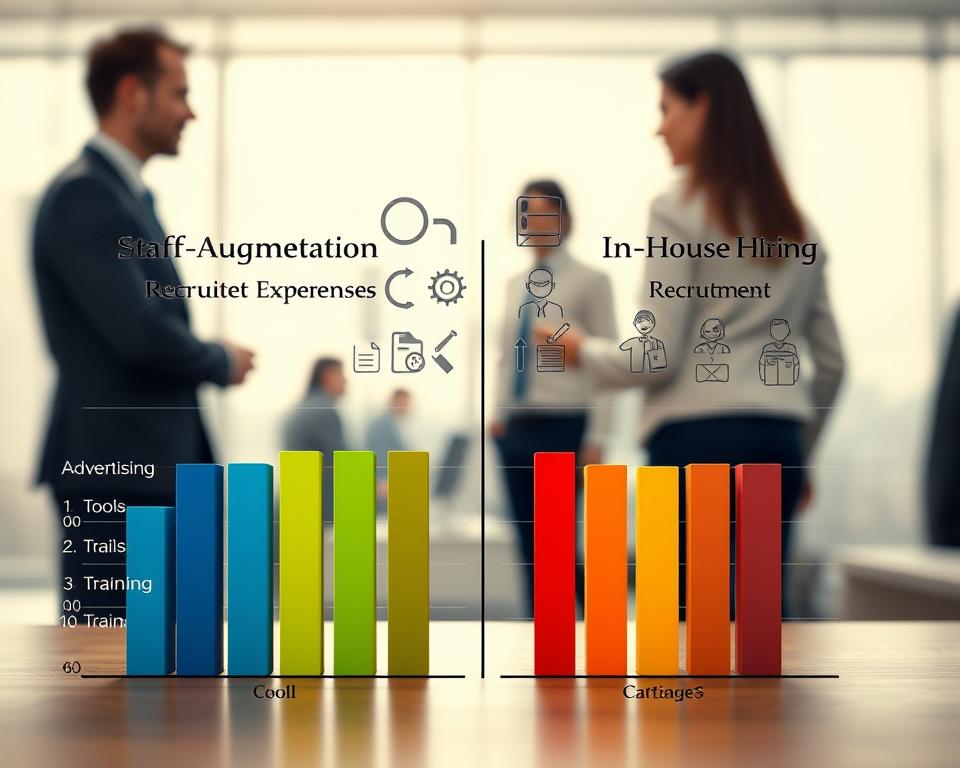
Choosing between staff augmentation and in-house hiring depends on costs. Businesses must look at job ads, agency fees, and interview time. These factors are key to making a decision.
Job Advertising and Recruitment Agency Fees
Job ads are a big expense. Companies spend a lot on job boards and social media. Costs can range from $100 to $500 per ad.
Recruitment agency fees can be 15% to 20% of the first-year salary. This is a big cost for businesses. Staff augmentation, however, can be cheaper, especially for short-term needs.
Interview Process and Candidate Assessment Costs
The interview process is costly. It includes time for HR and managers. Costs can be $100 to $400 per candidate.
- Initial screening and resume review
- Phone or video interviews
- In-person interviews and assessment tests
- Reference checks and background verification
Staff augmentation can save money. It provides vetted candidates, cutting down on interviews.
Background Verification and Pre-Employment Screening
Background checks and screenings are crucial. They ensure candidates are trustworthy. These steps can be costly and time-consuming.
In-house hiring covers these costs. But, staff augmentation includes them, saving money and effort for employers.
Speed to Hire and Time Investment Comparison
Speed is key in hiring. Slow processes can harm productivity and project timelines. In-house hiring takes longer due to multiple steps.
Staff augmentation is faster. It offers quick access to vetted candidates. This is great for urgent needs or changing workloads.
Onboarding and Initial Training Investments
Onboarding and initial training are big investments for companies. This is true whether they choose staff augmentation or traditional hiring. This phase is key for getting new employees ready to work well with the team.

New Employee Orientation Programs
New employee orientation programs introduce new hires to the company. For in-house employees, these programs are detailed. They cover company history, policies, and job roles.
For staff augmentation, the onboarding is more focused. It’s about getting the augmented staff ready for their project tasks.
Role-Specific Training and Skill Development
Role-specific training is vital for both in-house and augmented staff. It helps them do their jobs well. This training includes technical skills, software use, and soft skills.
Training costs differ for in-house and augmented staff. In-house employees get more training for their long-term roles. Augmented staff get training for their specific projects.
Mentor Assignment and Knowledge Transfer Costs
Mentor assignment helps with knowledge transfer, especially for in-house employees. It pairs new hires with experienced staff. They learn about the company and their job.
Mentor assignment costs include time for both the mentor and mentee. It also includes any formal programs the company sets up. For staff augmentation, knowledge transfer focuses on project details, not needing a formal mentorship.
In conclusion, both hiring models need onboarding and training. But the type and cost of these investments differ. Knowing these differences helps companies make better hiring choices and budget plans.
Workspace Infrastructure and Equipment Expenses
In-house employees need a full workspace setup. This includes office space, hardware, and software. These costs add up and are key to understanding the expenses of in-house hiring.
Office Space Rental and Utilities Per Employee
Office space rental is a big cost for in-house hiring. The price per employee changes based on where the office is. Cities with high demand for office space charge more.
Utilities like electricity, water, and internet also increase costs. A CBRE report shows office space prices in major U.S. cities can be from $50 to over $100 per square foot each year.

Computer Hardware and Peripheral Devices
Employees also need computer hardware and devices to work well. This includes desktops, laptops, and other essential items. High-performance devices can be expensive, with a top laptop costing over $2,000.
Technology changes fast, so devices may need to be updated or replaced often. This keeps the team productive.
Software Licenses and Subscription Services
Software licenses and subscriptions are also important for in-house employees. Companies spend on productivity tools, project management software, and more. For example, Microsoft Office 365 costs about $8.25 per user per month for the basic plan.
Specialized software can cost even more, depending on its features and the number of users.
“The cost of software licenses can add up quickly, especially for larger teams or organizations with complex software needs.” –
Communication Tools and Collaboration Platforms
Good communication and teamwork are vital for in-house teams. Companies invest in tools like Slack or Microsoft Teams. These tools help with communication, sharing files, and managing projects.
The cost of these services can vary. But they are key for a cohesive and productive team.
The total cost of workspace and equipment can be high. Companies must weigh these costs when deciding between in-house hiring and staff augmentation.
Ongoing Professional Development and Upskilling Costs
Keeping up with the fast pace of business today is key. Both hiring staff and using in-house teams need big investments in learning. This helps them keep up with new tech and trends.
Continuous Learning Program Investments
Learning never stops for employees. They need online courses, workshops, and training to grow. Companies invest in these to meet their team’s needs.
For those working with companies, training is a big deal. It can make a huge difference in how well they do their jobs. A study found that training can bring in up to $4.53 for every dollar spent.
“The moment you stop learning is the moment you start dying.” – Albert Einstein
Certification and Conference Attendance Fees
Certifications and going to conferences are important for staying current. They let employees learn from others and keep up with trends. But, the costs can vary a lot.
| Activity | Average Cost (In-House) | Average Cost (Augmented Staff) |
|---|---|---|
| Certification Programs | $1,500 – $3,000 | $1,000 – $2,500 |
| Conference Attendance | $2,000 – $5,000 | $1,500 – $3,500 |
Internal Training Resources and Materials
Having the right tools is essential for employee growth. Companies need to invest in materials and software. This ensures employees have what they need to succeed.

In summary, investing in employee growth is crucial for companies. Whether they choose to hire staff or use in-house teams, understanding these costs is key. This way, companies can stay competitive and productive.
Employee Turnover and Replacement Costs
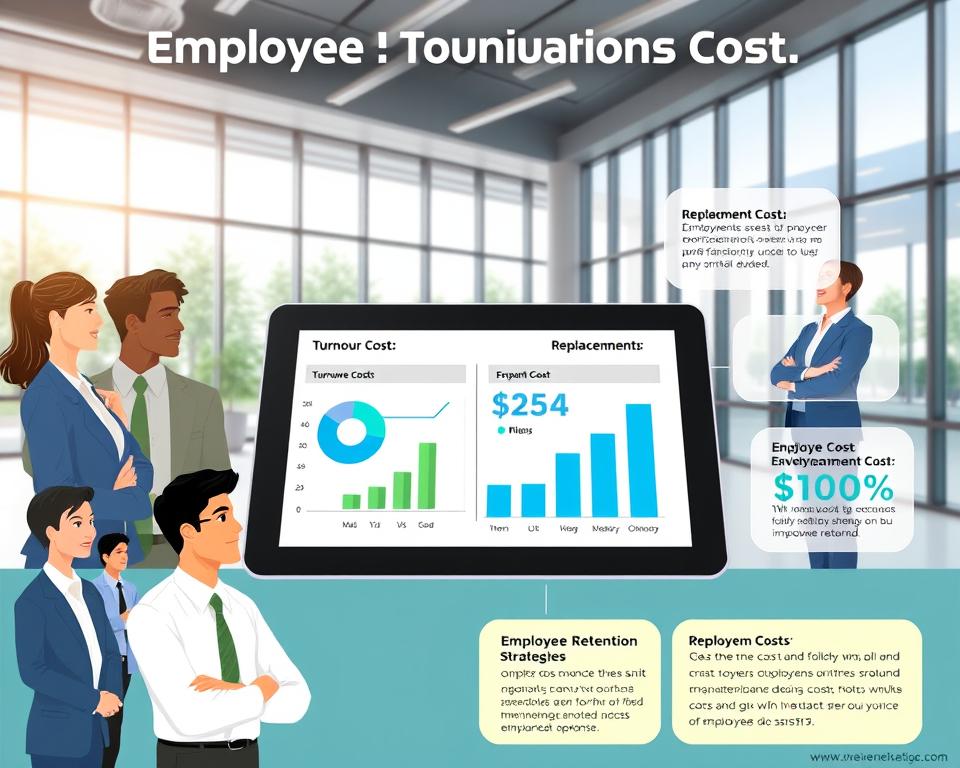
The cost of losing employees is a big deal when comparing in-house hiring to staff augmentation. High turnover means big expenses for finding, training, and keeping up with work.
Cost of Voluntary and Involuntary Terminations
When an employee leaves, it costs a lot. Voluntary terminations, like when someone quits, are especially pricey because they lose skilled workers. Involuntary terminations, like layoffs, also cost a lot due to severance packages and possible lawsuits.
The cost of replacing someone can be 50% to 200% of their yearly salary. For example, finding a new top executive can cost over $200,000. This includes fees, training, and lost work time.
Knowledge Loss and Productivity Gaps
When someone leaves, they take their skills and knowledge with them. This creates productivity gaps that are hard to fill. The work they did is spread out, which can lead to burnout and lower morale.
To keep knowledge from being lost, companies might use knowledge management systems and documentation processes. But these need money upfront and ongoing care.
Rehiring and Retraining Expenses
Replacing someone costs a lot. Recruitment costs, like job ads and interviews, add up. New employees also need a lot of training, which costs more.
Studies show the cost to hire someone can be $4,000 to $14,000 or more. For companies with a lot of turnover, these costs add up fast.
Staff Augmentation Contract Flexibility Advantages
Staff augmentation is more flexible than hiring employees directly. It lets businesses adjust their team size based on needs. This reduces the risk of having too many people when work is slow.
Staff augmentation providers handle finding, training, and managing extra staff. This saves the company from a lot of work.
| Cost Component | In-House Hiring | Staff Augmentation |
|---|---|---|
| Recruitment Costs | High | Low |
| Training Costs | High | Low to Moderate |
| Termination Costs | High | Low |
| Knowledge Loss | High | Low |
| Contract Flexibility | Limited | High |
Time-to-Productivity and Ramp-Up Period Analysis
The time it takes for new hires to become productive is key to a project’s cost and efficiency. When comparing staff augmentation to in-house hiring, understanding the ramp-up periods is vital. This helps in making informed decisions.
Immediate Contribution from Augmented Professionals
Augmented professionals usually have the skills and experience needed. They can start contributing to projects right away. This is a big plus of staff augmentation, as it cuts down on training and onboarding time.
Key benefits of augmented professionals include:
- Pre-existing skillset matching project requirements
- Reduced need for extensive training
- Faster integration into existing teams

In-House Employee Learning Curve Timeline
In-house employees need more time to reach full productivity. This includes training, onboarding, and getting familiar with the company’s culture and processes.
| Employee Type | Average Ramp-Up Period | Productivity Level |
|---|---|---|
| Augmented Professionals | 1-3 weeks | High |
| In-House Employees | 8-12 weeks | Medium to High |
Financial Impact of Delayed Project Deliverables
Delays in project deliverables can have big financial costs. These include longer project timelines, higher labor costs, and penalties for late delivery.
The financial impact can be substantial, making it crucial for businesses to consider the time-to-productivity when evaluating staffing options.
Scalability and Workforce Flexibility Cost Implications
Being able to adjust your workforce quickly is key for businesses with changing needs. Scalability and workforce flexibility play big roles in how well a staffing plan works. Companies need to think about these when choosing between hiring staff or using outside help.
Rapid Scaling for Project Demands
Staff augmentation lets businesses quickly grow or shrink their teams as needed. This is super helpful for companies with changing workloads or fast growth. Using outside staff, businesses can quickly adjust to new needs without the long-term costs of hiring in-house.
For example, a tech company can quickly add staff for a sudden increase in demand. This way, they can meet the demand without the costs of training new employees.
Downsizing Costs and Severance Packages
In-house hiring means more permanent jobs, which can be costly when downsizing. Costs include severance packages, outplacement services, and legal fees. Companies need to think about these costs when planning their staffing.
For instance, if a company hires in-house for a project that gets canceled, they face big downsizing costs. Staff augmentation can be a big help in such situations.
Seasonal Workload Management Strategies
Staff augmentation is also great for managing seasonal changes in workload. By hiring temporary or project-based staff, businesses can handle busy times without a big permanent team. This helps keep labor costs down during slow times.
A retail business can hire extra sales staff during holidays with staff augmentation. This way, they can meet demand without the cost of a big team all year.
Tax Obligations and Payroll Processing Expenses
It’s key for businesses to grasp the tax side of staffing choices. They must weigh the tax duties and payroll costs of hiring staff versus using contractors.
Employer Payroll Taxes and Social Security Contributions
Staff on payroll face employer taxes and social security costs. These include Social Security tax, Medicare tax, and federal and state unemployment taxes. Employers pay 6.2% Social Security and 1.45% Medicare on wages. These costs can really hit a company’s finances, especially with a big team.
Businesses might look into outsourcing to cut these costs. But, it’s smart to talk to a tax expert to see how it affects your business.
Contractor Payment Structures and Tax Treatment
Contractors get paid in ways that affect their taxes differently. Companies don’t withhold taxes or pay employment taxes for them. Instead, they give out Form 1099-MISC to the IRS. Contractors handle their own taxes, including self-employment tax.
This setup can save businesses money on staff augmentation. But, they must follow IRS rules on who is a contractor to avoid fines.
Payroll Administration and Compliance Costs
Both employees and contractors need payroll handling, but it’s more complex for employees. Companies must manage payroll, tax withholding, and follow labor laws. This takes a lot of work and might need special software or services.
Contractors are easier to handle since companies don’t withhold taxes or manage benefits. Yet, they must still pay correctly and follow contract rules.
In summary, knowing the tax and payroll costs of hiring versus using contractors is crucial. By looking at these details, businesses can make better staffing choices and save money.
Staff Augmentation vs In-House Hiring – Cost Analysis by Project Duration
Choosing between staff augmentation and in-house hiring depends on project length. This is because project duration affects costs. The best choice can change based on whether the project is short, medium, or long-term.
Short-Term Projects Under Six Months
For projects under six months, staff augmentation is often cheaper. It avoids long-term contracts and cuts down on hiring costs.
Benefits of Staff Augmentation for Short-Term Projects:
- No long-term employment contracts
- Reduced recruitment and training costs
- Flexibility to scale up or down as needed
Medium-Term Engagements Six to Eighteen Months
For projects between six to eighteen months, costs between staff augmentation and in-house hiring are closer. Staff augmentation stays flexible, but in-house hiring might save money over time.
Considerations for Medium-Term Projects:
- Potential for negotiated rates with staffing agencies
- Training costs for in-house staff
- Project-specific needs and skill requirements
Long-Term Commitments Beyond Two Years
For projects over two years, in-house hiring is usually cheaper. The upfront costs of hiring and training are spread out, making it more cost-effective.
Advantages of In-House Hiring for Long-Term Projects:
- Lower hourly or annual costs
- Greater control over project direction and outcomes
- Development of long-term skills and expertise
Break-Even Point Calculations and Scenarios
Finding the break-even point is key to deciding when to switch from staff augmentation to in-house hiring. It’s about finding when the costs of both models are the same.
| Project Duration | Staff Augmentation Costs | In-House Hiring Costs |
|---|---|---|
| 0-6 Months | $100,000 | $150,000 |
| 6-18 Months | $200,000 | $250,000 |
| 2+ Years | $400,000 | $350,000 |
Risk Management, Liability, and Legal Costs
Risk management is key when deciding between staff augmentation and hiring in-house. It affects liability and legal costs. Companies must weigh these factors to avoid risks and follow the law.
Employment Litigation and Dispute Resolution
Companies hiring in-house face big risks of employment lawsuits. Issues like contract disputes, discrimination, and wrongful termination can cost a lot. Staff augmentation shifts these risks to the agency, lowering the company’s legal worries.
Key considerations for employment litigation include:
- Understanding employment laws and regulations
- Drafting comprehensive employment contracts
- Implementing effective dispute resolution mechanisms
Workers Compensation and Liability Insurance Premiums
In-house employees need workers’ compensation insurance, which costs a lot. Staff augmentation often covers this, saving the company money.
Factors influencing workers’ compensation premiums include:
- Industry risk classification
- Claims history
- Payroll size and employee roles
Intellectual Property Rights and Confidentiality Agreements
Keeping intellectual property safe is vital for businesses, especially with outside help. Staff augmentation needs strong confidentiality agreements and IP protection to keep information safe.
Best practices for IP protection include:
- Implementing comprehensive confidentiality agreements
- Defining clear IP ownership terms
- Restricting access to sensitive information
Understanding and tackling these risks helps businesses choose wisely between staff augmentation and in-house hiring.
Return on Investment and Total Cost of Ownership
Businesses must look at both direct and indirect costs when deciding between staff augmentation and in-house hiring. This detailed look is key to making smart choices that affect profits.
Calculating True ROI for Each Hiring Model
To figure out the true ROI, companies must add up all costs. This includes salaries, benefits, training, and equipment for in-house staff. It also includes the fees for staff augmentation services. A deep dive into these costs shows the financial effects of each hiring method.
A study on body leasing vs internal recruitment showed big differences in total cost of ownership. This highlights the need for careful ROI calculations.
Hidden Cost Factors Often Overlooked
Many hidden costs can greatly affect the total cost of ownership. These include costs from employee turnover, like recruitment and training for new staff. There’s also the loss of productivity during the transition.
- Recruitment agency fees
- Training and onboarding costs
- Productivity loss during ramp-up
- Potential costs of litigation or compliance issues
Performance Metrics and Productivity Measurements
To really understand ROI, businesses need clear performance metrics and productivity measures. These might include project completion rates, work quality, and client satisfaction scores.
Five-Year Total Cost Projection Models
Creating a five-year total cost projection model helps businesses predict and compare long-term costs. It takes into account salary growth, benefit increases, and changes in staffing needs over time.
Using such models, companies can make better decisions about their staffing. This leads to better ROI and lower total cost of ownership.
Strategic Decision Framework for Your Business
To make smart hiring choices, companies need to look at their needs, think about their industry, and consider hybrid work models. This framework helps decide between hiring staff or bringing people in-house.
Evaluating Your Company’s Specific Needs
Knowing what your company needs is key to a good hiring plan. You must look at your goals, project needs, and the skills needed to reach those goals. This helps figure out if hiring staff or in-house is best for you.
Key factors to consider:
- Project duration and scope
- Required skill sets and expertise
- Budget constraints and cost considerations
- Timeline for project completion
Industry-Specific Considerations and Benchmarks
Different fields have their own needs and standards for hiring. For example, tech might use staff augmentation for short projects, while healthcare might hire in-house for long-term roles.
| Industry | Typical Hiring Preference | Key Considerations |
|---|---|---|
| Technology | Staff Augmentation | Project-based needs, specialized skills |
| Healthcare | In-House Hiring | Long-term patient care, regulatory compliance |
| Finance | Hybrid Model | Seasonal workload fluctuations, specialized expertise |
Hybrid Workforce Models Combining Both Approaches
A hybrid model mixes staff augmentation and in-house hiring. It’s flexible and can fit your business needs. It lets you use specialized skills from staff augmentation and keep a core team in-house.
- What are our short-term and long-term business objectives?
- What skills and expertise are required to achieve these goals?
- What is our budget for hiring and talent acquisition?
- How quickly do we need to scale our workforce?
- What are the industry benchmarks for hiring practices in our sector?
By looking at these factors and your company’s needs, you can make a framework for your hiring. This will help support your business goals.
Conclusion
When deciding between staff augmentation and in-house hiring, it’s important to look at costs closely. The choice depends on project length, budget, and the need for flexible workforces.
Staff augmentation can save money on short-term projects or when workloads change. On the other hand, hiring employees directly might be better for long-term needs. It offers stability and keeps things consistent.
Businesses should think about their specific needs and look at industry standards. A mix of both staff augmentation and in-house hiring could also work well. For more tips on saving on software development costs, check out recruiting dedicated developers.
In the end, a smart hiring plan that fits the company’s goals and budget is crucial. It helps maximize ROI and ensures project success.


