







Creating a successful SaaS product needs a deep grasp of the SaaS business model. It’s key for both startups and enterprises. They must make a SaaS product that the market wants.
The journey includes several important steps, from the idea to launch and growth. Knowing the differences between startup SaaS and enterprise SaaS helps make better choices during development.
Table of Contents
Key Takeaways
- Understanding the SaaS business model is crucial for success.
- Startups and enterprises have different needs in SaaS product development.
- A successful SaaS product meets specific market demands.
- The development process involves several key steps.
- Informed decisions are critical throughout the SaaS product development process.
Understanding the SaaS Business Model
The SaaS business model is unique. It has multi-tenancy architecture, scalability, and subscription-based pricing.
Key Characteristics of SaaS Products
SaaS products stand out from traditional software. They have:
- Multi-tenancy architecture: SaaS uses one software instance for many customers.
- Scalability: SaaS products grow with more users and traffic.
- Subscription-based pricing: Customers pay a recurring fee for access.
As noted by
“The SaaS model allows businesses to access software applications over the internet, reducing the need for costly hardware and infrastructure investments.”

SaaS Revenue Models
SaaS companies make money in different ways. These include:
| Revenue Model | Description |
|---|---|
| Subscription-based | Customers pay a recurring fee for access to the software. |
| Usage-based | Customers pay based on their usage of the software. |
| Freemium | Basic features are free, but premium features need a subscription. |
Differences Between Startup and Enterprise SaaS Approaches
Startups and enterprises have different SaaS strategies. Startups focus on quick growth and customer gain. Enterprises aim for scalability, security, and integration with current systems.
Knowing these differences helps create a SaaS product that fits your market’s needs.
Market Research and Opportunity Validation
Market research is key to making sure a SaaS product is a good idea. It helps businesses avoid wasting money. It looks at the market to find gaps and chances for success.
Identifying Market Gaps
Finding market gaps is crucial for a SaaS product to succeed. It means looking at what customers need and don’t get from current products.
Key strategies for identifying market gaps include:
- Conducting customer surveys and interviews
- Analyzing online reviews and feedback
- Monitoring industry trends and developments
Competitor Analysis
Understanding competitors is vital. It helps see where your product can stand out.
Key aspects to consider in competitor analysis:
- Competitor offerings and features
- Pricing strategies and revenue models
- Marketing and sales tactics
| Competitor | Key Features | Pricing Model |
|---|---|---|
| Competitor A | Feature 1, Feature 2 | Subscription-based |
| Competitor B | Feature 3, Feature 4 | Freemium Model |
Validating Your SaaS Idea
It’s important to check if there’s demand for your SaaS product.
Customer Interviews
Customer interviews give insights into what people want and expect.
Minimum Viable Product (MVP) Testing
MVP testing is a low-risk way to test your idea. It lets you get feedback from early users to improve your product.

Strategic Planning for SaaS Product Development
Strategic planning is key to making SaaS products successful. It helps understand the market, define the product’s unique value, and plan to meet business goals.
Defining Your Value Proposition
A strong value proposition is vital for standing out in a crowded market. It clearly shows what makes your product special and valuable to customers.
Setting Clear Product Goals
Having clear product goals is crucial. It keeps the development team focused and ensures everyone is working towards the same goals. These goals must align with the business strategy and what customers need.
Creating a Product Roadmap
A product roadmap outlines your SaaS product’s strategic plan. It includes both short-term goals and long-term vision.
Short-term Milestones
These are specific, achievable goals for the near future. They keep the product moving forward and on track.
Long-term Vision
The long-term vision gives a broader view of where the product is headed. It guides strategic decisions and how resources are used.

By combining these elements into a strategic plan, SaaS companies can handle product development’s complexities. This improves their chances of success in a competitive market.
SaaS Product Development Guide for Startups & Enterprises: Core Methodologies
Choosing the right development methods is crucial for SaaS success. Good SaaS product development for startups and big companies needs strong and flexible methods. These methods should drive innovation, quality, and efficiency.
Agile Development for SaaS
Agile development is key in modern SaaS product making. It focuses on being flexible, working together, and delivering fast. Agile helps SaaS teams quickly adapt to market changes and customer needs.
Key Agile practices include:
- Sprint planning and execution
- Daily stand-ups and retrospectives
- Continuous integration and testing
Lean Startup Methodology
The Lean Startup method is about making products that meet customer needs. It stresses the need for fast testing, customer feedback, and ongoing improvement.
“The Lean Startup methodology is not just about being efficient; it’s about being effective. It’s about building products that people actually want to use.” – Eric Ries, Author of “The Lean Startup”
DevOps Integration
DevOps is vital for SaaS products. It connects the development and operations teams. This connection leads to faster and more reliable software releases.
Continuous Integration/Continuous Deployment
Continuous Integration (CI) and Continuous Deployment (CD) are key in DevOps. CI means regularly adding code changes to a central place. CD automates putting these changes into production.
| Methodology | Key Benefits | Challenges |
|---|---|---|
| Agile Development | Flexibility, rapid delivery, customer collaboration | Requires cultural shift, can be challenging to scale |
| Lean Startup | Customer-centric, rapid experimentation, reduced waste | Can be resource-intensive, requires strong customer feedback loop |
| DevOps | Faster releases, improved collaboration, higher quality | Requires significant cultural and process changes |
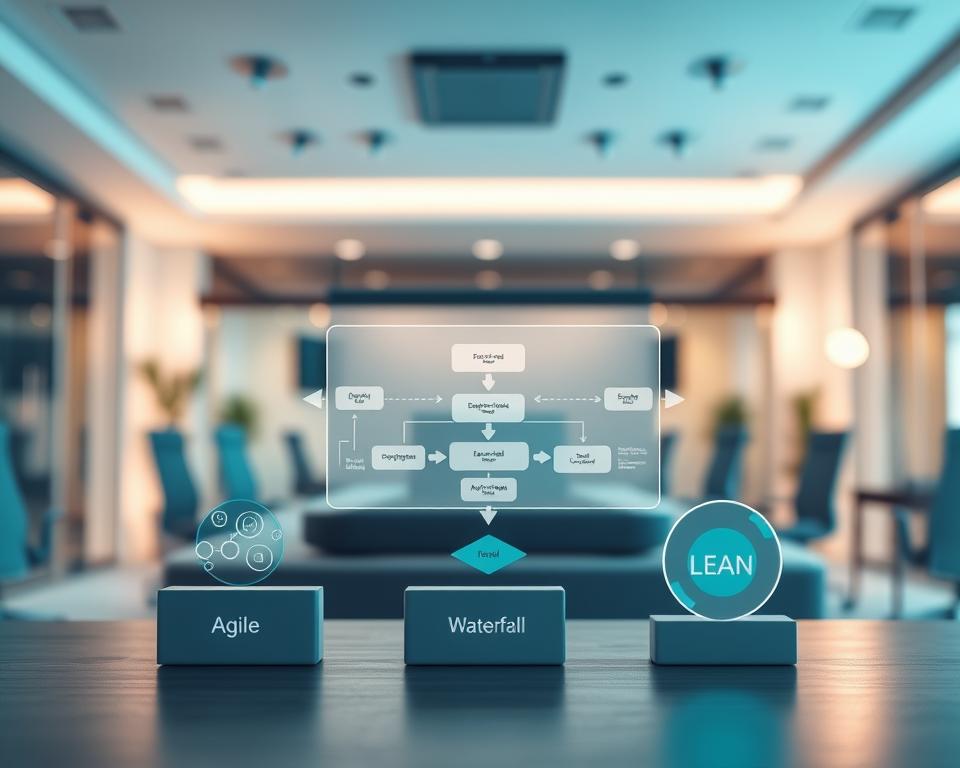
By using these core methods, SaaS companies can better their development, improve product quality, and get to market faster. Whether you’re a startup or a big company, knowing and using these methods is key to success in the SaaS world.
Technical Architecture Considerations
A good technical architecture is key for a SaaS product to meet user needs and last long. It’s the base of the product, affecting its growth, safety, and how well it works.
Choosing the Right Tech Stack
Picking the right tech stack is a big decision in SaaS development. It means choosing programming languages, frameworks, databases, and tools that fit the product’s needs. A good tech stack should help rapid development, be scalable, and keep the product secure.
- Evaluate the trade-offs between different technologies.
- Consider the expertise of your development team.
- Assess the long-term viability of the chosen technologies.
Multi-Tenancy Architecture
For SaaS products, a multi-tenancy architecture is often the best choice. It lets many customers use the same app, saving costs and improving how resources are used. Important things to think about include:
- Data isolation and security.
- Customization options for different customers.
- Scalability to handle different loads from customers.

Scalability Planning
Scalability is key for SaaS products to grow with more users and data. Planning for this means designing the architecture to handle more load. This can be done through horizontal scaling or vertical scaling.
Security Framework
A strong security framework is crucial to protect user data and keep trust. This includes using encryption, access controls, and doing regular security audits.
Data Protection Strategies
Good data protection strategies are essential to keep customer info safe. This includes:
- Encrypting data at rest and in transit.
- Implementing strict access controls.
- Regularly backing up data.
Feature Prioritization and MVP Definition
Feature prioritization and MVP definition are key to a SaaS product’s success. By focusing on the most valuable features, businesses can create a minimum viable product. This lets them test the product, get feedback, and improve it.
Core vs. Nice-to-Have Features
It’s important to know the difference between core and nice-to-have features. Core features meet the main needs of your audience and are vital. On the other hand, nice-to-have features can make the product better but aren’t essential.

Using the MoSCoW Method
The MoSCoW method helps prioritize features. It categorizes them as must-haves, should-haves, could-haves, and won’t-haves. This way, teams can:
- Identify must-have features that are critical.
- Determine should-have features that are important but not vital.
- Consider could-have features that can enhance the product.
- Exclude won’t-have features that are not necessary or can be deferred.
Defining Your Minimum Viable Product
Creating an MVP means making a product with only the essential features. This lets businesses test their idea with minimal resources. It helps gather feedback from early adopters.
Feature Scope Management
Managing the feature scope is key to keeping the product focused. It involves checking and adjusting the features based on user feedback, market trends, and business goals.
UI/UX Design for SaaS Products
Effective UI/UX design is key for SaaS products’ success. It affects how users adopt and feel about the product. A well-designed SaaS product stands out in a crowded market, boosting user engagement and cutting down on churn.
User-Centered Design Principles
User-centered design focuses on making products easy to use and meet user needs. It involves studying user behaviors, preferences, and challenges through research and feedback. By putting users first, SaaS companies can create products that are more likely to be used and loved.

Creating Intuitive User Flows
Intuitive user flows are vital for easy navigation and goal achievement in SaaS products. It means making complex tasks simpler, reducing steps, and guiding users clearly. This ensures a smooth user journey.
Designing for Different User Roles
SaaS products serve various user roles, each with its own needs and permissions. Designing for these roles means creating tailored experiences that meet each user’s specific needs. This boosts usability and satisfaction across all user groups.
Accessibility Considerations
Accessibility is a crucial part of UI/UX design, making sure SaaS products are for everyone, including those with disabilities. Following guidelines like the Web Content Accessibility Guidelines (WCAG) helps create an inclusive experience.
By emphasizing user-centered design, intuitive flows, role-based design, and accessibility, SaaS companies can make products that are both functional and enjoyable. This leads to customer loyalty and business success.
The SaaS Development Process
The SaaS development process is complex and involves many steps. It needs careful planning and execution. Key activities are crucial for a high-quality product.
Sprint Planning and Execution
Sprint planning is key in Agile development for SaaS. It sets sprint goals, prioritizes tasks, and allocates resources.
Good sprint execution needs skilled developers, clear communication, and the right tools. Focusing on working software in each sprint helps teams make steady progress.
Code Quality and Standards
High code quality is vital for a reliable, scalable, and maintainable SaaS product. It means following coding standards, doing code reviews, and using automated testing.
By focusing on code quality, teams can reduce technical debt, improve collaboration, and enhance the product’s quality.

Documentation Best Practices
Good documentation is crucial for both internal and external users. It includes API and user documentation.
API Documentation
API documentation should be clear, concise, and detailed. It helps developers integrate with the SaaS product.
User Documentation
User documentation should be easy to access and understand. It helps customers get the most out of the SaaS product.
| Documentation Type | Purpose | Best Practices |
|---|---|---|
| API Documentation | To guide developers in integrating with the SaaS product | Clear, concise, comprehensive, with examples |
| User Documentation | To help customers understand and use the SaaS product | Accessible, easy to understand, with visuals and step-by-step guides |
By focusing on these areas, SaaS development teams can create robust and user-friendly products. They meet customer needs and stay competitive.
Testing and Quality Assurance
In SaaS, testing is not just a phase; it’s ongoing. It makes sure the product works well and is reliable. A strong testing plan is key to finding and fixing problems before they affect users.

Automated Testing Strategies
Automated testing is key in SaaS development. It lets teams quickly run tests for many scenarios. This includes unit, integration, and UI tests, all important for the app’s correct behavior.
Using automated tools saves time and effort. It lets teams focus on more complex tasks.
Performance Testing
Performance testing is crucial for SaaS apps. It checks if the app can handle expected loads well. Key performance indicators like response time and error rate are watched closely.
This helps find and fix issues that slow the app down.
Security Testing
Security testing is vital for keeping SaaS apps safe. It finds weaknesses that hackers could use. This includes penetration testing and checking for compliance with security standards.
Proactive security steps are essential to protect user data and keep trust.
User Acceptance Testing
User Acceptance Testing (UAT) is the last step before a SaaS product is released. It checks if the app meets the needed specs and works as users expect. UAT is done by product owners or stakeholders to make sure the app is ready for users.
Launch Strategies for SaaS Products
A well-planned launch strategy is key for any SaaS product’s success. It’s not just about making the product available. It’s about a detailed plan that includes testing, marketing, and making the product stand out.
Beta Testing Programs
Beta testing is a must for a successful SaaS launch. It lets you test your product with a few users before the big launch. This helps find bugs, improve the user experience, and see if your product fits the market.
- Find early users who can give you valuable feedback.
- Use beta testing to make your product better.
- Get beta testers to help promote your product when you launch.
Soft Launch vs. Hard Launch
Choosing between a soft launch and a hard launch depends on your product and the market. A soft launch is for a small group, while a hard launch is for everyone.
Soft Launch: Great for getting feedback, testing marketing, and building excitement quietly.
Hard Launch: Best for making a big splash, getting lots of people talking, and selling a lot right away.
Marketing Your SaaS Product
Good marketing is essential for a SaaS launch. It’s about making people aware, getting them interested, and turning them into customers.
Content Marketing Approaches
Content marketing is a strong tool for SaaS products. It’s about making content that’s valuable, relevant, and consistent to attract and keep an audience.
- Write blog posts, whitepapers, and case studies that solve customer problems.
- Use SEO to get your content seen more in search results.
- Share your content on social media to reach more people and talk to your audience.
SEO for SaaS Products
SEO is important for getting your SaaS product seen in search engines. It helps bring in organic traffic and leads.
Key SEO Strategies:
- Do deep keyword research to find the right terms and phrases.
- Make your website easy for search engines to crawl by optimizing structure, content, and meta tags.
- Write content that’s high-quality, keyword-rich, and answers what users are searching for.
SaaS Pricing Models and Monetization
The pricing model you choose can greatly affect how well your SaaS product does. It’s key to find a pricing strategy that works for both your revenue goals and what customers can afford. It also needs to match the value they see in your product.
Freemium vs. Premium Models
The freemium model gives basic services for free but charges for extra features. The premium model makes customers pay for all services. The freemium model can draw in more users but might not convert them to paid users if the free version is too good.
Key Considerations:
- Feature differentiation between free and paid
- Conversion rates from free to paid
- Customer lifetime value (CLV)
Tiered Pricing Strategies
Tiered pricing offers different plans with various services or features. This way, businesses can serve different customer groups and boost the average revenue per user (ARPU).
Benefits:
- Flexibility for customers
- Increased revenue potential
- Ability to upsell and cross-sell
| Pricing Tier | Features | Price |
|---|---|---|
| Basic | Limited features | $9.99/month |
| Pro | Advanced features | $19.99/month |
| Enterprise | Full feature set, dedicated support | Custom pricing |
Usage-Based Pricing
Usage-based pricing charges based on how much a customer uses the service. It works well for services with varying usage patterns.
Advantages:
- Aligns costs with customer usage
- Can attract price-sensitive customers
- Encourages efficient use of the service
Enterprise Pricing Considerations
For big businesses, pricing is often custom-made based on their specific needs and scale. When pricing for enterprises, consider the total cost of ownership, ROI, and the value for large-scale use.
By looking into these pricing models and strategies, SaaS companies can find the best way to make money. They can meet customer needs while aiming to make more revenue.
Customer Acquisition and Retention Strategies
In the competitive SaaS world, getting and keeping customers is a big challenge. It needs careful planning. Good strategies for getting and keeping customers are key for any SaaS product’s success.
Onboarding Best Practices
A good onboarding process is vital. It makes sure new customers see the value of your SaaS fast. It includes clear steps, interactive guides, and quick support to help users start.
Personalizing the onboarding is important. Making it fit each user’s needs boosts engagement and cuts down on trouble.
Customer Success Programs
Starting a customer success program is smart. It helps SaaS companies meet customer needs, boost happiness, and lower churn. These programs often include regular meetings, health checks, and advice.
Using data analytics helps spot customers at risk. This way, SaaS companies can act early to stop them from leaving.
Reducing Churn
To lower churn, you need to understand what customers like and do. SaaS companies can use data to find out who might leave.
Acting early, like offering special support and solutions, can help keep customers. This improves retention.
Upselling and Cross-Selling Techniques
Upselling and cross-selling can boost revenue from current customers. SaaS companies can find chances by looking at how customers use their product.
By offering upgrades or extra services when it’s right, SaaS companies can make customers happier. This also helps grow revenue.
Common Challenges and Solutions in SaaS Development
Creating a SaaS solution is often filled with technical and operational hurdles. As the SaaS market grows, it’s key to tackle these challenges for success.
Technical Debt Management
Technical debt is the cost of quick fixes that need revisiting later. It’s vital to manage this debt to keep a SaaS product healthy over time.
- Prioritize and address critical technical debt items.
- Allocate dedicated time and resources for refactoring.
- Implement coding standards to reduce future debt.
Balancing Innovation with Stability
It’s a big challenge to balance innovation with stability in SaaS development. New features and updates must not harm the user experience.
Strategies to achieve this balance include:
- Implementing robust testing protocols.
- Using feature flags to control the rollout of new features.
- Monitoring user feedback and performance metrics closely.
Handling Legacy Integrations
As SaaS products grow, they often need to work with legacy systems. Making sure these integrations are smooth without disrupting workflows is a big challenge.
Best practices for handling legacy integrations include:
- Developing APIs that are backward compatible.
- Using middleware to facilitate communication between old and new systems.
- Conducting thorough compatibility testing.
Compliance and Regulatory Challenges
SaaS providers must follow regulations like GDPR, HIPAA, and CCPA, based on their markets and industries. Compliance is not just legal; it’s also key for keeping customer trust.
Key compliance strategies include:
| Regulation | Key Requirements |
|---|---|
| GDPR | Data protection, user consent |
| HIPAA | Healthcare data privacy, security |
| CCPA | Consumer data privacy, opt-out rights |
By tackling these common challenges, SaaS developers can overcome the complexities of SaaS development. This way, they can build successful, lasting products.
Scaling Your SaaS Product
Scaling a SaaS product is a complex task. It involves technical, team, and market strategies. As your product grows, you must tackle scaling challenges to keep performance and quality high.
Technical Scaling Challenges
Scaling a SaaS product means improving your technical setup. Technical scaling boosts your architecture to handle more traffic and users. You might need better servers, faster database queries, and load balancing.
Team Scaling
As your SaaS product grows, so does your team’s workload. Team scaling is about hiring more people and making sure your team is well-organized. Your team members should have the right skills and training.
International Expansion
Expanding into new markets is a big opportunity. But, it needs careful planning. You must follow local laws, handle different currencies, and meet diverse customer needs.
Enterprise Integration Capabilities
Adding enterprise integration capabilities is key for scaling. This means creating APIs and tools for smooth integration with other systems. It makes your product more valuable for big clients.
By focusing on these areas, you can scale your SaaS product successfully. This ensures it stays competitive and meets your customers’ changing needs.
Conclusion
Creating a successful SaaS product needs careful planning and a focus on the customer. It also requires ongoing improvement. By understanding the SaaS model and doing deep market research, businesses can set themselves up for success.
The success of a SaaS product comes from meeting the changing needs of its users. Businesses should prioritize features and make the product easy to use. They should also test and improve the product a lot.
The SaaS market is growing fast, and businesses must keep delivering great customer experiences. By focusing on this, they can build a strong base for their product. This leads to long-term success and achieving key SaaS success factors.