







Table of Contents
Introduction
Marketplaces have transformed the way we buy and sell goods and services, creating a convenient and dynamic online ecosystem. From e-commerce giants to niche platforms, marketplaces offer a platform for businesses and individuals to connect and transact. Building a successful marketplace requires careful planning, technical expertise, and a deep understanding of user needs. In this blog post, we will explore the world of marketplace development, examining its key components, challenges, and best practices. Whether you’re an entrepreneur or a business owner looking to create your own marketplace, this guide will provide you with valuable insights to unlock the potential of online commerce.

Understanding Marketplace Development
A marketplace is an online platform where buyers and sellers come together to engage in transactions. It facilitates the exchange of goods, services, or information between multiple parties. Marketplace development involves building the infrastructure and features necessary to enable seamless transactions, such as product listings, search functionalities, payment systems, and user ratings.
Key Components of Marketplace Development
User Management
A robust user management system is essential for marketplace development. It involves user registration, login, profile management, and role-based access control.
Product Listings and Catalog Management
The ability to create and manage product listings is vital. It includes features such as product descriptions, images, pricing, categories, and attributes.
Search and Filtering
Effective search and filtering functionalities help users find the products or services they need quickly. Features like keyword search, filters, and sorting options enhance the user experience.
Payment Integration
Seamless and secure payment integration is crucial for marketplace development. It involves integrating payment gateways and providing features like escrow services, transaction tracking, and secure payment processing.
Rating and Review Systems
Implementing a rating and review system allows buyers to provide feedback and helps establish trust and transparency within the marketplace.
Order Management and Tracking
Efficient order management and tracking systems ensure smooth transactions. This includes features like order processing, fulfillment, shipping, and order status updates.
Analytics and Reporting
Analytics and reporting features provide insights into user behavior, transaction patterns, and marketplace performance. This information can be used to optimize operations and make data-driven decisions.
Challenges in Marketplace Development
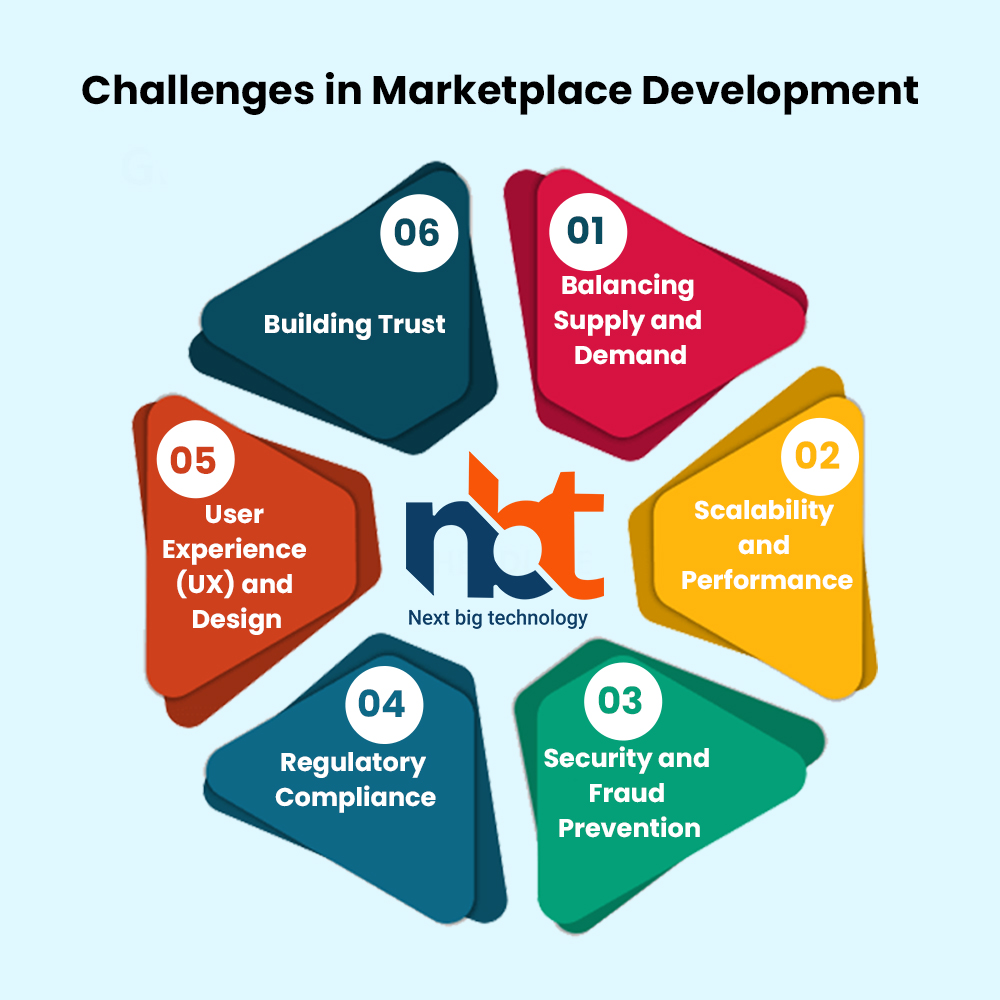
Building Trust
Establishing trust between buyers and sellers is crucial for marketplace success. Implementing verification processes, user ratings, and secure payment systems helps foster trust and credibility.
Balancing Supply and Demand
Attracting both buyers and sellers and ensuring a balanced marketplace can be challenging. Strategies like offering incentives, targeted marketing, and nurturing a community can help attract and retain users.
Scalability and Performance
Marketplaces need to handle a large number of users, products, and transactions. Ensuring the platform can scale effectively, handle increased traffic, and deliver optimal performance is essential.
Security and Fraud Prevention
Marketplace platforms are vulnerable to various security threats and fraudulent activities. Implementing security measures like encryption, data protection, and fraud detection algorithms is crucial.
Regulatory Compliance
Complying with legal and regulatory requirements, such as consumer protection laws, data privacy regulations, and taxation rules, is essential for marketplace development.
User Experience (UX) and Design
Creating a user-friendly interface, intuitive navigation, and a seamless user experience are critical to the success of a marketplace. Designing for mobile responsiveness and accessibility enhances usability.
Best Practices for Marketplace Development
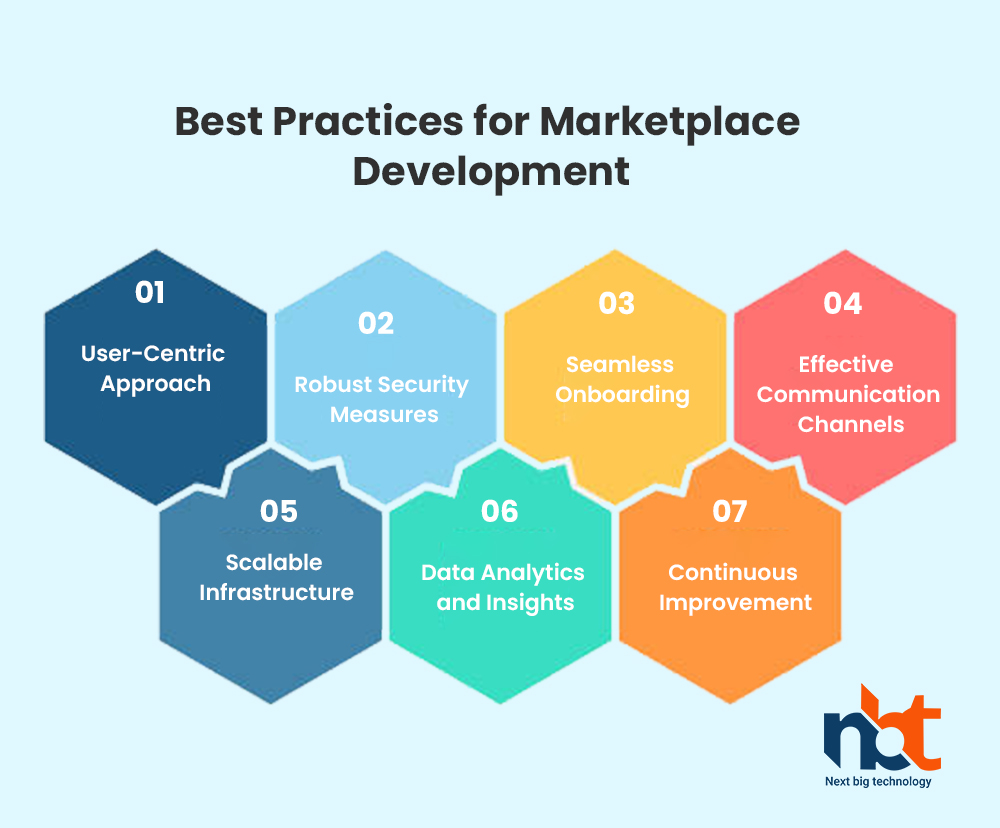
User-Centric Approach
Focus on understanding and meeting the needs of both buyers and sellers. Continuously gather user feedback, iterate, and improve the marketplace based on user insights.
Robust Security Measures
Implement stringent security measures to protect user data, secure transactions, and prevent fraudulent activities. Regularly update security protocols and stay up-to-date with industry standards.
Seamless Onboarding
Simplify the onboarding process for users by providing clear instructions, intuitive forms, and user-friendly interfaces. Minimize friction and encourage user engagement from the start.
Effective Communication Channels
Establish communication channels within the marketplace, allowing buyers and sellers to interact, negotiate, and resolve issues. Consider integrating chat or messaging functionalities for real-time communication.
Scalable Infrastructure
Build a scalable infrastructure that can handle increasing user traffic and growing transaction volumes. Utilize cloud-based technologies, scalable databases, and caching mechanisms to ensure performance.
Data Analytics and Insights
Leverage data analytics and reporting tools to gain valuable insights into user behavior, transaction patterns, and marketplace performance. Use this information to make informed business decisions and optimize the marketplace.
Continuous Improvement
Regularly update and enhance the marketplace based on user feedback, market trends, and emerging technologies. Stay adaptable and responsive to user needs and evolving industry demands.
Conclusion
Marketplace development offers immense opportunities for businesses and entrepreneurs to tap into the growing world of online commerce. By understanding the key components, challenges, and best practices in marketplace development, you can create a successful platform that connects buyers and sellers, fosters trust, and facilitates seamless transactions. Whether you’re developing a niche marketplace or a large-scale platform, prioritize user-centric design, security, scalability, and continuous improvement. Embrace the evolving technologies and stay agile to adapt to changing market dynamics. With the right approach, marketplace development can unlock the potential for growth and success in the digital economy.