







In today’s fast world, industry-specific software is key for companies to work better and grow.
Business technology changes fast. Businesses that pick the right software solutions can stand out.
Every industry has its own needs. Special software can solve these problems, making work easier and more productive.
Table of Contents
Key Takeaways
- Industry-specific software is crucial for businesses to stay competitive.
- Business technology is rapidly evolving.
- Tailored software solutions can enhance efficiency and productivity.
- Different sectors have unique software needs.
- Adopting the right technology can drive business growth.
The Evolution of Business Technology
Business technology has changed a lot over time. It used to be generic, but now it’s specialized. This change happened because industries got more complex. They needed software that was made just for them.

From General to Specialized Solutions
At first, business technology was the same for everyone. But as time went on, companies needed something more. They wanted solutions that fit their exact needs.
Now, companies use specialized software to get ahead. This software helps them work better and faster. Here’s a table showing the difference between old and new software.
| Feature | Generic Software | Specialized Software |
|---|---|---|
| Customization | Limited | High |
| Industry Focus | Broad | Narrow |
| Efficiency | Moderate | High |
The Rise of Industry-Specific Software
More and more industries are using software made just for them. This software is designed to solve problems specific to that industry. It has features that generic software can’t offer.
In healthcare, for example, electronic health records have changed how patient data is managed. In manufacturing, ERP systems have made production better. Using this specialized software is key to success for many businesses.
Why Generic Software Solutions Fall Short
The one-size-fits-all approach in software development can harm businesses. Generic software often doesn’t meet the specific needs of various industries. This leads to inefficiencies and higher costs.
Limitations of One-Size-Fits-All Approaches
Generic software has many drawbacks. It usually lacks the specialized features needed by certain industries. This forces businesses to change their ways to fit the software. This can cause:
- Inefficient workflows
- Reduced productivity
- Inability to fully use the software’s potential
Also, generic software might not follow industry-specific rules. This could lead to legal and compliance problems.
The Cost of Inefficient Technology
Inefficient technology comes with many costs. These include:
- Direct costs: Money spent on buying and keeping the software.
- Indirect costs: Lost productivity, missed chances, and legal fees.
Choosing industry-specific software solutions can help avoid these costs. It offers tailored features that meet a business’s unique needs.

Industry-Specific Software Solutions: How Different Businesses Use Technology
Industry-specific software is changing how businesses work in many fields. As tech grows, companies see that generic software doesn’t fit their needs anymore.

Defining Specialized Business Software
Specialized business software is made for specific industries or tasks. It’s different from general software because it meets the unique needs of a sector. This makes businesses more efficient and productive.
Key characteristics of specialized business software include:
- Industry-specific features and functionalities
- Customizable to meet the unique needs of a business
- Integration capabilities with other industry-specific tools
- Compliance with industry regulations and standards
Key Benefits of Tailored Technology Solutions
Tailored technology solutions bring many benefits to businesses. They mainly improve how things work and give a competitive edge.
Operational Efficiency Improvements
Industry-specific software makes processes smoother, automates tasks, and cuts down on mistakes. This leads to big gains in how well things work. For example, a McKinsey study showed a 20-30% boost in productivity for companies using such software.
“The right technology can transform a business by making it more agile, responsive, and efficient.” –
Competitive Advantage Factors
Using specialized software gives businesses a leg up in their markets. It lets them innovate, adapt fast to changes, and offer something unique to customers. Gartner says companies with this software are more likely to beat their rivals.
By using industry-specific software, businesses can tackle their unique problems better. This leads to better performance and a stronger position in their markets.
Healthcare Software Solutions
The healthcare industry has made big strides in technology, especially in software. These changes have changed how healthcare providers handle patient care, medical records, and practice operations.

Electronic Health Records (EHR) Systems
Electronic Health Records (EHR) systems are key in today’s healthcare. They offer a digital version of a patient’s medical history. This makes managing patient data more efficient and accurate.
Key Features of EHR Systems:
- Centralized patient data management
- Real-time updates and access
- Integration with other healthcare systems
- Enhanced security and privacy measures
Popular EHR Platforms: Epic, Cerner, and Allscripts
Epic, Cerner, and Allscripts are top EHR platforms. They are known for their detailed features and ability to work with other healthcare software.
Medical Practice Management Software
Medical Practice Management Software helps with the day-to-day tasks of running a medical practice. It handles scheduling, billing, and patient communication.
Benefits of Medical Practice Management Software:
- Improved operational efficiency
- Reduced administrative burdens
- Enhanced patient satisfaction
Telemedicine and Remote Patient Monitoring Tools
Telemedicine and remote patient monitoring tools have become more important, especially since the COVID-19 pandemic. They let healthcare providers give care from a distance. This improves access and lowers costs.
Telemedicine uses technology to give healthcare services from afar. Remote patient monitoring lets providers track patient health in real-time. This helps in giving care proactively.
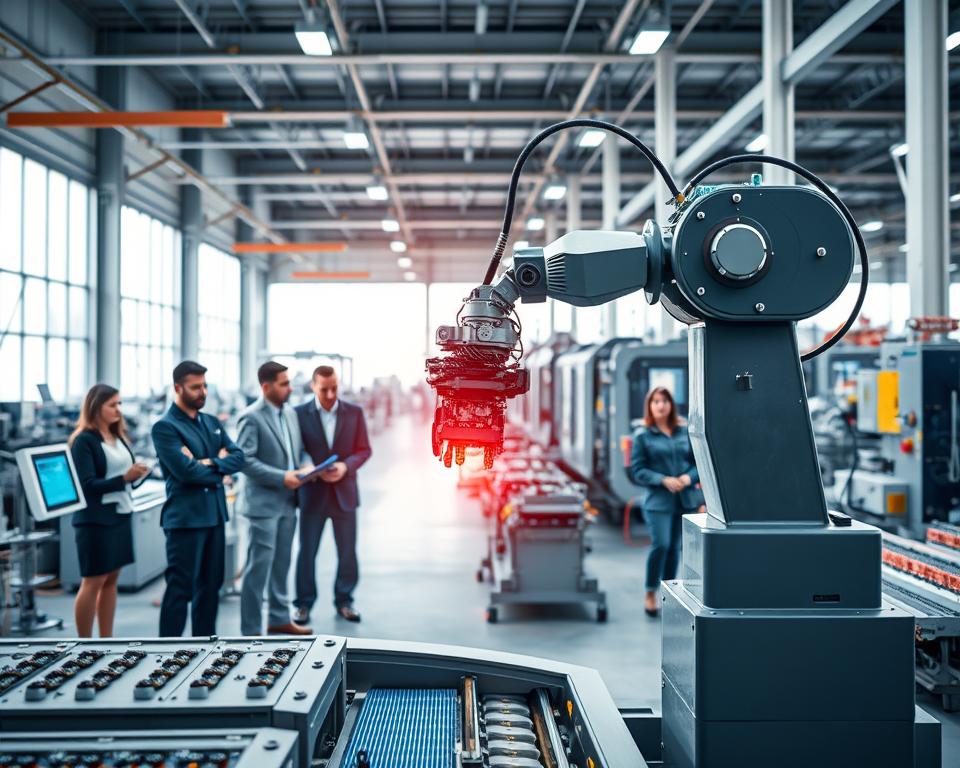
Manufacturing Industry Technology
Manufacturing technology includes many tools and systems to improve production. These technologies have changed the game for manufacturers. They help make goods faster and more accurately.
Enterprise Resource Planning (ERP) for Manufacturing
ERP systems are key for today’s manufacturing. They link up supply chain management, inventory control, and production planning. This makes production smoother, cutting costs and boosting efficiency.
Computer-Aided Design (CAD) and Manufacturing (CAM)
CAD/CAM technologies help design and make products with great accuracy. CAD software lets designers create detailed models. CAM software then uses these models to guide the making process. This makes creating complex products easier.
Industrial Internet of Things (IIoT) Applications
The IIoT uses Internet-connected devices in manufacturing. These devices track and manage production, offering real-time insights and analysis.
Predictive Maintenance Solutions
IIoT is also great for predictive maintenance. It uses data from sensors and machines to forecast when equipment might fail. This way, maintenance can be done before it’s needed, cutting downtime and boosting efficiency.
| Technology | Primary Function | Benefits |
|---|---|---|
| ERP | Integrates production processes | Improved productivity, reduced costs |
| CAD/CAM | Designs and manufactures products | High precision, complex product capability |
| IIoT | Monitors and controls production | Real-time data, improved efficiency |
Retail and E-commerce Solutions
The retail world is changing fast, and businesses are using special software to keep up. This shift towards technology is making shopping better and running stores more efficient.

Point of Sale (POS) and Inventory Management Systems
POS systems are key in retail, working with inventory management. POS systems do more than just handle sales. They track inventory, manage customer data, and analyze sales. Good inventory management means having the right products at the right time.
With advanced POS and inventory systems, retailers can keep their stock levels in sync. This is true for both physical stores and online shops. It makes shopping smooth for customers.
E-commerce Platforms and Integrations
E-commerce platforms are crucial for businesses wanting to sell online. They handle everything from product listings to payments. Integrations with other systems, like inventory and CRM, are key for a smooth operation.
Platforms like Shopify and Magento let retailers customize their online stores. They also help streamline operations.
Customer Relationship Management for Retail
CRM systems help retailers manage customer interactions and data. They make marketing more personal, improve service, and boost loyalty.
“CRM systems enable retailers to understand their customers better, creating targeted marketing campaigns and enhancing overall customer experience.” – Retail Industry Expert
Good CRM uses data from all customer touchpoints. This includes POS systems, e-commerce sites, and social media. It builds a full picture of each customer.
Financial Services Technology
Financial services technology is changing how businesses work and talk to customers. The industry has seen big changes in banking, investments, and insurance. These changes are making things better for everyone.

Banking and Payment Processing Software
Banking and payment processing software are key for financial companies. They make transactions safe and fast. These systems have real-time processing, enhanced security features, and streamlined operations. Some main benefits are:
- Transactions are faster and more accurate
- Customers have a better experience with easy-to-use interfaces
- Companies save money because of automation
Investment and Trading Platforms
Investment and trading platforms have changed how people and companies invest. These platforms give real-time market data, advanced analytics, and user-friendly interfaces. Key features are:
- Access to global markets and a wide range of investments
- Tools for managing risk
- Advice tailored to you through AI
Insurance Management Systems
Insurance management systems make insurance work better, from start to finish. They have automated workflows, enhanced data analytics, and improved customer engagement. As experts say:
“Insurance management systems are changing the insurance world. They give insurers the tools to innovate and stay competitive.”
Claims Processing Automation
Claims processing automation is a big part of insurance management systems. It makes claims handling faster, more accurate, and more satisfying for customers. The benefits are:
- Claims are settled quicker
- It costs less to run
- Customers are happier with clear and quick processes
Construction and Real Estate Software
The construction and real estate industries are using new software to make things easier. These tools help solve specific problems, making work more efficient and cheaper. They also help projects run better.

Building Information Modeling (BIM)
Building Information Modeling (BIM) is a digital model of a building. It’s a 3D model used from start to finish of a project. BIM helps teams work together better, cuts down on mistakes, and makes projects clearer.
Project Management for Construction
Project management is key in construction. Special software helps manage projects well. It tracks progress, handles resources, and keeps teams talking. This way, projects are done on time and within budget.
Property Management and Real Estate CRM Systems
Property management and real estate CRM systems help real estate pros. They manage properties and client relationships better. These systems track leases, collect rent, and handle maintenance. They also help with leads and client interactions. This leads to happier customers and business growth.
| Software Type | Key Features | Benefits |
|---|---|---|
| BIM | 3D modeling, clash detection | Improved collaboration, reduced errors |
| Project Management | Progress tracking, resource management | Enhanced efficiency, timely completion |
| Property Management CRM | Lease tracking, client management | Improved customer satisfaction, business growth |
Using these specialized software solutions, construction and real estate companies can do better. They can stay ahead in their markets.
Agriculture and Farming Technology
Technology is changing farming, making it more efficient and productive. Advanced software is now used in farming, helping farmers make better decisions. This leads to better use of resources.
Modern farming technology includes many tools and systems. These help increase crop yields, cut down on waste, and support sustainable farming. Tools like farm management information systems and precision agriculture software are key for farming’s future.
Farm Management Information Systems
Farm Management Information Systems (FMIS) help manage and analyze farm data. They give insights into crop health, soil, and equipment. This helps farmers run their farms better, save money, and make smarter choices.
| Feature | Benefit |
|---|---|
| Crop Monitoring | Early detection of issues, improved yields |
| Soil Analysis | Optimized fertilizer application, reduced waste |
| Equipment Tracking | Increased efficiency, reduced downtime |
Precision Agriculture Software
Precision agriculture software uses GPS, GIS, and remote sensing to improve crop management. It helps farmers use the right amount of water, fertilizers, and pesticides. This reduces harm to the environment and improves crop quality.
“Precision agriculture is not just about using technology; it’s about using it to make better decisions on the farm.” –
Supply Chain Management for Agriculture
Good supply chain management is vital for farming, ensuring products get from farm to table efficiently. Advanced systems help track inventory, manage logistics, and meet market demands quickly.

By using these technologies, farming can become more productive, save money, and help create a sustainable food system.
Transportation and Logistics Solutions
Specialized software is making transportation and logistics better. It helps companies work more efficiently and make customers happier. The industry is complex, with many people, routes, and schedules to manage. Advanced technology is the answer to this challenge.
Fleet management is key in this field. It makes sure vehicles are used well, saving money and speeding up deliveries.
Fleet Management Systems
Fleet management systems help manage fleets. They track vehicles, schedule maintenance, and handle drivers. These systems help companies cut costs and use their fleets better.
Route Optimization Software
Route optimization software is vital for planning the best delivery routes. It cuts down on fuel use and emissions. It also adjusts to traffic changes, ensuring on-time deliveries.
Warehouse Management Systems
Warehouse management systems (WMS) control warehouse activities. A WMS organizes inventory, boosts order accuracy, and uses space better. This leads to big efficiency gains for logistics companies.
| Technology | Primary Function | Benefits |
|---|---|---|
| Fleet Management Systems | Manage fleet operations | Reduced costs, improved fleet utilization |
| Route Optimization Software | Plan efficient delivery routes | Lower fuel consumption, timely deliveries |
| Warehouse Management Systems | Manage warehouse operations | Improved inventory management, efficiency gains |
Using these solutions, companies can improve a lot. They can work better and make customers happier. Advanced software is changing the industry, helping businesses keep up with the fast pace of the market.
Energy and Utilities Software
The energy sector is turning to advanced software to manage its complex operations. With growing energy demand and aging infrastructure, efficient technology is key. This technology helps meet the industry’s needs.
Grid Management Systems are vital for reliable energy distribution. They allow utilities to monitor and control the grid in real-time. This helps prevent outages and optimizes energy distribution.
Grid Management Systems
Grid management software handles the modern energy grid’s complexities. It includes real-time monitoring, predictive analytics, and automated control. This ensures a stable energy supply by quickly adapting to demand changes.
Energy Trading and Risk Management
Energy trading and risk management software helps navigate the energy market’s ups and downs. It offers tools for analyzing trends, managing risk, and optimizing trading. This way, energy companies can make smart decisions and avoid losses.
Smart Meter Data Management
Smart meter data management solutions are essential for handling the data from smart meters. They process and analyze data to give insights into energy use. This helps utilities optimize their operations and improve customer service.
By using these advanced software solutions, energy and utilities companies can boost efficiency and cut costs. As the energy landscape changes, software’s role in innovation and efficiency will grow.
Cross-Industry Technologies and Integration
Modern business is changing fast thanks to new technologies. These technologies help companies work better and grow. They make old ways of doing things better and open up new paths for innovation.
Cloud Computing Solutions
Cloud computing is a big deal in many industries. It makes things more flexible and saves money. Companies can use the cloud to grow or shrink their operations easily.
Cloud computing offers many benefits:
- It makes working together and remote work easier
- It helps keep businesses running smoothly even in tough times
- It gives access to new tech and updates often
Artificial Intelligence and Machine Learning Applications
AI and ML are changing the game in many fields. They make complex tasks easier, predict what will happen next, and make customer experiences better. AI and ML are bringing big changes and improvements.
“AI is not just about automating tasks; it’s about augmenting human capabilities to achieve more.” –
AI and ML are great at predictive analytics. They look at past data to guess what will happen next. This is super useful in many fields, like finance and healthcare.
| Industry | AI/ML Application | Benefit |
|---|---|---|
| Finance | Risk Assessment | Reduced default rates |
| Healthcare | Personalized Medicine | Improved patient outcomes |
| Manufacturing | Predictive Maintenance | Reduced downtime |
Data Analytics and Business Intelligence Tools
Data analytics and business intelligence tools are key for smart decisions. They help companies understand their data, find trends, and improve how they work. This leads to better decisions and success.
When data analytics works with AI and ML, it gets even better. Businesses can learn more and make more accurate predictions.
Measuring ROI and Business Impact
Measuring the return on investment (ROI) of technology is key for businesses. Companies spend a lot on software, so knowing its impact on profits is vital.
To measure ROI well, businesses need to track important metrics. They should look at both the costs and benefits of the technology.
Key Performance Indicators for Software Implementation
Key Performance Indicators (KPIs) are crucial for judging software success. Important KPIs include:
- Cost savings: Lower operational costs thanks to better efficiency.
- Productivity gains: Better employee performance and output.
- Revenue growth: More sales or revenue thanks to new tech.
- Customer satisfaction: Higher customer satisfaction or NPS scores.
Tracking these KPIs helps businesses understand their tech investments’ impact.
Case Studies: Successful Technology Transformations
Looking at successful tech transformations can offer insights. Here are some examples:
Small Business Success Stories
A small e-commerce business got a new inventory system. It cut inventory costs by 30% and boosted sales by 25% thanks to better stock.
Enterprise-Level Implementations
A big manufacturing company got an ERP system. It saved a lot of money through better supply chain management and boosted efficiency.
These stories show how tech can greatly impact business. By measuring ROI, businesses can make smart tech choices.
In summary, measuring ROI and business impact is key for justifying tech investments. By using KPIs and learning from case studies, businesses can get the most from their tech.
Conclusion
Businesses face many challenges in the digital world. Using industry-specific software is key to success. It helps companies grow, work more efficiently, and stay ahead in their markets.
Choosing business technology made for your industry helps solve specific problems. It also opens up new chances. This leads to better work, lower costs, and smarter choices.
Many industries have seen great results from using industry-specific software. By adopting new technology, businesses can stay ahead and succeed for a long time.
In short, picking the right software is vital for businesses to do well in today’s fast-changing world.


