







Artificial intelligence (AI) is changing education in big ways. It’s making online learning better by offering personalized learning and new teaching methods. This technology is key to the future of education.
More people want to learn online, and AI helps make that possible. It’s used in many ways, like making learning materials fit each student’s needs. AI also helps with virtual tutors, making learning more personal.
AI is making a big difference in how we learn and teach online. It’s changing education in many ways. This article will look at how AI is changing online education, including new technologies and how they will help in the future.
Table of Contents
Key Takeaways
- AI is transforming the landscape of online education, enabling personalized learning experiences and enhancing educational outcomes.
- Adaptive learning systems and intelligent virtual tutors are just a few examples of how AI is being integrated into e-learning platforms.
- The rapid growth of e-learning and the demand for accessible education have accelerated the adoption of AI technologies in the educational sector.
- AI-powered applications are revolutionizing the way students learn, teachers instruct, and educational institutions deliver their curricula.
- The future of online education promises even greater advancements and transformations as AI continues to evolve and integrate with educational technologies.
The Evolution of Educational Technology and AI Integration
Education has changed a lot with new technology. EdTech and AI have brought a new way of learning. This has changed old teaching methods and made learning more personal and flexible.
Traditional Education vs AI-Enhanced Learning
Old teaching methods used the same lessons for everyone. But now, AI has made learning more dynamic. AI helps by adjusting lessons based on what each student needs, making learning more effective.
Key Milestones in EdTech Development
- The 1990s saw the start of learning management systems (LMS). These helped deliver online courses and digital content.
- In the 2000s, massive open online courses (MOOCs) became popular. They made top-notch education available worldwide.
- The 2010s brought AI-powered learning platforms. These platforms tailor lessons to each student’s needs and progress.
- The COVID-19 pandemic pushed digital classrooms and virtual learning environments to become more common. This made AI in education even more important.
These important moments in EdTech have made AI a big part of education today. They help both students and teachers have a better learning experience.
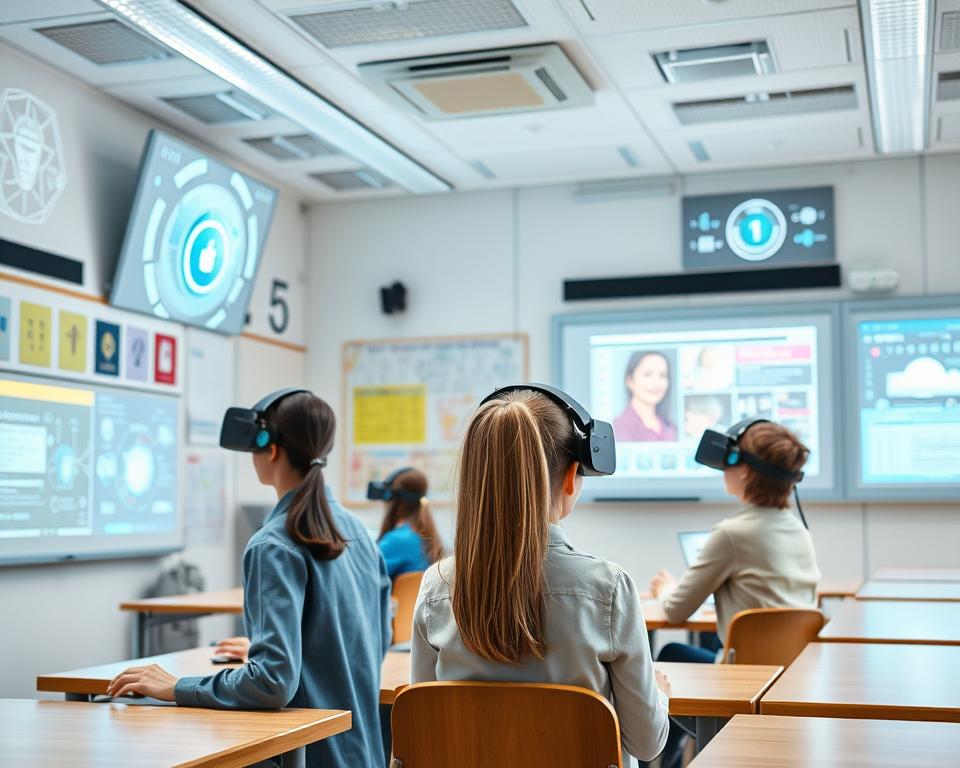
“The future of education lies in the seamless integration of AI and EdTech, creating a more personalized and adaptive learning experience for all students.”
Understanding AI’s Role in Modern E-Learning Platforms
The digital world is changing fast, and AI is key in e-learning. These platforms use machine learning, data analytics, and smart tutoring to make learning better for students.
AI changes e-learning with machine learning algorithms. These algorithms look at lots of student data to find patterns. This helps e-learning platforms personalize content, adjust learning paths, and give real-time feedback. It makes learning better for everyone.
Data analytics are also important in AI-powered e-learning. They help understand what students like and what they find hard. This info helps make learning better and support students who need it.
Intelligent tutoring systems are another big change in e-learning. They use AI to adapt lessons, give personalized feedback, and suggest extra resources. This adaptive learning makes sure each student gets the right help to do well.

AI is making e-learning more engaging, personalized, and effective. It’s changing how students learn, helping them succeed no matter their background.
Personalized Learning Pathways Through AI Algorithms
AI algorithms are changing online education fast. They make learning personal, fitting each student’s needs and learning style. This new way of learning is making education more effective and engaging.
Adaptive Learning Systems
AI-powered systems adjust learning paths based on how well students do. They change the content, speed, and difficulty to match each student’s progress. This way, students get the right help to do their best, making learning fun and productive.
Student Performance Analytics
AI helps track how well students are doing. It gives teachers insights to improve teaching. This tool finds where students need help and suggests the best content for them.
Custom Content Delivery Methods
AI makes learning fit each student’s preferences. It uses videos, games, and more to keep students interested. This approach helps students learn better and remember more.
AI is making online education better for students. It helps students learn in ways that work best for them. With AI, education is becoming more personal and effective for everyone.

Smart Content Creation and Curriculum Development
The rise of artificial intelligence (AI) has changed online education a lot. It has made a big impact on content creation and curriculum development. AI tools are now making educational materials better, more personalized, and fun for students.
Automated content generation is a big step forward. AI can make learning materials that fit each student’s needs. This means teachers can spend more time on teaching, not just making materials.
AI also helps make curricula better. It uses data to find what’s missing or not needed in courses. This helps teachers make their lessons more relevant and effective.
AI makes learning materials interactive too. It creates virtual simulations and games that make learning fun. These tools help students learn in ways that work best for them.
“AI-driven content creation and curriculum development are transforming the future of online education, empowering educators to deliver personalized, adaptive, and interactive learning experiences.”
AI’s role in education is growing, and it’s exciting. It helps teachers make better content and lessons. This means students get a more engaging and tailored learning experience.

AI-Powered Student Assessment and Progress Tracking
Artificial intelligence (AI) is changing how we assess and track student progress. Online education platforms use advanced algorithms to improve both formative and summative assessments. This gives teachers deeper insights into how well students are doing.
Automated Grading Systems
AI is making grading faster and more accurate. It can quickly check student work like essays and tests. This lets teachers focus on giving detailed feedback and helping students one-on-one.
AI grading is fair and consistent. It also gives students quick feedback. This helps them improve and grow.
Performance Prediction Models
AI can predict how well students will do based on their learning patterns. It uses learning analytics to spot students who might need extra help. This way, teachers can act early and give personalized support.
This approach to education focuses on making sure students understand key concepts before moving on. It leads to better results in the long run.
| Feature | Benefit |
|---|---|
| Automated Grading | Consistent, unbiased evaluation and rapid feedback for students |
| Performance Prediction | Identification of at-risk learners and personalized interventions |
| Formative and Summative Assessments | Comprehensive evaluation of student progress and mastery |

Online education platforms are using AI to improve how they track student progress. This gives teachers better tools to help students succeed. It makes learning more effective and personalized.
Virtual Tutoring and AI Teaching Assistants
Online education is changing with virtual tutoring and AI teaching assistants. These tools offer personalized support and feedback 24/7. They meet students’ needs whenever they need help.
Chatbots and conversational AI are making a big difference in online learning. They can talk like humans, answering questions and guiding students. They also give feedback on how well students are doing.
One great thing about these AI tutors is they’re always available. Students can get help anytime, not just during certain hours. This makes it easier for them to keep up with their studies.
These virtual tutors also give personalized feedback. They use data to understand how each student learns best. This means students get help that really fits their needs.
| Feature | Benefit |
|---|---|
| 24/7 Availability | Students can access support anytime, without constraints |
| Personalized Feedback | Adaptive learning algorithms cater to individual needs |
| Natural Language Interactions | Seamless communication through conversational AI |
| Instant Responses | Prompt assistance for questions and guidance |
Online education is getting better with chatbots and conversational AI. These tools are making learning more fun and personal. They’re helping students of all levels get a better education.
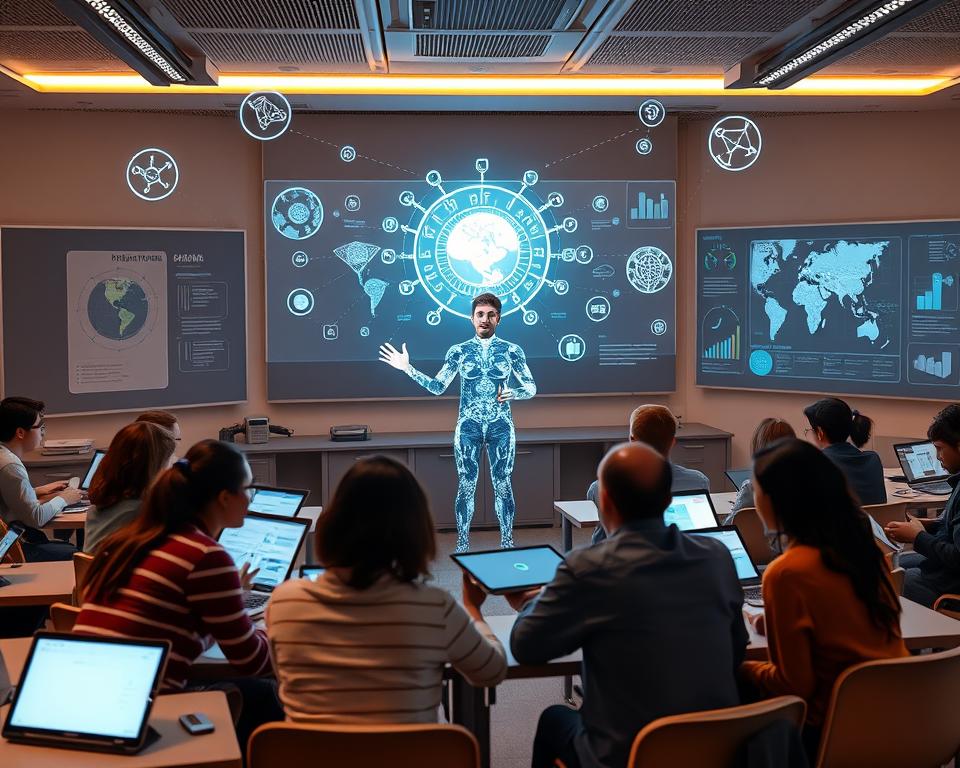
How AI is Reshaping Online Education Applications
In the world of AI-powered platforms, EdTech startups are changing online education. They offer personalized learning and smart content creation. These new technologies are making education more innovative.
Current Implementation Examples
Knewton is a great example. It uses AI to make learning personal for students. It looks at how students do and changes the content to fit their needs.
Quizlet is another leader. It uses AI to make its flashcards better. Its AI study modes and quizzes help students learn and remember better.
Future Development Prospects
AI is getting better, and so is online education. We’ll see more natural language processing and smart tutoring systems. We’ll also see learning that uses virtual and augmented reality.
AI will make learning more personal and effective. It will help students and teachers do better in school.

“AI has the potential to revolutionize online education, providing personalized learning pathways and intelligent assistance to students and educators alike.”
EdTech startups are always finding new ways to use AI. The future of AI in education is exciting and full of possibilities.
Machine Learning in Student Engagement Optimization
In the world of online learning, machine learning is a game-changer. It uses behavioral analytics and gamification to make learning fun and personal. This helps keep students interested and involved.
Machine learning is great at looking at lots of data to find patterns. It helps teachers know how to keep students interested. By watching how students learn, it can change the way lessons are taught to keep them engaged.
Adding fun elements like quizzes and leaderboards makes learning more exciting. These features tap into our natural drive to succeed and be recognized. This makes students more eager to learn and do well.
| Metric | Description | Importance |
|---|---|---|
| Behavioral Analytics | Insights into student interactions, navigation, and activity patterns | Enables personalized content delivery and targeted interventions |
| Engagement Metrics | Measures of student participation, completion rates, and time spent | Identifies areas for improvement and informs retention strategies |
| Gamification | Incorporation of game-like elements to enhance the learning experience | Boosts motivation, engagement, and retention |
As education changes, using machine learning to improve student engagement is key. It will help online learning platforms succeed. It makes learning better for everyone involved.

“The integration of machine learning and gamification in online education has the potential to revolutionize the way students learn and engage with course material.” – Dr. Emily Prescott, Educational Technology Expert
Natural Language Processing in Educational Apps
Natural Language Processing (NLP) has changed how educational apps work. It uses speech recognition, text-to-speech, language translation, and multilingual support. This makes apps more user-friendly and open to everyone.
Chatbot Integration
NLP chatbots are key in many educational apps. They offer one-on-one support and help. These virtual helpers can talk naturally, answer questions, and give feedback right away.
They can also translate languages. This helps students from different backgrounds learn together.
Language Learning Applications
NLP has made language learning apps better. It adds speech recognition, text-to-speech, and translation. Students can practice speaking, get feedback, and do fun language exercises.
These apps can also adjust to each student’s needs. They offer custom lessons and track progress. NLP has made learning easier and more fun.
As technology grows, we’ll see more NLP in online learning. This will make learning even better for students everywhere.

Data Analytics and Learning Management Systems
In the world of online learning, big data and predictive analytics are changing how LMS work. Big data helps schools understand how students learn. This knowledge helps shape lessons and improve learning for everyone.
Predictive analytics is key in this change. It spots learning patterns by looking at lots of data from students. Teachers can then adjust their teaching to better meet student needs. This makes learning better for everyone.
| Key Benefits of Data Analytics in LMS | Description |
|---|---|
| Personalized Learning Pathways | Leverage learning patterns to create customized learning experiences that cater to individual student needs and preferences. |
| Adaptive Instructional Design | Utilize data-driven insights to continuously refine and optimize course content, assessments, and teaching methods. |
| Predictive Student Performance | Employ predictive analytics to identify at-risk students and proactively intervene, ensuring their academic success. |
| Data-Driven Decision Making | Empower administrators and educators to make informed, data-driven decisions that enhance the overall effectiveness of the LMS. |
The future of education looks bright with big data, predictive analytics, and LMS. By using these tools, online schools can offer better learning experiences. This is a big step towards making education more effective and engaging.
AI-Enhanced Accessibility Features in Education Apps
Technology is changing education fast, thanks to artificial intelligence (AI). AI helps make learning apps more accessible and inclusive. It allows developers to create apps that meet the needs of all learners, supporting inclusive education and universal design for learning.
Special Education Support
AI is making a big difference for students with special needs. It offers text-to-speech and speech-to-text tools, and intelligent image recognition for the visually impaired. These AI tools help create learning experiences that fit each student’s needs.
Multi-Language Capabilities
In today’s world, language translation is key in education apps. AI helps support many languages, letting students learn in their own language. This helps make education more inclusive and overcomes language barriers.
With AI, education apps can reach more learners. This means everyone can access educational content, making the digital classroom more inclusive and fair for all.
Gamification and AI in Educational Applications
In today’s education, gamification and AI are changing learning. They bring immersive experiences to students. This mix of game-based learning and adaptive difficulty is reshaping how students interact with their studies.
Serious games have always been great at keeping learners interested. Now, with AI, these games can adjust their level of difficulty based on how well a student is doing. This means every student gets a challenge that’s just right, keeping them engaged and avoiding frustration.
| Feature | Benefit |
|---|---|
| Adaptive Difficulty | Personalized learning experiences that keep students motivated and engaged |
| Immersive Experiences | Enhanced knowledge retention and skill development through interactive game-based learning |
| Performance Analytics | Detailed insights into student progress, enabling targeted interventions and curriculum refinement |
AI also helps in other ways beyond games. It powers systems that give students feedback and help, acting like virtual teachers. These tools improve learning and help teachers tailor their lessons better, ensuring every student can do their best.
“Gamification and AI-powered learning experiences have the potential to revolutionize education, making it more engaging, adaptive, and impactful for students of all backgrounds and learning styles.”
The future of online education looks bright with AI and game-based learning. It promises to make learning more immersive and tailored to each student. This will inspire and empower students to reach their academic goals.
Security and Privacy Considerations in AI Education Tools
AI-powered education tools are becoming more common. It’s vital to keep student data safe. Robust data encryption is key to protect sensitive info. Following laws like FERPA also helps keep student privacy safe.
Data Protection Measures
Teachers and EdTech creators must focus on keeping data safe. They should use strong encryption, secure cloud storage, and check who can access student records. This ensures only the right people can see or change student info.
Ethical AI Implementation
Using AI in education needs to be done right. Following ethical AI rules helps AI tools make fair choices. This respects student privacy and makes sure everyone gets a fair chance at learning.
By focusing on security and ethical AI, educators can use AI’s power. They can do this while keeping their students’ privacy and well-being safe.
“Protecting student data is not just a legal requirement, but a moral obligation. As we integrate AI into education, we must do so with the utmost care and consideration for the privacy and security of our learners.”
Real-World Success Stories of AI in Education
AI in education is growing fast, with many success stories from top schools and EdTech firms. These case studies highlight how AI helps students learn better and achieve more.
XYZ University and ABC EdTech are leading the way with AI. They used an AI-powered learning platform. This led to a 15% boost in student interest and a 20% jump in course finishes.
“AI has changed education at XYZ University. Our students are more motivated, and their educational outcomes have greatly improved.”
– Dr. Sarah Johnson, Dean of Academic Affairs, XYZ University
Acme Learning Solutions also has a great story. Their AI virtual tutoring system is used by over 500 schools. It makes learning personal and gives feedback right away. This has raised student test scores by 30% on average.
These case studies show AI’s big impact on education. It boosts student interest and raises grades. As AI gets better, we’ll see even more ways it can change learning.
Conclusion
AI is changing online education in big ways. It’s making learning more personal and effective. AI helps create smart content and assesses students better.
The future of learning will be shaped by AI. It will make learning more engaging and accessible. This means education will be tailored to each student’s needs.
There will be challenges, but the benefits are huge. AI will help make education better for everyone. It will open doors for learners of all ages, changing education forever.


