






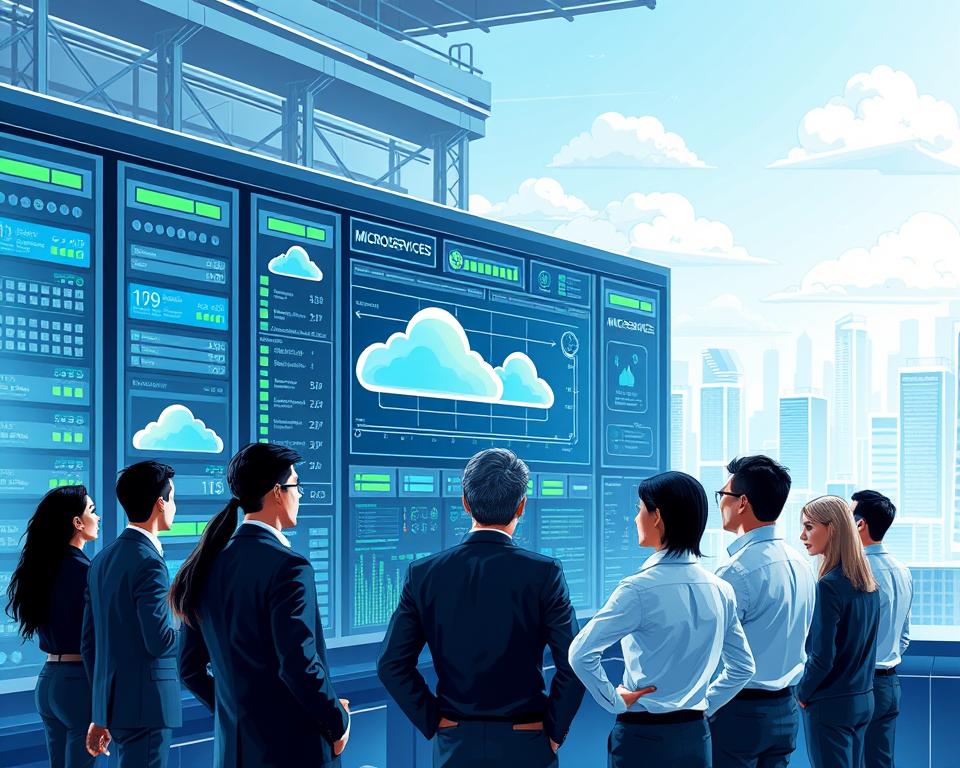
Legacy applications can hold back businesses from innovating and staying ahead. Modernizing these applications through microservices migration and cloud/edge architecture can be a big leap forward.
This change helps businesses grow, become more flexible, and save money. Yet, it comes with big challenges. These include making big changes to the architecture and facing possible service disruptions.
When companies start this journey, knowing the pros and cons of application modernization is key. This knowledge helps them make choices that fit their goals.
Table of Contents
Key Takeaways
- Modernizing legacy applications through microservices migration enhances scalability and flexibility.
- Adopting cloud/edge architecture can significantly reduce costs and improve performance.
- Application modernization requires careful planning to minimize disruptions.
- Understanding the benefits and challenges is crucial for informed decision-making.
- Strategic alignment is key to successful application modernization.
The Urgent Need for Application Modernization
Businesses are changing fast in today’s tech world. They need to update old apps to keep up. Old systems slow down innovation and make it hard to adapt to new trends.
Current Challenges with Legacy Applications
Legacy apps bring many problems, including:
- Scalability Issues: Old systems can’t grow with the business, causing slowdowns.
- Maintenance Difficulties: Keeping old tech up to date is expensive and hard, taking away from new ideas.
- Inability to Meet Modern Needs: Old apps don’t have the features needed for today’s business and customer needs.

Business Benefits of Modern Architecture
Switching to microservices and cloud/edge architecture brings big advantages, such as:
- Increased Agility: Microservices let businesses move faster in developing and scaling apps.
- Improved Scalability: Cloud and edge computing can grow as needed, keeping apps running smoothly.
- Enhanced Competitiveness: Using modern tech helps businesses stay ahead by innovating better.
Companies that update their apps see big wins in efficiency and customer happiness.
Understanding Microservices Architecture
Microservices have become key in software architecture. They make apps more resilient and easier to maintain. Microservices architecture breaks down an app into small, independent services.

Key Principles of Microservices
Microservices follow several key principles. Service decomposition is important. It breaks down the app into smaller services.
Each microservice is autonomous. It has its own database and logic. This allows for independent development and scaling.
Scalability is another key principle. Microservices can be scaled individually. This means you can use resources more efficiently and save costs.
Differences from Monolithic Architecture
Microservices differ from monolithic architecture. Monolithic apps are one unit. Microservices are a collection of independent services.
This change affects how apps are developed and maintained. Monolithic apps are easier to start but harder to grow.
Microservices are more flexible and resilient. If one service fails, it won’t take down the whole app. This fault isolation makes microservices more reliable.
Cloud and Edge Computing Fundamentals
Cloud and edge computing are changing how businesses work. It’s key to understand them for success. As companies move to new tech, knowing these basics is vital.
Cloud Computing Models
Cloud computing has different models like Infrastructure as a Service (IaaS), Platform as a Service (PaaS), and Software as a Service (SaaS). IaaS gives you virtual resources, PaaS helps with app development, and SaaS offers software online. Each model has its benefits, helping businesses pick what’s best for them.
IaaS lets you control your infrastructure, PaaS makes app development easier, and SaaS cuts down on software upkeep. These options help businesses meet their needs.
Edge Computing and Its Advantages
Edge computing works on data close to its source. This cuts down on latency and boosts real-time processing. It’s great for things like IoT and self-driving cars. Edge computing makes user experiences better and operations more efficient.
Edge computing also saves on bandwidth and boosts security. Data is processed locally, not sent to a central cloud or data center.
Hybrid Cloud-Edge Architectures
A hybrid cloud-edge architecture combines cloud and edge computing. It uses the best of both worlds. This setup handles urgent data at the edge and complex tasks in the cloud. It makes systems more efficient, scalable, and quick to respond.

By mixing cloud and edge computing, businesses get the best of both worlds. They balance centralized data processing with fast edge processing. This boosts overall system performance.
Assessing Your Current Application Landscape
Before starting your journey to microservices and cloud-edge architecture, you must assess your current applications. This step is key to understanding your applications’ current state. It helps identify areas for improvement and guides the best path for modernization.
Technical Debt Evaluation
Technical debt is the cost of quick fixes that need revisiting later. Evaluating this debt means looking at the effort needed to fix these issues. A detailed assessment helps focus modernization efforts on the most beneficial areas.
Key areas to consider in technical debt evaluation include:
- Outdated technologies and frameworks
- Inefficient code and processes
- Lack of documentation and testing

Identifying Modernization Candidates
Not all applications are ready for modernization. You need to evaluate their importance, user base, and potential for improvement. Applications that are crucial, have many users, or can innovate are prime candidates.
| Application Characteristics | Modernization Potential |
|---|---|
| Mission-critical, high user engagement | High |
| Low business value, outdated technology | Low |
| High potential for innovation | High |
Defining Business Goals for Migration
Defining clear business goals for migration is crucial. These goals might include improving scalability, enhancing user experience, or cutting costs. By setting clear objectives, you ensure your modernization efforts align with your business strategy.
Key considerations when defining business goals include:
- Expected ROI from modernization
- Desired improvements in customer satisfaction
- Target reductions in operational costs
How to Migrate Your App to Microservices + Cloud/Edge Architecture
As businesses move towards modernizing their applications, understanding the migration process is key. This transition involves strategic decisions that can impact success.

Migration Approaches Overview
There are several migration approaches for moving to microservices and cloud/edge architecture. These include:
- Rehosting: Moving applications to the cloud without significant modifications.
- Replatforming: Making some optimizations to the application to better suit the cloud environment.
- Refactoring: Significantly redesigning the application to take full advantage of cloud-native features.
Each approach has its advantages and is suited to different business needs and technical capabilities.
Choosing the Right Strategy for Your Business
Selecting the right migration strategy depends on several factors. These include the current state of the application, business goals, and technical requirements. A thorough assessment of these factors is crucial to determine the best approach.
| Migration Strategy | Best For | Key Considerations |
|---|---|---|
| Rehosting | Quick migration, minimal changes | Limited optimization, potential for cost savings |
| Replatforming | Optimizing for cloud, some code changes | Balancing optimization with effort, potential for improved performance |
| Refactoring | Maximizing cloud-native features, significant code changes | High effort, potential for significant benefits, improved scalability |
Risk Assessment and Mitigation
Migrating to microservices and cloud/edge architecture comes with risks. These include potential downtime, data loss, and security vulnerabilities. Effective risk mitigation strategies are essential to minimize these risks.
Some key strategies include:
- Conducting thorough risk assessments.
- Implementing robust backup and disaster recovery processes.
- Ensuring security measures are in place, such as encryption and access controls.
By understanding migration approaches, choosing the right strategy, and mitigating risks, organizations can successfully transition. This leads to greater scalability, flexibility, and competitiveness.
Planning Your Migration Journey
Starting your journey to modernize your app with microservices and cloud/edge tech needs a solid plan. A good migration plan covers strategy, resource use, and ongoing checks.
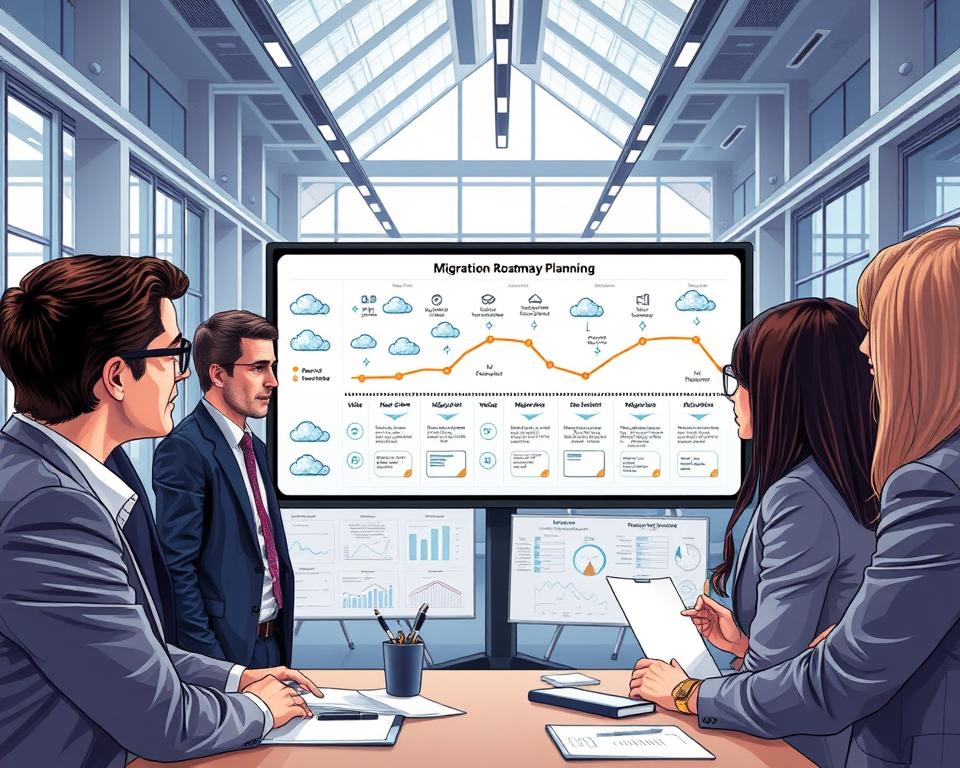
Creating a Detailed Migration Roadmap
A detailed roadmap is key for a smooth migration. It should list important milestones, timelines, and how different parts of the app relate to each other.
- Identify the apps and services to migrate
- Check the complexity and risks of each part
- Focus on migrations that matter most to your business and are doable
Using tools like Gantt charts or Kanban boards can make the migration easier to follow and track.
Resource Allocation and Team Structure
Getting the right people and resources is vital for a successful migration. You need to know the skills needed, assign tasks, and define roles.
Your migration team should have a variety of skills, such as:
- Technical know-how in microservices and cloud/edge tech
- Project management to lead the migration
- Business analysts to keep things aligned with your goals
Establishing Success Metrics
It’s important to set clear goals for measuring migration success. These goals should match your business aims and show the migration’s benefits, like better scalability or cost savings.
Some success metrics could be:
- Lowering operational costs
- Better app performance
- More frequent app updates
Checking these metrics often helps you make smart choices and tweak your migration plan if needed.
Domain-Driven Design for Microservices Identification
Using domain-driven design, developers can make a microservices architecture stronger and more flexible. This method digs into the heart of business areas and turns them into software parts.

Bounded Context Analysis
Bounded context analysis is key in DDD. It finds the limits of a domain model. This makes sure each microservice knows its job and works well with others.
Service Boundary Definition
Setting service boundaries is vital in microservices. It shows how services talk to each other. Each service should handle a unique business task.
Event Storming for Service Discovery
Event storming is a workshop method for diving into complex business areas. It uses events to model business processes. This helps spot services and how they interact.
With these DDD methods, companies can find and shape microservices that match their business needs. This leads to a system that’s easier to grow and keep up.
Refactoring Strategies for Legacy Code
As businesses move to microservices and cloud-edge architectures, refactoring legacy code is key. Legacy systems are crucial but slow down innovation. Good refactoring strategies help update these systems smoothly.
There are many ways to refactor legacy code, each with its own benefits. The right strategy depends on the company’s goals and tech needs.
Strangler Fig Pattern Implementation
The Strangler Fig pattern slowly replaces old systems with new microservices. This method helps update apps bit by bit, avoiding big changes all at once.
Benefits of the Strangler Fig pattern include:
- Less risk by slowly replacing old code
- More agility with microservices
- Alignment with modern tech
Branch by Abstraction Technique
The Branch by Abstraction method adds a layer over old code, making it easier to update. It reduces the risk of big changes.
Key advantages of Branch by Abstraction include:
- Separation of the layer from the details
- Flexibility to change or replace without affecting the system
- Less technical debt over time
Incremental Migration Approaches
Incremental migration breaks down updates into smaller steps. It focuses on parts of the old system, moving them to microservices.
| Migration Approach | Description | Benefits |
|---|---|---|
| Strangler Fig Pattern | Slowly replaces old systems with new microservices | Less risk, more agility |
| Branch by Abstraction | Adds a layer over old code for gradual updates | Decoupling, flexibility, less debt |
| Incremental Migration | Updates in smaller steps | Manageable, less disruption |

Using these strategies, businesses can update their old apps. This makes them easier to maintain and more ready for change.
Data Management in Distributed Architectures
The move to microservices and distributed systems needs a strong data management plan. With more complex apps and data spread out, keeping data safe, consistent, and available is tough.

Database Decomposition Strategies
Breaking down big databases into smaller ones for each service is key. It’s about finding bounded contexts and matching database designs to them.
Good strategies for this include:
- Finding entities for separate services
- Setting up who owns the data and who can access it
- Using data replication and sync tools
Data Consistency Patterns
Keeping data consistent in distributed systems is hard. Old ways like ACID transactions don’t work well here. So, new patterns are used.
Some patterns are:
- Eventual Consistency: Data will be consistent eventually, even if it’s not right now.
- Saga Pattern: Breaking down big processes into smaller, local steps.
Event-Driven Data Architecture
Event-driven architecture (EDA) fits well with distributed systems. It lets services talk through events. This makes data more consistent and the system more resilient.
Key parts of EDA are:
- Event Production: Services send out events for changes or actions.
- Event Consumption: Other services use these events to update or react.
- Event Store: A central place for events, good for checking and fixing issues.
Using these methods helps manage data in distributed systems. It keeps systems strong, scalable, and easy to handle.
Testing Strategies for Microservices
Testing microservices needs a detailed plan to tackle the unique issues of distributed systems. As apps grow, making sure each service works well is key.
Unit and Integration Testing Approaches
Unit testing looks at each part of a microservice to see if it works right. Integration testing checks how services talk to each other. Good unit testing means isolating parts and using mock-ups to mimic other service interactions.
- Write detailed unit tests for each part.
- Integration tests check how services work together.
- Mocking frameworks help isolate parts.
Contract Testing for Service Boundaries
Contract testing makes sure services talk to each other as agreed. This keeps services working together, even if they change. Consumer-driven contract testing is when the user sets what they expect, and the service is tested against it.
- Make contracts based on what the user expects.
- Test services to see if they meet these contracts.
- Use tools like Pact or Spring Cloud Contract for testing.
Chaos Engineering for Resilience
Chaos engineering makes a system fail on purpose to test its strength. This way, we can find and fix weak spots before they cause problems. Chaos engineering experiments help check if the system can bounce back from failures.
- Find where the system might fail.
- Plan chaos tests to mimic failures.
- Watch how the system reacts and tweak as needed.
Building a Robust CI/CD Pipeline
In today’s DevOps world, a strong CI/CD pipeline is key. It helps get software to market faster and improves its quality. With microservices, managing and deploying services gets more complex. A good CI/CD pipeline automates testing, building, and deployment.
Continuous Integration for Microservices
Continuous Integration (CI) means developers commit code often. This triggers automated builds and tests. For microservices, CI tests each service on its own before combining them.
- Automated testing frameworks find bugs early.
- Code quality checks follow coding standards.
- Tools like Jenkins and CircleCI support testing and building across services.
Deployment Automation Techniques
Deployment automation cuts down the time and effort to release updates. It includes:
- Canary Releases: Roll out new versions to a few users first.
- Blue-Green Deployments: Keep two environments, switch to avoid downtime.
- Automated Rollbacks: Go back to the old version if needed, keeping things running.
Infrastructure as Code Practices
Infrastructure as Code (IaC) manages infrastructure through code, not manual steps. It makes things consistent, cuts down errors, and boosts scalability.
Tools like Terraform and Ansible let teams write infrastructure code. This way, environments are the same in development, testing, and production.
Implementing Service Mesh and API Gateway
Microservices architecture is becoming more common. Using a service mesh and API gateway is key to manage service interactions well. A service mesh helps services talk to each other securely and efficiently.
“The service mesh is a vital component in a microservices architecture, as it allows for the decoupling of service discovery, traffic management, and security from the application code,” says
.
Service Discovery and Load Balancing
Service discovery is crucial in a service mesh. It lets services find and connect with each other automatically. Load balancing spreads traffic across service instances, making services more responsive and reliable.
Traffic Management and Resilience
Traffic management in a service mesh controls how services interact. It includes features like circuit breaking and traffic splitting. These ensure services are resilient and reliable, even when they fail or change.
API Gateway Design Patterns
An API gateway is the main entry point for clients to access microservices. Good API gateway design includes security, like authentication, and performance optimization. It also uses design patterns for request routing and service composition.
By using service mesh and API gateway technologies, organizations can make their microservices architecture more scalable, secure, and resilient.
Monitoring and Observability in Distributed Systems
Modern distributed systems are complex. They need advanced monitoring and observability techniques. As companies move to microservices and cloud-edge architectures, understanding their systems gets harder.
Good monitoring and observability are about more than just data collection. They’re about getting insights that help make decisions and improve systems. That’s where distributed tracing plays a key role.
Distributed Tracing Implementation
Distributed tracing gives a detailed look at transactions as they move through services. It helps teams find bottlenecks and failures. To use distributed tracing, you need to add trace data capture to apps. Then, you can analyze it to understand how the system works.
Metrics Collection and Analysis
Metrics collection is key to monitoring. It involves gathering data on system performance. This way, teams can spot trends and issues early. Analyzing these metrics shows how well the system is doing.
Centralized Logging Solutions
Centralized logging solutions bring together logs from different services. This makes it easier to find and fix problems. It gives a clear view of system activity by linking events across services.
In summary, monitoring and observability are vital for keeping distributed systems healthy and performing well. By using distributed tracing, metrics collection and analysis, and centralized logging, companies can get the insights needed to improve their systems.
Conclusion: Embracing the Future with Modern Architecture
Moving to microservices and cloud/edge architecture boosts an organization’s agility and competitiveness. It brings many benefits like better scalability, more flexibility, and stronger resilience.
The path to modernization requires careful planning and execution. Understanding microservices, cloud, and edge computing helps unlock app potential. This keeps businesses ahead in the digital world.
Future-proofing is key in modern architecture. Using microservices and cloud/edge tech prepares businesses for market changes and customer needs. As digital transformation gets more complex, embracing modern architecture is vital for long-term success.