





The logistics world is changing fast, thanks to digital changes and automation. Today, companies need smart ways to track their delivery trucks and service vehicles. This makes fleet management key to staying ahead.
Advanced systems help transport companies make their daily routes better and watch fuel use closely. These digital tools boost safety and make sure every vehicle works its best. By using these tools, owners can cut costs and boost productivity.
Data intelligence gives real-time insights for better driver management. It’s now a must to succeed in the market. High-tech solutions keep your business quick to adapt to new needs.
Table of Contents
Key Takeaways
- Digital transformation drives modern logistics efficiency.
- Specialized tools reduce operational costs significantly.
- Real-time data improves driver safety and performance.
- Automation streamlines route planning and fuel tracking.
- Advanced systems provide a competitive edge.
- Smart logistics ensure business agility and responsiveness.
Understanding Fleet Intelligence Software in Modern Transportation
Fleet intelligence software is changing how we move things around. It gives real-time data and helps make smart choices. This tech makes fleets run better, safer, and follow the rules.
What Is Fleet Intelligence Software?
Fleet intelligence software combines GPS tracking, IoT-based telematics, AI-powered analytics, and cloud-based dashboards. It’s more than just tracking. It offers predictive analytics, automated reports, and live monitoring.
Evolution from Traditional Fleet Management to Intelligence Systems
Old fleet management systems just tracked and monitored. But now, with new tech, they’ve become fleet intelligence platforms. They have features like route optimization, driver behavior analysis, and predictive maintenance. This helps companies make better choices and work more efficiently.
The Business Case for Fleet Intelligence
Companies use fleet intelligence software to stay ahead. It helps cut costs, improve service, and boost safety. For example, a study shows how it can help:
| Feature | Traditional Fleet Management | Fleet Intelligence Software |
|---|---|---|
| Tracking | Basic GPS tracking | Advanced GPS tracking with real-time updates |
| Analytics | Limited reporting | AI-powered predictive analytics |
| Maintenance | Reactive maintenance | Predictive maintenance capabilities |

Core Features of Fleet Intelligence Platforms
Modern fleet intelligence software has advanced features for real-time monitoring and data-driven decisions. These platforms offer detailed oversight and optimization of fleet operations. They help improve efficiency and cut costs.
Real-Time GPS Tracking and Vehicle Monitoring
Real-time GPS tracking and vehicle monitoring are key features. They let fleet managers track vehicle location, speed, and status in real-time. This helps in better route planning and more efficient dispatching.
Driver Behavior Analytics and Scoring
Driver behavior analytics and scoring are also important. They help identify safe and unsafe driving habits. By tracking speeding, harsh braking, and acceleration, managers can give drivers feedback to improve safety.
Predictive Maintenance Capabilities
Predictive maintenance is crucial. It uses data from sensors and systems to forecast when maintenance is needed. This reduces downtime and extends vehicle life.
Asset Utilization Tracking
Asset utilization tracking lets managers see how assets are used. It finds ways to improve and optimize use. This maximizes the value of fleet assets.
Dev Technosys creates advanced platforms with features like real-time GPS tracking and route optimization tools. They also include fuel consumption monitoring, automated dispatch, and predictive maintenance alerts. For more on developing a fleet management solution, see how to develop a fleet management app like Verizon.
| Feature | Description | Benefits |
|---|---|---|
| Real-Time GPS Tracking | Tracks vehicle location and status in real-time | Improved route optimization, enhanced security |
| Driver Behavior Analytics | Monitors and scores driver behavior | Improved safety, reduced accidents |
| Predictive Maintenance | Predicts maintenance needs based on sensor data | Reduced downtime, extended vehicle lifespan |
| Asset Utilization Tracking | Monitors asset usage and optimization opportunities | Maximized ROI, improved fleet efficiency |

Benefits of Implementing Fleet Intelligence Solutions
Transport companies can tackle big challenges with fleet intelligence solutions. These include lowering costs, improving safety, and boosting customer happiness. These tools help manage fleets well, leading to smarter decisions based on data.
Operational Cost Reduction
Operational cost reduction is a key advantage of fleet intelligence. Companies can cut costs by planning better routes, using less fuel, and knowing when to do maintenance. For example, GPS tracking helps plan routes more efficiently, saving fuel and money.
- Optimized route planning
- Reduced fuel consumption
- Predictive maintenance
Enhanced Safety and Risk Management
Fleet intelligence solutions are also vital for enhanced safety and risk management. They track driver and vehicle conditions in real-time. This helps spot safety risks early, preventing accidents and saving on insurance.
“The use of fleet intelligence solutions has been shown to reduce accidents by up to 20% in some industries.”
Improved Customer Service and Delivery Performance
Lastly, fleet intelligence solutions enhance improved customer service and delivery performance. They keep customers updated on their deliveries, raising satisfaction. Plus, better routes and schedules mean more accurate delivery times.

Key Technologies Powering Fleet Intelligence Software
Fleet intelligence software uses advanced technologies to work well. It combines GPS tracking, IoT telematics, AI analytics, and more. These tools help manage fleets better.
Internet of Things (IoT) and Telematics Devices
The Internet of Things (IoT) and telematics are key. IoT devices in vehicles send important data like location and speed. This data helps improve fleet operations.
Artificial Intelligence and Machine Learning Algorithms
Artificial Intelligence (AI) and Machine Learning (ML) are vital. They analyze data to predict maintenance needs and optimize routes. This leads to better efficiency and lower costs.

Cloud Computing Infrastructure
Cloud computing is crucial for fleet software. It offers scalability and flexibility. It helps store and process big data, giving fleet managers real-time insights.
Big Data Analytics
Big data analytics is key for insights. It helps fleet managers make better decisions. This improves efficiency and customer satisfaction.
As
“The integration of these technologies has transformed the fleet management landscape, enabling companies to achieve greater operational efficiency and competitiveness.”
Fleet intelligence software uses IoT, AI, cloud computing, and big data analytics. It offers a complete solution for today’s transportation needs.
Route Optimization and Fuel Management Capabilities
Transport companies can save a lot by using smart route planning and fuel management. These systems cut costs and lessen environmental harm. They make fleets run better by planning routes and loads wisely.
Dynamic Route Planning and Traffic Analysis
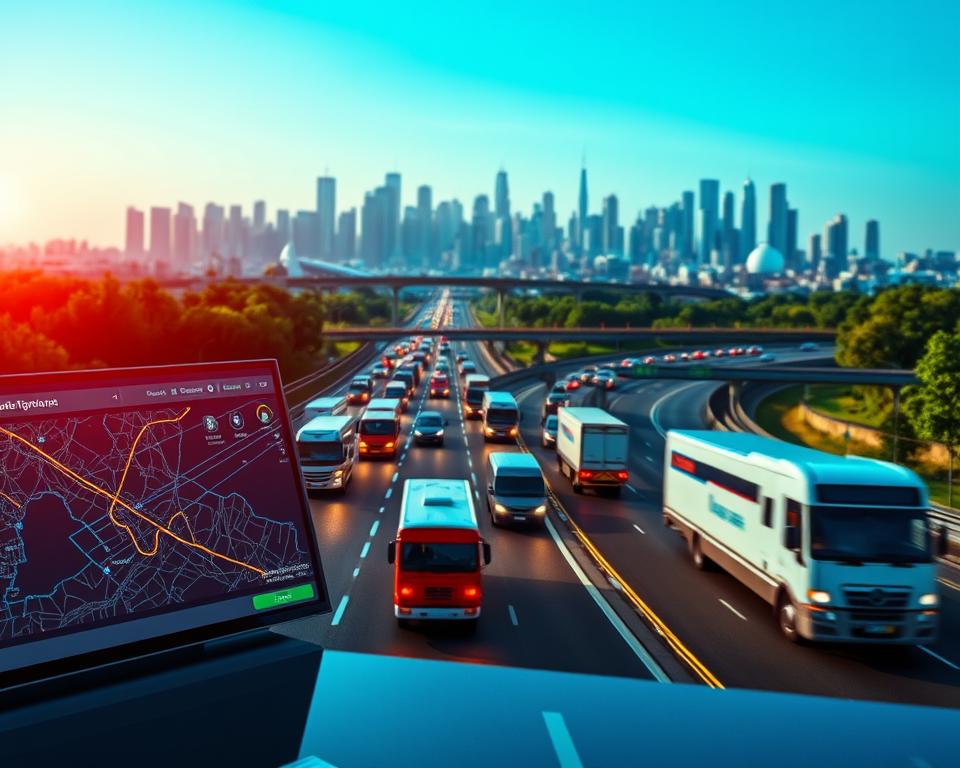
Modern fleet software uses real-time traffic data for smart route planning. It finds the best routes for vehicles. This cuts down fuel use and avoids traffic jams, ensuring on-time deliveries.
Fuel Consumption Monitoring and Reduction Strategies
Monitoring fuel use is key in fleet management. It lets companies spot and fix inefficiencies. They can then train drivers, maintain vehicles, and plan routes better.
Carbon Footprint Tracking
Tracking carbon emissions is crucial for transport companies today. Fleet software calculates vehicle emissions. This helps companies find ways to reduce their carbon footprint and go green.
Effective route optimization and fuel management are vital. They help companies save money and help the planet. By using these tools, transport companies can make a positive impact on the environment.
Fleet Intelligence Software Development for Transport Companies: The Complete Process
To create effective fleet intelligence software, transport companies must follow a detailed process. This process includes several key stages. These stages ensure the software meets the company’s needs and those of its stakeholders.
Requirements Gathering and Business Analysis
The first step is to gather requirements and do a business analysis. This stage finds out what the transport company needs. It looks at the data to be collected, the features needed, and the current setup.
Understanding the company’s operations is crucial. It helps spot where the software can make a difference. This stage lays out the development plan clearly.
Technology Stack Selection
Choosing the right technology is key for the software’s success. The choice should consider scalability, security, and compatibility with current systems.
A strong technology stack supports large data handling, real-time insights, and smooth integration with other systems.

Custom Development vs. Off-the-Shelf Solutions
Companies must choose between custom development and off-the-shelf solutions. Custom development tailors the software to specific needs. Off-the-shelf solutions are quicker and often cheaper upfront.
Experts say custom solutions are more flexible and adaptable. They fit changing business needs better.
A custom-built solution allows for the integration of specific features that are crucial for the unique operational needs of a transport company.
)
| Development Approach | Custom Development | Off-the-Shelf Solutions |
|---|---|---|
| Cost | Higher upfront cost | Lower upfront cost |
| Flexibility | Highly customizable | Limited customization |
| Deployment Time | Longer deployment time | Quicker deployment |
Agile Development Methodology
Using an agile development method is highly recommended. Agile allows for ongoing improvement and quick changes. It keeps the software aligned with business needs and on time and budget.
By working with experienced software companies, businesses can build better fleet management platforms. A structured process and the right technologies lead to big improvements in operations.
Data Analytics and Reporting Functions
Fleet intelligence software uses data analytics and reporting to boost efficiency. It helps transport companies understand their fleet’s performance and driver habits. This way, they can see how their operations work.
Real-Time Dashboard Capabilities
Real-time dashboards give fleet managers a clear view of their fleet’s status. They show vehicle location, driver status, and vehicle health. AI-driven analytics help predict maintenance needs and forecast demand. This leads to better decision-making.

Custom Report Generation and Scheduling
Fleet managers can make reports that fit their needs. These reports are set to come out at regular times. This keeps everyone informed about important performance metrics.
Key Performance Indicators (KPIs) Tracking
Tracking KPIs is key to checking fleet performance. Metrics like fuel efficiency and driver safety are important. By watching these, managers can find ways to get better.
Integration with Existing Transportation Management Systems
Seamless integration is key to unlocking the full potential of fleet intelligence software. It helps transportation companies streamline their operations. This improves data accuracy and boosts overall efficiency.
The integration process connects fleet intelligence software with various systems. This creates a cohesive management platform. It includes ERP systems, third-party APIs, legacy systems, and Warehouse Management Systems (WMS).
Enterprise Resource Planning (ERP) System Integration
Integrating fleet intelligence software with ERP systems synchronizes fleet data with business operations. This integration helps companies make informed decisions with comprehensive data analysis. For example, it optimizes resource allocation and improves supply chain management.
Industry experts say ERP integration is crucial. It creates a unified view of business operations. This enables companies to quickly respond to market changes.
“The integration of ERP and fleet management systems is a game-changer for companies looking to optimize their logistics and supply chain operations.”
Third-Party API Connections
Third-party API connections allow fleet intelligence software to communicate with external services. This includes telematics providers and carrier networks. It enhances the system’s functionality by providing real-time data and expanding its capabilities.
| API Connection | Functionality | Benefits |
|---|---|---|
| Telematics Providers | Real-time vehicle tracking | Improved fleet visibility |
| Carrier Networks | Enhanced shipment tracking | Better supply chain management |
Legacy System Compatibility and Data Migration
Ensuring compatibility with legacy systems is vital for a smooth transition. Data migration from old systems to new ones must be handled carefully. This avoids data loss and minimizes disruptions.
Key considerations for legacy system compatibility include:
- Assessing the current infrastructure
- Planning data migration strategies
- Conducting thorough testing
Warehouse Management System (WMS) Integration
Integrating fleet intelligence software with WMS enhances inventory management and logistics coordination. It allows for real-time updates on inventory levels and shipment statuses. This improves overall supply chain efficiency.

By integrating fleet intelligence software with existing transportation management systems, companies can achieve a more streamlined and efficient operation. This integration is crucial for maximizing the benefits of fleet intelligence and staying competitive in the transportation industry.
Mobile Applications for Drivers and Fleet Managers
Mobile apps have changed how fleet managers and drivers work. They offer tools that help improve productivity and efficiency. These apps meet the needs of both drivers and managers, making communication and oversight easier.
Driver Mobile App Features and Functionality
Driver apps come with many features to make their jobs easier. Some key features include:
- Real-time GPS tracking and navigation
- Electronic logging of hours of service (HOS)
- Instant messaging and notification systems
- Access to trip details and schedules
- Vehicle inspection checklists
These features help drivers and make fleet operations more efficient. For example, a study by a leading car-sharing app development company showed that apps can cut down on driver wait times and improve delivery times.
Manager Dashboard and Remote Controls
Fleet managers get detailed dashboards for real-time insights. Key features of these dashboards include:
| Feature | Description | Benefit |
|---|---|---|
| Real-time tracking | Monitor vehicle locations and statuses in real-time | Improved fleet visibility and control |
| Driver performance monitoring | Track driver behavior and performance metrics | Enhanced safety and reduced risk |
| Route optimization | Optimize routes for improved efficiency | Reduced fuel consumption and lower emissions |
Offline Capability and Data Synchronization
Fleet management apps need to work offline. They sync data when they connect to the network. This keeps operations running smoothly, even in areas with bad internet.
“The ability to operate offline is crucial for fleet operations, as it ensures continuity even in challenging environments.”
Apps with offline and sync features offer a smooth experience. They work well in any environment.

Security and Data Privacy Considerations
Fleet intelligence software is key to transportation operations. It must protect the data it handles. This includes vehicle locations, driver behaviors, and cargo details, making it a target for cyber threats.
Cybersecurity Best Practices for Fleet Systems are crucial. They involve several strategies. Regular software updates and patch management are key to fixing vulnerabilities. Network segmentation helps contain breaches by isolating critical systems. Employee training is also vital to prevent social engineering attacks.
Cybersecurity Best Practices for Fleet Systems
Fleet operators should use a multi-layered defense approach. This includes firewalls, intrusion detection systems, and antivirus software. Shipping software development company services can help implement these security measures.
Data Encryption and Protection Protocols
Data encryption is vital for fleet intelligence security. It makes data unreadable even if accessed without permission. TLS and AES are common protocols used for this.
Access Control and User Authentication
Strict access control and user authentication are needed. This includes strong password policies and multi-factor authentication. Role-based access control ensures users only see relevant information.
“Security, compliance, and data protection are embedded into every solution to ensure operational trust and reliability,” says the importance of these aspects in fleet intelligence software development.
Compliance and Regulatory Requirements in the United States
Fleet operators in the United States face a complex regulatory landscape. They must follow various federal and state rules. This is crucial for their operations.
Electronic Logging Device (ELD) Mandate Compliance
The ELD mandate requires electronic devices to track drivers’ hours. It aims to boost safety by cutting down on driver fatigue. Key aspects of ELD compliance include:
- Implementing ELDs that meet FMCSA standards
- Training drivers and fleet managers on ELD usage
- Maintaining accurate and tamper-proof records
Department of Transportation (DOT) Requirements
The DOT has many rules for fleet operators. These cover vehicle maintenance, driver qualifications, and safety. Regular audits and inspections are conducted to ensure compliance.
Hours of Service (HOS) Regulations
HOS rules limit how long drivers can work. They aim to prevent driver fatigue and accidents. Fleet managers must watch driver hours closely.
Federal Motor Carrier Safety Administration (FMCSA) Standards
The FMCSA sets safety rules for commercial vehicles. Following these standards is key to avoiding penalties. Centralized data helps fleet managers track risks and ensure compliance.
Implementation Strategies for Transport Companies
A good plan is key for transport companies to get the most from fleet intelligence software. It’s important to follow several steps for a smooth transition. This ensures the system works well.
Phased Rollout Approach
A phased rollout approach helps avoid big problems. It works by:
- Starting with a small group to test the system
- Rolling it out bit by bit to the rest of the fleet
- Keeping an eye on how it’s going and making changes as needed
This method makes the process easier and lowers the chance of big issues.
Training Programs and Change Management
Good training programs are vital. They make sure everyone knows how to use the new system. This includes:
- First training to show off the system’s features
- Helping out with any questions or problems later on
- Helping people get used to the new tech
Good training and change management are key to getting everyone on board and making the system work well.
Measuring Implementation Success
It’s important to know if the system is working. Look at things like:
- Lowering costs
- Getting deliveries faster and making customers happier
- Improving safety and following rules better
Checking these things often helps find ways to get even better.
Common Implementation Challenges and Solutions
Even with a good plan, companies might still face problems. Like people not wanting to change or technical issues. Here are some ways to deal with them:
- Talking to people early to clear up any worries
- Having tech support ready to help
- Always checking the system and making changes when needed
Knowing these challenges and having plans to fix them helps companies succeed with their fleet intelligence software.
Return on Investment and Cost Analysis
Investing in fleet intelligence software is a smart move for transport companies. It can greatly improve their financial health. To make a wise choice, a detailed return on investment (ROI) and cost analysis is crucial. This helps companies understand the financial impact of such a system.
Development and Implementation Costs
The first costs for fleet intelligence software include development and setup. These expenses change based on the system’s complexity, technology, and whether it’s made in-house or by a third party. For more on the costs of fleet management software development, check out this analysis.
Expected ROI Timeline and Metrics
The ROI timeline for fleet intelligence software varies. Yet, most see big returns in the first few years. Important metrics include fuel savings, lower maintenance costs, better driver productivity, and higher customer satisfaction. Tracking these helps companies see if their investment is working.
Long-Term Financial Benefits and Savings
In the long run, fleet intelligence software brings big financial gains. Companies with advanced software control their operations better, cut fuel and maintenance costs, and improve safety and customer satisfaction. These advantages lead to a big return on investment and better profits for transport companies.
Selecting the Right Development Partner
Finding the right development partner is key to success in fleet intelligence software. Transport companies need to look at several important factors. This ensures their fleet intelligence solutions work well.
Essential Criteria for Vendor Selection
Choosing a vendor means checking their technical skills, industry know-how, and customization abilities. Important points include:
- Experience in developing fleet management solutions
- Technical expertise in AI, IoT, and cloud computing
- Ability to integrate with existing transportation management systems
Questions to Ask Potential Development Partners
To see if a partner fits, ask these questions:
- What is your experience with fleet intelligence software development?
- How do you ensure data security and compliance with regulations?
- Can you provide case studies or references from previous clients?
Evaluating Technical Expertise and Industry Experience
It’s crucial to check a vendor’s technical skills and industry experience. Look for partners with a history of creating solutions with real-time GPS tracking and AI-powered predictive maintenance. Make sure they can offer scalable and secure solutions.
Future Trends in Fleet Intelligence Technology
Fleet management in 2026 and beyond will see big changes. Automation, real-time data, and predictive analytics will lead the way. Transport companies must keep up with these trends to stay ahead.
New technologies will change fleet management a lot. Three main areas will shape the future: autonomous vehicles, advanced predictive analytics, and sustainability.
Autonomous Vehicle Integration
Autonomous vehicles will change fleet management a lot. They will make driving safer, cut down on costs, and make things more efficient. Fleets will need to adjust their ways to work with these new vehicles.
Advanced Predictive Analytics and Edge Computing
Predictive analytics, thanks to edge computing, will help fleets make smart choices fast. It will predict when things need fixing, find the best routes, and boost overall performance.
Sustainability and Green Fleet Management Initiatives
Sustainability will be key in fleet management soon. Companies will focus on using electric vehicles and finding ways to use less fuel. This will help them reduce their impact on the environment.
| Trend | Description | Impact |
|---|---|---|
| Autonomous Vehicles | Integration of self-driving vehicles into fleets | Enhanced safety, reduced labor costs |
| Predictive Analytics | Use of data analytics for predictive maintenance and optimization | Improved efficiency, reduced downtime |
| Sustainability Initiatives | Adoption of green technologies and practices | Reduced environmental impact, compliance with regulations |
Conclusion
Fleet intelligence software is changing the game for the transportation industry. It uses cool tech like IoT, AI, and big data to make things better. This helps transport companies work smarter and more efficiently.
These solutions give real-time info on how vehicles and drivers are doing. They also help find the best routes. This means companies can make choices based on solid data. It’s good for saving money, keeping everyone safe, and making customers happy.
As the world of transport keeps changing, using fleet intelligence is key to staying ahead. Companies that adopt these new tools can become the best at what they do. This leads to lasting success.
The future of managing fleets is all about using the latest tech. This tech helps companies innovate and work better. As they move forward, using fleet intelligence will be crucial for their success.