






In today’s fast-paced business world, having a strong customer relationship management system on-the-go is key. It boosts customer engagement and sales productivity.
Creating a mobile CRM solution can change how your business works. It gives sales teams instant access to customer data. This lets them make better decisions and increase customer happiness.
A good CRM mobile app can make sales easier, improve teamwork, and help your business grow.
Table of Contents
Key Takeaways
- Enhance customer engagement with a robust CRM mobile app.
- Improve sales productivity with real-time customer data access.
- Streamline sales processes and enhance collaboration.
- Drive business growth with a well-designed CRM mobile application.
- Transform your business operations with mobile CRM solutions.
Understanding CRM Mobile App Development
Businesses are moving to mobile technologies fast. This is because mobile CRM solutions offer flexibility, better customer engagement, and more efficient sales. It’s key to stay competitive.

What Makes Mobile CRM Different from Desktop Solutions
Mobile CRM is a big change from desktop CRM. It’s all about being easy to use on the go. Desktop CRM is complex, but mobile CRM is simple.
Key differences include:
- Optimized user interfaces for smaller screens
- Offline access to critical data
- Integration with device features like GPS and camera
- Push notifications for real-time updates
Key Components of Modern Mobile CRM Systems
Modern mobile CRM systems have many features. These make them useful and easy to use. Some key parts are:
- Comprehensive contact and lead management
- Visual sales pipeline and opportunity tracking
- Integrated task management and scheduling
- Real-time reporting and performance analytics
These parts work together for a smooth CRM experience on mobile.
The Role of Mobile CRM in Digital Transformation
Mobile CRM is key in digital transformation. It makes businesses more agile and customer-focused. With mobile CRM, companies can:
- Enhance customer engagement through timely interactions
- Streamline sales processes and improve forecasting
- Provide field sales teams with real-time access to customer data
- Make data-driven decisions with real-time analytics
By using mobile CRM, businesses can lead the way in a mobile-first world.
Why Your Business Needs a Mobile CRM Solution
The modern business world needs to be flexible and accessible. Mobile CRM is essential in today’s fast-paced market. Businesses must quickly respond to customer needs and sales opportunities.
Empowering Remote and Field Sales Teams
A mobile CRM solution empowers remote and field sales teams. It gives them the tools to manage customer relationships effectively anywhere. Sales teams can:
- Access customer information and history
- Update sales records in real-time
- Respond promptly to customer inquiries
Instant Access to Critical Customer Information
Having instant access to critical customer information helps sales teams make quick decisions. They can:
- View customer interaction history
- Check the status of ongoing sales processes
- Get notifications about customer activities

Accelerating Sales Cycles and Deal Closure
A mobile CRM solution accelerates sales cycles. It helps sales teams manage their pipeline effectively. This includes:
- Tracking sales opportunities in real-time
- Managing sales tasks and follow-ups
- Analyzing sales performance data
Building Stronger Customer Relationships on the Go
With a mobile CRM, businesses can build stronger customer relationships. They can be more responsive and personalized. Key benefits are:
| Benefit | Description |
|---|---|
| Personalized Service | Tailoring interactions based on customer data |
| Timely Responses | Responding quickly to customer inquiries and needs |
By using a mobile CRM, businesses can improve their sales and customer management. This leads to growth and competitiveness in the market.
Essential Features of CRM Mobile App Development
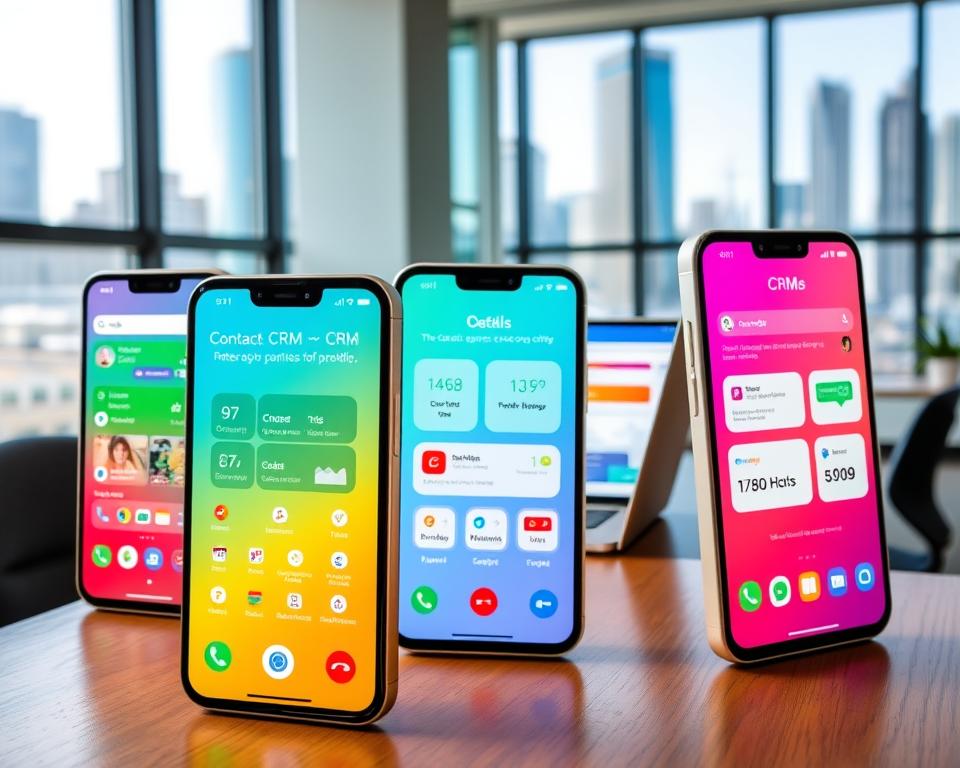
To make a great CRM mobile app, it’s key to include features that meet the needs of sales teams and customers. A good CRM app should be easy to use and help businesses manage customer relationships better.
Comprehensive Contact and Lead Management
A top CRM app should have comprehensive contact and lead management. It should let users update customer info anytime, anywhere. This is crucial for sales teams to stay organized and focus on important leads.
Visual Sales Pipeline and Opportunity Tracking
The app should have a visual sales pipeline for tracking deal progress and spotting issues. This helps sales teams to focus their efforts and close deals faster.
Integrated Task Management and Scheduling
Integrated task management and scheduling are key for sales teams to manage their tasks and meetings. The app should make it easy to schedule follow-ups and meetings.
Real-Time Reporting and Performance Analytics
Real-time reporting and performance analytics are essential for making smart business decisions. The CRM app should offer insights into sales performance and customer behavior.
Robust Offline Access and Data Synchronization
A robust offline access feature is important for the app to work without internet. The app should sync data automatically when it connects to the internet, keeping all info current.
Types and Platforms for Mobile CRM Applications
The platform you pick for your mobile CRM app is key. It affects how well your app works and how users feel about it. Each platform has its own good and bad points.
Native iOS and Android CRM Applications
Native apps are made just for iOS or Android. They work super well and can use your phone’s features like GPS. These apps feel right at home on their platform, thanks to their design.
- Pros: High performance, direct hardware access, and platform-specific UI/UX.
- Cons: Requires separate development efforts for each platform, higher maintenance costs.
Cross-Platform Development Solutions
Cross-platform apps work on many platforms, like iOS and Android, from one codebase. Tools like React Native and Flutter are popular for their fast performance.
“Cross-platform development can significantly reduce development time and costs while maintaining a consistent user experience across different platforms.”
Progressive Web Applications for CRM
PWAs give a native app feel without the high costs. They work in web browsers and can be installed on devices. They offer offline use and push notifications.
- Pros: Lower development costs, easy maintenance, and broad accessibility.
- Cons: Limited access to device hardware compared to native apps.
Hybrid Mobile CRM Approaches
Hybrid apps mix native and web app features. They use web tech in a native shell. This lets them work on many platforms and use some device features.

In conclusion, picking a platform for your mobile CRM app depends on your business needs and budget. Knowing the good and bad of each platform helps you choose wisely.
The Complete CRM Mobile App Development Process
To make a great CRM mobile app, businesses need a clear plan. This plan makes sure the app works well for users and fits the company’s goals.
Business Requirements and Strategy Planning
The first step is to figure out what the app needs to do. This means knowing who will use it, what they need, and what features will make them happy.
- Do market research to know what users want
- Decide on the app’s main features
- Set clear goals for the app
Mobile-First UI and UX Design
A mobile-first design approach is key for a good CRM app. It means designing the app for mobile devices first. This makes it easy and fun to use.

Agile Development and Sprint Cycles
Agile development methodologies are great for CRM apps. They let teams work in short cycles. This way, they can keep improving the app based on feedback.
- Plan and pick features for each cycle
- Build and test features in short cycles
- Use feedback to get better
Comprehensive Testing Across Devices
Testing the app on different devices is crucial. It checks if the app works well everywhere. This includes checking how it looks, feels, and performs.
- Test on various devices and systems
- Check how real users find it
- Make sure it works well on different networks
App Store Deployment and Distribution
The last step is to put the app in the app stores. This means getting it ready, submitting it, and spreading the word.
By sticking to this process, businesses can make a CRM app that really helps users and boosts their success.
Technology Stack for Building Mobile CRM Apps
The technology stack for CRM mobile apps is key to their success. It affects how well they work, grow, and stay easy to update. A good stack is crucial for a mobile CRM app that meets business needs.
iOS Development with Swift and SwiftUI
Swift and SwiftUI are top picks for iOS apps. Swift is Apple’s language, known for its speed and advanced features. SwiftUI makes creating user interfaces for Apple devices easier.
- High-performance capabilities
- Advanced features for complex app development
- Simplified UI development with SwiftUI
Android Development with Kotlin and Jetpack
Kotlin and Jetpack are favorites for Android apps. Kotlin is a modern language with clear syntax and safety features. Jetpack makes Android app development easier, offering a solid base for CRM apps.
- Concise syntax and improved code readability
- Null safety features to prevent common errors
- Simplified Android app development with Jetpack
React Native and Flutter for Cross-Platform Development
React Native and Flutter are great for apps on both iOS and Android. React Native uses JavaScript and React for native apps. Flutter, with Dart, creates apps that run natively on multiple platforms.
- Cross-platform compatibility
- Faster development cycles
- Shared codebase across multiple platforms
Cloud Infrastructure and Database Solutions
Cloud infrastructure and database solutions are essential for CRM apps. Cloud services provide scalable storage and analytics, keeping CRM data current on all devices.

- Scalable storage solutions
- Real-time data synchronization
- Advanced analytics capabilities
In conclusion, picking the right tech stack is crucial for a successful CRM app. Using native tools like Swift and Kotlin, cross-platform frameworks like React Native and Flutter, and strong cloud services helps businesses build effective CRM solutions. These solutions boost sales, improve customer relationships, and enhance business performance.
Integration Capabilities for Mobile CRM Systems
In today’s world, CRM mobile apps need to work with many tools and platforms. This lets businesses create a smooth workflow. It connects customer data with other important business tasks.

Email, Calendar, and Communication Tools Integration
Modern CRM mobile apps can link with email, calendar, and other communication tools. This makes it easy for sales teams to manage their talks within the CRM. It logs all customer interactions for easy access.
By linking these tools, businesses can streamline their sales processes. They can also reduce manual data entry and boost productivity.
Social Media and Marketing Platform Connections
Connecting CRM systems with social media and marketing platforms is also key. It helps businesses understand their customers better. This lets companies tailor their marketing efforts to improve customer engagement and sales.
ERP and Business Management Software Integration
Linking CRM mobile apps with ERP and other business management software is essential. It gives a complete view of business operations. This integration syncs customer data with financial, inventory, and supply chain info.
It helps businesses make better decisions by understanding their operations fully.
Custom API Development and Webhooks
For unique needs, custom API development and webhooks are great. They let companies connect their CRM mobile app with any other app. Webhooks make data exchange in real-time possible, keeping all systems updated.
Security and Data Protection in Mobile CRM Development
In the world of mobile CRM, keeping data safe is key for companies everywhere. As these apps grow in importance, strong security is more crucial than ever.
End-to-End Encryption and Secure Storage
End-to-end encryption is a must for mobile CRM apps. It keeps data safe as it moves between devices and servers. Also, secure storage practices are vital for keeping data on phones and tablets safe.
Multi-Factor Authentication and Biometric Security
Adding multi-factor authentication (MFA) boosts security. It makes it harder for hackers to get in. Biometric security, like face or fingerprint scans, adds another layer. It ensures only the right people can see important customer info.

GDPR, CCPA, and Regulatory Compliance
Following rules like the GDPR and CCPA is essential for companies in Europe and California. Staying GDPR compliant keeps businesses out of trouble and builds trust with customers.
Secure Cloud Synchronization and Backup
Secure cloud syncing keeps data current and consistent across all devices. Secure backups ensure data is safe in case of loss or system failure. This keeps businesses running smoothly.
By focusing on these security steps, companies can keep their mobile CRM apps and customer data safe from threats.
Customization and Scalability Options
As businesses grow, their CRM apps must change too. Customization and scalability options are key for success. They help the CRM system meet the needs of the business, its customers, and users.
Industry-Specific Feature Development
Different industries need different things from a CRM app. Industry-specific feature development lets businesses make their app fit their needs. This makes the app more effective and easier to use.
For example, healthcare needs to follow HIPAA rules, and finance needs to meet strict reporting standards.
Custom Workflow Automation and Business Rules
Custom workflow automation makes tasks in the CRM app easier and less prone to errors. By setting business rules, companies can make sure their CRM follows their rules and processes.
This could mean automating who gets leads or when to follow up after a call.
Configurable Dashboards and User Interfaces
A configurable dashboard lets users see what’s important to them in the CRM app. This makes the app more useful and helps users work better.
Also, a customizable interface can make training new users faster and get more people using the app.
Scalable Architecture for Growing Businesses
A scalable architecture is important for growing businesses. It makes sure the CRM app can handle more data and users without slowing down.
Scalability comes from cloud-based systems and microservices architecture. This lets businesses grow their CRM as they need to.

In summary, customization and scalability are essential for a good CRM app. Adding features for specific industries, automating workflows, making dashboards customizable, and having a scalable design help businesses grow and meet their changing needs.
Cost Considerations for CRM Mobile App Development
Knowing the costs of CRM mobile app development is key for good budget planning. Several factors affect the total cost. It’s important for businesses to plan carefully.
Factors Affecting Development Costs
The complexity of features, technology stack, and development team’s rates are main factors. Complex features like advanced analytics and custom workflows can raise costs and time needed.
Technology stack choices, like native, cross-platform, or hybrid, also play a role. Native apps for iOS and Android might cost more but offer better performance.
Platform Choice and Its Budget Impact
Picking the right platform is vital. Native iOS and Android apps give the best user experience but cost more. Cross-platform apps, like those made with React Native or Flutter, save money but might not perform as well.
| Platform | Development Cost | Maintenance Cost |
|---|---|---|
| Native iOS | High | Medium |
| Native Android | High | Medium |
| Cross-platform | Medium | Low |
Design Complexity and User Experience Investment
Investing in a great user experience is key for a CRM app’s success. Custom UI/UX design can improve user engagement but increases costs. Businesses must find a balance between design quality and budget.
Ongoing Maintenance and Update Expenses
Keeping the CRM app updated is crucial for its security and functionality. Regular updates include new features, bug fixes, and performance boosts. These updates cost money.
When budgeting for CRM app development, remember to include ongoing maintenance and update costs. This ensures the app stays effective and secure over time.
Best Practices for Mobile CRM Implementation Success
Getting a CRM mobile app to work well needs careful planning and tech skills. To get the most out of a CRM mobile app, companies should follow some key steps. These steps help make sure the app is used and valued by everyone.
Prioritizing User Experience and Simplicity
Putting the user first is key for a CRM mobile app to succeed. By focusing on user experience and making things simple, companies can make their app easy to use. This makes it easier for employees to learn and use the app.
- Simplify navigation and workflows
- Use clear and concise language in the app’s interface
- Ensure that the app is responsive and works well on various devices
Optimizing Performance and Load Times
Performance optimization is vital for a smooth user experience. If the app is slow or doesn’t work well, it can make people unhappy and less productive.
- Optimize data loading and synchronization processes
- Minimize the use of resource-intensive features
- Regularly test and monitor the app’s performance
Planning for Continuous Updates and Improvements
The world of CRM is always changing, and companies need to keep up. They should listen to what users say, watch market trends, and add new features and tech.
- Regularly update the app to fix bugs and improve performance
- Add new features based on user feedback and market trends
- Stay informed about the latest CRM trends and technologies
Developing Effective User Training Strategies
User training is crucial for getting the most out of a CRM mobile app. Companies need to create good training plans. This ensures employees can use the app well.
- Provide comprehensive training programs for new users
- Offer ongoing support and resources for users
- Encourage user feedback to improve the training process
By following these best practices, companies can make their CRM mobile app a success. This leads to better work, stronger customer ties, and a stronger market position.
Selecting Your CRM Mobile App Development Partner
Finding a reliable development partner is key to a successful CRM mobile app. The right partner can greatly affect your app’s quality, function, and success.
Assessing Technical Capabilities and Experience
When looking for a development partner, check their technical capabilities and CRM app development experience. Choose partners with a solid track record of creating top-notch mobile apps.
Make sure they know various technologies and platforms, like iOS, Android, and cross-platform frameworks. It’s important they fit your technology needs.
Reviewing Previous Projects and Client Testimonials
Looking at a partner’s previous projects and client testimonials gives you insight into their work and reliability. Look for examples of CRM mobile apps they’ve built.
Client feedback and reviews are also key. They show the partner’s professionalism, communication, and ability to meet client needs.
Evaluating Communication and Collaboration Methods
Good communication and collaboration are vital for project success. Check how potential partners communicate and manage projects.
Look for agile methodologies and transparent project management. Make sure they’re quick to respond to your questions and concerns.
Understanding Support and Maintenance Offerings
Support and maintenance are crucial for your app’s long-term success. Know the support and maintenance services your partner offers.
Check if they provide updates, bug fixes, and performance improvements. Ensure they have a clear plan for supporting your app after launch.
| Evaluation Criteria | Importance Level | Partner 1 | Partner 2 |
|---|---|---|---|
| Technical Capabilities | High | 8/10 | 9/10 |
| Previous Projects | Medium | 7/10 | 8/10 |
| Communication | High | 9/10 | 8/10 |
| Support and Maintenance | High | 8/10 | 9/10 |
Conclusion
CRM Mobile App Development is key in today’s business world. It helps companies connect better with customers, boost sales, and grow. By knowing what makes a good mobile CRM app, businesses can create one that fits their needs.
Creating a successful CRM mobile app takes careful planning and upkeep. It’s important to think about how users will experience the app, keep it secure, and make sure it can grow with the business. This way, companies can get a good return on their investment and stay ahead of the competition.
As technology keeps changing, it’s vital for businesses to stay updated on CRM trends. Using mobile CRM solutions and keeping up with new tech can help companies succeed in the long run. This way, they can meet their customer relationship management goals.