






Businesses face a big decision when it comes to software development pricing. They must choose between a fixed cost model and a dedicated team model. This choice greatly affects project management and success.
The fixed cost model means setting a price for the whole project upfront. This gives you cost certainty from the start. The dedicated team model lets you hire a team to work only on your project. This model offers flexibility and adaptability.
It’s vital to pick the right model for good project management and success. Knowing the differences between these models helps you make a choice that fits your business needs.
Table of Contents
Key Takeaways
- Understand the difference between the fixed cost and dedicated team models.
- Consider the level of flexibility needed for your project.
- Evaluate the importance of cost certainty versus adaptability.
- Assess your project’s complexity and requirements.
- Choose a model that aligns with your business goals and project management needs.
Understanding Software Development Engagement Models
Choosing the right engagement model is key for project success in software development. The model you pick affects the project’s outcome and how well the client and development team work together.
The Importance of Choosing the Right Model
It’s crucial to pick the right model because it impacts your budget, timeline, and quality. Each model offers different levels of flexibility, control, and risk sharing. Some are better for projects with clear needs, while others adapt to changing requirements.
The right model can boost team collaboration, improve project visibility, and manage risks better. It makes sure the client and development team are on the same page, reducing the chance of project failure.
Overview of Available Engagement Models
There are many software development engagement models, each with its own strengths and weaknesses. The most common ones are:
- Fixed Price Model: This model has a fixed price for the whole project, based on the initial scope and requirements.
- Dedicated Team Model: Here, the client gets a dedicated team of developers who work only on their project.
- Time and Materials Model: This model charges based on the actual time and materials used for the project.
Each model has its pros and cons. The choice depends on the project’s specific needs and goals. Knowing these models well is important for making a good choice.

What Is the Fixed Cost Model?
Fixed cost projects in software development have a set scope, timeline, and budget. This is agreed upon by both the client and the vendor. It’s great for clients who know exactly what they need and want a clear budget.

Key Characteristics of Fixed Cost Projects
Fixed cost projects have unique features that make them stand out. Two main characteristics are:
Defined Scope and Requirements
In a fixed cost model, the project’s scope and needs are clear from the start. This is key because it’s the foundation of the agreement between the client and the vendor. A clear scope means both sides know what’s expected, avoiding future misunderstandings.
Predetermined Timeline and Budget
Another important aspect is that the timeline and budget are set in advance. This gives clients a clear picture of when the project will end and the total cost. It helps with financial planning and management.
How Fixed Cost Pricing Works
Fixed cost pricing sets a fixed price for the whole project. Vendors look at the project’s needs and risks to set the price. The client then agrees to this price. This model encourages vendors to work efficiently, as they risk losing money if costs go up.
“The fixed price model is beneficial for projects where the requirements are well understood and unlikely to change significantly during the project lifecycle.”
In summary, the fixed cost model is simple and predictable for budgeting in software development. It’s especially good for clients with clear project needs.
What Is the Dedicated Team Model?
In software development, the dedicated team model is special. It combines flexibility and teamwork. A client and a vendor work together closely. The vendor gives a team of experts for the client’s project.
Key Characteristics of Dedicated Teams
Dedicated teams can change to meet client needs. Flexibility is key, letting changes in project scope and timelines.
Team Composition and Structure
A dedicated team has experts like developers, designers, and project managers. The team composition fits the project’s needs, making sure all skills are there.

The dedicated team model relies on ongoing collaboration between the client and team. Regular talks and feedback keep the project on track. This way, any problems are solved quickly.
How Dedicated Team Pricing Works
Pricing for dedicated teams depends on the team’s composition and project length. Clients pay for the team’s time. Rates can be hourly, monthly, or project-based. This model helps clients manage costs while getting the team’s expertise.
Advantages of the Fixed Cost Model
Software development projects benefit a lot from the fixed cost model. It helps with budgeting and managing projects. This approach lets businesses manage their money better and makes projects simpler.

Budget Predictability and Control
The fixed cost model gives budget predictability. This means businesses can plan their money better. It’s very important for projects with clear goals and needs.
No Surprise Costs
Another big plus is no surprise costs. With a fixed price deal, the service provider takes on the risk of extra costs. This means clients don’t have to worry about unexpected bills.
Easier Financial Planning
The fixed cost model makes easier financial planning possible. It shows the total cost of the project from the start. This helps businesses plan their money better and make smart budget choices.
Clear Scope and Deliverables
Fixed cost projects have a clearly defined scope and specific goals. This makes it easier to manage what everyone expects. It also keeps the project on track.
Reduced Management Overhead
The fixed cost model also means reduced management overhead. The service provider takes care of the project. This lets businesses focus on what they do best.
Disadvantages of the Fixed Cost Model
The fixed cost model helps predict budgets but has big downsides. These can hurt project success. Knowing these issues is key for smart software development choices.
Limited Flexibility for Changes
The fixed cost model is very structured. This makes it hard to change things once started.
Change Request Complications
Changes can cause big problems with the fixed cost model. This includes:
- Delays in project timelines
- Increased costs for extra work
- Disputes over what’s included
Additional Costs for Modifications
Changes can add extra costs. These costs might not be clear at first. They can hurt the budget and project success.
Potential for Scope Creep Conflicts
Scope creep can cause trouble. It’s when the project grows too big. In a fixed cost model, this can lead to disagreements.

Higher Initial Risk Premium
The fixed cost model often has a higher risk premium. This premium covers possible risks and uncertainties. It can make the project more expensive at the start.
| Aspect | Fixed Cost Model |
|---|---|
| Flexibility | Limited flexibility for changes |
| Scope Creep | Potential for scope creep conflicts |
| Initial Cost | Higher initial risk premium |
Knowing these downsides is crucial for deciding if the fixed cost model is right for a project.
Advantages of the Dedicated Team Model
The Dedicated Team Model is known for its flexibility. It lets teams quickly adjust to new project needs. This makes it perfect for complex and ever-changing projects.
Maximum Flexibility and Adaptability
This model offers the highest level of flexibility. Teams can easily change to meet new demands and priorities. This is key in today’s fast software development world.
Easy Requirement Adjustments
Adjusting project needs is simple with a dedicated team. They can quickly adapt to changes. This ensures the final product meets the client’s evolving expectations.
Agile Development Support
The Dedicated Team Model fits well with Agile development. It supports iterative development and continuous improvement. It also allows for quick responses to changes.

Direct Team Control and Collaboration
Having direct control over the team improves collaboration and communication. Clients can give feedback and guidance at every step. This ensures the project aligns with their vision.
This teamwork approach makes sure the project meets the client’s goals. The team works closely with the client’s objectives.
Long-Term Cost Efficiency
While it requires a longer commitment, the Dedicated Team Model saves costs in the long term. Having a dedicated team focused on one project reduces overhead. This is compared to constantly starting new projects or managing many at once.
The Dedicated Team Model’s benefits make it a great choice. It offers a collaborative, flexible, and cost-effective way to develop software.
Disadvantages of the Dedicated Team Model
The Dedicated Team model offers flexibility but also has challenges. Budget uncertainty is a big concern. It affects project planning and financial management.
Budget Uncertainty
The Dedicated Team model can lead to variable monthly costs. This makes it hard to predict the total project cost.
Variable Monthly Costs
Costs can change based on team productivity, task complexity, and technology. This makes budget planning tough.
Difficulty Forecasting Total Investment
Project scope and requirements can change. This makes it hard to predict the total investment needed. It’s a big drawback for businesses with tight budgets.
Higher Management Responsibility
Managing a Dedicated Team is more challenging. It involves overseeing team dynamics, ensuring communication, and aligning work with project goals.
Longer Commitment Required
The Dedicated Team model requires a longer commitment. This can be a drawback for businesses seeking more flexibility.
Comparison of Key Factors: Dedicated Team Model
| Factor | Description | Impact |
|---|---|---|
| Budget Uncertainty | Variable costs due to team productivity and task complexity | High |
| Management Responsibility | Overseeing team dynamics and communication | High |
| Commitment Duration | Longer commitment required | Medium |

Cost Comparison: Fixed Cost vs Dedicated Team
It’s important to compare the costs of fixed cost and dedicated team models carefully.
Short-Term Cost Analysis
The costs of fixed cost and dedicated team models are different in the short term.
Initial Investment Requirements
Fixed cost projects need a big upfront payment. This is because the whole project cost is set from the start. Dedicated teams, however, might have lower initial costs. This is because the cost grows as the team works more.
Payment Structure Differences
Fixed cost projects are paid for in milestones. Payments are made when certain tasks are done. Dedicated teams get paid regularly, based on their ongoing work.
Long-Term Cost Analysis
Long-term costs include the total cost and how easy it is to grow the project.
Total Cost of Ownership
Fixed cost projects have a clear total cost from the start. Dedicated teams’ total cost can change as the project grows and the team changes.
Scalability Cost Implications
Dedicated teams are more flexible and can grow with your project. Fixed cost projects might be harder to adjust, leading to extra costs for changes.
Hidden Costs to Consider
There are hidden costs to think about when choosing between fixed cost and dedicated team models.
| Cost Factor | Fixed Cost | Dedicated Team |
|---|---|---|
| Project Management Overhead | Lower | Higher |
| Change Request Costs | Higher | Lower |
| Scalability Costs | Higher | Lower |
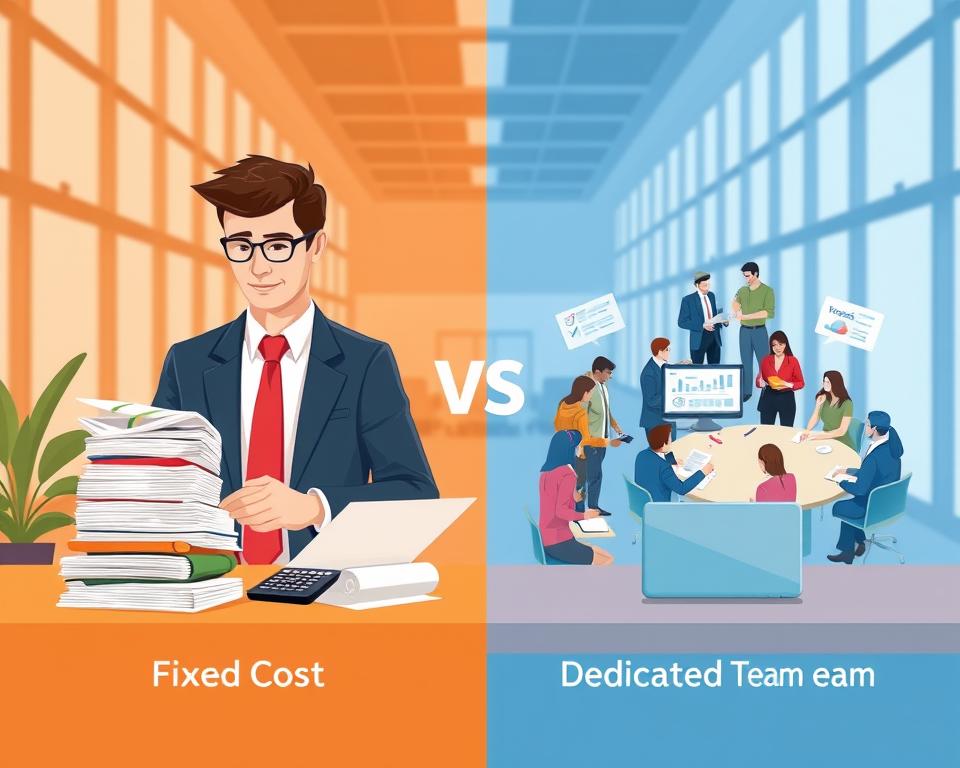
In conclusion, comparing fixed cost and dedicated team models requires looking at both short-term and long-term costs. It’s also important to consider hidden costs. By understanding these, businesses can choose the best model for their needs.
Risk Management in Both Models
Risk management is key to the success of software projects, whether you choose fixed cost or dedicated team. It’s about knowing who bears what risks and responsibilities.
Risk Distribution in Fixed Cost Projects
In fixed cost projects, the vendor usually takes on more risk. This is because they face the cost of unexpected issues or changes in scope.
Vendor Responsibility Areas
- Accurate project scoping and estimation
- Management of project timelines and resources
- Mitigation of technical risks
Client Responsibility Areas
- Clear communication of project requirements
- Timely decision-making to avoid delays
- Providing necessary access to information and resources
For more on the pros and cons of different models, check out freelance vs dedicated web and app development.
Risk Distribution in Dedicated Team Projects
In dedicated team projects, risks are shared between client and vendor. This is because they work together from start to finish.
Shared Risk Approach
- Collaborative planning and goal-setting
- Regular progress monitoring and adaptation
- Shared responsibility for project outcomes

Understanding risk distribution and responsibilities in both models helps clients make better choices. This ensures their projects meet their needs and risk levels.
When to Choose the Fixed Cost Model
Choosing the right pricing model for software development is key. The fixed cost model is great for certain projects. It works well for businesses with clear goals and project needs.
Ideal Project Types for Fixed Cost
The fixed cost model fits well with specific project types. These include:
- Well-Defined Small to Medium Projects: Projects with a clear scope and well-defined requirements are ideal for the fixed cost model. This is because the project scope is unlikely to change significantly during development.
- Projects with Stable Requirements: When the project requirements are stable and unlikely to undergo significant changes, the fixed cost model provides a predictable and reliable pricing structure.
Well-Defined Small to Medium Projects
Small to medium-sized projects with a clear scope are well-suited for the fixed cost model. This is because the requirements are typically well-understood, and the project timeline is relatively short.
Projects with stable requirements benefit from the fixed cost model as it provides a predictable budget. This allows businesses to plan their finances more effectively without worrying about cost overruns.
Business Situations Favoring Fixed Cost
Certain business situations make the fixed cost model more attractive. These include:
- Budget Constraints: Businesses with strict budget constraints can benefit from the fixed cost model as it provides cost certainty.
- Need for Predictability: Companies that require predictability in their project costs can benefit from the fixed cost model.
Industry-Specific Use Cases
The fixed cost model is used in various industries, including:
- Software Development: For projects with well-defined requirements, the fixed cost model is commonly used.
- IT Consulting: IT consulting projects with clear objectives and scope often utilize the fixed cost model.
When to Choose the Dedicated Team Model
The dedicated team model is great for projects that need ongoing work and flexibility. It’s perfect for businesses that must quickly adjust to changing needs or handle complex, long-term projects.
Ideal Project Types for Dedicated Teams
Dedicated teams work best for projects with changing needs or those that need constant improvement. Two main types of projects that benefit are:
Long-Term Product Development
Long-term product development projects really shine with dedicated teams. They need ongoing effort, constant updates, and adjustments to new tech or market trends. As John Doe, CEO of Next Big Technology, says, “A dedicated team lets us keep our product up-to-date, keeping it competitive.”
Projects with Evolving Requirements
Projects with changing needs also do well with dedicated teams. This model offers flexibility and quick adjustments to new needs without contract changes. For example, a project can start simple and grow to include more features as needs change.
Business Situations Favoring Dedicated Teams
Some business situations make dedicated teams more appealing. These include needing to quickly grow a development team, requiring special skills for a short time, or needing to innovate fast. For example, a startup might use a dedicated team to quickly build an MVP and then improve it based on feedback.
As noted in this article, working with a dedicated team offers the flexibility and expertise needed to move projects forward efficiently.
Industry-Specific Use Cases
Many industries use dedicated teams for their software development. In tech, companies making complex software or fintech solutions often choose dedicated teams. The healthcare sector also benefits, especially for telemedicine or healthtech projects.
In summary, the dedicated team model is flexible and effective for various industries. Knowing the right projects, situations, and industries for it helps businesses make smart choices.
Project Complexity and Model Selection
Choosing between fixed cost and dedicated team models depends on project complexity. The complexity of a project greatly affects the success of the chosen model.
Simple Projects with Clear Requirements
For projects with simple needs and a clear scope, the fixed cost model works best. These projects usually have a clear plan for what needs to be done and when.
Websites and Landing Pages
Websites and landing pages are often simple. They need a clear plan for design, content, and how they work. A dedicated team might be too much for these, making fixed cost a better choice.
Standard Mobile Applications
Standard mobile apps with known features and functions also fit the fixed cost model. The needs are clear, and the development is straightforward.
Complex Projects with Evolving Needs
But, for complex projects with changing needs, a dedicated team is better. These projects need flexibility and ongoing teamwork between the team and the client.
Enterprise Software Solutions
Enterprise software is a great example of complex projects. They involve many people, complex workflows, and changing needs. A dedicated team can handle these changes well.
Innovative Tech Products
Innovative tech products also need a dedicated team. They involve new technology and need a lot of teamwork and flexibility to handle the unknowns.
Team Management and Communication Differences
Effective team management and communication are key for software development success. Whether you pick a fixed cost or dedicated team model, the way teams are managed and communicate matters a lot. These differences can greatly affect the project’s outcome.
Management Requirements for Fixed Cost Projects
Fixed cost projects have simpler management needs. The project scope and timeline are set. The main goal is to finish the project as agreed.
Milestone Tracking and Approval
Milestone tracking and approval are crucial in fixed cost projects. Clear milestones are set, progress is tracked, and client approval is needed before moving on. This keeps everyone on the same page and allows for quick adjustments.
Management Requirements for Dedicated Teams
Dedicated teams need a different management style. With more flexibility, the focus is on ongoing collaboration and adaptation.
Daily Involvement and Sprint Planning
Daily involvement and sprint planning are key for dedicated teams. Daily stand-ups, sprint planning, and regular meetings help keep the project on track. Any needed changes are made quickly.
Performance Monitoring and Feedback
Performance monitoring and feedback are also important. Regular feedback helps spot areas for improvement. It ensures the team is working well towards the project goals.
Communication Protocols and Expectations
Clear communication protocols and expectations are essential for both models. But, the specifics can differ. Fixed cost projects often have more formal communication around milestone approvals. Dedicated teams have more flexible communication with regular updates.
For more insights on choosing between a dedicated team and a fixed price model, you can refer to this detailed comparison.
Fixed Cost vs Dedicated Team – What Should You Choose?
Choosing the right way to work on software development is key. You might pick fixed cost or a dedicated team. Your choice depends on the project’s needs, your budget, and how fast you need it done.
Decision-Making Framework
It’s important to think about your project needs well. Look at the project’s scope, how complex it is, and if it might change.
Assessing Your Project Requirements
Knowing what your project needs is crucial. Think if the project’s needs are clear or if they might change.
Evaluating Your Budget Constraints
How much you can spend is a big deal. Decide if you have a set budget or if you’re okay with different prices.
Considering Your Timeline
How fast you need the project done also matters. Decide if you need it quickly or if you have more time.
| Factor | Fixed Cost | Dedicated Team |
|---|---|---|
| Project Scope | Well-defined, clear requirements | Flexible, evolving requirements |
| Budget | Fixed budget | Flexible budget |
| Timeline | Predictable timeline | Flexible timeline |
Key Questions to Ask Before Choosing
Before you decide, ask yourself these questions:
- How complex is the project?
- How likely are changes to the project scope?
- What is the budget for the project?
- What is the expected timeline for completion?
Hybrid Approaches and Alternatives
Maybe a mix or something different is better. Here are some options to think about:
Time and Materials Model
This model lets you pay for actual time and materials used. It’s flexible.
Milestone-Based Approach
You pay for reaching certain goals. It’s a mix of flexibility and knowing what to expect.
Conclusion
Choosing between a fixed cost and a dedicated team for software development depends on several key factors. These include project duration, the ability to freeze requirements, and the presence of an in-house team. For small projects with well-defined requirements, a fixed cost model may be more suitable.
On the other hand, a dedicated team is often the better choice for long-term projects. These projects require flexibility and adaptability.
By understanding the advantages and disadvantages of each model, businesses can make informed decisions. This aligns with their project goals and budget constraints. For those looking for a reliable partner in software development, DigitalMara offers expertise in both fixed cost and dedicated team models. They have a proven track record of delivering high-quality solutions.
Ultimately, the right engagement model can significantly impact the success of a software development project. By carefully considering the specific needs of the project and the strengths of each model, businesses can set themselves up for success in the ever-evolving landscape of software development.